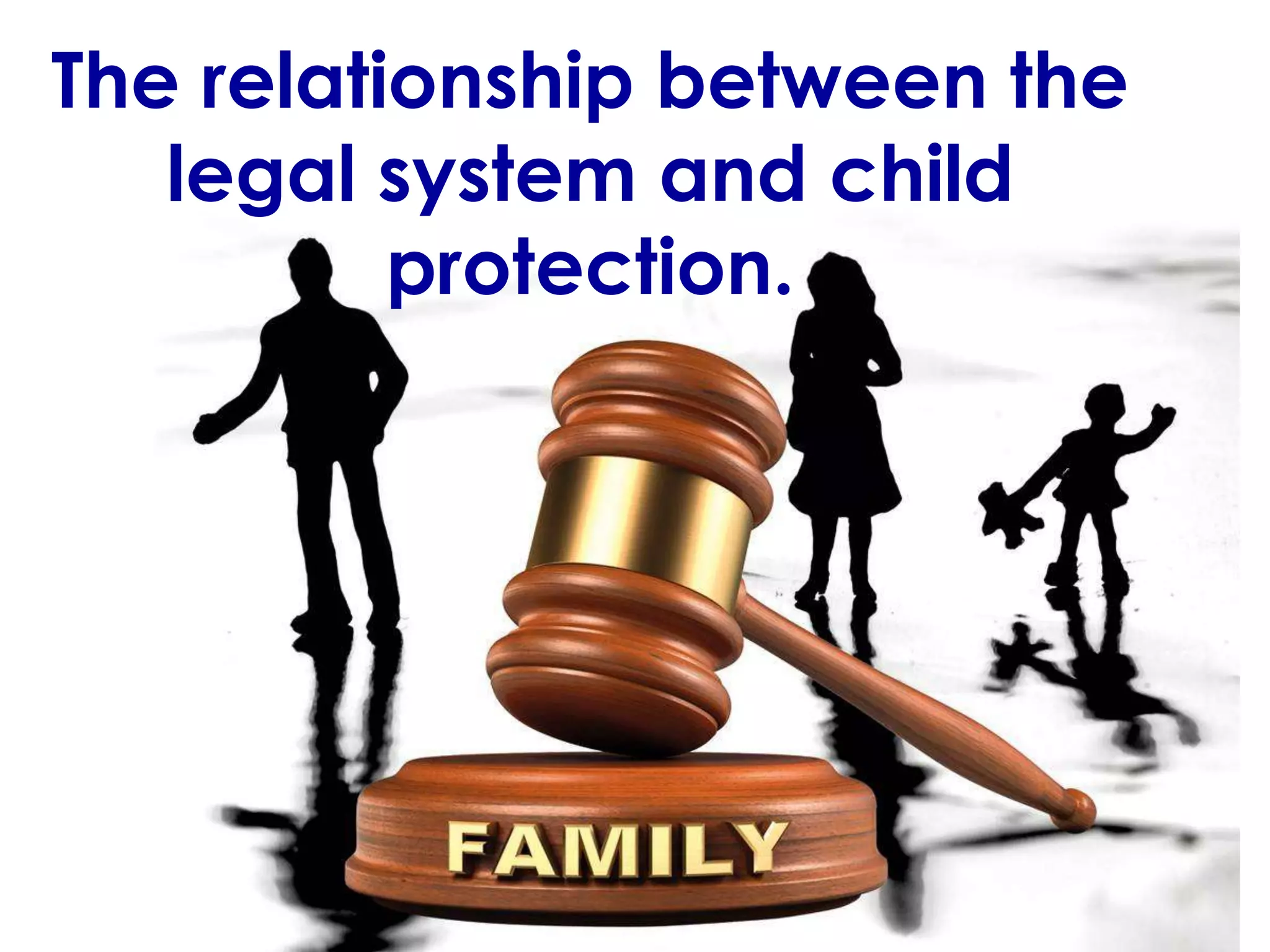
The relationship between the 
legal system and child 
protection.
As we have seen: 
• The law governs the relationship between legal 
individuals; these are known as ‘Civil Cases’. The courts 
decide these cases on the basis of what probably 
happened between these legal individuals: ‘The 
balance of probability’. 
• Events that a deemed to be so serious that they are a 
grave threat to the ‘social order’ are classified as 
‘Criminal Cases’. In the UK, the figurehead of this social 
order is The Crown represented as ‘R’. The courts have 
to have a great deal of confidence in terms of what 
happened regarding the offence. ‘Beyond reasonable 
doubt’.
What counts as a legal individual? 
• Health and Local authorities and their officers 
are classified as ‘legal individuals’ even though 
they are organisations rather than single 
individuals.
The legal remedies for abuse of children can be 
subject to civil and/or criminal proceedings. 
Most often these proceedings will be civil. 
The Local Authority (as a legal person) brings the 
case to court on behalf of the victim child. 
However, the respondent in the case is the 
child’s name usually anonymised to an initial: 
A Local Authority v NL [2013]
The Children Act 1989 key point 1 
In civil law, child welfare is the responsibility of 
local authorities and family courts. Under 
section 47 of the Children Act 1989, local 
authorities are charged with the “duty to 
investigate … if they have reasonable cause to 
suspect that a child who lives, or is found, in 
their area is suffering, or is likely to suffer, 
significant harm”.
The Children Act 1989 & Adoption of 
Children Act 2002: key point 2 
• Harm, under section 31(9) of the Children Act 
1989 is defined as "ill-treatment or the 
impairment of health or development". Section 
120 of the Adoption and Children Act 2002 added 
to this definition: "… including for example, 
impairment suffered from seeing or hearing the 
ill-treatment of another". To decide whether 
harm is significant, the health and development 
of the child is "compared with that which could 
reasonably be expected of a similar child" 
(Children Act 1989).
The Children Act 1989: key point 3 
Under Section 17 (10) of the Children Act 1989, a child is 
a Child in Need if: 
a) he is unlikely to achieve or maintain, or to have the 
opportunity of achieving or maintaining, a reasonable 
standard of health or development without the 
provision for him of services by a local authority 
under this Part; 
b) his health or development is likely to be significantly 
impaired, or further impaired, without the provision 
for him of such services; or 
c) he is disabled.
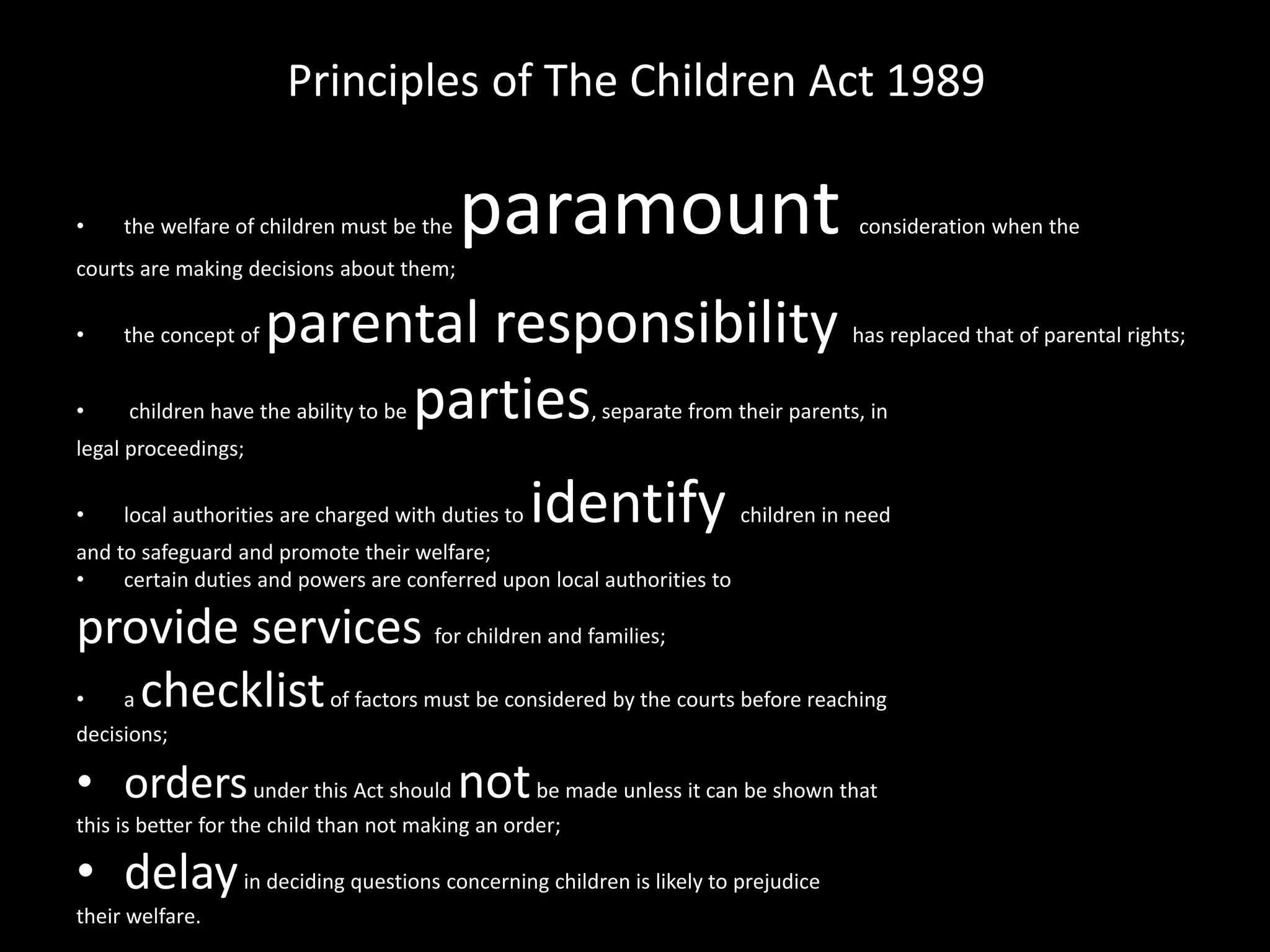
Principles of The Children Act 1989 
• the welfare of children must be the paramount consideration when the 
courts are making decisions about them; 
• the concept of parental responsibility has replaced that of parental rights; 
• children have the ability to be parties, separate from their parents, in 
legal proceedings; 
• local authorities are charged with duties to identify children in need 
and to safeguard and promote their welfare; 
• certain duties and powers are conferred upon local authorities to 
provide services for children and families; 
• a checklist of factors must be considered by the courts before reaching 
decisions; 
• orders under this Act should notbe made unless it can be shown that 
this is better for the child than not making an order; 
• delayin deciding questions concerning children is likely to prejudice 
their welfare.
In criminal law 
It is the police and the criminal courts (The 
Crown; ‘R’) who prosecute offenders and protect 
the public, including children. Home Office 
Circular 16/2005 lists criminal offences against 
children. It includes the offence of cruelty to 
children, which was first established in section 1 
of the Children and Young Persons Act 1933:
• “If any person who has attained the age of 
sixteen years and has the custody, charge, or 
care of any child or young person under that 
age, wilfully assaults, ill-treats, neglects, 
abandons, or exposes him, or causes or 
procures him to be assaulted, ill-treated, 
neglected, abandoned, or exposed, in a 
manner likely to cause him unnecessary 
suffering or injury to health…that person shall 
be guilty of a misdemeanour…”.
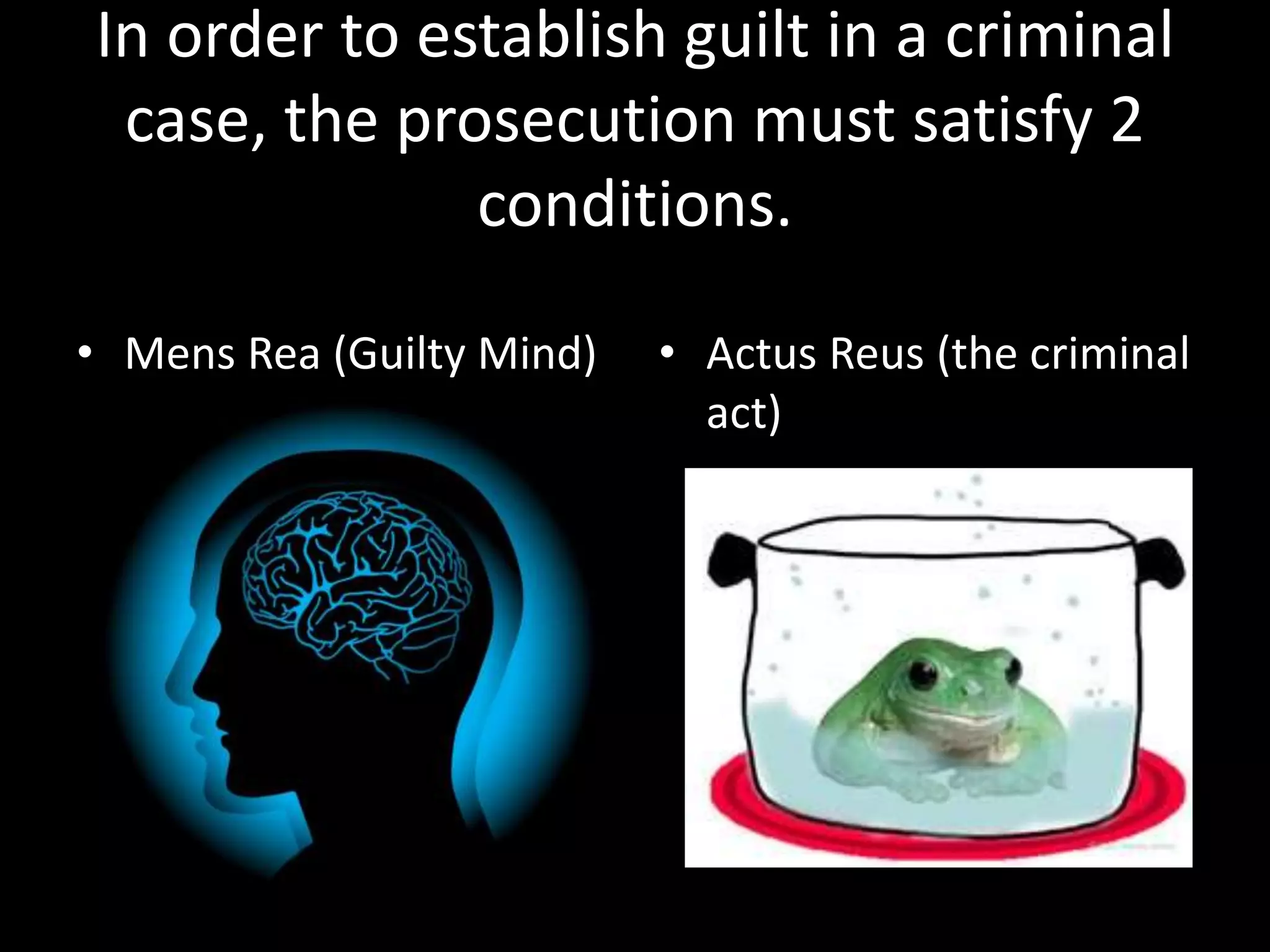
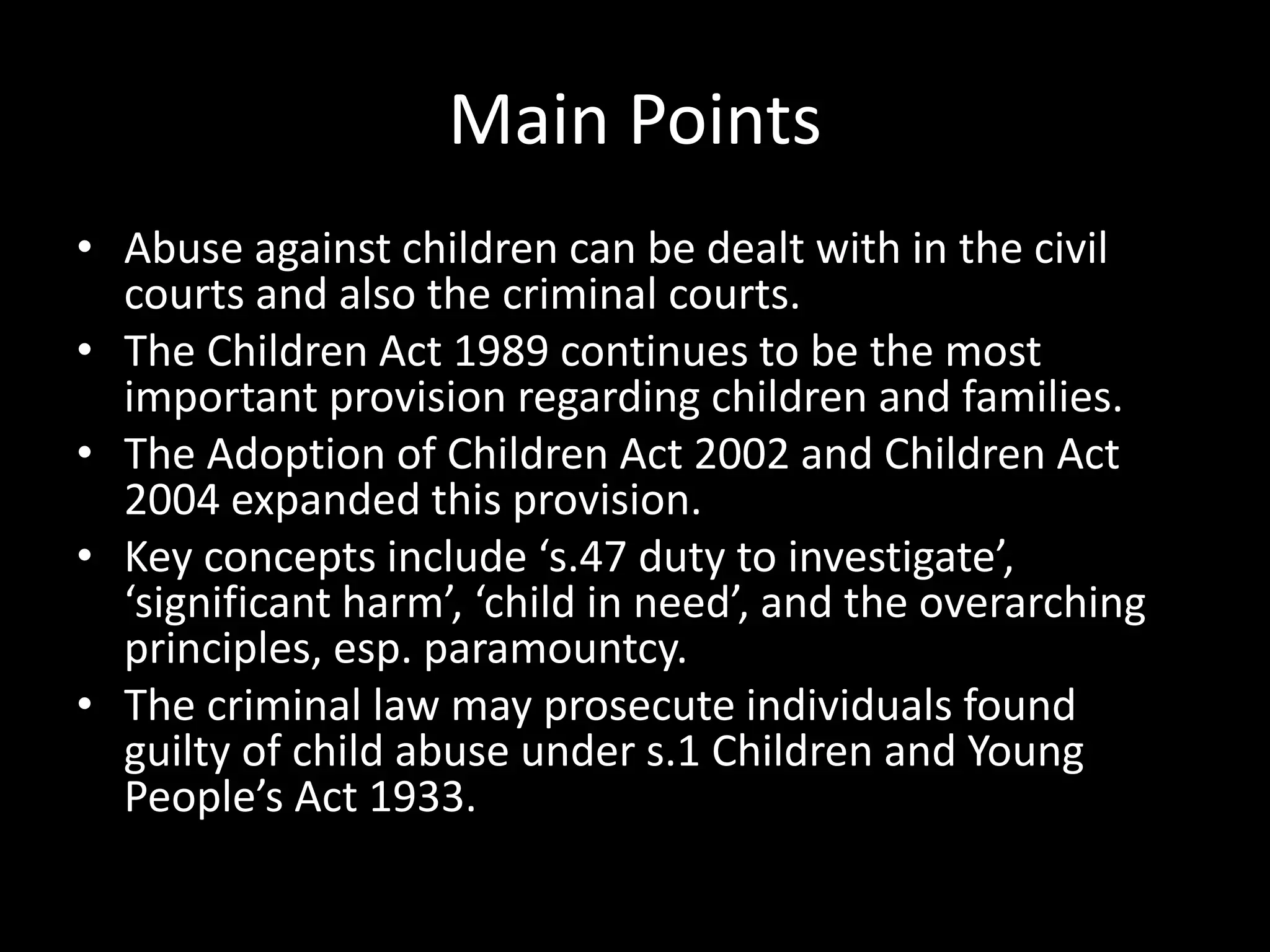
In order to establish guilt in a criminal 
case, the prosecution must satisfy 2 
conditions. 
• Mens Rea (Guilty Mind) • Actus Reus (the criminal 
act)
Main Points 
• Abuse against children can be dealt with in the civil 
courts and also the criminal courts. 
• The Children Act 1989 continues to be the most 
important provision regarding children and families. 
• The Adoption of Children Act 2002 and Children Act 
2004 expanded this provision. 
• Key concepts include ‘s.47 duty to investigate’, 
‘significant harm’, ‘child in need’, and the overarching 
principles, esp. paramountcy. 
• The criminal law may prosecute individuals found 
guilty of child abuse under s.1 Children and Young 
People’s Act 1933.

Defining abuse & the policy framework

  • 1.
    The relationship betweenthe legal system and child protection.
  • 2.
    As we haveseen: • The law governs the relationship between legal individuals; these are known as ‘Civil Cases’. The courts decide these cases on the basis of what probably happened between these legal individuals: ‘The balance of probability’. • Events that a deemed to be so serious that they are a grave threat to the ‘social order’ are classified as ‘Criminal Cases’. In the UK, the figurehead of this social order is The Crown represented as ‘R’. The courts have to have a great deal of confidence in terms of what happened regarding the offence. ‘Beyond reasonable doubt’.
  • 3.
    What counts asa legal individual? • Health and Local authorities and their officers are classified as ‘legal individuals’ even though they are organisations rather than single individuals.
  • 4.
    The legal remediesfor abuse of children can be subject to civil and/or criminal proceedings. Most often these proceedings will be civil. The Local Authority (as a legal person) brings the case to court on behalf of the victim child. However, the respondent in the case is the child’s name usually anonymised to an initial: A Local Authority v NL [2013]
  • 5.
    The Children Act1989 key point 1 In civil law, child welfare is the responsibility of local authorities and family courts. Under section 47 of the Children Act 1989, local authorities are charged with the “duty to investigate … if they have reasonable cause to suspect that a child who lives, or is found, in their area is suffering, or is likely to suffer, significant harm”.
  • 6.
    The Children Act1989 & Adoption of Children Act 2002: key point 2 • Harm, under section 31(9) of the Children Act 1989 is defined as "ill-treatment or the impairment of health or development". Section 120 of the Adoption and Children Act 2002 added to this definition: "… including for example, impairment suffered from seeing or hearing the ill-treatment of another". To decide whether harm is significant, the health and development of the child is "compared with that which could reasonably be expected of a similar child" (Children Act 1989).
  • 7.
    The Children Act1989: key point 3 Under Section 17 (10) of the Children Act 1989, a child is a Child in Need if: a) he is unlikely to achieve or maintain, or to have the opportunity of achieving or maintaining, a reasonable standard of health or development without the provision for him of services by a local authority under this Part; b) his health or development is likely to be significantly impaired, or further impaired, without the provision for him of such services; or c) he is disabled.
  • 8.
    Principles of TheChildren Act 1989 • the welfare of children must be the paramount consideration when the courts are making decisions about them; • the concept of parental responsibility has replaced that of parental rights; • children have the ability to be parties, separate from their parents, in legal proceedings; • local authorities are charged with duties to identify children in need and to safeguard and promote their welfare; • certain duties and powers are conferred upon local authorities to provide services for children and families; • a checklist of factors must be considered by the courts before reaching decisions; • orders under this Act should notbe made unless it can be shown that this is better for the child than not making an order; • delayin deciding questions concerning children is likely to prejudice their welfare.
  • 9.
    In criminal law It is the police and the criminal courts (The Crown; ‘R’) who prosecute offenders and protect the public, including children. Home Office Circular 16/2005 lists criminal offences against children. It includes the offence of cruelty to children, which was first established in section 1 of the Children and Young Persons Act 1933:
  • 10.
    • “If anyperson who has attained the age of sixteen years and has the custody, charge, or care of any child or young person under that age, wilfully assaults, ill-treats, neglects, abandons, or exposes him, or causes or procures him to be assaulted, ill-treated, neglected, abandoned, or exposed, in a manner likely to cause him unnecessary suffering or injury to health…that person shall be guilty of a misdemeanour…”.
  • 11.
    In order toestablish guilt in a criminal case, the prosecution must satisfy 2 conditions. • Mens Rea (Guilty Mind) • Actus Reus (the criminal act)
  • 12.
    Main Points •Abuse against children can be dealt with in the civil courts and also the criminal courts. • The Children Act 1989 continues to be the most important provision regarding children and families. • The Adoption of Children Act 2002 and Children Act 2004 expanded this provision. • Key concepts include ‘s.47 duty to investigate’, ‘significant harm’, ‘child in need’, and the overarching principles, esp. paramountcy. • The criminal law may prosecute individuals found guilty of child abuse under s.1 Children and Young People’s Act 1933.