CHAPTER 10
DEFICIENCY DISORDERS
Mr. Ashok Kumar
Dept of Pharmacy Practice
SRM College of Pharmacy
SRM University
VITAMIN E
‰The term vitamin E describes a family
of 8 antioxidants,
4 tocopherols (α,β, γ, & δ) and
4 tocotrienols.
‰α-tocopherol is the active form of
vitamin E in the human body.
FUNCTIONS
• The main function of vitamin E is anti
oxidant. It intercepts free radicals &
prevents destruction of cell membrane.
• It protects the fat in LDL from oxidation.
• It inhibits platelets aggregation.
• It enhances vasodilatation.
• It inhibits the activity of protein kinase C.
Vitamin E Dietary Sources
‰ Vegetable oils
‰ Almonds & peanuts
‰ Avocado
‰ Spinach
‰ Carrots (least)
Vitamin E deficiency
•Severe vitamin E deficiency causes:
¾Neurological symptoms (impaired
coordination) & muscle weakness.
¾Increased risk of cardiovascular
diseases
¾Hemolytic anemia in children
RISK FACTORS
‰Severe PEM
‰Genetics defects affecting the
transfer protein of α-tocopherol
‰ Fat malabsorption syndrome
THERAPEUTIC USES
‰ Prevention of cardiovascular diseases
‰ Diabetes Mellitus
‰ Cancer prevention
‰ Boost immunity
‰ Dementia
TOXICITY
Excess vitamin E may cause:
9 Impaired blood clotting leading to
increased risk of bleeding in some persons.
9It is recommended that vitamin E
supplements to be stopped one month
before elective surgery.
VITAMIN K
The K is derived from the German word
Koagulation.
There are 2 naturally occurring forms of
vitamin K. Plants synthesize phylloquinone
(vitamin K1) & bacteria synthesize
menaquinone-3 (vit K2).
Menaquinone-4 is produced in animals from
vit K1, but its function is yet to be discovered.
FUNCTIONS
•Vitamin K is needed for production of
vitamin K-dependent coagulation factors in
the liver.
•Other functions include:
9Assist in bone mineralization. The
mineral binding capacity of osteocalcin
requires vit K.
9Gas6 is vit K-dependent protein
identified in 1993. It is important for
neuronal function.
SOURCES OF VITAMIN K
Bacteria in large intestine produce vit
K2 and supply 40-50% of human
requirement.
Vegetable oils
Almonds & peanuts
Avocado & Broccoli
Spinach, Lettuce, parsley (raw)
Vitamin K deficiency
¾ Is uncommon in adults. Only those with
severe liver disease & those on oral
anticoagulants are at risk.
¾ Exclusively breast fed & premature babies
are at risk coz human milk is low in vitamin E
& their gut is not yet colonized with bacteria.
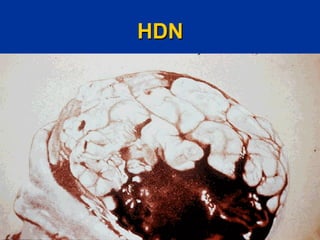
¾ Hemorrhagic disease of the newborn is a
serious threat to life & routine vit k
prophylaxis is recommended by the AAP.
HDN
VITAMIN C
ƒ Humans, unlike other mammals, are
unable to make ascorbic acid & they get it
from food.
ƒ Rich dietary sources are citrus juices
(orange, grapefruit & lime), strawberry,
Guava, tomato, sweet red pepper & broccoli.
ƒ Recommended daily intake is between
15-120 mg/day depending on age. Smokers
& lactating mother needs the higher range.
FUNCTIONS
‰ Collagen synthesis
‰ Antioxidant
‰ Synthesize of noradrenaline
‰ Carnitine synthesize
‰ Metabolism of cholesterol to bile salts
Vitamin C deficiency
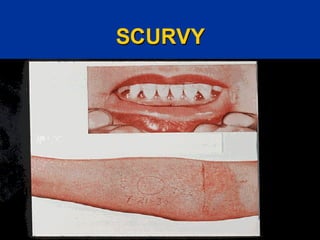
‰ Severe deficiency leads to Scurvy with the
following manifestations:
¾Bleeding & bruising easily
¾Hair & teeth loss
¾Joint pain & swelling
¾Fatigue & lack of concentration
THERAPEUTIC USES
• Cardiovascular diseases
• Cataracts
• Diabetes Mellitus
• Cancer prevention
• Common cold
• Lead toxicity
DRUG INTERACTIONS
• Contraceptive pills & aspirin lower
vitamin C level in plasma & WBC.
• Vitamin C in large dose blocks the action
of warfarin & interferes with
interpretation of certain lab tests
(bilirubin & creatinine in serum and
guaiac assay for occult blood).
• Previous claims of serious toxic effects
of vit C are not evidence-based.
SCURVY
VITAMIN B Complex
ƒ Group of 7 water soluble vitamins, thiamin,
riboflavin, niacin, pyridoxine, cobalamin,
biotin & pantothenic acid.
ƒ Biotin & pantothenic acid deficiencies are
extremely rare coz it is found in numerous
foods and also is synthesized by intestinal
bacteria.
ƒ Biotin deficiency may occur with prolonged
antibiotic therapy & ingestion of raw eggs.
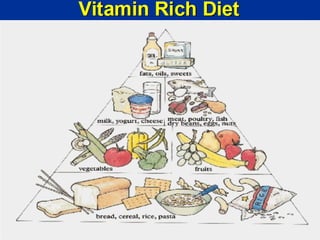
Vitamin Rich Diet
THIAMIN (VIT B1)
‰ Thiamin is rapidly converted to its active
form, thiamin pyrophosphate in the brain and
liver by a specific enzymes, thiamin
diphosphotransferase.
‰ TPP is necessary as a cofactor for the
reactions of the pentose phosphate pathway.
‰ The dietary requirement for thiamin is
proportional to the caloric intake of the diet
and ranges from 1.0 - 1.5 mg/day for normal
adults.
RISK OF THIAMIN DEFICIENCY
‰ Low intake & alcoholism
‰ Increased consumption: Malaria & AIDS
‰ Excessive loss: hemodialysis and diuretics
‰ Anti-thiamin factors: tea & coffee.
‰ Thiaminases found in raw fish, raw shellfish
& in silkworms.
DEFICIENCY & USES
‰ Severe thiamin deficiency can lead to:
¾ Beri-Beri
¾ Wernicke-Korsakoff syndrome
‰ Thiamin is used for treatment of
congestive heart failure & Alzheimer's
disease as well as in cancer prevention.
RIBOFLAVIN (VIT B2)
‰ Adequate amounts of B2 is present in eggs,
milk, meat & cereals. Deficiency is often seen
in chronic alcoholics due to their poor dietetic
habits.
‰ Symptoms associated with riboflavin
deficiency include, glossitis, seborrhea,
angular stomatitis, cheilosis and photophobia.
‰ Riboflavin decomposes when exposed to
visible light. This characteristic can lead to
riboflavin deficiencies in newborns treated by
phototherapy.
NIACIN (VIT B3)
‰ Niacin is available in both animal & plant
food and is made in the body from
tryptophane.
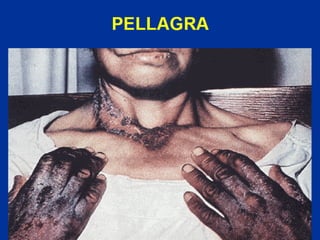
‰ Severe deficiency causes pellagra with
glossitis, dermatitis, diarrhea, depression and
dementia.
‰ Hartnup disease, malignant carcinoid
syndrome & Isoniazid can lead to niacin
deficiency .
‰ In large doses niacin lowers plasma
cholesterol but it elevates blood glucose &
uric acid levels, so it is not recommended
with diabetes & gout.
PELLAGRA
PYRIDOXINE (VIT B6)
‰ Pyridoxine functions as a cofactor in
enzymes reactions required for the
synthesis & catabolism of the amino acids
as well as in glycogenolysis.
‰ Widely available in diet & deficiency
may follow INH & pencillamine therapy.
‰ Deficiency can cause neonatal seizures,
cheilosis, glossitis & neuroitis.
COBALOMIN (VIT B12)
‰ B12 functions as a cofactor for enzymes
required for the catabolism of fatty acids &
the conversion of homocysteine to
methionine.
‰ B12 is not available in plant & deficiency
may occur in strict vegetarians & in pts
with GIT problems & those on prolonged
antibiotic treatment.
‰ Deficiency causes megaloblastic
anemia, SACDC, & high homocysteine in
blood which is a risk of IHD & stroke.
FOLIC ACID
‰ Folic acid is obtained from yeasts and leafy
vegetables as well as animal liver. Animals can’t
synthesize folate, thus, it must come from diet.
‰ Folate is needed for synthesis of nucleic
acids
‰ Deficiency causes megaloblastic anemia &
neural tube defects in utero.
‰ Used for treatment of chronic hemolytic
anemia.
Deficiency_disorders present in human body

  • 1.
    CHAPTER 10 DEFICIENCY DISORDERS Mr.Ashok Kumar Dept of Pharmacy Practice SRM College of Pharmacy SRM University
  • 2.
    VITAMIN E ‰The termvitamin E describes a family of 8 antioxidants, 4 tocopherols (α,β, γ, & δ) and 4 tocotrienols. ‰α-tocopherol is the active form of vitamin E in the human body.
  • 3.
    FUNCTIONS • The mainfunction of vitamin E is anti oxidant. It intercepts free radicals & prevents destruction of cell membrane. • It protects the fat in LDL from oxidation. • It inhibits platelets aggregation. • It enhances vasodilatation. • It inhibits the activity of protein kinase C.
  • 4.
    Vitamin E DietarySources ‰ Vegetable oils ‰ Almonds & peanuts ‰ Avocado ‰ Spinach ‰ Carrots (least)
  • 5.
    Vitamin E deficiency •Severevitamin E deficiency causes: ¾Neurological symptoms (impaired coordination) & muscle weakness. ¾Increased risk of cardiovascular diseases ¾Hemolytic anemia in children
  • 6.
    RISK FACTORS ‰Severe PEM ‰Geneticsdefects affecting the transfer protein of α-tocopherol ‰ Fat malabsorption syndrome
  • 7.
    THERAPEUTIC USES ‰ Preventionof cardiovascular diseases ‰ Diabetes Mellitus ‰ Cancer prevention ‰ Boost immunity ‰ Dementia
  • 8.
    TOXICITY Excess vitamin Emay cause: 9 Impaired blood clotting leading to increased risk of bleeding in some persons. 9It is recommended that vitamin E supplements to be stopped one month before elective surgery.
  • 9.
    VITAMIN K The Kis derived from the German word Koagulation. There are 2 naturally occurring forms of vitamin K. Plants synthesize phylloquinone (vitamin K1) & bacteria synthesize menaquinone-3 (vit K2). Menaquinone-4 is produced in animals from vit K1, but its function is yet to be discovered.
  • 10.
    FUNCTIONS •Vitamin K isneeded for production of vitamin K-dependent coagulation factors in the liver. •Other functions include: 9Assist in bone mineralization. The mineral binding capacity of osteocalcin requires vit K. 9Gas6 is vit K-dependent protein identified in 1993. It is important for neuronal function.
  • 11.
    SOURCES OF VITAMINK Bacteria in large intestine produce vit K2 and supply 40-50% of human requirement. Vegetable oils Almonds & peanuts Avocado & Broccoli Spinach, Lettuce, parsley (raw)
  • 12.
    Vitamin K deficiency ¾Is uncommon in adults. Only those with severe liver disease & those on oral anticoagulants are at risk. ¾ Exclusively breast fed & premature babies are at risk coz human milk is low in vitamin E & their gut is not yet colonized with bacteria. ¾ Hemorrhagic disease of the newborn is a serious threat to life & routine vit k prophylaxis is recommended by the AAP.
  • 13.
  • 14.
    VITAMIN C ƒ Humans,unlike other mammals, are unable to make ascorbic acid & they get it from food. ƒ Rich dietary sources are citrus juices (orange, grapefruit & lime), strawberry, Guava, tomato, sweet red pepper & broccoli. ƒ Recommended daily intake is between 15-120 mg/day depending on age. Smokers & lactating mother needs the higher range.
  • 15.
    FUNCTIONS ‰ Collagen synthesis ‰Antioxidant ‰ Synthesize of noradrenaline ‰ Carnitine synthesize ‰ Metabolism of cholesterol to bile salts
  • 16.
    Vitamin C deficiency ‰Severe deficiency leads to Scurvy with the following manifestations: ¾Bleeding & bruising easily ¾Hair & teeth loss ¾Joint pain & swelling ¾Fatigue & lack of concentration
  • 17.
    THERAPEUTIC USES • Cardiovasculardiseases • Cataracts • Diabetes Mellitus • Cancer prevention • Common cold • Lead toxicity
  • 18.
    DRUG INTERACTIONS • Contraceptivepills & aspirin lower vitamin C level in plasma & WBC. • Vitamin C in large dose blocks the action of warfarin & interferes with interpretation of certain lab tests (bilirubin & creatinine in serum and guaiac assay for occult blood). • Previous claims of serious toxic effects of vit C are not evidence-based.
  • 19.
  • 20.
    VITAMIN B Complex ƒGroup of 7 water soluble vitamins, thiamin, riboflavin, niacin, pyridoxine, cobalamin, biotin & pantothenic acid. ƒ Biotin & pantothenic acid deficiencies are extremely rare coz it is found in numerous foods and also is synthesized by intestinal bacteria. ƒ Biotin deficiency may occur with prolonged antibiotic therapy & ingestion of raw eggs.
  • 21.
  • 22.
    THIAMIN (VIT B1) ‰Thiamin is rapidly converted to its active form, thiamin pyrophosphate in the brain and liver by a specific enzymes, thiamin diphosphotransferase. ‰ TPP is necessary as a cofactor for the reactions of the pentose phosphate pathway. ‰ The dietary requirement for thiamin is proportional to the caloric intake of the diet and ranges from 1.0 - 1.5 mg/day for normal adults.
  • 23.
    RISK OF THIAMINDEFICIENCY ‰ Low intake & alcoholism ‰ Increased consumption: Malaria & AIDS ‰ Excessive loss: hemodialysis and diuretics ‰ Anti-thiamin factors: tea & coffee. ‰ Thiaminases found in raw fish, raw shellfish & in silkworms.
  • 24.
    DEFICIENCY & USES ‰Severe thiamin deficiency can lead to: ¾ Beri-Beri ¾ Wernicke-Korsakoff syndrome ‰ Thiamin is used for treatment of congestive heart failure & Alzheimer's disease as well as in cancer prevention.
  • 25.
    RIBOFLAVIN (VIT B2) ‰Adequate amounts of B2 is present in eggs, milk, meat & cereals. Deficiency is often seen in chronic alcoholics due to their poor dietetic habits. ‰ Symptoms associated with riboflavin deficiency include, glossitis, seborrhea, angular stomatitis, cheilosis and photophobia. ‰ Riboflavin decomposes when exposed to visible light. This characteristic can lead to riboflavin deficiencies in newborns treated by phototherapy.
  • 26.
    NIACIN (VIT B3) ‰Niacin is available in both animal & plant food and is made in the body from tryptophane. ‰ Severe deficiency causes pellagra with glossitis, dermatitis, diarrhea, depression and dementia. ‰ Hartnup disease, malignant carcinoid syndrome & Isoniazid can lead to niacin deficiency . ‰ In large doses niacin lowers plasma cholesterol but it elevates blood glucose & uric acid levels, so it is not recommended with diabetes & gout.
  • 27.
  • 28.
    PYRIDOXINE (VIT B6) ‰Pyridoxine functions as a cofactor in enzymes reactions required for the synthesis & catabolism of the amino acids as well as in glycogenolysis. ‰ Widely available in diet & deficiency may follow INH & pencillamine therapy. ‰ Deficiency can cause neonatal seizures, cheilosis, glossitis & neuroitis.
  • 29.
    COBALOMIN (VIT B12) ‰B12 functions as a cofactor for enzymes required for the catabolism of fatty acids & the conversion of homocysteine to methionine. ‰ B12 is not available in plant & deficiency may occur in strict vegetarians & in pts with GIT problems & those on prolonged antibiotic treatment. ‰ Deficiency causes megaloblastic anemia, SACDC, & high homocysteine in blood which is a risk of IHD & stroke.
  • 30.
    FOLIC ACID ‰ Folicacid is obtained from yeasts and leafy vegetables as well as animal liver. Animals can’t synthesize folate, thus, it must come from diet. ‰ Folate is needed for synthesis of nucleic acids ‰ Deficiency causes megaloblastic anemia & neural tube defects in utero. ‰ Used for treatment of chronic hemolytic anemia.