DavidA.Bainbridge
RestorationEcologist
DeepRootsMatter
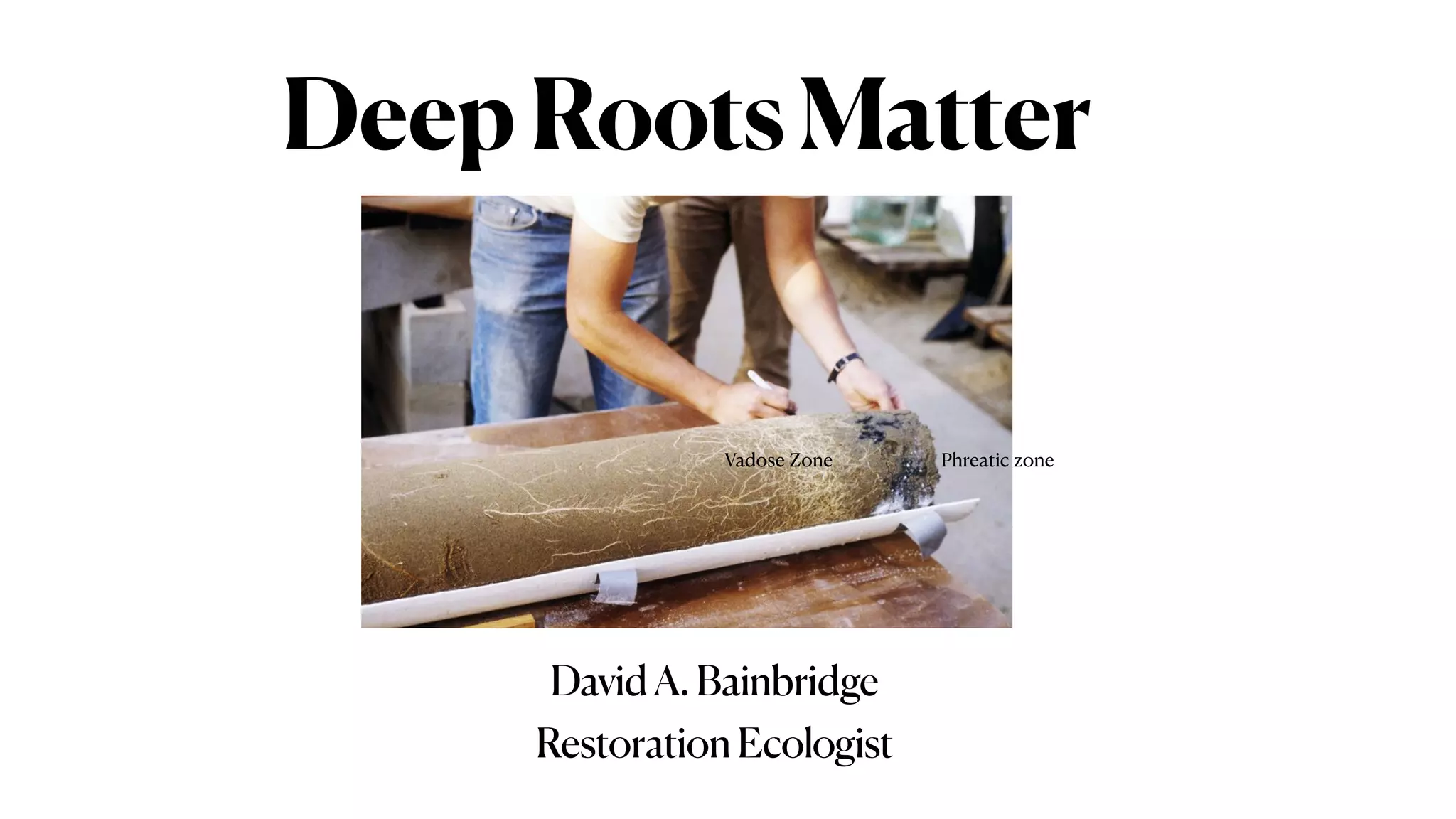
Vadose Zone Phreatic zone
Rootlivesmatter
• Mostofthetimeweignore
ourroots
• Wecan’tseethem
• Wedon’t knowthem
• But theyareimportant
Mycorrhizalfungi
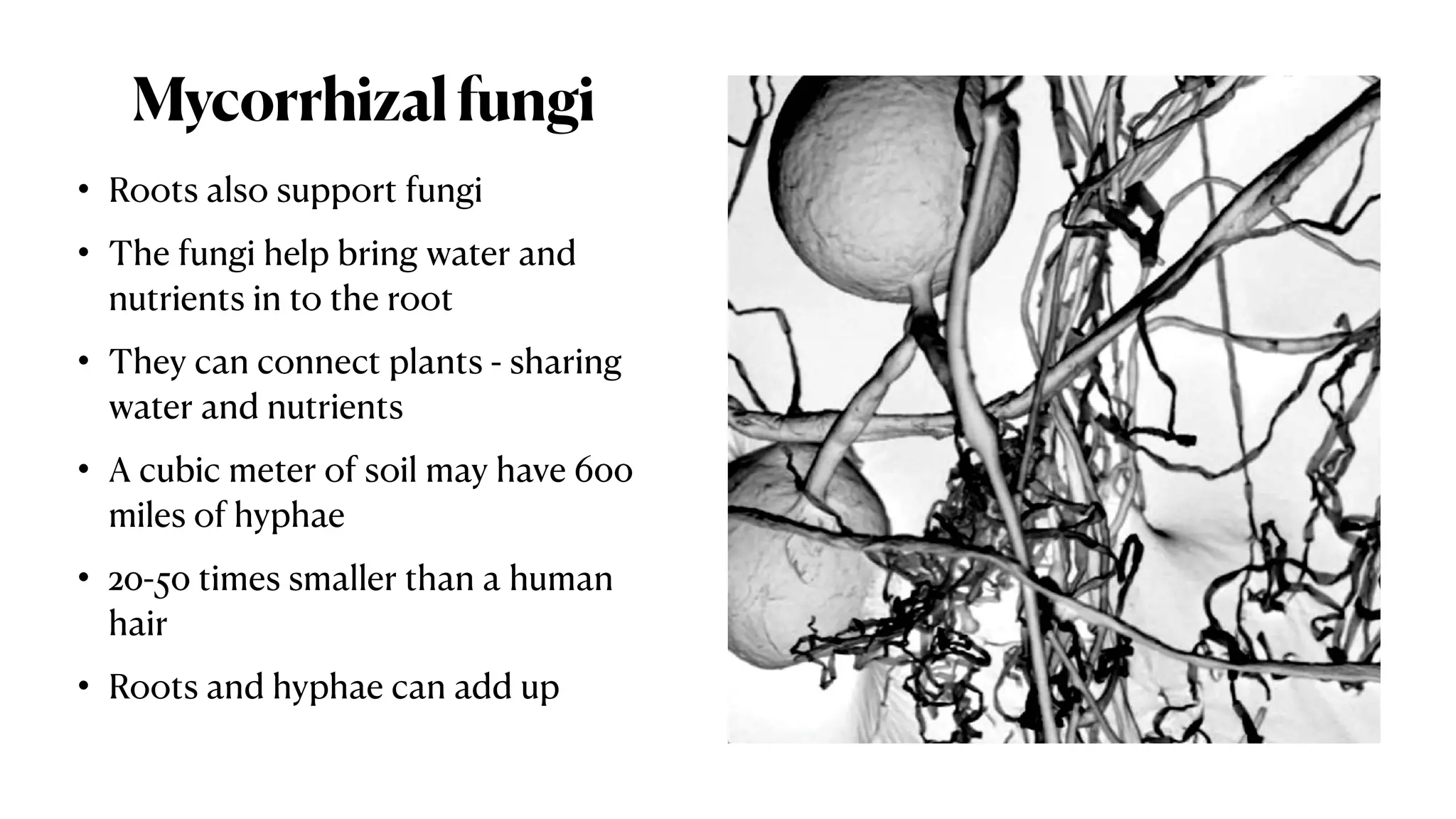
• Roots also support fungi
• The fungi help bring water and
nutrients in to the root
• They can connect plants - sharing
water and nutrients
• A cubic meter of soil may have 600
miles of hyphae
• 20-50 times smaller than a human
hair
• Roots and hyphae can add up
Interconnection
• Connections may be critical in arid
environments
• Mature trees can help support
seedlings
• Here is a connection map for two
species of fungi from an older oak
tree to other plants
• As far as 60 feet away from host
Hyphaeasrootaids
• The threadsof hyphaeactas
micro-roots
• Theycancollectandmovewaterand
nutrients
• Smallenoughto penetratetinycracksin
manyrocktypes- evengranite
• Criticalinaridzones
• Hereanoaktreerootwithhyphae
Mike Allen UC Riverside
Howdeep?
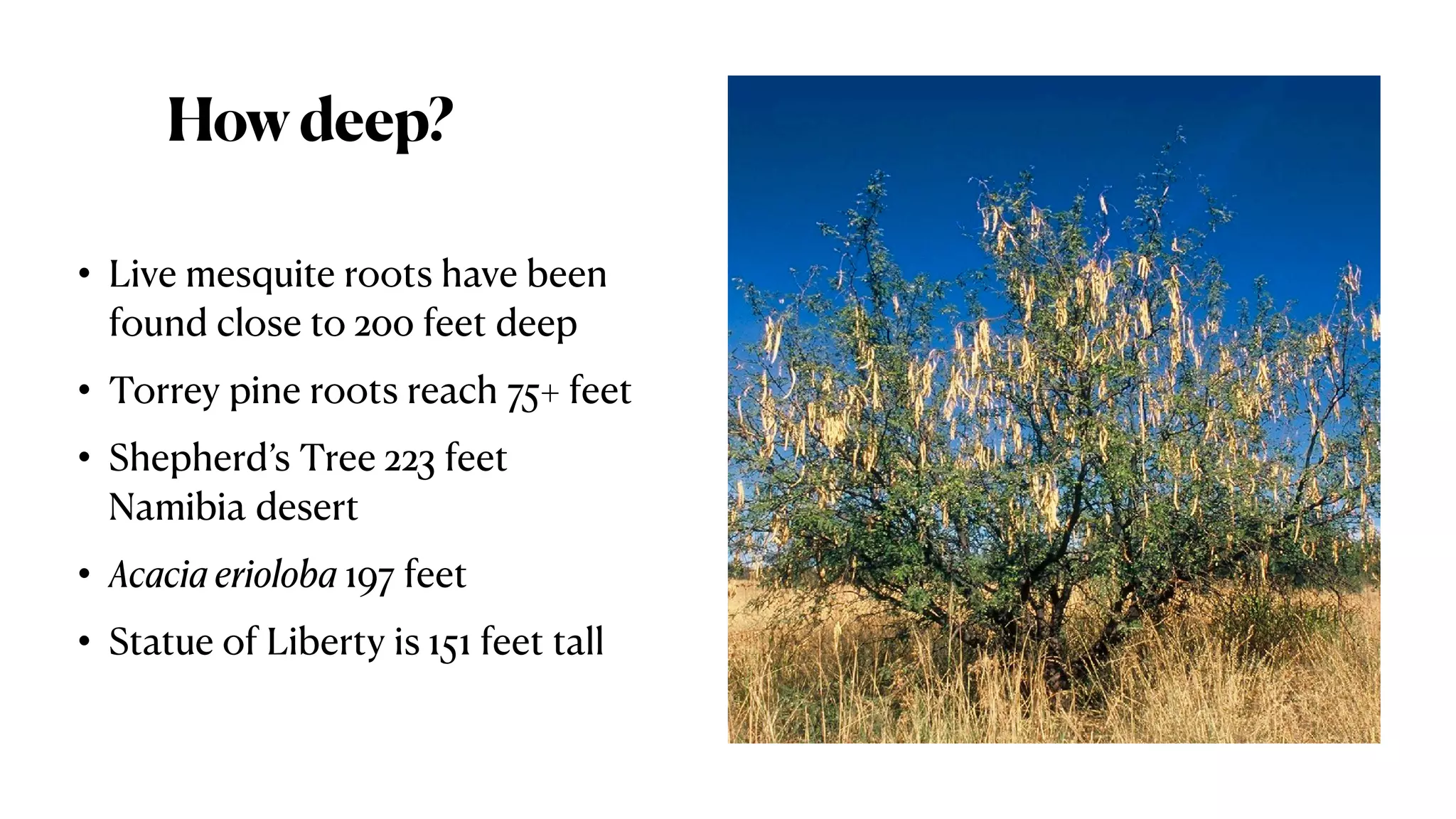
• Live mesquite roots have been
found close to 200 feet deep
• Torrey pine roots reach 75+ feet
• Shepherd’s Tree 223 feet
Namibia desert
• Acacia erioloba 197 feet
• Statue of Liberty is 151 feet tall
Rootstudies
• I studied roots of mesquite
seedlings in the low desert
• They are adapted to germinate
after a flood event and to stay
ahead of the drying front
• Dominant tap roots go deep
fast
• I also learned that digging in the
desert soil can lead to Valley
Fever - a lung disease from fungi
Field
Taproot
• Notethevigorousgrowth
• Fewminorroots
• Maximumrootgrowthwasat
108°F forVelvetMesquite
Seedling
Two years
Deepstudies
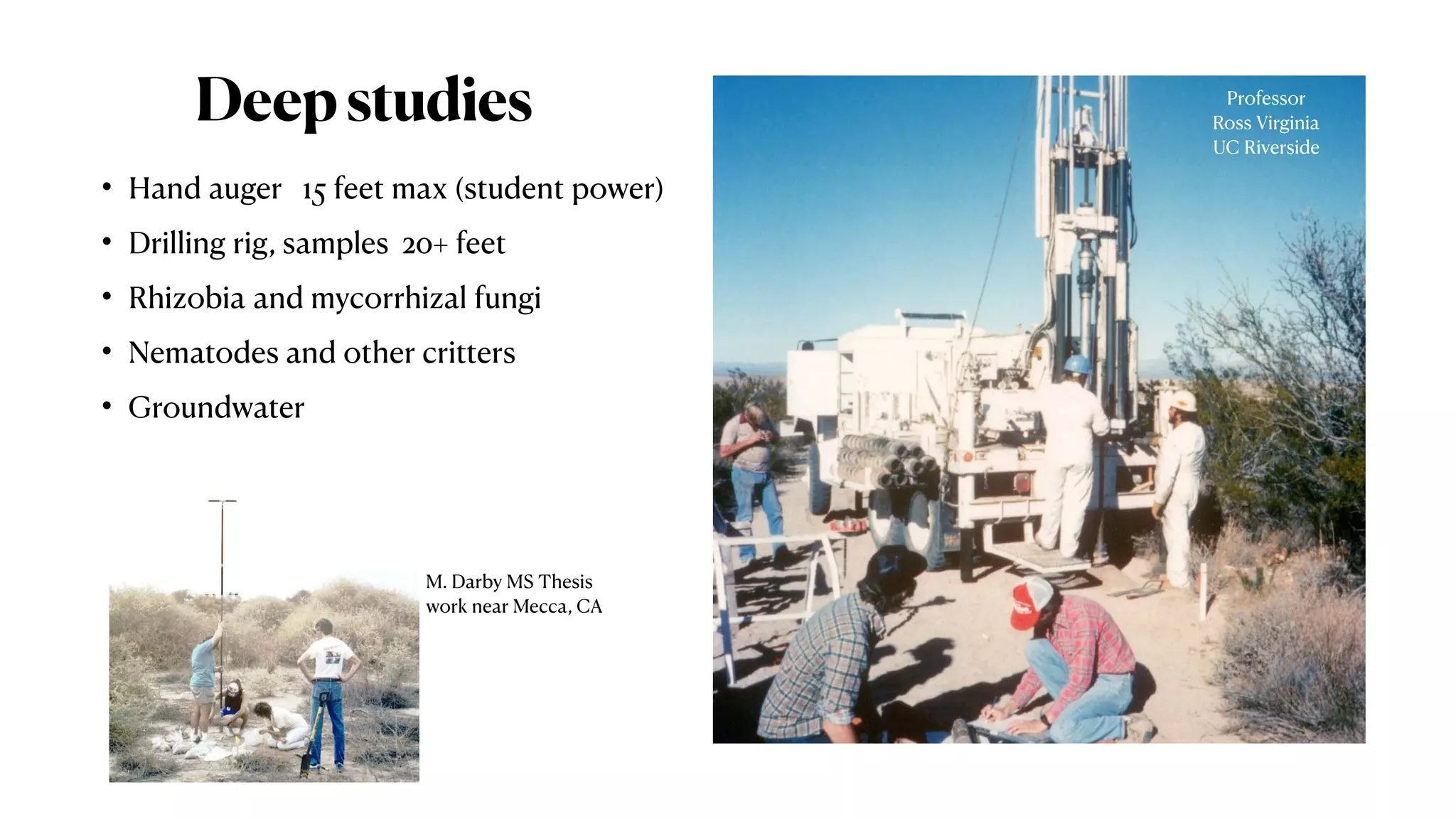
• Hand auger 15 feet max (student power)
• Drilling rig, samples 20+ feet
• Rhizobia and mycorrhizal fungi
• Nematodes and other critters
• Groundwater
M. Darby MS Thesis
work near Mecca, CA
Professor
Ross Virginia
UC Riverside
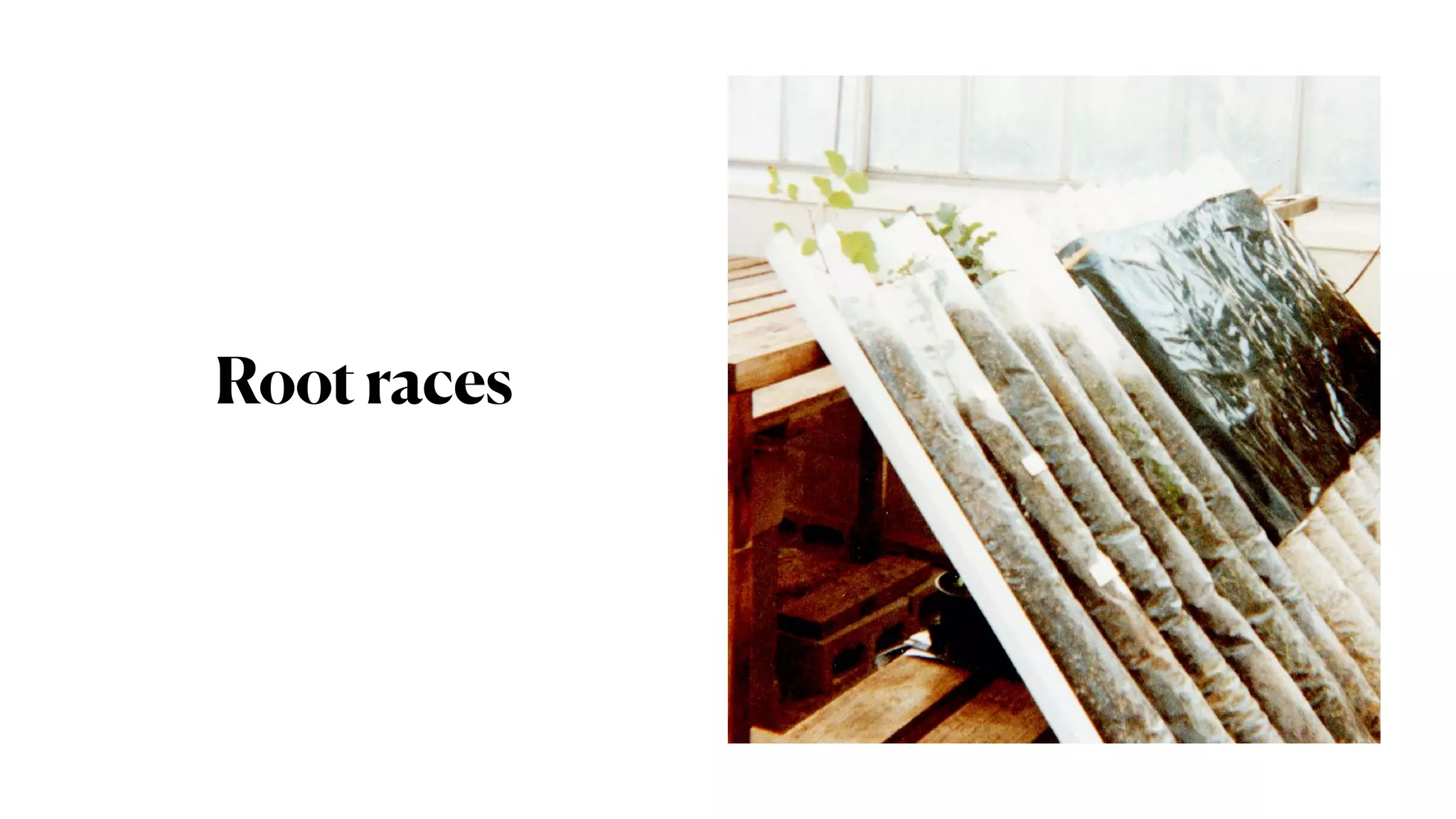
Labstudies
• Rootsareeasiertostudyinthelab
• Asoilfilledclearplasticfilmtube
• Restinginaguttersection
• Thetube is shaded
• Rotatedtomeasuregrowth
Rootraces
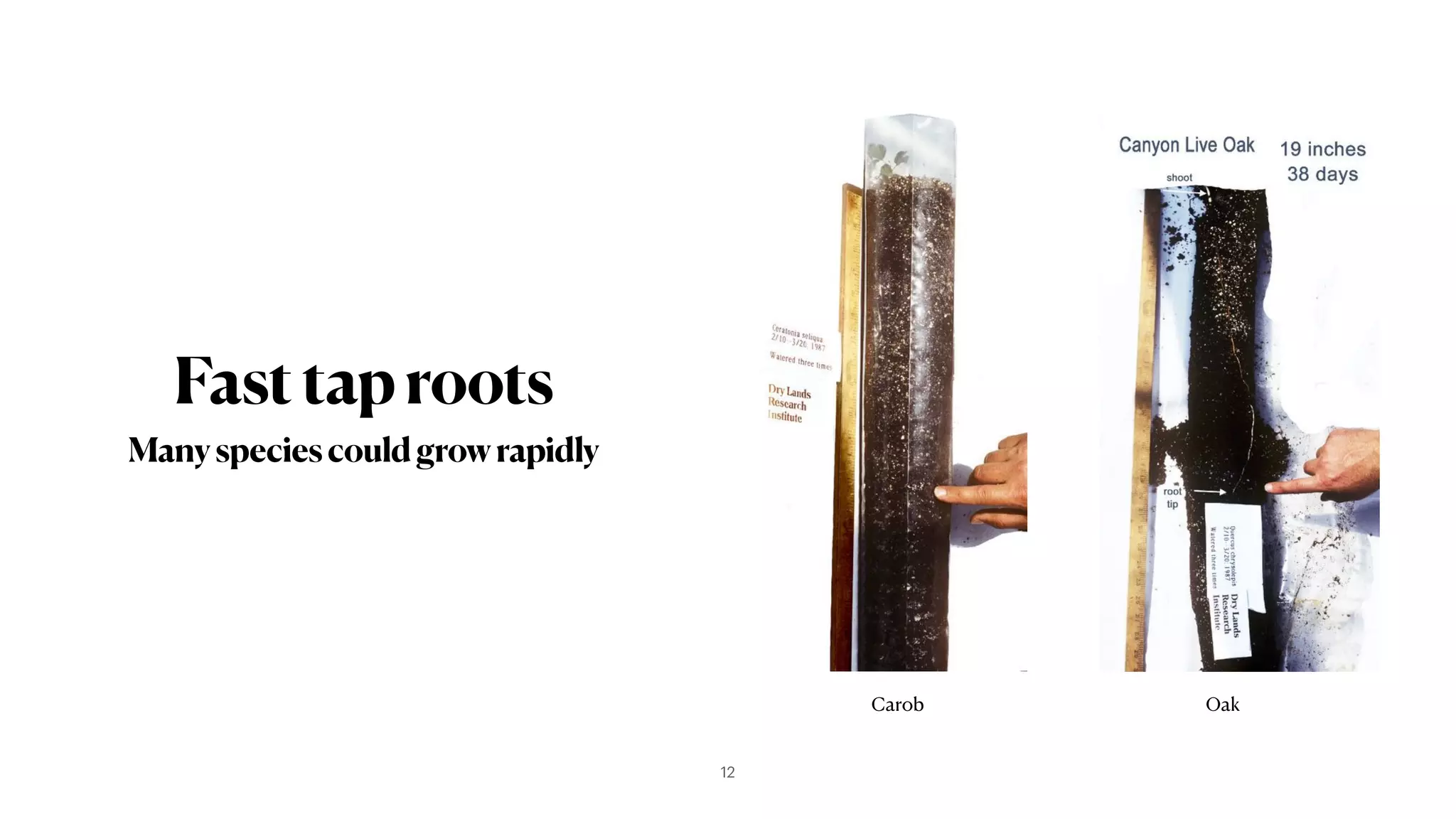
Fasttaproots
Manyspeciescouldgrowrapidly
Carob Oak
12
Allocation
Rootsnotshoots
• Roots matter
• Shoots are less critical
• Root:shoot ratio mesquite 5:1 - 10:1
• Most forest trees in temperate
areas are more likely 1:3 or even 1:5
• Nursery plants are often 1:20
• Guided development of new
containers
SOIL SURFACE
CM
Root-Shoot
• Few good studies of roots
• Difficult and Costly
• Many fail to go beyond 2 or 3 feet
• The global average here was for all
good studies the researchers could
find
• Mesquite estimates by author, after
Geesing and Felker
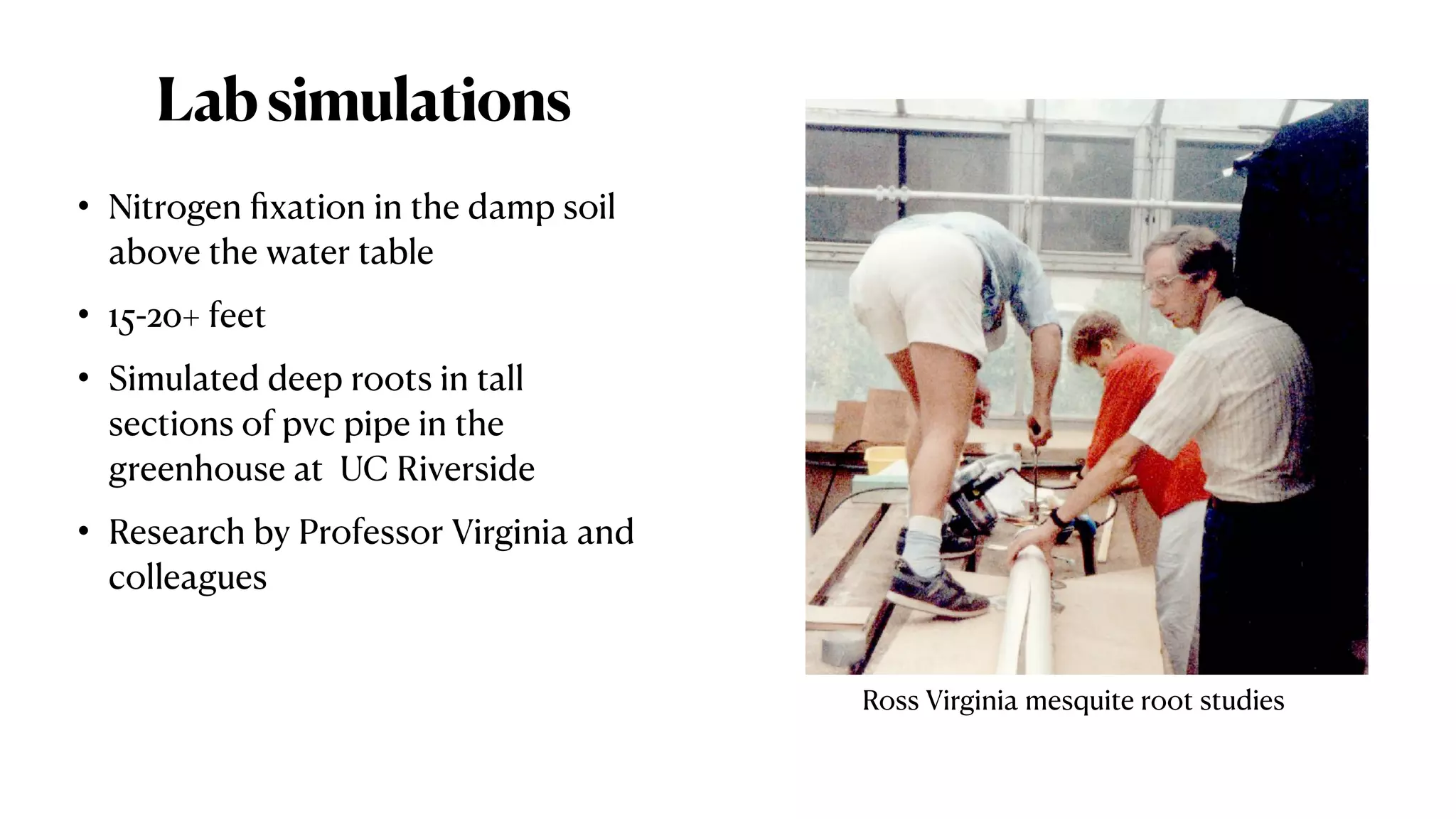
Labsimulations
• Nitrogen fixation in the damp soil
above the water table
• 15-20+ feet
• Simulated deep roots in tall
sections of pvc pipe in the
greenhouse at UC Riverside
• Research by Professor Virginia and
colleagues
Ross Virginia mesquite root studies
Lessonslearned
• Deep containersneededtogrowtap root
dominateddesert plants
• Historicallylathboxorbamboosplit
• PVC pipesplit
• Bob MoonatJoshuaTreedevelopedTall
Pots (32” x 6”)
• StueweandSonsmakeseveralexcellent
containers
MS Thesis near Mecca - Marcy Darby
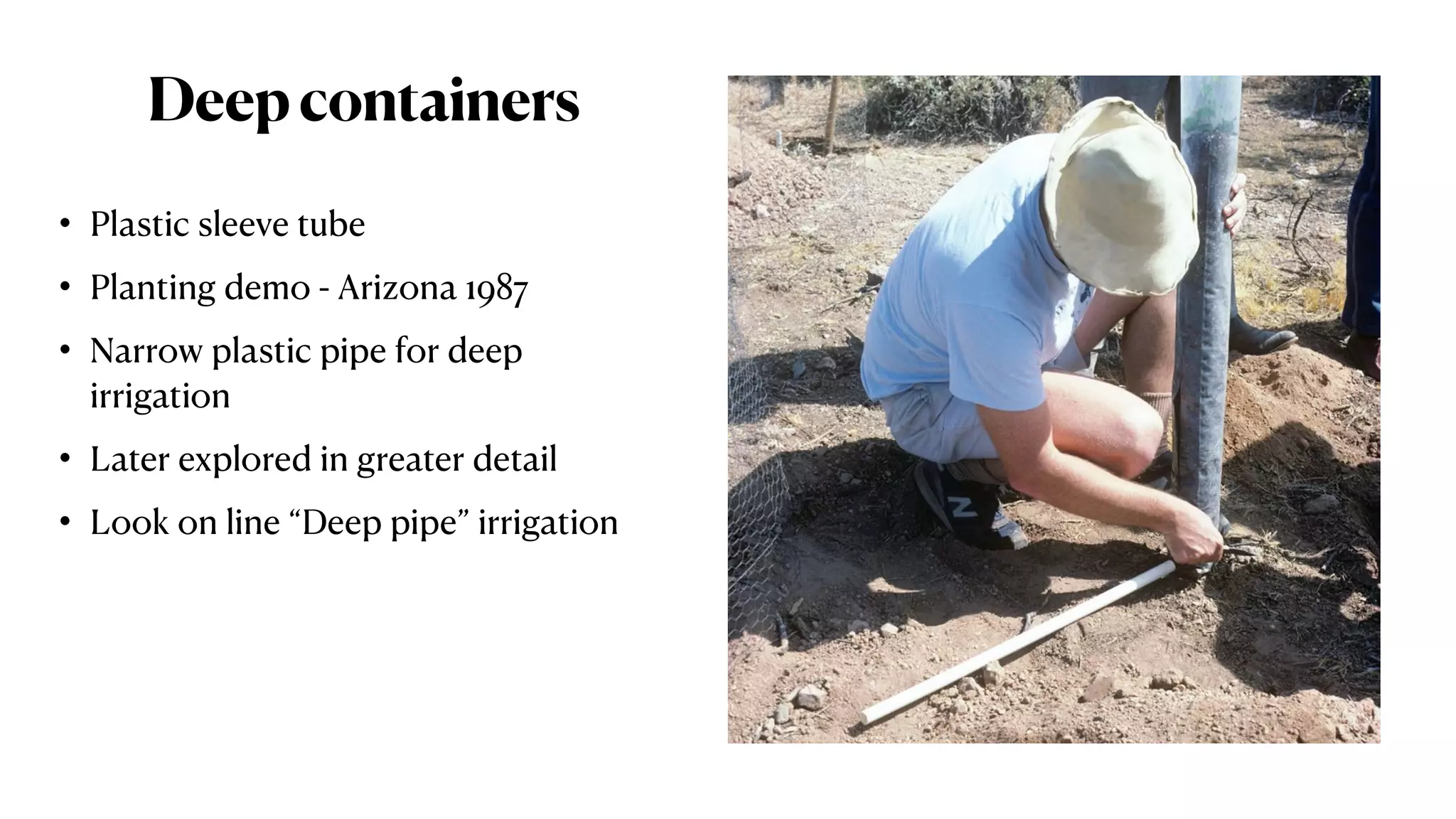
Deepcontainers
• Plastic sleeve tube
• Planting demo - Arizona 1987
• Narrow plastic pipe for deep
irrigation
• Later explored in greater detail
• Look on line “Deep pipe” irrigation
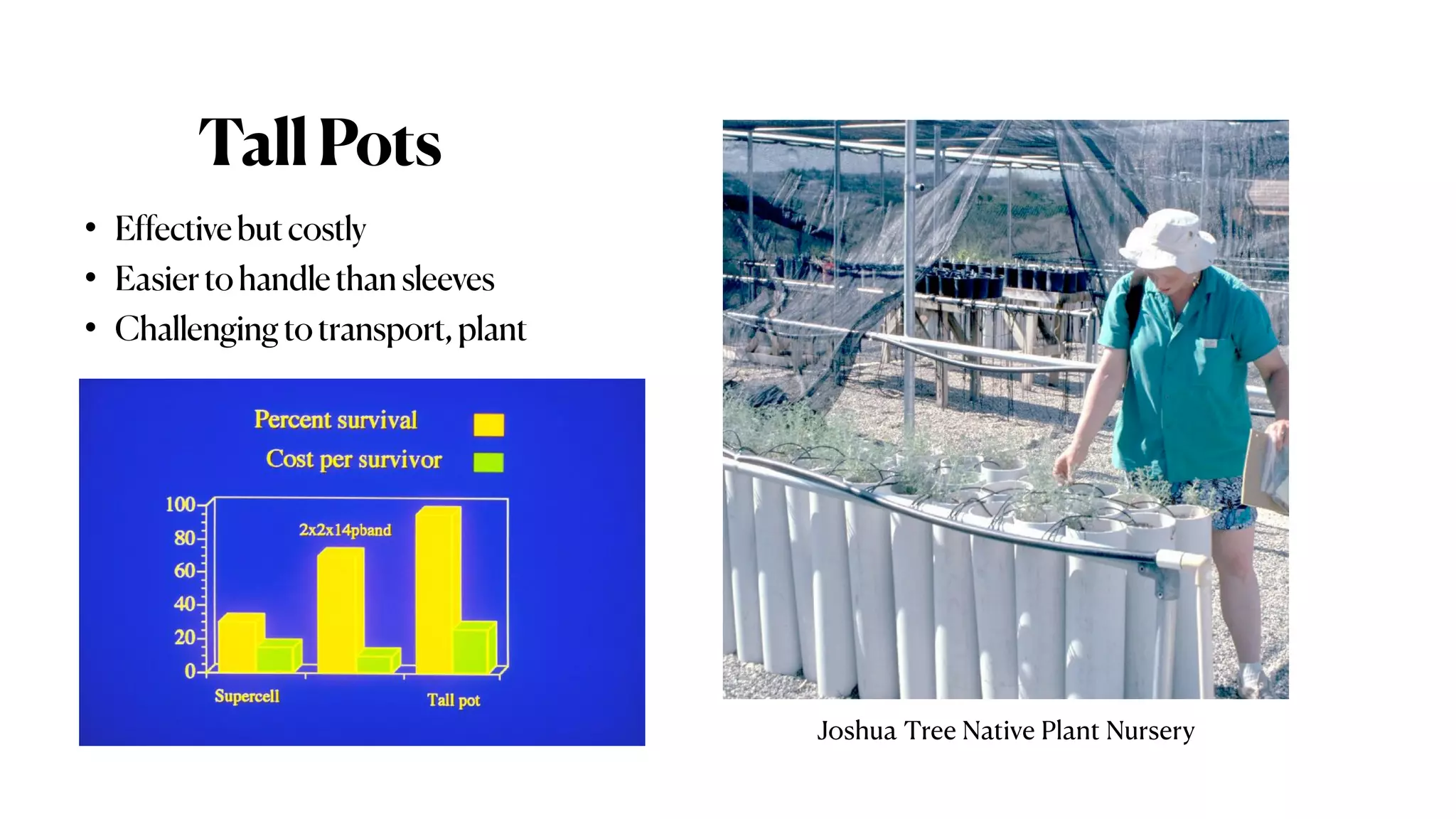
TallPots
• Effectivebutcostly
• Easiertohandlethan sleeves
• Challengingtotransport,plant
Joshua Tree Native Plant Nursery
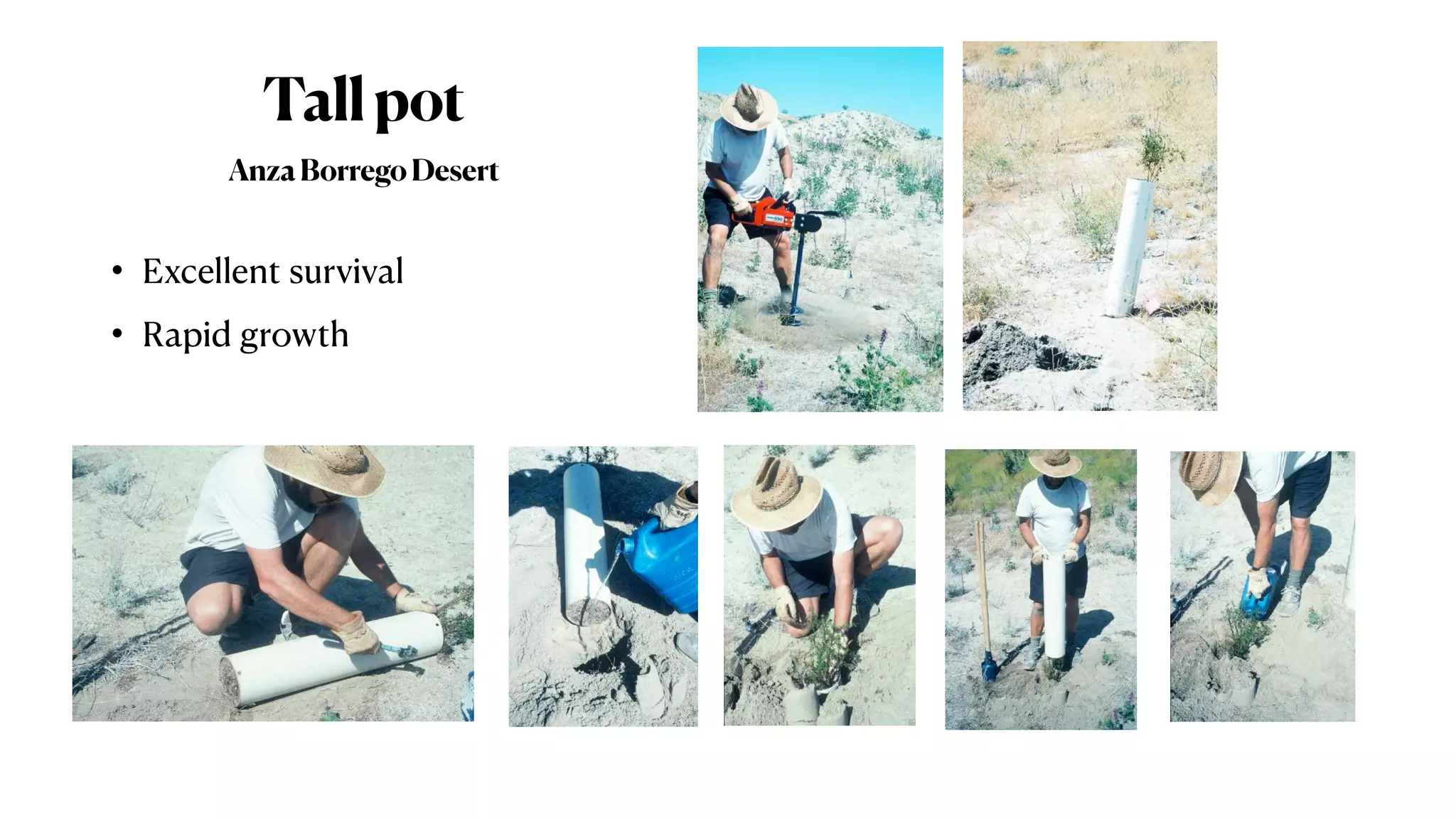
Tallpot
AnzaBorregoDesert
• Excellent survival
• Rapid growth
Tall Pots
Later we cut many
down to 16” and
called them half-highs
Deepots
• Inexpensive
• Can be used for deep pipe irrigation
after planting
• Tippy so build rack or pack boxes
carefully
stuewe.com
(541) 757-7798
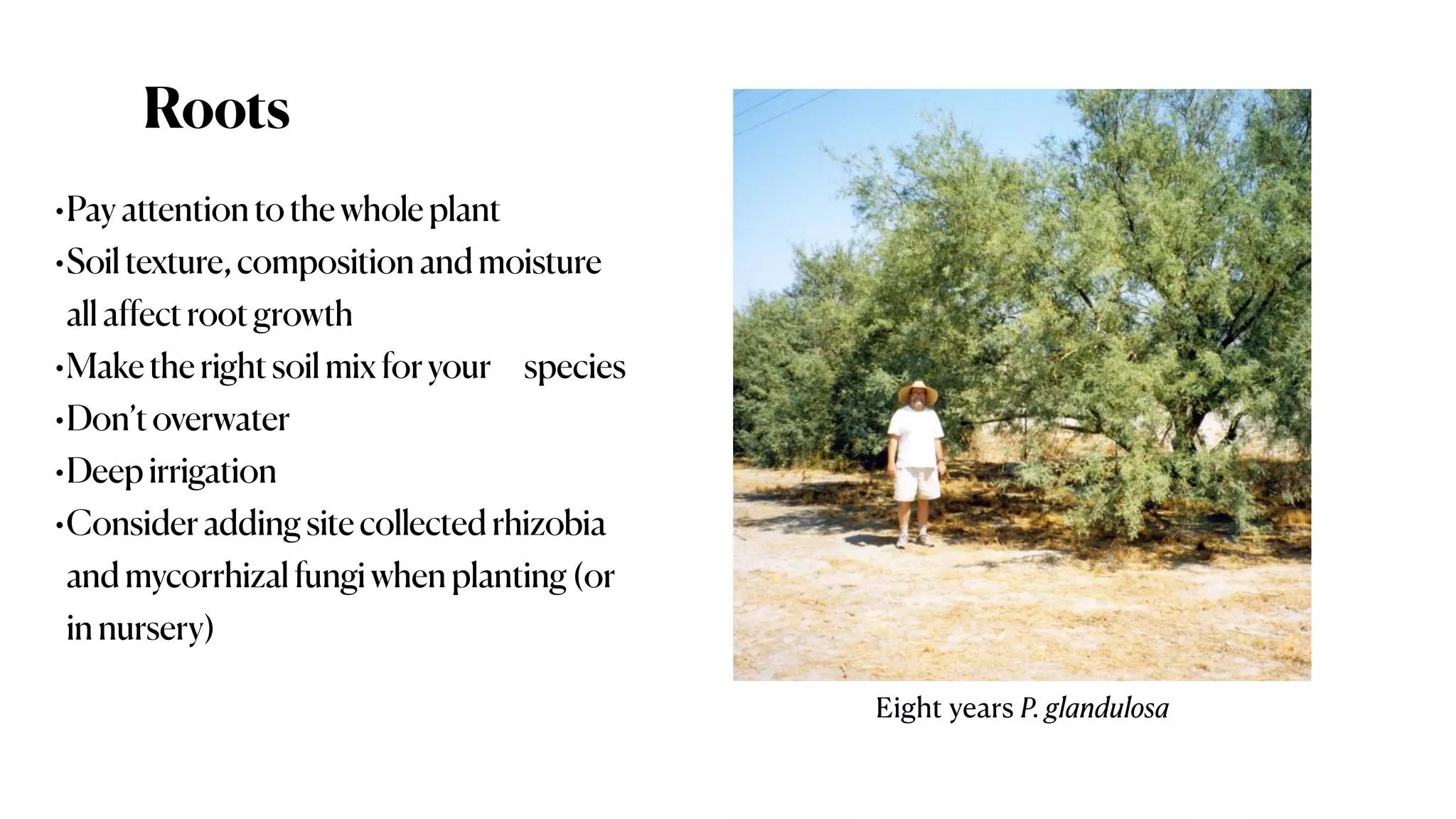
Roots
•Pay attentionto thewholeplant
•Soiltexture,compositionandmoisture
all affectrootgrowth
•Make therightsoilmix foryour species
•Don’toverwater
•Deep irrigation
•Consideraddingsite collectedrhizobia
andmycorrhizalfungiwhenplanting(or
innursery)
Eight years P. glandulosa
Rootstudies
• Labandgreenhouse
• Digging
• Installingaccess tubes with holes
• Videologging fromtransparenttubes
• Radioactivetagging
• Butmanystudiesareneededtobetter
understand carbonallocation
• Hydraulic liftofroots
Root studies in Thailand
Maeght
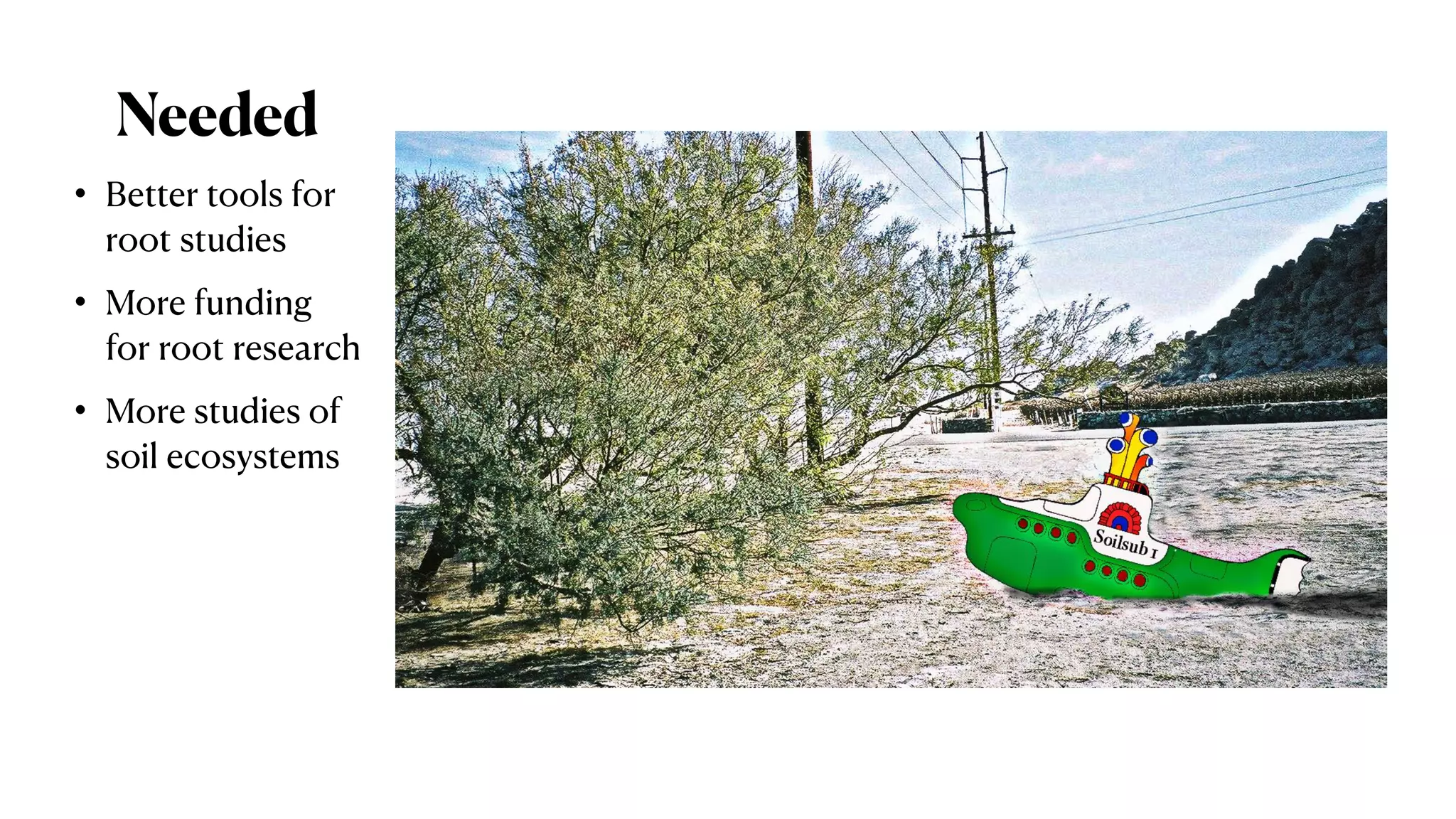
Needed
• Better tools for
root studies
• More funding
for root research
• More studies of
soil ecosystems
ReadingRoots
• Böhm W. 1979. Methods of Studying Root Systems. Springer, Berlin
• Maeght, J. L., B. Rewald and A. Pierret. 2013. How to study deep roots—and why it matters. Frontiers
in Plant Science. 4(299):1-14.
• Bainbridge, D. A. 2007. A Guide for Desert and Dryland Restoration. Island Press.
• Allen, M. F. 2007. Mycorrhizal fungi: highways for water and nutrients in arid soils. Vadose Zone
Journal. 6(2):291-297.
• Virginia R. A., M. B. Jenkins, W. M. Jarrell. 1986. Depth of root symbiont occurrence in soil. Biology
and Fertility of Soils. 2:127–130.
• Eilers K. G., S. Debenport, S. Anderson and N. Fierer. 2012. Digging deeper to find unique microbial
communities: the strong effect of depth on the structure of bacterial and archaeal communities in
soil. Soil Biology and Biochemistry. 50:58-65.
• More information at: www.bepress.com/david_a_bainbridge/

Deep Roots Matter

  • 1.
  • 2.
  • 3.
    Mycorrhizalfungi • Roots alsosupport fungi • The fungi help bring water and nutrients in to the root • They can connect plants - sharing water and nutrients • A cubic meter of soil may have 600 miles of hyphae • 20-50 times smaller than a human hair • Roots and hyphae can add up
  • 4.
    Interconnection • Connections maybe critical in arid environments • Mature trees can help support seedlings • Here is a connection map for two species of fungi from an older oak tree to other plants • As far as 60 feet away from host
  • 5.
    Hyphaeasrootaids • The threadsofhyphaeactas micro-roots • Theycancollectandmovewaterand nutrients • Smallenoughto penetratetinycracksin manyrocktypes- evengranite • Criticalinaridzones • Hereanoaktreerootwithhyphae Mike Allen UC Riverside
  • 6.
    Howdeep? • Live mesquiteroots have been found close to 200 feet deep • Torrey pine roots reach 75+ feet • Shepherd’s Tree 223 feet Namibia desert • Acacia erioloba 197 feet • Statue of Liberty is 151 feet tall
  • 7.
    Rootstudies • I studiedroots of mesquite seedlings in the low desert • They are adapted to germinate after a flood event and to stay ahead of the drying front • Dominant tap roots go deep fast • I also learned that digging in the desert soil can lead to Valley Fever - a lung disease from fungi Field
  • 8.
    Taproot • Notethevigorousgrowth • Fewminorroots •Maximumrootgrowthwasat 108°F forVelvetMesquite Seedling Two years
  • 9.
    Deepstudies • Hand auger15 feet max (student power) • Drilling rig, samples 20+ feet • Rhizobia and mycorrhizal fungi • Nematodes and other critters • Groundwater M. Darby MS Thesis work near Mecca, CA Professor Ross Virginia UC Riverside
  • 10.
    Labstudies • Rootsareeasiertostudyinthelab • Asoilfilledclearplasticfilmtube •Restinginaguttersection • Thetube is shaded • Rotatedtomeasuregrowth
  • 11.
  • 12.
  • 13.
    Allocation Rootsnotshoots • Roots matter •Shoots are less critical • Root:shoot ratio mesquite 5:1 - 10:1 • Most forest trees in temperate areas are more likely 1:3 or even 1:5 • Nursery plants are often 1:20 • Guided development of new containers SOIL SURFACE CM
  • 14.
    Root-Shoot • Few goodstudies of roots • Difficult and Costly • Many fail to go beyond 2 or 3 feet • The global average here was for all good studies the researchers could find • Mesquite estimates by author, after Geesing and Felker
  • 15.
    Labsimulations • Nitrogen fixationin the damp soil above the water table • 15-20+ feet • Simulated deep roots in tall sections of pvc pipe in the greenhouse at UC Riverside • Research by Professor Virginia and colleagues Ross Virginia mesquite root studies
  • 16.
    Lessonslearned • Deep containersneededtogrowtaproot dominateddesert plants • Historicallylathboxorbamboosplit • PVC pipesplit • Bob MoonatJoshuaTreedevelopedTall Pots (32” x 6”) • StueweandSonsmakeseveralexcellent containers MS Thesis near Mecca - Marcy Darby
  • 17.
    Deepcontainers • Plastic sleevetube • Planting demo - Arizona 1987 • Narrow plastic pipe for deep irrigation • Later explored in greater detail • Look on line “Deep pipe” irrigation
  • 18.
    TallPots • Effectivebutcostly • Easiertohandlethansleeves • Challengingtotransport,plant Joshua Tree Native Plant Nursery
  • 19.
  • 20.
    Tall Pots Later wecut many down to 16” and called them half-highs
  • 21.
    Deepots • Inexpensive • Canbe used for deep pipe irrigation after planting • Tippy so build rack or pack boxes carefully stuewe.com (541) 757-7798
  • 22.
    Roots •Pay attentionto thewholeplant •Soiltexture,compositionandmoisture allaffectrootgrowth •Make therightsoilmix foryour species •Don’toverwater •Deep irrigation •Consideraddingsite collectedrhizobia andmycorrhizalfungiwhenplanting(or innursery) Eight years P. glandulosa
  • 23.
    Rootstudies • Labandgreenhouse • Digging •Installingaccess tubes with holes • Videologging fromtransparenttubes • Radioactivetagging • Butmanystudiesareneededtobetter understand carbonallocation • Hydraulic liftofroots Root studies in Thailand Maeght
  • 24.
    Needed • Better toolsfor root studies • More funding for root research • More studies of soil ecosystems
  • 25.
    ReadingRoots • Böhm W.1979. Methods of Studying Root Systems. Springer, Berlin • Maeght, J. L., B. Rewald and A. Pierret. 2013. How to study deep roots—and why it matters. Frontiers in Plant Science. 4(299):1-14. • Bainbridge, D. A. 2007. A Guide for Desert and Dryland Restoration. Island Press. • Allen, M. F. 2007. Mycorrhizal fungi: highways for water and nutrients in arid soils. Vadose Zone Journal. 6(2):291-297. • Virginia R. A., M. B. Jenkins, W. M. Jarrell. 1986. Depth of root symbiont occurrence in soil. Biology and Fertility of Soils. 2:127–130. • Eilers K. G., S. Debenport, S. Anderson and N. Fierer. 2012. Digging deeper to find unique microbial communities: the strong effect of depth on the structure of bacterial and archaeal communities in soil. Soil Biology and Biochemistry. 50:58-65. • More information at: www.bepress.com/david_a_bainbridge/