Deep Ocean: Extreme Environment By: Jim Fields
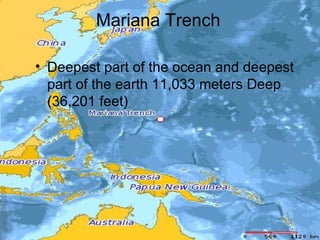
Mariana Trench Deepest part of the ocean and deepest part of the earth 11,033 meters Deep (36,201 feet)
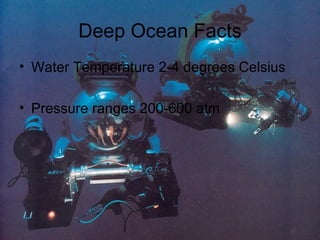
Deep Ocean Facts Water Temperature 2-4 degrees Celsius Pressure ranges 200-600 atm
Human Limitations 14.7 PSI ( pounds per square inch) a human weighs  Under water every 33 feet traveled another atmosphere is felt by the human diver (14.7 PSI) For example, 66 ft = 44.1 PSI Divers can withstand up to 3-4 atmospheres of pressure
Body Systems Affected Respiratory Muscular  Nervous
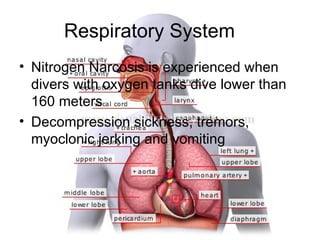
Respiratory System Nitrogen Narcosis is experienced when divers with oxygen tanks dive lower than 160 meters Decompression sickness, tremors, myoclonic jerking and vomiting
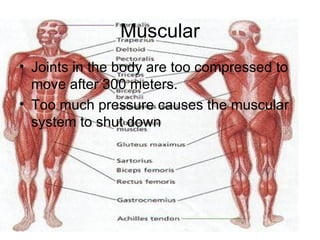
Muscular Joints in the body are too compressed to move after 300 meters. Too much pressure causes the muscular system to shut down
Nervous Nitrogen and Oxygen levels underwater can be toxic leading to tremors and or seizures underwater
Adaptations of Human Body The Buoyancy of the human body work to keep the head and body afloat to prevent drowning The body shivers to maintain homeostasis the muscles move rapidly to generate heat Enlarged eyes, Expandable Stomach absence of  Jaw
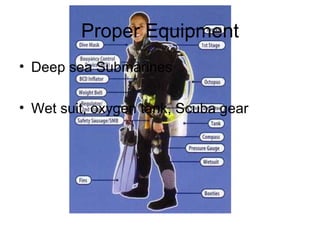
Proper Equipment Deep sea Submarines Wet suit, oxygen tank, Scuba gear

Deep Ocean

  • 1.
    Deep Ocean: ExtremeEnvironment By: Jim Fields
  • 2.
    Mariana Trench Deepestpart of the ocean and deepest part of the earth 11,033 meters Deep (36,201 feet)
  • 3.
    Deep Ocean FactsWater Temperature 2-4 degrees Celsius Pressure ranges 200-600 atm
  • 4.
    Human Limitations 14.7PSI ( pounds per square inch) a human weighs Under water every 33 feet traveled another atmosphere is felt by the human diver (14.7 PSI) For example, 66 ft = 44.1 PSI Divers can withstand up to 3-4 atmospheres of pressure
  • 5.
    Body Systems AffectedRespiratory Muscular Nervous
  • 6.
    Respiratory System NitrogenNarcosis is experienced when divers with oxygen tanks dive lower than 160 meters Decompression sickness, tremors, myoclonic jerking and vomiting
  • 7.
    Muscular Joints inthe body are too compressed to move after 300 meters. Too much pressure causes the muscular system to shut down
  • 8.
    Nervous Nitrogen andOxygen levels underwater can be toxic leading to tremors and or seizures underwater
  • 9.
    Adaptations of HumanBody The Buoyancy of the human body work to keep the head and body afloat to prevent drowning The body shivers to maintain homeostasis the muscles move rapidly to generate heat Enlarged eyes, Expandable Stomach absence of Jaw
  • 10.
    Proper Equipment Deepsea Submarines Wet suit, oxygen tank, Scuba gear