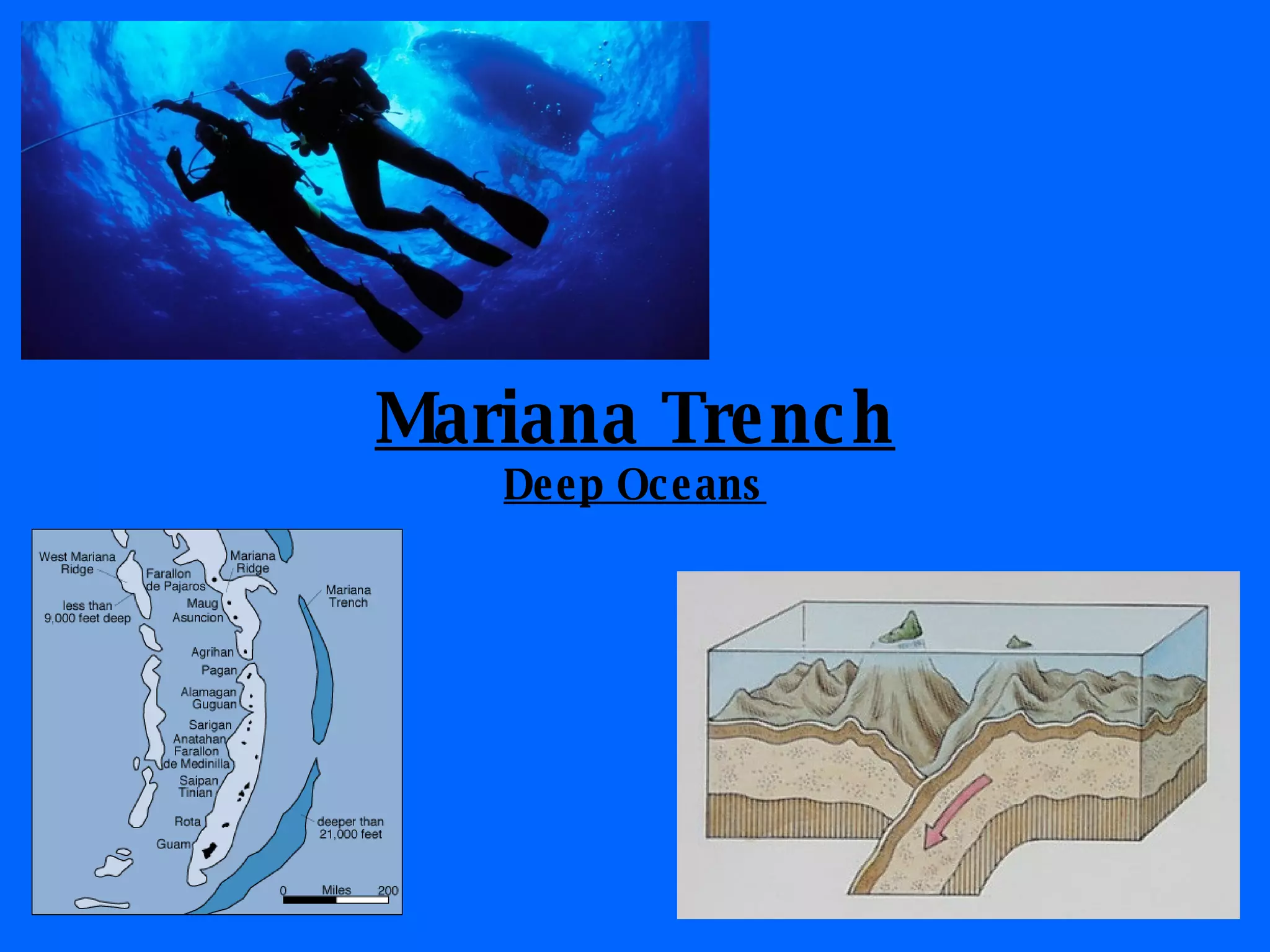
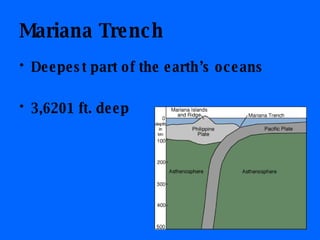
Mariana Trench Deep Oceans
Mariana Trench Deepest part of the earth’s oceans 3,6201 ft. deep
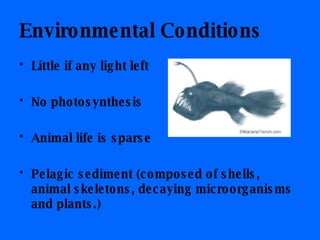
Environmental Conditions Little if any light left No photosynthesis Animal life is sparse Pelagic sediment (composed of shells, animal skeletons, decaying microorganisms and plants.)
Environmental Conditions cnt.’d. Temperature decreases with increasing depth 3-4 degrees Celsius at 6,600 feet of water
Maximum Time Humans Can Cope Control over heart rate & other bodily functions Umberto Pelizzari (5 min/200 feet) Diving Graph
Three Body Systems Most Affected/their reactions Respiratory (or pulmonary) system Cardiovascular (or circulatory) system Ears and sinuses
Respiratory (or pulmonary) system Breathes in oxygen while submerged into the water Lungs become over pressurized (tear)  Air enters tissue & blood stream.  Cause rupture of alveoli and capillaries, mixing blood & air into the lungs, which can then lead to person coughing up blood.
Cardiovascular (or circulatory) system Carotid-sinus receptors Monitor blood pressure .  Less blood flows to the brain .  Symptoms are discomfort, light-headedness and eventually loss of consciousness .
Ears and sinuses Ears, sinuses, or teeth   Pressure increases and the middle ear or sinuses are “squeezed” under pressure .  Squeezing your nose and breathing out .  Sudden pain and onset to the ear
Proper Clothing & Special Equipment Required Diving Suit Breathing Apparatus Surface Supplied Equipment

Mariana Trench

  • 1.
  • 2.
    Mariana Trench Deepestpart of the earth’s oceans 3,6201 ft. deep
  • 3.
    Environmental Conditions Littleif any light left No photosynthesis Animal life is sparse Pelagic sediment (composed of shells, animal skeletons, decaying microorganisms and plants.)
  • 4.
    Environmental Conditions cnt.’d.Temperature decreases with increasing depth 3-4 degrees Celsius at 6,600 feet of water
  • 5.
    Maximum Time HumansCan Cope Control over heart rate & other bodily functions Umberto Pelizzari (5 min/200 feet) Diving Graph
  • 6.
    Three Body SystemsMost Affected/their reactions Respiratory (or pulmonary) system Cardiovascular (or circulatory) system Ears and sinuses
  • 7.
    Respiratory (or pulmonary)system Breathes in oxygen while submerged into the water Lungs become over pressurized (tear) Air enters tissue & blood stream. Cause rupture of alveoli and capillaries, mixing blood & air into the lungs, which can then lead to person coughing up blood.
  • 8.
    Cardiovascular (or circulatory)system Carotid-sinus receptors Monitor blood pressure . Less blood flows to the brain . Symptoms are discomfort, light-headedness and eventually loss of consciousness .
  • 9.
    Ears and sinusesEars, sinuses, or teeth Pressure increases and the middle ear or sinuses are “squeezed” under pressure . Squeezing your nose and breathing out . Sudden pain and onset to the ear
  • 10.
    Proper Clothing &Special Equipment Required Diving Suit Breathing Apparatus Surface Supplied Equipment