QUS 3205
ESTIMATING 1:
DECLINING BALANCE METHOD
PRESENTERS:
CHAN WING LAM
CHAN ZUO YI
CHUA CHEN YEW
LAU KAR CHUN
LIM PHOOI MUN
Declining Balance Method
• Refers to one of the several methods of allocating the cost of an asset over its
expected lifetime
• A depreciation technique where a constant percentage is applied to the book value of
an asset.
• Results in larger depreciation amounts in the earlier years of an asset’s useful life and
progressively lower amounts in later years.
• However, the book value of the asset can never be lower than its salvage value.
• Adjustments need to be made to the final year of depreciation to prevent the book
value from falling below the asset’s salvage value.
Calculation Method for
Declining Balance Method of depreciation
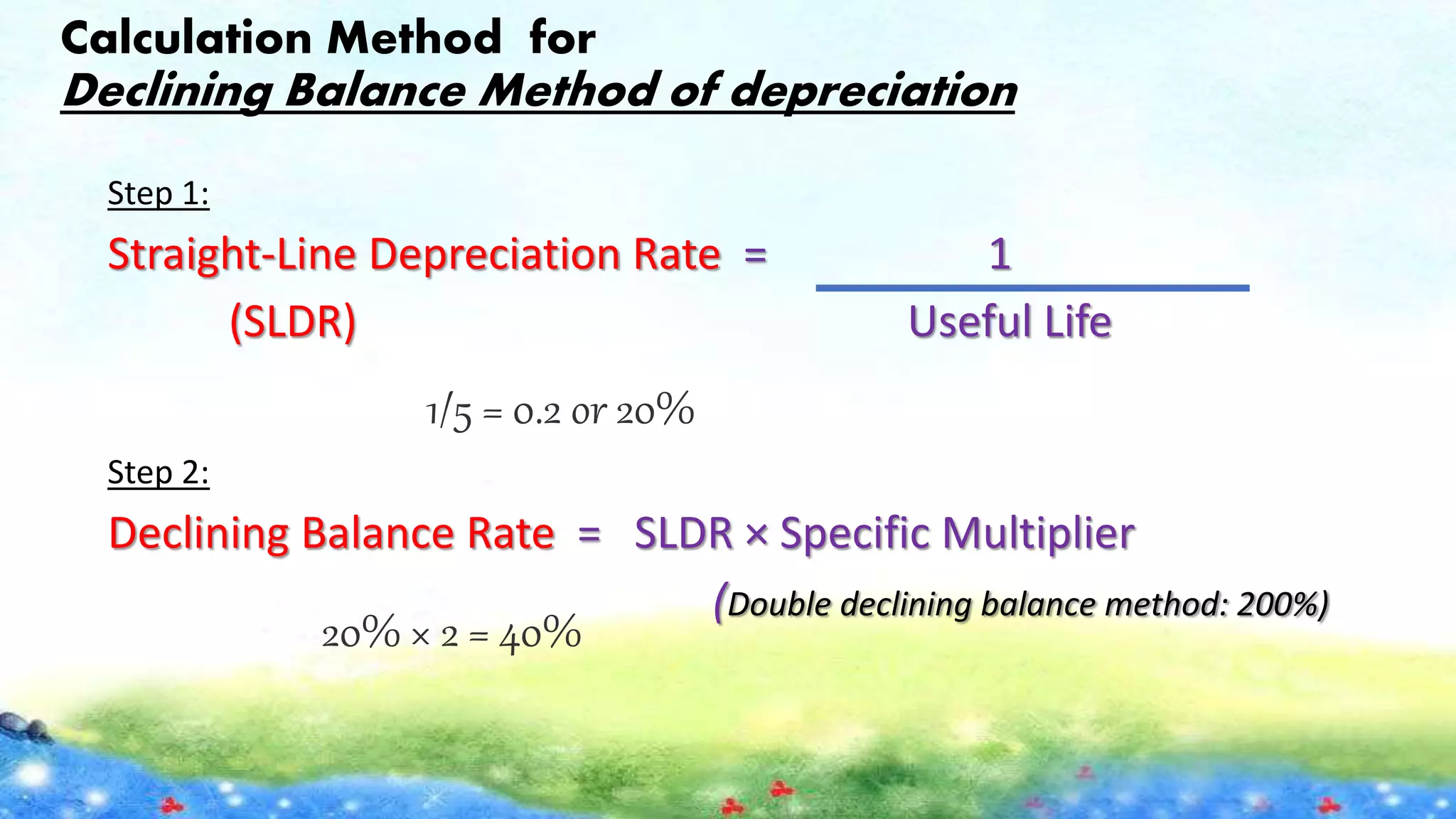
Step 1:
Straight-Line Depreciation Rate = 1
(SLDR) Useful Life
Step 2:
Declining Balance Rate = SLDR × Specific Multiplier
(Double declining balance method: 200%)
1/5 = 0.2 or 20%
20% × 2 = 40%
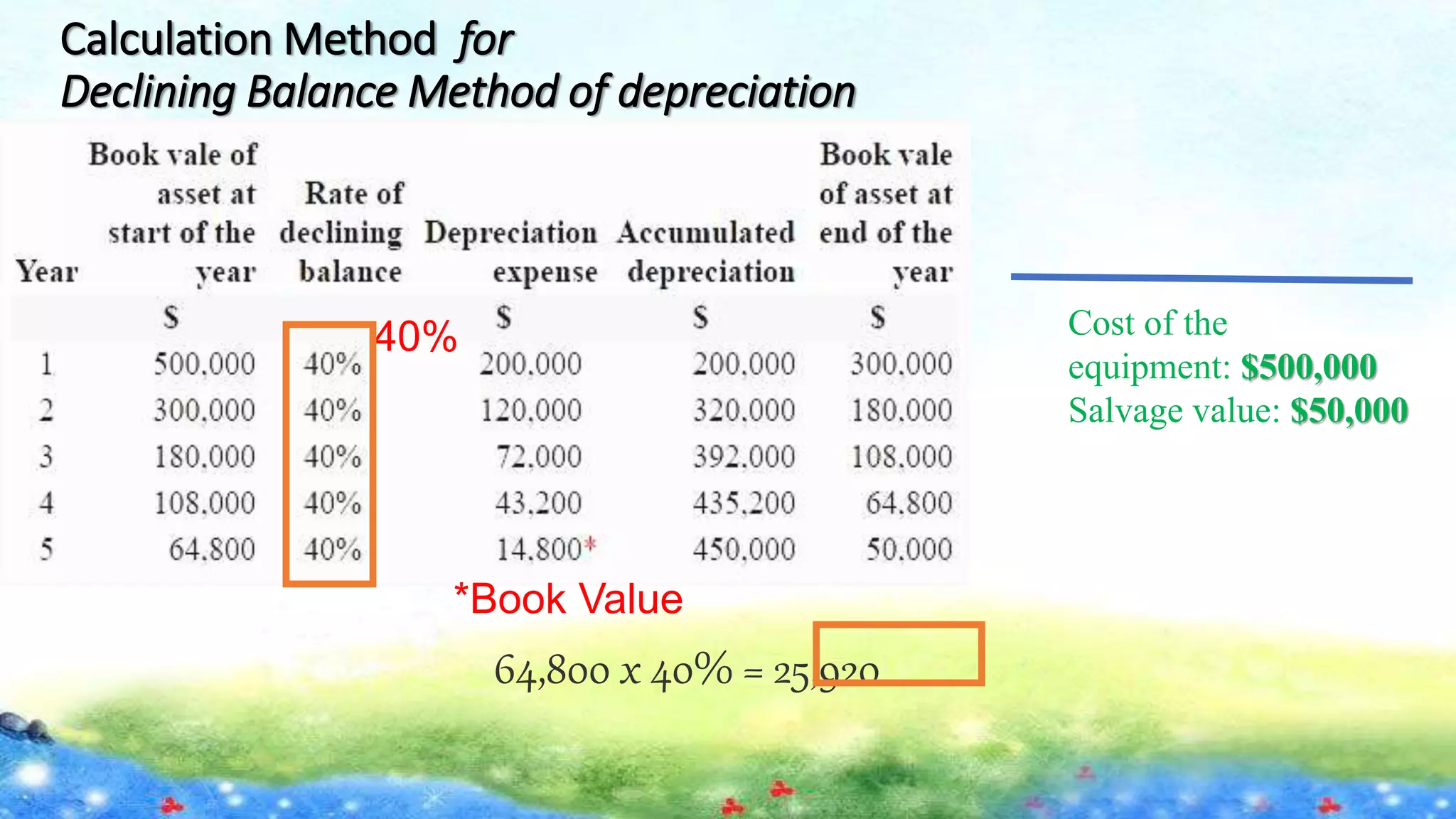
Calculation Method for
Declining Balance Method of depreciation
40% Cost of the
equipment: $500,000
Salvage value: $50,000
64,800 x 40% = 25,920
*Book Value
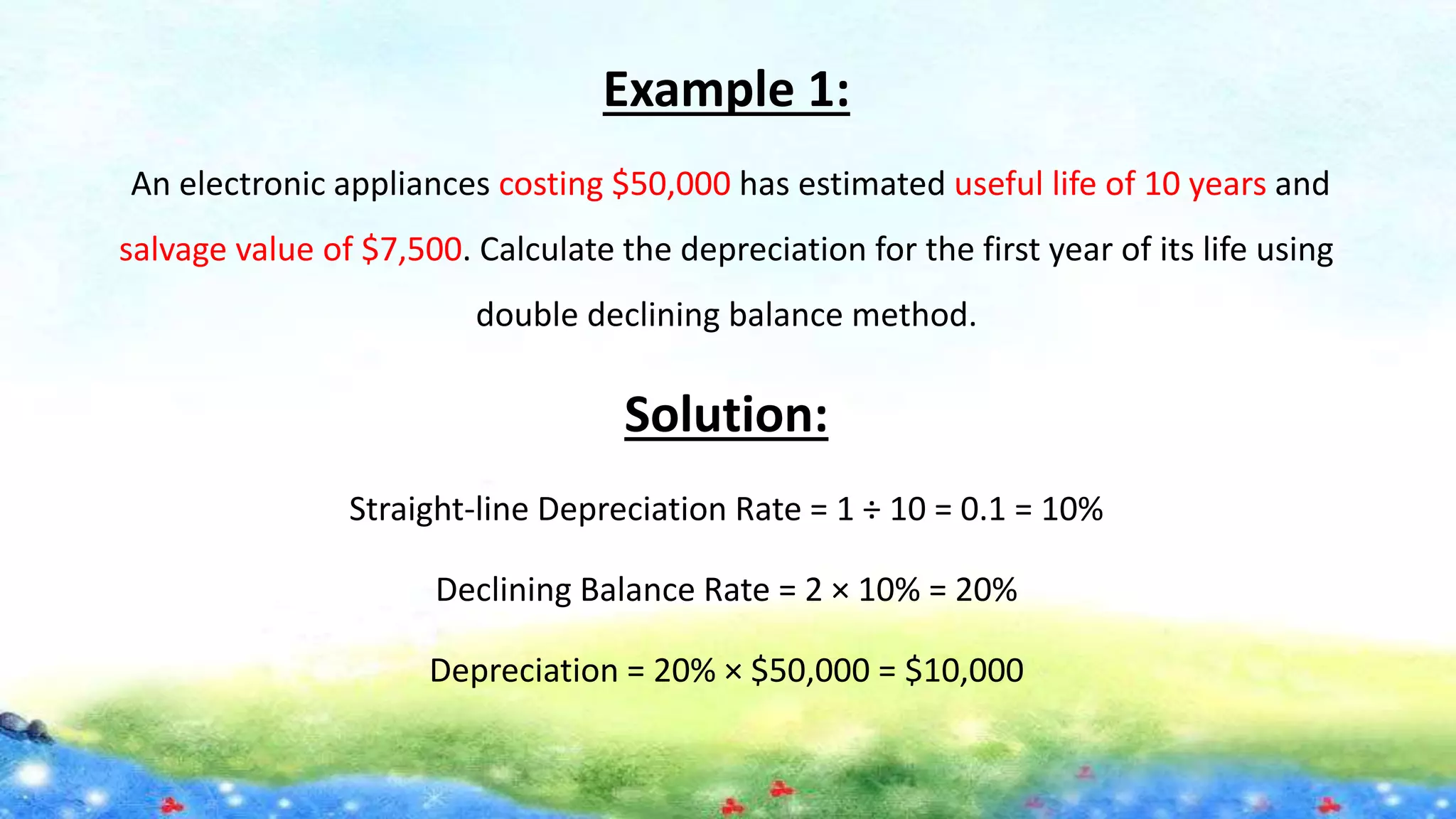
Example 1:
An electronic appliances costing $50,000 has estimated useful life of 10 years and
salvage value of $7,500. Calculate the depreciation for the first year of its life using
double declining balance method.
Solution:
Straight-line Depreciation Rate = 1 ÷ 10 = 0.1 = 10%
Declining Balance Rate = 2 × 10% = 20%
Depreciation = 20% × $50,000 = $10,000
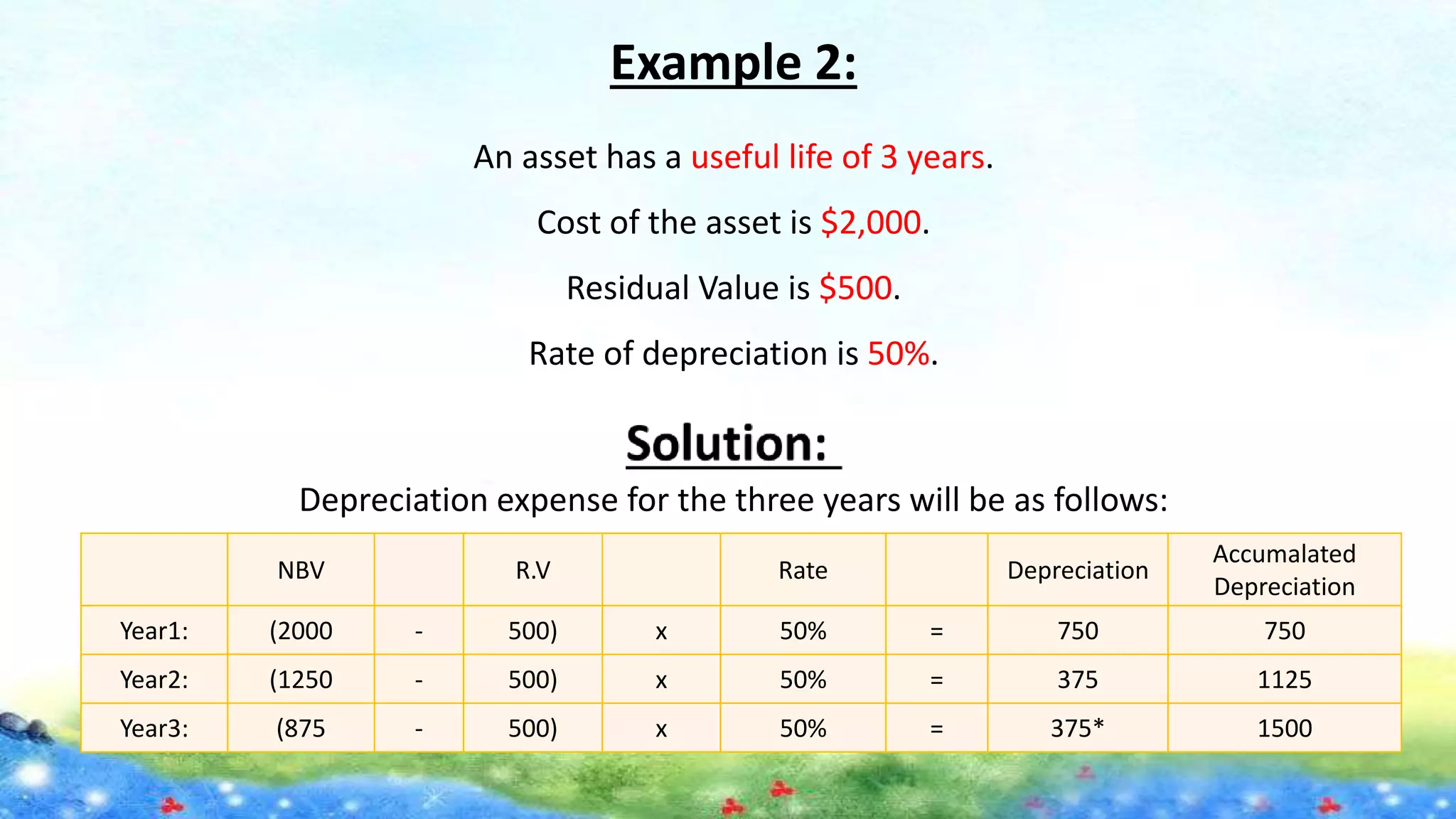
Example 2:
An asset has a useful life of 3 years.
Cost of the asset is $2,000.
Residual Value is $500.
Rate of depreciation is 50%.
Depreciation expense for the three years will be as follows:
NBV R.V Rate Depreciation
Accumalated
Depreciation
Year1: (2000 - 500) x 50% = 750 750
Year2: (1250 - 500) x 50% = 375 1125
Year3: (875 - 500) x 50% = 375* 1500
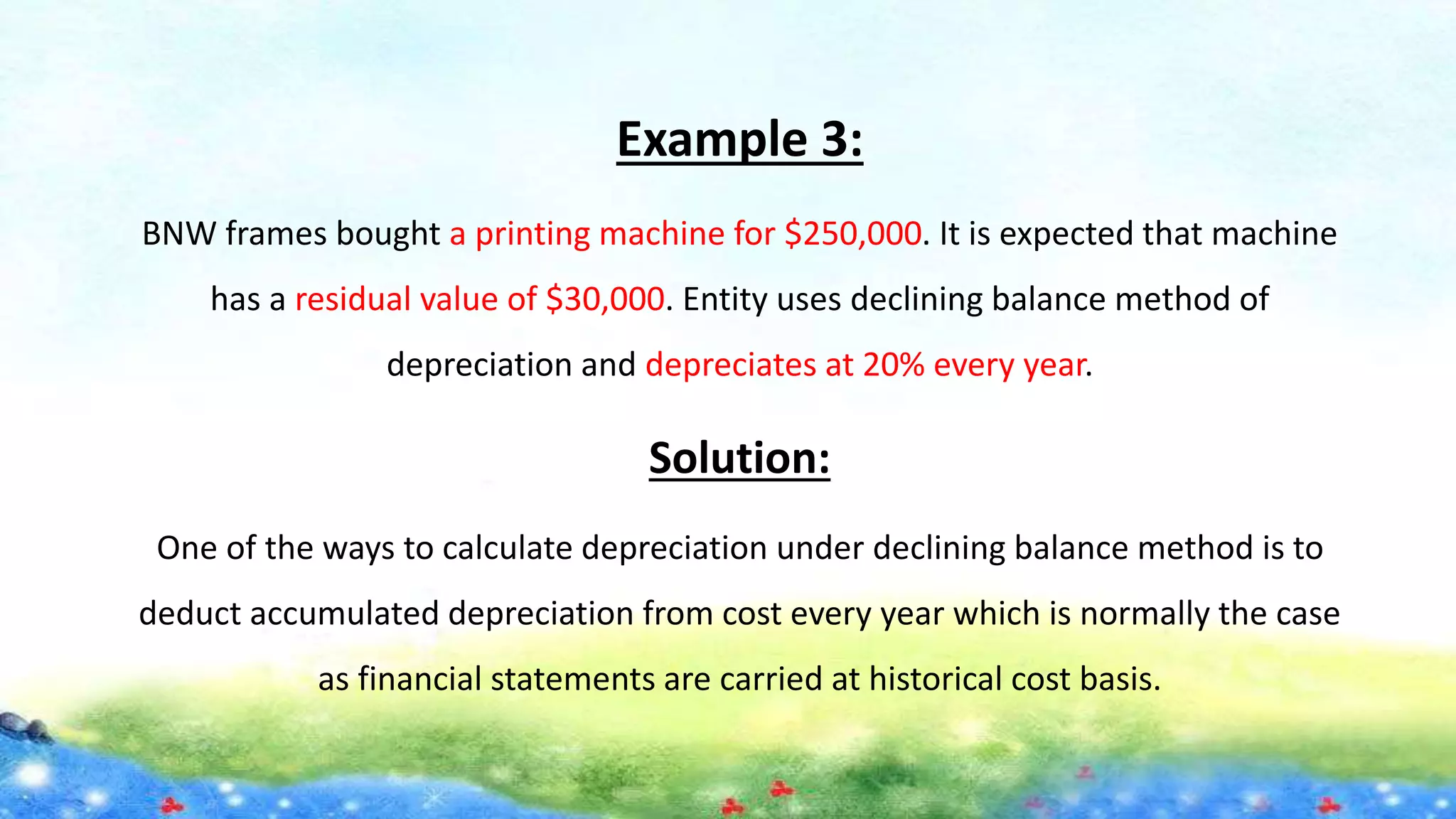
Example 3:
BNW frames bought a printing machine for $250,000. It is expected that machine
has a residual value of $30,000. Entity uses declining balance method of
depreciation and depreciates at 20% every year.
Solution:
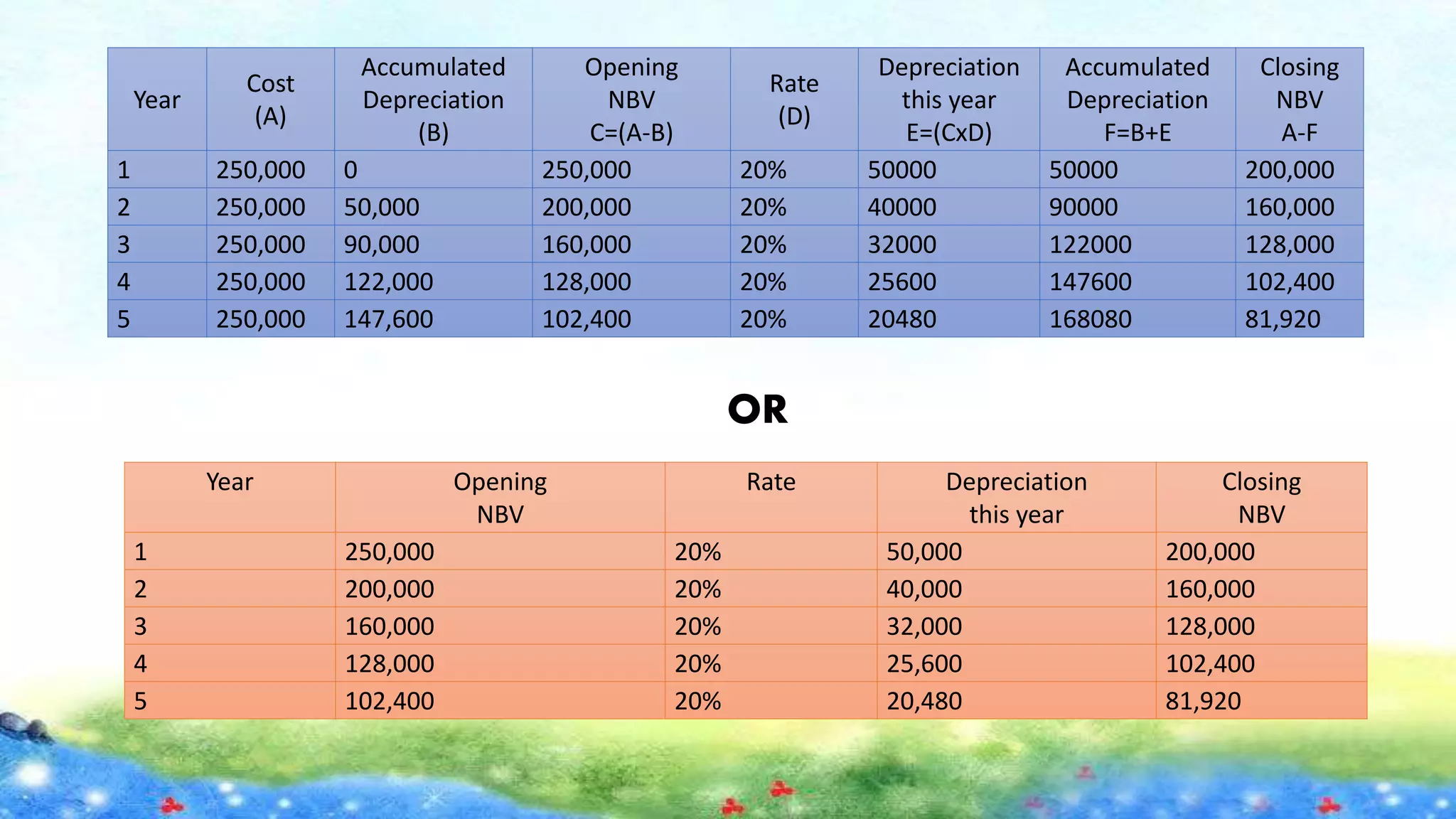
One of the ways to calculate depreciation under declining balance method is to
deduct accumulated depreciation from cost every year which is normally the case
as financial statements are carried at historical cost basis.
Year
Cost
(A)
Accumulated
Depreciation
(B)
Opening
NBV
C=(A-B)
Rate
(D)
Depreciation
this year
E=(CxD)
Accumulated
Depreciation
F=B+E
Closing
NBV
A-F
1 250,000 0 250,000 20% 50000 50000 200,000
2 250,000 50,000 200,000 20% 40000 90000 160,000
3 250,000 90,000 160,000 20% 32000 122000 128,000
4 250,000 122,000 128,000 20% 25600 147600 102,400
5 250,000 147,600 102,400 20% 20480 168080 81,920
Year Opening
NBV
Rate Depreciation
this year
Closing
NBV
1 250,000 20% 50,000 200,000
2 200,000 20% 40,000 160,000
3 160,000 20% 32,000 128,000
4 128,000 20% 25,600 102,400
5 102,400 20% 20,480 81,920
OR
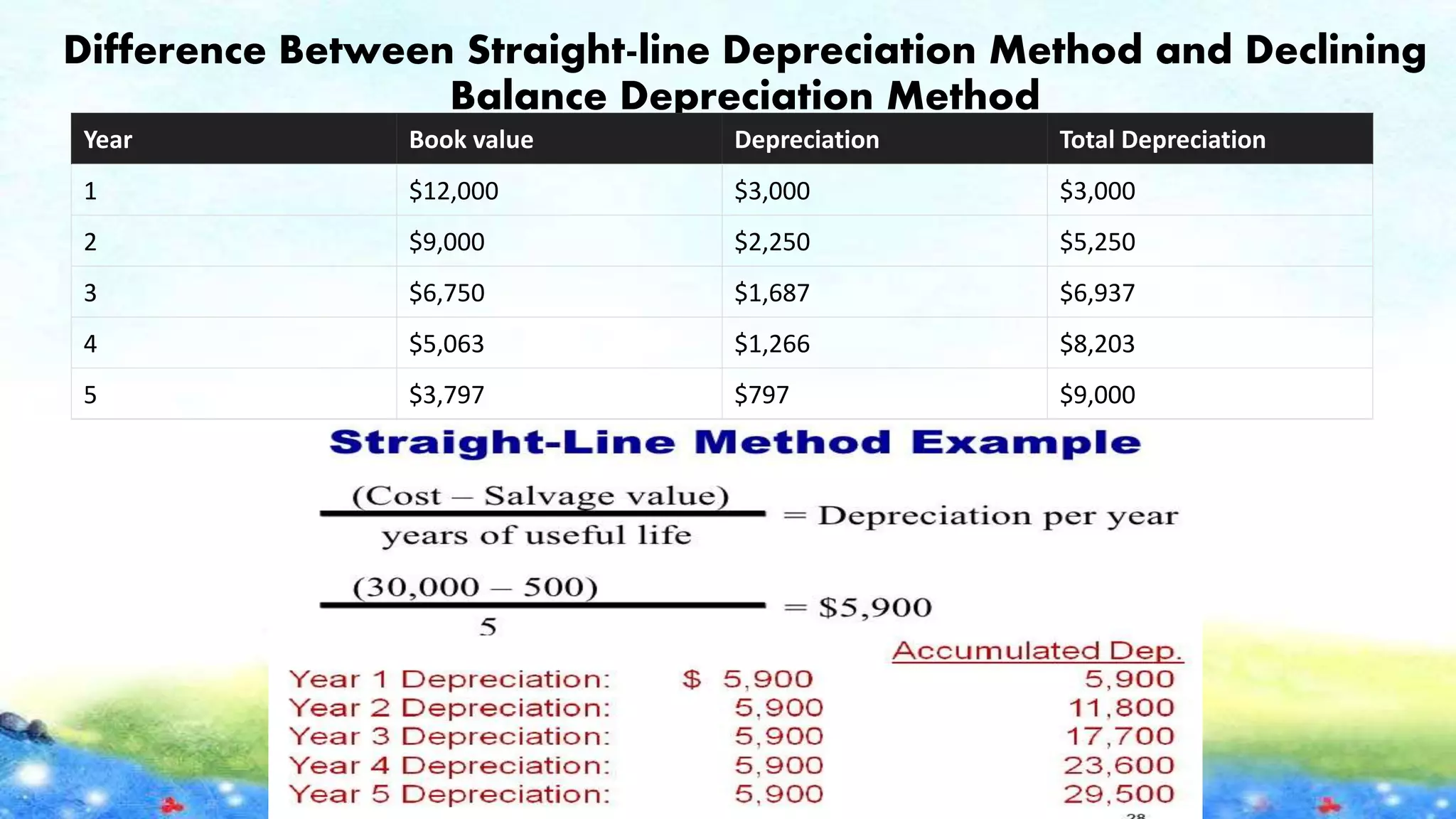
Difference Between Straight-line Depreciation Method and Declining
Balance Depreciation Method
Year Book value Depreciation Total Depreciation
1 $12,000 $3,000 $3,000
2 $9,000 $2,250 $5,250
3 $6,750 $1,687 $6,937
4 $5,063 $1,266 $8,203
5 $3,797 $797 $9,000
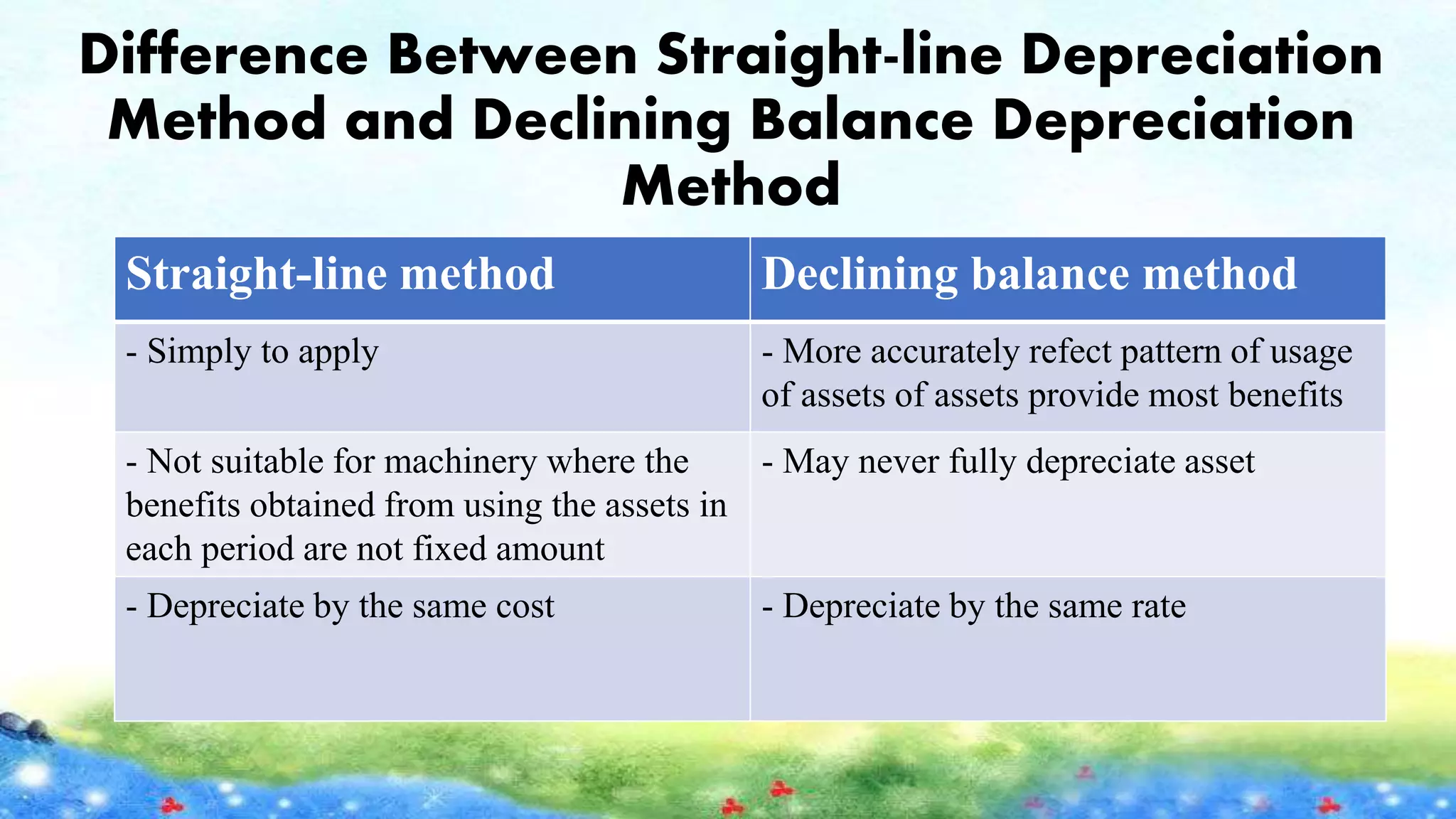
Difference Between Straight-line Depreciation
Method and Declining Balance Depreciation
Method
Straight-line method Declining balance method
- Simply to apply - More accurately refect pattern of usage
of assets of assets provide most benefits
- Not suitable for machinery where the
benefits obtained from using the assets in
each period are not fixed amount
- May never fully depreciate asset
- Depreciate by the same cost - Depreciate by the same rate
qus 3205 estimating 1 : Declining balance method

qus 3205 estimating 1 : Declining balance method

  • 1.
    QUS 3205 ESTIMATING 1: DECLININGBALANCE METHOD PRESENTERS: CHAN WING LAM CHAN ZUO YI CHUA CHEN YEW LAU KAR CHUN LIM PHOOI MUN
  • 2.
    Declining Balance Method •Refers to one of the several methods of allocating the cost of an asset over its expected lifetime • A depreciation technique where a constant percentage is applied to the book value of an asset. • Results in larger depreciation amounts in the earlier years of an asset’s useful life and progressively lower amounts in later years. • However, the book value of the asset can never be lower than its salvage value. • Adjustments need to be made to the final year of depreciation to prevent the book value from falling below the asset’s salvage value.
  • 3.
    Calculation Method for DecliningBalance Method of depreciation Step 1: Straight-Line Depreciation Rate = 1 (SLDR) Useful Life Step 2: Declining Balance Rate = SLDR × Specific Multiplier (Double declining balance method: 200%) 1/5 = 0.2 or 20% 20% × 2 = 40%
  • 4.
    Calculation Method for DecliningBalance Method of depreciation 40% Cost of the equipment: $500,000 Salvage value: $50,000 64,800 x 40% = 25,920 *Book Value
  • 5.
    Example 1: An electronicappliances costing $50,000 has estimated useful life of 10 years and salvage value of $7,500. Calculate the depreciation for the first year of its life using double declining balance method. Solution: Straight-line Depreciation Rate = 1 ÷ 10 = 0.1 = 10% Declining Balance Rate = 2 × 10% = 20% Depreciation = 20% × $50,000 = $10,000
  • 6.
    Example 2: An assethas a useful life of 3 years. Cost of the asset is $2,000. Residual Value is $500. Rate of depreciation is 50%. Depreciation expense for the three years will be as follows: NBV R.V Rate Depreciation Accumalated Depreciation Year1: (2000 - 500) x 50% = 750 750 Year2: (1250 - 500) x 50% = 375 1125 Year3: (875 - 500) x 50% = 375* 1500
  • 7.
    Example 3: BNW framesbought a printing machine for $250,000. It is expected that machine has a residual value of $30,000. Entity uses declining balance method of depreciation and depreciates at 20% every year. Solution: One of the ways to calculate depreciation under declining balance method is to deduct accumulated depreciation from cost every year which is normally the case as financial statements are carried at historical cost basis.
  • 8.
    Year Cost (A) Accumulated Depreciation (B) Opening NBV C=(A-B) Rate (D) Depreciation this year E=(CxD) Accumulated Depreciation F=B+E Closing NBV A-F 1 250,0000 250,000 20% 50000 50000 200,000 2 250,000 50,000 200,000 20% 40000 90000 160,000 3 250,000 90,000 160,000 20% 32000 122000 128,000 4 250,000 122,000 128,000 20% 25600 147600 102,400 5 250,000 147,600 102,400 20% 20480 168080 81,920 Year Opening NBV Rate Depreciation this year Closing NBV 1 250,000 20% 50,000 200,000 2 200,000 20% 40,000 160,000 3 160,000 20% 32,000 128,000 4 128,000 20% 25,600 102,400 5 102,400 20% 20,480 81,920 OR
  • 9.
    Difference Between Straight-lineDepreciation Method and Declining Balance Depreciation Method Year Book value Depreciation Total Depreciation 1 $12,000 $3,000 $3,000 2 $9,000 $2,250 $5,250 3 $6,750 $1,687 $6,937 4 $5,063 $1,266 $8,203 5 $3,797 $797 $9,000
  • 10.
    Difference Between Straight-lineDepreciation Method and Declining Balance Depreciation Method Straight-line method Declining balance method - Simply to apply - More accurately refect pattern of usage of assets of assets provide most benefits - Not suitable for machinery where the benefits obtained from using the assets in each period are not fixed amount - May never fully depreciate asset - Depreciate by the same cost - Depreciate by the same rate