Decision-Making
In Project Management
Decision Framing
Intaver Institute Inc.
303, 6707, Elbow Drive S.W, Calgary, AB, Canada
Tel: +1(403)692-2252
Fax: +1(403)459-4533
www.intaver.com
What is decision framing?
• Identifying problems and assessing situations
• Defining project objectives
• Generating alternatives and identifying risks using
qualitative and quantitative risk analysis (e.g. Monte Carlo
simulations)
Assessing Business Situations
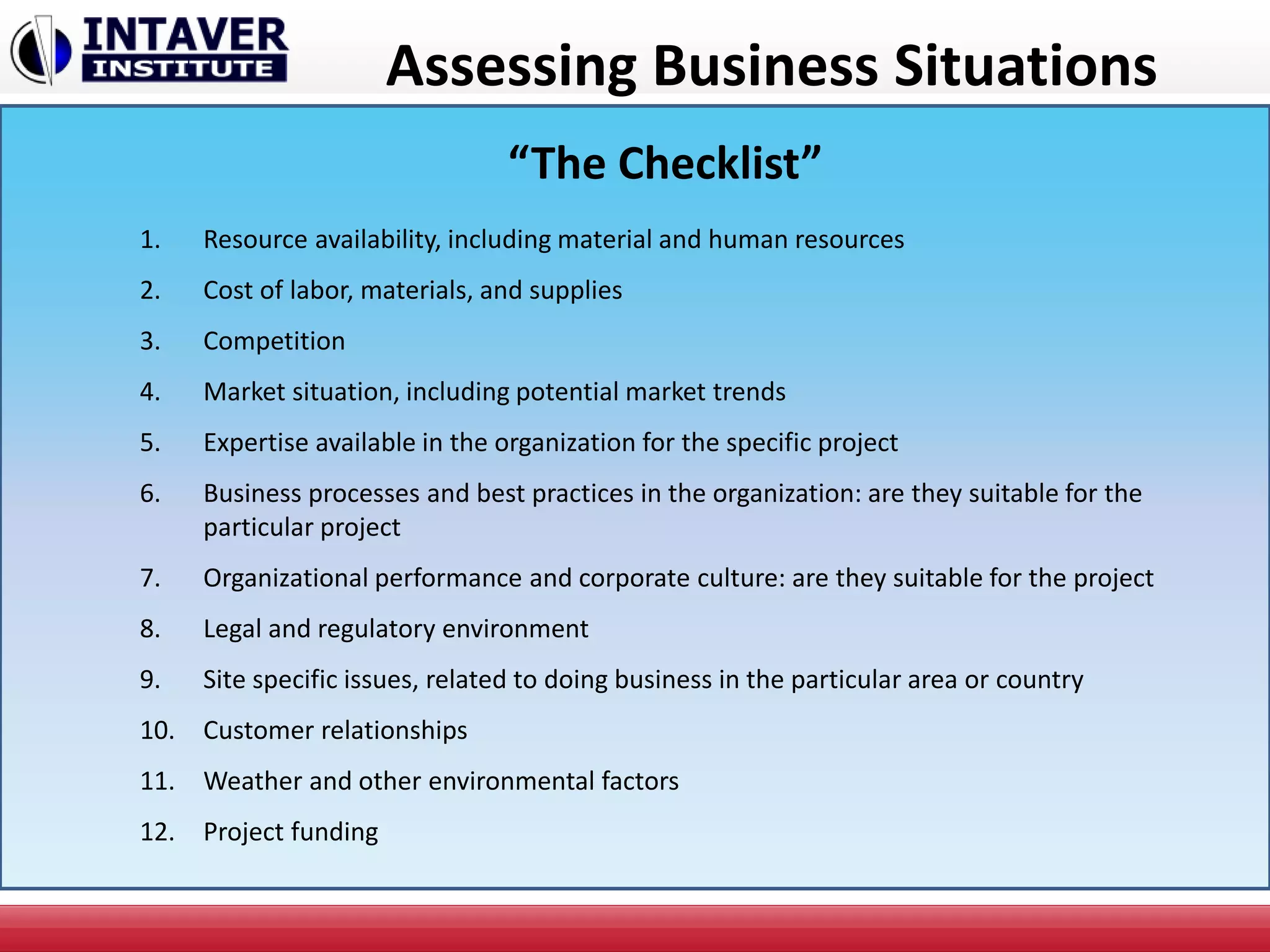
1. Resource availability, including material and human resources
2. Cost of labor, materials, and supplies
3. Competition
4. Market situation, including potential market trends
5. Expertise available in the organization for the specific project
6. Business processes and best practices in the organization: are they suitable for the
particular project
7. Organizational performance and corporate culture: are they suitable for the project
8. Legal and regulatory environment
9. Site specific issues, related to doing business in the particular area or country
10. Customer relationships
11. Weather and other environmental factors
12. Project funding
“The Checklist”
Decision Conferencing
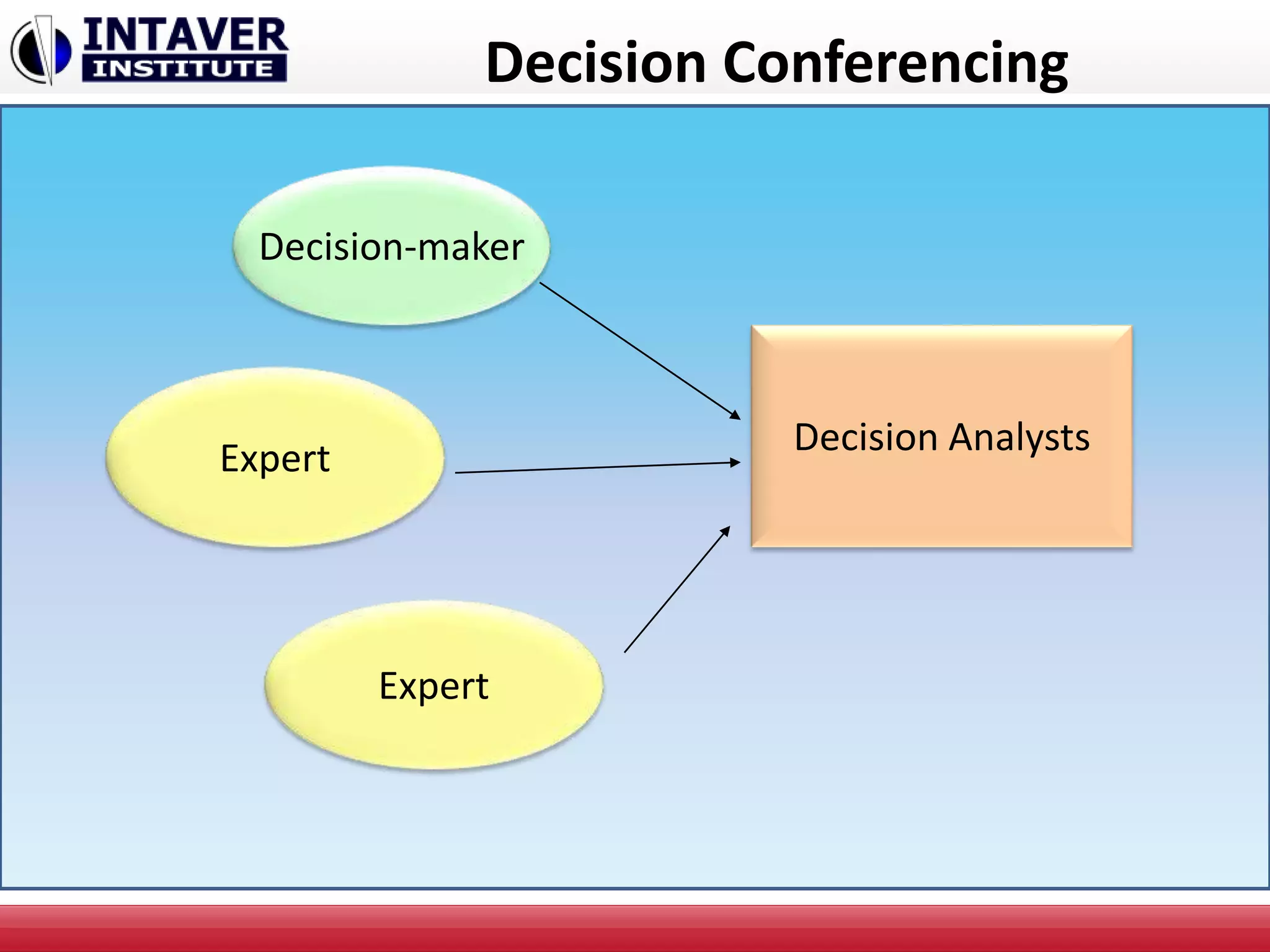
Decision-maker
Expert
Expert
Decision Analysts
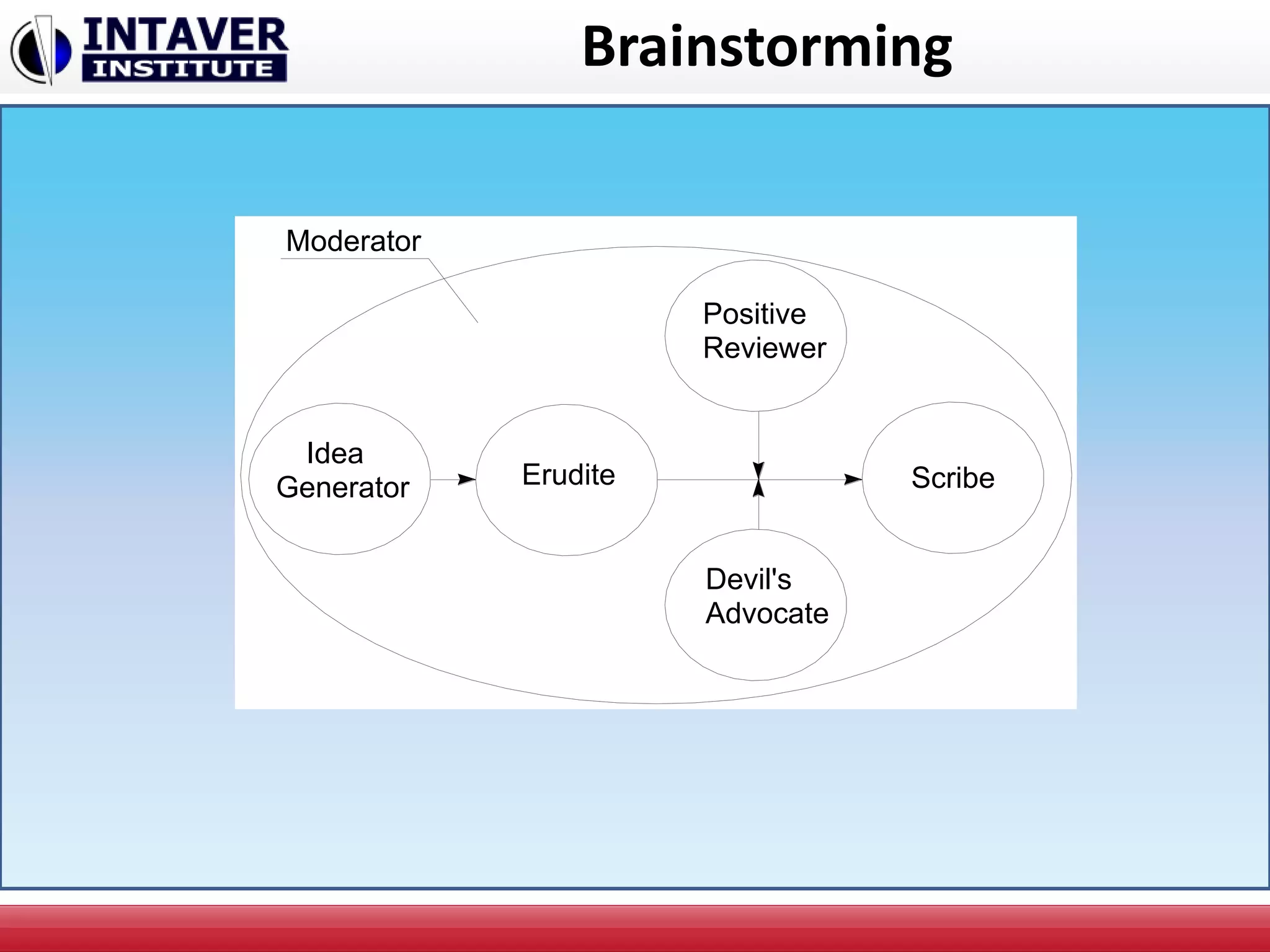
Brainstorming
Idea
Generator
Moderator
Erudite
Devil's
Advocate
Scribe
Positive
Reviewer
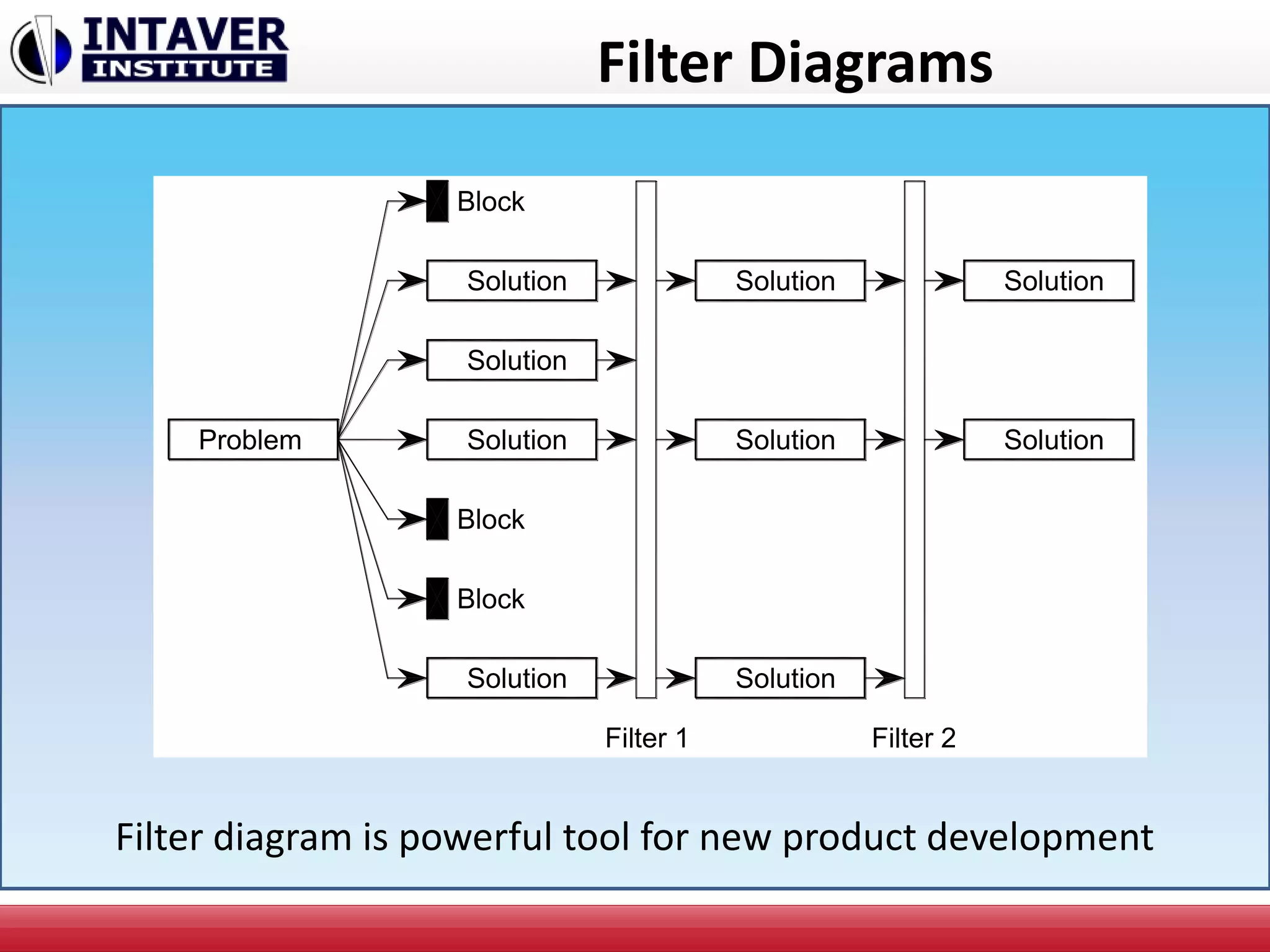
Filter Diagrams
Problem
Solution
Block
Block
Block
Filter 1 Filter 2
Solution
Solution
Solution
Solution
Solution
Solution
Solution
Solution
Filter diagram is powerful tool for new product development
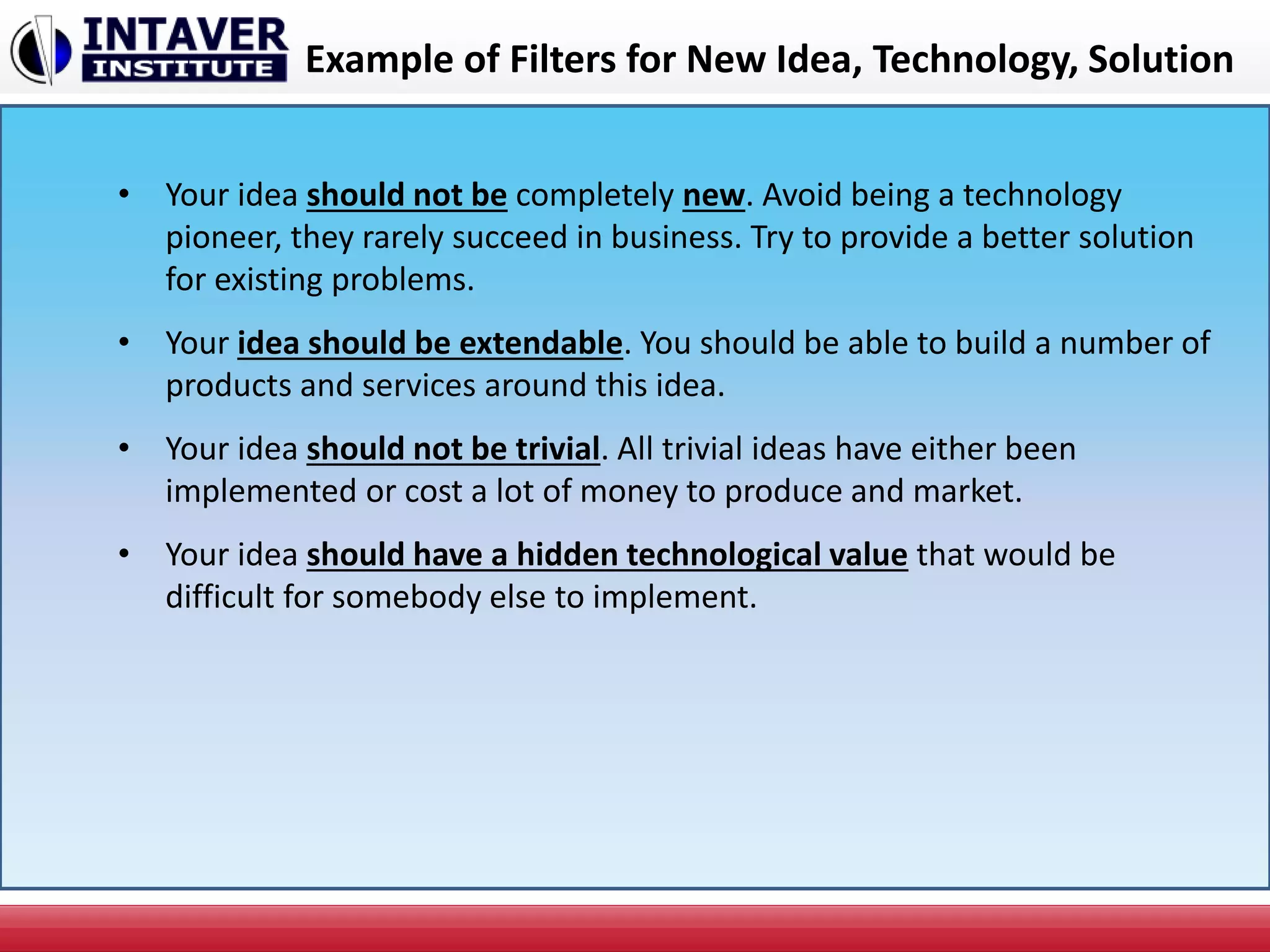
Example of Filters for New Idea, Technology, Solution
• Your idea should not be completely new. Avoid being a technology
pioneer, they rarely succeed in business. Try to provide a better solution
for existing problems.
• Your idea should be extendable. You should be able to build a number of
products and services around this idea.
• Your idea should not be trivial. All trivial ideas have either been
implemented or cost a lot of money to produce and market.
• Your idea should have a hidden technological value that would be
difficult for somebody else to implement.
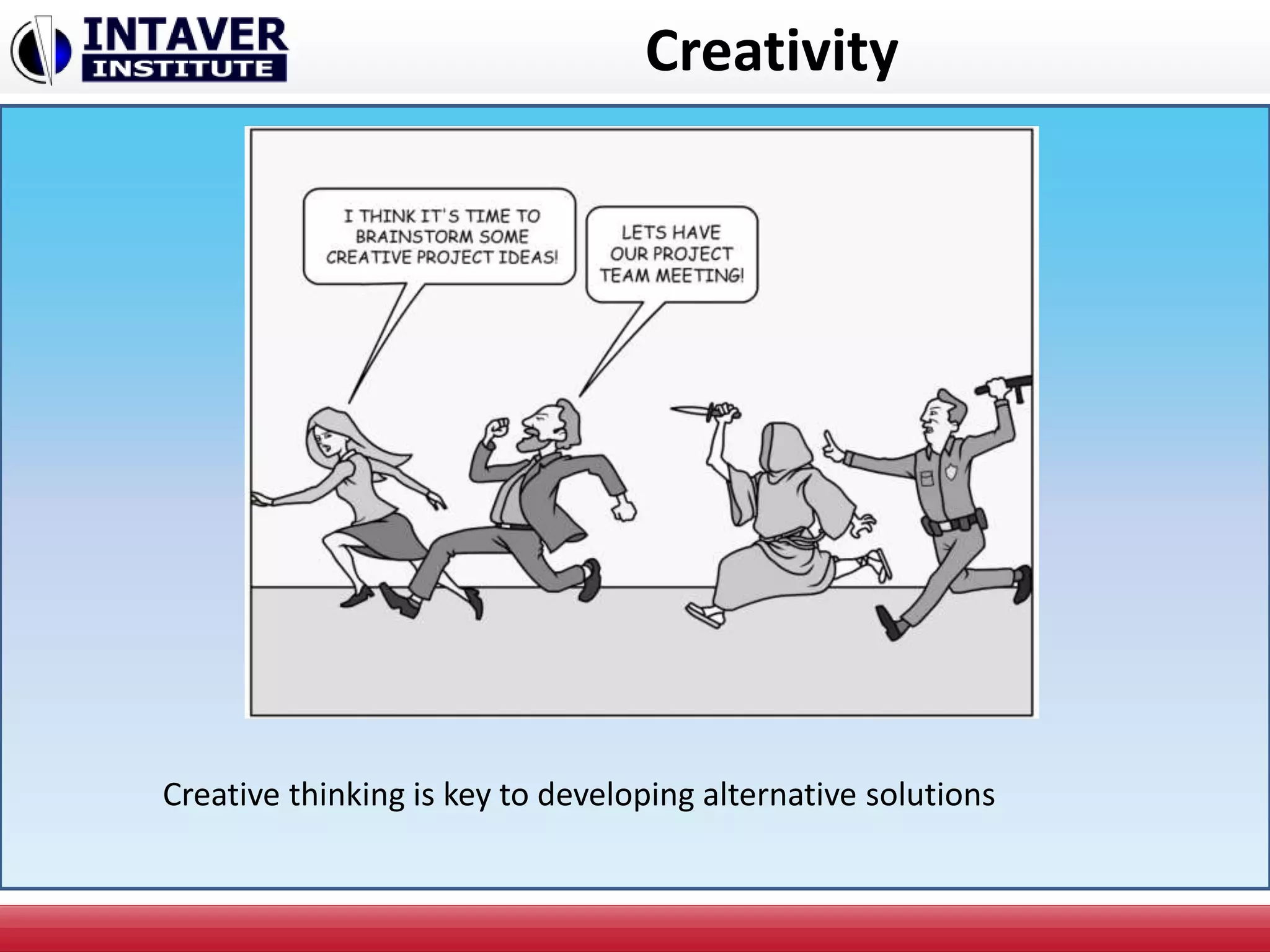
Creativity
Creative thinking is key to developing alternative solutions
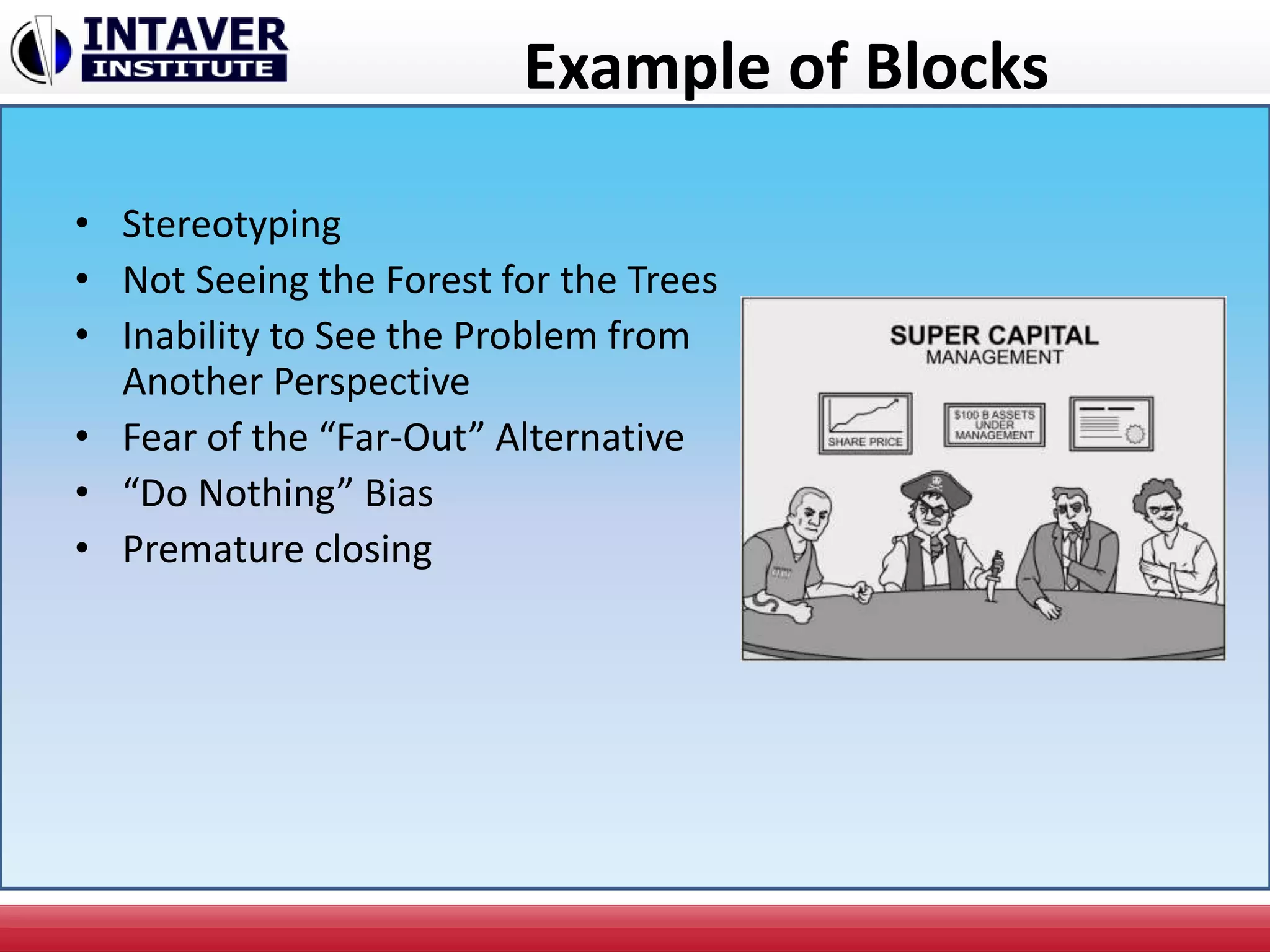
Example of Blocks
• Stereotyping
• Not Seeing the Forest for the Trees
• Inability to See the Problem from
Another Perspective
• Fear of the “Far-Out” Alternative
• “Do Nothing” Bias
• Premature closing
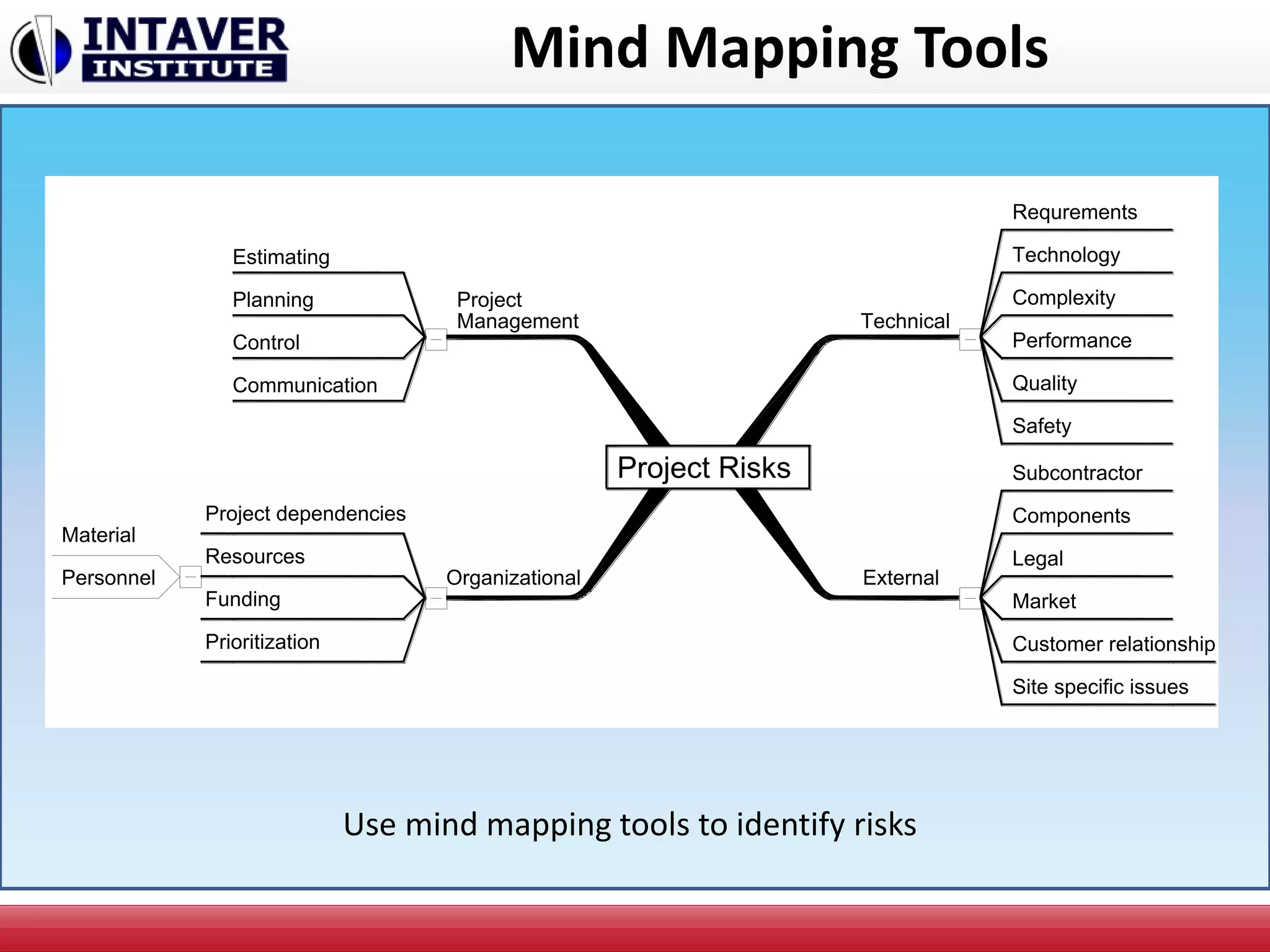
Mind Mapping Tools
Project Risks
Technical
Requrements
Technology
Complexity
Performance
Quality
Safety
Subcontractor
Components
Legal
Market
Customer relationship
Site specific issues
External
Project
Organizational
Project dependencies
Resources
Funding
Prioritization
Estimating
Planning
Control
Communication
Material
Personnel
Management
Use mind mapping tools to identify risks
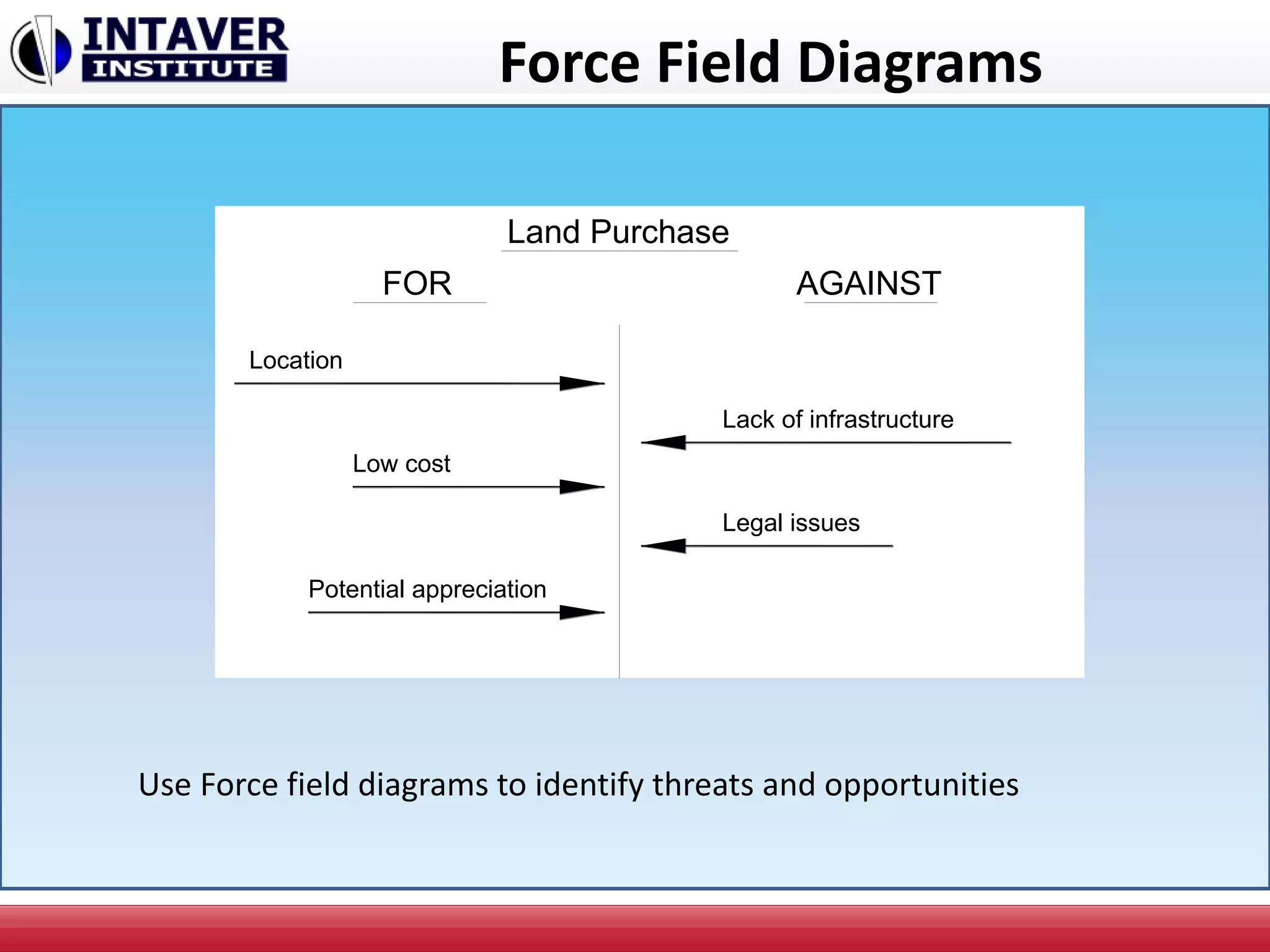
Force Field Diagrams
Land Purchase
FOR AGAINST
Location
Low cost
Potential appreciation
Lack of infrastructure
Legal issues
Use Force field diagrams to identify threats and opportunities
Multi Criteria Decision Making
1. Economic indicators, such as net present value (NPV), rate of
return (ROR), and project cost
2. Project duration indicators, such as total duration, finish time,
duration of particular phase
3. Resource usage, including material and work resources
4. Project scope indicators, such as number of features implemented
5. Quality indicators, such as number of defects
6. Safety indicators, such as number of accidents
7. Environmental indicators, such as level of emissions
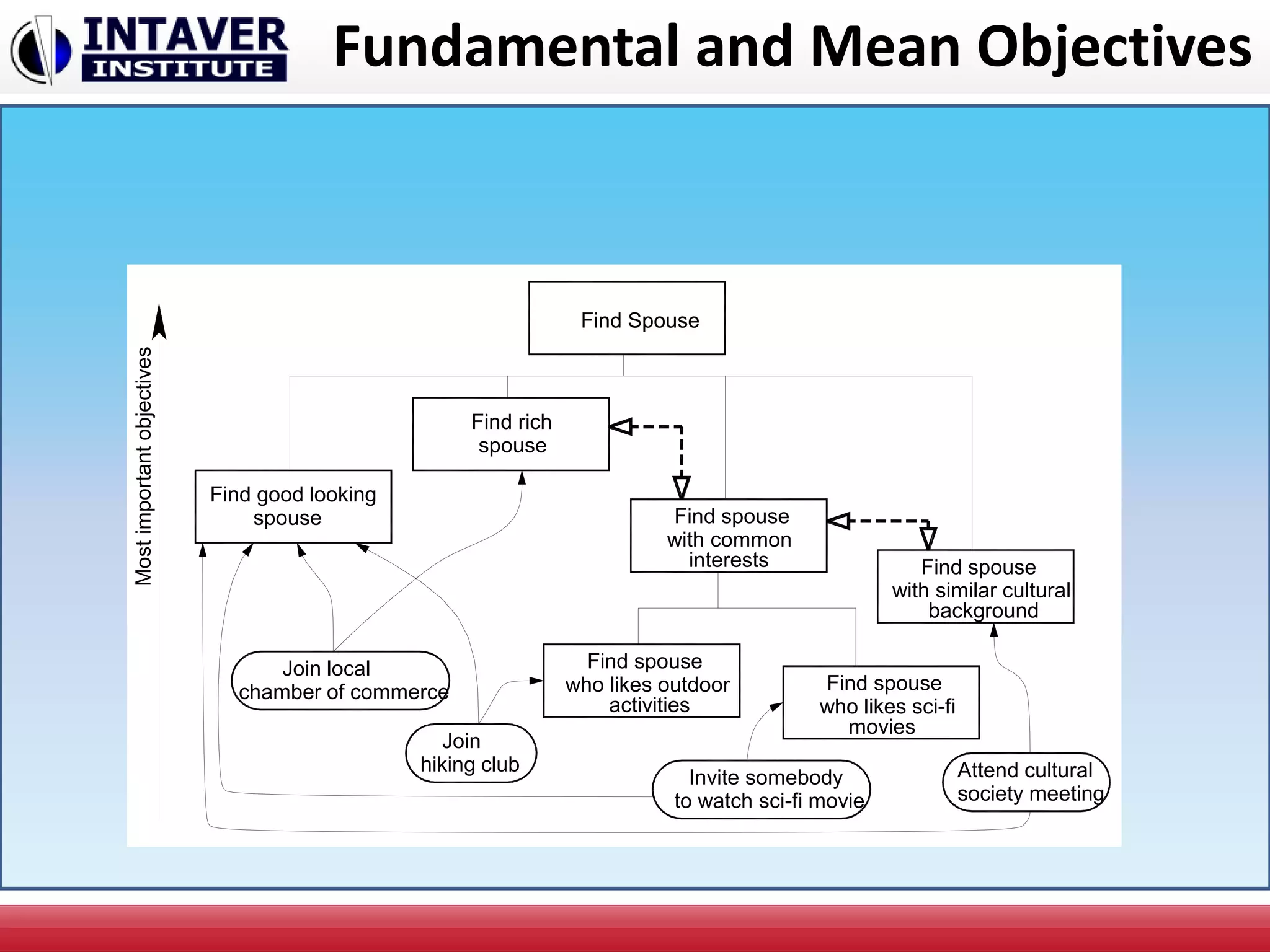
Fundamental and Mean Objectives
Find Spouse
Find good looking
spouse
Find rich
spouse
Find spouse
with common
Find spouse
with similar cultural
background
interests
Find spouse
activities
who likes outdoor
movies
who likes sci-fi
Find spouse
Join local
chamber of commerce
Join
hiking club Attend cultural
society meeting
Invite somebody
to watch sci-fi movie
Mostimportantobjectives
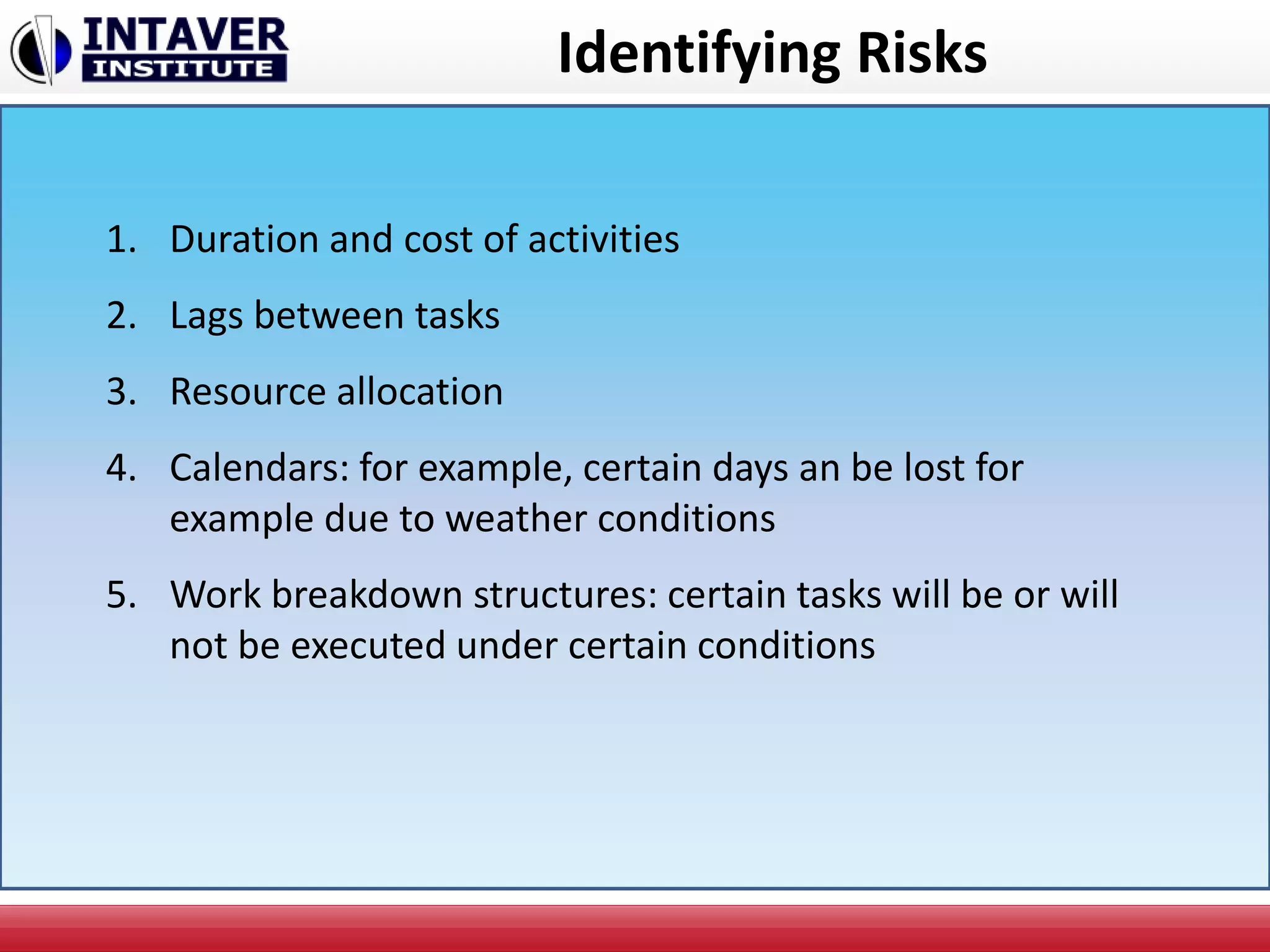
Identifying Risks
1. Duration and cost of activities
2. Lags between tasks
3. Resource allocation
4. Calendars: for example, certain days an be lost for
example due to weather conditions
5. Work breakdown structures: certain tasks will be or will
not be executed under certain conditions
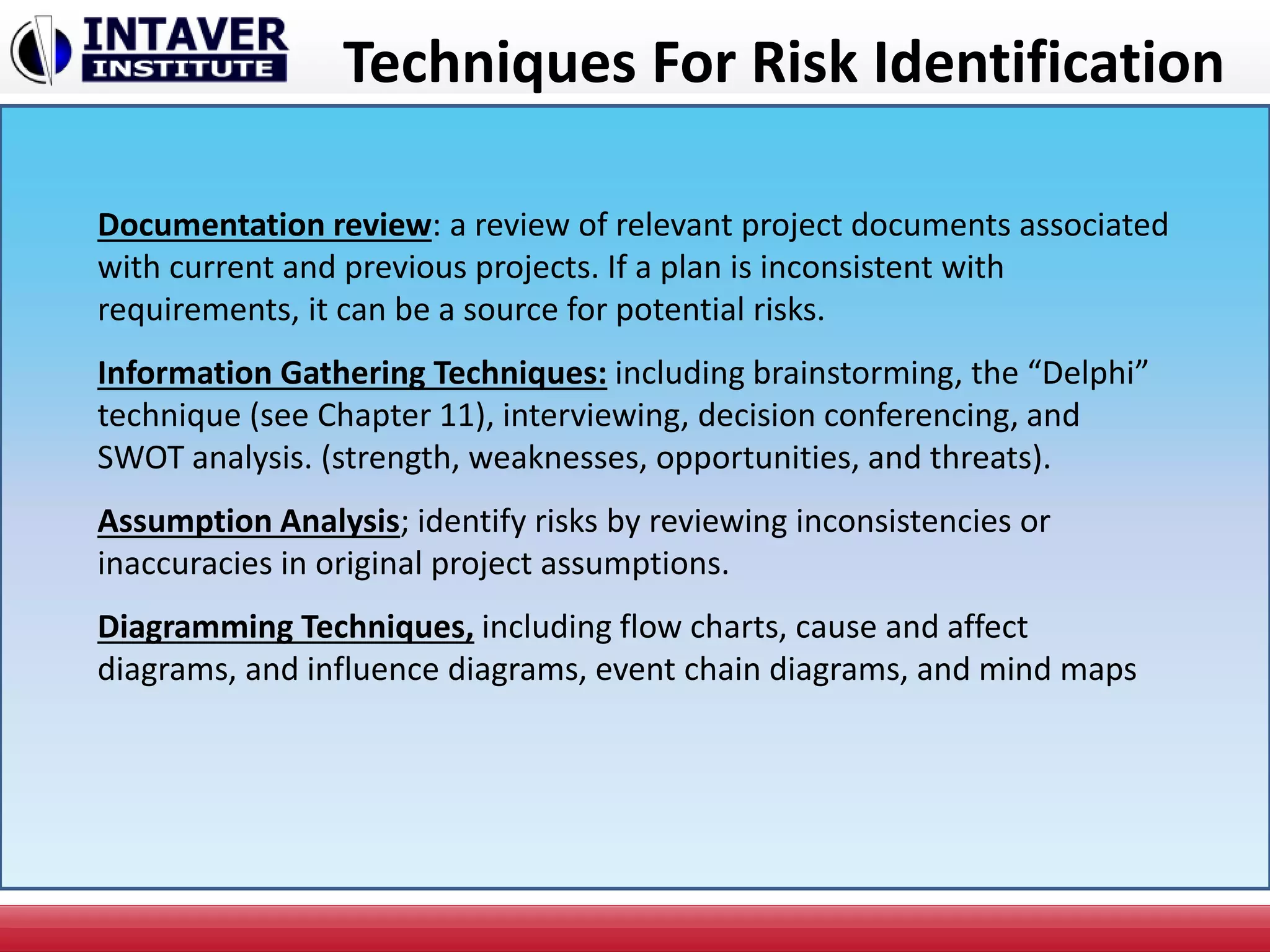
Techniques For Risk Identification
Documentation review: a review of relevant project documents associated
with current and previous projects. If a plan is inconsistent with
requirements, it can be a source for potential risks.
Information Gathering Techniques: including brainstorming, the “Delphi”
technique (see Chapter 11), interviewing, decision conferencing, and
SWOT analysis. (strength, weaknesses, opportunities, and threats).
Assumption Analysis; identify risks by reviewing inconsistencies or
inaccuracies in original project assumptions.
Diagramming Techniques, including flow charts, cause and affect
diagrams, and influence diagrams, event chain diagrams, and mind maps
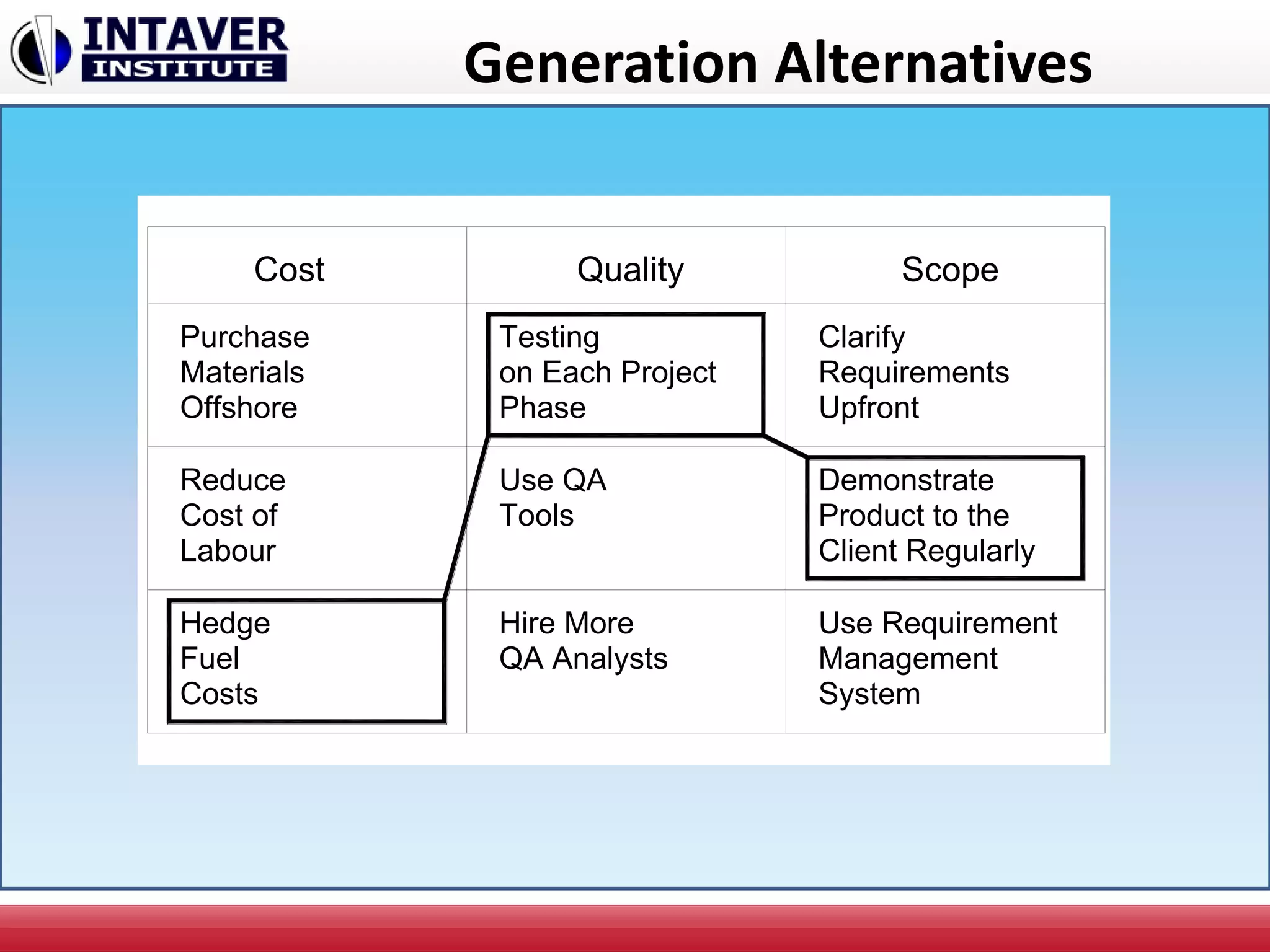
Generation Alternatives
Purchase
Materials
Offshore
Reduce
Cost of
Labour
Hedge
Fuel
Costs
Testing
on Each Project
Phase
Use QA
Tools
Hire More
QA Analysts
Clarify
Requirements
Upfront
Demonstrate
Product to the
Client Regularly
Use Requirement
Management
System
Cost Quality Scope
Risk Breakdown Structures
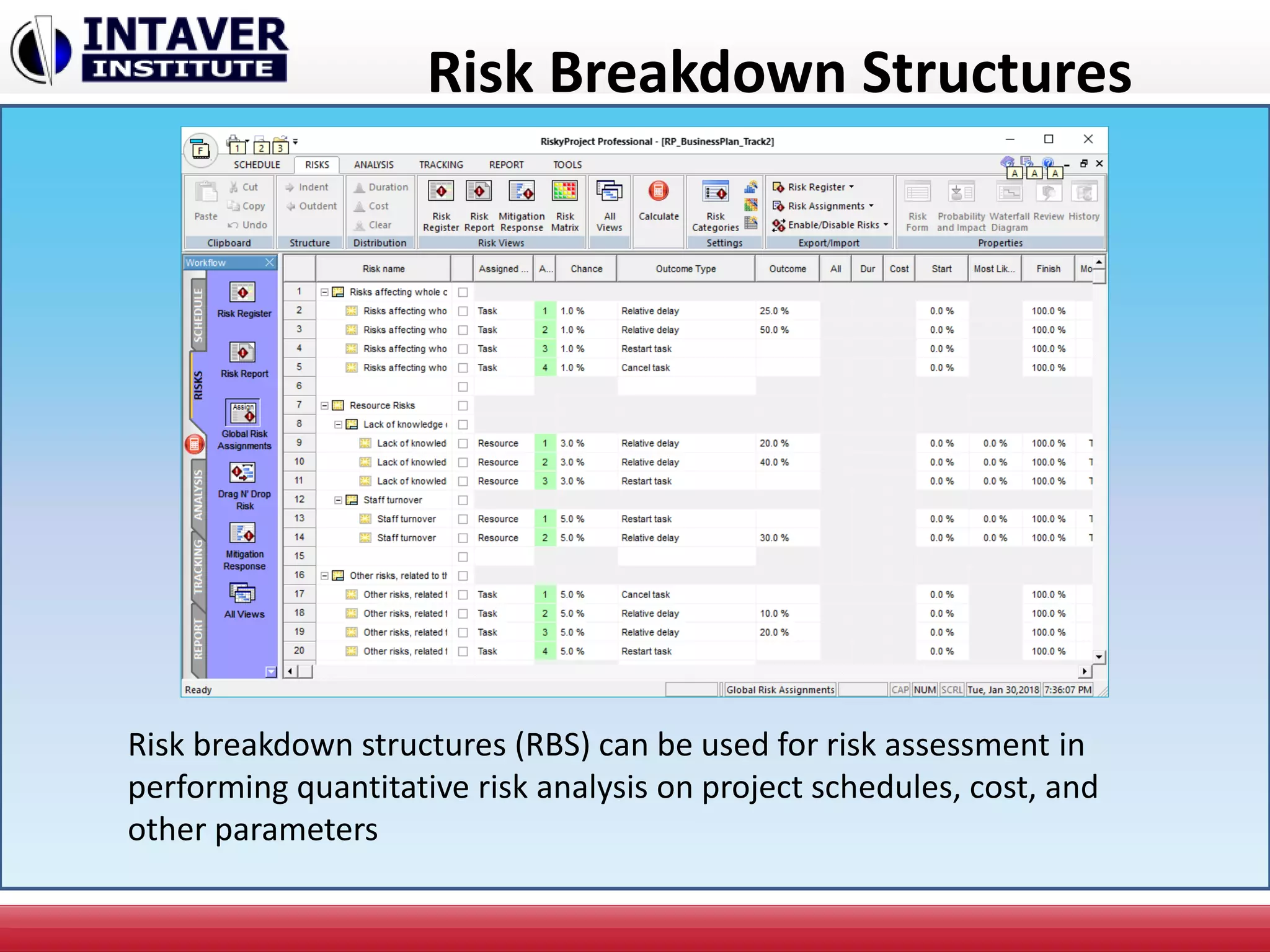
Risk breakdown structures (RBS) can be used for risk assessment in
performing quantitative risk analysis on project schedules, cost, and
other parameters
Risk Response Planning
Dealing with threats:
1. Avoid
2. Transfer
3. Mitigate
4. Accept
Dealing with opportunities:
1. Exploit
2. Share
3. Enhance
4. Accept
Risk Register
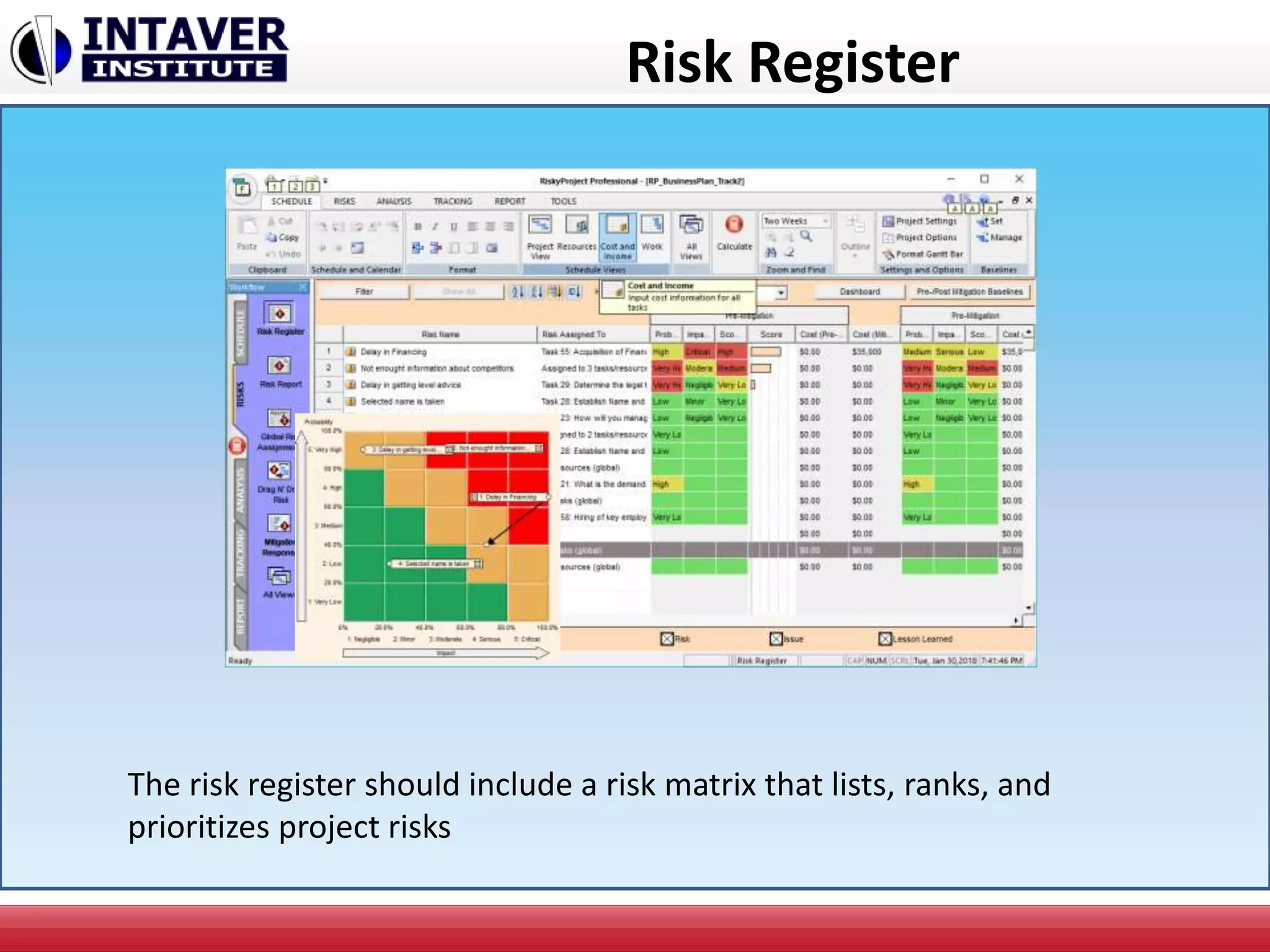
The risk register should include a risk matrix that lists, ranks, and
prioritizes project risks
Additional Resources
20
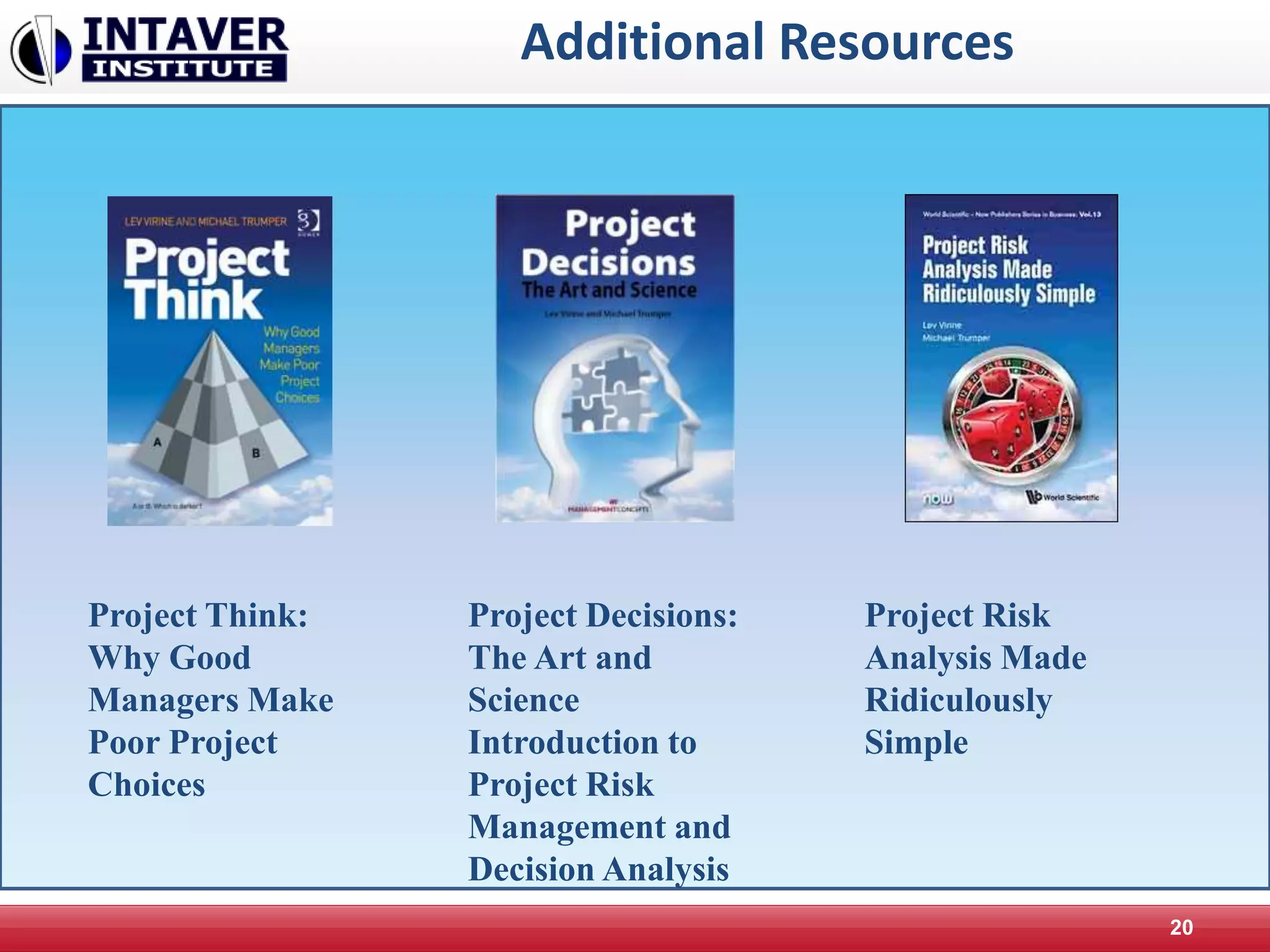
Project Think:
Why Good
Managers Make
Poor Project
Choices
Project Decisions:
The Art and
Science
Introduction to
Project Risk
Management and
Decision Analysis
Project Risk
Analysis Made
Ridiculously
Simple
Questions?

Decision framing in Project Management

  • 1.
    Decision-Making In Project Management DecisionFraming Intaver Institute Inc. 303, 6707, Elbow Drive S.W, Calgary, AB, Canada Tel: +1(403)692-2252 Fax: +1(403)459-4533 www.intaver.com
  • 2.
    What is decisionframing? • Identifying problems and assessing situations • Defining project objectives • Generating alternatives and identifying risks using qualitative and quantitative risk analysis (e.g. Monte Carlo simulations)
  • 3.
    Assessing Business Situations 1.Resource availability, including material and human resources 2. Cost of labor, materials, and supplies 3. Competition 4. Market situation, including potential market trends 5. Expertise available in the organization for the specific project 6. Business processes and best practices in the organization: are they suitable for the particular project 7. Organizational performance and corporate culture: are they suitable for the project 8. Legal and regulatory environment 9. Site specific issues, related to doing business in the particular area or country 10. Customer relationships 11. Weather and other environmental factors 12. Project funding “The Checklist”
  • 4.
  • 5.
  • 6.
    Filter Diagrams Problem Solution Block Block Block Filter 1Filter 2 Solution Solution Solution Solution Solution Solution Solution Solution Filter diagram is powerful tool for new product development
  • 7.
    Example of Filtersfor New Idea, Technology, Solution • Your idea should not be completely new. Avoid being a technology pioneer, they rarely succeed in business. Try to provide a better solution for existing problems. • Your idea should be extendable. You should be able to build a number of products and services around this idea. • Your idea should not be trivial. All trivial ideas have either been implemented or cost a lot of money to produce and market. • Your idea should have a hidden technological value that would be difficult for somebody else to implement.
  • 8.
    Creativity Creative thinking iskey to developing alternative solutions
  • 9.
    Example of Blocks •Stereotyping • Not Seeing the Forest for the Trees • Inability to See the Problem from Another Perspective • Fear of the “Far-Out” Alternative • “Do Nothing” Bias • Premature closing
  • 10.
    Mind Mapping Tools ProjectRisks Technical Requrements Technology Complexity Performance Quality Safety Subcontractor Components Legal Market Customer relationship Site specific issues External Project Organizational Project dependencies Resources Funding Prioritization Estimating Planning Control Communication Material Personnel Management Use mind mapping tools to identify risks
  • 11.
    Force Field Diagrams LandPurchase FOR AGAINST Location Low cost Potential appreciation Lack of infrastructure Legal issues Use Force field diagrams to identify threats and opportunities
  • 12.
    Multi Criteria DecisionMaking 1. Economic indicators, such as net present value (NPV), rate of return (ROR), and project cost 2. Project duration indicators, such as total duration, finish time, duration of particular phase 3. Resource usage, including material and work resources 4. Project scope indicators, such as number of features implemented 5. Quality indicators, such as number of defects 6. Safety indicators, such as number of accidents 7. Environmental indicators, such as level of emissions
  • 13.
    Fundamental and MeanObjectives Find Spouse Find good looking spouse Find rich spouse Find spouse with common Find spouse with similar cultural background interests Find spouse activities who likes outdoor movies who likes sci-fi Find spouse Join local chamber of commerce Join hiking club Attend cultural society meeting Invite somebody to watch sci-fi movie Mostimportantobjectives
  • 14.
    Identifying Risks 1. Durationand cost of activities 2. Lags between tasks 3. Resource allocation 4. Calendars: for example, certain days an be lost for example due to weather conditions 5. Work breakdown structures: certain tasks will be or will not be executed under certain conditions
  • 15.
    Techniques For RiskIdentification Documentation review: a review of relevant project documents associated with current and previous projects. If a plan is inconsistent with requirements, it can be a source for potential risks. Information Gathering Techniques: including brainstorming, the “Delphi” technique (see Chapter 11), interviewing, decision conferencing, and SWOT analysis. (strength, weaknesses, opportunities, and threats). Assumption Analysis; identify risks by reviewing inconsistencies or inaccuracies in original project assumptions. Diagramming Techniques, including flow charts, cause and affect diagrams, and influence diagrams, event chain diagrams, and mind maps
  • 16.
    Generation Alternatives Purchase Materials Offshore Reduce Cost of Labour Hedge Fuel Costs Testing onEach Project Phase Use QA Tools Hire More QA Analysts Clarify Requirements Upfront Demonstrate Product to the Client Regularly Use Requirement Management System Cost Quality Scope
  • 17.
    Risk Breakdown Structures Riskbreakdown structures (RBS) can be used for risk assessment in performing quantitative risk analysis on project schedules, cost, and other parameters
  • 18.
    Risk Response Planning Dealingwith threats: 1. Avoid 2. Transfer 3. Mitigate 4. Accept Dealing with opportunities: 1. Exploit 2. Share 3. Enhance 4. Accept
  • 19.
    Risk Register The riskregister should include a risk matrix that lists, ranks, and prioritizes project risks
  • 20.
    Additional Resources 20 Project Think: WhyGood Managers Make Poor Project Choices Project Decisions: The Art and Science Introduction to Project Risk Management and Decision Analysis Project Risk Analysis Made Ridiculously Simple
  • 21.