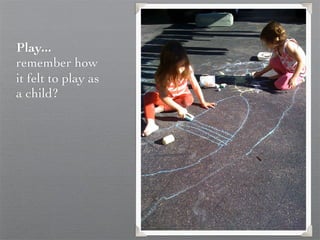
Play...
remember how
it felt to play as
a child?
Who Plays?
 All people, many animals including mammals, marsupials
 and birds.

Purpose of Play
 The act of playing engenders trust, builds social groups,
 teaches communication and other skills and alleviates
 stress.

Fair Play & Survival
 According to Marc
 Berkoff, animals that
 play fair are more
 likely to survive in the
 wild.
Types of Play

Toys
Tools for discovery.
Unorganized stimulation.

Simulation
Investigative and exploratory

Game
Goal-oriented, player choice
The Magic Circle
     Trust
Play...

“Flow represents
the ultimate in
harnessing the
emotions in the
service of
performance and
learning.”
            —Mihály
     Csíkszentmihályi
Puzzles & Board games: Monopoly, Mousetrap
Physical games: kickball, skating, tennis
Hobbies: microscope, drawing, painting, frogs & bugs & turtles
Pretending:
  Group invented games: create the story, layout the environment,
  collect the props:
     spies, explorers, etc.
     renegade teachers, teens, mothers, doctors, builders, Miss
     America, brides, veterinarians
  Doll houses, train sets, cars & trucks
Puzzles & Board games: STRATEGY
Physical games: PROWESS
Hobbies: CREATIVITY, INNOVATION & EXPLORATION
Pretending:
  Group invented games: create the story, layout the environment,
  collect the props (ROLE PLAYING):
     spies, explorers, etc. EXPLORATION of external world
     renegade teachers, teens, mothers, doctors, builders, Miss
     America, brides, veterinarians MIMICRY
  Doll houses, train sets, cars & trucks SIMULATIONS
Computer, video, mobile, and
alternative reality games
 We are still playing the
 same games BUT the lines
 have blurred between
 types of play and blend
 differing genres in one
 form.
 Technology & market
 forces create a fruit fly lab
 for discoveries of
 successful play
 characteristics.
Fruit fly lab—key characteristics
 Magic circle
 Flow
 Exploratory
 Experiential
 Sandbox
 On-demand & in-time learning
 Well order problems
 Repetition
 Cycle of expertise
 Pervasiveness of practice
Game Systems:
Engagement & Participation

 Central conflict or challenge
 Goals: clear win-lose state
 Player roles
 Rules
 Multiple pathways to goal
 Levels of difficulty and achievement
 Balance difficulty against time (frustrating
 vs boring)
 Incorporate “toys”
 Rewards matched to difficulty
Rules keep the game balanced
Difficulty must be weighted against time to
    completion and adequate rewards.
“But the power of video game resides not just in their present
instantiations, but in the promises the technologies by which
they are made hold out for the future.”

“Game  designers can make worlds where people can have
meaningful new experiences, experiences that their places in life
would never allow them to have or even experiences no human
being has ever had before. These experiences have the potential
to make people smarter and more thoughtful.”

              —James Paul Gee,
               “Learning by Design: Good Video Games as Learning Machines”
DeMarle Play and Games

DeMarle Play and Games

  • 1.
    Play... remember how it feltto play as a child?
  • 2.
    Who Plays? Allpeople, many animals including mammals, marsupials and birds. Purpose of Play The act of playing engenders trust, builds social groups, teaches communication and other skills and alleviates stress. Fair Play & Survival According to Marc Berkoff, animals that play fair are more likely to survive in the wild.
  • 3.
    Types of Play Toys Toolsfor discovery. Unorganized stimulation. Simulation Investigative and exploratory Game Goal-oriented, player choice
  • 4.
  • 5.
    Play... “Flow represents the ultimatein harnessing the emotions in the service of performance and learning.” —Mihály Csíkszentmihályi
  • 6.
    Puzzles & Boardgames: Monopoly, Mousetrap Physical games: kickball, skating, tennis Hobbies: microscope, drawing, painting, frogs & bugs & turtles Pretending: Group invented games: create the story, layout the environment, collect the props: spies, explorers, etc. renegade teachers, teens, mothers, doctors, builders, Miss America, brides, veterinarians Doll houses, train sets, cars & trucks
  • 7.
    Puzzles & Boardgames: STRATEGY Physical games: PROWESS Hobbies: CREATIVITY, INNOVATION & EXPLORATION Pretending: Group invented games: create the story, layout the environment, collect the props (ROLE PLAYING): spies, explorers, etc. EXPLORATION of external world renegade teachers, teens, mothers, doctors, builders, Miss America, brides, veterinarians MIMICRY Doll houses, train sets, cars & trucks SIMULATIONS
  • 8.
    Computer, video, mobile,and alternative reality games We are still playing the same games BUT the lines have blurred between types of play and blend differing genres in one form. Technology & market forces create a fruit fly lab for discoveries of successful play characteristics.
  • 9.
    Fruit fly lab—keycharacteristics Magic circle Flow Exploratory Experiential Sandbox On-demand & in-time learning Well order problems Repetition Cycle of expertise Pervasiveness of practice
  • 10.
    Game Systems: Engagement &Participation Central conflict or challenge Goals: clear win-lose state Player roles Rules Multiple pathways to goal Levels of difficulty and achievement Balance difficulty against time (frustrating vs boring) Incorporate “toys” Rewards matched to difficulty
  • 11.
    Rules keep thegame balanced Difficulty must be weighted against time to completion and adequate rewards.
  • 12.
    “But the powerof video game resides not just in their present instantiations, but in the promises the technologies by which they are made hold out for the future.” “Game designers can make worlds where people can have meaningful new experiences, experiences that their places in life would never allow them to have or even experiences no human being has ever had before. These experiences have the potential to make people smarter and more thoughtful.” —James Paul Gee, “Learning by Design: Good Video Games as Learning Machines”