Desert Development
Programme
Presented by: Surbhi, Jasmine, Jyoti, Aastha
meet our team
TAKUMA HAYASHI MIRJAM NILSSON​ FLORA BERGGREN​ RAJESH SANTOSHI
president chief executive officer chief operations
officer
vp marketing
20XX presentation title 2
agenda
Evolution
4
Coverage area
7
Objectives
11
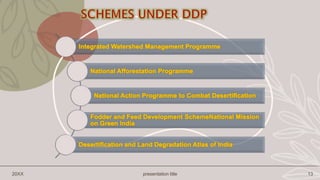
Schemes
13
Funding pattern
14
Case study
19
Conclusion
28
20XX presentation title 4
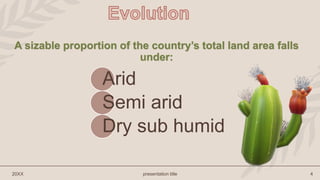
A sizable proportion of the country’s total land area falls
under:
Arid
Semi arid
Dry sub humid
A drought is a long period of dry
weather caused by a shortfall in
the usual rainfall in a given time
period of more than a certain
percentage, usually 50% in the
sowing season.
A drought-prone area is
characterized by:
20XX presentation title 5
degradation of land
hunger and malnutrition
decreasing productivity of
crops
depleting water resources
out-migration of both human
and cattle populations
20XX presentation title 6
On the recommendations of the
, in its Interim Report (1974), the hot desert
areas were identified for the implementation of a program
comprising afforestation and livestock development. As for
the cold desert areas of Jammu & Kashmir and Himachal
Pradesh, the National Commission (in its Final Report, 976)
recommended that their specific problems should be studied
in depth.
The above recommendations lead to the Desert
Development Programme (DDP) in the year 1977-78. The
DDP program was implemented on a sectoral basis to
develop poor areas in the long term. It was launched in both
the of and
and the of and
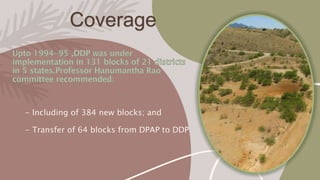
Coverage
- Including of 384 new blocks; and
- Transfer of 64 blocks from DPAP to DDP.
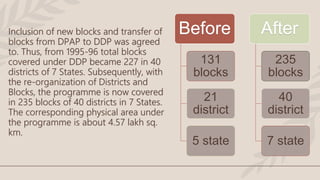
Inclusion of new blocks and transfer of
blocks from DPAP to DDP was agreed
to. Thus, from 1995-96 total blocks
covered under DDP became 227 in 40
districts of 7 States. Subsequently, with
the re-organization of Districts and
Blocks, the programme is now covered
in 235 blocks of 40 districts in 7 States.
The corresponding physical area under
the programme is about 4.57 lakh sq.
km.
Before
131
blocks
21
district
5 state
After
235
blocks
40
district
7 state
20XX presentation title 9







J&K
Haryana
Rajasth
an
Gujarat
Andhra
Pradesh
Karnatak
a
Himachal
Pradesh
To restore ecological balance by
harnessing, conserving and developing natural
resources i.e. land, water, vegetative cover
and rising land productivity
20XX presentation title 13
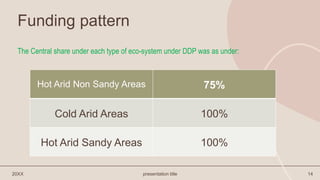
Funding pattern
The Central share under each type of eco-system under DDP was as under:
20XX presentation title 14
Hot Arid Non Sandy Areas 75%
Cold Arid Areas 100%
Hot Arid Sandy Areas 100%
20XX presentation title 15
The above Central share was applicable up to 31st March 1999.
With effect from 1st April 1999, the program is being funded based on
. In all these cases the watershed projects are being
are being sanctioned on or after this date. From 1.4.1995 till
31.3.2000, each cost ranged between Rs. 22.50 lakhs to Rs. 25 lakhs.
With effect from 1.4.2000, a uniform rate of
Rs. 30 lakh per project has been prescribed.
Releases made under DDP (1995-96 to 2002-
03) as on 31-1-2003
20XX presentation title 16
S.
No
Name of
state
1995-
96
1996-
97
1997-
98
1998-
99
1999-
2000
2000-
01
2001-
02
2002-
03
Total
1. Andhra
Pradesh
4.05 6.74 4.22 4.83 4.37 6.51 9.99 6.41 47.12
2. Gujarat 18.61 10.27 11.01 8.60 27.51 24.45 22.58 30.39 153.42
3. Haryana 4.50 6.34 7.97 6.08 4.54 8.11 14.83 11.50 63.87
4. Himachal
Pradesh
6.36 8.00 1.50 0.30 2.55 4.51 5.14 7.36 35.72
5. Jammu &
Kashmir
10.00 13.30 2.25 5.85 4.86 7.84 5.75 9.02 58.97
6. Karnataka 3.90 4.32 8.42 3.50 2.15 5.03 9.95 11.24 48.51
7. Rajasthan 53.58 16.40 34.64 60.64 39.1 78.54 81.64 58.41 412.86
Total 101.00 65.35 70.80 79.80 84.99 134.99 149.89 134.33 820.37
Rs. in crore
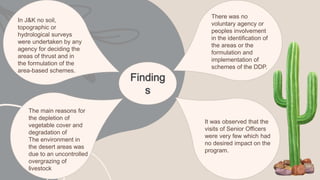
In J&K no soil,
topographic or
hydrological surveys
were undertaken by any
agency for deciding the
areas of thrust and in
the formulation of the
area-based schemes.
There was no
voluntary agency or
peoples involvement
in the identification of
the areas or the
formulation and
implementation of
schemes of the DDP.
It was observed that the
visits of Senior Officers
were very few which had
no desired impact on the
program.
The main reasons for
the depletion of
vegetable cover and
degradation of
The environment in
the desert areas was
due to an uncontrolled
overgrazing of
livestock
20XX presentation title 18
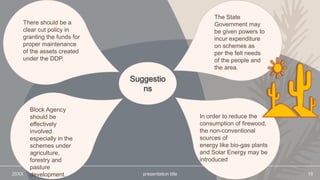
There should be a
clear cut policy in
granting the funds for
proper maintenance
of the assets created
under the DDP.
The State
Government may
be given powers to
incur expenditure
on schemes as
per the felt needs
of the people and
the area.
Block Agency
should be
effectively
involved
especially in the
schemes under
agriculture,
forestry and
pasture
development.
In order to reduce the
consumption of firewood,
the non-conventional
sources of
energy like bio-gas plants
and Solar Energy may be
introduced
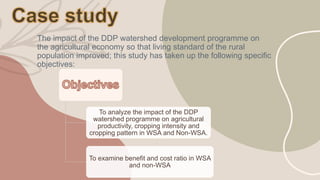
The impact of the DDP watershed development programme on
the agricultural economy so that living standard of the rural
population improved; this study has taken up the following specific
objectives:
To analyze the impact of the DDP
watershed programme on agricultural
productivity, cropping intensity and
cropping pattern in WSA and Non-WSA.
To examine benefit and cost ratio in WSA
and non-WSA
20XX presentation title 20
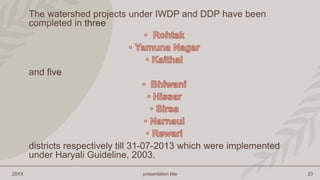
The watershed projects under IWDP and DDP have been
completed in three
and five
districts respectively till 31-07-2013 which were implemented
under Haryali Guideline, 2003.
presentation title 21
Source of Data
20XX
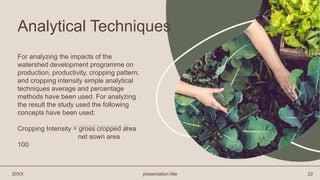
Analytical Techniques
For analyzing the impacts of the
watershed development programme on
production, productivity, cropping pattern,
and cropping intensity simple analytical
techniques average and percentage
methods have been used. For analyzing
the result the study used the following
concepts have been used:
Cropping Intensity = gross cropped area
net sown area
100
20XX presentation title 22
20XX presentation title 23
20XX presentation title 24
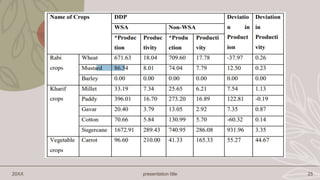
Results and Discussions:
A comparison of WSA and Non-WSA under DDP watershed
development programme related to production, productivity of
different crops, cropping pattern, cropping intensity, cost and
returns of different crops has been done. Then find out
percentage deviation between them so that impacts of DDP
watershed development programme have been examined.
20XX presentation title 25
20XX presentation title 26
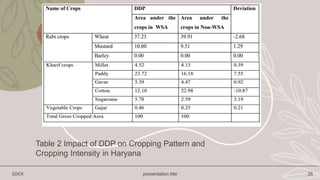
Table 2 Impact of DDP on Cropping Pattern and
Cropping Intensity in Haryana
20XX presentation title 27
20XX presentation title 28
thank you

DDP (desert devdevelopment programme)sec.pptx

  • 1.
    Desert Development Programme Presented by:Surbhi, Jasmine, Jyoti, Aastha
  • 2.
    meet our team TAKUMAHAYASHI MIRJAM NILSSON​ FLORA BERGGREN​ RAJESH SANTOSHI president chief executive officer chief operations officer vp marketing 20XX presentation title 2
  • 3.
  • 4.
    20XX presentation title4 A sizable proportion of the country’s total land area falls under: Arid Semi arid Dry sub humid
  • 5.
    A drought isa long period of dry weather caused by a shortfall in the usual rainfall in a given time period of more than a certain percentage, usually 50% in the sowing season. A drought-prone area is characterized by: 20XX presentation title 5 degradation of land hunger and malnutrition decreasing productivity of crops depleting water resources out-migration of both human and cattle populations
  • 6.
    20XX presentation title6 On the recommendations of the , in its Interim Report (1974), the hot desert areas were identified for the implementation of a program comprising afforestation and livestock development. As for the cold desert areas of Jammu & Kashmir and Himachal Pradesh, the National Commission (in its Final Report, 976) recommended that their specific problems should be studied in depth. The above recommendations lead to the Desert Development Programme (DDP) in the year 1977-78. The DDP program was implemented on a sectoral basis to develop poor areas in the long term. It was launched in both the of and and the of and
  • 7.
    Coverage - Including of384 new blocks; and - Transfer of 64 blocks from DPAP to DDP.
  • 8.
    Inclusion of newblocks and transfer of blocks from DPAP to DDP was agreed to. Thus, from 1995-96 total blocks covered under DDP became 227 in 40 districts of 7 States. Subsequently, with the re-organization of Districts and Blocks, the programme is now covered in 235 blocks of 40 districts in 7 States. The corresponding physical area under the programme is about 4.57 lakh sq. km. Before 131 blocks 21 district 5 state After 235 blocks 40 district 7 state
  • 9.
  • 10.
  • 12.
    To restore ecologicalbalance by harnessing, conserving and developing natural resources i.e. land, water, vegetative cover and rising land productivity
  • 13.
  • 14.
    Funding pattern The Centralshare under each type of eco-system under DDP was as under: 20XX presentation title 14 Hot Arid Non Sandy Areas 75% Cold Arid Areas 100% Hot Arid Sandy Areas 100%
  • 15.
    20XX presentation title15 The above Central share was applicable up to 31st March 1999. With effect from 1st April 1999, the program is being funded based on . In all these cases the watershed projects are being are being sanctioned on or after this date. From 1.4.1995 till 31.3.2000, each cost ranged between Rs. 22.50 lakhs to Rs. 25 lakhs. With effect from 1.4.2000, a uniform rate of Rs. 30 lakh per project has been prescribed.
  • 16.
    Releases made underDDP (1995-96 to 2002- 03) as on 31-1-2003 20XX presentation title 16 S. No Name of state 1995- 96 1996- 97 1997- 98 1998- 99 1999- 2000 2000- 01 2001- 02 2002- 03 Total 1. Andhra Pradesh 4.05 6.74 4.22 4.83 4.37 6.51 9.99 6.41 47.12 2. Gujarat 18.61 10.27 11.01 8.60 27.51 24.45 22.58 30.39 153.42 3. Haryana 4.50 6.34 7.97 6.08 4.54 8.11 14.83 11.50 63.87 4. Himachal Pradesh 6.36 8.00 1.50 0.30 2.55 4.51 5.14 7.36 35.72 5. Jammu & Kashmir 10.00 13.30 2.25 5.85 4.86 7.84 5.75 9.02 58.97 6. Karnataka 3.90 4.32 8.42 3.50 2.15 5.03 9.95 11.24 48.51 7. Rajasthan 53.58 16.40 34.64 60.64 39.1 78.54 81.64 58.41 412.86 Total 101.00 65.35 70.80 79.80 84.99 134.99 149.89 134.33 820.37 Rs. in crore
  • 17.
    In J&K nosoil, topographic or hydrological surveys were undertaken by any agency for deciding the areas of thrust and in the formulation of the area-based schemes. There was no voluntary agency or peoples involvement in the identification of the areas or the formulation and implementation of schemes of the DDP. It was observed that the visits of Senior Officers were very few which had no desired impact on the program. The main reasons for the depletion of vegetable cover and degradation of The environment in the desert areas was due to an uncontrolled overgrazing of livestock
  • 18.
    20XX presentation title18 There should be a clear cut policy in granting the funds for proper maintenance of the assets created under the DDP. The State Government may be given powers to incur expenditure on schemes as per the felt needs of the people and the area. Block Agency should be effectively involved especially in the schemes under agriculture, forestry and pasture development. In order to reduce the consumption of firewood, the non-conventional sources of energy like bio-gas plants and Solar Energy may be introduced
  • 19.
    The impact ofthe DDP watershed development programme on the agricultural economy so that living standard of the rural population improved; this study has taken up the following specific objectives: To analyze the impact of the DDP watershed programme on agricultural productivity, cropping intensity and cropping pattern in WSA and Non-WSA. To examine benefit and cost ratio in WSA and non-WSA
  • 20.
    20XX presentation title20 The watershed projects under IWDP and DDP have been completed in three and five districts respectively till 31-07-2013 which were implemented under Haryali Guideline, 2003.
  • 21.
  • 22.
    Analytical Techniques For analyzingthe impacts of the watershed development programme on production, productivity, cropping pattern, and cropping intensity simple analytical techniques average and percentage methods have been used. For analyzing the result the study used the following concepts have been used: Cropping Intensity = gross cropped area net sown area 100 20XX presentation title 22
  • 23.
  • 24.
    20XX presentation title24 Results and Discussions: A comparison of WSA and Non-WSA under DDP watershed development programme related to production, productivity of different crops, cropping pattern, cropping intensity, cost and returns of different crops has been done. Then find out percentage deviation between them so that impacts of DDP watershed development programme have been examined.
  • 25.
  • 26.
    20XX presentation title26 Table 2 Impact of DDP on Cropping Pattern and Cropping Intensity in Haryana
  • 27.
  • 28.
  • 29.