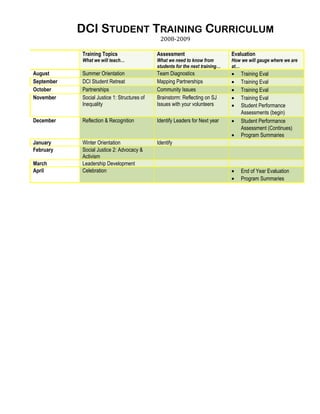
DCI STUDENT TRAINING CURRICULUM
2008-2009

Training Topics

Assessment

Evaluation

What we will teach…

What we need to know from
students for the next training…

How we will gauge where we are
at…

August
September
October
November

Summer Orientation
DCI Student Retreat
Partnerships
Social Justice 1: Structures of
Inequality

Team Diagnostics
Mapping Partnerships
Community Issues
Brainstorm: Reflecting on SJ
Issues with your volunteers

•
•
•
•
•

December

Reflection & Recognition

Identify Leaders for Next year

•
•

January
February
March
April

Winter Orientation
Social Justice 2: Advocacy &
Activism
Leadership Development
Celebration

Training Eval
Training Eval
Training Eval
Training Eval
Student Performance
Assessments (begin)
Student Performance
Assessment (Continues)
Program Summaries

•
•

End of Year Evaluation
Program Summaries

Identify
August – Summer Orientation
Topic
Our Stories
What is DCI?
Policies & Procedures
Team-building
Community Basics
Volunteer Recruitment
Program Ideas

Content/Goal
Students will:
(Students and staff will) express the
reasons/paths that brought them to DCI
Understand the Mission and make-up of DCI
Understand how to work in the DCI offices
Develop a sense of group identity and team
cohesiveness
Gain basic skills in contacting and working
with community members
Learn about a variety of strategies for
recruiting volunteers
Brainstorm event ideas

Activity
Motivation Bubbles
Introduce the Handbook, go over content
Tour of DCI
Team Diagnostics
Community Partner Role Play
(using brochure)
Volunteer Facilitation Exercise
(Update premises to reflect tabling events
and office visits by volunteers)
Program Idea exchange - Brainstorm by
program, then as a group developing
purposeful collaboration between areas
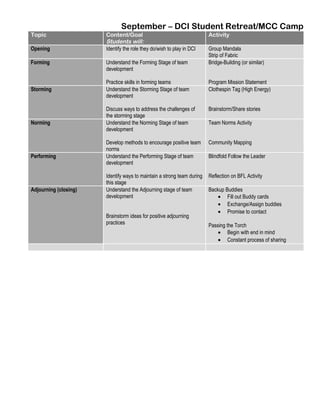
September – DCI Student Retreat/MCC Camp
Topic
Opening
Forming

Storming

Norming

Performing

Adjourning (closing)

Content/Goal
Students will:
Identify the role they do/wish to play in DCI
Understand the Forming Stage of team
development

Activity
Group Mandala
Strip of Fabric
Bridge-Building (or similar)

Practice skills in forming teams
Understand the Storming Stage of team
development

Program Mission Statement
Clothespin Tag (High Energy)

Discuss ways to address the challenges of
the storming stage
Understand the Norming Stage of team
development

Brainstorm/Share stories

Develop methods to encourage positive team
norms
Understand the Performing Stage of team
development

Community Mapping

Identify ways to maintain a strong team during
this stage
Understand the Adjourning stage of team
development

Reflection on BFL Activity

Brainstorm ideas for positive adjourning
practices

Team Norms Activity

Blindfold Follow the Leader

Backup Buddies
• Fill out Buddy cards
• Exchange/Assign buddies
• Promise to contact
Passing the Torch
• Begin with end in mind
• Constant process of sharing
October – Authentic Community Partnerships
Topic
Collaboration
Community Partnerships

Volunteer Support

Content/Goal
Students will:
Understand the factors of successful
collaboration
Discuss current and future partnerships

Activity

Practice strategies for developing
meaningful partnerships
Understand the elements of positive
volunteer experiences

CBO Checklist (Modified version for
students)
Delegation activity
(Justin & Lindsey’s version of these)

Assess current strategies for supporting
volunteers and develop ideas for new
strategies

Putting them back in the position of
taking direction & orders from someone
(more intensive version of Volunteer
Facilitation)

“Success Factors of Collaboration”
(VISTA Resource Binder)
Anatomy of Community Partnerships
November – Social Justice 1: Structures of
Inequality
Topic
Introduction to Open Space
Rules & Intentional
Conversations
Intentional Conversations

Content/Goal
Students will:
Understand the rules and methodology of
Open space & Intentional Conversations

Activity

Possible Topics:
• Causes, Effects & Possible
Solutions of Poverty
• Racism: Not just a Black &
White Issue, Why do these racial
divides exist?
• Justice, Social Justice, Ecojustice
– Where can we find the hope?

Staff members will agree to “chair a
topic” and encourage discussion.

Introduction, explain the rules, post the
topics

Staff plays the role of facilitator, not
participant, so students have the chance
to hash out their ideas together.
Staff will act as the “keeper of the
rules”

At a staff retreat, staff will identify
Concluding the Day

Students will reflect on the personal
impact of the day’s discussions
As a group students will discuss
strategies for using what they’ve learned
today in their programming and daily
lives

Facilitated discussion (Staff)
December – Reflection & Recognition
(VISION Student Coordinator)
Topic
Triumphs of the Fall
Semester

Content/Goal
Students will:
Identify and share their successes of the
Fall Semester

Mock Awards

Award and recognize each other as
teammates

Recognition of Volunteers

Students will create recognition pieces
for volunteers/people they have been
working with (i.e. SSC April 08
workshop)

Activity
Group Scrapbook – each person brings
or submits a photo and a story or quote
to go with it. After they share their
story, they add the page to the group
scrapbook.
VISION Student Coordinator will
create award categories and have
people vote
Materials: Space, random craft items,
paper, etc.
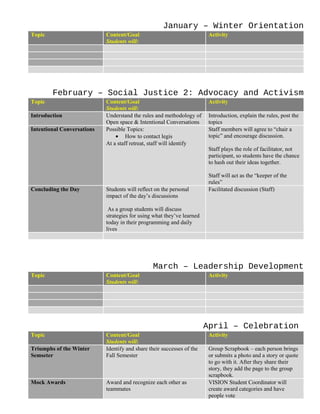
January – Winter Orientation
Topic

Content/Goal
Students will:

Activity

February – Social Justice 2: Advocacy and Activism
Topic
Introduction
Intentional Conversations

Concluding the Day

Content/Goal
Students will:
Understand the rules and methodology of
Open space & Intentional Conversations
Possible Topics:
• How to contact legis
At a staff retreat, staff will identify

Students will reflect on the personal
impact of the day’s discussions

Activity
Introduction, explain the rules, post the
topics
Staff members will agree to “chair a
topic” and encourage discussion.
Staff plays the role of facilitator, not
participant, so students have the chance
to hash out their ideas together.
Staff will act as the “keeper of the
rules”
Facilitated discussion (Staff)

As a group students will discuss
strategies for using what they’ve learned
today in their programming and daily
lives

March – Leadership Development
Topic

Content/Goal
Students will:

Activity

April – Celebration
Topic
Triumphs of the Winter
Semseter

Mock Awards

Content/Goal
Students will:
Identify and share their successes of the
Fall Semester

Award and recognize each other as
teammates

Activity
Group Scrapbook – each person brings
or submits a photo and a story or quote
to go with it. After they share their
story, they add the page to the group
scrapbook.
VISION Student Coordinator will
create award categories and have
people vote
Warm Fuzzies
*SAMPLE* Student Training Curriculum

*SAMPLE* Student Training Curriculum

  • 1.
    DCI STUDENT TRAININGCURRICULUM 2008-2009 Training Topics Assessment Evaluation What we will teach… What we need to know from students for the next training… How we will gauge where we are at… August September October November Summer Orientation DCI Student Retreat Partnerships Social Justice 1: Structures of Inequality Team Diagnostics Mapping Partnerships Community Issues Brainstorm: Reflecting on SJ Issues with your volunteers • • • • • December Reflection & Recognition Identify Leaders for Next year • • January February March April Winter Orientation Social Justice 2: Advocacy & Activism Leadership Development Celebration Training Eval Training Eval Training Eval Training Eval Student Performance Assessments (begin) Student Performance Assessment (Continues) Program Summaries • • End of Year Evaluation Program Summaries Identify
  • 2.
    August – SummerOrientation Topic Our Stories What is DCI? Policies & Procedures Team-building Community Basics Volunteer Recruitment Program Ideas Content/Goal Students will: (Students and staff will) express the reasons/paths that brought them to DCI Understand the Mission and make-up of DCI Understand how to work in the DCI offices Develop a sense of group identity and team cohesiveness Gain basic skills in contacting and working with community members Learn about a variety of strategies for recruiting volunteers Brainstorm event ideas Activity Motivation Bubbles Introduce the Handbook, go over content Tour of DCI Team Diagnostics Community Partner Role Play (using brochure) Volunteer Facilitation Exercise (Update premises to reflect tabling events and office visits by volunteers) Program Idea exchange - Brainstorm by program, then as a group developing purposeful collaboration between areas
  • 3.
    September – DCIStudent Retreat/MCC Camp Topic Opening Forming Storming Norming Performing Adjourning (closing) Content/Goal Students will: Identify the role they do/wish to play in DCI Understand the Forming Stage of team development Activity Group Mandala Strip of Fabric Bridge-Building (or similar) Practice skills in forming teams Understand the Storming Stage of team development Program Mission Statement Clothespin Tag (High Energy) Discuss ways to address the challenges of the storming stage Understand the Norming Stage of team development Brainstorm/Share stories Develop methods to encourage positive team norms Understand the Performing Stage of team development Community Mapping Identify ways to maintain a strong team during this stage Understand the Adjourning stage of team development Reflection on BFL Activity Brainstorm ideas for positive adjourning practices Team Norms Activity Blindfold Follow the Leader Backup Buddies • Fill out Buddy cards • Exchange/Assign buddies • Promise to contact Passing the Torch • Begin with end in mind • Constant process of sharing
  • 4.
    October – AuthenticCommunity Partnerships Topic Collaboration Community Partnerships Volunteer Support Content/Goal Students will: Understand the factors of successful collaboration Discuss current and future partnerships Activity Practice strategies for developing meaningful partnerships Understand the elements of positive volunteer experiences CBO Checklist (Modified version for students) Delegation activity (Justin & Lindsey’s version of these) Assess current strategies for supporting volunteers and develop ideas for new strategies Putting them back in the position of taking direction & orders from someone (more intensive version of Volunteer Facilitation) “Success Factors of Collaboration” (VISTA Resource Binder) Anatomy of Community Partnerships
  • 5.
    November – SocialJustice 1: Structures of Inequality Topic Introduction to Open Space Rules & Intentional Conversations Intentional Conversations Content/Goal Students will: Understand the rules and methodology of Open space & Intentional Conversations Activity Possible Topics: • Causes, Effects & Possible Solutions of Poverty • Racism: Not just a Black & White Issue, Why do these racial divides exist? • Justice, Social Justice, Ecojustice – Where can we find the hope? Staff members will agree to “chair a topic” and encourage discussion. Introduction, explain the rules, post the topics Staff plays the role of facilitator, not participant, so students have the chance to hash out their ideas together. Staff will act as the “keeper of the rules” At a staff retreat, staff will identify Concluding the Day Students will reflect on the personal impact of the day’s discussions As a group students will discuss strategies for using what they’ve learned today in their programming and daily lives Facilitated discussion (Staff)
  • 6.
    December – Reflection& Recognition (VISION Student Coordinator) Topic Triumphs of the Fall Semester Content/Goal Students will: Identify and share their successes of the Fall Semester Mock Awards Award and recognize each other as teammates Recognition of Volunteers Students will create recognition pieces for volunteers/people they have been working with (i.e. SSC April 08 workshop) Activity Group Scrapbook – each person brings or submits a photo and a story or quote to go with it. After they share their story, they add the page to the group scrapbook. VISION Student Coordinator will create award categories and have people vote Materials: Space, random craft items, paper, etc.
  • 7.
    January – WinterOrientation Topic Content/Goal Students will: Activity February – Social Justice 2: Advocacy and Activism Topic Introduction Intentional Conversations Concluding the Day Content/Goal Students will: Understand the rules and methodology of Open space & Intentional Conversations Possible Topics: • How to contact legis At a staff retreat, staff will identify Students will reflect on the personal impact of the day’s discussions Activity Introduction, explain the rules, post the topics Staff members will agree to “chair a topic” and encourage discussion. Staff plays the role of facilitator, not participant, so students have the chance to hash out their ideas together. Staff will act as the “keeper of the rules” Facilitated discussion (Staff) As a group students will discuss strategies for using what they’ve learned today in their programming and daily lives March – Leadership Development Topic Content/Goal Students will: Activity April – Celebration Topic Triumphs of the Winter Semseter Mock Awards Content/Goal Students will: Identify and share their successes of the Fall Semester Award and recognize each other as teammates Activity Group Scrapbook – each person brings or submits a photo and a story or quote to go with it. After they share their story, they add the page to the group scrapbook. VISION Student Coordinator will create award categories and have people vote
  • 8.