LOCALIZING POVERTY
REDUCTION STRATEGIES AND
TARGETS
THE ALTERNATIVE DELIVERY MODEL
(ADM) IN EDUCATION FOR OUT OF
SCHOOL CHILDREN
Ramon C. Bobier
• Present: Management Consultant,
Alternative Delivery Model Project,
BRAC/DFAT
• Past : Deputy Project Director, BEAM
(2001-2010)
• Project Director, BEAM-ARMM Extension
• (2010-2012)
• Community Development Adviser
Outline of Presentation
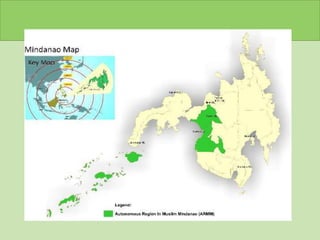
• ARMM Context
- Basic Indicators
- Key Development Challenges
• Alternative Delivery Model In Education
- Rationale
- Key Features
- Challenges
- Lessons Learned
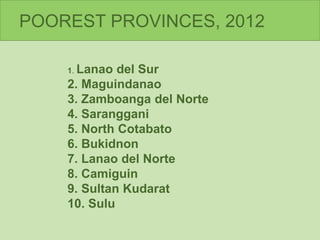
POOREST PROVINCES, 2012
1. Lanao del Sur
2. Maguindanao
3. Zamboanga del Norte
4. Saranggani
5. North Cotabato
6. Bukidnon
7. Lanao del Norte
8. Camiguin
9. Sultan Kudarat
10. Sulu
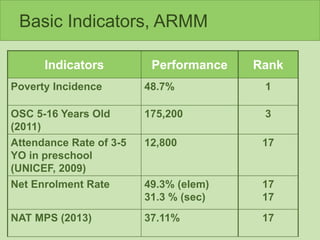
Basic Indicators, ARMM
Indicators Performance Rank
Poverty Incidence 48.7% 1
OSC 5-16 Years Old
(2011)
175,200 3
Attendance Rate of 3-5
YO in preschool
(UNICEF, 2009)
12,800 17
Net Enrolment Rate 49.3% (elem)
31.3 % (sec)
17
17
NAT MPS (2013) 37.11% 17
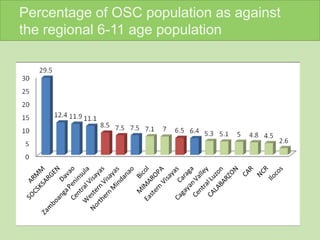
Percentage of OSC population as against
the regional 6-11 age population
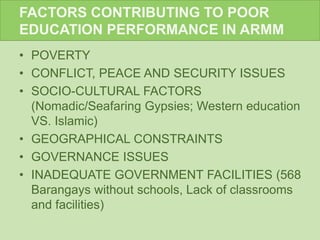
FACTORS CONTRIBUTING TO POOR
EDUCATION PERFORMANCE IN ARMM
• POVERTY
• CONFLICT, PEACE AND SECURITY ISSUES
• SOCIO-CULTURAL FACTORS
(Nomadic/Seafaring Gypsies; Western education
VS. Islamic)
• GEOGRAPHICAL CONSTRAINTS
• GOVERNANCE ISSUES
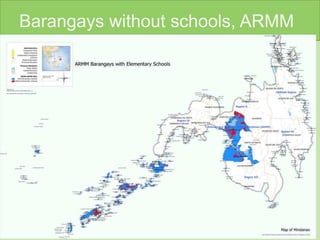
• INADEQUATE GOVERNMENT FACILITIES (568
Barangays without schools, Lack of classrooms
and facilities)
Barangays without schools, ARMM
• CHALLENGES OF EDUCATION IN ARMM
• - LONG HISTORY OF CONFLICT AND
STRUGGLE FOR AUTONOMY AND
INDEPENDENCE
• SOCIO-ECONOMIC MARGINALIZATION
• - POLITICAL INSTABILITY (SPDA, ARMM,
BBL)
• - POVERTY
• -
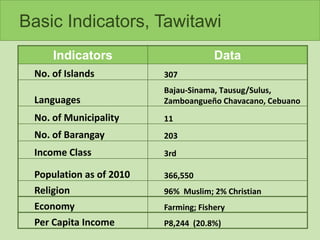
Basic Indicators, Tawitawi
Indicators Data
No. of Islands 307
Languages
Вajau-Sinama, Тausug/Ѕulus,
Zamboangueño Chavacano, Cebuano
No. of Municipality 11
No. of Barangay 203
Income Class 3rd
Population as of 2010 366,550
Religion 96% Muslim; 2% Christian
Economy Farming; Fishery
Per Capita Income P8,244 (20.8%)
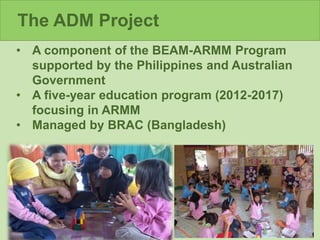
The ADM Project
• A component of the BEAM-ARMM Program
supported by the Philippines and Australian
Government
• A five-year education program (2012-2017)
focusing in ARMM
• Managed by BRAC (Bangladesh)
ALTERNATIVE DELIVERY MODEL IN
EDUCATION (ADM Project)
BEAM-ARMM GOAL - Contribute to poverty
reduction and the emergence of sustainable peace.
ADM Project Goal - To improve access to
education by providing catch-up and second
chance education for poor and marginalized
children through the kindergarten and elementary
education classes established in priority
communities.
Key Features of ADM
• Establishment of BRAC Learning Centers
offering formal classes in Kindergarten and
Elementary grade levels
• Students complete elementary education as
a cohort beginning Grade 1 to Grade 6
• One classroom one Learning Center
• School operation and classroom instruction
based on BRAC education model
• Local NGOs manage the Learning Centers
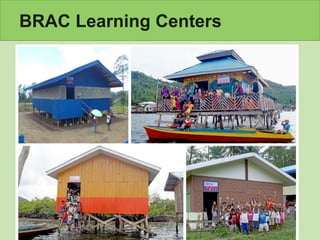
BRAC Learning Centers
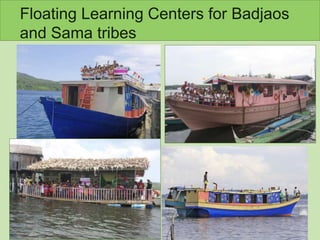
Floating Learning Centers for Badjaos
and Sama tribes
Target Communities
• Barangays without a school or with
access issues
• Large number of children not attending
school
• Supportive community
• Marginalized children
• Endorsed by Deped
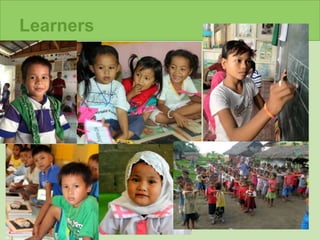
Learners
Curriculum
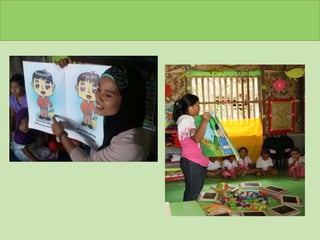
• The ADM-BRAC schools implement the
DepEd’s K to 12 curriculum for the
preschool and elementary education.
• The curriculum contents and instructional
materials are contextualized in the ARMM
setting.
• Mother tongue-based instruction is
employed in preschool, Grade 1 and
Grade 2 classes.
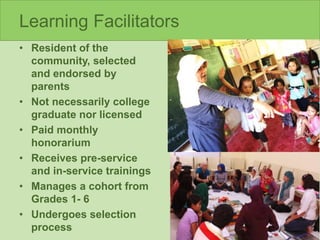
Learning Facilitators
• Resident of the
community, selected
and endorsed by
parents
• Not necessarily college
graduate nor licensed
• Paid monthly
honorarium
• Receives pre-service
and in-service trainings
• Manages a cohort from
Grades 1- 6
• Undergoes selection
process
Instructional Materials
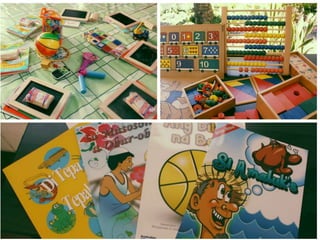
• ADM-BRAC Learning Centers have
adequate, varied and appropriate teaching
and learning materials for teachers and
pupils to support the Kto12 curriculum
• The materials were enriched in the ARMM
context and were developed with the
participation of teachers and writers from
DepEd-ARMM and DepEd-Central Office.
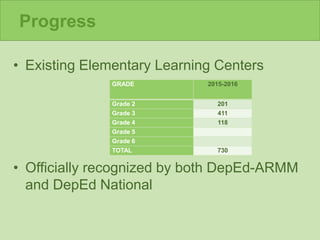
Progress
• Existing Elementary Learning Centers
• Officially recognized by both DepEd-ARMM
and DepEd National
GRADE 2015-2016
Grade 2 201
Grade 3 411
Grade 4 118
Grade 5
Grade 6
TOTAL 730
INITIAL OUTCOMES
• Served 62,000 children in 1,993 ADM
classes; 7% of ARMM enrollment
• Supported marginal groups (Badjaos,
Tedurays, CSN)
• High transition rate from kinder to
Grade 1 (97%)
• Attendance rate (94%)
• Strong community support
• Value for education among parents
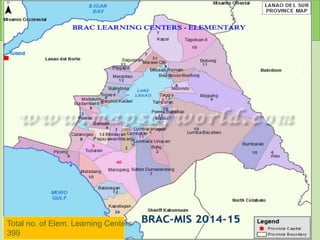
Total no. of Elem. Learning Centers
399
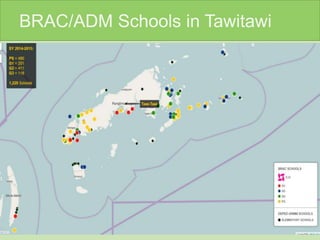
BRAC/ADM Schools in Tawitawi
Challenges
• Conflict, security and safety
• Geographic constraints
• Teacher qualifications and competency
• DepEd support
• Sustainability of ADM
Lessons Learned
• ADM responding to the education needs of
marginalized children
• ADM supplements government efforts in
education
• ADM as an alternative education delivery
mode
• Cost effectiveness of the ADM
• NGOs as effective partners in education
delivery
shukran

Davao localizing poverty out of-school

  • 1.
    LOCALIZING POVERTY REDUCTION STRATEGIESAND TARGETS THE ALTERNATIVE DELIVERY MODEL (ADM) IN EDUCATION FOR OUT OF SCHOOL CHILDREN
  • 2.
    Ramon C. Bobier •Present: Management Consultant, Alternative Delivery Model Project, BRAC/DFAT • Past : Deputy Project Director, BEAM (2001-2010) • Project Director, BEAM-ARMM Extension • (2010-2012) • Community Development Adviser
  • 3.
    Outline of Presentation •ARMM Context - Basic Indicators - Key Development Challenges • Alternative Delivery Model In Education - Rationale - Key Features - Challenges - Lessons Learned
  • 5.
    POOREST PROVINCES, 2012 1.Lanao del Sur 2. Maguindanao 3. Zamboanga del Norte 4. Saranggani 5. North Cotabato 6. Bukidnon 7. Lanao del Norte 8. Camiguin 9. Sultan Kudarat 10. Sulu
  • 6.
    Basic Indicators, ARMM IndicatorsPerformance Rank Poverty Incidence 48.7% 1 OSC 5-16 Years Old (2011) 175,200 3 Attendance Rate of 3-5 YO in preschool (UNICEF, 2009) 12,800 17 Net Enrolment Rate 49.3% (elem) 31.3 % (sec) 17 17 NAT MPS (2013) 37.11% 17
  • 7.
    Percentage of OSCpopulation as against the regional 6-11 age population
  • 8.
    FACTORS CONTRIBUTING TOPOOR EDUCATION PERFORMANCE IN ARMM • POVERTY • CONFLICT, PEACE AND SECURITY ISSUES • SOCIO-CULTURAL FACTORS (Nomadic/Seafaring Gypsies; Western education VS. Islamic) • GEOGRAPHICAL CONSTRAINTS • GOVERNANCE ISSUES • INADEQUATE GOVERNMENT FACILITIES (568 Barangays without schools, Lack of classrooms and facilities)
  • 9.
    Barangays without schools,ARMM • CHALLENGES OF EDUCATION IN ARMM • - LONG HISTORY OF CONFLICT AND STRUGGLE FOR AUTONOMY AND INDEPENDENCE • SOCIO-ECONOMIC MARGINALIZATION • - POLITICAL INSTABILITY (SPDA, ARMM, BBL) • - POVERTY • -
  • 10.
    Basic Indicators, Tawitawi IndicatorsData No. of Islands 307 Languages Вajau-Sinama, Тausug/Ѕulus, Zamboangueño Chavacano, Cebuano No. of Municipality 11 No. of Barangay 203 Income Class 3rd Population as of 2010 366,550 Religion 96% Muslim; 2% Christian Economy Farming; Fishery Per Capita Income P8,244 (20.8%)
  • 11.
    The ADM Project •A component of the BEAM-ARMM Program supported by the Philippines and Australian Government • A five-year education program (2012-2017) focusing in ARMM • Managed by BRAC (Bangladesh)
  • 12.
    ALTERNATIVE DELIVERY MODELIN EDUCATION (ADM Project) BEAM-ARMM GOAL - Contribute to poverty reduction and the emergence of sustainable peace. ADM Project Goal - To improve access to education by providing catch-up and second chance education for poor and marginalized children through the kindergarten and elementary education classes established in priority communities.
  • 13.
    Key Features ofADM • Establishment of BRAC Learning Centers offering formal classes in Kindergarten and Elementary grade levels • Students complete elementary education as a cohort beginning Grade 1 to Grade 6 • One classroom one Learning Center • School operation and classroom instruction based on BRAC education model • Local NGOs manage the Learning Centers
  • 14.
  • 15.
    Floating Learning Centersfor Badjaos and Sama tribes
  • 16.
    Target Communities • Barangayswithout a school or with access issues • Large number of children not attending school • Supportive community • Marginalized children • Endorsed by Deped
  • 17.
  • 18.
    Curriculum • The ADM-BRACschools implement the DepEd’s K to 12 curriculum for the preschool and elementary education. • The curriculum contents and instructional materials are contextualized in the ARMM setting. • Mother tongue-based instruction is employed in preschool, Grade 1 and Grade 2 classes.
  • 20.
    Learning Facilitators • Residentof the community, selected and endorsed by parents • Not necessarily college graduate nor licensed • Paid monthly honorarium • Receives pre-service and in-service trainings • Manages a cohort from Grades 1- 6 • Undergoes selection process
  • 21.
    Instructional Materials • ADM-BRACLearning Centers have adequate, varied and appropriate teaching and learning materials for teachers and pupils to support the Kto12 curriculum • The materials were enriched in the ARMM context and were developed with the participation of teachers and writers from DepEd-ARMM and DepEd-Central Office.
  • 23.
    Progress • Existing ElementaryLearning Centers • Officially recognized by both DepEd-ARMM and DepEd National GRADE 2015-2016 Grade 2 201 Grade 3 411 Grade 4 118 Grade 5 Grade 6 TOTAL 730
  • 24.
    INITIAL OUTCOMES • Served62,000 children in 1,993 ADM classes; 7% of ARMM enrollment • Supported marginal groups (Badjaos, Tedurays, CSN) • High transition rate from kinder to Grade 1 (97%) • Attendance rate (94%) • Strong community support • Value for education among parents
  • 25.
    Total no. ofElem. Learning Centers 399
  • 26.
  • 27.
    Challenges • Conflict, securityand safety • Geographic constraints • Teacher qualifications and competency • DepEd support • Sustainability of ADM
  • 28.
    Lessons Learned • ADMresponding to the education needs of marginalized children • ADM supplements government efforts in education • ADM as an alternative education delivery mode • Cost effectiveness of the ADM • NGOs as effective partners in education delivery
  • 29.