data warehousing overviewGood decisions by effectively managing dataPresented to : Eng. ShahinazAzab	Presented by : Ahmed Gamal Mohammed SWE2 – ITInc .Intake 30 2009/2010
OutlineForethoughtWhat is Data Warehousing ? Architecture of Data Warehousing Data warehousing methodologiesAdvantages of using Data WarehousingDisadvantages of using Data WarehousingConclusion 2
		Forethought“Today every company is an information company but not all are prepared to deal with it.“Mark Lahr – 3M Corp"The CEO will always get good data, but the challenge is making it available to the masses. That’s the challenge, how do you democratize decision-making?" Eric Berg, chief administrative officer and former CIO-Goodyear.3
What is date warehouse ?“collection of data that is used primarily in organizational decision making.”-- W.H. Inmon, credited with initially using the term Data Warehouse, 19924
Also means `A data warehouse is a subject-oriented, integrated, time-variant and non-volatile collection of data in support of management's decision making process.It is :- Subject-Oriented.Integrated.Time-Variant.Non-volatile.5
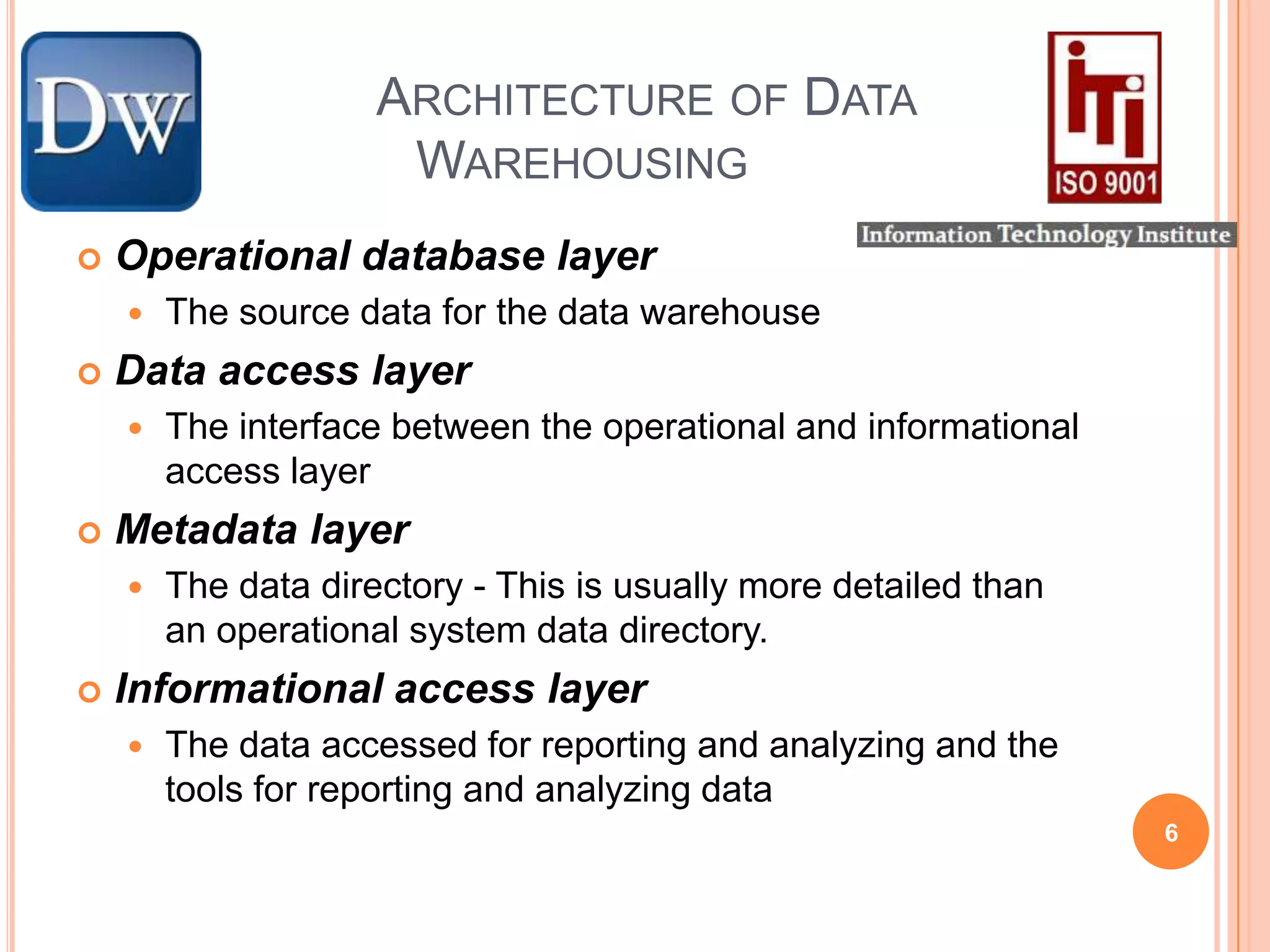
	Architecture of Data Warehousing Operational database layerThe source data for the data warehouse Data access layerThe interface between the operational and informational access layerMetadata layerThe data directory - This is usually more detailed than an operational system data directory. Informational access layerThe data accessed for reporting and analyzing and the tools for reporting and analyzing data 6
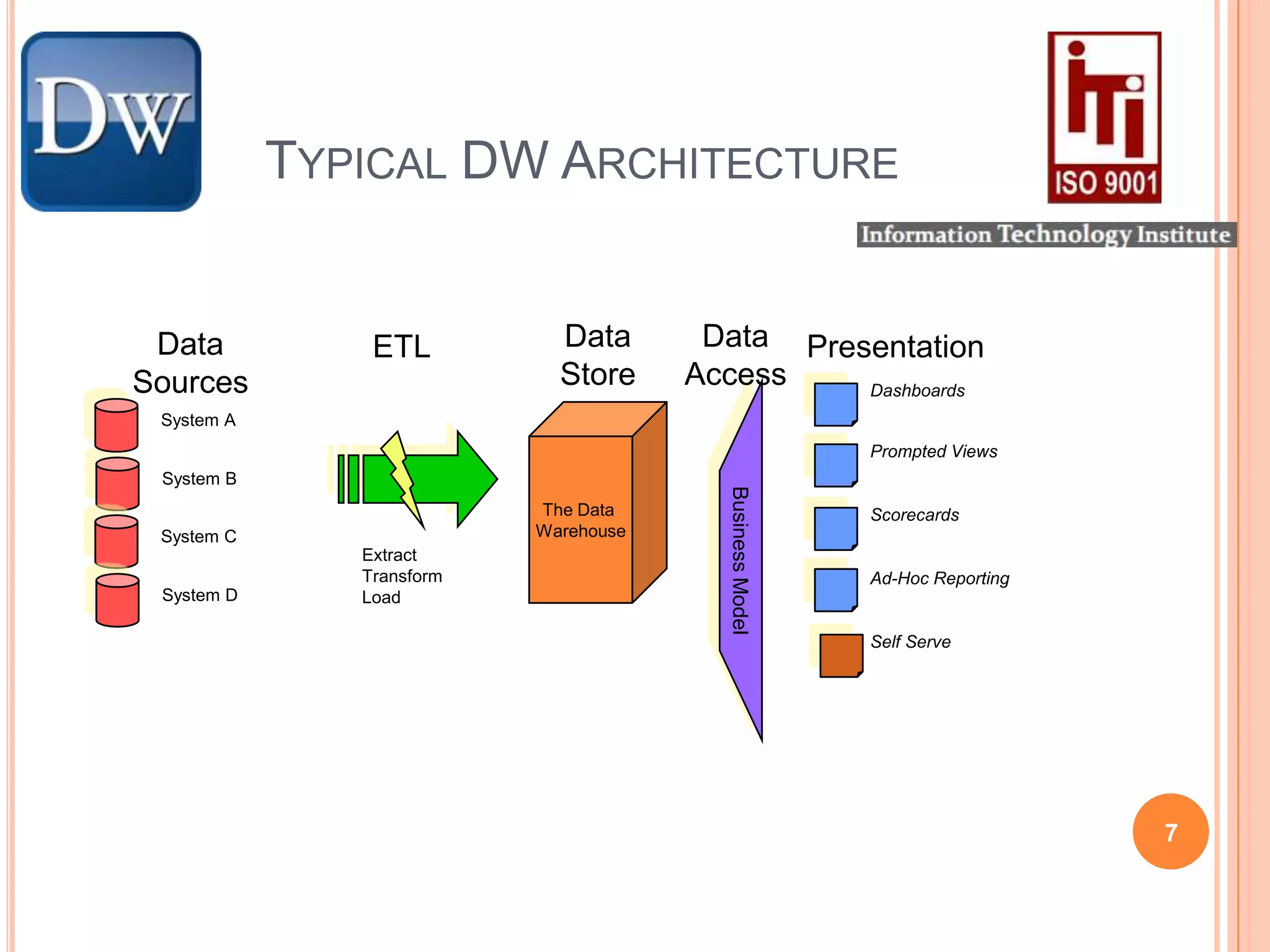
Typical DW ArchitectureData StoreData AccessData SourcesETLPresentationDashboardsThe Data WarehouseSystem APrompted ViewsSystem BScorecardsSystem CExtractTransformLoadBusiness ModelAd-Hoc ReportingSystem DSelf Serve7
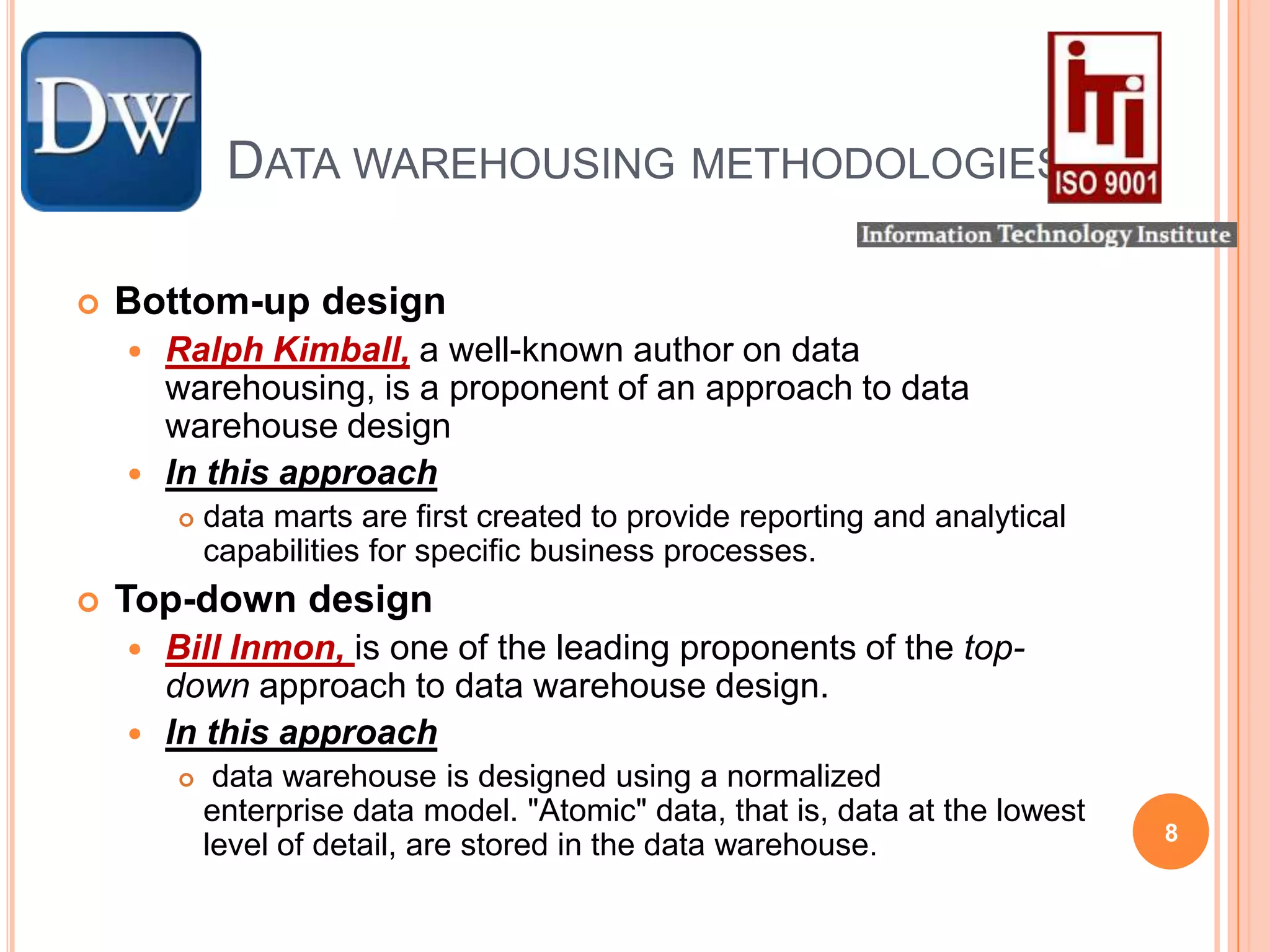
	Data warehousing methodologiesBottom-up designRalph Kimball, a well-known author on data warehousing, is a proponent of an approach to data warehouse designIn this approachdata marts are first created to provide reporting and analytical capabilities for specific business processes.Top-down designBill Inmon, is one of the leading proponents of the top-down approach to data warehouse design.In this approach  data warehouse is designed using a normalized enterprise data model. "Atomic" data, that is, data at the lowest level of detail, are stored in the data warehouse.8
Advantagesof using Data warehousingPrior to loading data into the data warehouse, inconsistencies are identified and resolved. This greatly simplifies reporting and analysis.Because they are separate from operational systems, data warehouses provide retrieval of data without slowing down operational systems.9
Disadvantages	of using data warehousing Data warehouses are not the optimal environment for unstructured data.Because data must be extracted, transformed and loaded into the warehouse, there is an element of latency in data warehouse data.10
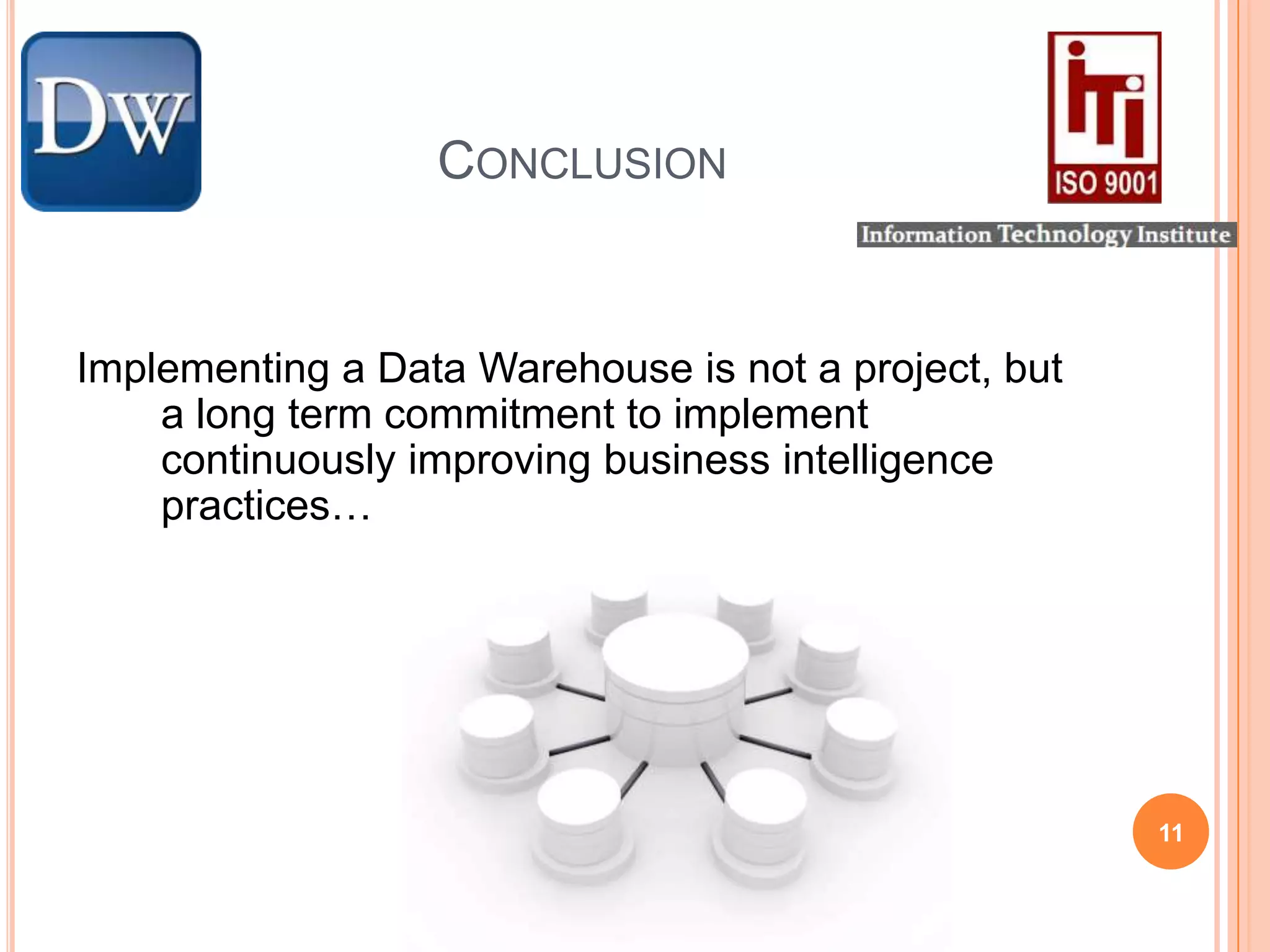
Conclusion 11Implementing a Data Warehouse is not a project, but a long term commitment to implement continuously improving business intelligence practices…
12Thank you for your listening At the end

Data Warehousing Overview

  • 1.
    data warehousing overviewGooddecisions by effectively managing dataPresented to : Eng. ShahinazAzab Presented by : Ahmed Gamal Mohammed SWE2 – ITInc .Intake 30 2009/2010
  • 2.
    OutlineForethoughtWhat is DataWarehousing ? Architecture of Data Warehousing Data warehousing methodologiesAdvantages of using Data WarehousingDisadvantages of using Data WarehousingConclusion 2
  • 3.
    Forethought“Today every companyis an information company but not all are prepared to deal with it.“Mark Lahr – 3M Corp"The CEO will always get good data, but the challenge is making it available to the masses. That’s the challenge, how do you democratize decision-making?" Eric Berg, chief administrative officer and former CIO-Goodyear.3
  • 4.
    What is datewarehouse ?“collection of data that is used primarily in organizational decision making.”-- W.H. Inmon, credited with initially using the term Data Warehouse, 19924
  • 5.
    Also means `Adata warehouse is a subject-oriented, integrated, time-variant and non-volatile collection of data in support of management's decision making process.It is :- Subject-Oriented.Integrated.Time-Variant.Non-volatile.5
  • 6.
    Architecture of DataWarehousing Operational database layerThe source data for the data warehouse Data access layerThe interface between the operational and informational access layerMetadata layerThe data directory - This is usually more detailed than an operational system data directory. Informational access layerThe data accessed for reporting and analyzing and the tools for reporting and analyzing data 6
  • 7.
    Typical DW ArchitectureDataStoreData AccessData SourcesETLPresentationDashboardsThe Data WarehouseSystem APrompted ViewsSystem BScorecardsSystem CExtractTransformLoadBusiness ModelAd-Hoc ReportingSystem DSelf Serve7
  • 8.
    Data warehousing methodologiesBottom-updesignRalph Kimball, a well-known author on data warehousing, is a proponent of an approach to data warehouse designIn this approachdata marts are first created to provide reporting and analytical capabilities for specific business processes.Top-down designBill Inmon, is one of the leading proponents of the top-down approach to data warehouse design.In this approach data warehouse is designed using a normalized enterprise data model. "Atomic" data, that is, data at the lowest level of detail, are stored in the data warehouse.8
  • 9.
    Advantagesof using DatawarehousingPrior to loading data into the data warehouse, inconsistencies are identified and resolved. This greatly simplifies reporting and analysis.Because they are separate from operational systems, data warehouses provide retrieval of data without slowing down operational systems.9
  • 10.
    Disadvantages of using datawarehousing Data warehouses are not the optimal environment for unstructured data.Because data must be extracted, transformed and loaded into the warehouse, there is an element of latency in data warehouse data.10
  • 11.
    Conclusion 11Implementing aData Warehouse is not a project, but a long term commitment to implement continuously improving business intelligence practices…
  • 12.
    12Thank you foryour listening At the end