Data and Genocide Acts
By Renata Avila
Berlin, 10th March 2015.
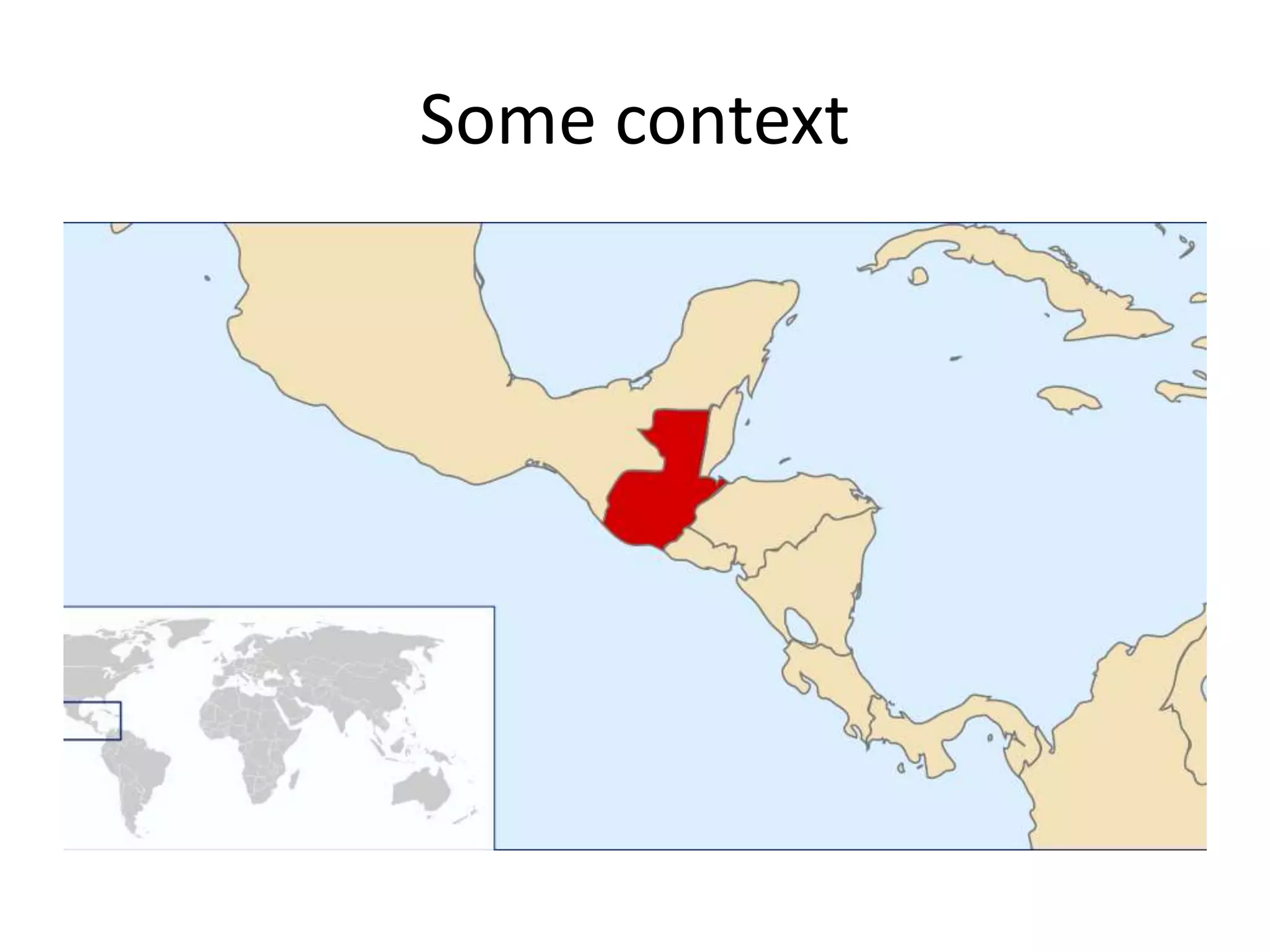
Some context
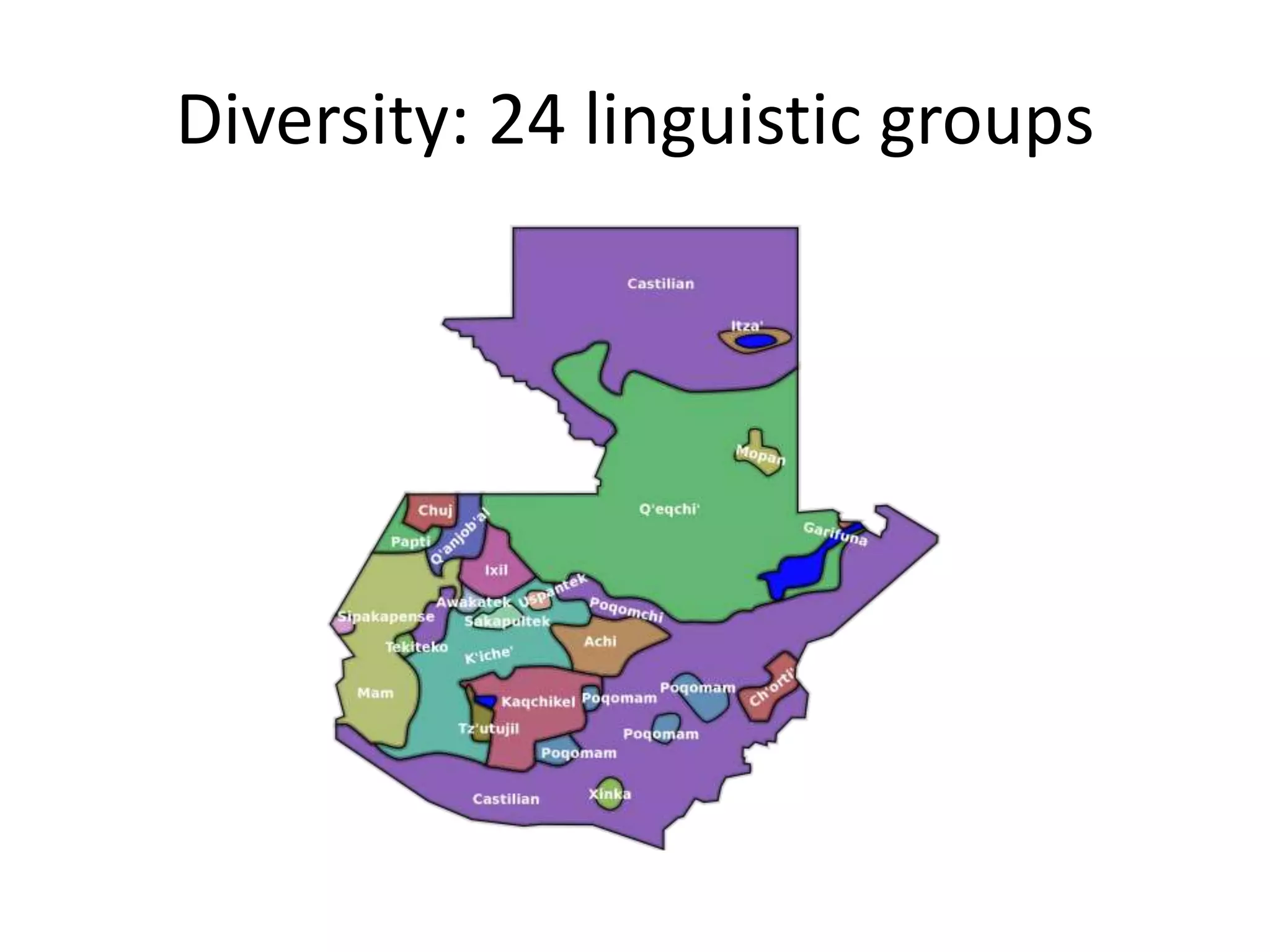
Diversity: 24 linguistic groups
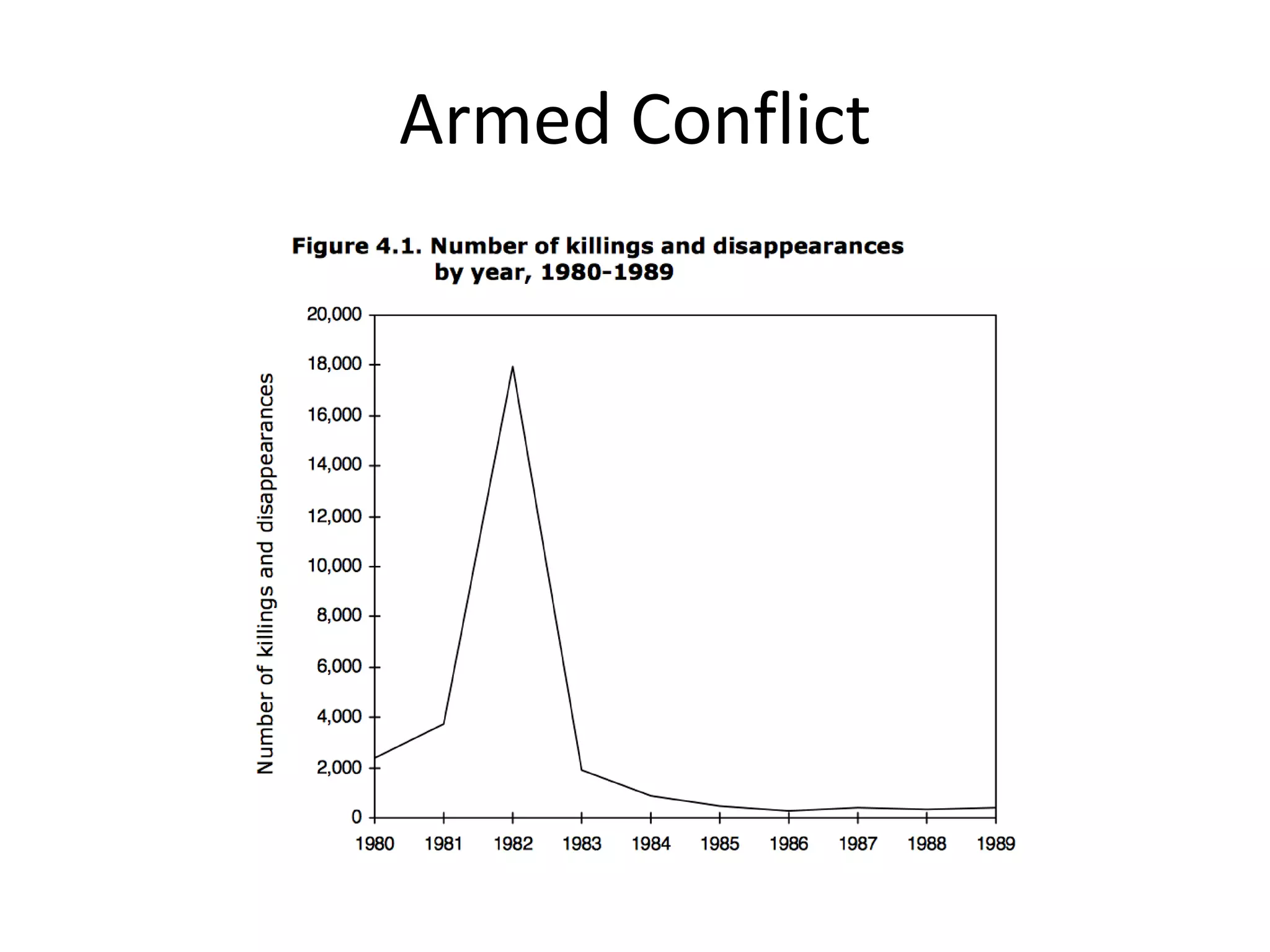
Armed Conflict
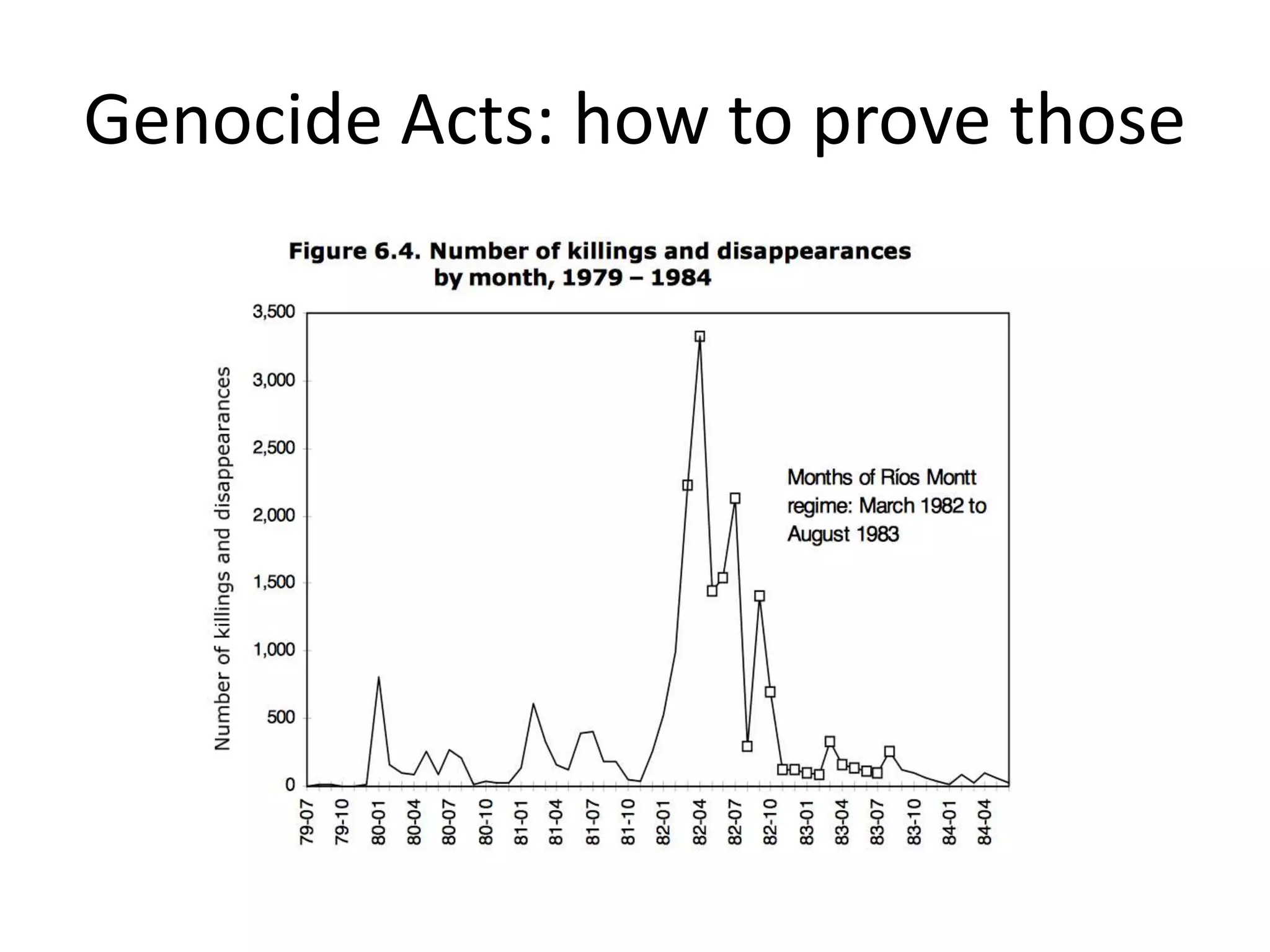
Genocide Acts: how to prove those
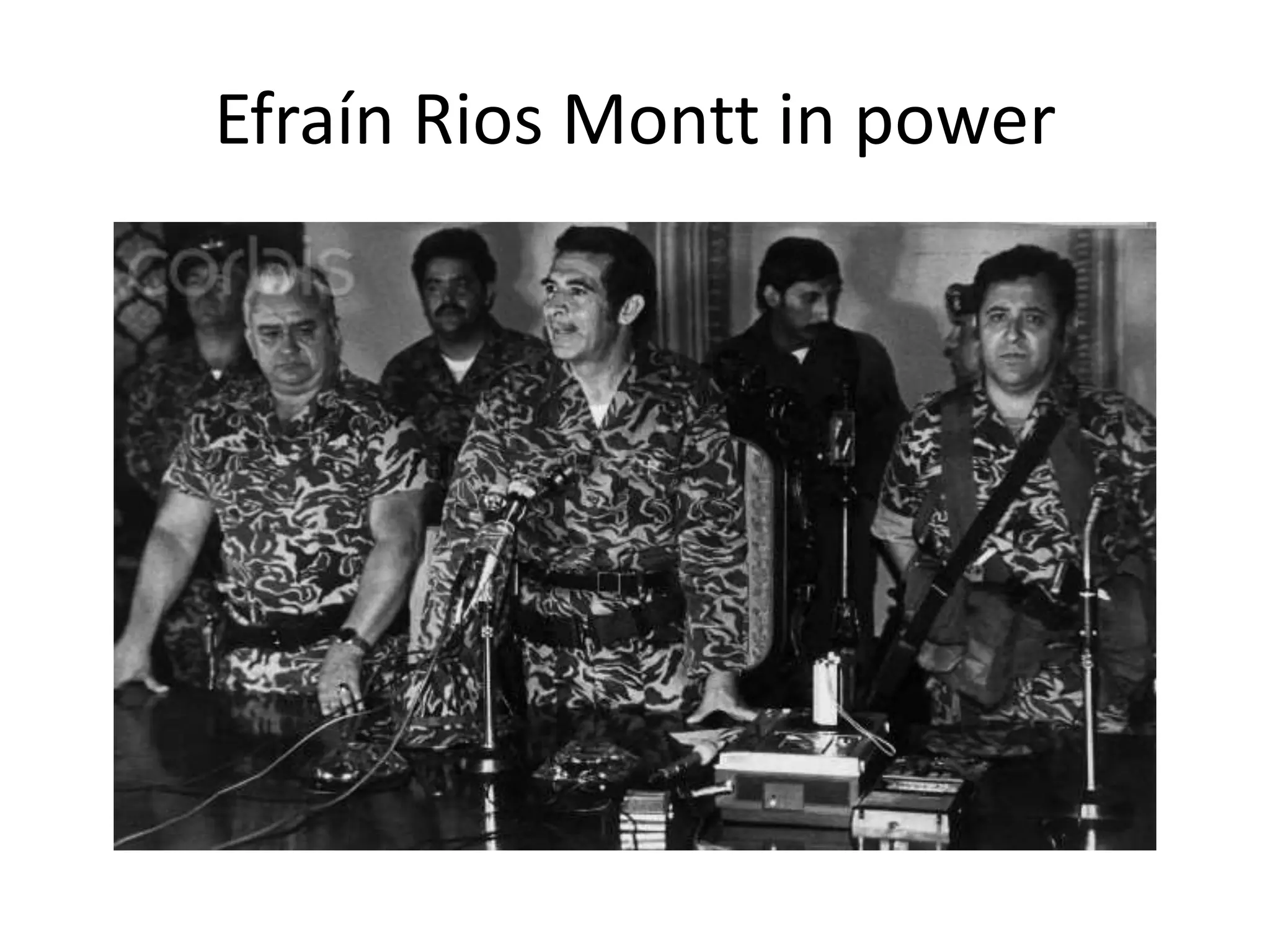
Efraín Rios Montt in power
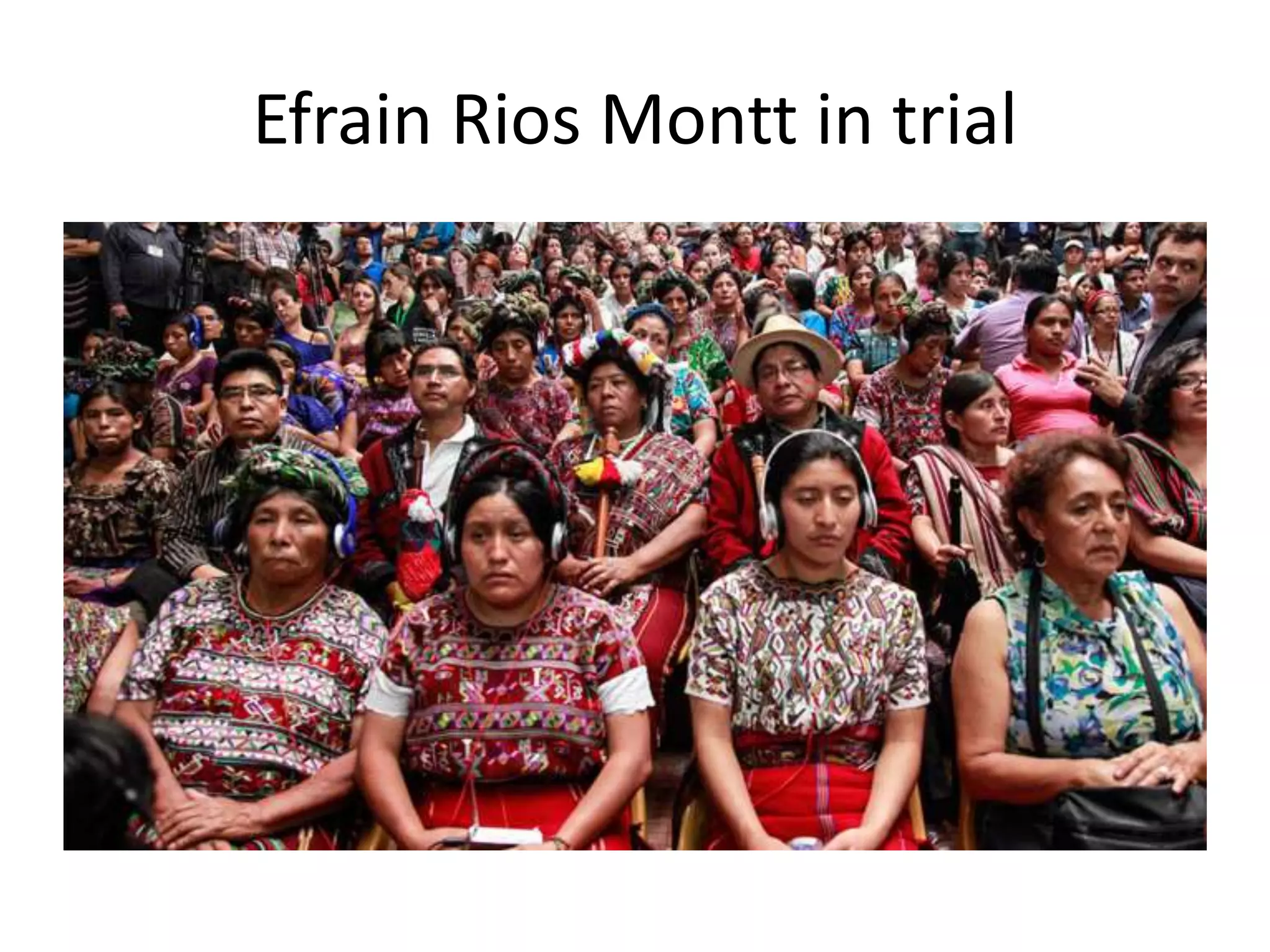
Efrain Rios Montt in trial
How to prove it?
• Convention on the Prevention and Punishment of the Crime of Genocide
(CPPCG)
• ...any of the following acts committed with intent to destroy, in whole or in
part, a national, ethnical, racial or religious group, as such:
• (a) Killing members of the group;
• (b) Causing serious bodily or mental harm to members of the group;
• (c) Deliberately inflicting on the group conditions of life calculated to bring
about its physical destruction in whole or in part;
• (d) Imposing measures intended to prevent births within the group;
• (e) Forcibly transferring children of the group to another group.
• — Convention on the Prevention and Punishment of the Crime of
Genocide, Article 2[2]
In short…
Genocide is a specific crime it does not mean
killing a lot of people. Genocide specifically
means that you picked out a particular group.
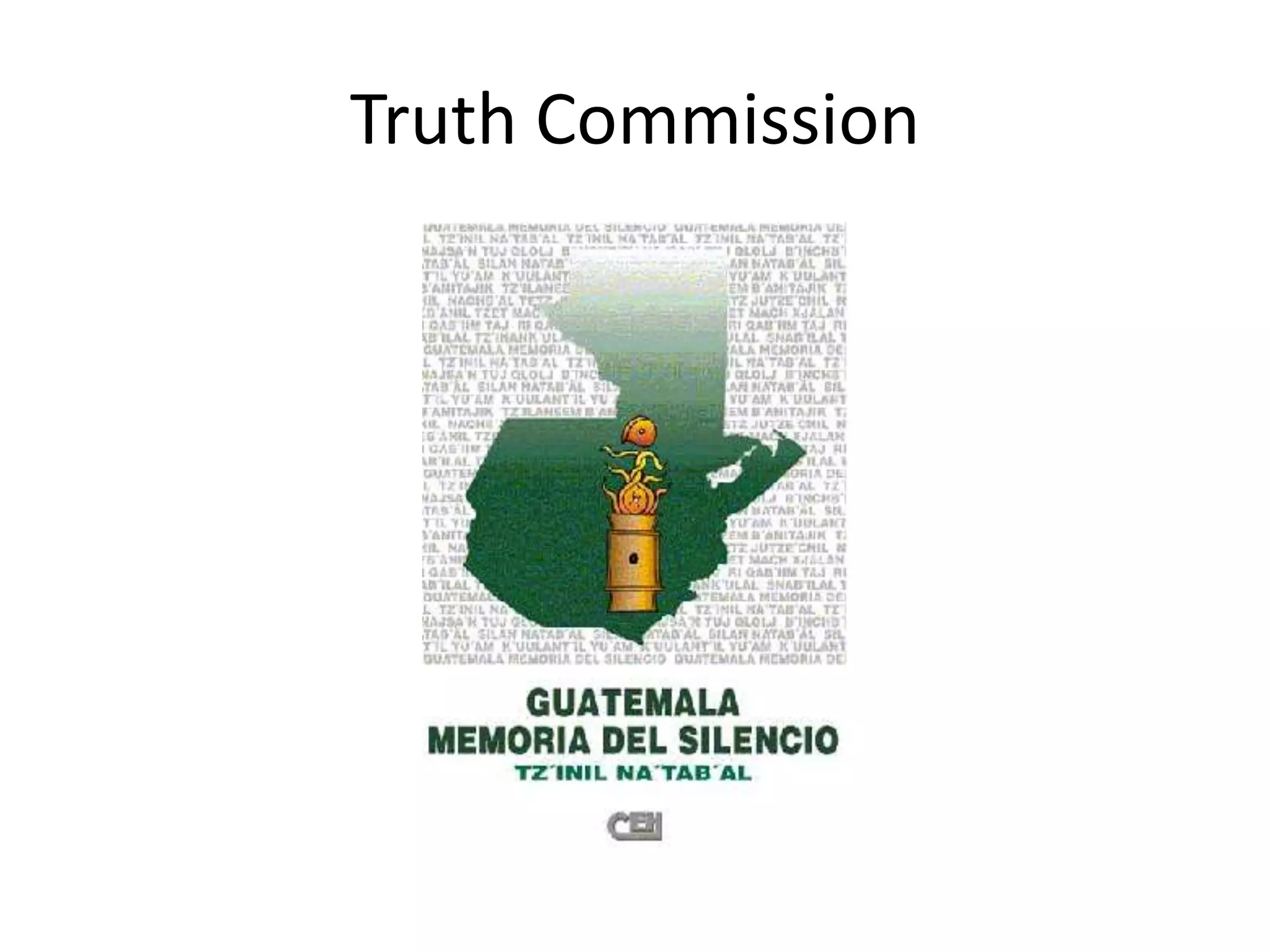
Truth Commission
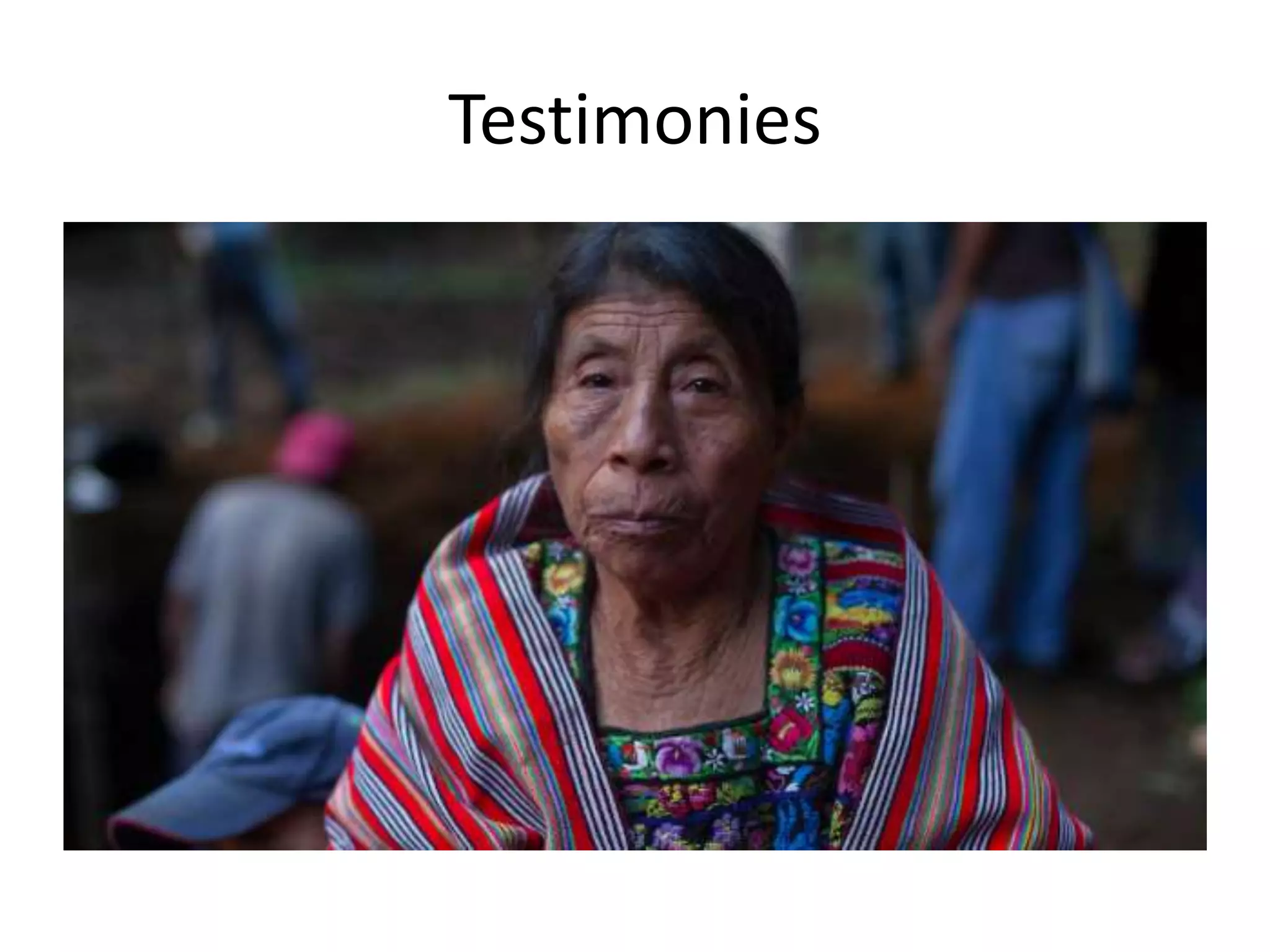
Testimonies
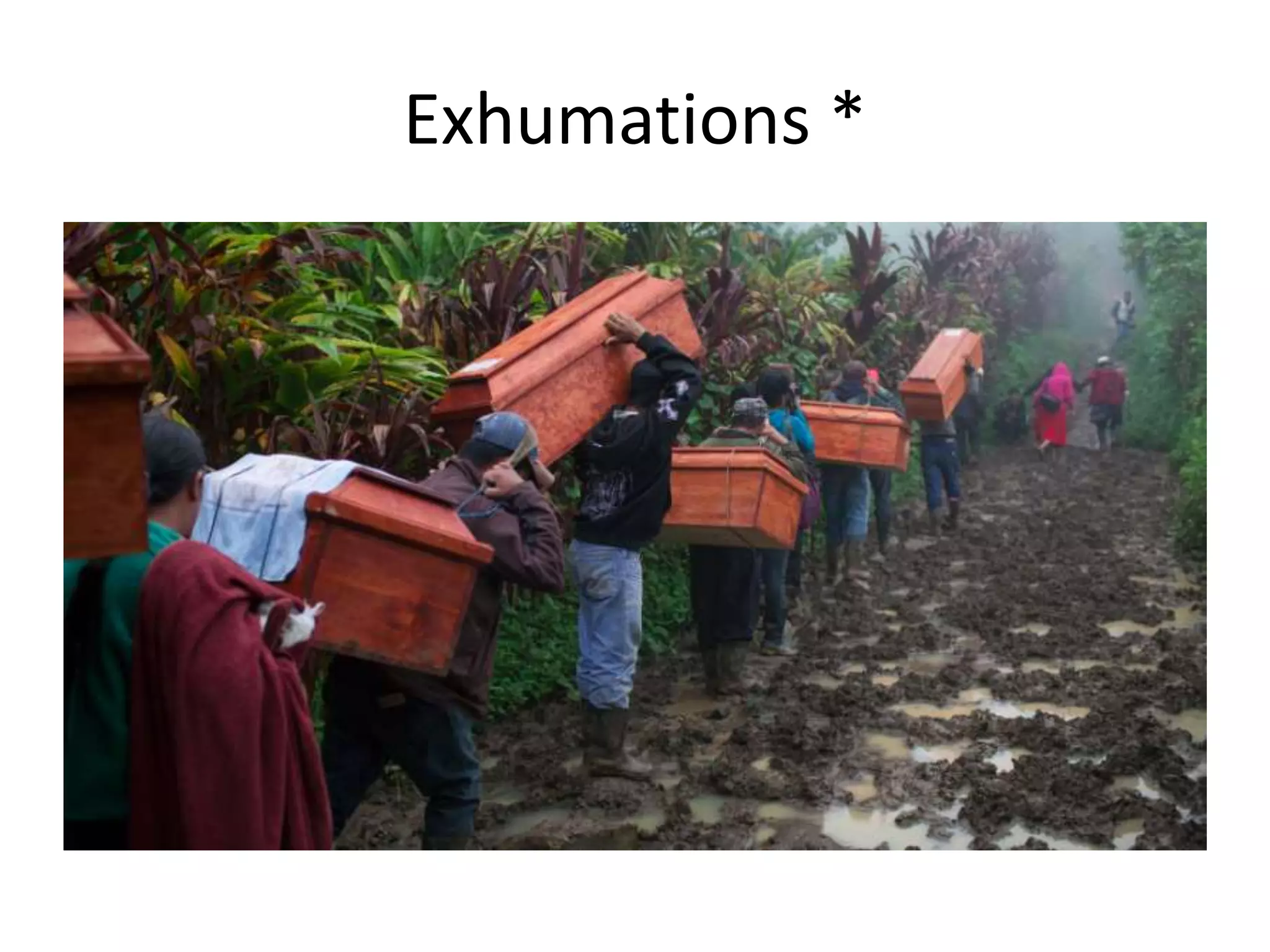
Exhumations *
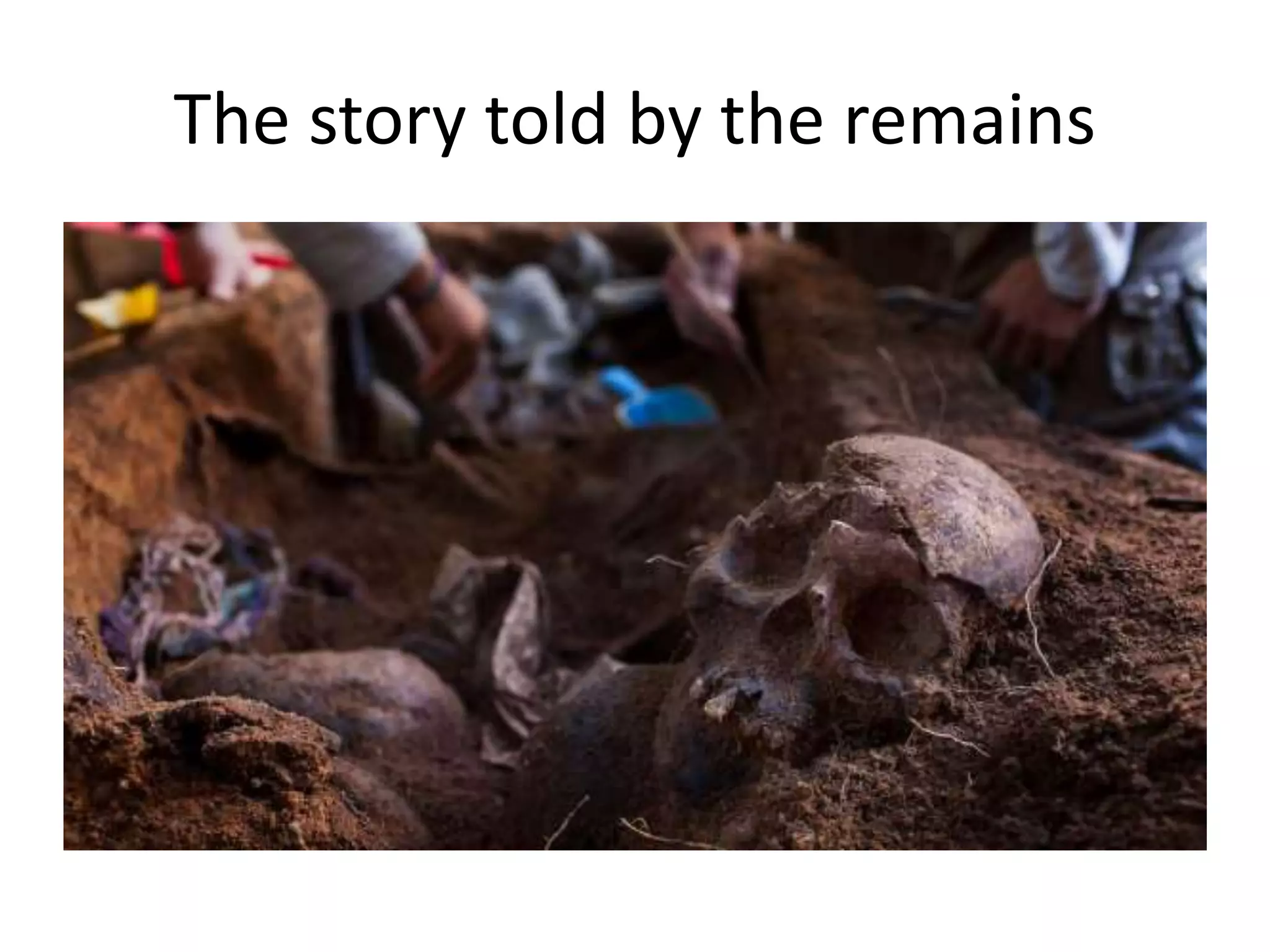
The story told by the remains
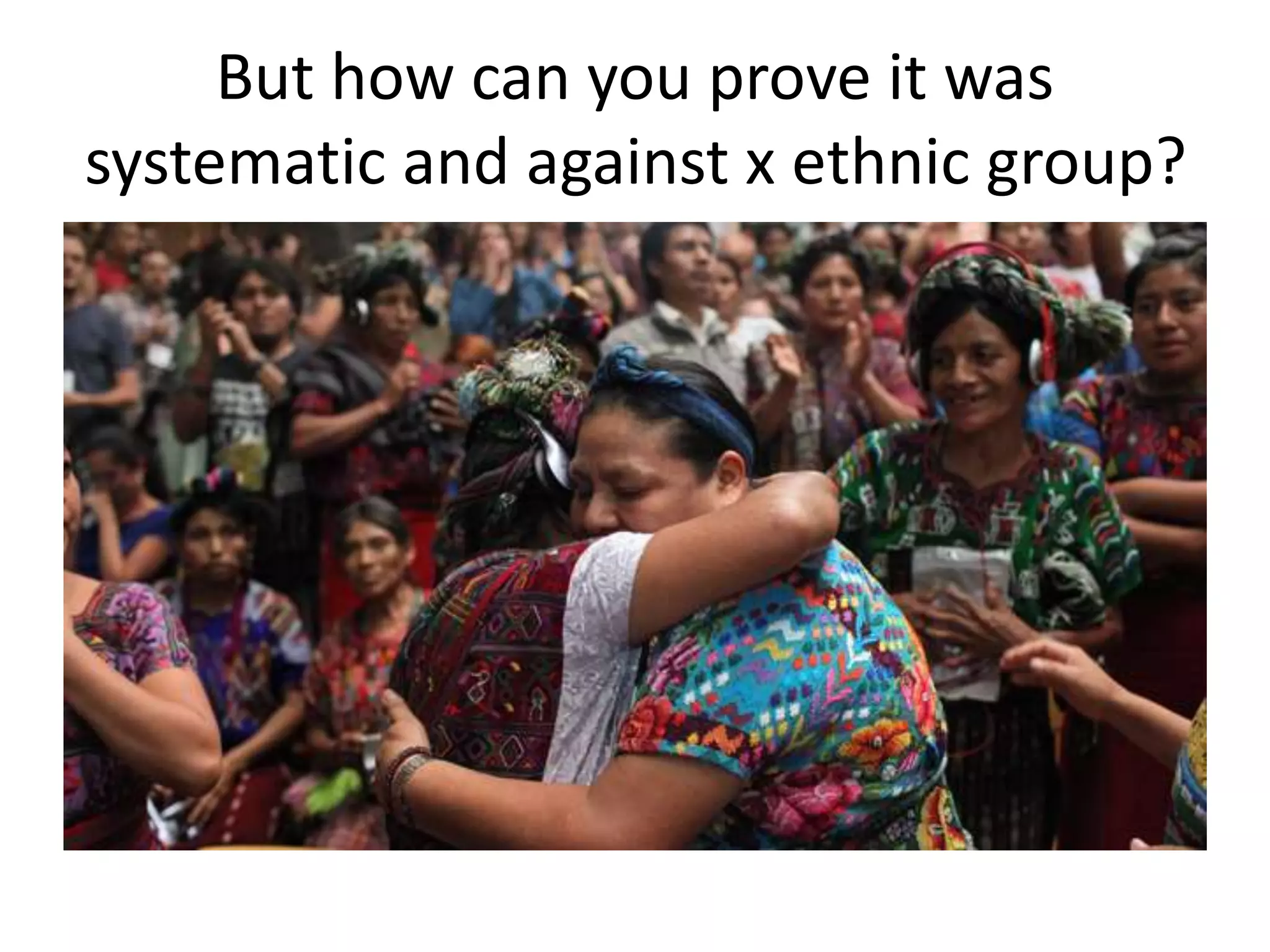
But how can you prove it was
systematic and against x ethnic group?
Meet Patrick Ball
What Data + Statistics did
• The analysis of Patrick Ball using data from
different sources and statistics to fill the
missing information gaps, showed that the
homicide rate for non-indigenous peoples in
the Ixil region was 0.7 percent, while the
homicide rate for the Maya was 5.5 percent:
the probability of being killed by the Army was
8 times greater for the Maya Ixil than for their
non-indigenous neighbors.
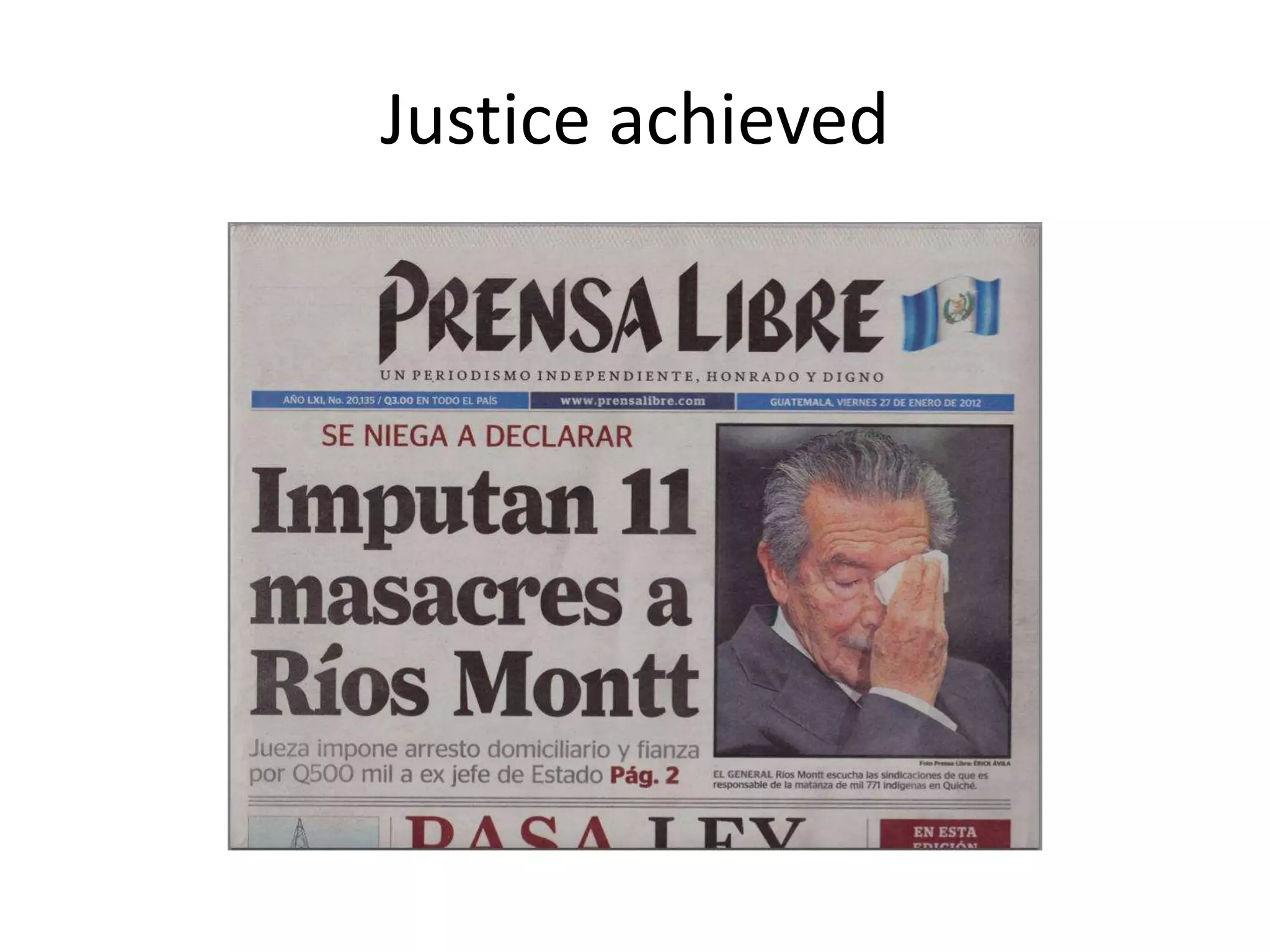
Justice achieved
For a week…
The curious case of Metadata to
determine command responsibility
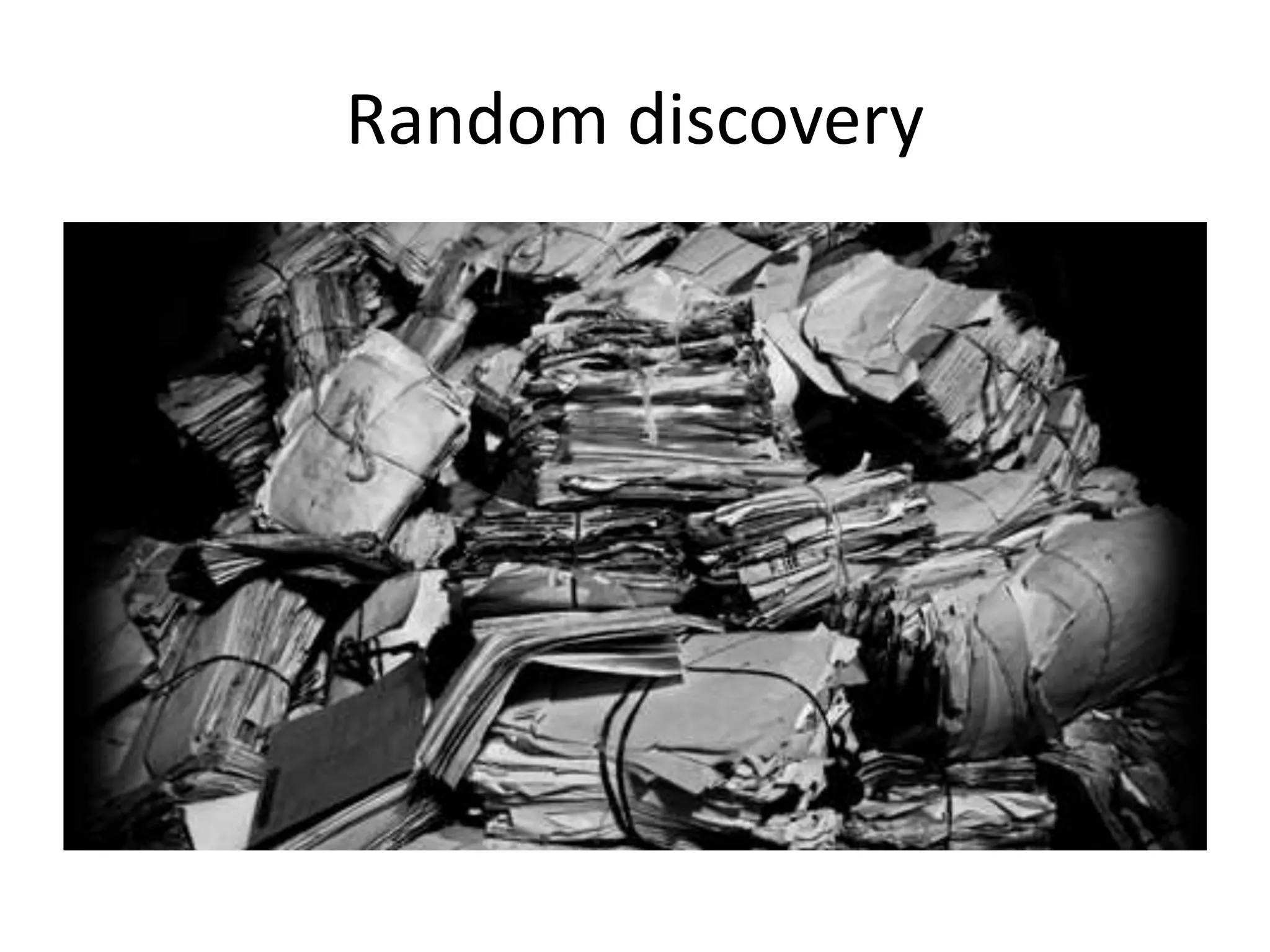
Random discovery
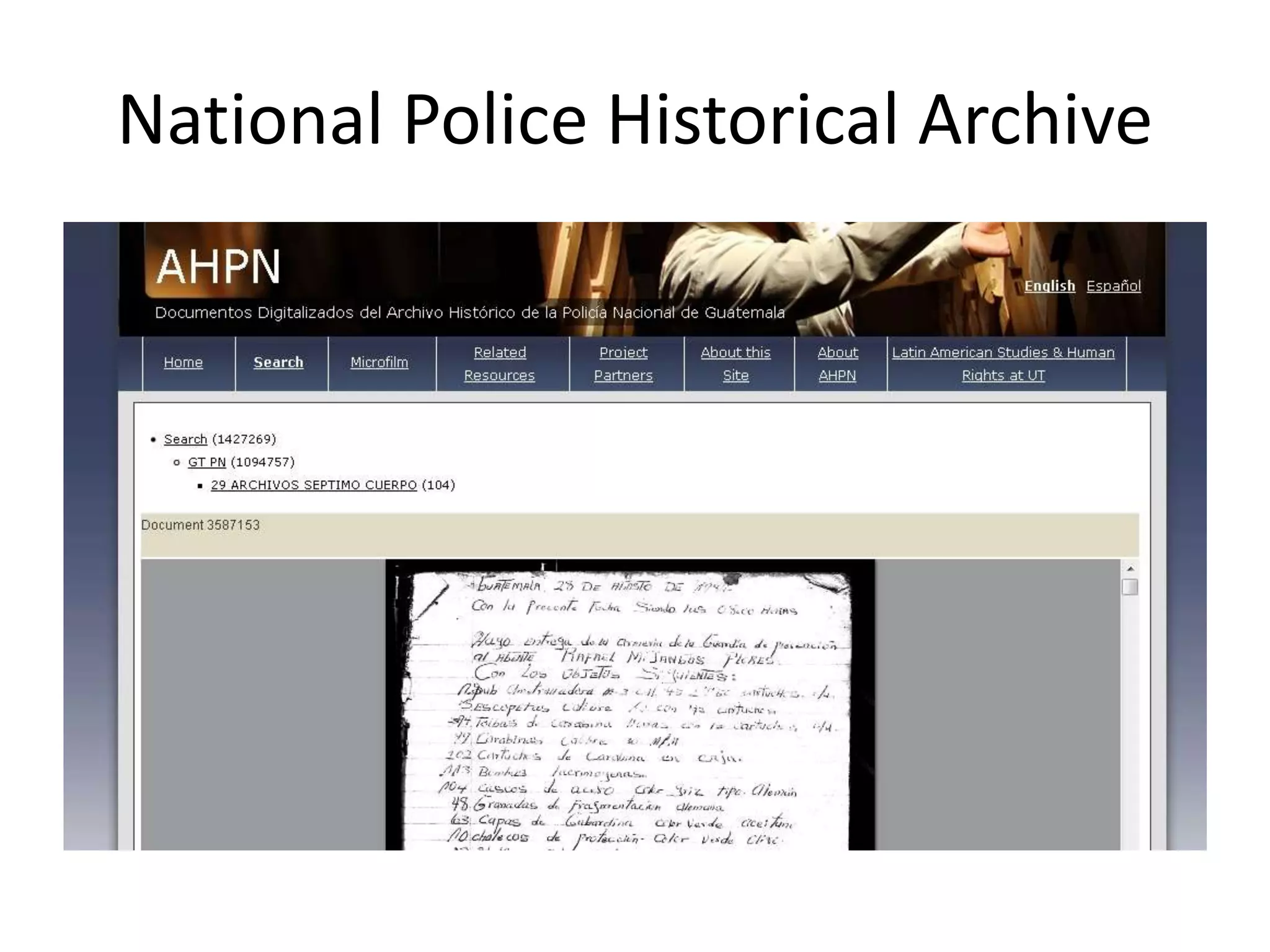
National Police Historical Archive
Some ideas
• How could we potentially use the discoveries
of truth commissions and the work done in
the last 2.5 decades to find patterns of
violence?
• Will a data powered analysis help us to
prevent a genocide from happening?

Data to prosecute dictators

  • 1.
    Data and GenocideActs By Renata Avila Berlin, 10th March 2015.
  • 2.
  • 3.
  • 4.
  • 5.
    Genocide Acts: howto prove those
  • 6.
  • 7.
  • 8.
    How to proveit? • Convention on the Prevention and Punishment of the Crime of Genocide (CPPCG) • ...any of the following acts committed with intent to destroy, in whole or in part, a national, ethnical, racial or religious group, as such: • (a) Killing members of the group; • (b) Causing serious bodily or mental harm to members of the group; • (c) Deliberately inflicting on the group conditions of life calculated to bring about its physical destruction in whole or in part; • (d) Imposing measures intended to prevent births within the group; • (e) Forcibly transferring children of the group to another group. • — Convention on the Prevention and Punishment of the Crime of Genocide, Article 2[2]
  • 9.
    In short… Genocide isa specific crime it does not mean killing a lot of people. Genocide specifically means that you picked out a particular group.
  • 10.
  • 11.
  • 12.
  • 13.
    The story toldby the remains
  • 14.
    But how canyou prove it was systematic and against x ethnic group?
  • 15.
  • 16.
    What Data +Statistics did • The analysis of Patrick Ball using data from different sources and statistics to fill the missing information gaps, showed that the homicide rate for non-indigenous peoples in the Ixil region was 0.7 percent, while the homicide rate for the Maya was 5.5 percent: the probability of being killed by the Army was 8 times greater for the Maya Ixil than for their non-indigenous neighbors.
  • 17.
  • 18.
  • 19.
    The curious caseof Metadata to determine command responsibility
  • 20.
  • 21.
  • 22.
    Some ideas • Howcould we potentially use the discoveries of truth commissions and the work done in the last 2.5 decades to find patterns of violence? • Will a data powered analysis help us to prevent a genocide from happening?