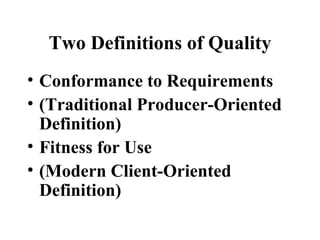
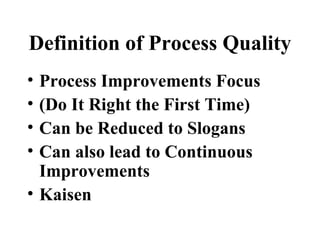
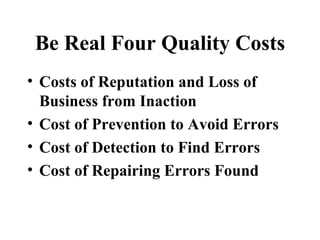
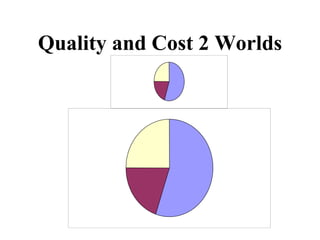
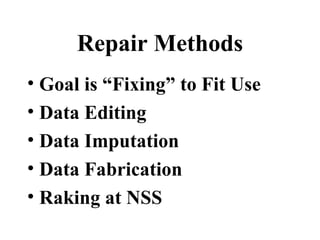
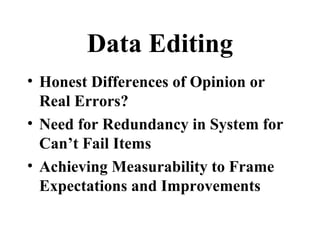
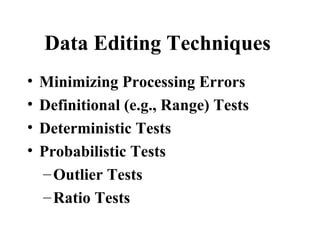
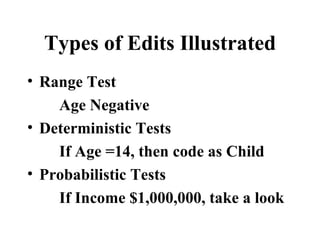
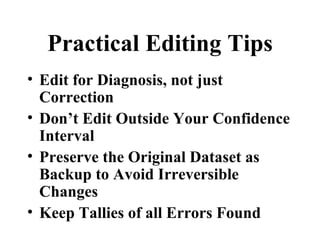
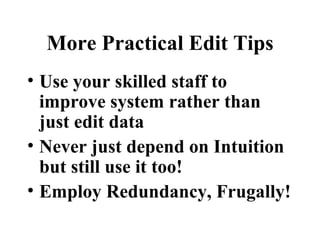
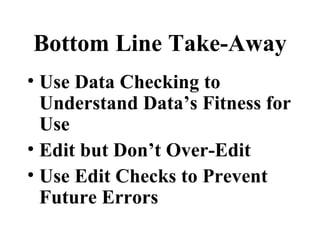
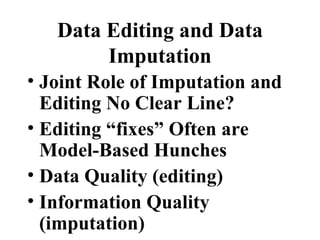
This document discusses data quality issues and methods for addressing them. It defines two perspectives on quality - conformance to requirements and fitness for use. There are four costs of poor quality: reputation, prevention, detection, and repair. Methods for addressing quality issues include data editing, imputation, and fabrication. Data editing involves techniques like range tests, deterministic tests, and probabilistic tests to identify potential errors. Imputation is used to handle missing or misreported data, but care must be taken not to over-impute. Fabrication poses a threat as intentionally entering false data undermines quality. Overall the document emphasizes improving quality through understanding sources of error rather than over-editing data.