DANGERS ON
THE INTERNET
FRAUD
■ Done by professionals to
manipulate somebody to gain
money or other riches;
■ Easily done on the Internet as
talking face to face is not
required and pretending to be
somebody else can be easy;
■ Sometimes can be done to find
information about something;
HACKING
■ Can breach your computer
security programmes and steal
valuable information;
■ Usually done by a professional to
search for secret, personal
information;
■ Can be used to damage
reputations, spread lies or/and
steal personal information to
blackmail and earn money;
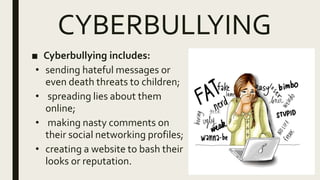
CYBERBULLYING
■ Cyberbullying includes:
• sending hateful messages or
even death threats to children;
• spreading lies about them
online;
• making nasty comments on
their social networking profiles;
• creating a website to bash their
looks or reputation.
PIRACY
■ 95% of music is downloaded
illegally;
■ Piracy is punished by jail time in
a lot of countries in Europe;
■ $12.5 billion in economic losses
each year due to Piracy in the
music industry;
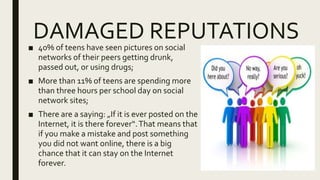
DAMAGED REPUTATIONS■ 40% of teens have seen pictures on social
networks of their peers getting drunk,
passed out, or using drugs;
■ More than 11% of teens are spending more
than three hours per school day on social
network sites;
■ There are a saying: „If it is ever posted on the
Internet, it is there forever“.That means that
if you make a mistake and post something
you did not want online, there is a big
chance that it can stay on the Internet
forever.
WAYSTO
PREVENT IT
Think twice before
you post something
■ Be aware that photos you post, for example, on
Facebook can be downloaded and then used against you.
■ All employers check social media before they hire
somebody, so any incriminating photos and/or posts can
help decide if they are willing to hire the candidate.
Do not give personal
information to anybody
■ Frauds can try to become your friend and then get
personal information from you, so they can use it in
their advantage.
■ The best way to prevent this is to try as hard as
possible not to talk to anyone you do not know in real
life.
Change your passwords
regurlarly
■ This simple task can prevent you from getting hacked and
losing valuable documents and money;
■ Strengthen the protection of such things as your bank
accounts by adding extra protections such as extra
questions that only you know the answer and/or fingertip
recognition if possible and necessary.
Thank you for your
attention
and stay safe!

Dangers on the Internet

  • 1.
  • 2.
    FRAUD ■ Done byprofessionals to manipulate somebody to gain money or other riches; ■ Easily done on the Internet as talking face to face is not required and pretending to be somebody else can be easy; ■ Sometimes can be done to find information about something;
  • 3.
    HACKING ■ Can breachyour computer security programmes and steal valuable information; ■ Usually done by a professional to search for secret, personal information; ■ Can be used to damage reputations, spread lies or/and steal personal information to blackmail and earn money;
  • 4.
    CYBERBULLYING ■ Cyberbullying includes: •sending hateful messages or even death threats to children; • spreading lies about them online; • making nasty comments on their social networking profiles; • creating a website to bash their looks or reputation.
  • 5.
    PIRACY ■ 95% ofmusic is downloaded illegally; ■ Piracy is punished by jail time in a lot of countries in Europe; ■ $12.5 billion in economic losses each year due to Piracy in the music industry;
  • 6.
    DAMAGED REPUTATIONS■ 40%of teens have seen pictures on social networks of their peers getting drunk, passed out, or using drugs; ■ More than 11% of teens are spending more than three hours per school day on social network sites; ■ There are a saying: „If it is ever posted on the Internet, it is there forever“.That means that if you make a mistake and post something you did not want online, there is a big chance that it can stay on the Internet forever.
  • 7.
  • 8.
    Think twice before youpost something ■ Be aware that photos you post, for example, on Facebook can be downloaded and then used against you. ■ All employers check social media before they hire somebody, so any incriminating photos and/or posts can help decide if they are willing to hire the candidate.
  • 9.
    Do not givepersonal information to anybody ■ Frauds can try to become your friend and then get personal information from you, so they can use it in their advantage. ■ The best way to prevent this is to try as hard as possible not to talk to anyone you do not know in real life.
  • 10.
    Change your passwords regurlarly ■This simple task can prevent you from getting hacked and losing valuable documents and money; ■ Strengthen the protection of such things as your bank accounts by adding extra protections such as extra questions that only you know the answer and/or fingertip recognition if possible and necessary.
  • 11.
    Thank you foryour attention and stay safe!