PRESENTED BY: PEEYUSH SHRIMAL 
RTU MBA 2013-15 
IIIM COLLEGE
COMPANY PROFILE 
INTRODUCTION 
• MR SUNIL DUGGAL- CEO OF THE COMPANY 
• DABUR INDIA LIMITED IS INDIA’S LEADING 
FMCG COMPANY. 
• DABUR IS CURRENTLY THE 4TH LARGEST 
INDIAN CONSUMER GOODS 
MANUFACTURING COMPANY(FMCG)
• The birth of Dabur in a small Calcutta pharmacy, 
where Dr. S.K. Burman launches his mission of 
making health care products in the year 1884 
• With growing popularity of Dabur products, Dr. 
Burman expands his operations by setting up a 
manufacturing plant for mass production of 
formulations in the year 1896 
• Dabur enters the specialised area of nature-based 
Ayurvedic medicines, for which standardised 
drugs are not available in the market.
• Major strategic business units (SBU) - Consumer 
Care Division (CCD) and Consumer Health 
Division (CHD) 
• DABUR IS LEADING CONSUMER GOODS 
COMPANY IN INDIA WITH TURNOVER OF RS 
7,073 CRORE AS PER THE FY 2013-14. 
• THE REVENUE OF DABUR INDIA LTD. IS RS 914 
CRORE AS PER THE FY 2013-14 
• MORE THAN 60 COUNTRIES WORLD WIDE 
PRODUCTS OF DABUR IS MARKETED
VISION 
• “Dedicated to the health and well being of every 
household.” 
MISSION 
To maximize shareholders’ value , by offering 
superior quality 
nature based products, that contribute in 
improving consumers’ life in 
personal care, health care and foods.
A walk down the memory lane. 
• Started in 1884 as a health care products 
manufacturing facility 
• 1900s entered the specialized area of 
Ayurvedic medicines 
• 1919 established research laboratories 
• 1936 Dabur became Dabur India Pvt Ltd. 
• 1986 it became a public limited company 
• 2007 Dabur foods merged with Dabur India
OBJECTIVE OF STUDY 
• To understand the demand pattern of Dabur 
products in the market. 
• To understand the image of the products in 
the eyes of the consumers 
• To analysis market petition strategy of Dabur 
in competitive market. 
• To know the various kind of schemes on dabur 
product.
RESEARCH METHODOLOGY 
• Research is Conducted by taking the primary 
data from various sources like talking with 
employees of the organisation, meeting 
branch head of the dabur, questionaire survey 
from the retailers and consumers of dabur 
product. 
• Taking secondary data from internet, 
newspaper, reports, magzine etc
SWOT ANALYSIS 
strength 
• Unique “Ayurvedic and Health” Positioning 
• Extensive market penetration with more than 
5000 distributors and over 2.8 million retail 
outlets all over India 
• Monopoly status in multiple product categories 
like digestives (90% ), branded honey(75% ) and 
Chyawanprash(65%)
WEAKNESS 
• Low Penetration in Rural areas in Food, Health 
Supplements and Home care categories. 
• Dabur’s R&D work is low and insignificant as 
compared to other companies like HUL
OPPORTUNITY 
• Packaged Foods category 
• Sugar free food and health care substitutes e.g. 
Sugar Free Chyawanprash 
THREAT 
• Counterfeit products in the Food and Home 
care category 
• Increasing competition from private labels 
• Increasing bargaining power of modern trade 
especially in the Personal Care segment
DATA ANALYSIS 
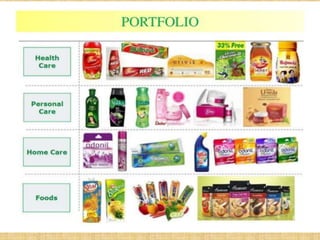
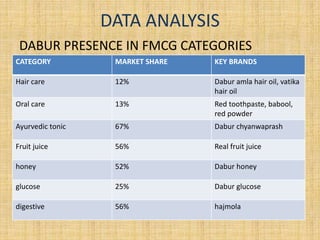
DABUR PRESENCE IN FMCG CATEGORIES 
CATEGORY MARKET SHARE KEY BRANDS 
Hair care 12% Dabur amla hair oil, vatika 
hair oil 
Oral care 13% Red toothpaste, babool, 
red powder 
Ayurvedic tonic 67% Dabur chyanwaprash 
Fruit juice 56% Real fruit juice 
honey 52% Dabur honey 
glucose 25% Dabur glucose 
digestive 56% hajmola
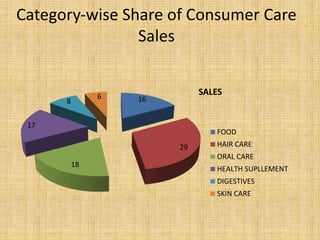
Category‐wise Share of Consumer Care 
Sales 
16 
29 
18 
17 
8 
6 SALES 
FOOD 
HAIR CARE 
ORAL CARE 
HEALTH SUPLLEMENT 
DIGESTIVES 
SKIN CARE
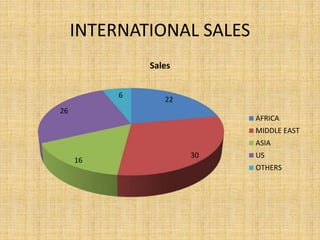
INTERNATIONAL SALES 
22 
30 
16 
26 
6 
Sales 
AFRICA 
MIDDLE EAST 
ASIA 
US 
OTHERS
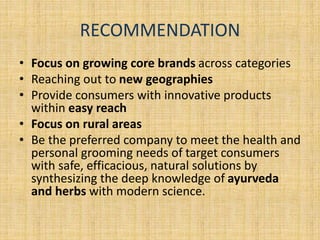
RECOMMENDATION 
• Focus on growing core brands across categories 
• Reaching out to new geographies 
• Provide consumers with innovative products 
within easy reach 
• Focus on rural areas 
• Be the preferred company to meet the health and 
personal grooming needs of target consumers 
with safe, efficacious, natural solutions by 
synthesizing the deep knowledge of ayurveda 
and herbs with modern science.
THANK YOU

DABUR INDIA LTD

  • 2.
    PRESENTED BY: PEEYUSHSHRIMAL RTU MBA 2013-15 IIIM COLLEGE
  • 3.
    COMPANY PROFILE INTRODUCTION • MR SUNIL DUGGAL- CEO OF THE COMPANY • DABUR INDIA LIMITED IS INDIA’S LEADING FMCG COMPANY. • DABUR IS CURRENTLY THE 4TH LARGEST INDIAN CONSUMER GOODS MANUFACTURING COMPANY(FMCG)
  • 4.
    • The birthof Dabur in a small Calcutta pharmacy, where Dr. S.K. Burman launches his mission of making health care products in the year 1884 • With growing popularity of Dabur products, Dr. Burman expands his operations by setting up a manufacturing plant for mass production of formulations in the year 1896 • Dabur enters the specialised area of nature-based Ayurvedic medicines, for which standardised drugs are not available in the market.
  • 5.
    • Major strategicbusiness units (SBU) - Consumer Care Division (CCD) and Consumer Health Division (CHD) • DABUR IS LEADING CONSUMER GOODS COMPANY IN INDIA WITH TURNOVER OF RS 7,073 CRORE AS PER THE FY 2013-14. • THE REVENUE OF DABUR INDIA LTD. IS RS 914 CRORE AS PER THE FY 2013-14 • MORE THAN 60 COUNTRIES WORLD WIDE PRODUCTS OF DABUR IS MARKETED
  • 6.
    VISION • “Dedicatedto the health and well being of every household.” MISSION To maximize shareholders’ value , by offering superior quality nature based products, that contribute in improving consumers’ life in personal care, health care and foods.
  • 8.
    A walk downthe memory lane. • Started in 1884 as a health care products manufacturing facility • 1900s entered the specialized area of Ayurvedic medicines • 1919 established research laboratories • 1936 Dabur became Dabur India Pvt Ltd. • 1986 it became a public limited company • 2007 Dabur foods merged with Dabur India
  • 10.
    OBJECTIVE OF STUDY • To understand the demand pattern of Dabur products in the market. • To understand the image of the products in the eyes of the consumers • To analysis market petition strategy of Dabur in competitive market. • To know the various kind of schemes on dabur product.
  • 11.
    RESEARCH METHODOLOGY •Research is Conducted by taking the primary data from various sources like talking with employees of the organisation, meeting branch head of the dabur, questionaire survey from the retailers and consumers of dabur product. • Taking secondary data from internet, newspaper, reports, magzine etc
  • 12.
    SWOT ANALYSIS strength • Unique “Ayurvedic and Health” Positioning • Extensive market penetration with more than 5000 distributors and over 2.8 million retail outlets all over India • Monopoly status in multiple product categories like digestives (90% ), branded honey(75% ) and Chyawanprash(65%)
  • 13.
    WEAKNESS • LowPenetration in Rural areas in Food, Health Supplements and Home care categories. • Dabur’s R&D work is low and insignificant as compared to other companies like HUL
  • 14.
    OPPORTUNITY • PackagedFoods category • Sugar free food and health care substitutes e.g. Sugar Free Chyawanprash THREAT • Counterfeit products in the Food and Home care category • Increasing competition from private labels • Increasing bargaining power of modern trade especially in the Personal Care segment
  • 15.
    DATA ANALYSIS DABURPRESENCE IN FMCG CATEGORIES CATEGORY MARKET SHARE KEY BRANDS Hair care 12% Dabur amla hair oil, vatika hair oil Oral care 13% Red toothpaste, babool, red powder Ayurvedic tonic 67% Dabur chyanwaprash Fruit juice 56% Real fruit juice honey 52% Dabur honey glucose 25% Dabur glucose digestive 56% hajmola
  • 16.
    Category‐wise Share ofConsumer Care Sales 16 29 18 17 8 6 SALES FOOD HAIR CARE ORAL CARE HEALTH SUPLLEMENT DIGESTIVES SKIN CARE
  • 17.
    INTERNATIONAL SALES 22 30 16 26 6 Sales AFRICA MIDDLE EAST ASIA US OTHERS
  • 18.
    RECOMMENDATION • Focuson growing core brands across categories • Reaching out to new geographies • Provide consumers with innovative products within easy reach • Focus on rural areas • Be the preferred company to meet the health and personal grooming needs of target consumers with safe, efficacious, natural solutions by synthesizing the deep knowledge of ayurveda and herbs with modern science.
  • 19.