CASE STUDY ON DABUR
BY- Balpreet Guliani (2220982018)
Ratan Kumar (2220982060)
INTRODUCTION TO DABUR
• Dabur is an Indian consumer goods company founded in 1884 by Dr. S.K.
Burman
• The company is known for its range of Ayurvedic and natural health care
products
• Dabur is headquartered in Ghaziabad, India and operates in over 100
countries worldwide
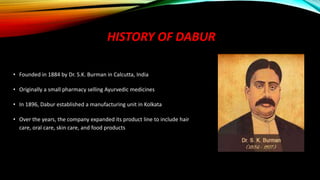
HISTORY OF DABUR
• Founded in 1884 by Dr. S.K. Burman in Calcutta, India
• Originally a small pharmacy selling Ayurvedic medicines
• In 1896, Dabur established a manufacturing unit in Kolkata
• Over the years, the company expanded its product line to include hair
care, oral care, skin care, and food products
UNIQUE SELLING PROPOSITION (USP)
• Dabur's USP is its focus on natural and Ayurvedic ingredients in its
products
• The company has a reputation for producing high-quality, effective
products that are gentle on the body
• Dabur also emphasizes sustainability and ethical sourcing practices in its
supply chain
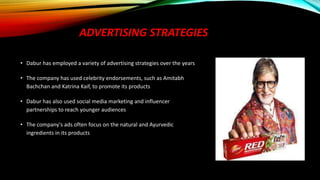
ADVERTISING STRATEGIES
• Dabur has employed a variety of advertising strategies over the years
• The company has used celebrity endorsements, such as Amitabh
Bachchan and Katrina Kaif, to promote its products
• Dabur has also used social media marketing and influencer
partnerships to reach younger audiences
• The company's ads often focus on the natural and Ayurvedic
ingredients in its products
LOGO
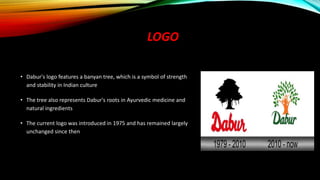
• Dabur's logo features a banyan tree, which is a symbol of strength
and stability in Indian culture
• The tree also represents Dabur's roots in Ayurvedic medicine and
natural ingredients
• The current logo was introduced in 1975 and has remained largely
unchanged since then
FINANCIAL POSITION
• Dabur is a publicly traded company with a market capitalization of over $10 billion
• The company has seen steady revenue growth over the past decade, with revenues
of over $2 billion in 2020
• Dabur has a strong balance sheet with low debt levels and a healthy cash reserve
COMPETITORS AND THEIR STRATEGIES
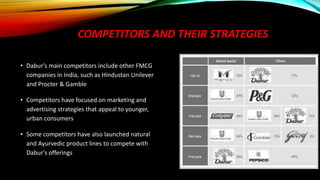
• Dabur's main competitors include other FMCG
companies in India, such as Hindustan Unilever
and Procter & Gamble
• Competitors have focused on marketing and
advertising strategies that appeal to younger,
urban consumers
• Some competitors have also launched natural
and Ayurvedic product lines to compete with
Dabur's offerings
CONCLUSION
• Dabur is a well-established Indian consumer goods company known for its natural and Ayurvedic products
• The company has a strong financial position and has seen steady revenue growth over the past decade
• Dabur's competitors have tried to emulate its success by launching their own natural and Ayurvedic product
lines
• Overall, Dabur is poised for continued success in the Indian and global markets.
THANK YOU

Dabur_ppt[1].pptx

  • 1.
    CASE STUDY ONDABUR BY- Balpreet Guliani (2220982018) Ratan Kumar (2220982060)
  • 2.
    INTRODUCTION TO DABUR •Dabur is an Indian consumer goods company founded in 1884 by Dr. S.K. Burman • The company is known for its range of Ayurvedic and natural health care products • Dabur is headquartered in Ghaziabad, India and operates in over 100 countries worldwide
  • 3.
    HISTORY OF DABUR •Founded in 1884 by Dr. S.K. Burman in Calcutta, India • Originally a small pharmacy selling Ayurvedic medicines • In 1896, Dabur established a manufacturing unit in Kolkata • Over the years, the company expanded its product line to include hair care, oral care, skin care, and food products
  • 4.
    UNIQUE SELLING PROPOSITION(USP) • Dabur's USP is its focus on natural and Ayurvedic ingredients in its products • The company has a reputation for producing high-quality, effective products that are gentle on the body • Dabur also emphasizes sustainability and ethical sourcing practices in its supply chain
  • 5.
    ADVERTISING STRATEGIES • Daburhas employed a variety of advertising strategies over the years • The company has used celebrity endorsements, such as Amitabh Bachchan and Katrina Kaif, to promote its products • Dabur has also used social media marketing and influencer partnerships to reach younger audiences • The company's ads often focus on the natural and Ayurvedic ingredients in its products
  • 6.
    LOGO • Dabur's logofeatures a banyan tree, which is a symbol of strength and stability in Indian culture • The tree also represents Dabur's roots in Ayurvedic medicine and natural ingredients • The current logo was introduced in 1975 and has remained largely unchanged since then
  • 7.
    FINANCIAL POSITION • Daburis a publicly traded company with a market capitalization of over $10 billion • The company has seen steady revenue growth over the past decade, with revenues of over $2 billion in 2020 • Dabur has a strong balance sheet with low debt levels and a healthy cash reserve
  • 8.
    COMPETITORS AND THEIRSTRATEGIES • Dabur's main competitors include other FMCG companies in India, such as Hindustan Unilever and Procter & Gamble • Competitors have focused on marketing and advertising strategies that appeal to younger, urban consumers • Some competitors have also launched natural and Ayurvedic product lines to compete with Dabur's offerings
  • 9.
    CONCLUSION • Dabur isa well-established Indian consumer goods company known for its natural and Ayurvedic products • The company has a strong financial position and has seen steady revenue growth over the past decade • Dabur's competitors have tried to emulate its success by launching their own natural and Ayurvedic product lines • Overall, Dabur is poised for continued success in the Indian and global markets.
  • 10.