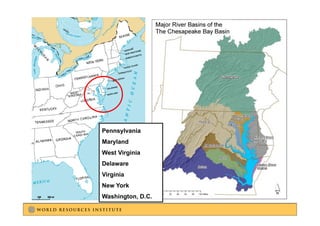
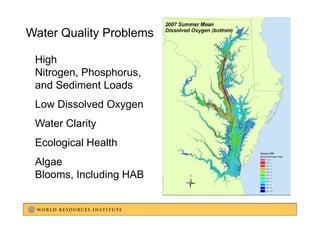
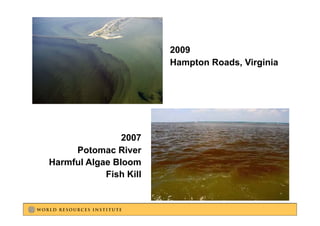
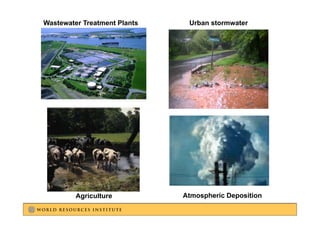
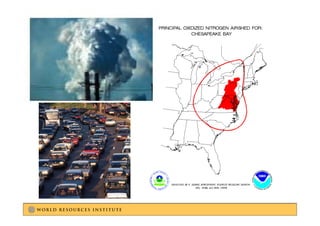
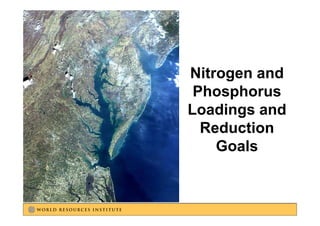
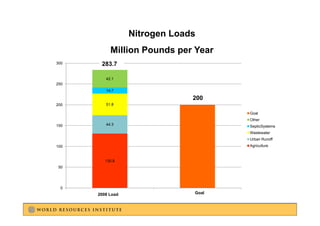
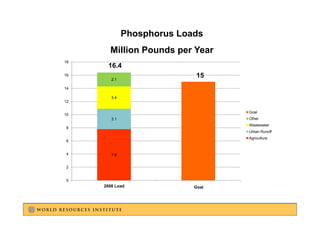
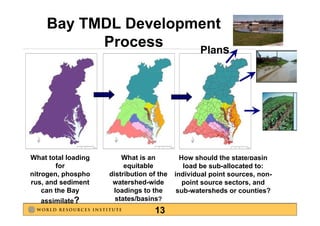
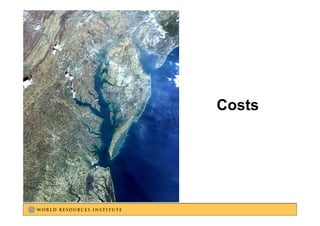
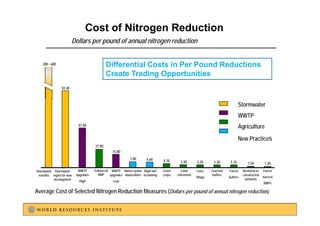
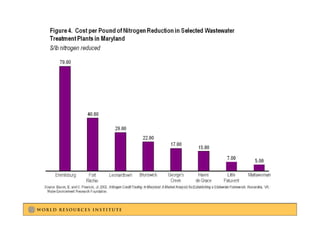
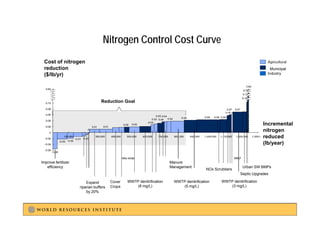
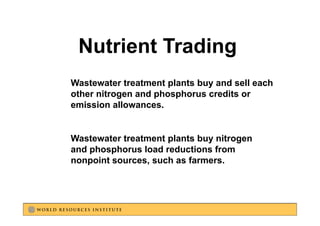
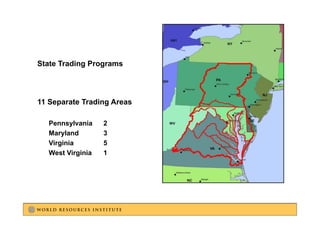
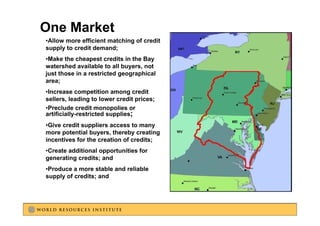
This document discusses regional nitrogen and phosphorus trading programs in the Chesapeake Bay watershed. It notes that high nutrient loads from sources like wastewater treatment plants, urban stormwater, and agriculture are causing water quality problems in the bay like algae blooms and low dissolved oxygen. The Chesapeake Bay Total Maximum Daily Load plan sets goals to reduce nitrogen and phosphorus loads to levels the bay can assimilate. The document discusses the costs of reducing nutrient loads from different sources and how trading programs can provide a cost-effective approach to allowing growth while meeting reduction targets. It analyzes how expanding trading across state boundaries could increase opportunities for lower-cost nutrient reductions compared to the current system of separate state-based