
Custom Hiring Centre's(CHC’s)
Reshma Rani
Roll no : 75 – PGDM ABPM
Existing Practice
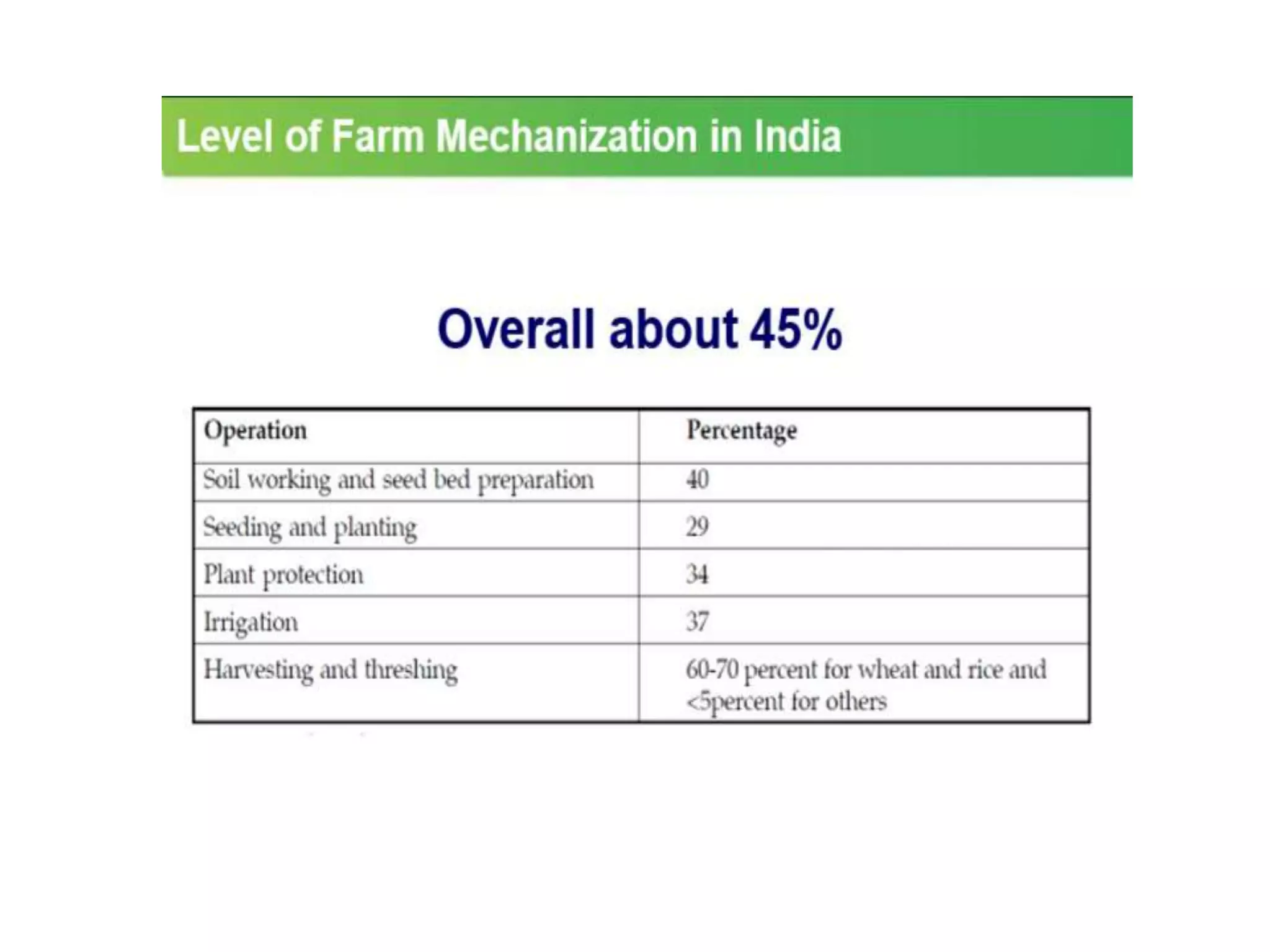
• Average per capita land holding is 1.16 ha.
• About 80% of the land holdings operated by small & marginal farmers
.(Less than 1,or 1-2 ) Cannot invest in farm machinery and implements.
• Hence farmer is compromising for productivity & efficiency in crop
production.
• Labor problem is a serious problem faced in peak stage
DIFFERENT MODELS OF CUSTOM HIRING
SERVICES OF AM
1.Individual farmer lending
2.Farmers group purchased machineries
3.Co-operatives managed
4.Traders implemented
5.Individual entrepreneur operated
6.NGO supported
7.Govt. supported centres (PPP)
Establishment of village level custom
hiring centre for farm machinery
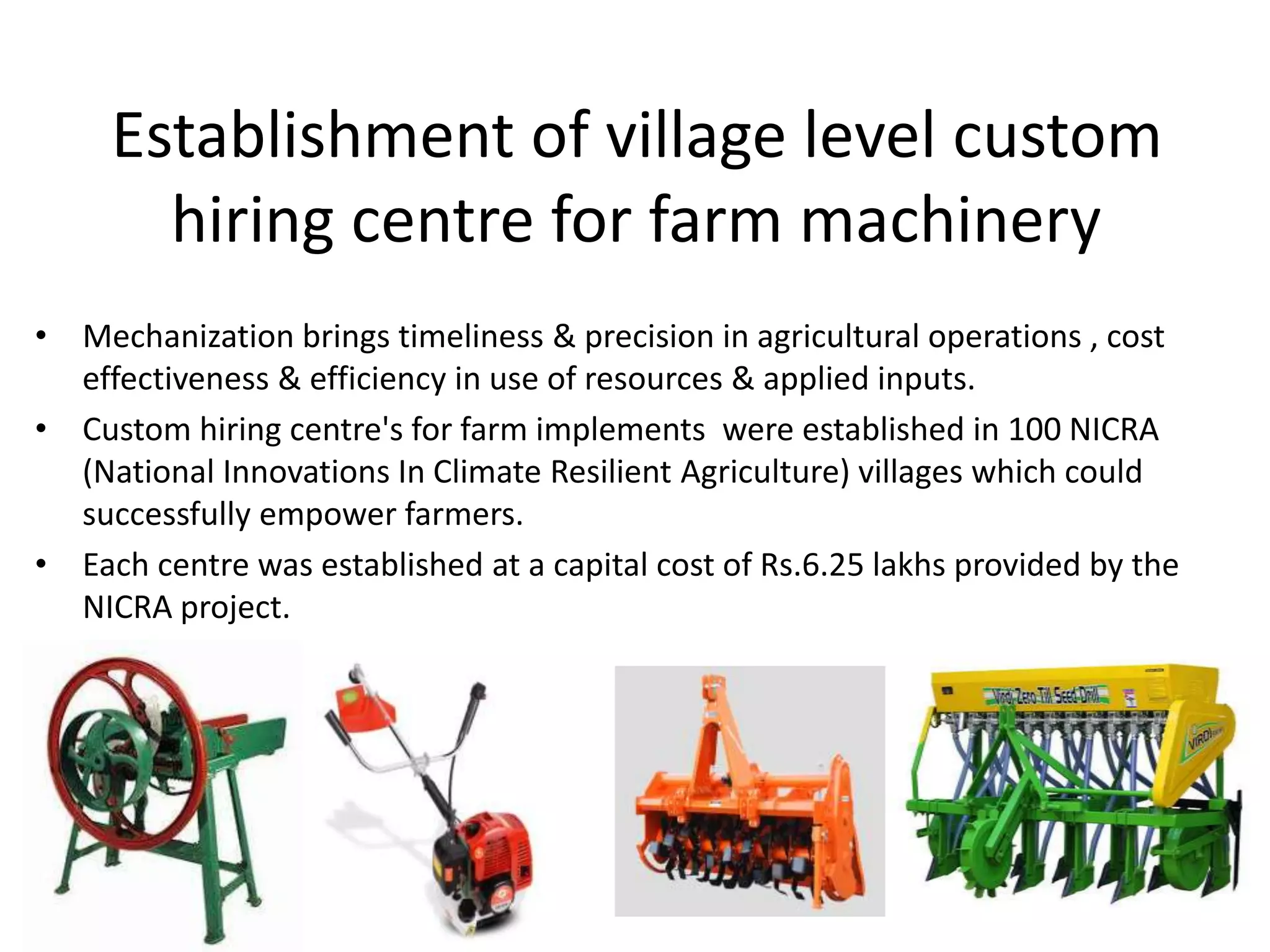
• Mechanization brings timeliness & precision in agricultural operations , cost
effectiveness & efficiency in use of resources & applied inputs.
• Custom hiring centre's for farm implements were established in 100 NICRA
(National Innovations In Climate Resilient Agriculture) villages which could
successfully empower farmers.
• Each centre was established at a capital cost of Rs.6.25 lakhs provided by the
NICRA project.
Impact of Custom hiring centers
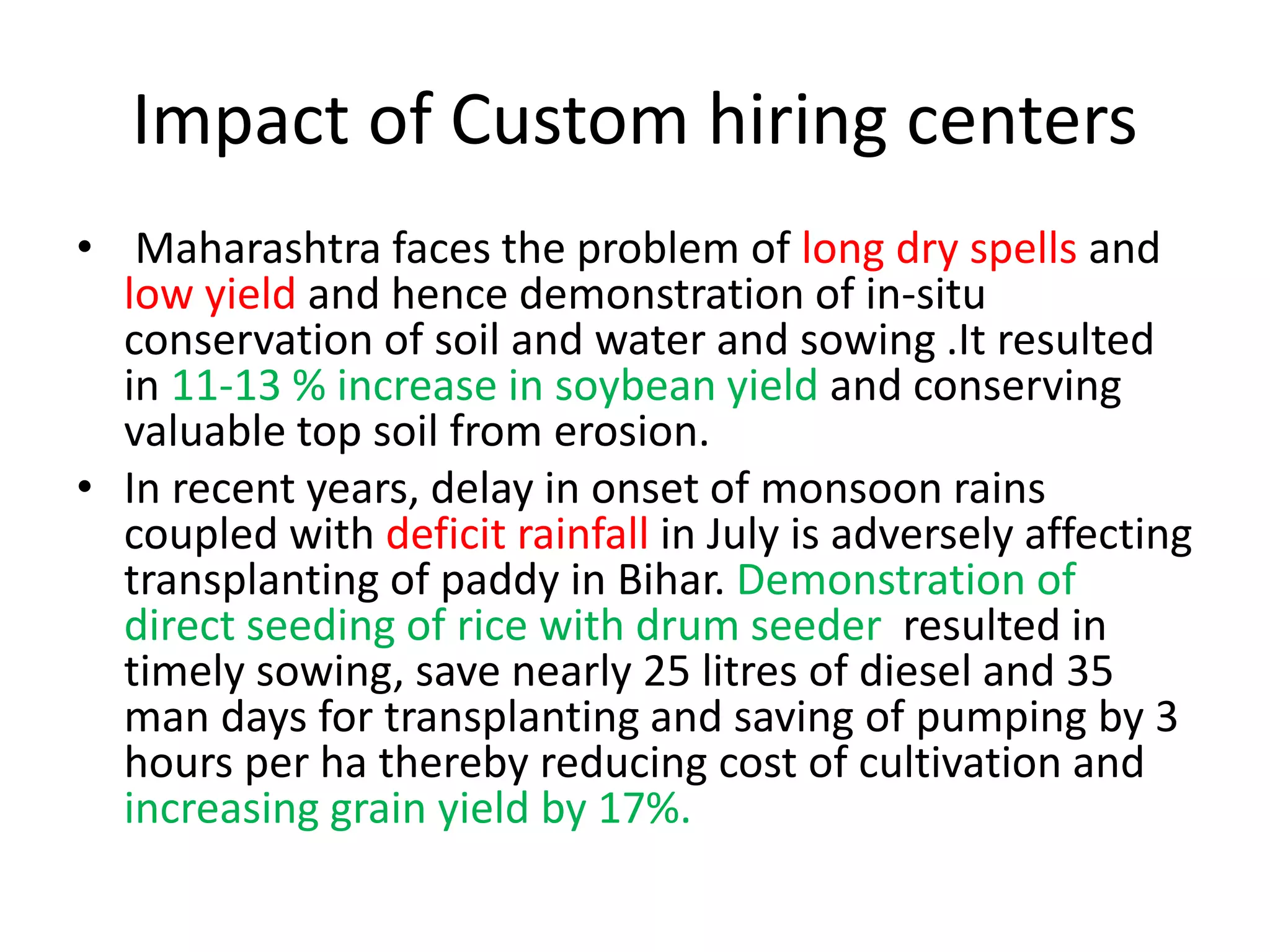
• Maharashtra faces the problem of long dry spells and
low yield and hence demonstration of in-situ
conservation of soil and water and sowing .It resulted
in 11-13 % increase in soybean yield and conserving
valuable top soil from erosion.
• In recent years, delay in onset of monsoon rains
coupled with deficit rainfall in July is adversely affecting
transplanting of paddy in Bihar. Demonstration of
direct seeding of rice with drum seeder resulted in
timely sowing, save nearly 25 litres of diesel and 35
man days for transplanting and saving of pumping by 3
hours per ha thereby reducing cost of cultivation and
increasing grain yield by 17%.
• In NICRA villages in Madhya Pradesh, farmers
who avoided damage to the crop due to excess
rainfall in kharif adopted broad bed furrow
planting method in soybean with BBF planter
realized about 40% yield advantage compared to
flat bed sowing
• Deep ploughing increased the fertility of the soil
and also helped control weeds, said a farmer
from the village, adding, “productivity of my
wheat crop increased from 17 quintal per acre to
22 quintal per acre”.
Management of custom hiring centre
• Innovative institutional mechanism was put in place at the village
level for management .
• Village Climate Risk Management Committee (VCRMC) was
constituted comprising of 12-20 villagers with nominated members
as President, Secretary and Treasurer.
• A bank account is opened in the name of VCRMC and is operated
by any two signatories.
• The committee fixes the charges for hiring for different implements
and hiring rates are to be displayed prominently.
• Farmers' contributory share towards inputs like seeds, fertilizer,
animals etc., is also deposited in the bank account. The revenue and
expenditure details must be shared with the general body
periodically.
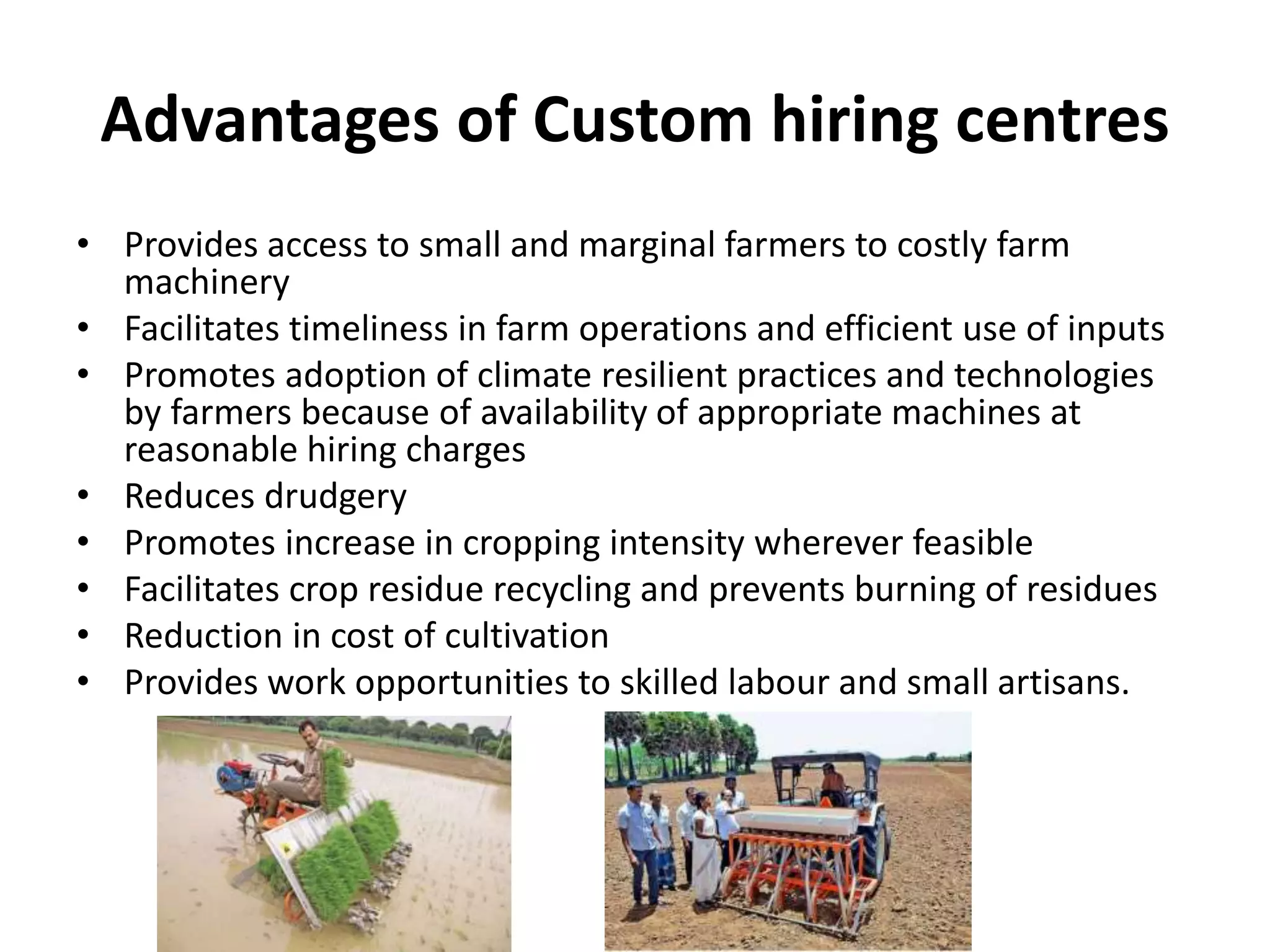
Advantages of Custom hiring centres
• Provides access to small and marginal farmers to costly farm
machinery
• Facilitates timeliness in farm operations and efficient use of inputs
• Promotes adoption of climate resilient practices and technologies
by farmers because of availability of appropriate machines at
reasonable hiring charges
• Reduces drudgery
• Promotes increase in cropping intensity wherever feasible
• Facilitates crop residue recycling and prevents burning of residues
• Reduction in cost of cultivation
• Provides work opportunities to skilled labour and small artisans.
Scale of operation
• Over 1000 demonstrations with energy
efficient implements were successfully
conducted in the NICRA villages by hiring from
CHCs covering 22000 ha and 30000 farmers.
• Cumulative revenue generated from CHCs is
26 lakhs with an average revenue generated
per centre ranging from Rs. 7000 to 74000.
Recent trends :
• In the rush to mechanize farm operations, the private
sector too isn’t far behind. According to a report published
in July by lobby group Ficci and the German Agribusiness
Alliance, leading farm equipment manufacturers such as
Mahindra and Mahindra, TAFE, Escorts and John Deere are
trying out different models of custom hiring.
• Custom hiring is the only practical way to introduce capital
intensive, high quality mechanisation to the small farming
structures prevalent of India”.
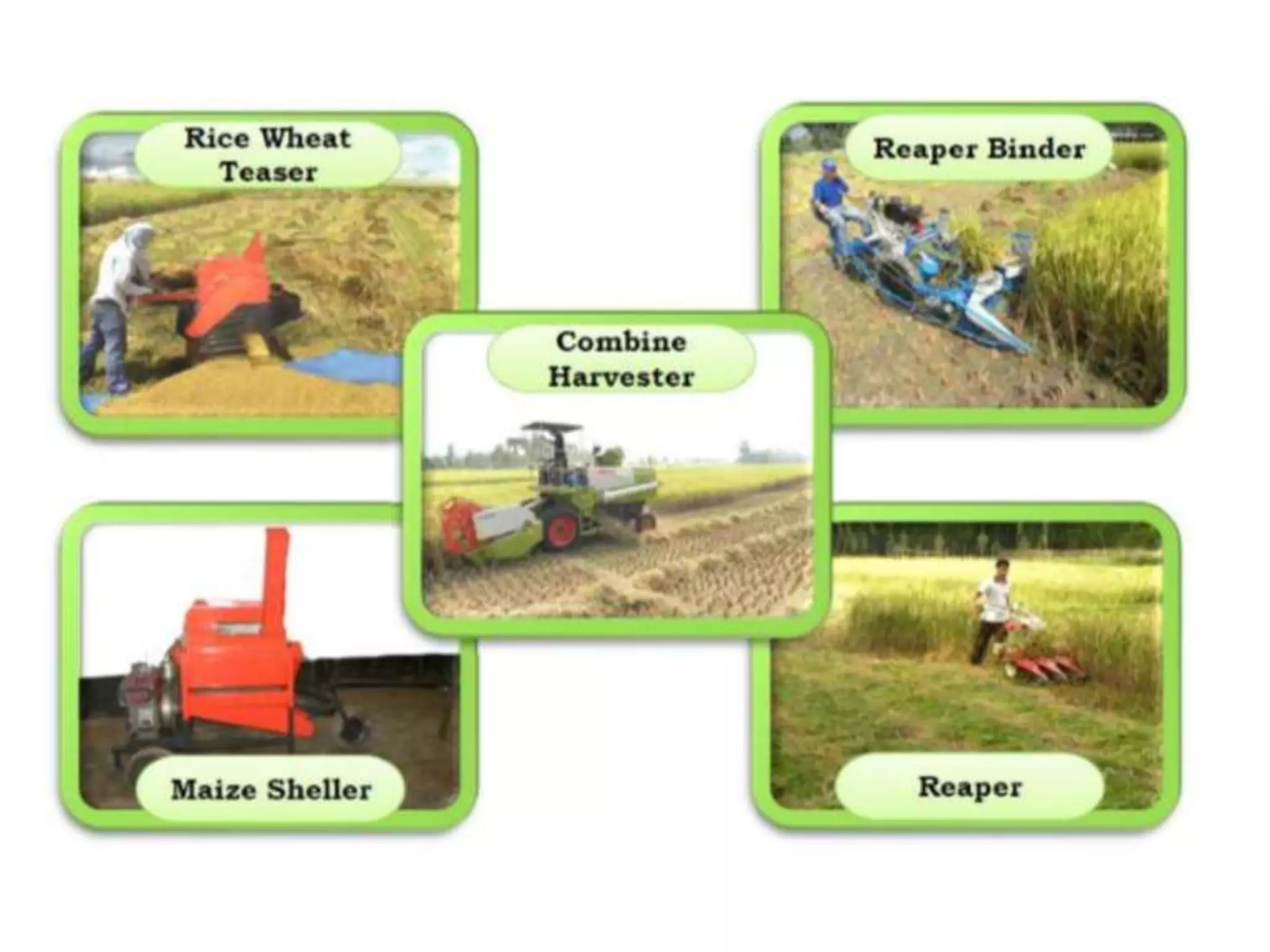
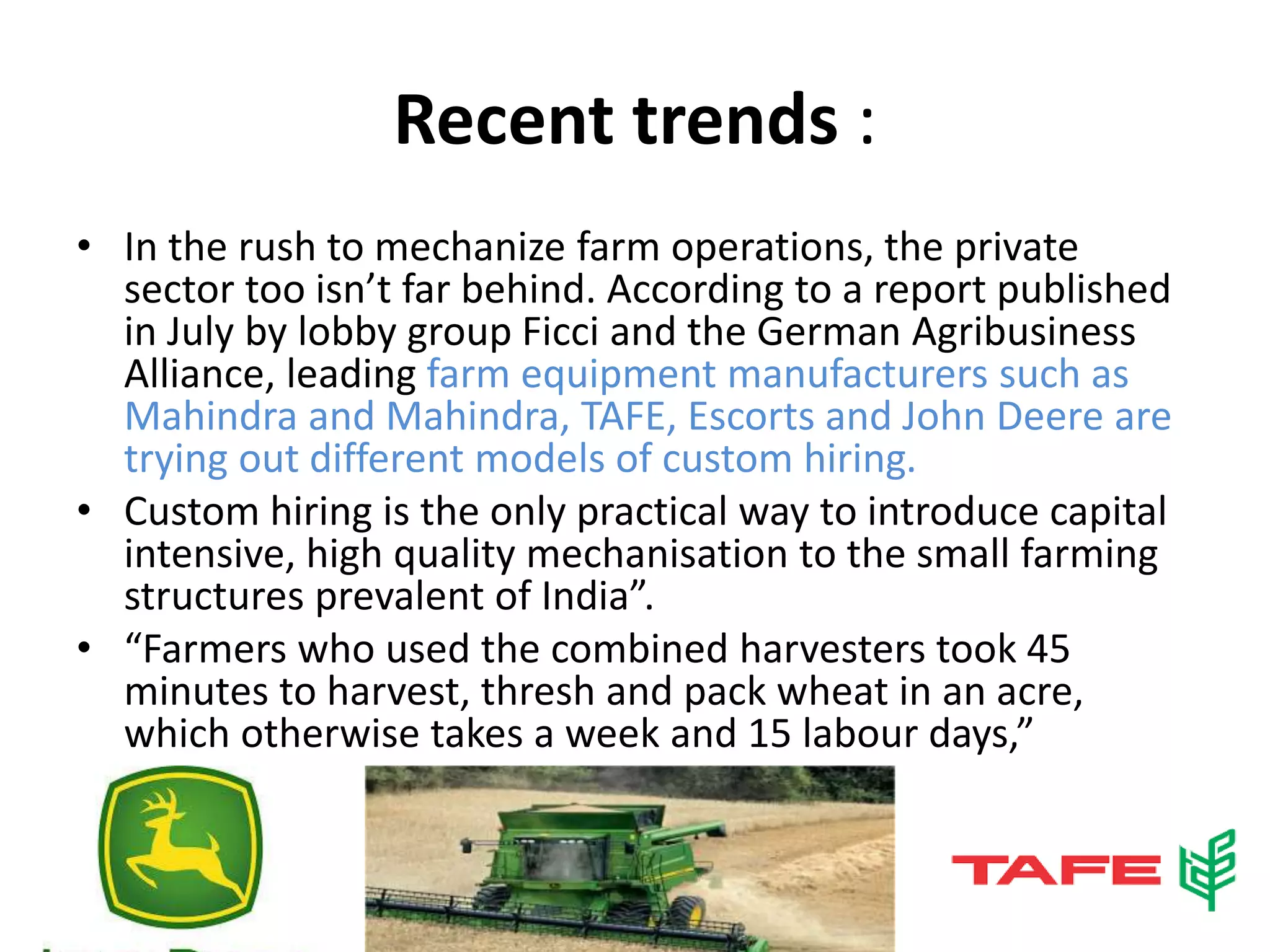
• “Farmers who used the combined harvesters took 45
minutes to harvest, thresh and pack wheat in an acre,
which otherwise takes a week and 15 labour days,”

Custom Hiring Centre

  • 1.
    Custom Hiring Centre's(CHC’s) ReshmaRani Roll no : 75 – PGDM ABPM
  • 2.
    Existing Practice • Averageper capita land holding is 1.16 ha. • About 80% of the land holdings operated by small & marginal farmers .(Less than 1,or 1-2 ) Cannot invest in farm machinery and implements. • Hence farmer is compromising for productivity & efficiency in crop production. • Labor problem is a serious problem faced in peak stage
  • 6.
    DIFFERENT MODELS OFCUSTOM HIRING SERVICES OF AM 1.Individual farmer lending 2.Farmers group purchased machineries 3.Co-operatives managed 4.Traders implemented 5.Individual entrepreneur operated 6.NGO supported 7.Govt. supported centres (PPP)
  • 9.
    Establishment of villagelevel custom hiring centre for farm machinery • Mechanization brings timeliness & precision in agricultural operations , cost effectiveness & efficiency in use of resources & applied inputs. • Custom hiring centre's for farm implements were established in 100 NICRA (National Innovations In Climate Resilient Agriculture) villages which could successfully empower farmers. • Each centre was established at a capital cost of Rs.6.25 lakhs provided by the NICRA project.
  • 10.
    Impact of Customhiring centers • Maharashtra faces the problem of long dry spells and low yield and hence demonstration of in-situ conservation of soil and water and sowing .It resulted in 11-13 % increase in soybean yield and conserving valuable top soil from erosion. • In recent years, delay in onset of monsoon rains coupled with deficit rainfall in July is adversely affecting transplanting of paddy in Bihar. Demonstration of direct seeding of rice with drum seeder resulted in timely sowing, save nearly 25 litres of diesel and 35 man days for transplanting and saving of pumping by 3 hours per ha thereby reducing cost of cultivation and increasing grain yield by 17%.
  • 11.
    • In NICRAvillages in Madhya Pradesh, farmers who avoided damage to the crop due to excess rainfall in kharif adopted broad bed furrow planting method in soybean with BBF planter realized about 40% yield advantage compared to flat bed sowing • Deep ploughing increased the fertility of the soil and also helped control weeds, said a farmer from the village, adding, “productivity of my wheat crop increased from 17 quintal per acre to 22 quintal per acre”.
  • 12.
    Management of customhiring centre • Innovative institutional mechanism was put in place at the village level for management . • Village Climate Risk Management Committee (VCRMC) was constituted comprising of 12-20 villagers with nominated members as President, Secretary and Treasurer. • A bank account is opened in the name of VCRMC and is operated by any two signatories. • The committee fixes the charges for hiring for different implements and hiring rates are to be displayed prominently. • Farmers' contributory share towards inputs like seeds, fertilizer, animals etc., is also deposited in the bank account. The revenue and expenditure details must be shared with the general body periodically.
  • 13.
    Advantages of Customhiring centres • Provides access to small and marginal farmers to costly farm machinery • Facilitates timeliness in farm operations and efficient use of inputs • Promotes adoption of climate resilient practices and technologies by farmers because of availability of appropriate machines at reasonable hiring charges • Reduces drudgery • Promotes increase in cropping intensity wherever feasible • Facilitates crop residue recycling and prevents burning of residues • Reduction in cost of cultivation • Provides work opportunities to skilled labour and small artisans.
  • 14.
    Scale of operation •Over 1000 demonstrations with energy efficient implements were successfully conducted in the NICRA villages by hiring from CHCs covering 22000 ha and 30000 farmers. • Cumulative revenue generated from CHCs is 26 lakhs with an average revenue generated per centre ranging from Rs. 7000 to 74000.
  • 15.
    Recent trends : •In the rush to mechanize farm operations, the private sector too isn’t far behind. According to a report published in July by lobby group Ficci and the German Agribusiness Alliance, leading farm equipment manufacturers such as Mahindra and Mahindra, TAFE, Escorts and John Deere are trying out different models of custom hiring. • Custom hiring is the only practical way to introduce capital intensive, high quality mechanisation to the small farming structures prevalent of India”. • “Farmers who used the combined harvesters took 45 minutes to harvest, thresh and pack wheat in an acre, which otherwise takes a week and 15 labour days,”