Anand Pattern-
Simplified
Manvik Joshi
What is it?
➔ The Anand Pattern is an integrated cooperative
structure that procures, processes and markets
produce.
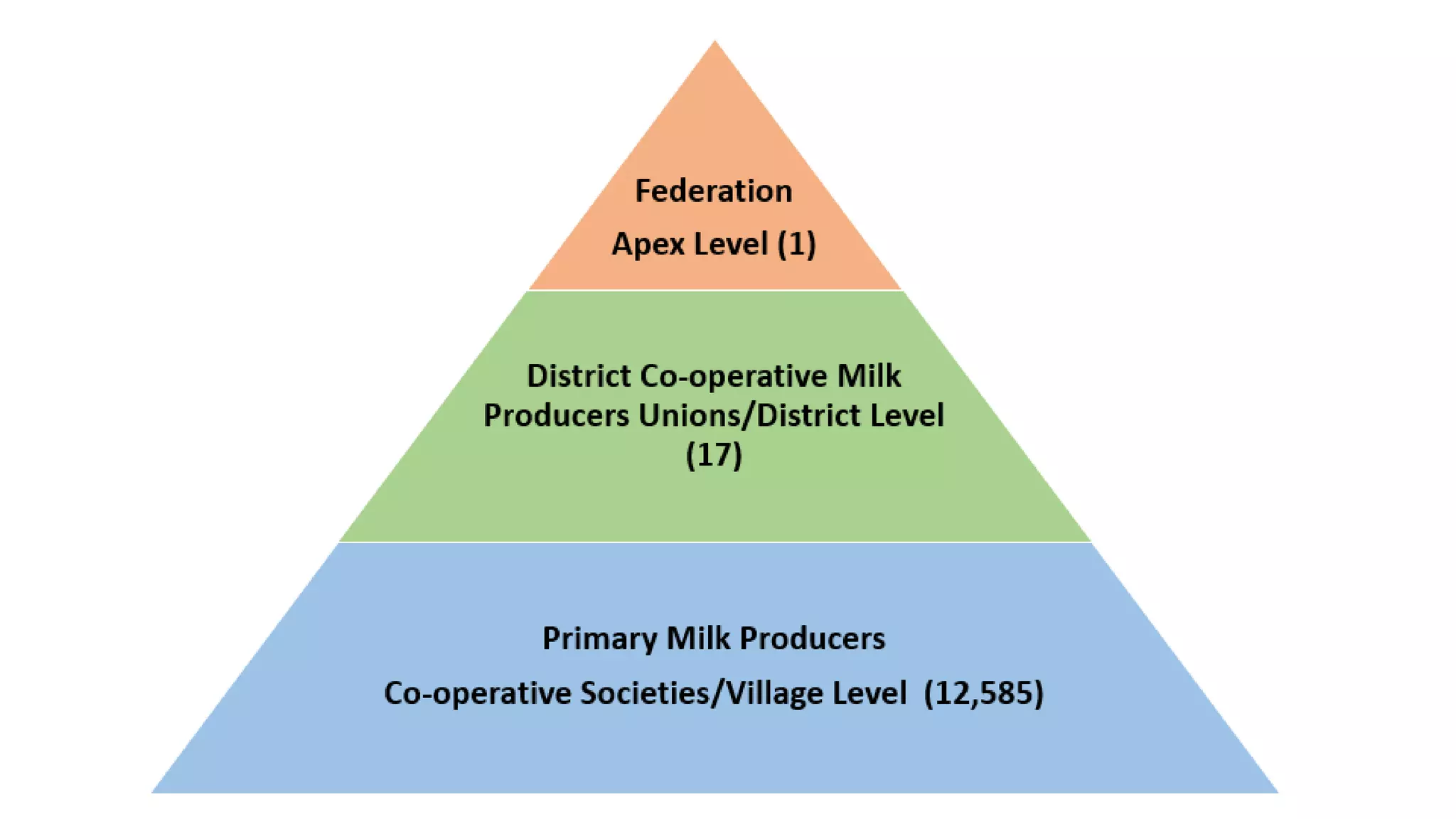
➔ A three tier model.
Why it was succeeded?
➔ Supported by professional management, producers decide their own
business policies, adopt modern production and marketing techniques
and receive services that they can individually neither afford nor
manage.
➔ The Anand Pattern succeeds because it involves people in their own
development through cooperatives where professionals are accountable to
leaders elected by producers.
➔ The institutional infrastructure -- village cooperative, dairy and cattle feed
plants, state and national marketing -- is owned and controlled by farmers.
➔ Anand Pattern cooperatives have progressively, linked producers directly
with consumers.
Understanding Three Tier
Structure
Village Society
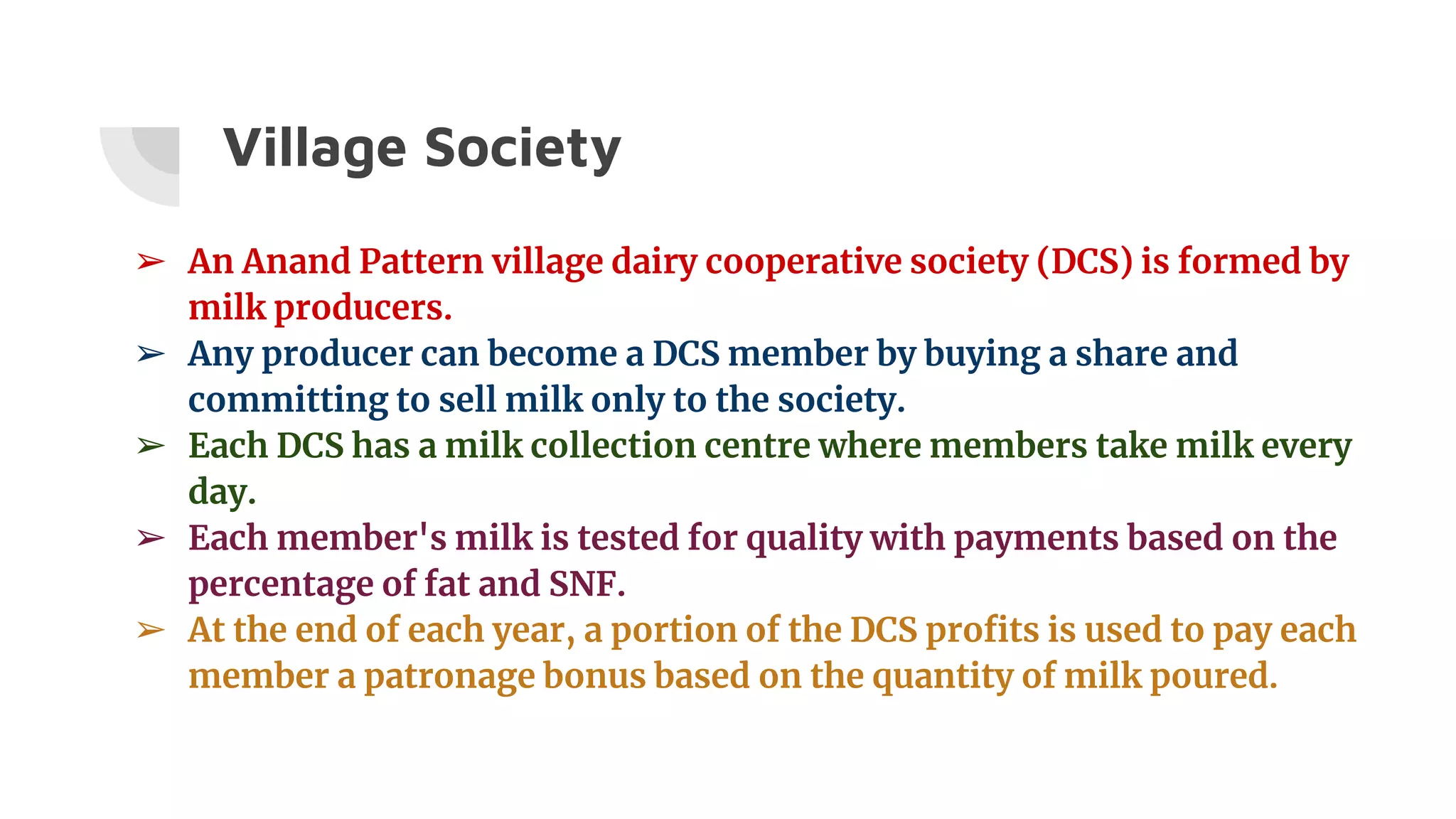
➢ An Anand Pattern village dairy cooperative society (DCS) is formed by
milk producers.
➢ Any producer can become a DCS member by buying a share and
committing to sell milk only to the society.
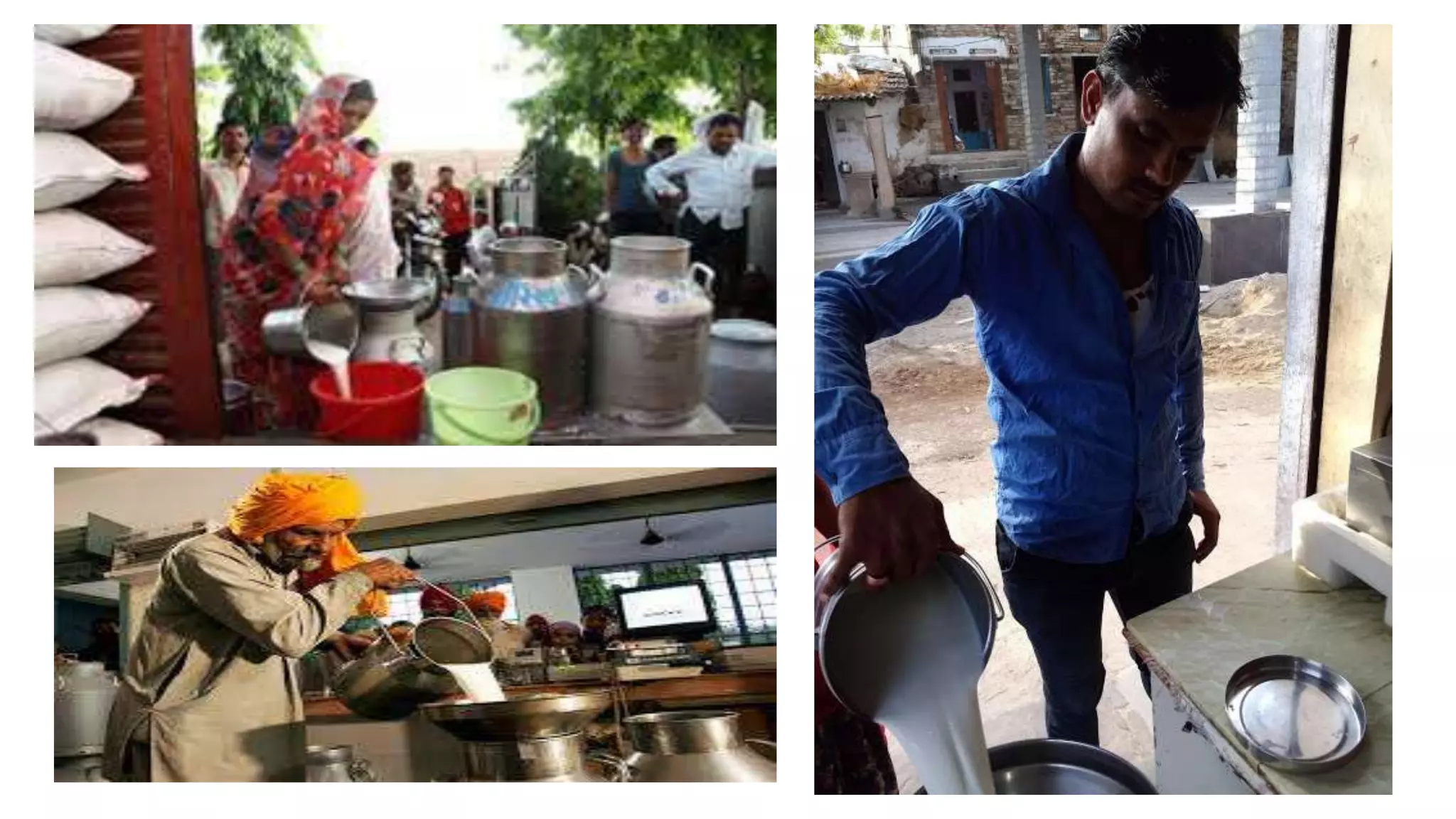
➢ Each DCS has a milk collection centre where members take milk every
day.
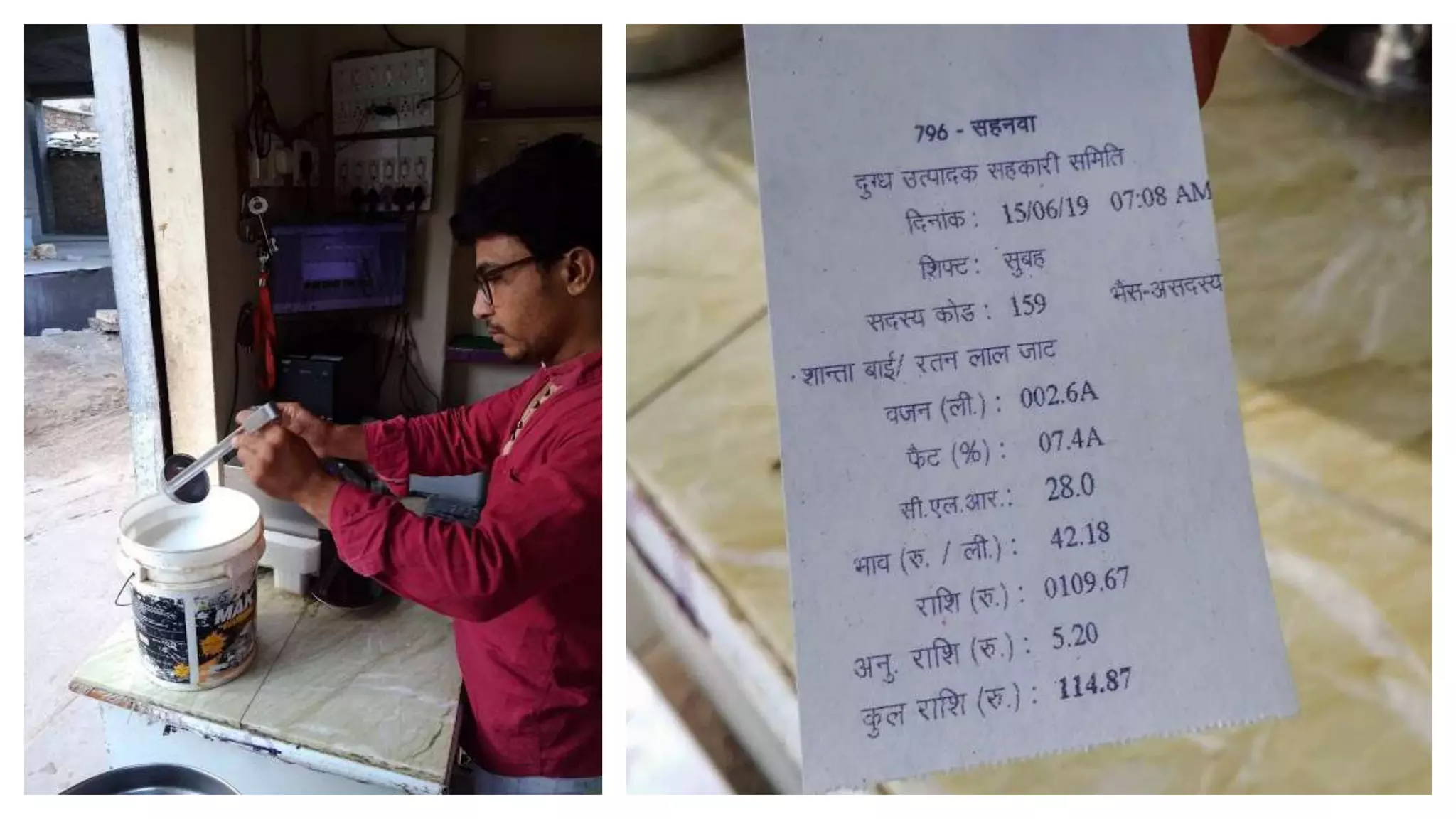
➢ Each member's milk is tested for quality with payments based on the
percentage of fat and SNF.
➢ At the end of each year, a portion of the DCS profits is used to pay each
member a patronage bonus based on the quantity of milk poured.
The District Union
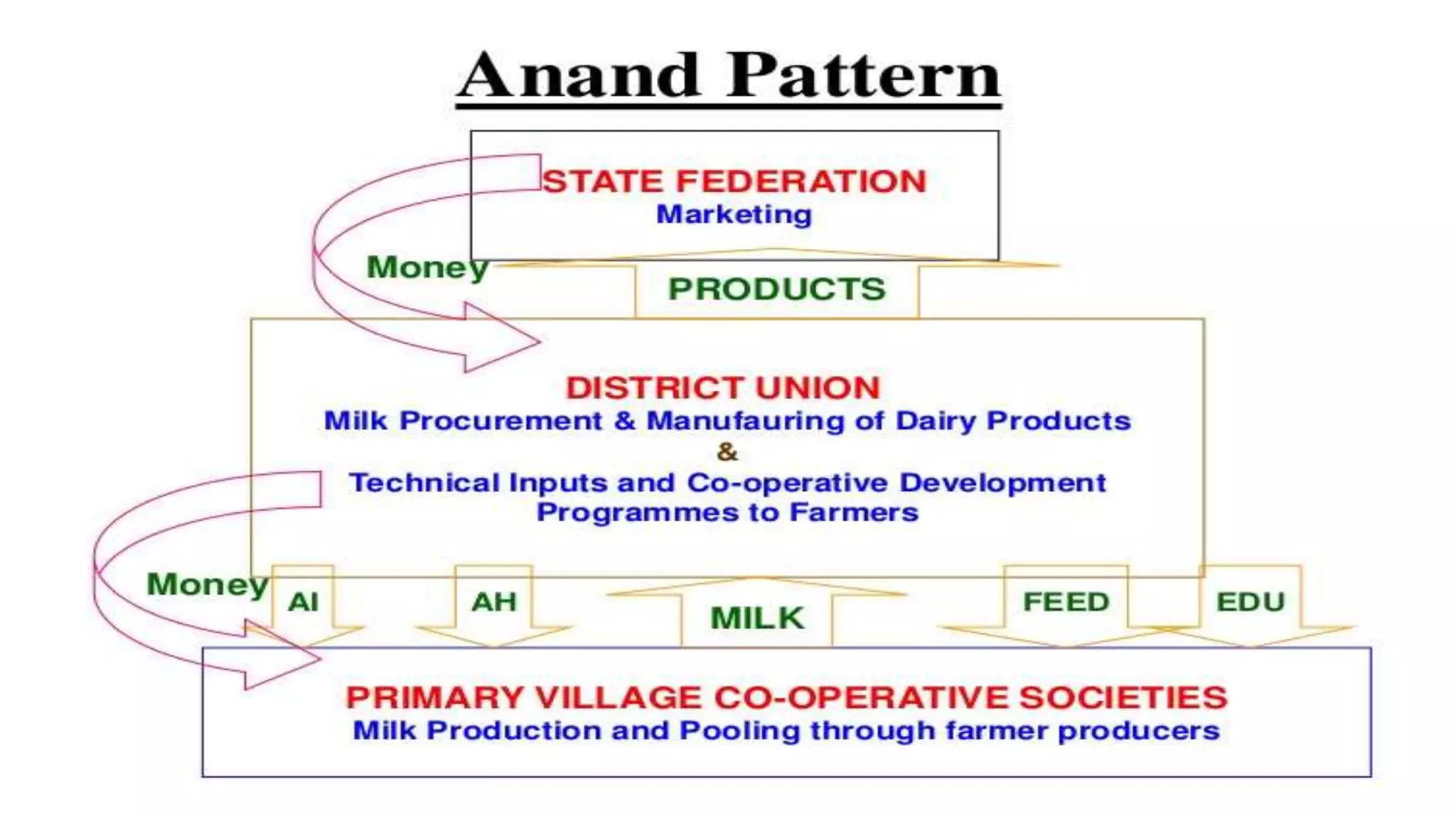
➢ A District Cooperative Milk Producers' Union is owned by dairy cooperative
societies.
➢ The Union buys all the societies' milk, then processes and markets fluid milk
and products.
➢ Most Unions also provide a range of inputs and services to DCSs and their
members: feed, veterinary care, artificial insemination to sustain the growth of
milk production and the cooperatives' business.
➢ Union staff train and provide consulting services to support DCS leaders and
staff.
The District Federation
➢ Establishment of a direct linkage between milk producers and
consumers by eliminating middleman.
➢ The cooperative milk producers' unions in a state form, a State
Federation, which is responsible for marketing the fluid milk
and products of member unions.
➢ Some federations also manufacture feed and support other
union activities.
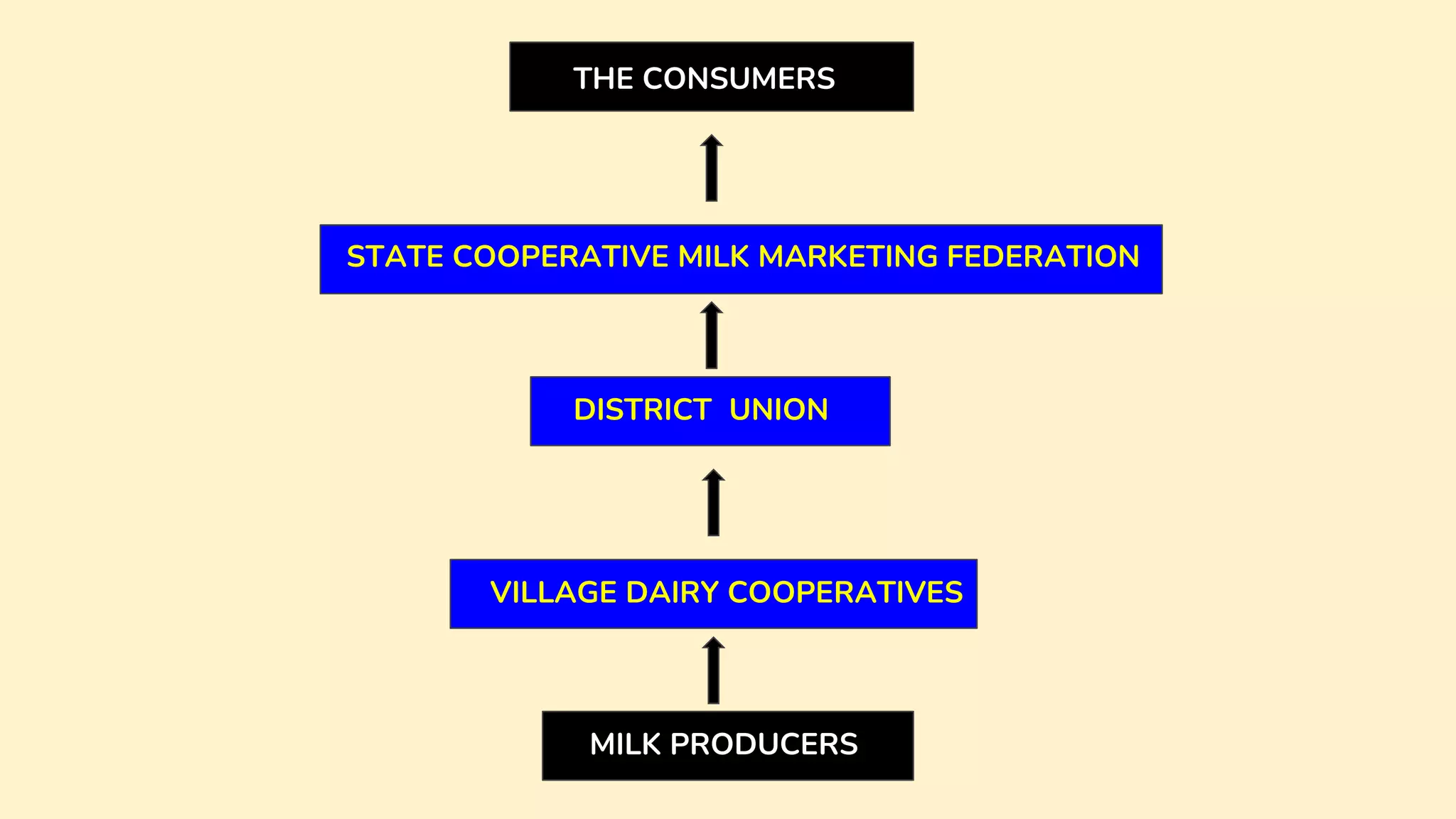
MILK PRODUCERS
VILLAGE DAIRY COOPERATIVES
DISTRICT UNION
STATE COOPERATIVE MILK MARKETING FEDERATION
THE CONSUMERS
Further Reading
1. https://www.nddb.coop/about/genesis/pattern
2. http://ecoursesonline.iasri.res.in/mod/page/view.php?id=4920
3. https://www.slideshare.net/SunilMeena22/amul-96602109
4. https://www.achieveriasclasses.com/view.php?id=1038
5. http://www.dudhsagardairy.coop/about-us/amul-pattern/
6. http://www.amuldairy.com/index.php/18-content/22-anand-pattern-
how-we-work
ANY QUERY!!!
THANK YOU!!!

Anand pattern- simplified by Manvik Joshi

  • 1.
  • 2.
    What is it? ➔The Anand Pattern is an integrated cooperative structure that procures, processes and markets produce. ➔ A three tier model.
  • 4.
    Why it wassucceeded? ➔ Supported by professional management, producers decide their own business policies, adopt modern production and marketing techniques and receive services that they can individually neither afford nor manage. ➔ The Anand Pattern succeeds because it involves people in their own development through cooperatives where professionals are accountable to leaders elected by producers. ➔ The institutional infrastructure -- village cooperative, dairy and cattle feed plants, state and national marketing -- is owned and controlled by farmers. ➔ Anand Pattern cooperatives have progressively, linked producers directly with consumers.
  • 6.
  • 8.
    Village Society ➢ AnAnand Pattern village dairy cooperative society (DCS) is formed by milk producers. ➢ Any producer can become a DCS member by buying a share and committing to sell milk only to the society. ➢ Each DCS has a milk collection centre where members take milk every day. ➢ Each member's milk is tested for quality with payments based on the percentage of fat and SNF. ➢ At the end of each year, a portion of the DCS profits is used to pay each member a patronage bonus based on the quantity of milk poured.
  • 11.
    The District Union ➢A District Cooperative Milk Producers' Union is owned by dairy cooperative societies. ➢ The Union buys all the societies' milk, then processes and markets fluid milk and products. ➢ Most Unions also provide a range of inputs and services to DCSs and their members: feed, veterinary care, artificial insemination to sustain the growth of milk production and the cooperatives' business. ➢ Union staff train and provide consulting services to support DCS leaders and staff.
  • 13.
    The District Federation ➢Establishment of a direct linkage between milk producers and consumers by eliminating middleman. ➢ The cooperative milk producers' unions in a state form, a State Federation, which is responsible for marketing the fluid milk and products of member unions. ➢ Some federations also manufacture feed and support other union activities.
  • 14.
    MILK PRODUCERS VILLAGE DAIRYCOOPERATIVES DISTRICT UNION STATE COOPERATIVE MILK MARKETING FEDERATION THE CONSUMERS
  • 15.
    Further Reading 1. https://www.nddb.coop/about/genesis/pattern 2.http://ecoursesonline.iasri.res.in/mod/page/view.php?id=4920 3. https://www.slideshare.net/SunilMeena22/amul-96602109 4. https://www.achieveriasclasses.com/view.php?id=1038 5. http://www.dudhsagardairy.coop/about-us/amul-pattern/ 6. http://www.amuldairy.com/index.php/18-content/22-anand-pattern- how-we-work
  • 16.
  • 17.