WINTER
Template
Curriculum Sharing
of
Optional
Mathematics
Presented by: JANAK SINGH SAUD
♥
Mathematics as a
necessity of
civilization
Nature of
Mathematics
Why to teach
Mathematics
Steps of
learning
Optional
mathematics
as a Optional
subject. Why?
Purpose of
Optional
mathematics
General
objectives of
Optional
Mathematics
Techniques
and strategies
of
Mathematics
Teaching
learning
materials
Evaluation
process
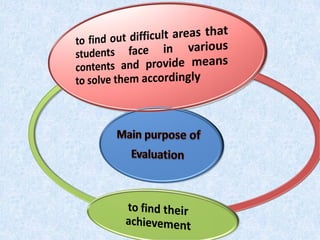
Purpose of
Evaluation
Record
keeping
Framework
of
this session
❑Mathematics is a language
❑Mathematics is way of thinking
❑Mathematics is pattern of science
❑Mathematics is organized structure of
knowledge
❑Mathematics is practical science
❑Inductive nature of mathematics
❑Mathematics is both science and art
❑Telescopic and microscopic nature of
mathematics
• Arithmetical skills which are needed for use at
home or office or workplace.
• Basis of scientific development and modern
technology
• Use of mathematical technique as
management tool in commerce and industries
• Fundamental to study of physical science and
engineering of all kind.
• For enjoyment for example, puzzles corners
which help to solve them.
Mathematics in real Practice
Type of cake Flour Fat Profit
A 250 gm 40 gm Rs. 5
B 100 gm 50 gm Rs. 10
Total 5000 gm 2000 gm
Let, x an y be the no. of cakes A and B.
Total quantity of flour = 250x + 100 y
Total quantity of fat = 40 x + 50 y
And the total profit = 5x + 10 y = Objective function
Thus he has to produce 40 pieces of cake B and no cake A
to get maximum profit of Rs. 400
Maximum value is 400
There are certain steps or methods that should
be applied in learning process which are all
follows:
Steps of learning
• Along with the knowledge and skills of
different subjects and areas, students must
be equipped with knowledge and skills of
mathematical concepts for their overall
development.
engineering, medical science, and pure science
Purpose
• To develop additional knowledge and skills in most
of the concepts which are included in compulsory
mathematics.
• To provide wider knowledge on algebra (excluding
the concepts which are already mentioned in
compulsory mathematics), matrix, coordinate
geometry, trigonometry, vector, transformation,
and statistics and so on.
• The curriculum of an optional mathematics is
designed by collecting suggestions from
subject teachers and experts to make it useful,
effective, standard and practical.
1. To introduce of relation and function and explain its characteristics
2. To draw the graph of function
3. To define the inverse and composite functions
4. To find the positive, negative base of exponential expression, to find product and
division and to solve relates equations.
5. To introduce with the polynomial and apply the remainder and factor theorem .
6. To understand the definition of Series, A.S and G.S and solve the their problem.
7. To find the A.M., G.M and relation between them
8. To find the sum of natural numbers of A.S and G.S
9. To maximize and minimize the feasible region bounded by the polygon of given
inequalities.
10. To solve the linear and quadratic equations, draw their graph and quadratic
equation by graphical way.
11. To define , present the matrix and its operations.
12. To solve the simultaneous equations by matrix method.
13. To find the trigonometric ratios of compound angles and solve the problem
related to these compound angles.
14. To prove the conational trigonometric identities
15. To solve the trigonometric equations
16. To solve the problems of height and distance involving two angles elevation and
depression.
Specification Grid of Opt. Maths
S.
N
Content Topics
K U A HA
TQ TM
Each of
1 Mark
Each of
2 marks
Each of
4 marks
Each of
5 marks
1 Algebra
Function
2 3 2 1 8 21
Polynomial
Sequence & Series
Linear programming
Quadratic equation and graph
2
Limit and
continuity
Continuity and discontinuity
1 - 1 - 2 5
3 Matrix
Determinant and inverse of matrix
1 2 1 - 4 9
Solve equation by matrix method
Cramer’s rule
4
Coordinate
geometry
Angle between two lines
2 2 1 1 6 15
Pair of straight lines
Conic sections
Circle
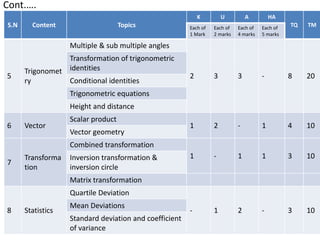
Cont.….
S.N Content Topics
K U A HA
TQ TM
Each of
1 Mark
Each of
2 marks
Each of
4 marks
Each of
5 marks
5
Trigonomet
ry
Multiple & sub multiple angles
2 3 3 - 8 20
Transformation of trigonometric
identities
Conditional identities
Trigonometric equations
Height and distance
6 Vector
Scalar product
1 2 - 1 4 10
Vector geometry
7
Transforma
tion
Combined transformation
1 - 1 1 3 10
Inversion transformation &
inversion circle
Matrix transformation
8 Statistics
Quartile Deviation
- 1 2 - 3 10
Mean Deviations
Standard deviation and coefficient
of variance
WINTER
Template
Techniques and
Strategies in
Teaching
Mathematics
WINTER
Template
➢Questioner and Discussion
Approach
➢Experimental Approach
➢Inductive and deductive Approach
➢Discovery Approach
➢Synthetic and analytical Approach
➢Problem Solving Approach
➢Demonstration approach
DEMONSTRATION
APPROACH
PROBLEM
SOLVING
PROBLEM-SOLVING
• a learner-directed strategy in which
learners “think patiently and analytically
about complex situations in order to find
answers to questions”.
COOPERATIVE
Learning
COOPERATIVE LEARNING
•eliminates competition among learners. It
encourages them to work together towards
common goals.
•It fosters positive intergroup attitudes in
the classroom. It encourages learners to
work in small groups to learn.
Discovery
Approach
A. DISCOVERY APPROACH
The ultimate goal of this approach
is that learners learn how to learn
rather than what to learn.
•for developing their higher-order
thinking skills.
BRAIN
STORMING
BRAINSTORMING
• It is an excellent strategy
for stimulating
creativity among
learners.
Materials
– Power Point presentations (visual aids)
– Text Books
– Practice Book
– Question Bank
– Multimedia materials: Instructional video or audio
– Geo Gebra (GeoGebra is a cross-platform Dynamic
Mathematics Software that integrates Geometry and
Algebra)
– www.slideshare.net
(https://www.slideshare.net/search/slideshow?search
from=header&q=janak+singh+saud)
For Absent Students
Power point presentation
Geo Gebra
Evaluation process/scheme
To examine if students are able to achieve
expected objective or not.
To inspect if students are ready with the prerequisites to
learn new lesson of mathematics or not.
To provide feedback on accomplishment (what
and how much have the students learnt)
To provide feedback on effectiveness of teaching
to the teachers ( what and how much has been
taught)
To determine a level of the students by evaluating
their outcome.
The evaluation process of an optional mathematics
should be targeted to achieve the following objectives.
While teaching mathematics, students
will be evaluated by using following
methods:
• Observation
• Students’ participation ( by involving students
in different activities and letting them to apply
in their daily life)
• Practicum
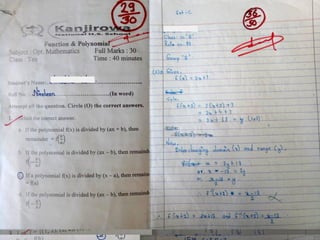
• Written/class test, homework
Written
tests
Formative
assessment
The test
administered in
different times
monthly,
weekly,
at the end of a
lesson,
quarterly,
twice a year
Summative
Assessment
www.slideshare.net
CURRICULUM SHARING .pdf

CURRICULUM SHARING .pdf

  • 1.
  • 2.
  • 3.
    Nature of Mathematics Why toteach Mathematics Steps of learning Optional mathematics as a Optional subject. Why? Purpose of Optional mathematics General objectives of Optional Mathematics Techniques and strategies of Mathematics Teaching learning materials Evaluation process Purpose of Evaluation Record keeping Framework of this session
  • 4.
    ❑Mathematics is alanguage ❑Mathematics is way of thinking ❑Mathematics is pattern of science ❑Mathematics is organized structure of knowledge ❑Mathematics is practical science ❑Inductive nature of mathematics ❑Mathematics is both science and art ❑Telescopic and microscopic nature of mathematics
  • 5.
    • Arithmetical skillswhich are needed for use at home or office or workplace. • Basis of scientific development and modern technology • Use of mathematical technique as management tool in commerce and industries • Fundamental to study of physical science and engineering of all kind. • For enjoyment for example, puzzles corners which help to solve them.
  • 6.
    Mathematics in realPractice Type of cake Flour Fat Profit A 250 gm 40 gm Rs. 5 B 100 gm 50 gm Rs. 10 Total 5000 gm 2000 gm Let, x an y be the no. of cakes A and B. Total quantity of flour = 250x + 100 y Total quantity of fat = 40 x + 50 y And the total profit = 5x + 10 y = Objective function Thus he has to produce 40 pieces of cake B and no cake A to get maximum profit of Rs. 400 Maximum value is 400
  • 7.
    There are certainsteps or methods that should be applied in learning process which are all follows:
  • 8.
  • 9.
    • Along withthe knowledge and skills of different subjects and areas, students must be equipped with knowledge and skills of mathematical concepts for their overall development.
  • 10.
  • 11.
    Purpose • To developadditional knowledge and skills in most of the concepts which are included in compulsory mathematics. • To provide wider knowledge on algebra (excluding the concepts which are already mentioned in compulsory mathematics), matrix, coordinate geometry, trigonometry, vector, transformation, and statistics and so on.
  • 12.
    • The curriculumof an optional mathematics is designed by collecting suggestions from subject teachers and experts to make it useful, effective, standard and practical.
  • 13.
    1. To introduceof relation and function and explain its characteristics 2. To draw the graph of function 3. To define the inverse and composite functions 4. To find the positive, negative base of exponential expression, to find product and division and to solve relates equations. 5. To introduce with the polynomial and apply the remainder and factor theorem . 6. To understand the definition of Series, A.S and G.S and solve the their problem. 7. To find the A.M., G.M and relation between them 8. To find the sum of natural numbers of A.S and G.S 9. To maximize and minimize the feasible region bounded by the polygon of given inequalities. 10. To solve the linear and quadratic equations, draw their graph and quadratic equation by graphical way. 11. To define , present the matrix and its operations. 12. To solve the simultaneous equations by matrix method. 13. To find the trigonometric ratios of compound angles and solve the problem related to these compound angles. 14. To prove the conational trigonometric identities 15. To solve the trigonometric equations 16. To solve the problems of height and distance involving two angles elevation and depression.
  • 14.
    Specification Grid ofOpt. Maths S. N Content Topics K U A HA TQ TM Each of 1 Mark Each of 2 marks Each of 4 marks Each of 5 marks 1 Algebra Function 2 3 2 1 8 21 Polynomial Sequence & Series Linear programming Quadratic equation and graph 2 Limit and continuity Continuity and discontinuity 1 - 1 - 2 5 3 Matrix Determinant and inverse of matrix 1 2 1 - 4 9 Solve equation by matrix method Cramer’s rule 4 Coordinate geometry Angle between two lines 2 2 1 1 6 15 Pair of straight lines Conic sections Circle
  • 15.
    Cont.…. S.N Content Topics KU A HA TQ TM Each of 1 Mark Each of 2 marks Each of 4 marks Each of 5 marks 5 Trigonomet ry Multiple & sub multiple angles 2 3 3 - 8 20 Transformation of trigonometric identities Conditional identities Trigonometric equations Height and distance 6 Vector Scalar product 1 2 - 1 4 10 Vector geometry 7 Transforma tion Combined transformation 1 - 1 1 3 10 Inversion transformation & inversion circle Matrix transformation 8 Statistics Quartile Deviation - 1 2 - 3 10 Mean Deviations Standard deviation and coefficient of variance
  • 17.
  • 18.
    WINTER Template ➢Questioner and Discussion Approach ➢ExperimentalApproach ➢Inductive and deductive Approach ➢Discovery Approach ➢Synthetic and analytical Approach ➢Problem Solving Approach ➢Demonstration approach
  • 19.
  • 21.
  • 22.
    PROBLEM-SOLVING • a learner-directedstrategy in which learners “think patiently and analytically about complex situations in order to find answers to questions”.
  • 24.
  • 25.
    COOPERATIVE LEARNING •eliminates competitionamong learners. It encourages them to work together towards common goals. •It fosters positive intergroup attitudes in the classroom. It encourages learners to work in small groups to learn.
  • 27.
  • 28.
    A. DISCOVERY APPROACH Theultimate goal of this approach is that learners learn how to learn rather than what to learn. •for developing their higher-order thinking skills.
  • 29.
  • 30.
    BRAINSTORMING • It isan excellent strategy for stimulating creativity among learners.
  • 31.
    Materials – Power Pointpresentations (visual aids) – Text Books – Practice Book – Question Bank – Multimedia materials: Instructional video or audio – Geo Gebra (GeoGebra is a cross-platform Dynamic Mathematics Software that integrates Geometry and Algebra) – www.slideshare.net (https://www.slideshare.net/search/slideshow?search from=header&q=janak+singh+saud)
  • 32.
  • 33.
  • 34.
  • 35.
    Evaluation process/scheme To examineif students are able to achieve expected objective or not. To inspect if students are ready with the prerequisites to learn new lesson of mathematics or not. To provide feedback on accomplishment (what and how much have the students learnt) To provide feedback on effectiveness of teaching to the teachers ( what and how much has been taught) To determine a level of the students by evaluating their outcome. The evaluation process of an optional mathematics should be targeted to achieve the following objectives.
  • 36.
    While teaching mathematics,students will be evaluated by using following methods: • Observation • Students’ participation ( by involving students in different activities and letting them to apply in their daily life) • Practicum • Written/class test, homework
  • 37.
    Written tests Formative assessment The test administered in differenttimes monthly, weekly, at the end of a lesson, quarterly, twice a year Summative Assessment
  • 41.