Topic:-
Curriculum: Relevance and
Effectiveness
Presented by: - Sindhu Joyo
Key points
 * What is Curriculum?
 * Elements of curriculum.
 * Types of curriculum
 * why we develop the Curriculum
 * 7 points in focus while preparing a good curriculum
 * What kind of challenges, curriculum developers face while
preparing the curriculum.
 * 10 standarda of a Good curriculum.
 * conclusion
What is curriculum?
 * The curriculum means a detailed description of
contents of teaching( syllabi) the teacher should
deliver to their pupils through teaching.
 * Curriculum is the heart of education
improvement.
 * the term curriculum comes from the latin word
“currere” which means to run, the course of the race or
course of study.
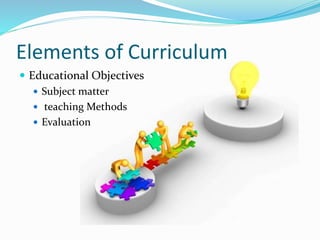
Elements of Curriculum
 Educational Objectives
 Subject matter
 teaching Methods
 Evaluation
Types of Curriculum
 * Activity based curriculum
 * Subject based curriculum
 * Hidden curriculum
 * Co- curricular Activities
Activity Based curriculum
A facilitator add various
activities to make his
teaching more fruitfull.
Subject based Curriculum
 A teacher is an active participants while students are
passive learners.
Hidden curriculum
 Those things which are not the part of the curriculum
actually, but the student must learn those things.
 For example:
 Classroom rules and procedure
 Teacher- pupil relationship
 Disciplane
Co- Curricular Activities
 A teacher is a collaborator or facilitator.
 He/ she should motivate/ guide/teach student for co-
curricular activities.
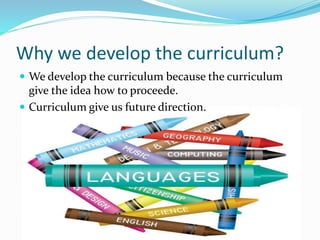
Why we develop the curriculum?
 We develop the curriculum because the curriculum
give the idea how to proceede.
 Curriculum give us future direction.
7 points in focus while preparing a
good curriculum
 1 curriculum must be pro- active.
 2 Begin with the end in mind.
 3 Put first thing first
 4 Think win-win situation
 5 Seek first to understand then to be understood
 6 Synergize
 7 Sharpen to the saw
What kind of challenges the curriculum
developers face while preparing curriculum
 1 Economic problems
 2 political Interference
 3 Unavailability of teaching material
 4 Lack of trained teachers
 5 unavailability of laboratries
How to make an effective curriculum:
10 Standards of a good curriculum
 1 Subject matter knowledge
 2 Human growth and development
 3 Islamic values and Ethics
 4 Instructional planning and strategies
 5 Teaching of english as second language
 6 Learning environment
 7 effective Communication & use of ICT
 8 Collaboration & Partenership
 9 Continuous professional development & code of
conduct
 10 Assessment
Conclusion
 Nowadays the curriculum varies from:
 1 Passive learning to Active learning
 2 Teacher centered to student centered
 3 Fragmented curriculum to Integrated curriculum
 4 low level curriculum to high level curriculum
 5 Little students freedom to generous student freedom
 6 Textbook driven to research driven
 7 Testing to Assessment
 8 good management to great leadership
 9 Transmission teaching to transformational teaching
 10 And many more
Thank you

Curriculum: Relevance and Effectiveness

  • 2.
  • 3.
    Key points  *What is Curriculum?  * Elements of curriculum.  * Types of curriculum  * why we develop the Curriculum  * 7 points in focus while preparing a good curriculum  * What kind of challenges, curriculum developers face while preparing the curriculum.  * 10 standarda of a Good curriculum.  * conclusion
  • 4.
    What is curriculum? * The curriculum means a detailed description of contents of teaching( syllabi) the teacher should deliver to their pupils through teaching.  * Curriculum is the heart of education improvement.  * the term curriculum comes from the latin word “currere” which means to run, the course of the race or course of study.
  • 5.
    Elements of Curriculum Educational Objectives  Subject matter  teaching Methods  Evaluation
  • 6.
    Types of Curriculum * Activity based curriculum  * Subject based curriculum  * Hidden curriculum  * Co- curricular Activities
  • 7.
    Activity Based curriculum Afacilitator add various activities to make his teaching more fruitfull.
  • 8.
    Subject based Curriculum A teacher is an active participants while students are passive learners.
  • 9.
    Hidden curriculum  Thosethings which are not the part of the curriculum actually, but the student must learn those things.  For example:  Classroom rules and procedure  Teacher- pupil relationship  Disciplane
  • 10.
    Co- Curricular Activities A teacher is a collaborator or facilitator.  He/ she should motivate/ guide/teach student for co- curricular activities.
  • 11.
    Why we developthe curriculum?  We develop the curriculum because the curriculum give the idea how to proceede.  Curriculum give us future direction.
  • 12.
    7 points infocus while preparing a good curriculum  1 curriculum must be pro- active.  2 Begin with the end in mind.  3 Put first thing first  4 Think win-win situation  5 Seek first to understand then to be understood  6 Synergize  7 Sharpen to the saw
  • 13.
    What kind ofchallenges the curriculum developers face while preparing curriculum  1 Economic problems  2 political Interference  3 Unavailability of teaching material  4 Lack of trained teachers  5 unavailability of laboratries
  • 14.
    How to makean effective curriculum: 10 Standards of a good curriculum  1 Subject matter knowledge  2 Human growth and development  3 Islamic values and Ethics  4 Instructional planning and strategies  5 Teaching of english as second language  6 Learning environment  7 effective Communication & use of ICT  8 Collaboration & Partenership  9 Continuous professional development & code of conduct  10 Assessment
  • 15.
    Conclusion  Nowadays thecurriculum varies from:  1 Passive learning to Active learning  2 Teacher centered to student centered  3 Fragmented curriculum to Integrated curriculum  4 low level curriculum to high level curriculum  5 Little students freedom to generous student freedom  6 Textbook driven to research driven  7 Testing to Assessment  8 good management to great leadership  9 Transmission teaching to transformational teaching  10 And many more
  • 16.