STUDENTS AS TEACHERS:
Collaborating for Greater Success
In Science for English Language Learners
Written by: Elizabeth Park

Presented by: Liriett Herrera
This program was developed in a middle
school in New Jersey because the state and federal
mandates requiere that eighth grade students
perform at a level considered proficient on
standardized content area assessment within a few

years of their arrivals in the United States.
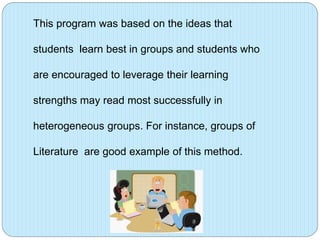
This program was based on the ideas that
students learn best in groups and students who
are encouraged to leverage their learning
strengths may read most successfully in
heterogeneous groups. For instance, groups of
Literature are good example of this method.
BELIEFS BEHIND THE PROGRAM
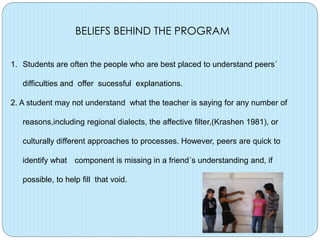
1. Students are often the people who are best placed to understand peers´
difficulties and offer sucessful explanations.
2. A student may not understand what the teacher is saying for any number of
reasons,including regional dialects, the affective filter,(Krashen 1981), or
culturally different approaches to processes. However, peers are quick to
identify what component is missing in a friend´s understanding and, if
possible, to help fill that void.
All the ELLs in the Students as Teachers are native
Speakers and the school is located in a town with
A population identified as 75% Spanish speakers.
The students in this program are classified as
Beginners , intermediate and advanced.
1. Beginners receive content instruction in Spanish
In addition to the ESL classes.
2. Intermediate level students are offered sheltered
content area Instruction in English with ESL instruction
reading and writing, math,e social studies, and science.
3. Students at advanced level attend English only content
,
reading, and writing classes and have no classes
period of ESL support each day.
ORGANIZATION OF THE PROGRAM
TEACHER´S
INTRODUCTION
STUDENT´S
CONTENT
EXPLORATION

CREATION OF
TEXTS

WRITING

ILLUSTRATING

DEVELOPING
ASSESSMENT

LAYING OUT
THE PAGES

TEACHING AND
ASSESSMENT
TEACHERS IS MONITORING
THE PROCESS AND
ANSWERING QUESTIONS

PRINTING AND ASSEMBLING
(8-12 PAGES .ENGLISH
BOOKLET)
CONTENT INTRODUCTION AND GROUP CREATION

THE TEACHER
INTRODUCES THE
TOPIC

STUDENTS BEGIN
TO ENVISION
THEMSELVES AS
TEACHERS

WATER

TOPICS ASSIGNED
BY THE TEACHER

SOUND

LIGHT
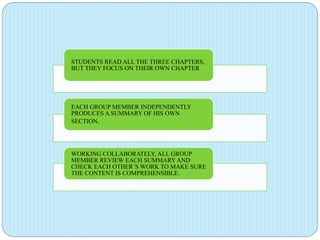
STUDENTS READ ALL THE THREE CHAPTERS,
BUT THEY FOCUS ON THEIR OWN CHAPTER

EACH GROUP MEMBER INDEPENDENTLY
PRODUCES A SUMMARY OF HIS OWN
SECTION.

WORKING COLLABORATELY, ALL GROUP
MEMBER REVIEW EACH SUMMARY AND
CHECK EACH OTHER´S WORK TO MAKE SURE
THE CONTENT IS COMPREHENSIBLE.
TEACHING

DISCIPLINE

ASSESSING

• ROUND-ROBIN
READING

• VERBAL
WARNING

• MULTIPLE CHOICE
TEST

• LECTURE

• TEACHER
DETENTIONS

• EASY QUESTIONS
ABOUT THE TOPIC

• GROUP
DISCUSSION

• STUDENTS
DETENTIONS
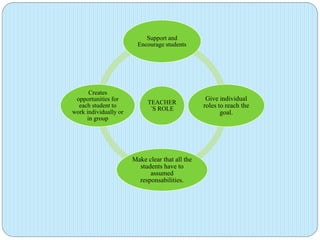
Support and
Encourage students

Creates
opportunities for
each student to
work individually or
in group

TEACHER
´S ROLE

Make clear that all the
students have to
assumed
responsabilities.

Give individual
roles to reach the
goal.
Negative Factors:
1. Classroom management was profoundly affected
By this program.
2. Disciplinary actions (for infractor such as missing
homework, class disruption,
3. And sidebars conversations unrelated to class work)
dropped by approximately 50% as measured by the
number of detentions issued for breaking class
rules against these kinds of behaviors.
EVALUATION OF THE PROGRAM

For all leaners in the Students as Teachers program, content area

grades rose by an average of one letter grade. Allowing students to
concentrate on sections of one chapter as a whole. When students
tookthe next step and explained their understanding to their peers,
they were encouraged to focus more deeply on their language
proficiency,
They mined small pieces of text for increasingly greater meaning,
analyzing syntax and grammar in ways they had not done before.
CONCLUSION:
A program like this offers challenges and rewards .
But as the author of this chapter mentioned “If the
Student can study in collaborative groups and create
Their own materials , many of them learn more
Comprehensively. Students who know content
exceptionally well can and should in turn teach
their peers.

Curriculum ppt

  • 1.
    STUDENTS AS TEACHERS: Collaboratingfor Greater Success In Science for English Language Learners Written by: Elizabeth Park Presented by: Liriett Herrera
  • 2.
    This program wasdeveloped in a middle school in New Jersey because the state and federal mandates requiere that eighth grade students perform at a level considered proficient on standardized content area assessment within a few years of their arrivals in the United States.
  • 3.
    This program wasbased on the ideas that students learn best in groups and students who are encouraged to leverage their learning strengths may read most successfully in heterogeneous groups. For instance, groups of Literature are good example of this method.
  • 4.
    BELIEFS BEHIND THEPROGRAM 1. Students are often the people who are best placed to understand peers´ difficulties and offer sucessful explanations. 2. A student may not understand what the teacher is saying for any number of reasons,including regional dialects, the affective filter,(Krashen 1981), or culturally different approaches to processes. However, peers are quick to identify what component is missing in a friend´s understanding and, if possible, to help fill that void.
  • 5.
    All the ELLsin the Students as Teachers are native Speakers and the school is located in a town with A population identified as 75% Spanish speakers. The students in this program are classified as Beginners , intermediate and advanced.
  • 6.
    1. Beginners receivecontent instruction in Spanish In addition to the ESL classes. 2. Intermediate level students are offered sheltered content area Instruction in English with ESL instruction reading and writing, math,e social studies, and science. 3. Students at advanced level attend English only content , reading, and writing classes and have no classes period of ESL support each day.
  • 7.
    ORGANIZATION OF THEPROGRAM TEACHER´S INTRODUCTION STUDENT´S CONTENT EXPLORATION CREATION OF TEXTS WRITING ILLUSTRATING DEVELOPING ASSESSMENT LAYING OUT THE PAGES TEACHING AND ASSESSMENT TEACHERS IS MONITORING THE PROCESS AND ANSWERING QUESTIONS PRINTING AND ASSEMBLING (8-12 PAGES .ENGLISH BOOKLET)
  • 8.
    CONTENT INTRODUCTION ANDGROUP CREATION THE TEACHER INTRODUCES THE TOPIC STUDENTS BEGIN TO ENVISION THEMSELVES AS TEACHERS WATER TOPICS ASSIGNED BY THE TEACHER SOUND LIGHT
  • 9.
    STUDENTS READ ALLTHE THREE CHAPTERS, BUT THEY FOCUS ON THEIR OWN CHAPTER EACH GROUP MEMBER INDEPENDENTLY PRODUCES A SUMMARY OF HIS OWN SECTION. WORKING COLLABORATELY, ALL GROUP MEMBER REVIEW EACH SUMMARY AND CHECK EACH OTHER´S WORK TO MAKE SURE THE CONTENT IS COMPREHENSIBLE.
  • 10.
    TEACHING DISCIPLINE ASSESSING • ROUND-ROBIN READING • VERBAL WARNING •MULTIPLE CHOICE TEST • LECTURE • TEACHER DETENTIONS • EASY QUESTIONS ABOUT THE TOPIC • GROUP DISCUSSION • STUDENTS DETENTIONS
  • 11.
    Support and Encourage students Creates opportunitiesfor each student to work individually or in group TEACHER ´S ROLE Make clear that all the students have to assumed responsabilities. Give individual roles to reach the goal.
  • 12.
    Negative Factors: 1. Classroommanagement was profoundly affected By this program. 2. Disciplinary actions (for infractor such as missing homework, class disruption, 3. And sidebars conversations unrelated to class work) dropped by approximately 50% as measured by the number of detentions issued for breaking class rules against these kinds of behaviors.
  • 13.
    EVALUATION OF THEPROGRAM For all leaners in the Students as Teachers program, content area grades rose by an average of one letter grade. Allowing students to concentrate on sections of one chapter as a whole. When students tookthe next step and explained their understanding to their peers, they were encouraged to focus more deeply on their language proficiency, They mined small pieces of text for increasingly greater meaning, analyzing syntax and grammar in ways they had not done before.
  • 14.
    CONCLUSION: A program likethis offers challenges and rewards . But as the author of this chapter mentioned “If the Student can study in collaborative groups and create Their own materials , many of them learn more Comprehensively. Students who know content exceptionally well can and should in turn teach their peers.