Curriculum Approaches in
Language Teaching: Forward,
Central, and Backward Design
:
Presentation By
yourwebsite.com →
Introduction
This presentation examines various curriculum
approaches in language teaching, focusing on the
efficacy and structures that underpin modern
methodologies.
→
Curriculum
Approaches
01
Communicative Language
Teaching
Communicative Language Teaching (CLT) emphasizes
interaction as the primary means of language
learning. The approach prioritizes real-life
communication in the classroom, fostering students'
ability to use the language practically. Key aspects
include engaging in conversation, using role-plays,
and focusing on both fluency and accuracy to
enhance language proficiency.
→
Task-Based Language Teaching
Task-Based Language Teaching (TBLT) centers around
the use of authentic tasks as a means to promote
language learning. Students engage in meaningful
tasks that mimic real-world activities, facilitating
language acquisition through practical application.
This approach supports language use in context,
focusing on language as a tool for completing tasks
rather than as an isolated skill.
→
Content-Based
Instruction
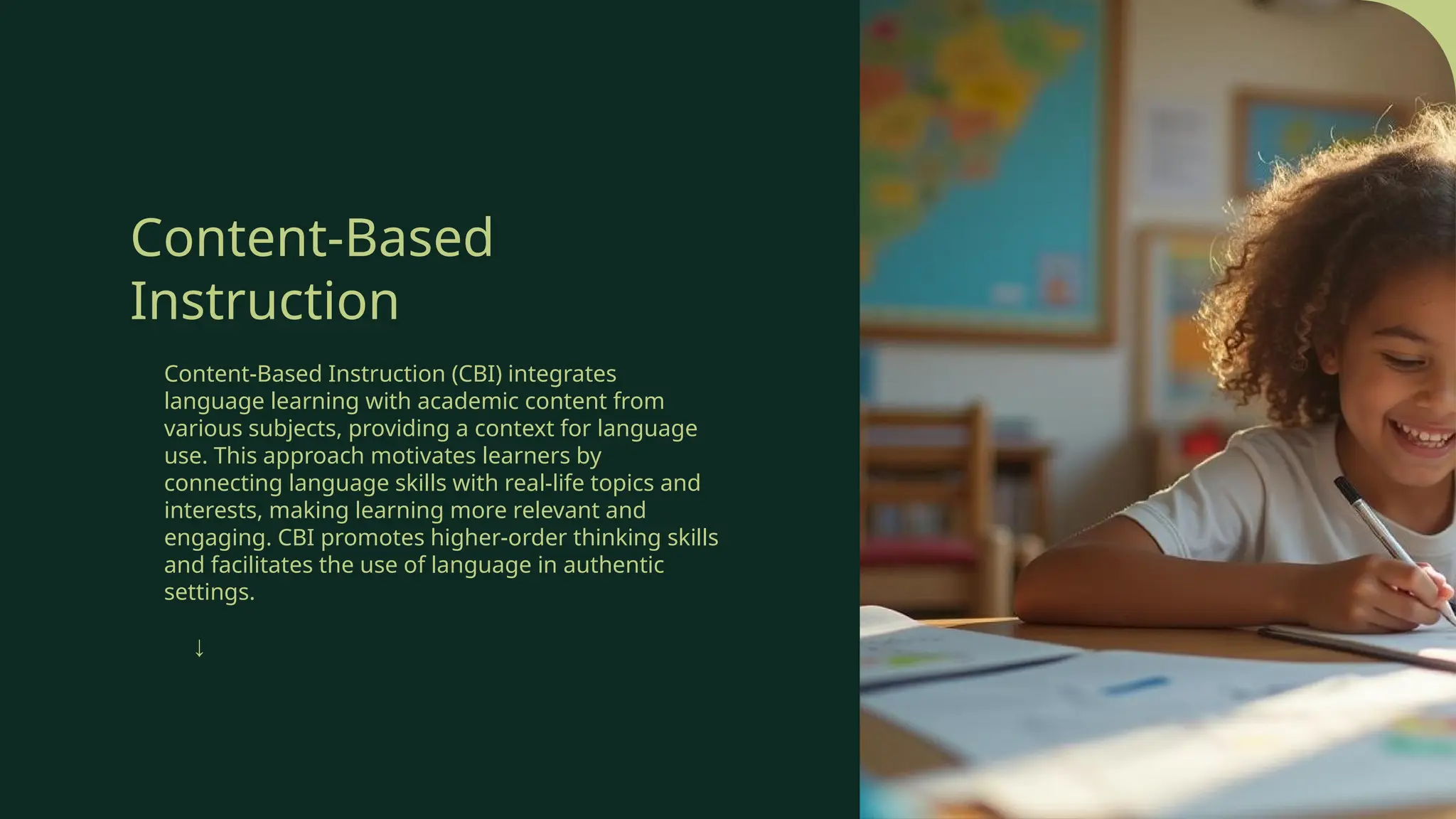
Content-Based Instruction (CBI) integrates
language learning with academic content from
various subjects, providing a context for language
use. This approach motivates learners by
connecting language skills with real-life topics and
interests, making learning more relevant and
engaging. CBI promotes higher-order thinking skills
and facilitates the use of language in authentic
settings.
↓
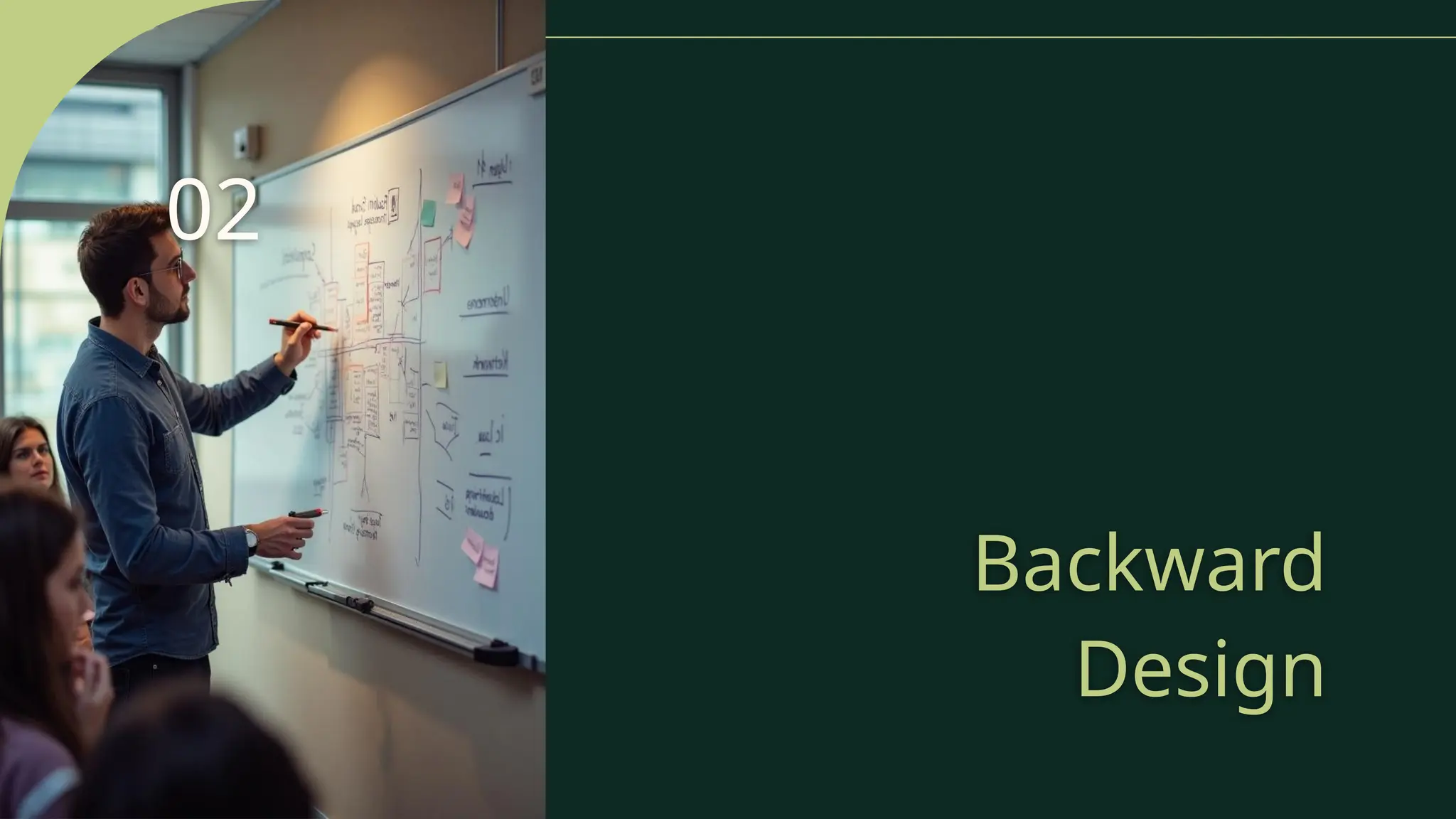
Backward
Design
02
Understanding by Design Framework
The Understanding by Design (UbD) framework focuses on
designing curriculum backward from desired learning
outcomes. This model ensures that assessments and
instructional activities are aligned with the goals, promoting
deep understanding. Educators start by identifying the
desired results, then determine acceptable evidence for
assessment, and finally plan learning experiences that will
lead to achieving those goals.
→
Assessment Alignment
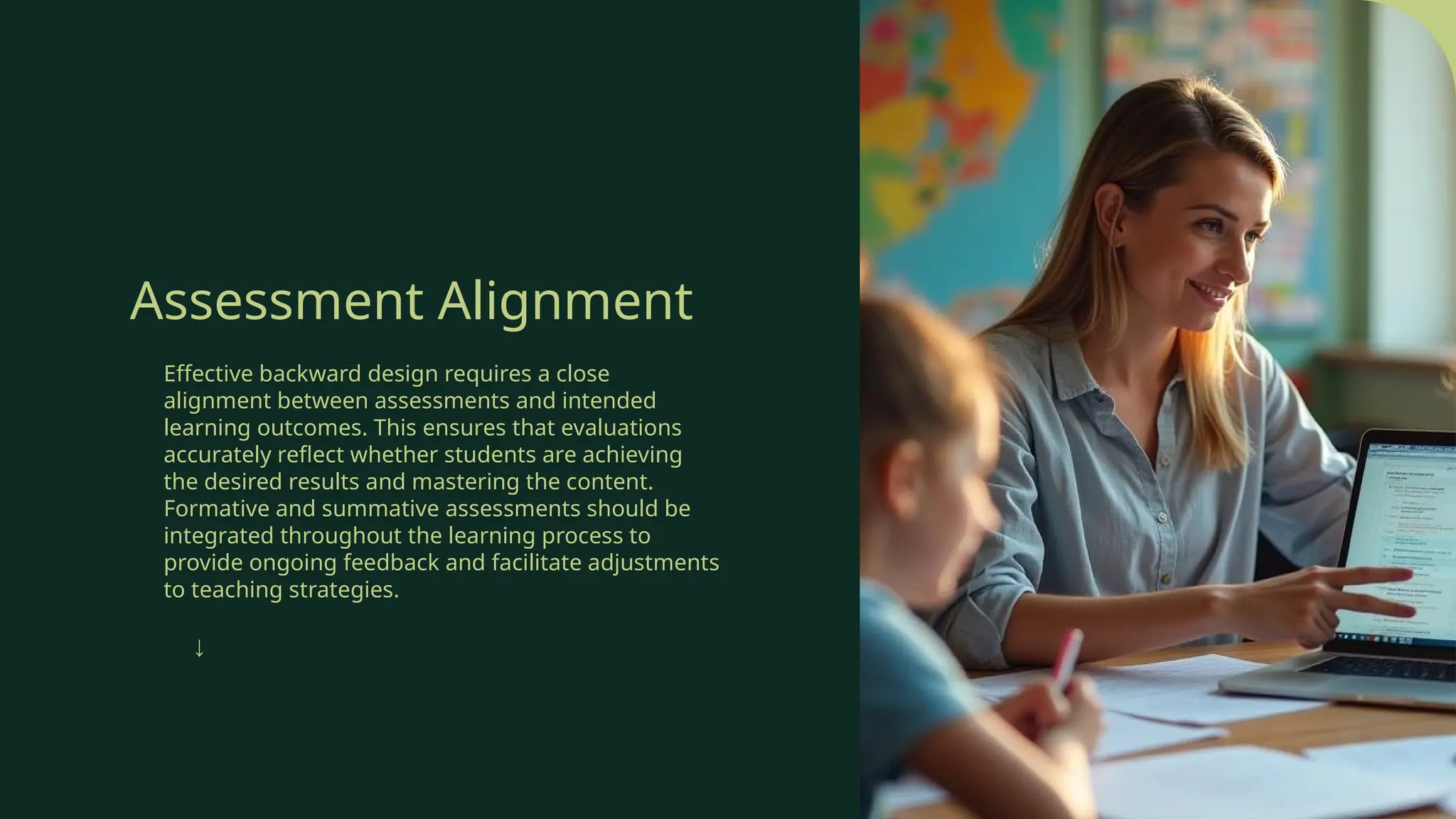
Effective backward design requires a close
alignment between assessments and intended
learning outcomes. This ensures that evaluations
accurately reflect whether students are achieving
the desired results and mastering the content.
Formative and summative assessments should be
integrated throughout the learning process to
provide ongoing feedback and facilitate adjustments
to teaching strategies.
↓
Learning Outcomes Development
Developing clear and measurable learning outcomes
is critical in backward design. These outcomes guide
curriculum and assessment decisions, ensuring that
all activities serve a purpose and align with students'
overall learning goals. Well-defined outcomes help
both educators and students understand
expectations, facilitating focused instruction and
meaningful assessment.
→
Conclusions
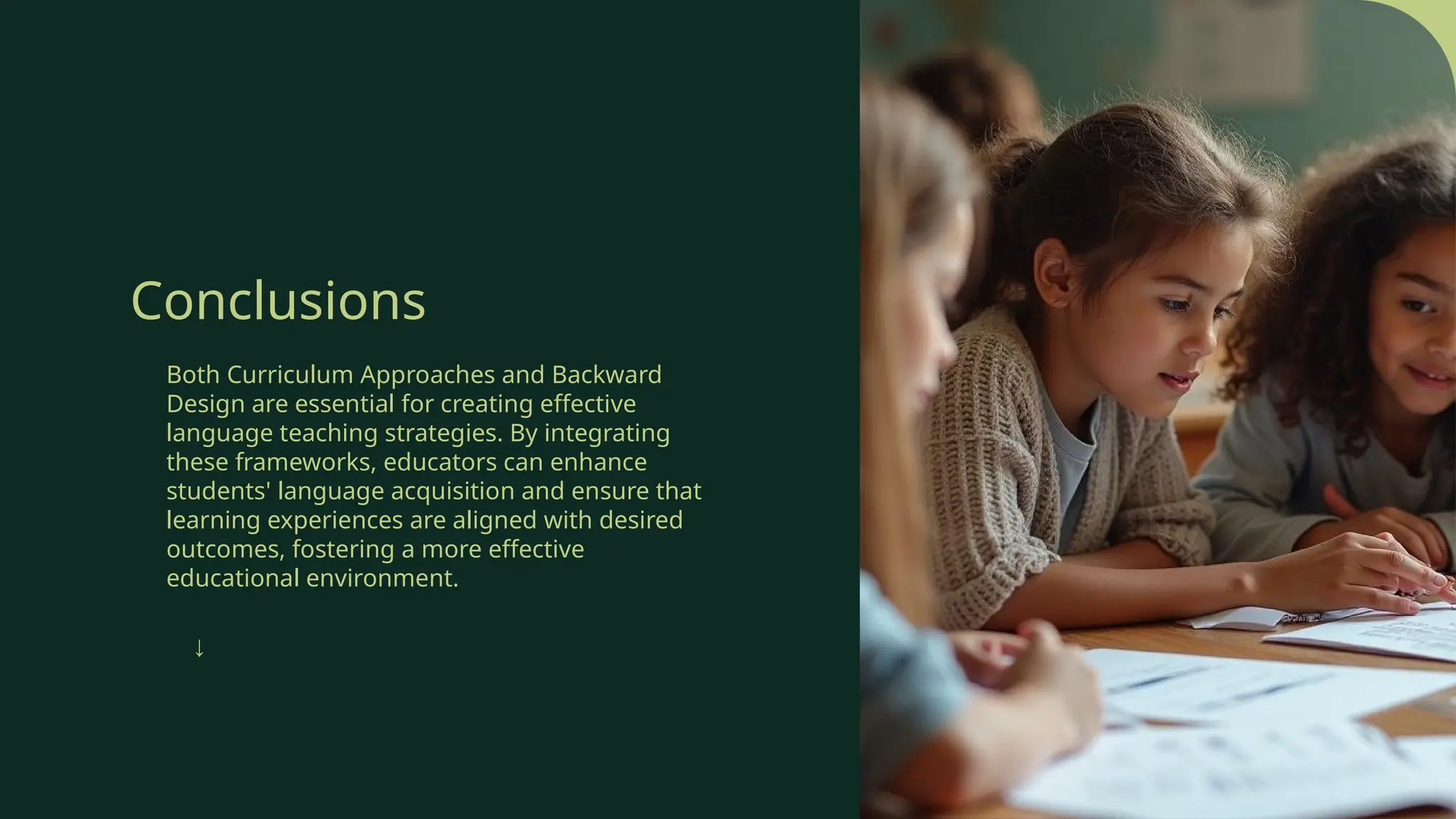
Both Curriculum Approaches and Backward
Design are essential for creating effective
language teaching strategies. By integrating
these frameworks, educators can enhance
students' language acquisition and ensure that
learning experiences are aligned with desired
outcomes, fostering a more effective
educational environment.
↓

Thank you!
Do you have any questions?
www.yourwebsite.com ↓

Curriculum based Approachesbed course .pptx

  • 1.
    Curriculum Approaches in LanguageTeaching: Forward, Central, and Backward Design : Presentation By yourwebsite.com →
  • 2.
    Introduction This presentation examinesvarious curriculum approaches in language teaching, focusing on the efficacy and structures that underpin modern methodologies. →
  • 3.
  • 4.
    Communicative Language Teaching Communicative LanguageTeaching (CLT) emphasizes interaction as the primary means of language learning. The approach prioritizes real-life communication in the classroom, fostering students' ability to use the language practically. Key aspects include engaging in conversation, using role-plays, and focusing on both fluency and accuracy to enhance language proficiency. →
  • 5.
    Task-Based Language Teaching Task-BasedLanguage Teaching (TBLT) centers around the use of authentic tasks as a means to promote language learning. Students engage in meaningful tasks that mimic real-world activities, facilitating language acquisition through practical application. This approach supports language use in context, focusing on language as a tool for completing tasks rather than as an isolated skill. →
  • 6.
    Content-Based Instruction Content-Based Instruction (CBI)integrates language learning with academic content from various subjects, providing a context for language use. This approach motivates learners by connecting language skills with real-life topics and interests, making learning more relevant and engaging. CBI promotes higher-order thinking skills and facilitates the use of language in authentic settings. ↓
  • 7.
  • 8.
    Understanding by DesignFramework The Understanding by Design (UbD) framework focuses on designing curriculum backward from desired learning outcomes. This model ensures that assessments and instructional activities are aligned with the goals, promoting deep understanding. Educators start by identifying the desired results, then determine acceptable evidence for assessment, and finally plan learning experiences that will lead to achieving those goals. →
  • 9.
    Assessment Alignment Effective backwarddesign requires a close alignment between assessments and intended learning outcomes. This ensures that evaluations accurately reflect whether students are achieving the desired results and mastering the content. Formative and summative assessments should be integrated throughout the learning process to provide ongoing feedback and facilitate adjustments to teaching strategies. ↓
  • 10.
    Learning Outcomes Development Developingclear and measurable learning outcomes is critical in backward design. These outcomes guide curriculum and assessment decisions, ensuring that all activities serve a purpose and align with students' overall learning goals. Well-defined outcomes help both educators and students understand expectations, facilitating focused instruction and meaningful assessment. →
  • 11.
    Conclusions Both Curriculum Approachesand Backward Design are essential for creating effective language teaching strategies. By integrating these frameworks, educators can enhance students' language acquisition and ensure that learning experiences are aligned with desired outcomes, fostering a more effective educational environment. ↓
  • 12.
    Thank you! Do youhave any questions? www.yourwebsite.com ↓