1
ICD-10
Boot Camp
Internal Medicine
Specific guidelines and
documentation tips
2
Presented by Evan M. Gwilliam, DC MBA BS
CPC CCPC NCICS CCCPC CPC-I MCS-P CPMA
Chief Product Officer
Dr. Evan Gwilliam
• Education
• Bachelor’s of Science, Accounting - Brigham Young University
• Master’s of Business Administration - Broadview University
• Doctor of Chiropractic, Valedictorian - Palmer College of Chiropractic
• Certifications
• Certified Professional Coder (CPC) - AAPC
• Nationally Certified Insurance Coding Specialist (NCICS) - NCCT
• Certified Chiropractic Professional Coder (CCPC) - AAPC
• ChiroCode Certified Chiropractic Professional Coder (CCCPC) - ChiroCode
• Certified Professional Coder – Instructor (CPC-I) - AAPC
• Medical Compliance Specialist – Physician (MCS-P) - MCS
• Certified Professional Medical Auditor (CPMA) – AAPC, NAMAS
• Certified ICD-10 Trainer - AAPC
3
Overview
• Part 1 - ICD-10 fundamentals and navigation
• Part 2 - Coding conventions and guidelines
• Part 3 - ICD-10 code selection strategies
• Part 4 - Documentation improvement
***Specialty specific training
4
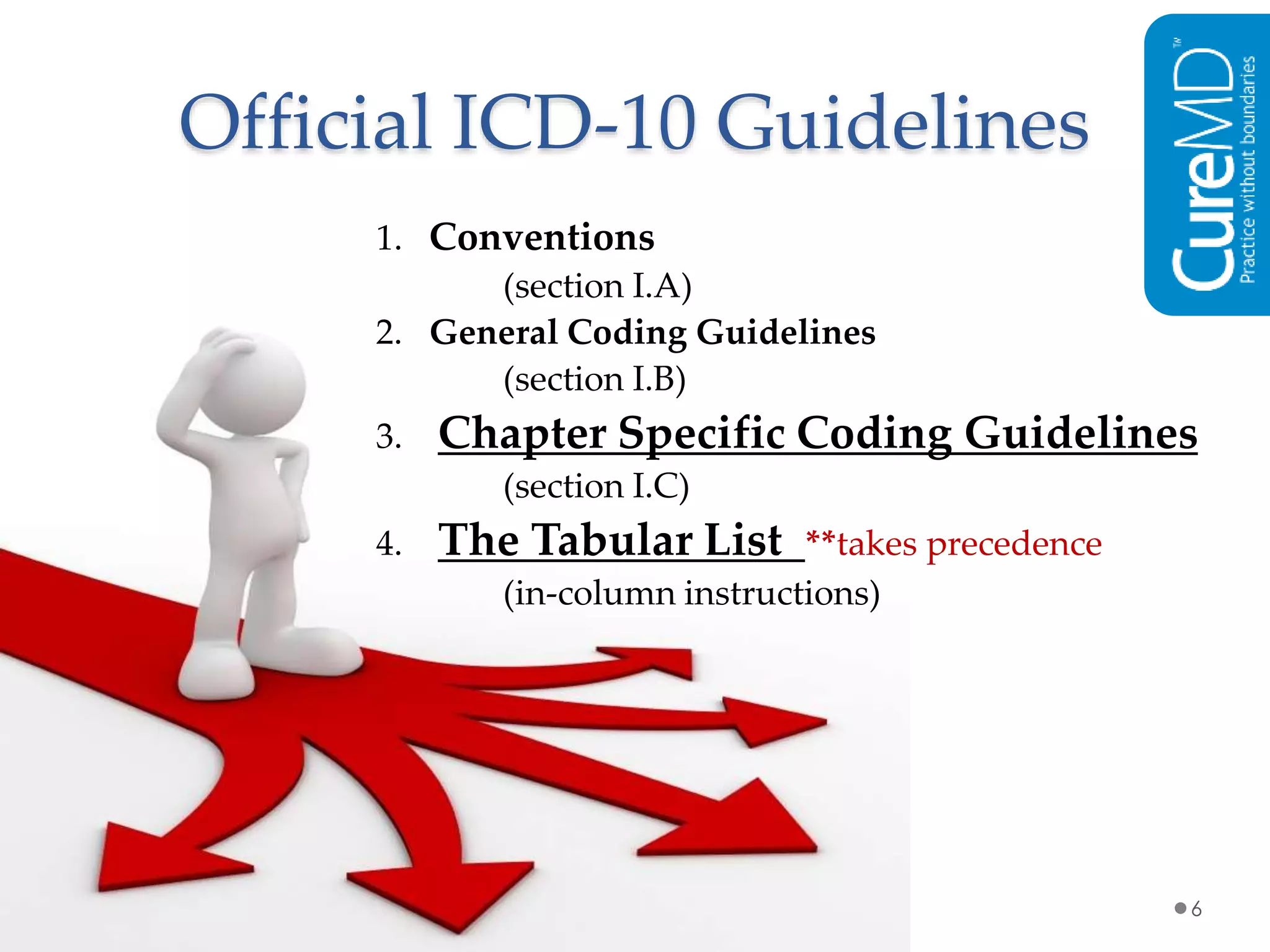
Official ICD-10 Guidelines
1. Conventions
(section I.A)
2. General Coding Guidelines
(section I.B)
3. Chapter Specific Coding Guidelines
(section I.C)
4. The Tabular List **takes precedence
(in-column instructions)
5
Official ICD-10 Guidelines
1. Conventions
(section I.A)
2. General Coding Guidelines
(section I.B)
3. Chapter Specific Coding Guidelines
(section I.C)
4. The Tabular List **takes precedence
(in-column instructions)
6
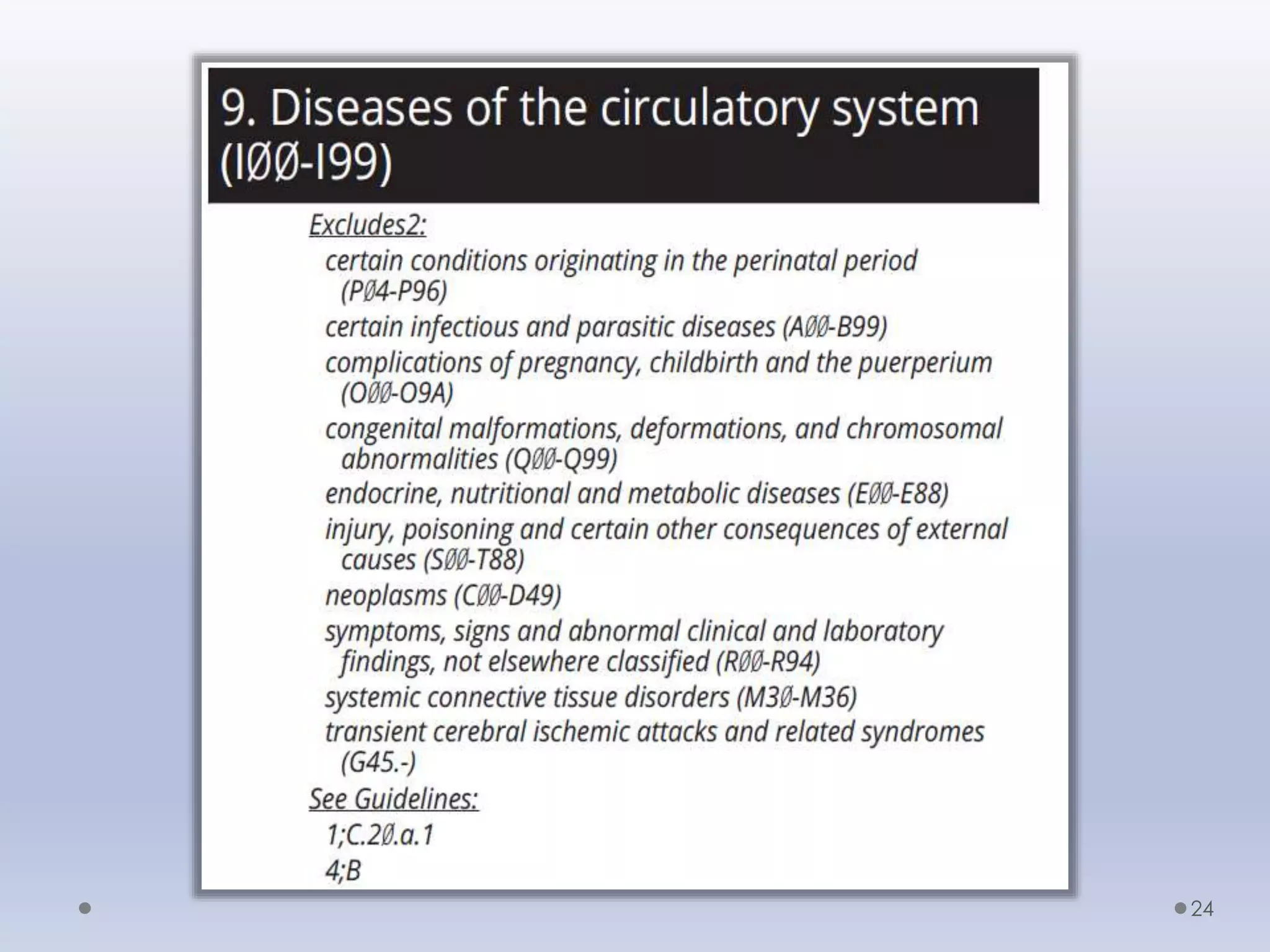
Tabular list layout
Chapter
21 of them
from A to Z
(body system
or condition)
Block
Ranges of
categories
(related
conditions)
Categories
3 characters
(more specific
condition)
Subcategories
4th or 5th
characters
(etiology,
location, etc.)
Codes
6th or 7th
characters
(laterality,
encounter, etc.)
7
Note: Codes may be complete with fewer than 6 characters. Some codes only have 3.
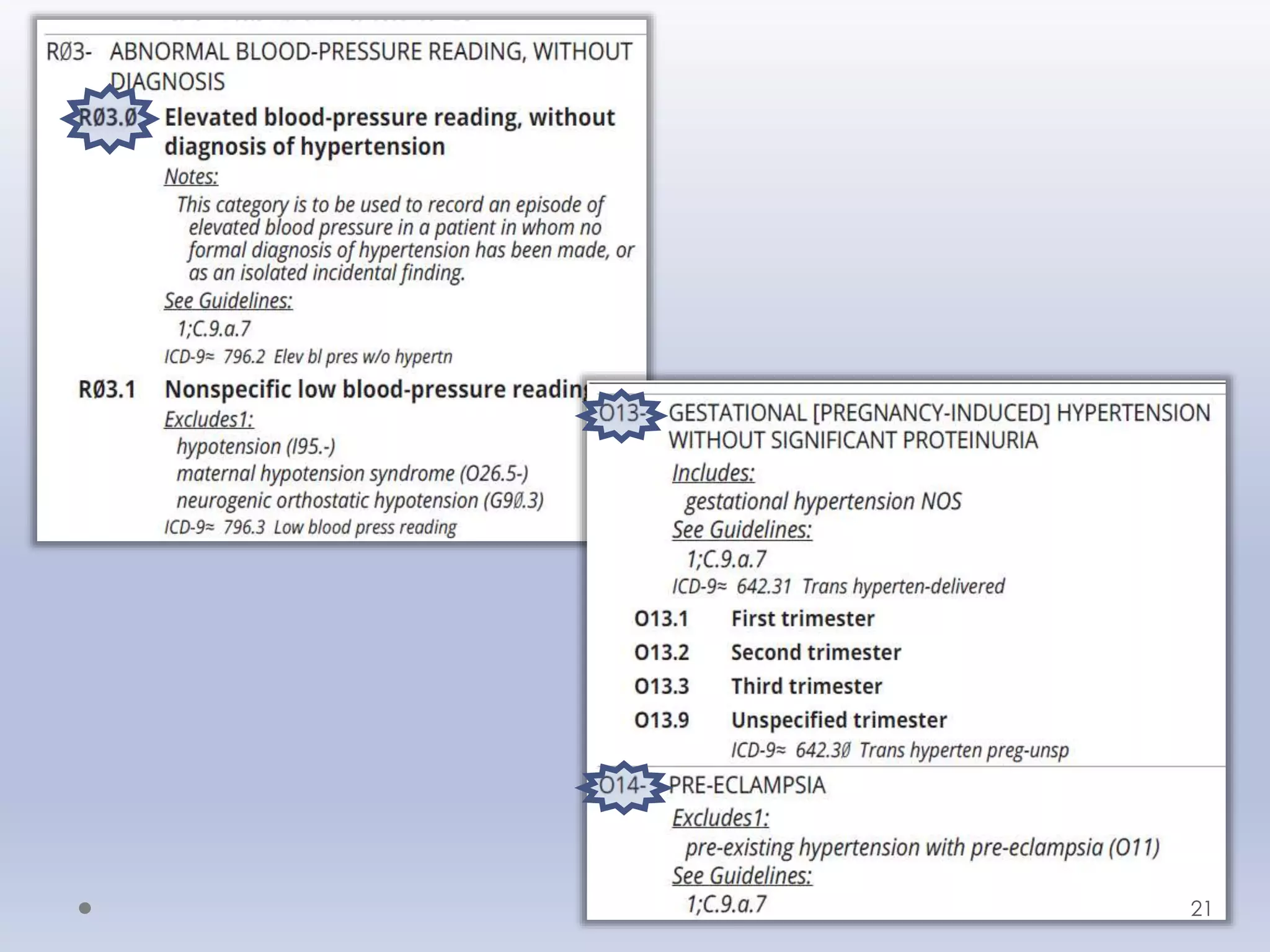
Hypertension
• Formerly 401- in ICD-9-CM
• Coding Guidelines can be checked at the following
levels:
8
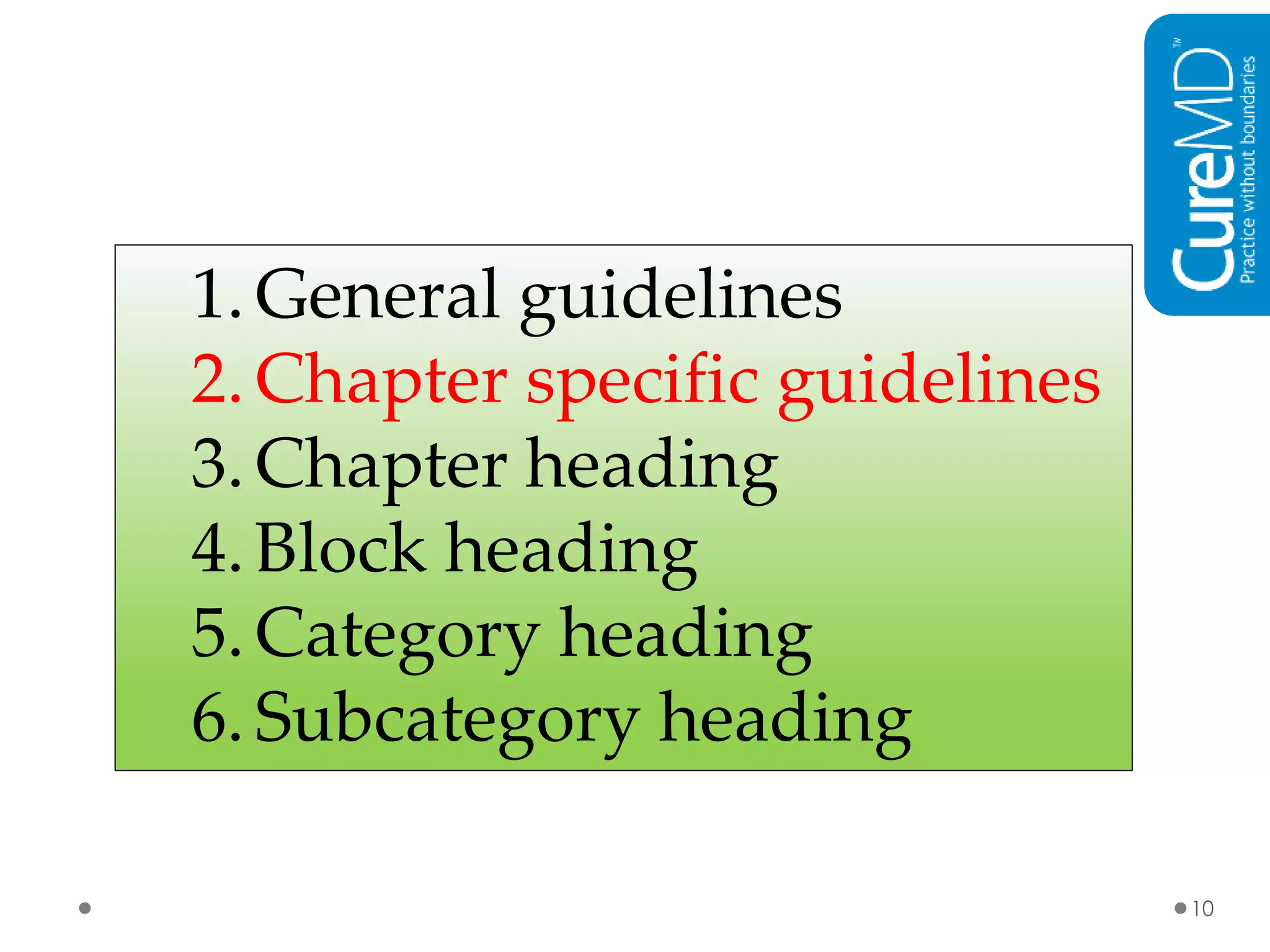
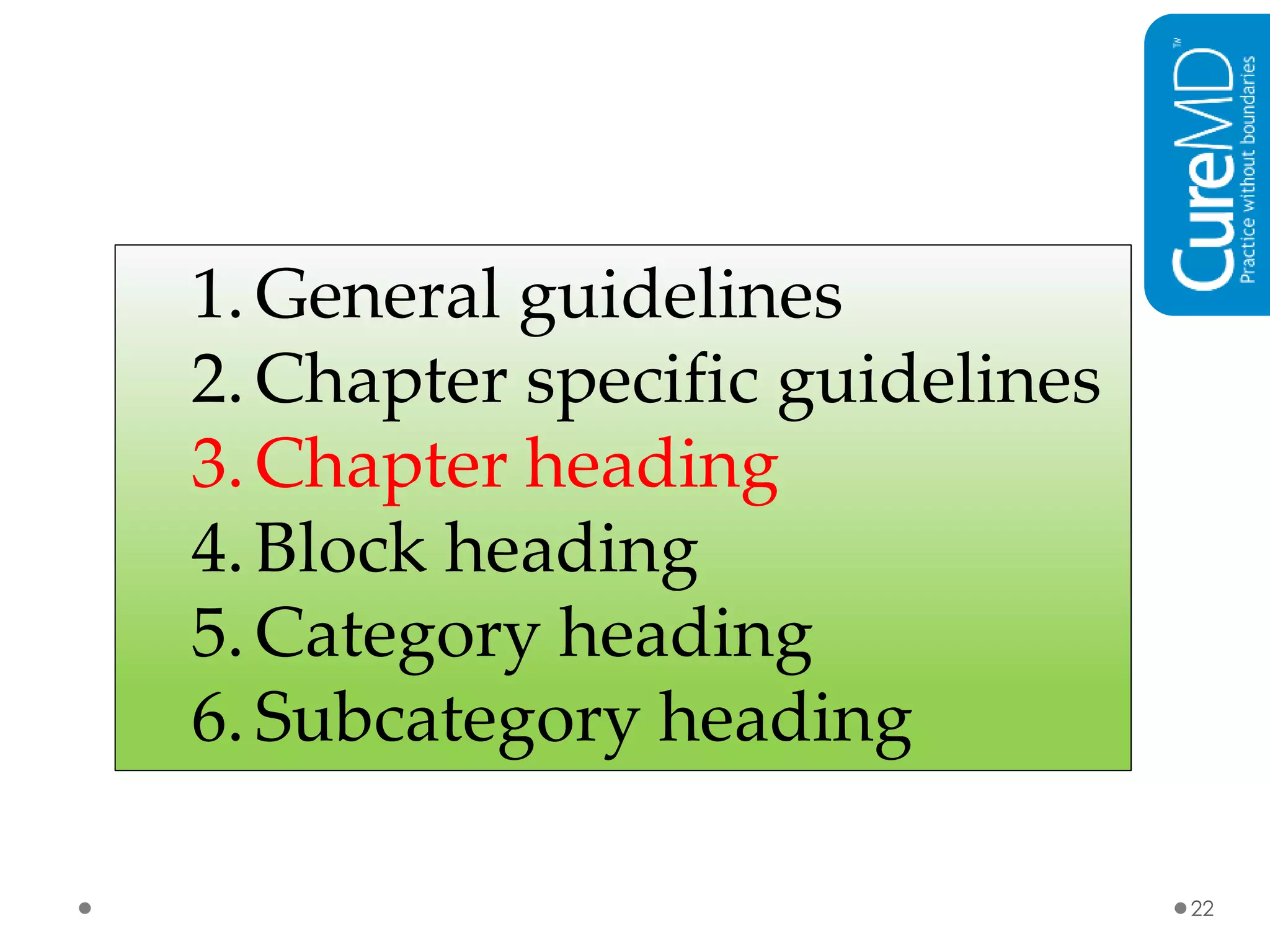
1. General guidelines
2. Chapter specific guidelines
3. Chapter heading
4. Block heading
5. Category heading
6. Subcategory heading
Hypertension
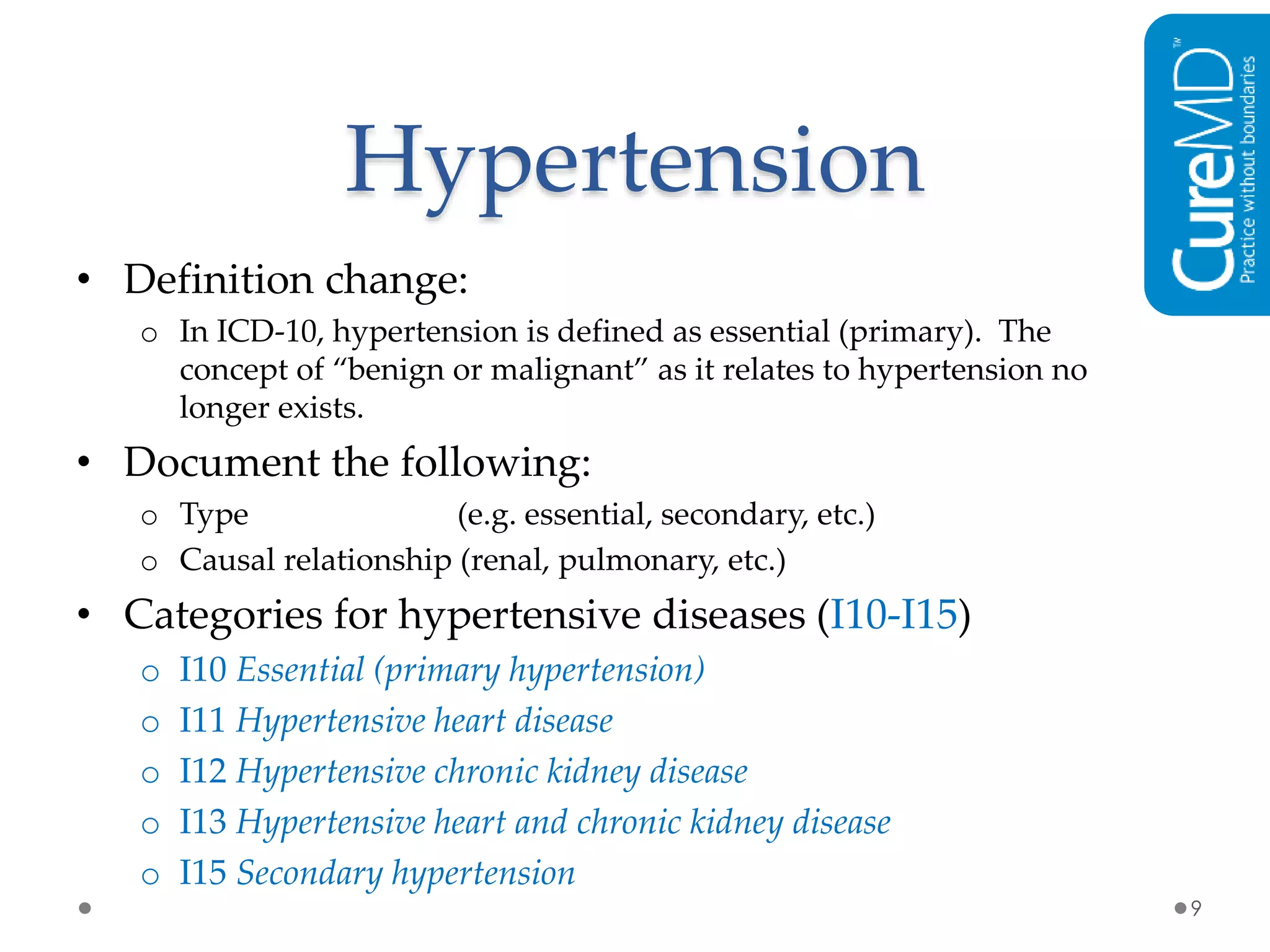
• Definition change:
o In ICD-10, hypertension is defined as essential (primary). The
concept of “benign or malignant” as it relates to hypertension no
longer exists.
• Document the following:
o Type (e.g. essential, secondary, etc.)
o Causal relationship (renal, pulmonary, etc.)
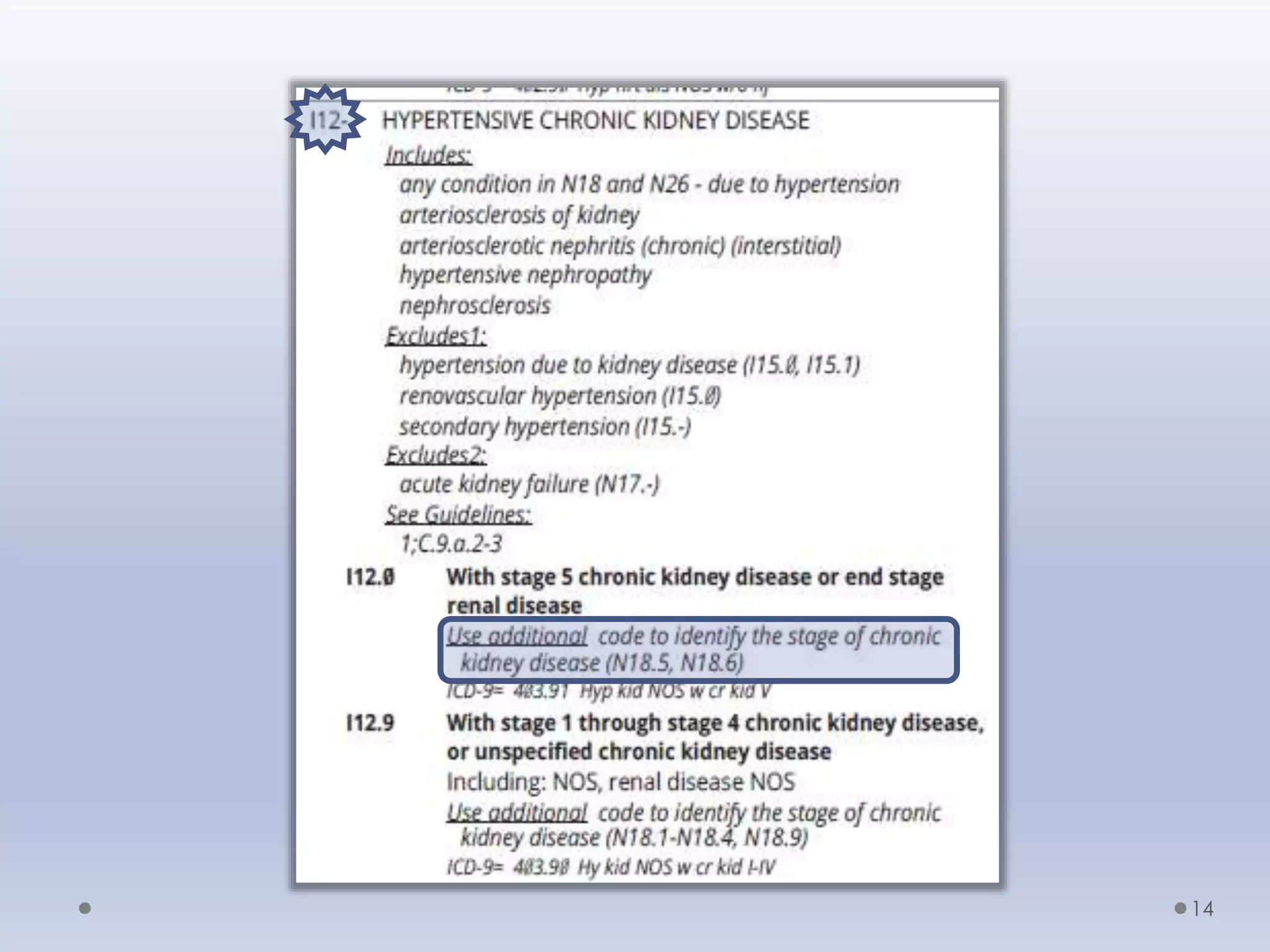
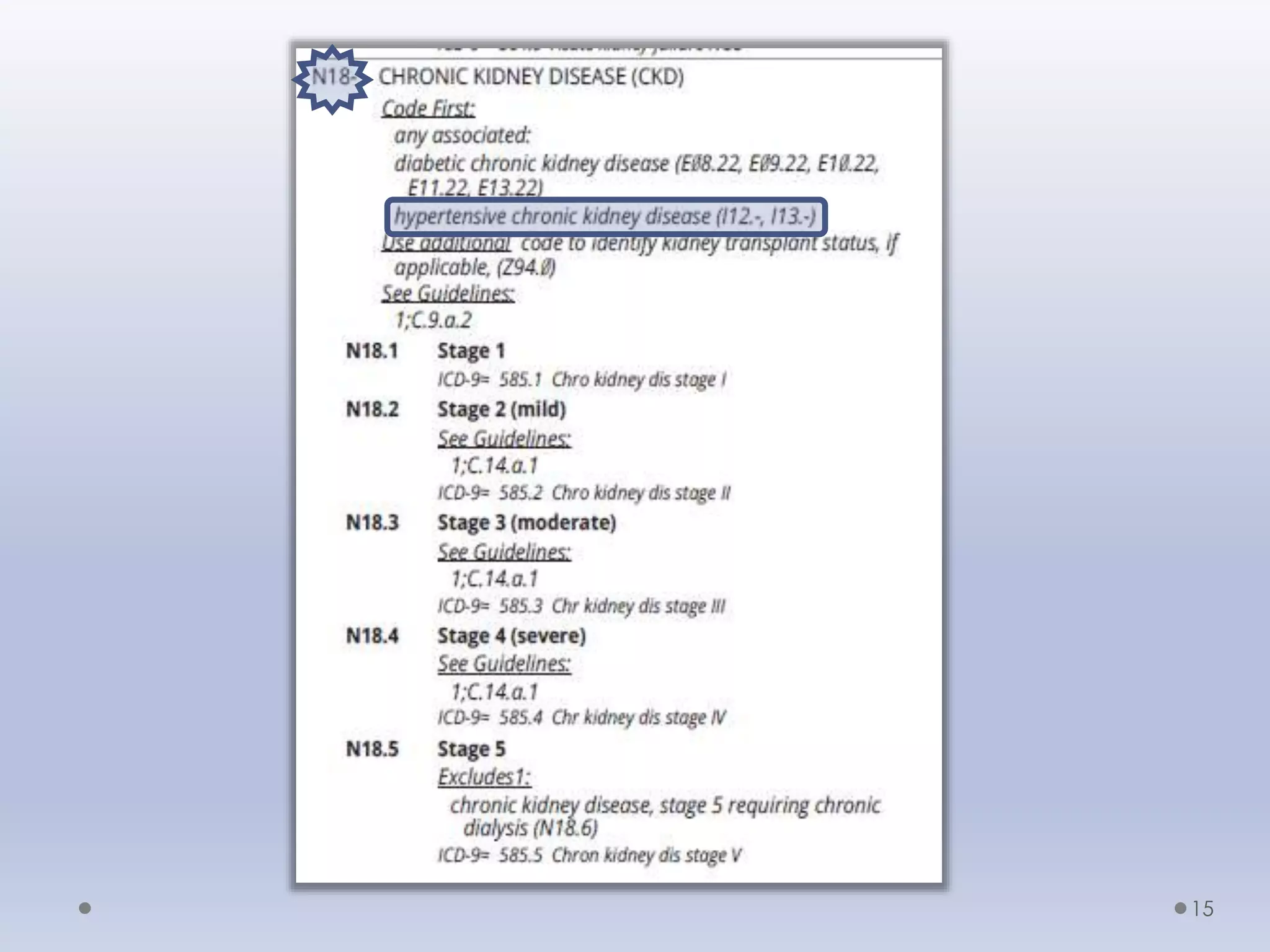
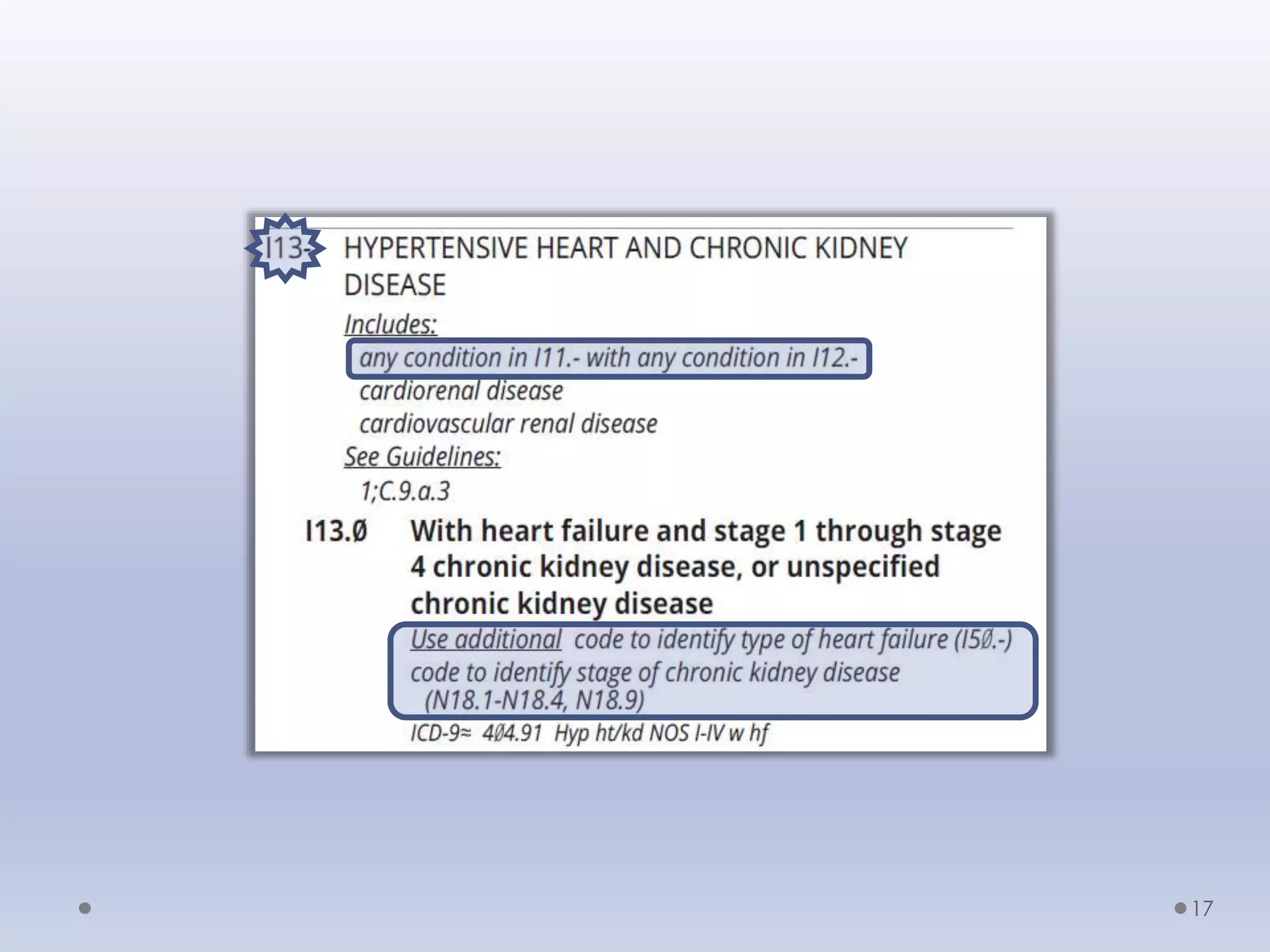
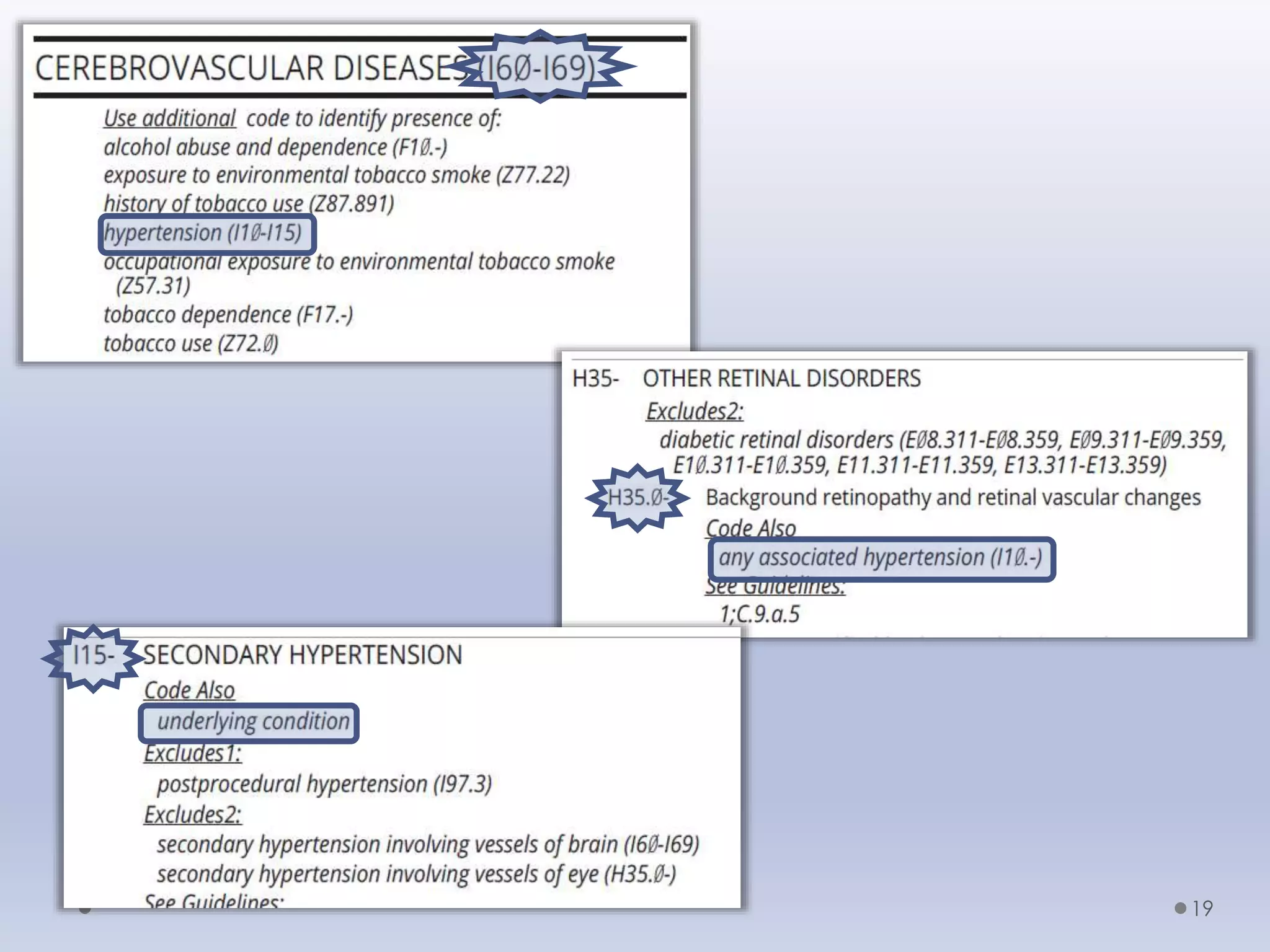
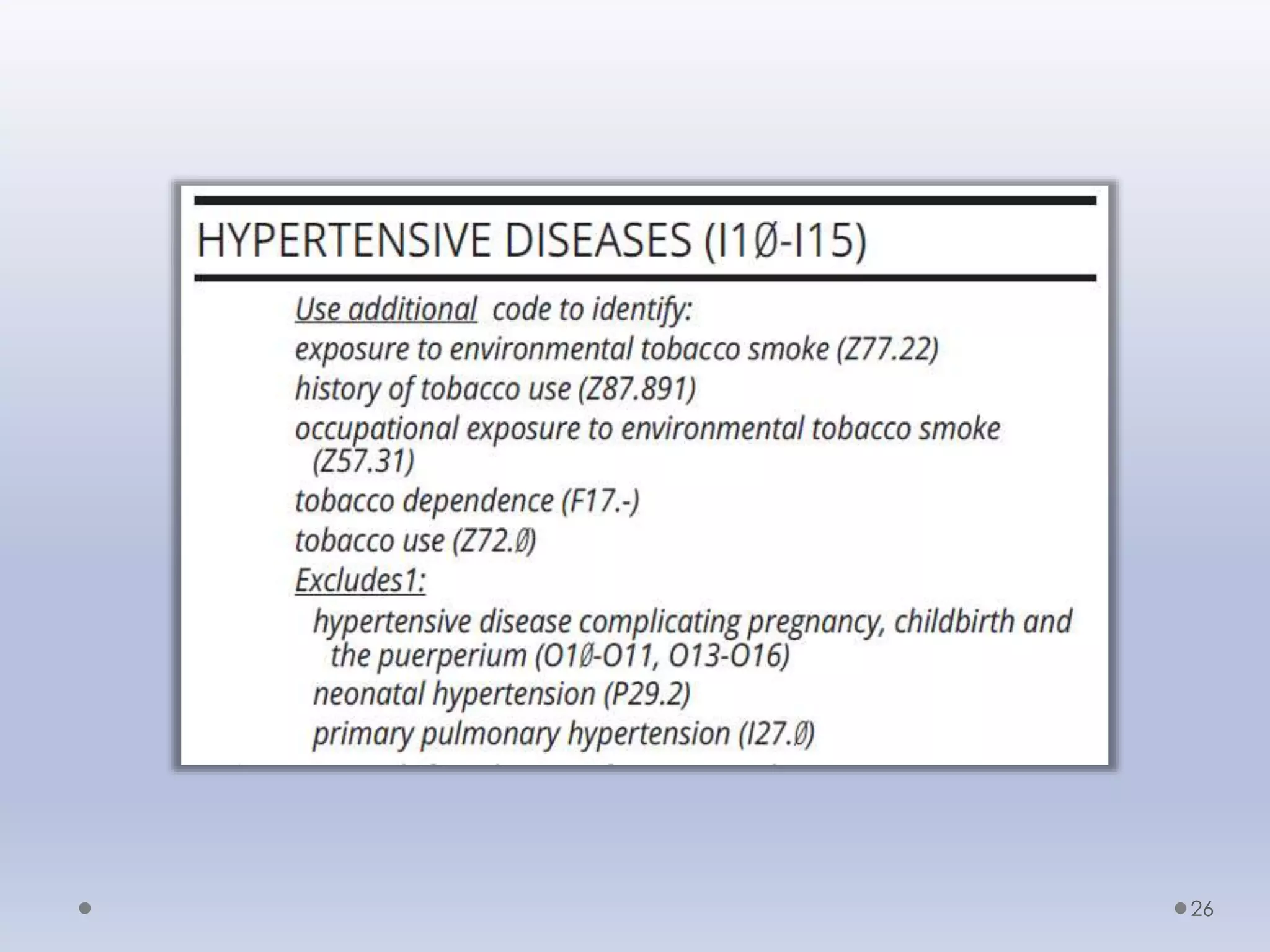
• Categories for hypertensive diseases (I10-I15)
o I10 Essential (primary hypertension)
o I11 Hypertensive heart disease
o I12 Hypertensive chronic kidney disease
o I13 Hypertensive heart and chronic kidney disease
o I15 Secondary hypertension
9
10
1.General guidelines
2.Chapter specific guidelines
3.Chapter heading
4.Block heading
5.Category heading
6.Subcategory heading
11
12
13
14
15
16
17
18
19
20
21
22
1. General guidelines
2.Chapter specific
guidelines
3. Chapter heading
4. Block heading
5. Category heading
6. Subcategory heading
1.General guidelines
2.Chapter specific guidelines
3.Chapter heading
4.Block heading
5.Category heading
6.Subcategory heading
Tabular list layout
Chapter
21 of them
from A to Z
(body system
or condition)
Block
Ranges of
categories
(related
conditions)
Categories
3 characters
(more specific
condition)
Subcategories
4th or 5th
characters
(etiology,
location, etc.)
Codes
6th or 7th
characters
(laterality,
encounter, etc.)
23
Note: Codes may be complete with fewer than 6 characters. Some codes only have 3.
24
25
1. General guidelines
2.Chapter specific
guidelines
3. Chapter heading
4. Block heading
5. Category heading
6. Subcategory heading
1.General guidelines
2.Chapter specific guidelines
3.Chapter heading
4.Block heading
5.Category heading
6.Subcategory heading
26
27
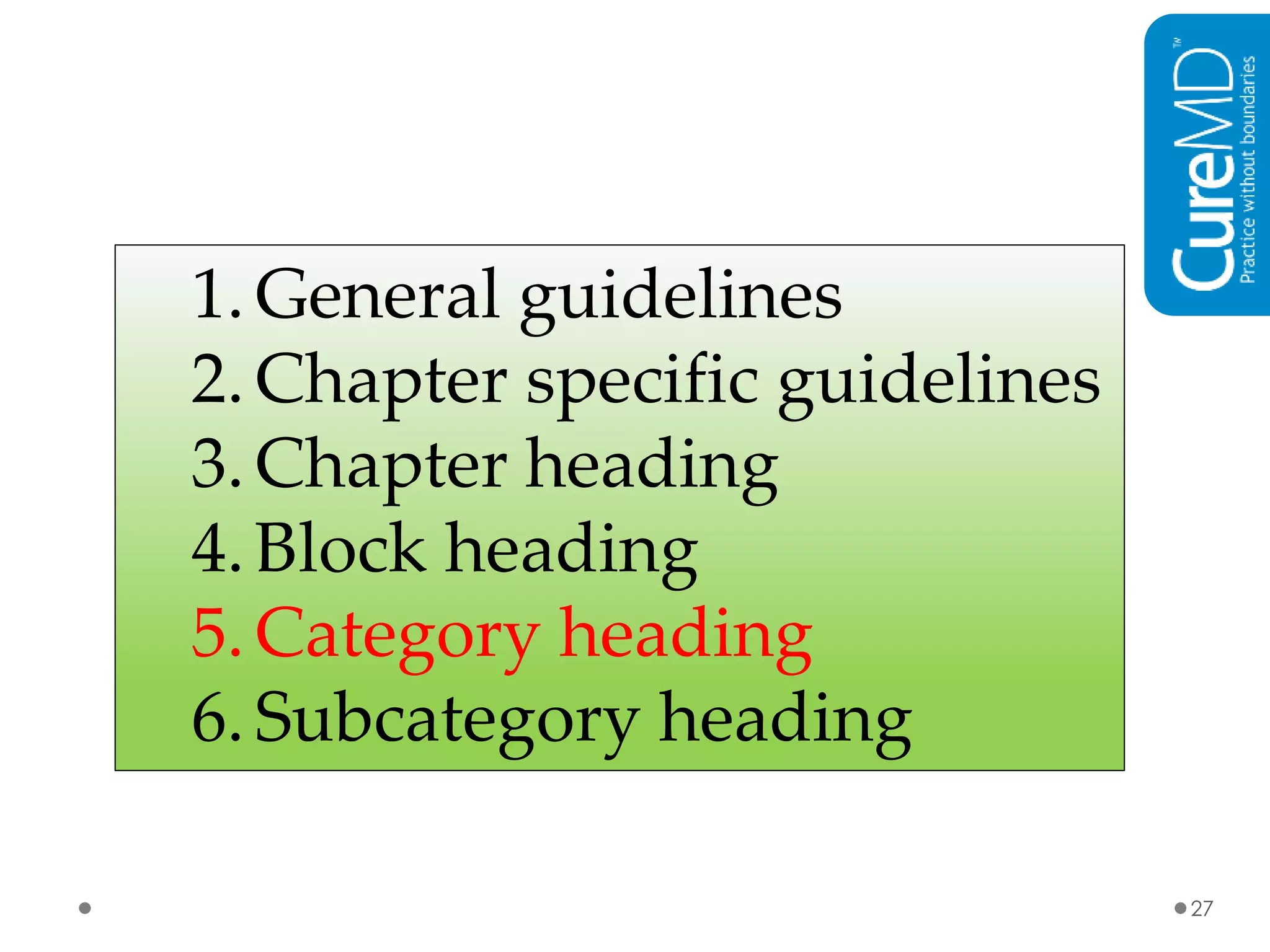
1. General guidelines
2.Chapter specific
guidelines
3. Chapter heading
4. Block heading
5. Category heading
6. Subcategory heading
1.General guidelines
2.Chapter specific guidelines
3.Chapter heading
4.Block heading
5.Category heading
6.Subcategory heading
28
34 specialty specific
ICD-10 books
• More than 70 pages which teach
• Conventions
• Guidelines
• Implementation steps
• Documentation strategies
• Provider Documentation
Guides
• Specialty specific
• GEMs mapping
• Alpha Index
• Abridged Tabular List
Use “CureMD20” to save
$20 at InstaCode.com
30
31
32
33
34
35

CureMD Training For Internal Medicine Part 1

  • 1.
  • 2.
    ICD-10 Boot Camp Internal Medicine Specificguidelines and documentation tips 2 Presented by Evan M. Gwilliam, DC MBA BS CPC CCPC NCICS CCCPC CPC-I MCS-P CPMA Chief Product Officer
  • 3.
    Dr. Evan Gwilliam •Education • Bachelor’s of Science, Accounting - Brigham Young University • Master’s of Business Administration - Broadview University • Doctor of Chiropractic, Valedictorian - Palmer College of Chiropractic • Certifications • Certified Professional Coder (CPC) - AAPC • Nationally Certified Insurance Coding Specialist (NCICS) - NCCT • Certified Chiropractic Professional Coder (CCPC) - AAPC • ChiroCode Certified Chiropractic Professional Coder (CCCPC) - ChiroCode • Certified Professional Coder – Instructor (CPC-I) - AAPC • Medical Compliance Specialist – Physician (MCS-P) - MCS • Certified Professional Medical Auditor (CPMA) – AAPC, NAMAS • Certified ICD-10 Trainer - AAPC 3
  • 4.
    Overview • Part 1- ICD-10 fundamentals and navigation • Part 2 - Coding conventions and guidelines • Part 3 - ICD-10 code selection strategies • Part 4 - Documentation improvement ***Specialty specific training 4
  • 5.
    Official ICD-10 Guidelines 1.Conventions (section I.A) 2. General Coding Guidelines (section I.B) 3. Chapter Specific Coding Guidelines (section I.C) 4. The Tabular List **takes precedence (in-column instructions) 5
  • 6.
    Official ICD-10 Guidelines 1.Conventions (section I.A) 2. General Coding Guidelines (section I.B) 3. Chapter Specific Coding Guidelines (section I.C) 4. The Tabular List **takes precedence (in-column instructions) 6
  • 7.
    Tabular list layout Chapter 21of them from A to Z (body system or condition) Block Ranges of categories (related conditions) Categories 3 characters (more specific condition) Subcategories 4th or 5th characters (etiology, location, etc.) Codes 6th or 7th characters (laterality, encounter, etc.) 7 Note: Codes may be complete with fewer than 6 characters. Some codes only have 3.
  • 8.
    Hypertension • Formerly 401-in ICD-9-CM • Coding Guidelines can be checked at the following levels: 8 1. General guidelines 2. Chapter specific guidelines 3. Chapter heading 4. Block heading 5. Category heading 6. Subcategory heading
  • 9.
    Hypertension • Definition change: oIn ICD-10, hypertension is defined as essential (primary). The concept of “benign or malignant” as it relates to hypertension no longer exists. • Document the following: o Type (e.g. essential, secondary, etc.) o Causal relationship (renal, pulmonary, etc.) • Categories for hypertensive diseases (I10-I15) o I10 Essential (primary hypertension) o I11 Hypertensive heart disease o I12 Hypertensive chronic kidney disease o I13 Hypertensive heart and chronic kidney disease o I15 Secondary hypertension 9
  • 10.
    10 1.General guidelines 2.Chapter specificguidelines 3.Chapter heading 4.Block heading 5.Category heading 6.Subcategory heading
  • 11.
  • 12.
  • 13.
  • 14.
  • 15.
  • 16.
  • 17.
  • 18.
  • 19.
  • 20.
  • 21.
  • 22.
    22 1. General guidelines 2.Chapterspecific guidelines 3. Chapter heading 4. Block heading 5. Category heading 6. Subcategory heading 1.General guidelines 2.Chapter specific guidelines 3.Chapter heading 4.Block heading 5.Category heading 6.Subcategory heading
  • 23.
    Tabular list layout Chapter 21of them from A to Z (body system or condition) Block Ranges of categories (related conditions) Categories 3 characters (more specific condition) Subcategories 4th or 5th characters (etiology, location, etc.) Codes 6th or 7th characters (laterality, encounter, etc.) 23 Note: Codes may be complete with fewer than 6 characters. Some codes only have 3.
  • 24.
  • 25.
    25 1. General guidelines 2.Chapterspecific guidelines 3. Chapter heading 4. Block heading 5. Category heading 6. Subcategory heading 1.General guidelines 2.Chapter specific guidelines 3.Chapter heading 4.Block heading 5.Category heading 6.Subcategory heading
  • 26.
  • 27.
    27 1. General guidelines 2.Chapterspecific guidelines 3. Chapter heading 4. Block heading 5. Category heading 6. Subcategory heading 1.General guidelines 2.Chapter specific guidelines 3.Chapter heading 4.Block heading 5.Category heading 6.Subcategory heading
  • 28.
  • 29.
    34 specialty specific ICD-10books • More than 70 pages which teach • Conventions • Guidelines • Implementation steps • Documentation strategies • Provider Documentation Guides • Specialty specific • GEMs mapping • Alpha Index • Abridged Tabular List Use “CureMD20” to save $20 at InstaCode.com
  • 30.
  • 31.
  • 32.
  • 33.
  • 34.
  • 35.

Editor's Notes

  • #3 ICD-10 can be overwhelming, but, with some strategizing and planning it can be managed. In this presentation we will look at a few ICD-10 fundamentals, then familiarize ourselves with three methods for finding the right ICD-10 code. Each one is a different path, but all lead to the same destination: the right code.
  • #30 The examples shown to you were from the InstaCode ICD-10 specialty books. There are 24 different specialties, each with their own customized ICD-10 guide and Tabular List. Come to our booth to see some examples and get a flyer. We have special pricing available for those who wish to order one today.