Culturally-Sensitive
                                           Learning Practices
                                           Dr. Lesley Farmer
                     California State University Long Beach
                                         lfarmer@csulb.edu

Diversity Challenge Resilience: School Libraries in Action - The 12th Biennial School Library
Association of Queensland, the 39th International Association of School Librarianship Annual
Conference, incorporating the 14th International Forum on Research in School Librarianship,
Brisbane, QLD Australia, 27 September – 1 October 2010.
Agenda
Cultural factors
Language issues
Teaching factors
Future
Conclusions
Cultural Factors
Definition: group beliefs, social forms
and traits
Cultural assumptions subconscious,
norms and values are behaviors
Teaching tends to be surface so
problems can arise
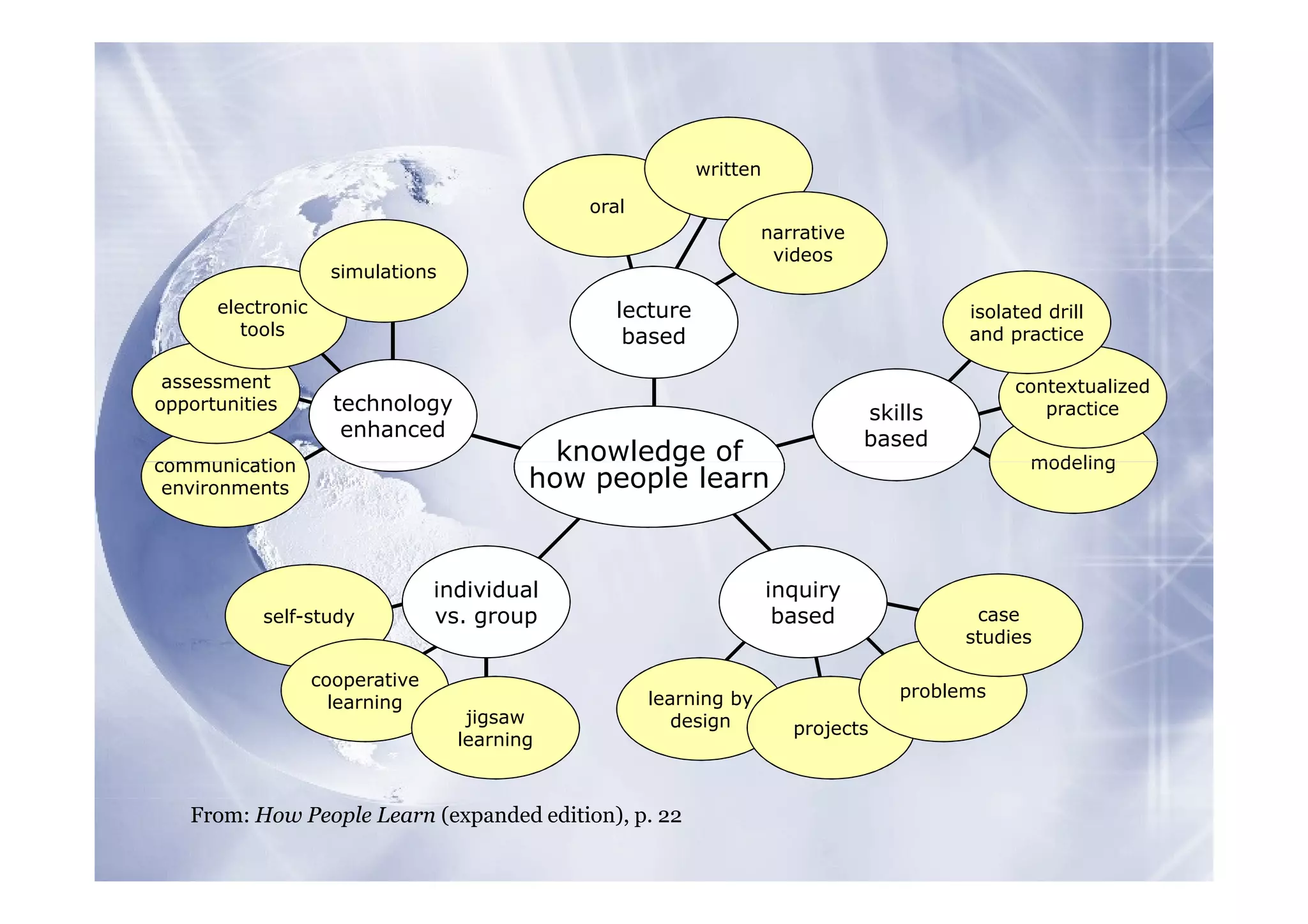
written

                                              oral
                                                                   narrative
                                                                    videos
                     simulations
      electronic                                 lecture                                isolated drill
         tools                                    based                                 and practice

 assessment                                                                                  contextualized
opportunities        technology                                                skills           practice
                      enhanced                                                 based
communication
                                            knowledge of                                       modeling
 environments                             how people learn


                                 individual                          inquiry
           self-study            vs. group                            based              case
                                                                                        studies

                   cooperative
                                                     learning by                  problems
                     learning
                                    jigsaw              design         projects
                                   learning


   From: How People Learn (expanded edition), p. 22
Elearning Characteristics
Physical access to resources
Experiencing information formats
Intellectual access to resource: note
tech skills
Social learning
Digital natives vs. immigrants
Learner Cultural Characteristics
      Language (primary/secondary,
      usage, vocabulary)
      Educational philosophy and
      experience
      Gender issues
      Age-linked cultural norms
      (generation, family, social realities
      Knowledge of career
Hofstede’s Cultural Dimensions
                        Model
     Power distance
     Individualism vs. collectivism
     Masculinity
     Uncertainty avoidance

     Note learning styles (field-
     dependent, non-linear learning)
Biggs’ 3P Model
of Teaching and Learning
Presage: experiences before
learning
Process during learning
Products: outcomes of learning

Differentiation between surface
learning, deep approaches,
achievement orientation
Kalyanpur and Harry Cultural
               Benchmarks
    Cultural knowledge
    Cultural awareness
    Cultural sensitivity
    Cultural competence: congruent
    behaviors
    Cultural proficiency: interaction
Language Issues
Language idioms/formality
Online benefits: translation, pacing,
anonymity
Communicating: plain language,
define terms, slow/clear,
rephrase/summarize, graphic
organizers
Check for understanding
Provide local language resources
visual cues (may mislead)

Note sports terms
Teaching Factors
Student-teacher relations
Topics of discussion (taboos,
feelings)
Choice of resources
Learner participation
Learning activities
Assessment
Technology Teaching Issues
     Equipment and connectivity
     Tech experience and self-efficacy
     Generational issues
     Time differences
     Evaluation of resources
     Web: software, accessibility
     Tech support
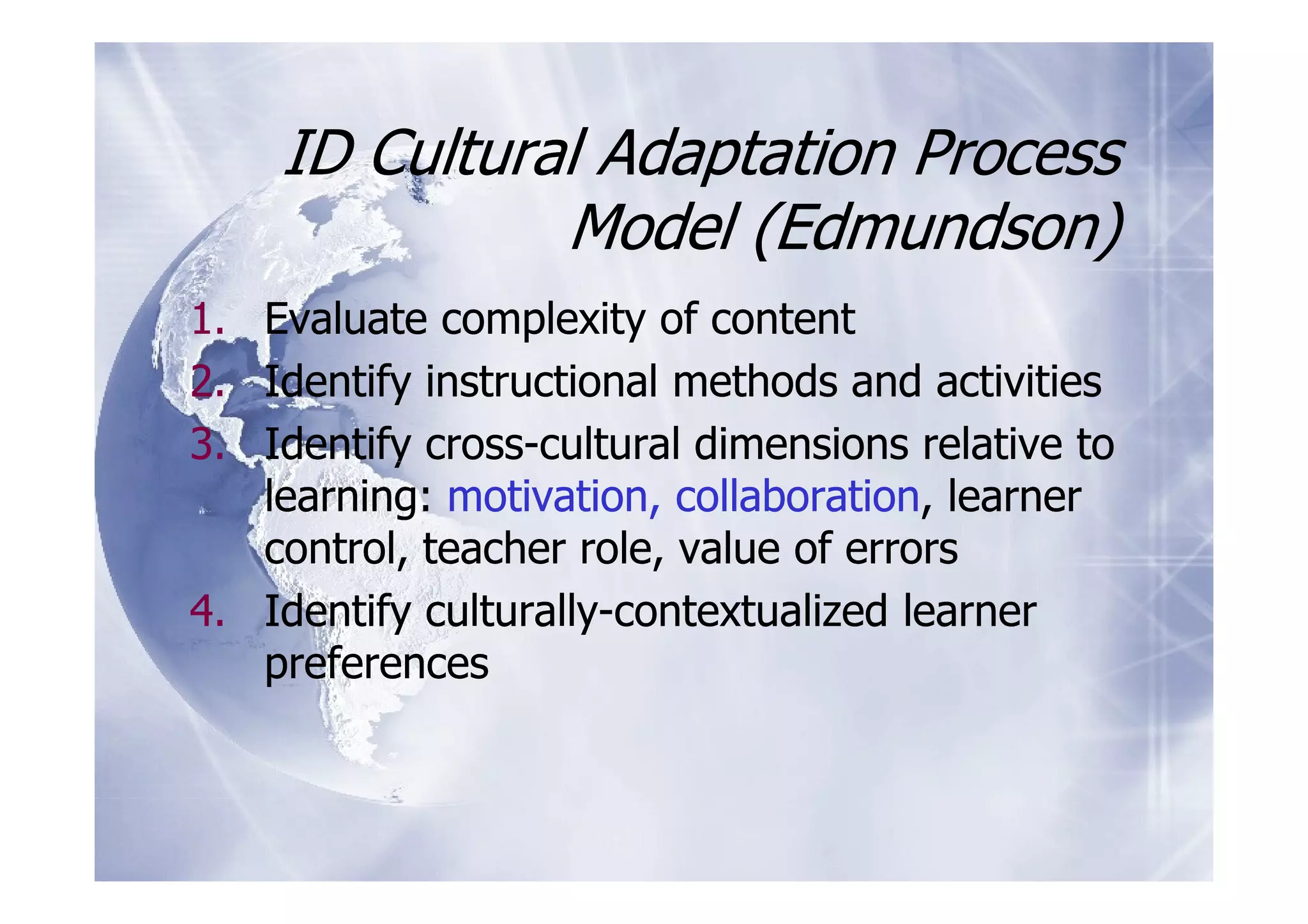
ID Cultural Adaptation Process
              Model (Edmundson)
1. Evaluate complexity of content
2. Identify instructional methods and activities
3. Identify cross-cultural dimensions relative to
   learning: motivation, collaboration, learner
   control, teacher role, value of errors
4. Identify culturally-contextualized learner
   preferences
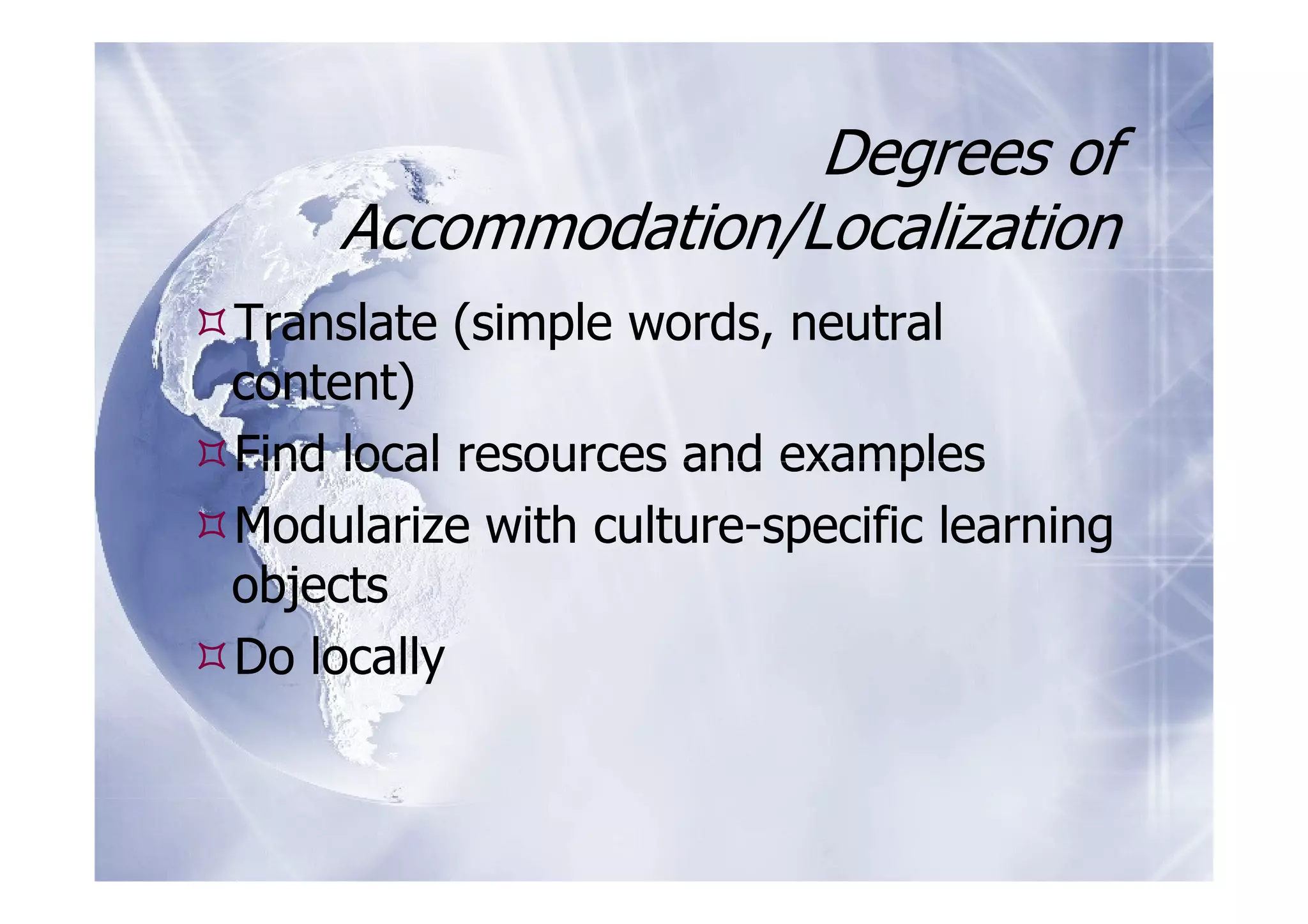
Degrees of
     Accommodation/Localization
Translate (simple words, neutral
content)
Find local resources and examples
Modularize with culture-specific learning
objects
Do locally
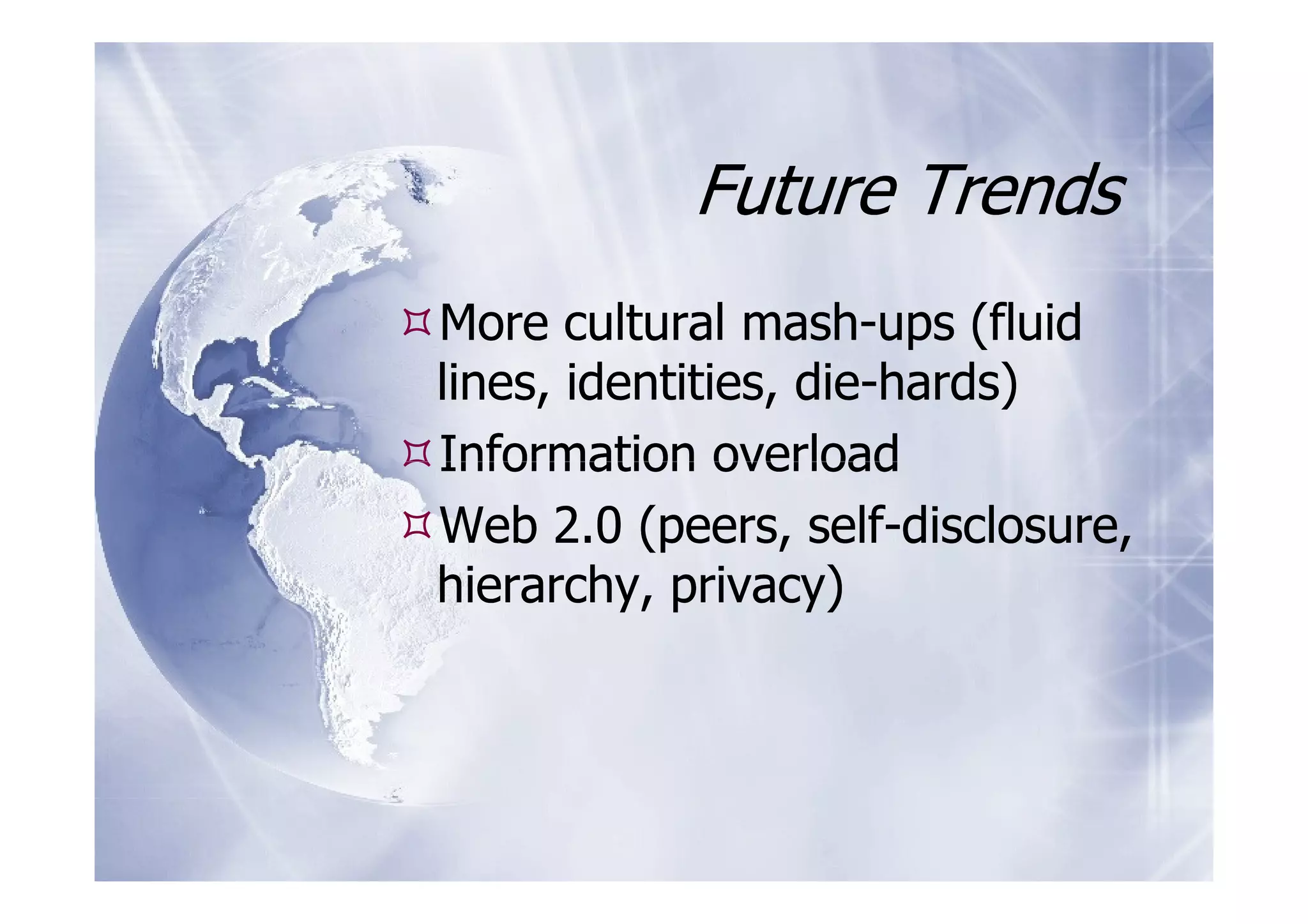
Future Trends
More cultural mash-ups (fluid
lines, identities, die-hards)
Information overload
Web 2.0 (peers, self-disclosure,
hierarchy, privacy)
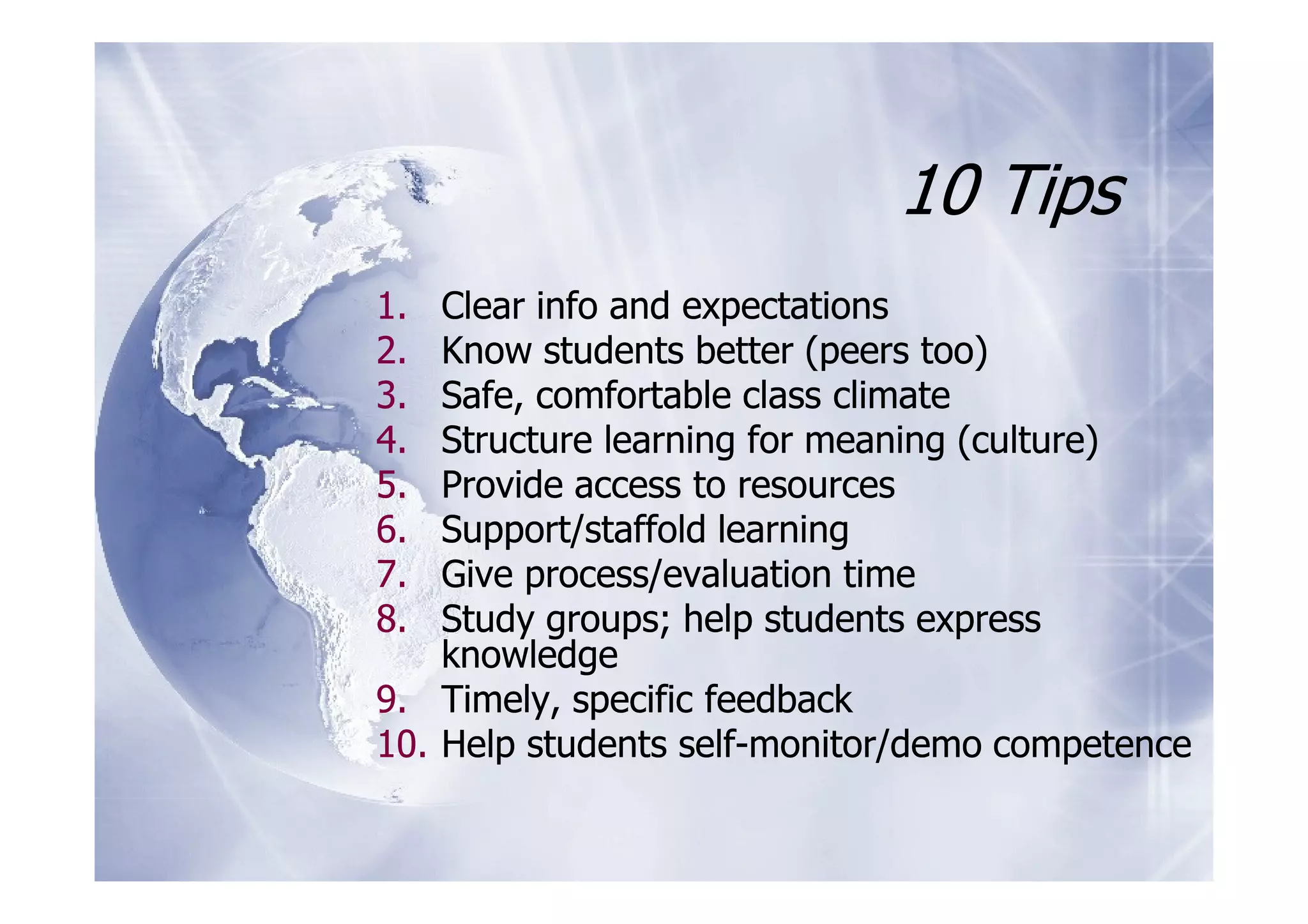
10 Tips
1.  Clear info and expectations
2.  Know students better (peers too)
3.  Safe, comfortable class climate
4.  Structure learning for meaning (culture)
5.  Provide access to resources
6.  Support/staffold learning
7.  Give process/evaluation time
8.  Study groups; help students express
    knowledge
9. Timely, specific feedback
10. Help students self-monitor/demo competence

Culturally sensitive learning practices

  • 1.
    Culturally-Sensitive Learning Practices Dr. Lesley Farmer California State University Long Beach lfarmer@csulb.edu Diversity Challenge Resilience: School Libraries in Action - The 12th Biennial School Library Association of Queensland, the 39th International Association of School Librarianship Annual Conference, incorporating the 14th International Forum on Research in School Librarianship, Brisbane, QLD Australia, 27 September – 1 October 2010.
  • 2.
  • 3.
    Cultural Factors Definition: groupbeliefs, social forms and traits Cultural assumptions subconscious, norms and values are behaviors Teaching tends to be surface so problems can arise
  • 4.
    written oral narrative videos simulations electronic lecture isolated drill tools based and practice assessment contextualized opportunities technology skills practice enhanced based communication knowledge of modeling environments how people learn individual inquiry self-study vs. group based case studies cooperative learning by problems learning jigsaw design projects learning From: How People Learn (expanded edition), p. 22
  • 5.
    Elearning Characteristics Physical accessto resources Experiencing information formats Intellectual access to resource: note tech skills Social learning Digital natives vs. immigrants
  • 6.
    Learner Cultural Characteristics Language (primary/secondary, usage, vocabulary) Educational philosophy and experience Gender issues Age-linked cultural norms (generation, family, social realities Knowledge of career
  • 7.
    Hofstede’s Cultural Dimensions Model Power distance Individualism vs. collectivism Masculinity Uncertainty avoidance Note learning styles (field- dependent, non-linear learning)
  • 8.
    Biggs’ 3P Model ofTeaching and Learning Presage: experiences before learning Process during learning Products: outcomes of learning Differentiation between surface learning, deep approaches, achievement orientation
  • 9.
    Kalyanpur and HarryCultural Benchmarks Cultural knowledge Cultural awareness Cultural sensitivity Cultural competence: congruent behaviors Cultural proficiency: interaction
  • 10.
    Language Issues Language idioms/formality Onlinebenefits: translation, pacing, anonymity Communicating: plain language, define terms, slow/clear, rephrase/summarize, graphic organizers Check for understanding Provide local language resources visual cues (may mislead) Note sports terms
  • 11.
    Teaching Factors Student-teacher relations Topicsof discussion (taboos, feelings) Choice of resources Learner participation Learning activities Assessment
  • 12.
    Technology Teaching Issues Equipment and connectivity Tech experience and self-efficacy Generational issues Time differences Evaluation of resources Web: software, accessibility Tech support
  • 13.
    ID Cultural AdaptationProcess Model (Edmundson) 1. Evaluate complexity of content 2. Identify instructional methods and activities 3. Identify cross-cultural dimensions relative to learning: motivation, collaboration, learner control, teacher role, value of errors 4. Identify culturally-contextualized learner preferences
  • 14.
    Degrees of Accommodation/Localization Translate (simple words, neutral content) Find local resources and examples Modularize with culture-specific learning objects Do locally
  • 15.
    Future Trends More culturalmash-ups (fluid lines, identities, die-hards) Information overload Web 2.0 (peers, self-disclosure, hierarchy, privacy)
  • 16.
    10 Tips 1. Clear info and expectations 2. Know students better (peers too) 3. Safe, comfortable class climate 4. Structure learning for meaning (culture) 5. Provide access to resources 6. Support/staffold learning 7. Give process/evaluation time 8. Study groups; help students express knowledge 9. Timely, specific feedback 10. Help students self-monitor/demo competence