LISTENING                          SPEAKING                           WRITTING                        READING
Listening and understanding        Reproduction of text                Combination of spelling,       Using basic strategies for the
instructions or explanations,      production and oral                 pronunciation and meaning      production of simple texts
interactions from oral or          representations, songs,             from written models, oral      using well-known structures
audiovisual recordings and         recitations, plays, directed        expression and relationship    and sentences orally
computer support for extract       interactions…                       spelling-sound
specific and global information.                                                                      Using information technology
                                   Developing strategies to support    Reading and comprehension      and communication for
Development of basic strategies    basic oral expression: visual       of several texts on paper      reading, writing and
to support comprehension:          and non-verbal context and use      and digital formats, adapted   transmitting information
association of words and           of phonetic aspects, rhythm,        to the linguistic competence
expressions with gestures and      stress and intonation.              of the students                Interest in the care and
visual elements, use of phonetic                                                                      presentation of texts
aspects such as rhythm, stress     Recognition and use of              Using print media
and intonation, and prior          vocabulary, basic forms and         consultation and
knowledge of the language.         typical structures of foreign       information and the
                                   language previously used.           possibilities technologies
Use of repetition, memorization                                        offer
and observation models to          Using standard formulas of
acquire basic vocabulary and       greeting, naming, and active
grammatical structures             participation in routines, plays,
previously used.                   songs, recitations, drama…


                                   Oral interaction in real or
                                   fictional contexts, giving verbal
                                   and nonverbal answers


                                   Assessment of the foreign
                                   language as a tool to
                                   communicate and interest for
                                   use in several situations
                                   Interest in learning about
                                   people and culture of the
                                   foreign language countries

Contenidos

  • 1.
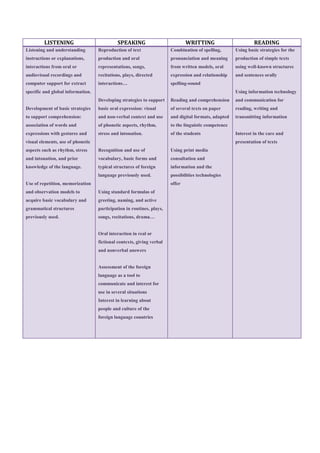
    LISTENING SPEAKING WRITTING READING Listening and understanding Reproduction of text Combination of spelling, Using basic strategies for the instructions or explanations, production and oral pronunciation and meaning production of simple texts interactions from oral or representations, songs, from written models, oral using well-known structures audiovisual recordings and recitations, plays, directed expression and relationship and sentences orally computer support for extract interactions… spelling-sound specific and global information. Using information technology Developing strategies to support Reading and comprehension and communication for Development of basic strategies basic oral expression: visual of several texts on paper reading, writing and to support comprehension: and non-verbal context and use and digital formats, adapted transmitting information association of words and of phonetic aspects, rhythm, to the linguistic competence expressions with gestures and stress and intonation. of the students Interest in the care and visual elements, use of phonetic presentation of texts aspects such as rhythm, stress Recognition and use of Using print media and intonation, and prior vocabulary, basic forms and consultation and knowledge of the language. typical structures of foreign information and the language previously used. possibilities technologies Use of repetition, memorization offer and observation models to Using standard formulas of acquire basic vocabulary and greeting, naming, and active grammatical structures participation in routines, plays, previously used. songs, recitations, drama… Oral interaction in real or fictional contexts, giving verbal and nonverbal answers Assessment of the foreign language as a tool to communicate and interest for use in several situations Interest in learning about people and culture of the foreign language countries