Multi-Family Case Study:
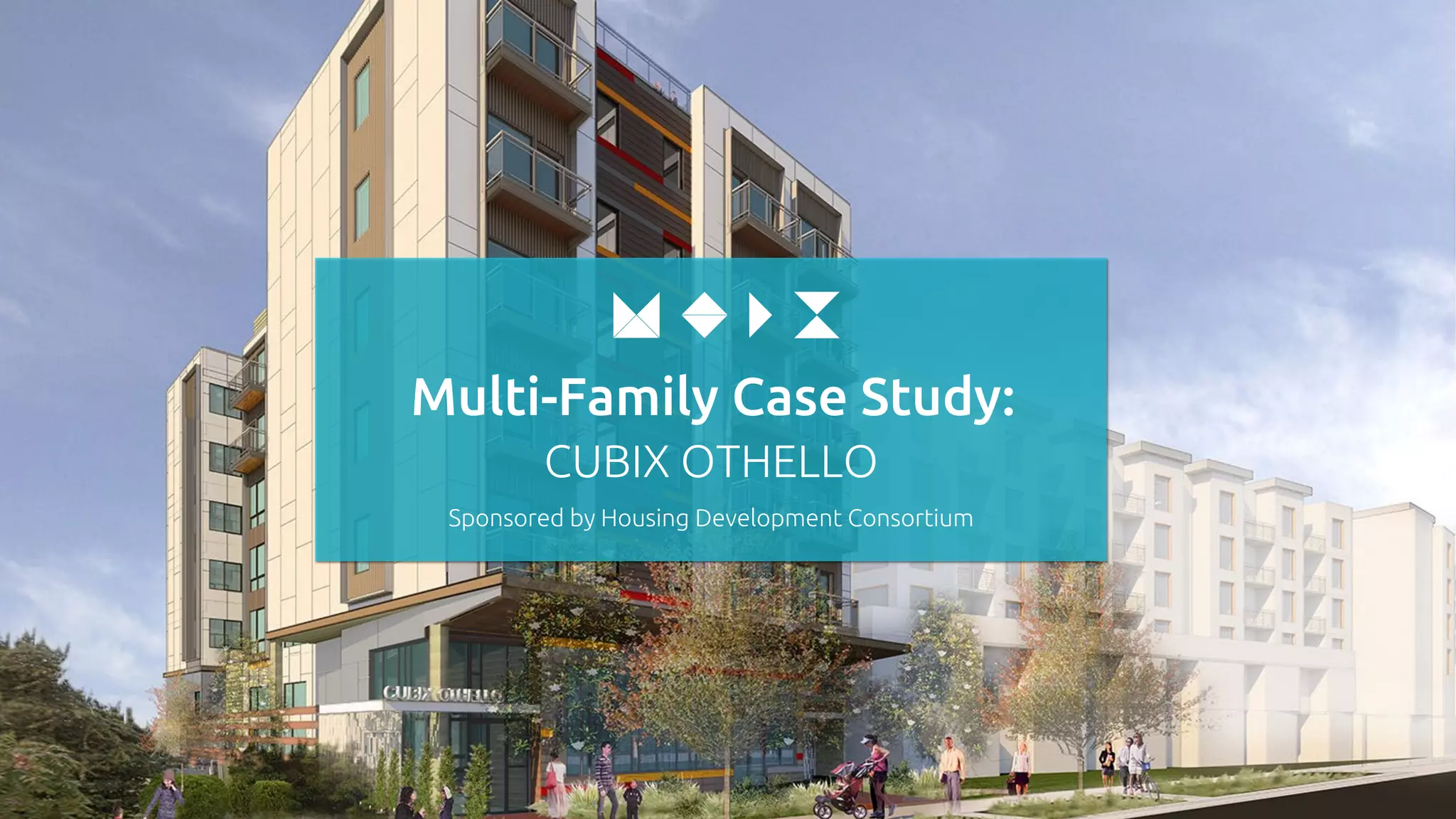
CUBIX OTHELLO
Sponsored by Housing Development Consortium
Your Presenters
Matthew Laase
Principal
Jackson | Main Architecture
Craig Mitchell
Director
Innovative Solutions
Metric Modular
Daniel Stoner
NexGen
Housing Partners
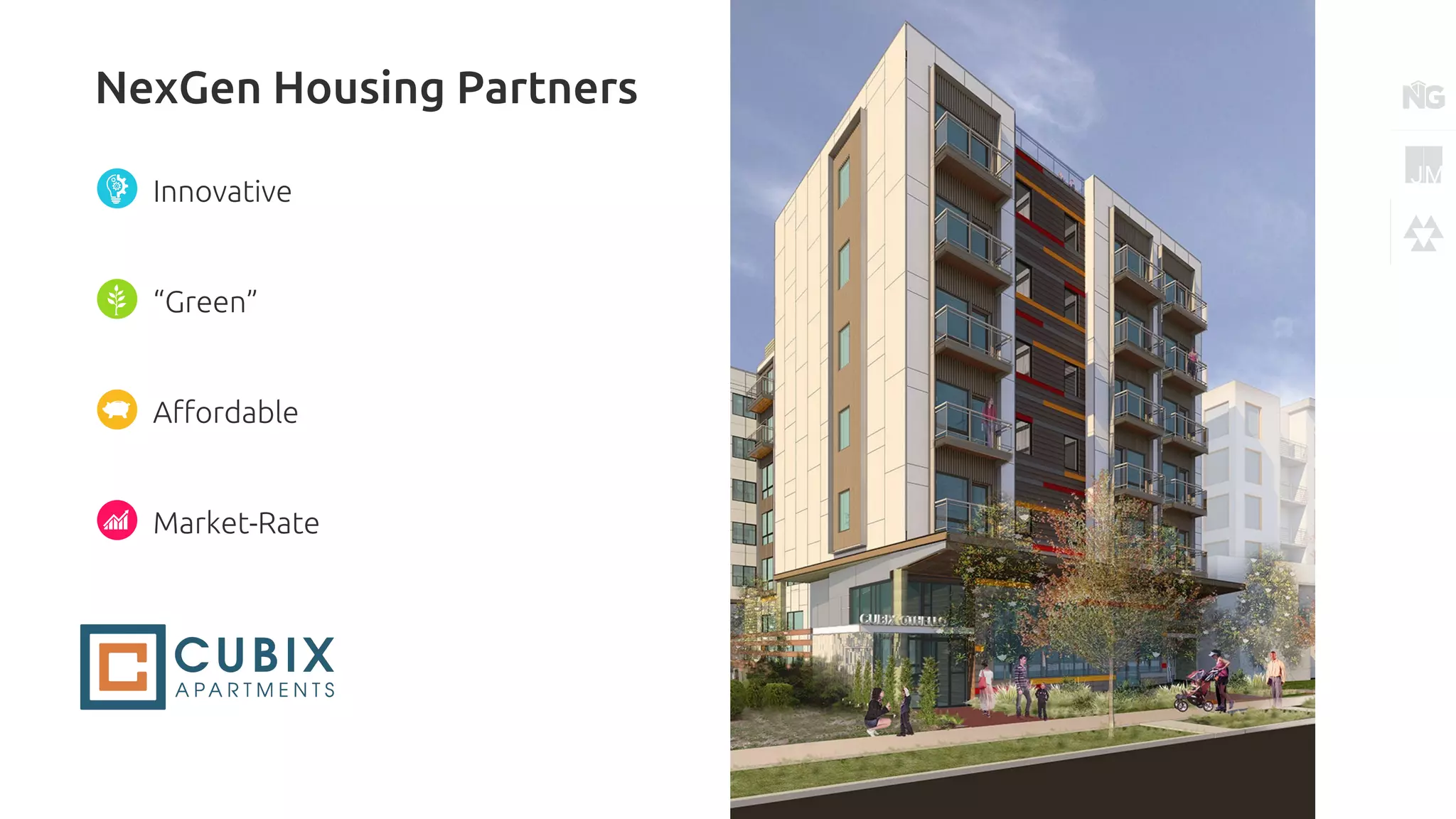
NexGen Housing Partners
Innovative
“Green”
Affordable
Market-Rate
13
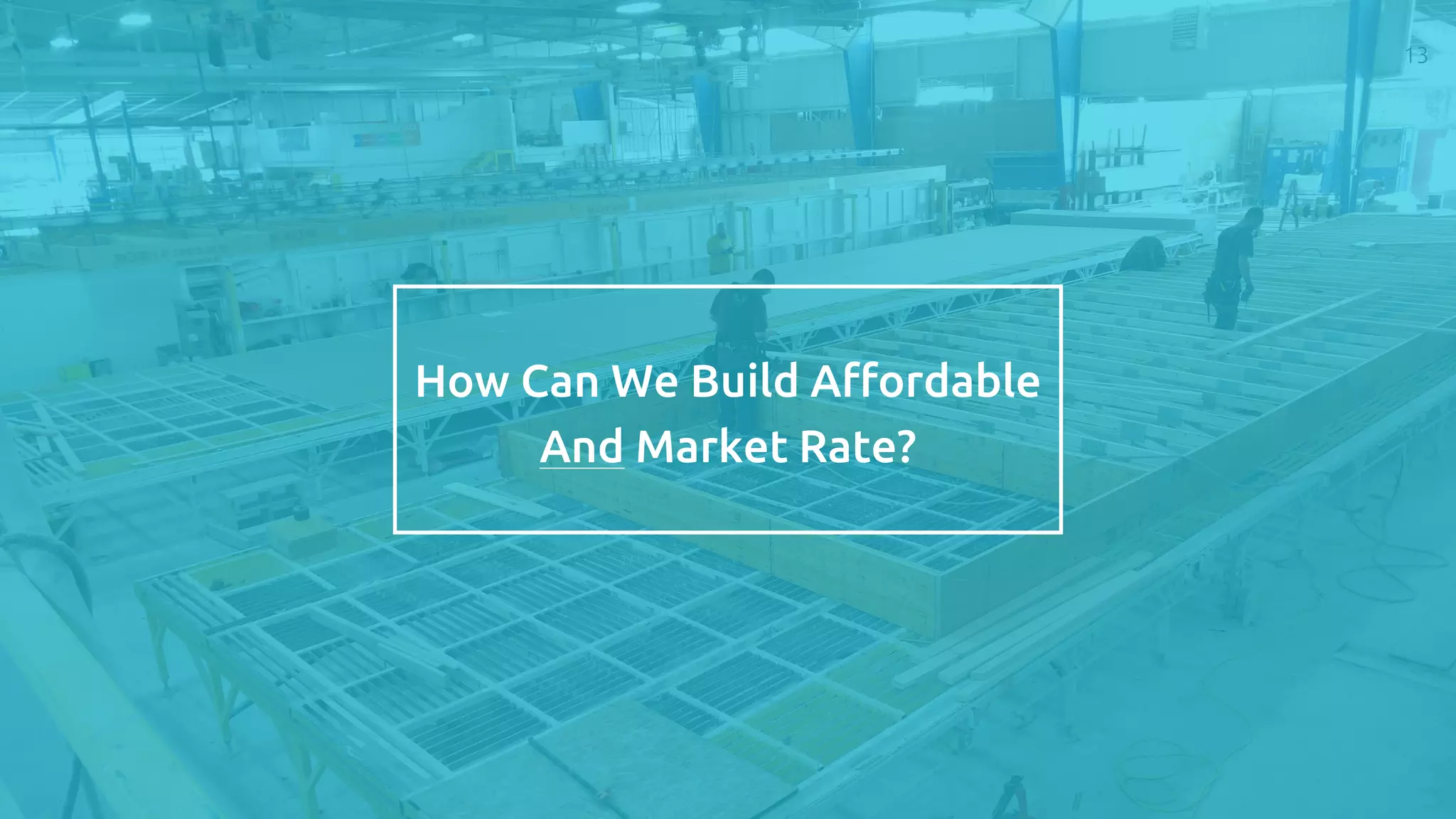
How Can We Build Affordable
And Market Rate?
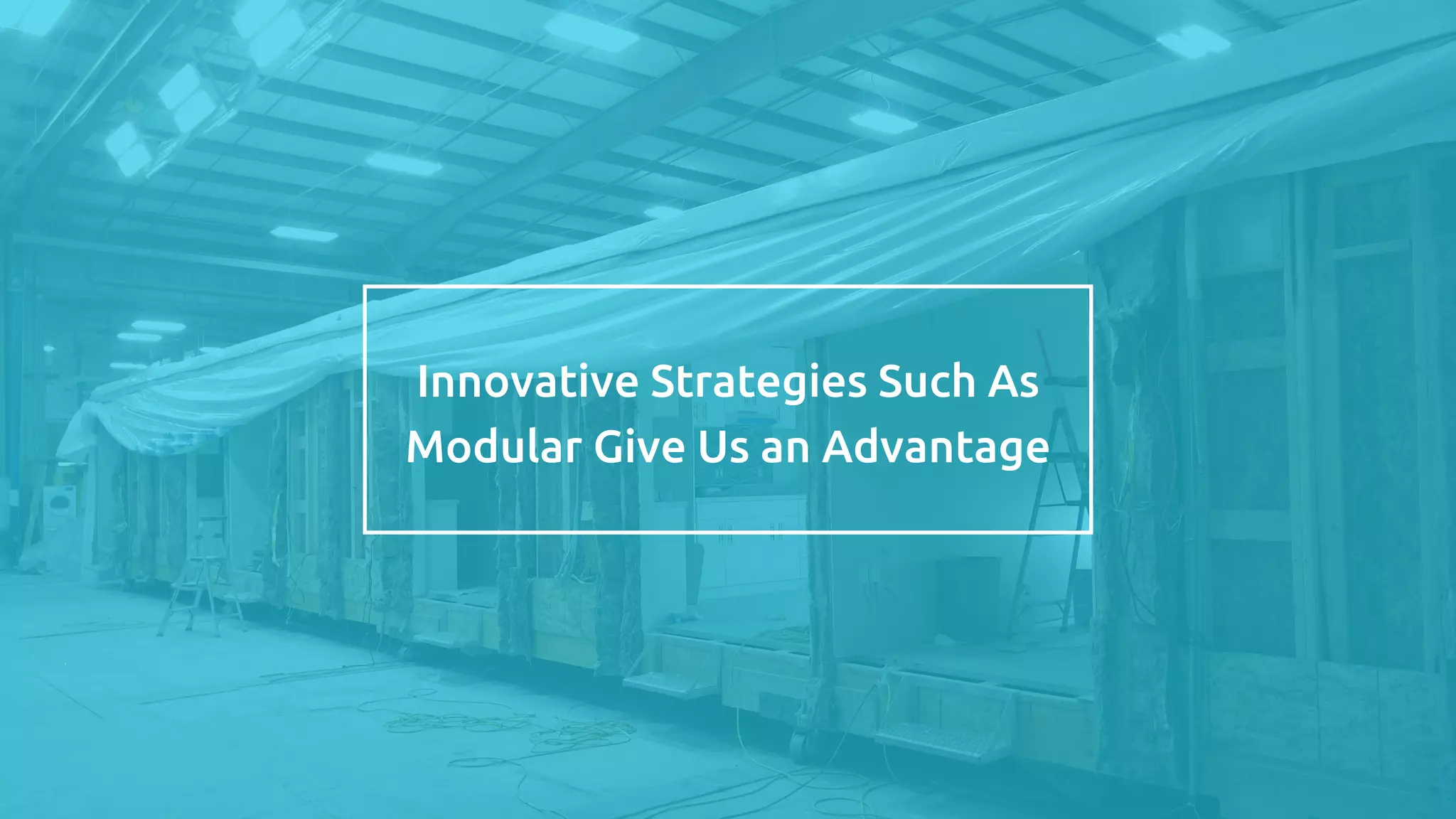
Innovative Strategies Such As
Modular Give Us an Advantage
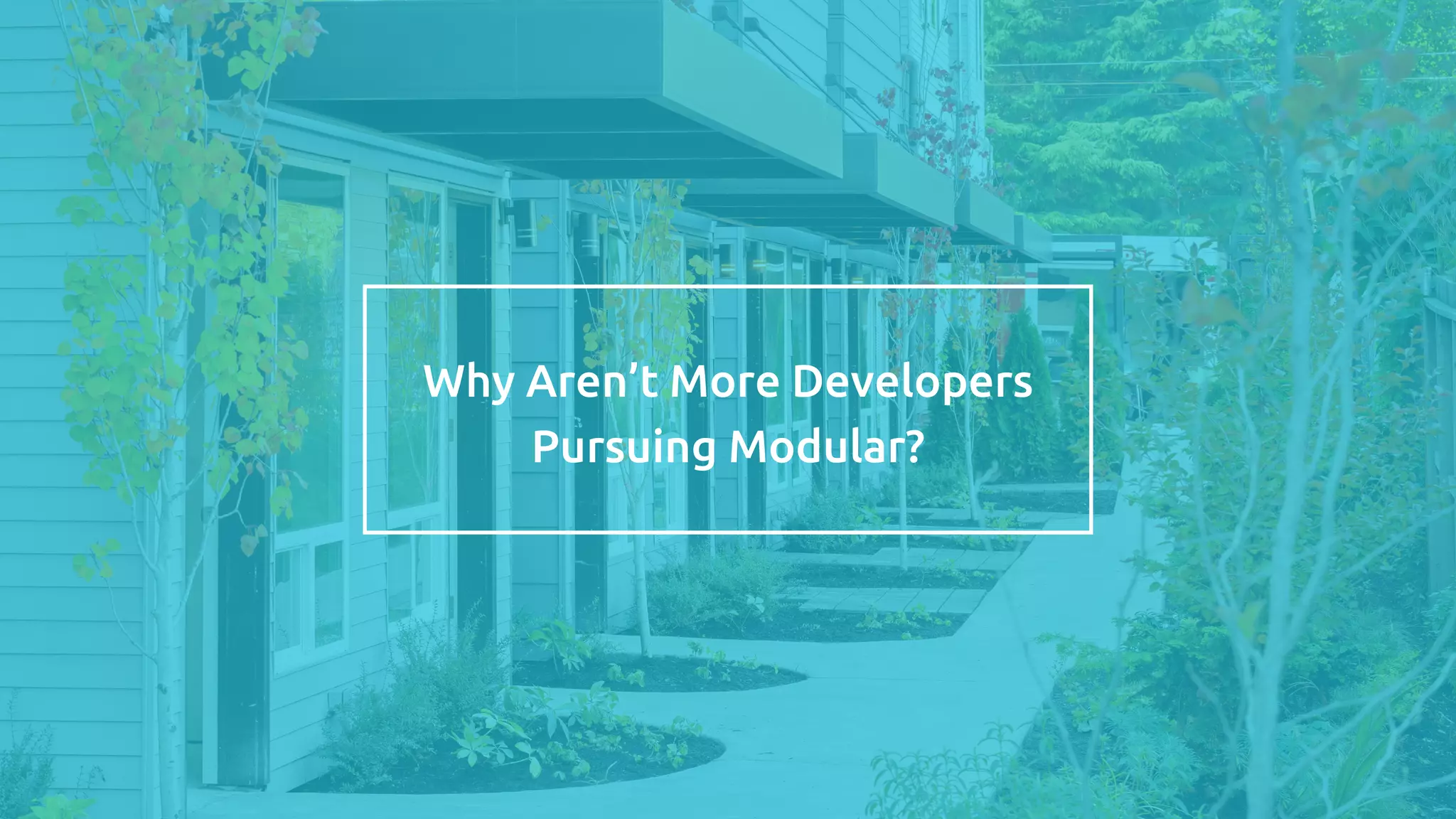
Why Aren’t More Developers
Pursuing Modular?
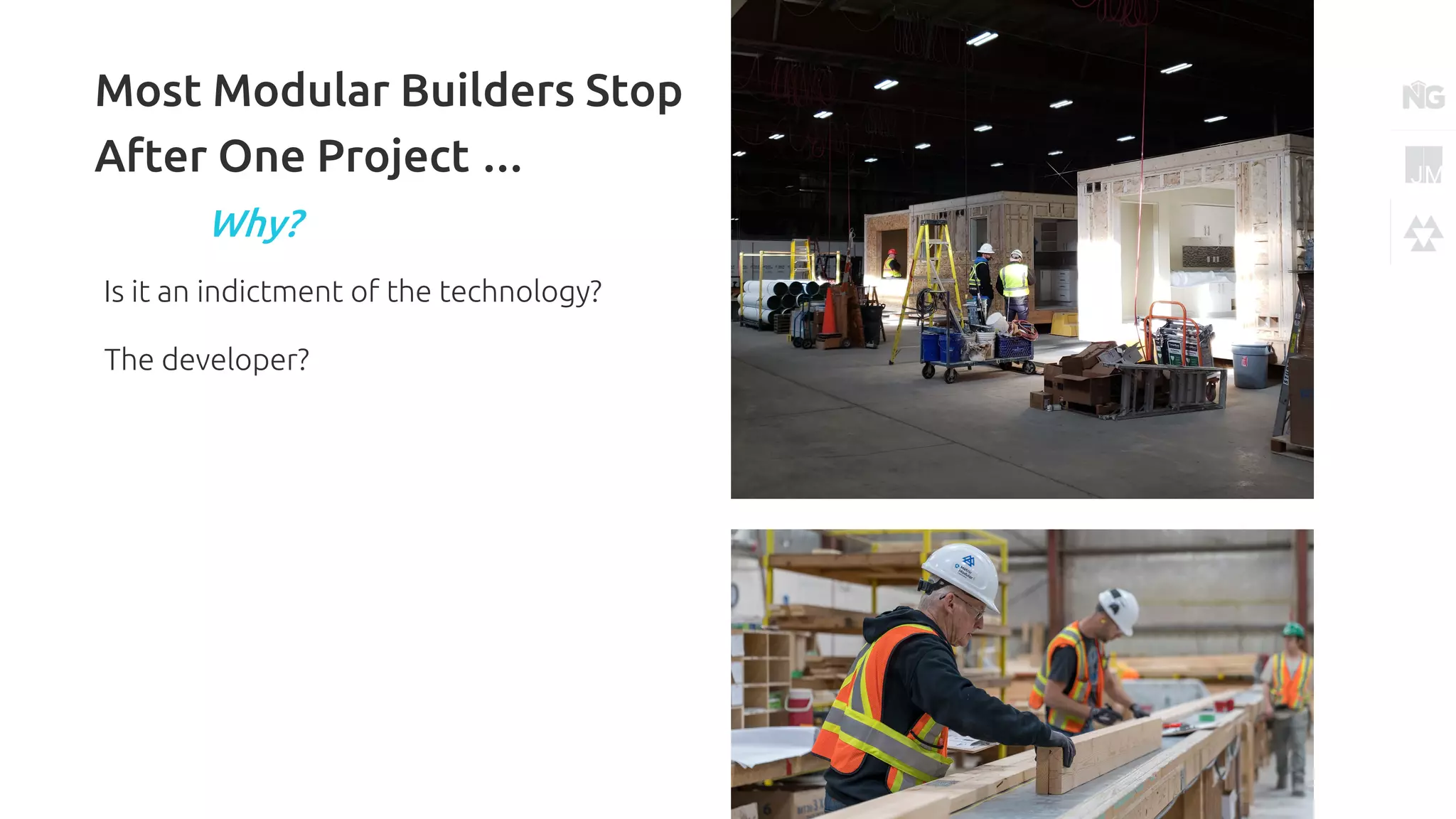
Most Modular Builders Stop
After One Project …
Is it an indictment of the technology?
The developer?
Why?
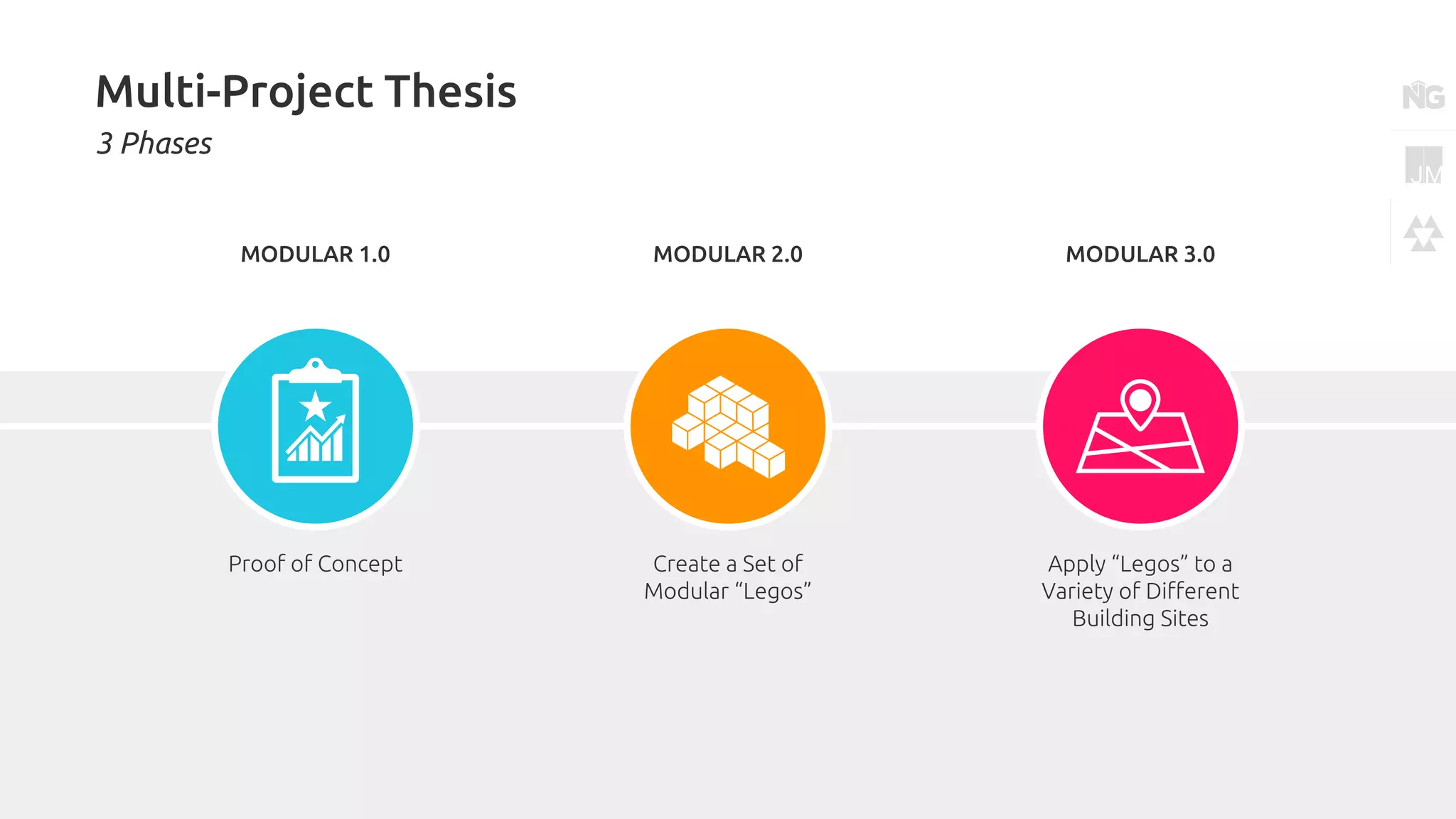
The Answer is a Multi-Project Thesis
Answered in 3 Phases:
Multi-Project Thesis
3 Phases
Proof of Concept
MODULAR 1.0
Create a Set of
Modular “Legos”
MODULAR 2.0
Apply “Legos” to a
Variety of Different
Building Sites
MODULAR 3.0
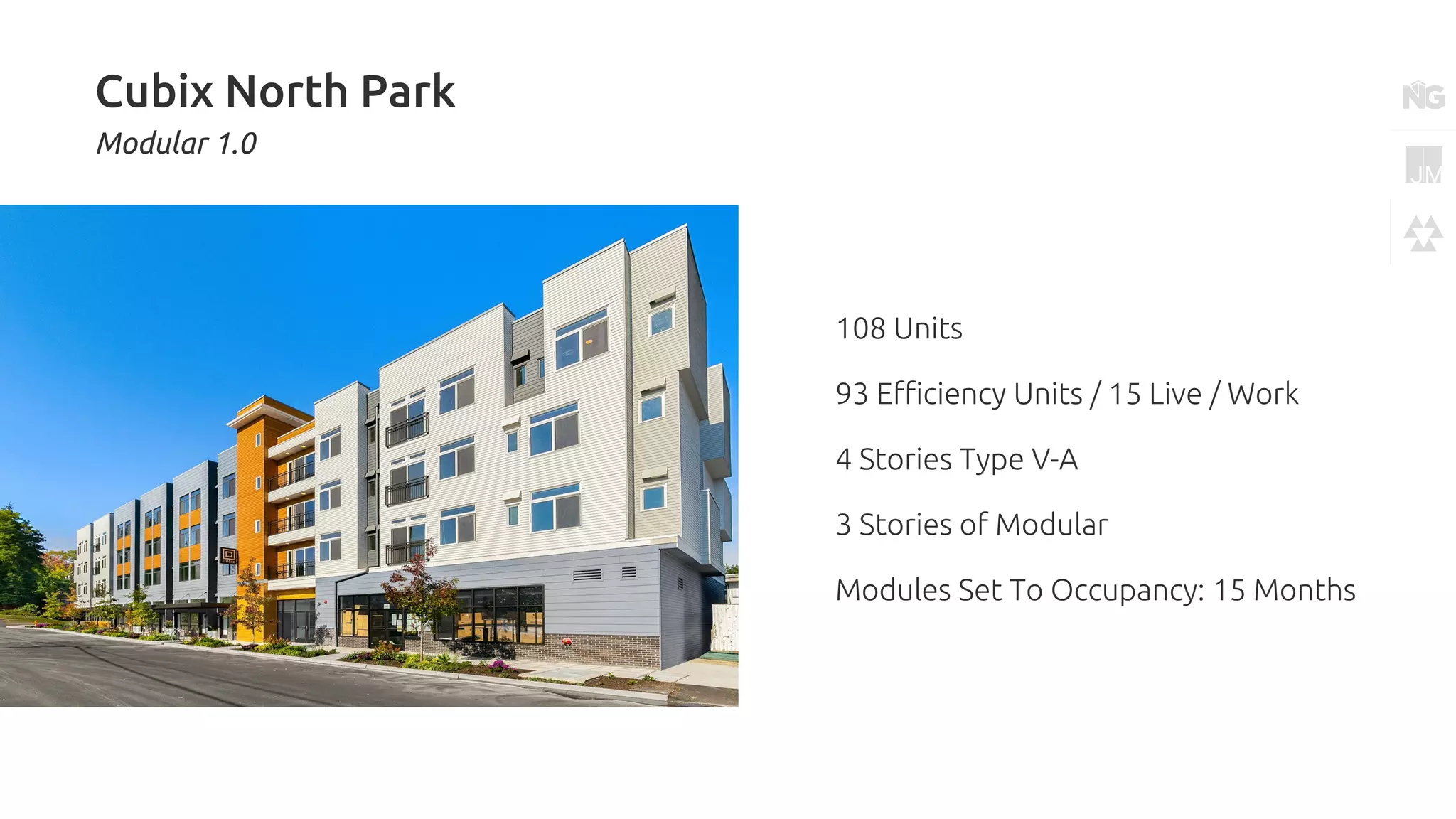
Cubix North Park
Modular 1.0
108 Units
93 Efficiency Units / 15 Live / Work
4 Stories Type V-A
3 Stories of Modular
Modules Set To Occupancy: 15 Months
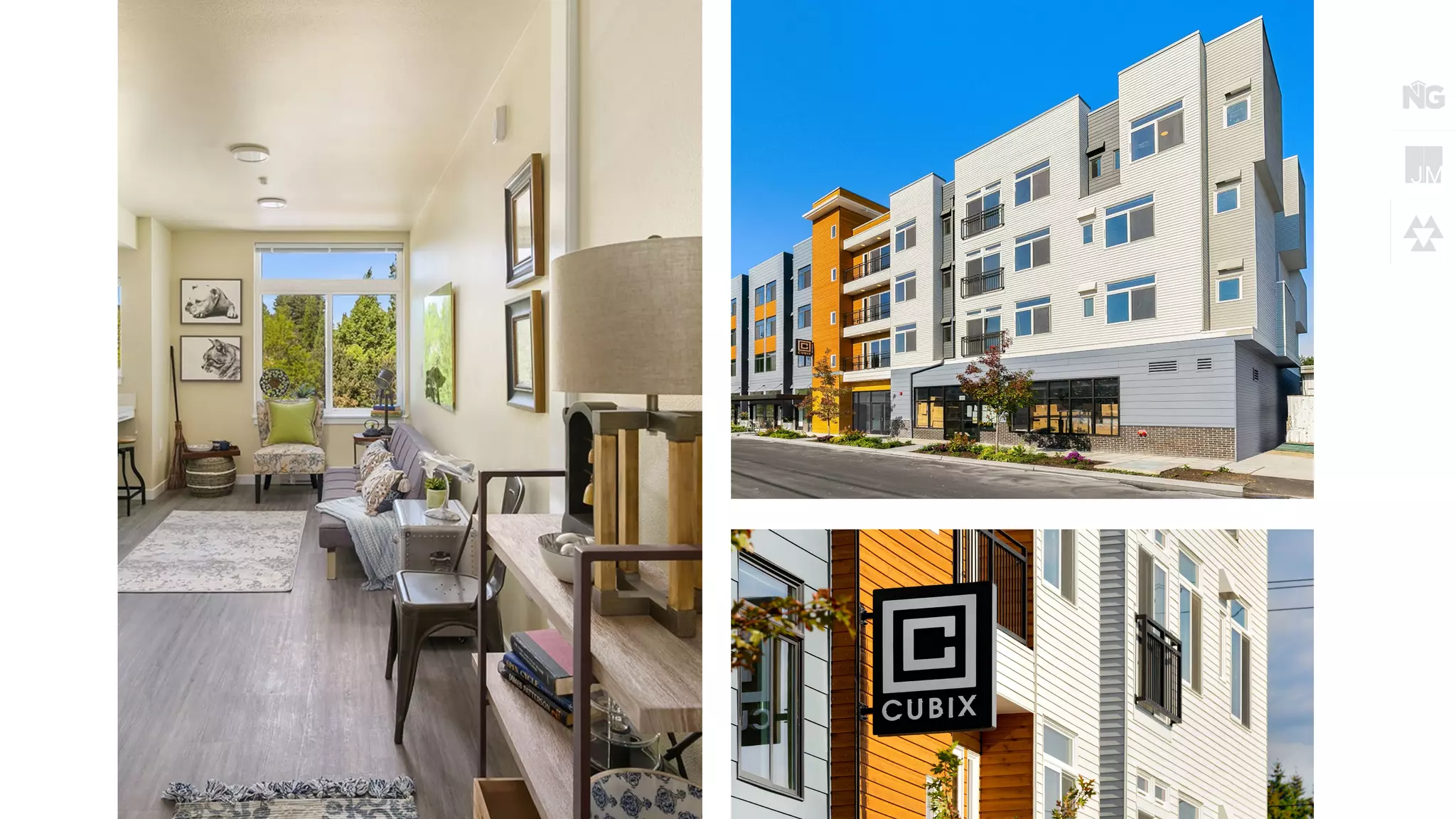
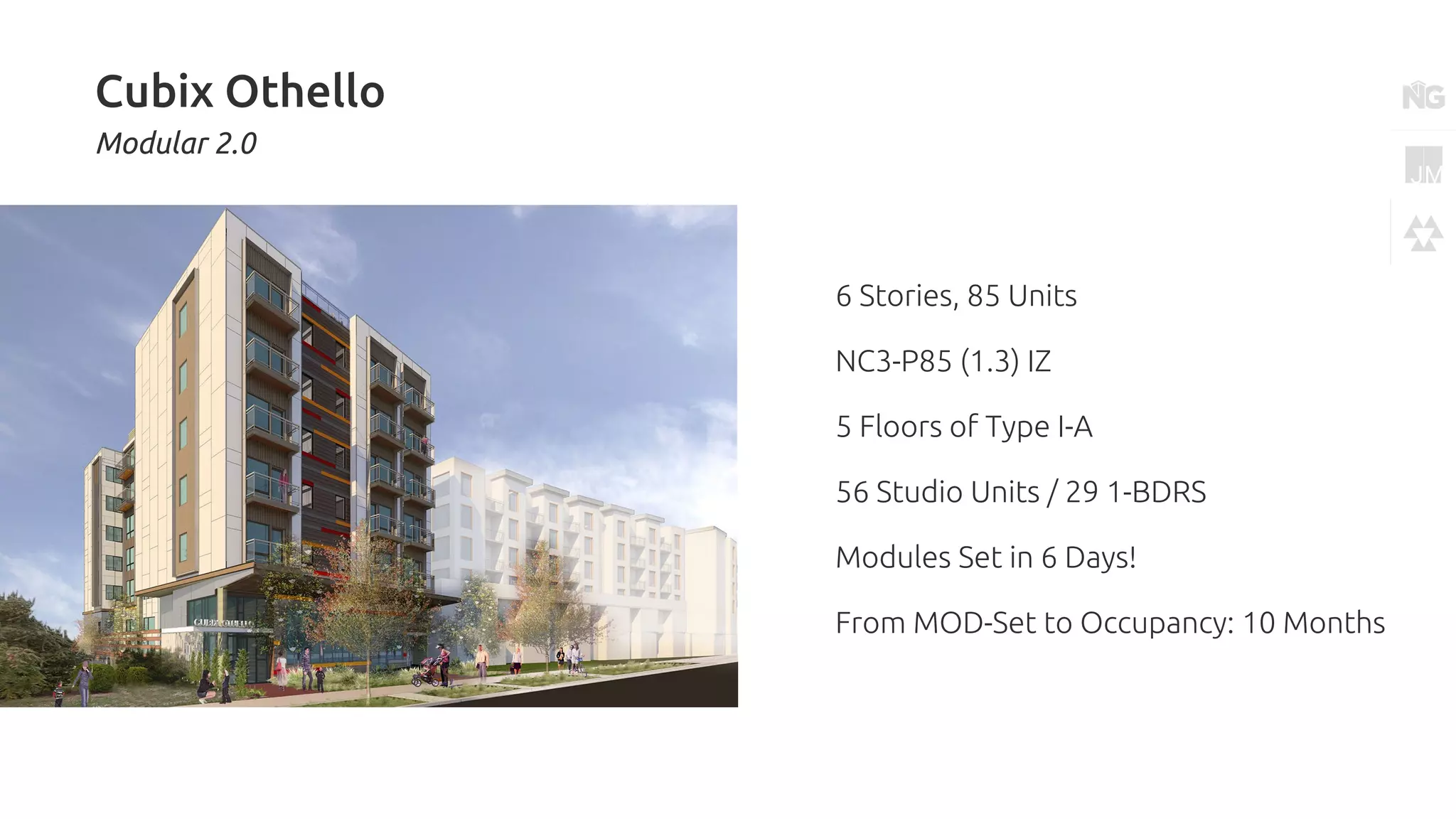
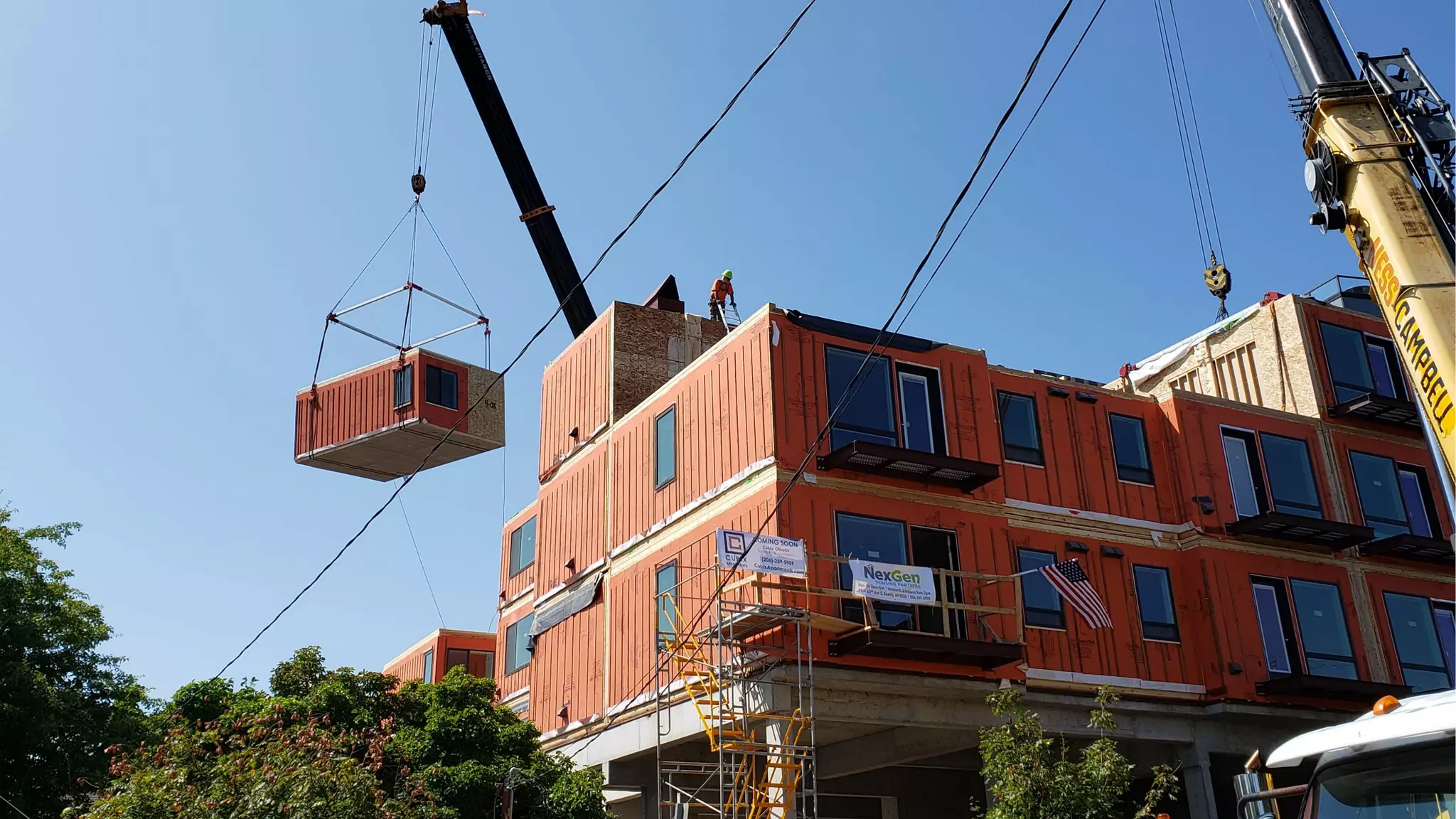
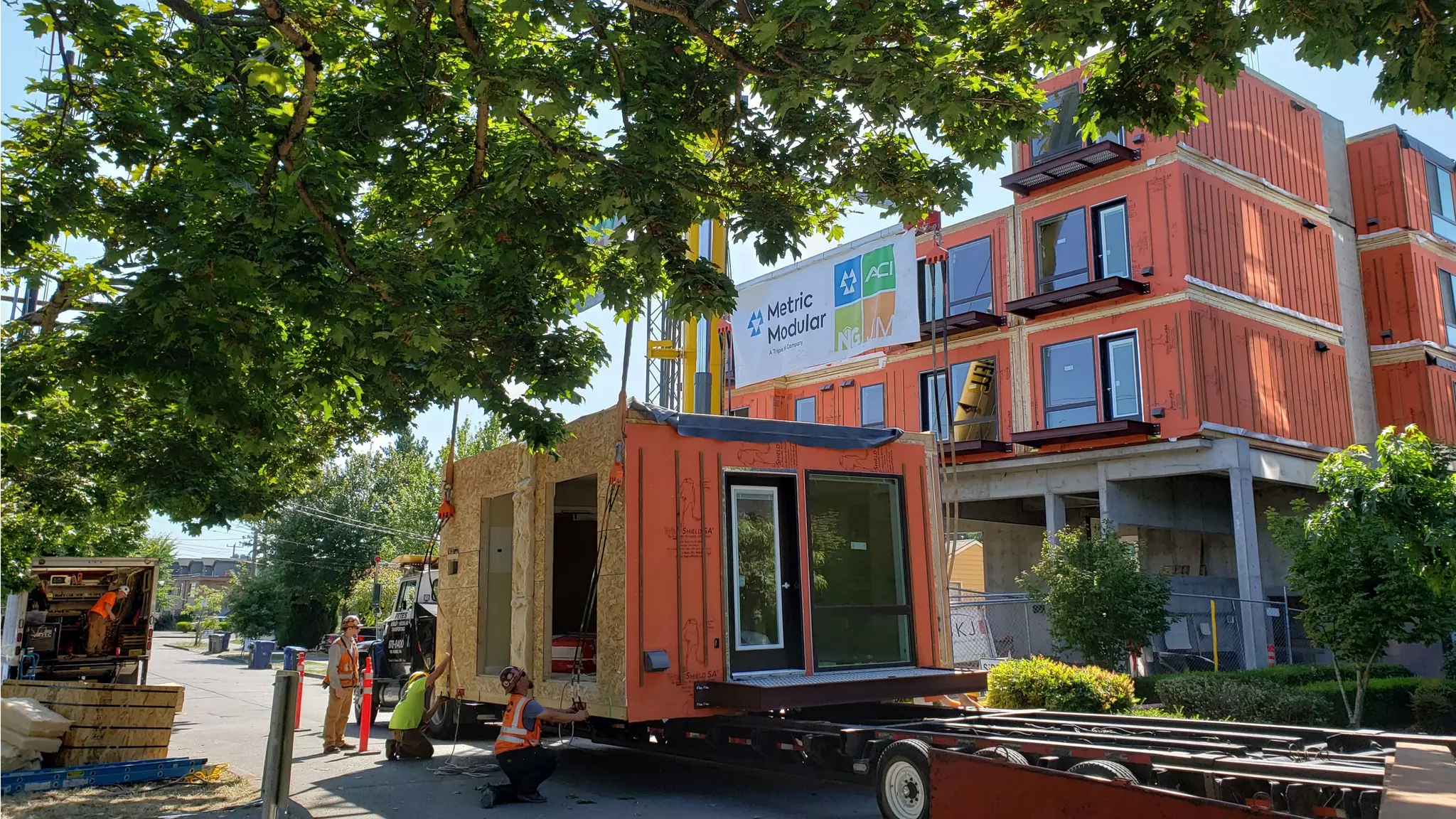
Cubix Othello
Modular 2.0
6 Stories, 85 Units
NC3-P85 (1.3) IZ
5 Floors of Type I-A
56 Studio Units / 29 1-BDRS
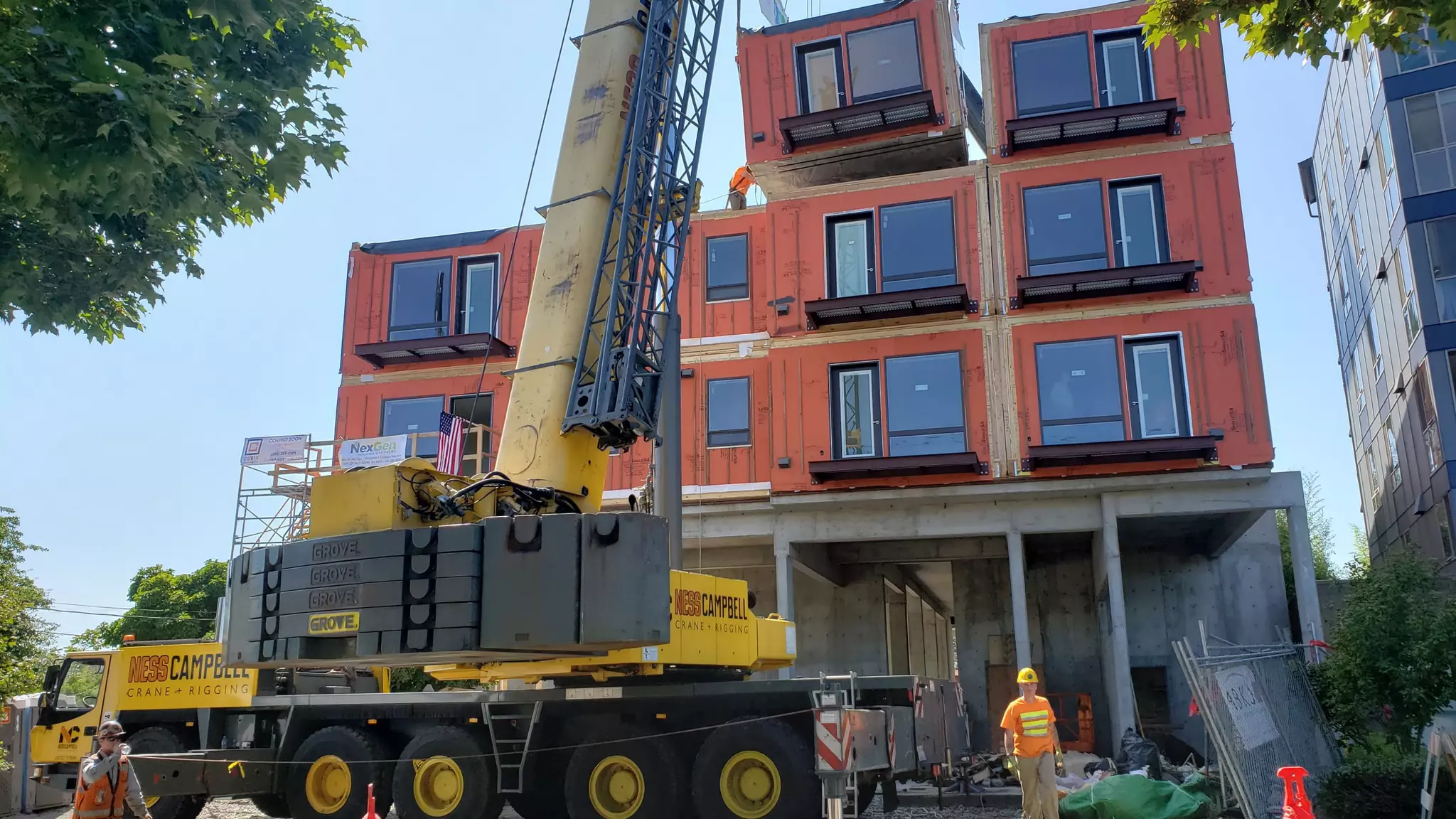
Modules Set in 6 Days!
From MOD-Set to Occupancy: 10 Months
Tour of Othello
Video Placeholder
Why Choose Modular?
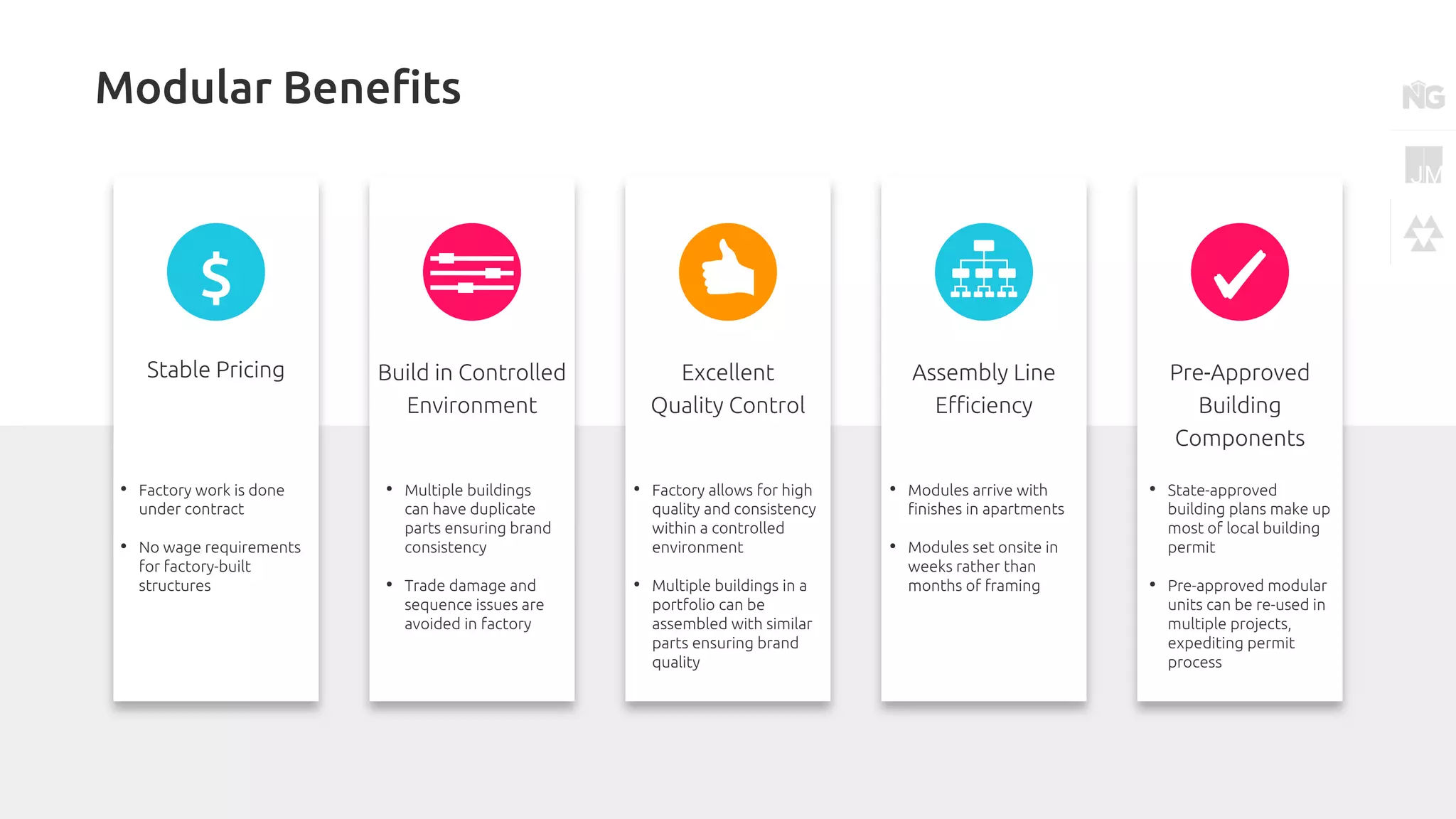
Modular Benefits
Stable Pricing
$
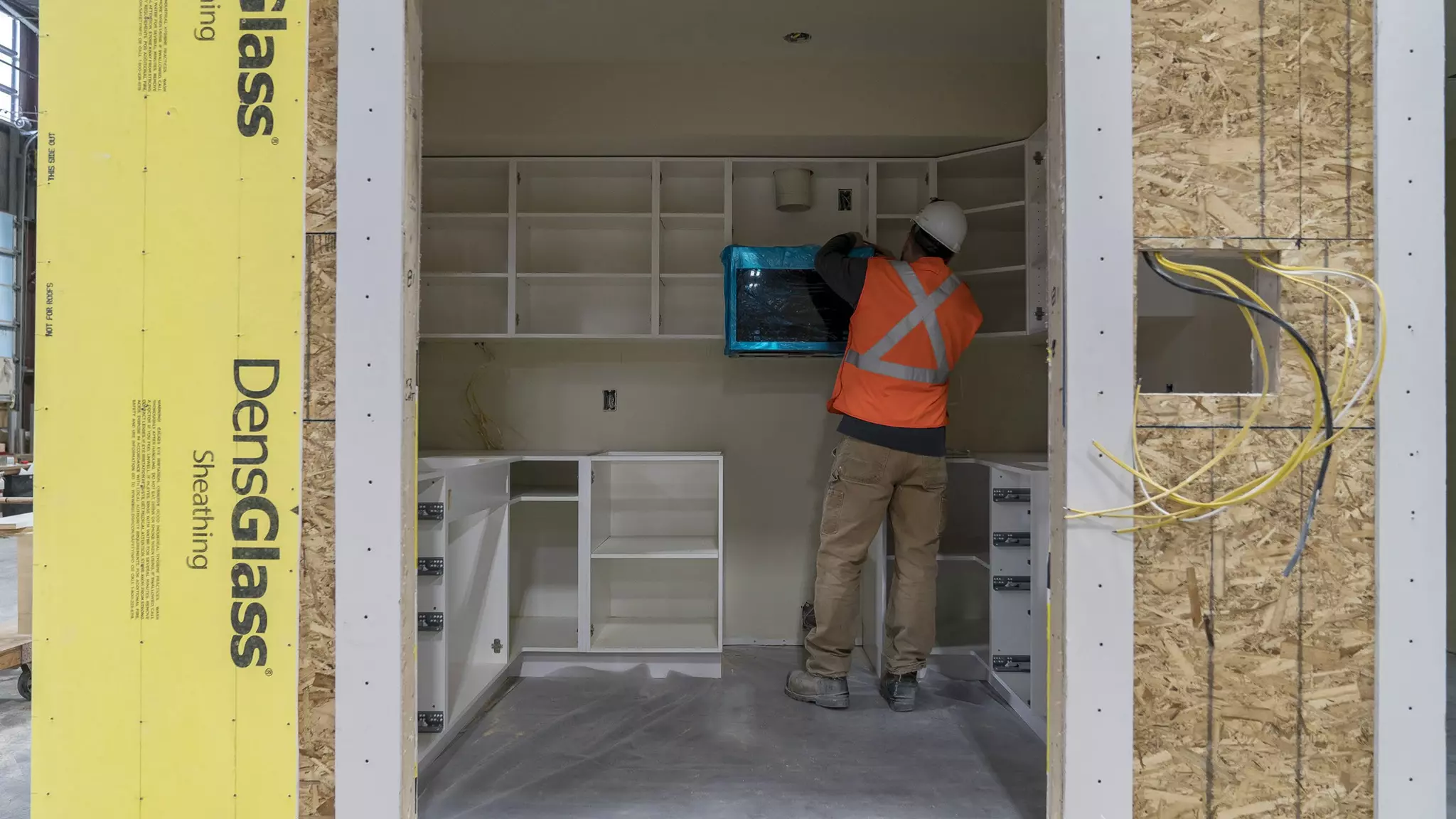
• Factory work is done
under contract
• No wage requirements
for factory-built
structures
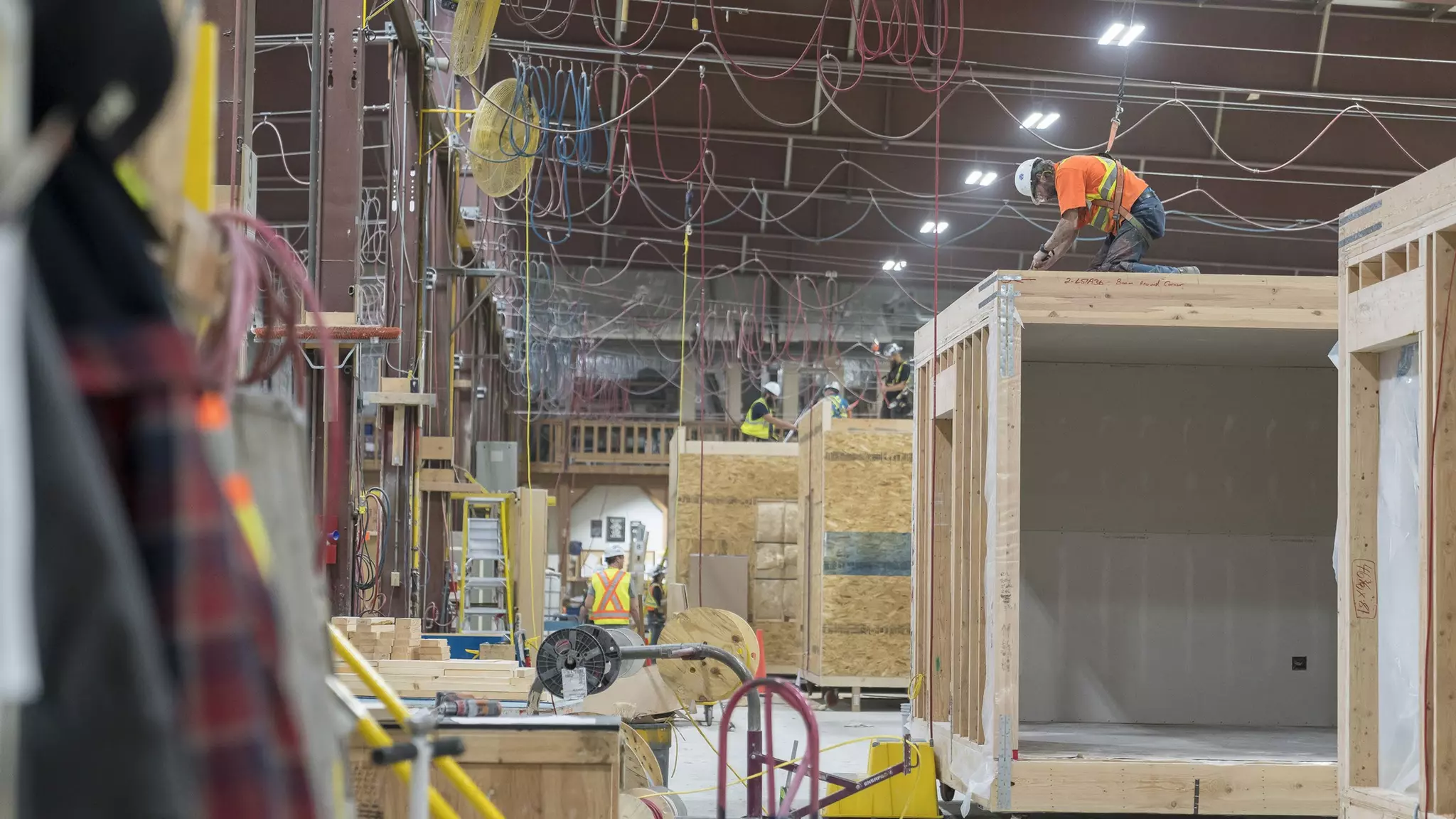
Build in Controlled
Environment
• Multiple buildings
can have duplicate
parts ensuring brand
consistency
• Trade damage and
sequence issues are
avoided in factory
Excellent
Quality Control
• Factory allows for high
quality and consistency
within a controlled
environment
• Multiple buildings in a
portfolio can be
assembled with similar
parts ensuring brand
quality
Assembly Line
Efficiency
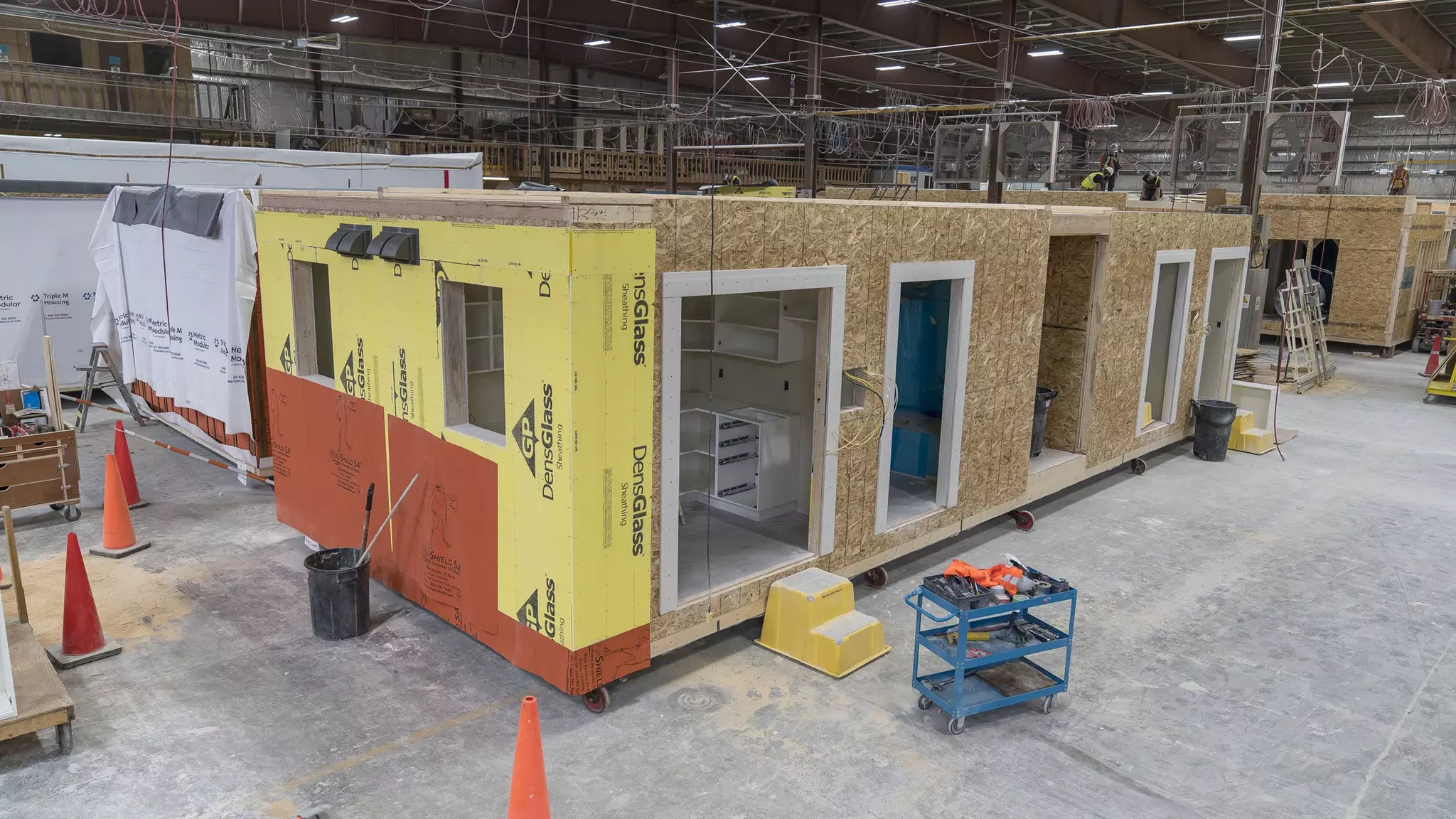
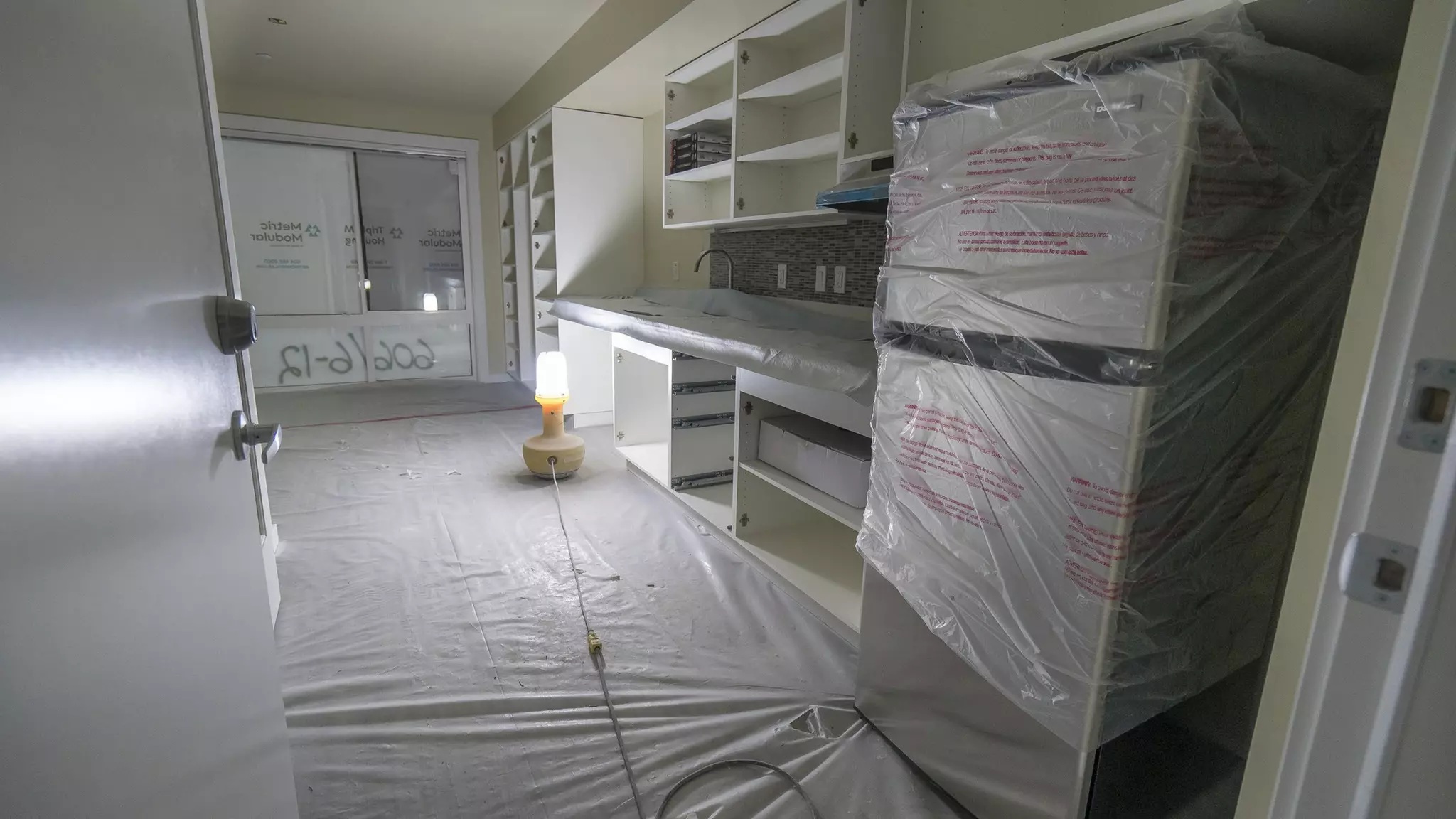
• Modules arrive with
finishes in apartments
• Modules set onsite in
weeks rather than
months of framing
Pre-Approved
Building
Components
• State-approved
building plans make up
most of local building
permit
• Pre-approved modular
units can be re-used in
multiple projects,
expediting permit
process
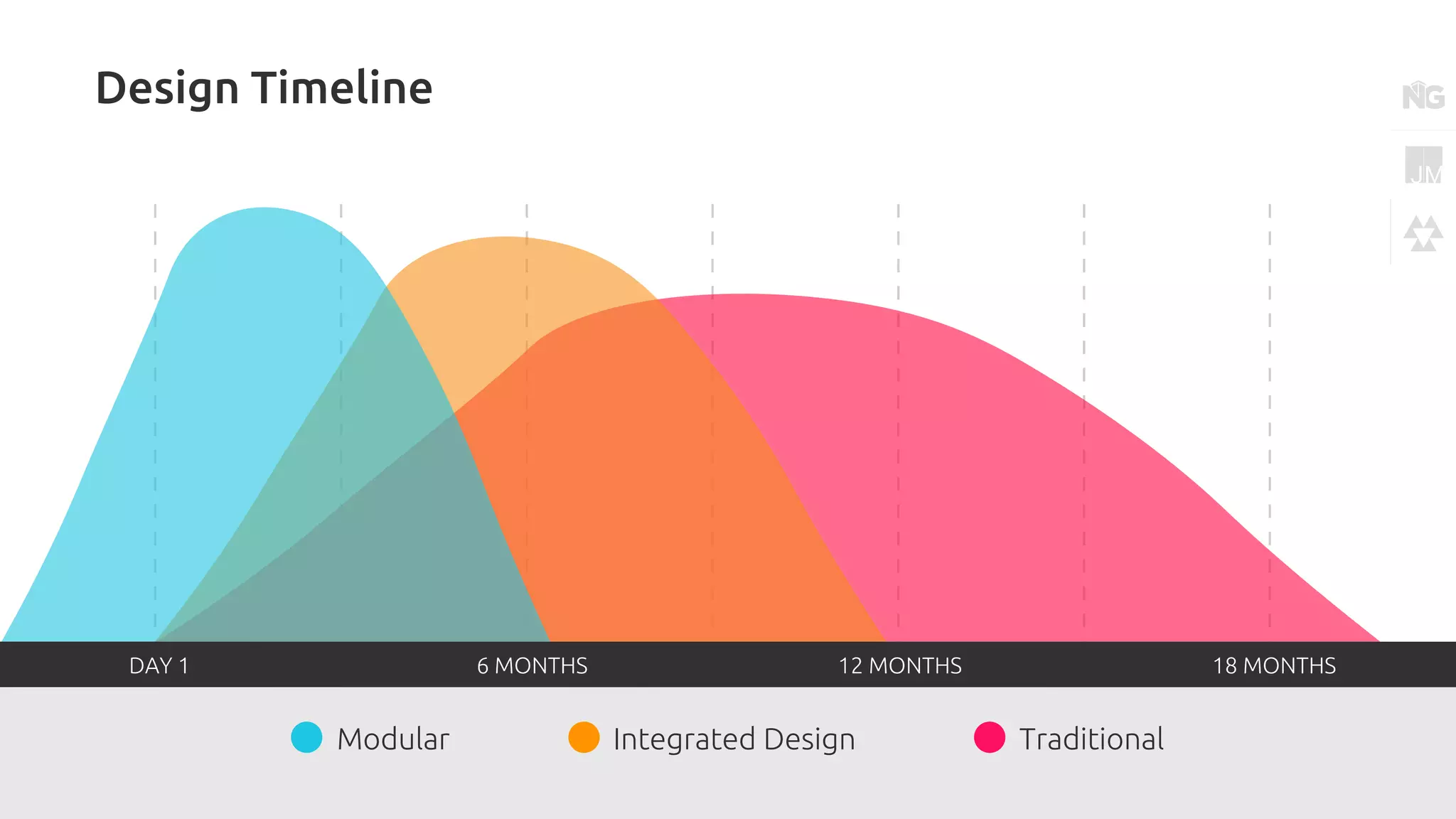
Modular Integrated Design Traditional
DAY 1 6 MONTHS 12 MONTHS 18 MONTHS
Design Timeline
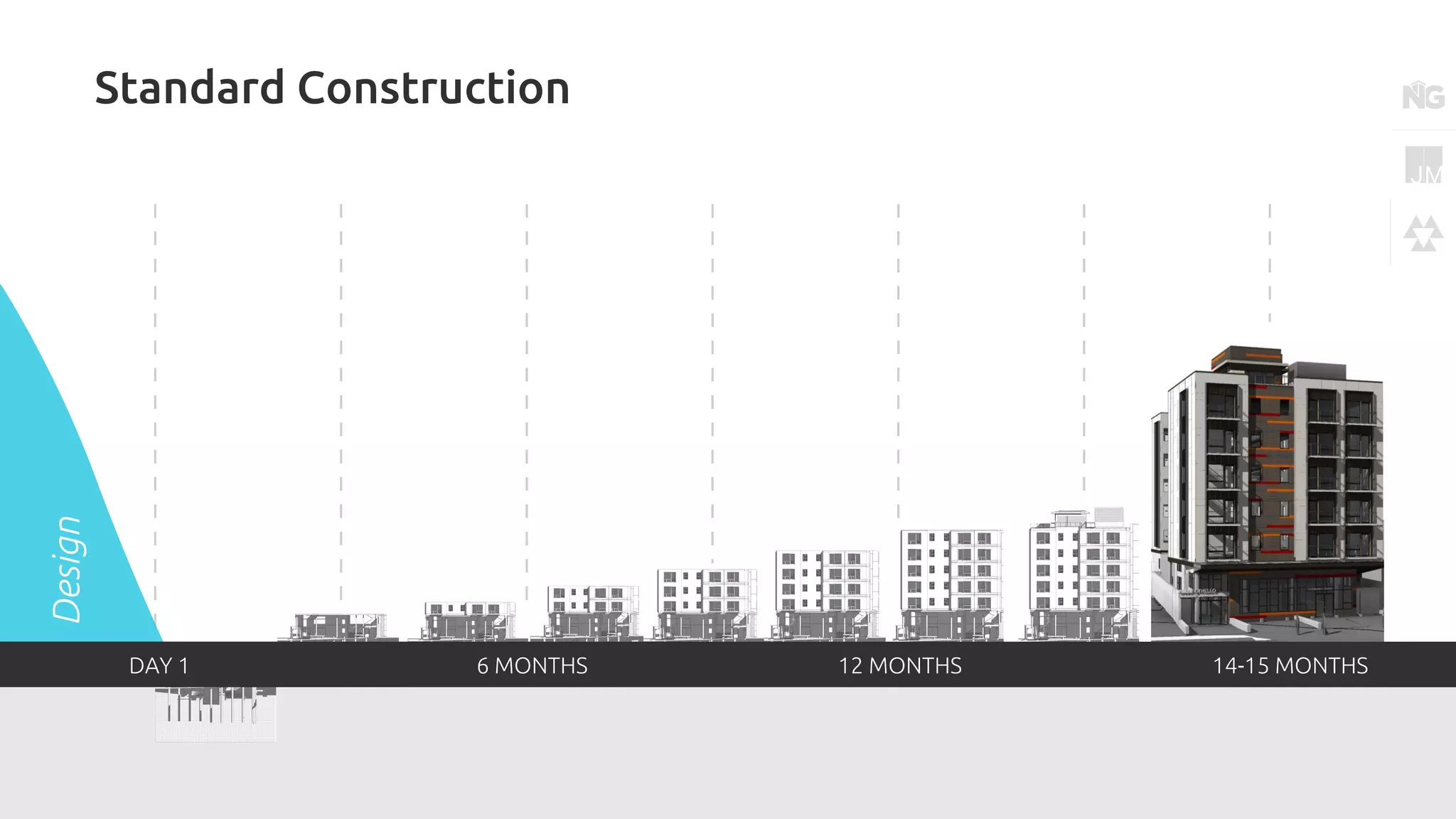
Design
DAY 1 6 MONTHS 12 MONTHS 14-15 MONTHS
Standard Construction
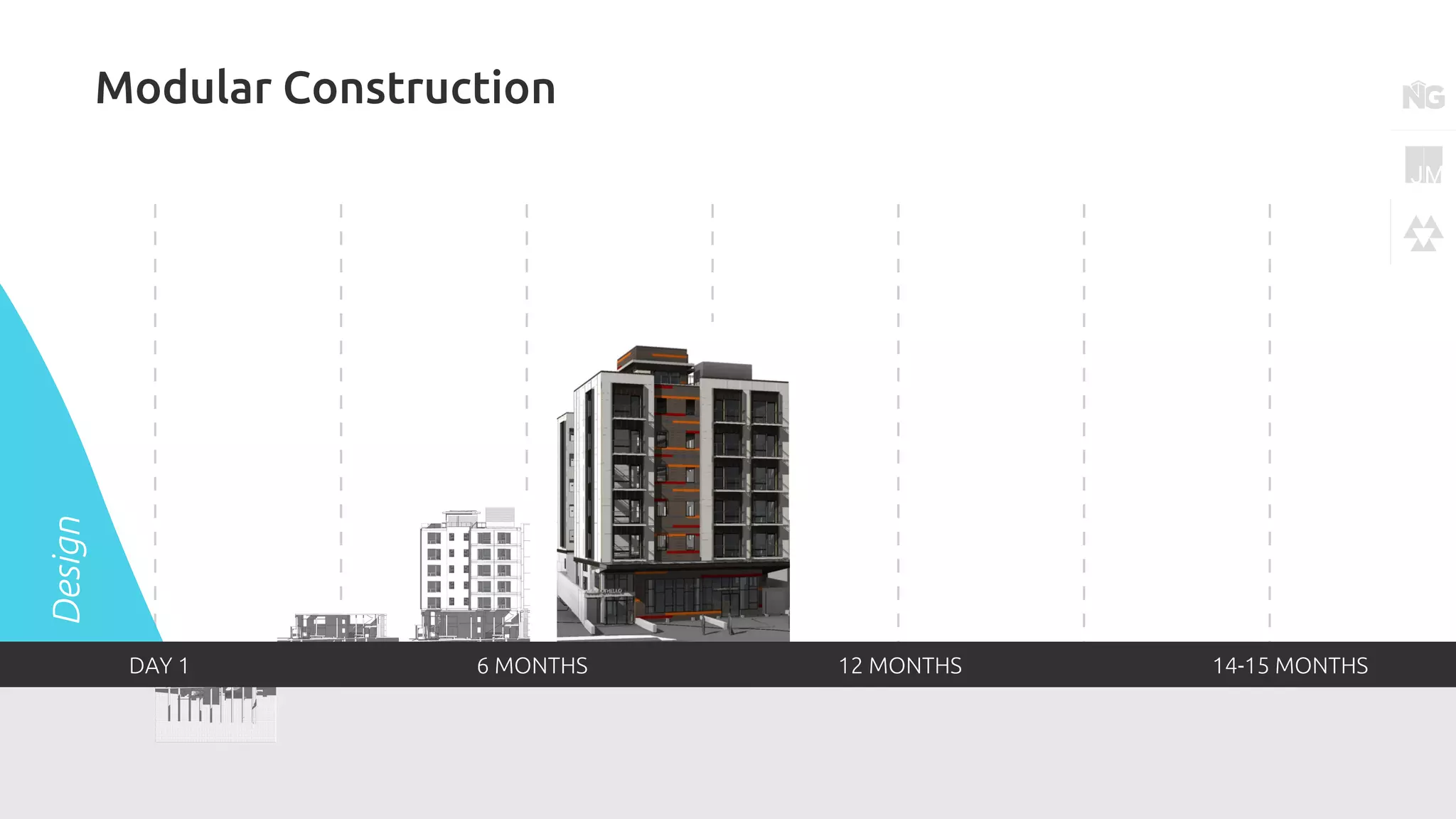
Design
DAY 1 6 MONTHS 12 MONTHS 14-15 MONTHS
Modular Construction
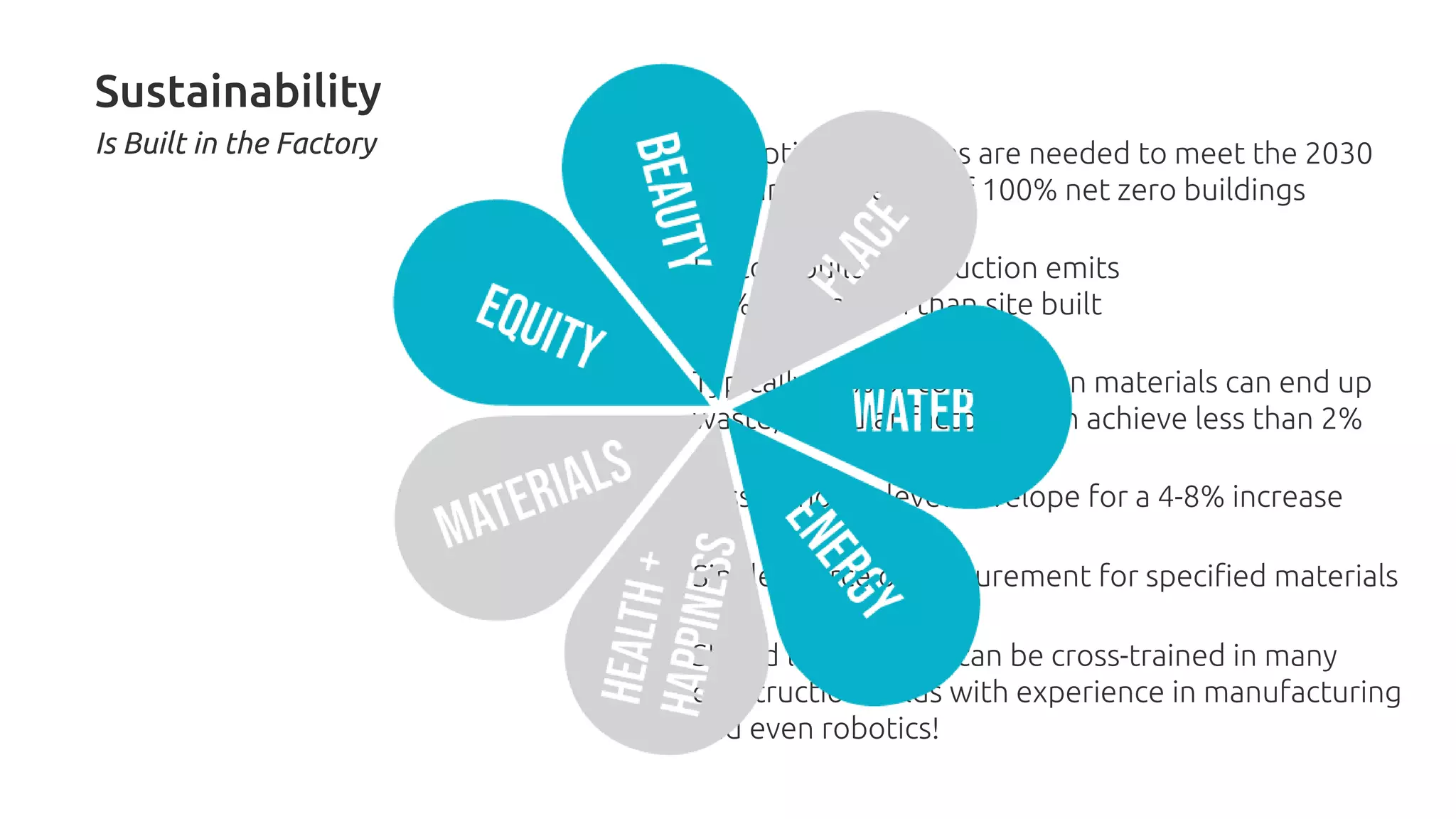
Disruptive strategies are needed to meet the 2030
building challenge of 100% net zero buildings
Factory built construction emits
43% less carbon than site built
Typically 10% of construction materials can end up
waste, modular factories can achieve less than 2%
Passive house level envelope for a 4-8% increase
Single source of procurement for specified materials
Skilled labor trades can be cross-trained in many
construction fields with experience in manufacturing
and even robotics!
Sustainability
Is Built in the Factory
Design:
It’s in the Details
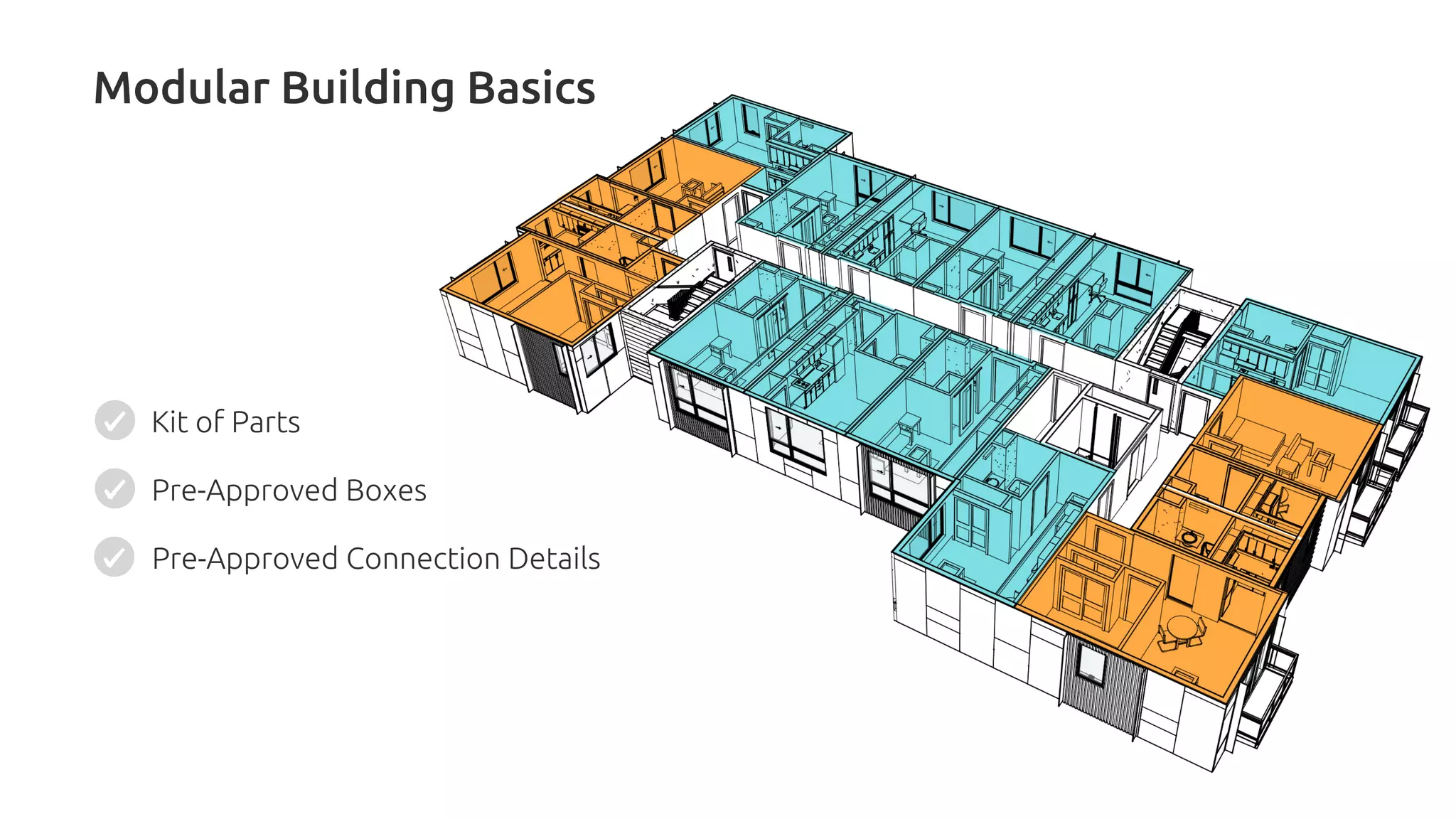
Modular Building Basics
Kit of Parts
Pre-Approved Boxes
Pre-Approved Connection Details
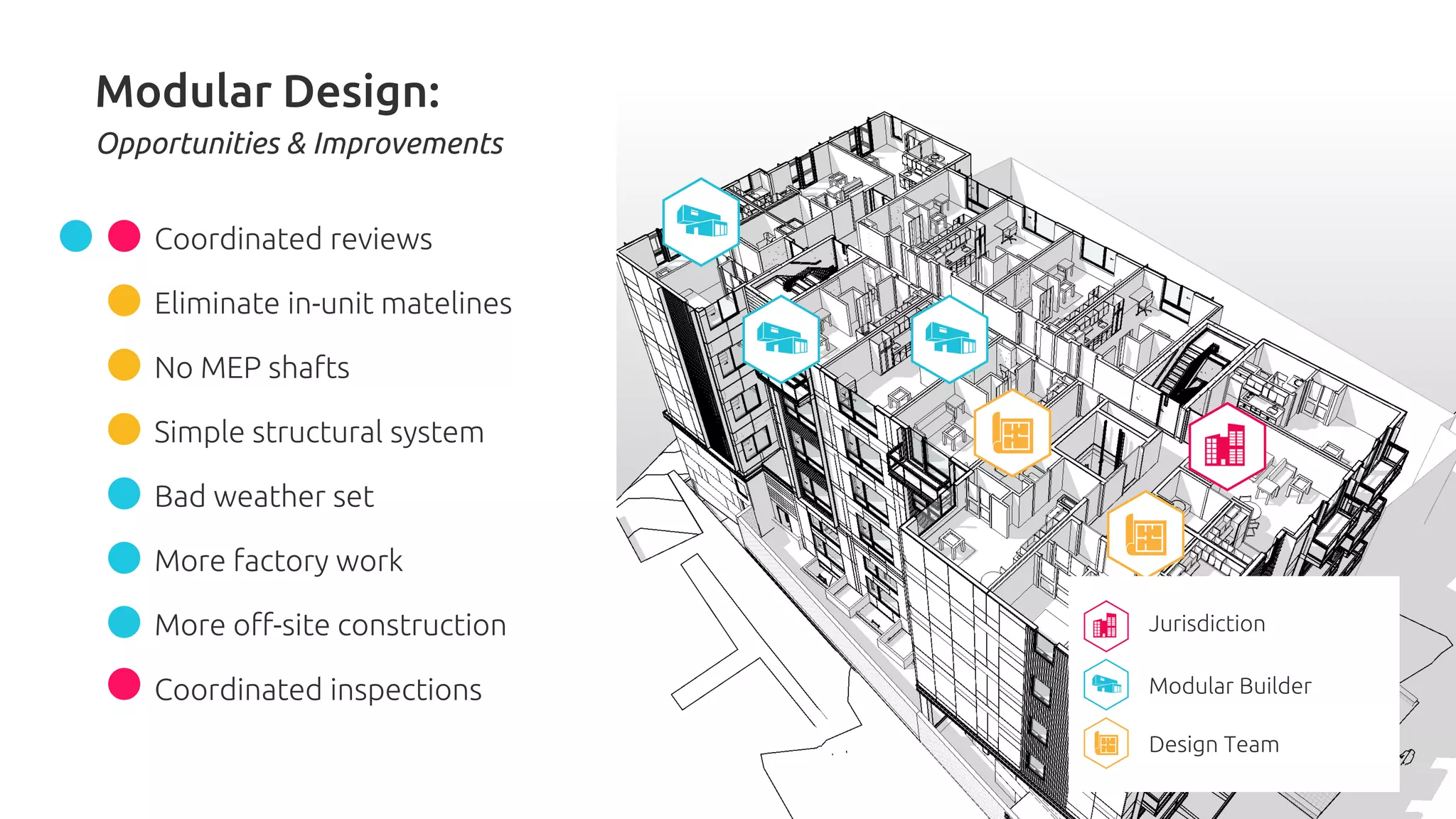
Jurisdiction
Modular Builder
Design Team
Coordinated reviews
Eliminate in-unit matelines
No MEP shafts
Simple structural system
Bad weather set
More factory work
More off-site construction
Coordinated inspections
Modular Design:
Opportunities & Improvements
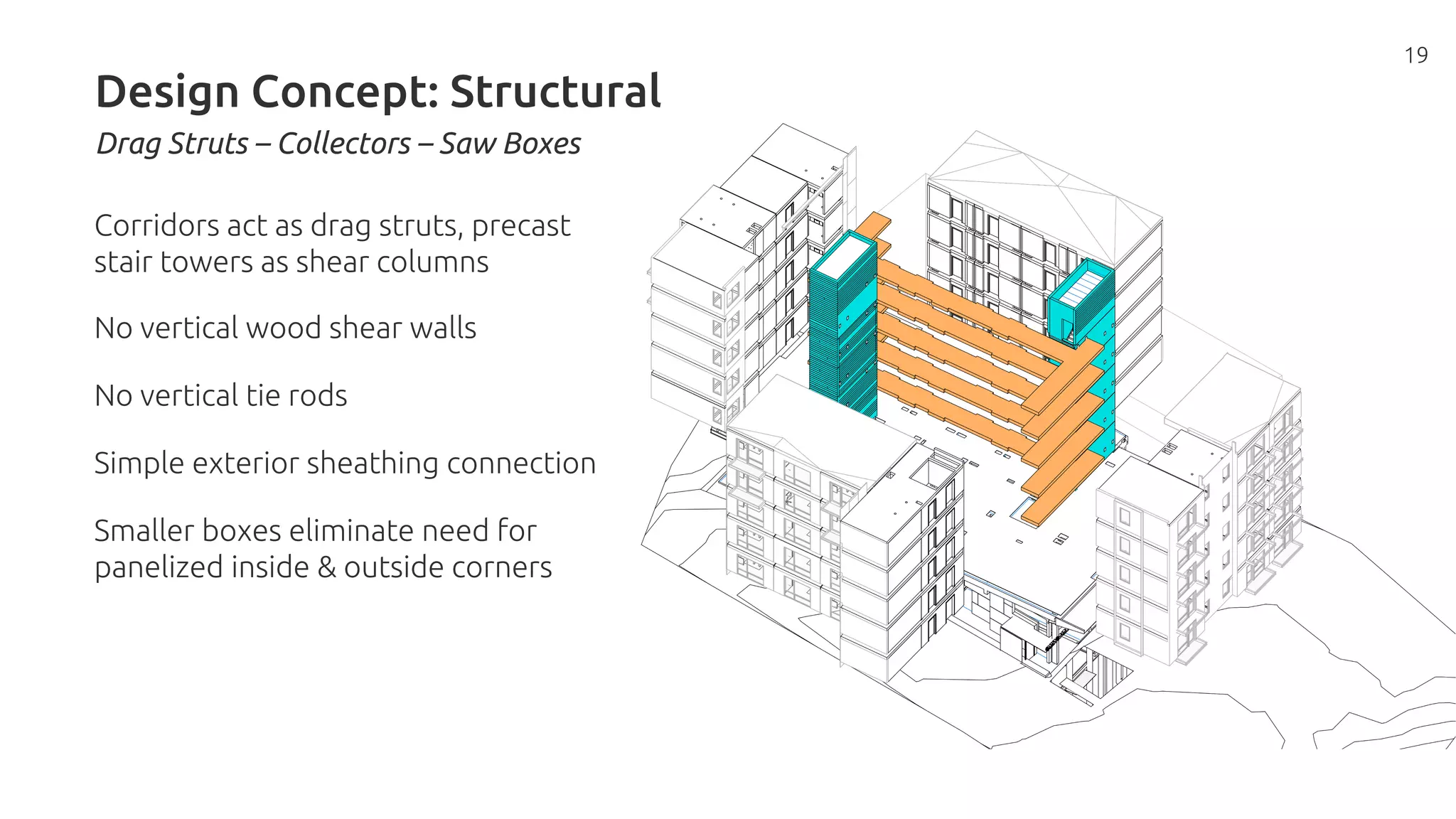
Corridors act as drag struts, precast
stair towers as shear columns
No vertical wood shear walls
No vertical tie rods
Simple exterior sheathing connection
Smaller boxes eliminate need for
panelized inside & outside corners
19
Design Concept: Structural
Drag Struts – Collectors – Saw Boxes
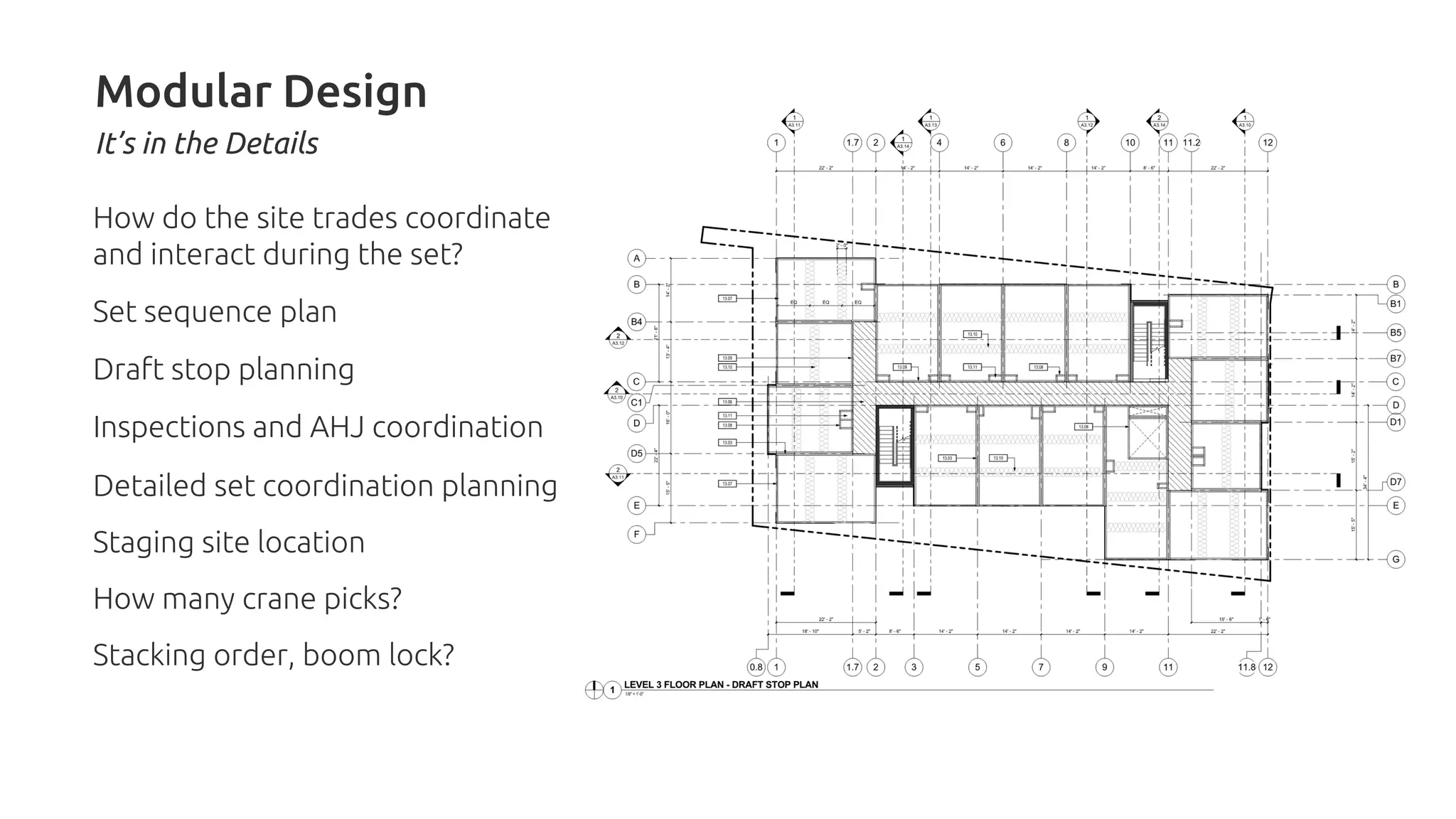
How do the site trades coordinate
and interact during the set?
Set sequence plan
Draft stop planning
Inspections and AHJ coordination
Detailed set coordination planning
Staging site location
How many crane picks?
Stacking order, boom lock?
Modular Design
It’s in the Details
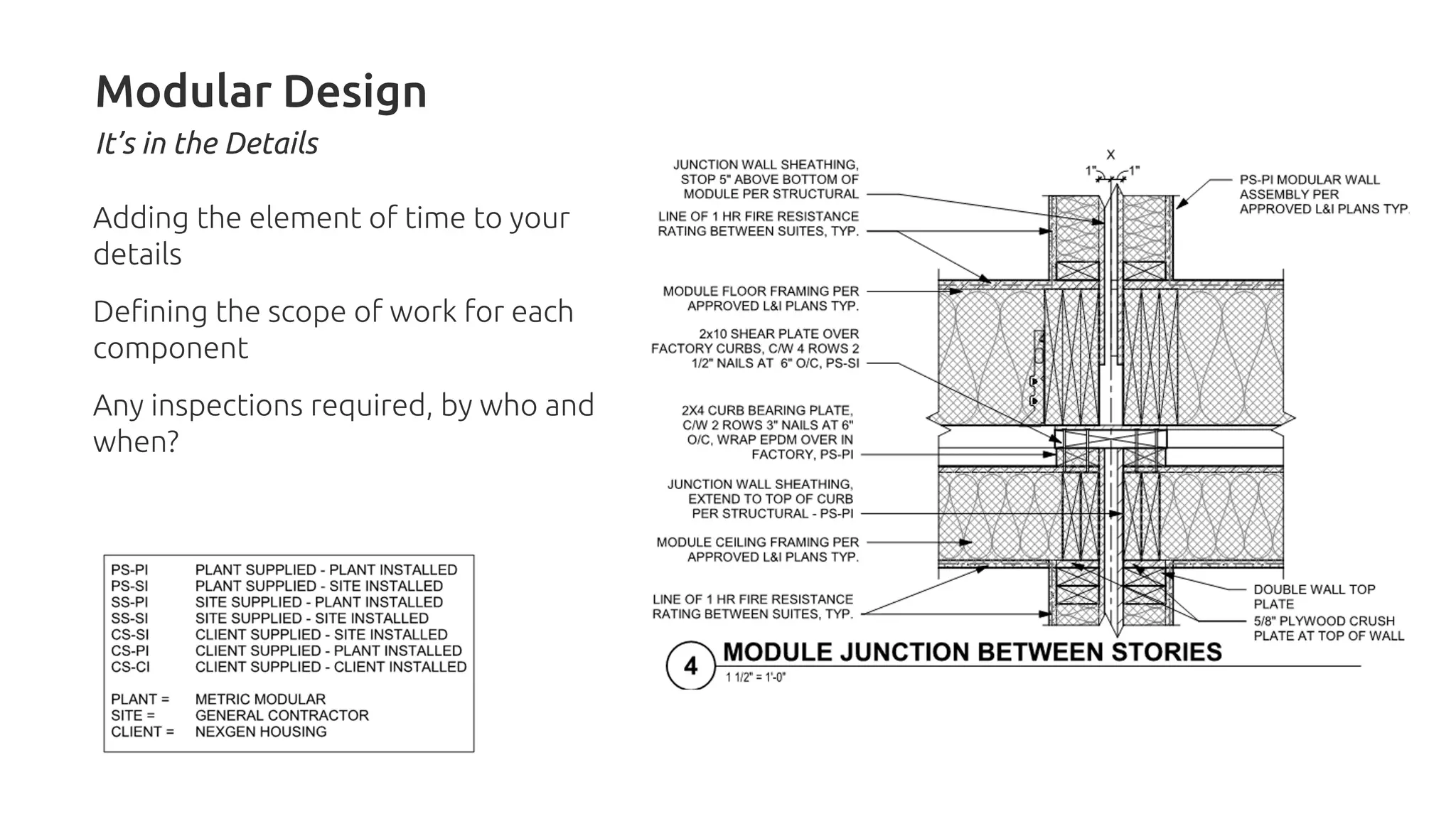
Adding the element of time to your
details
Defining the scope of work for each
component
Any inspections required, by who and
when?
Modular Design
It’s in the Details
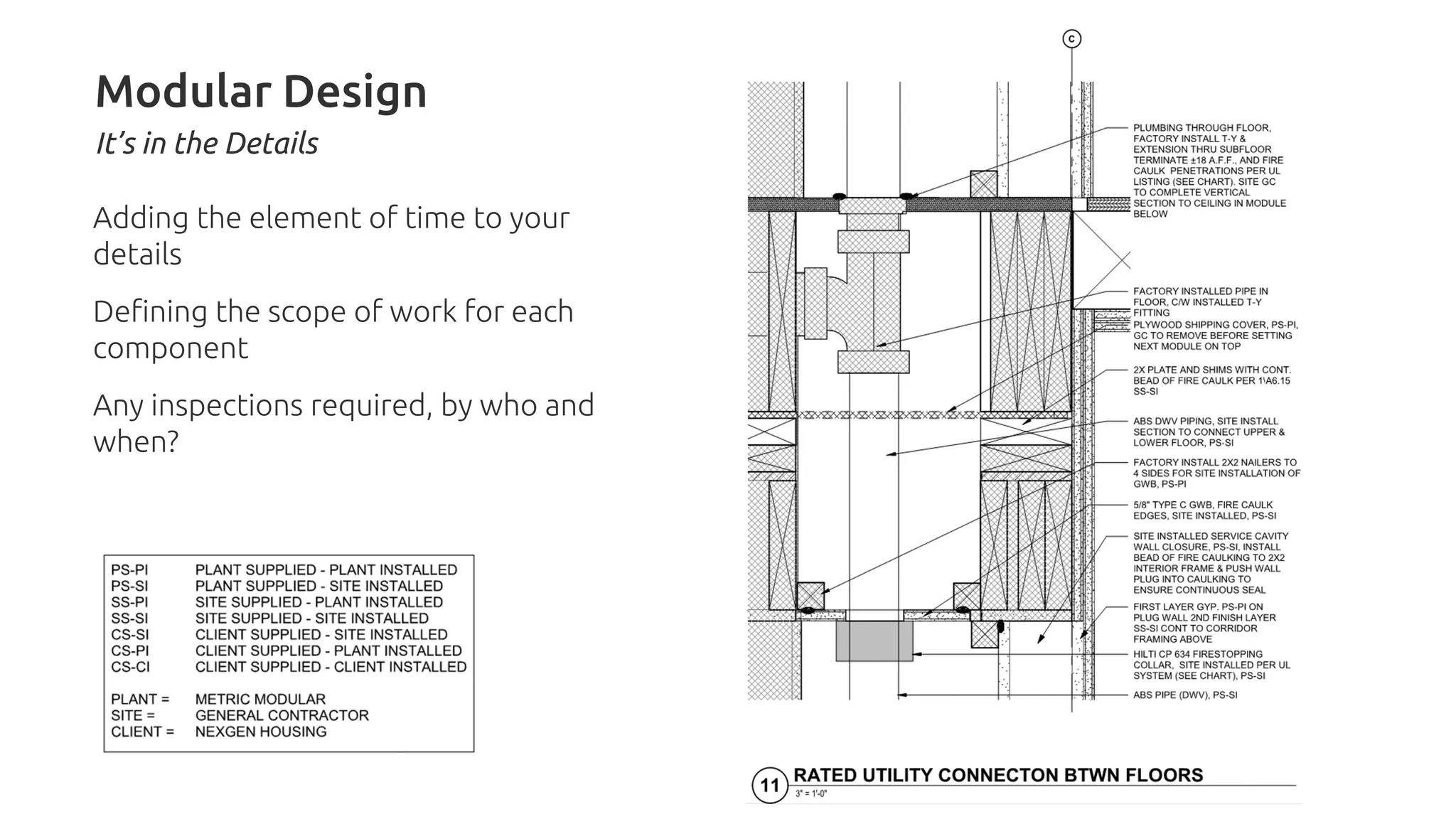
Adding the element of time to your
details
Defining the scope of work for each
component
Any inspections required, by who and
when?
Modular Design
It’s in the Details
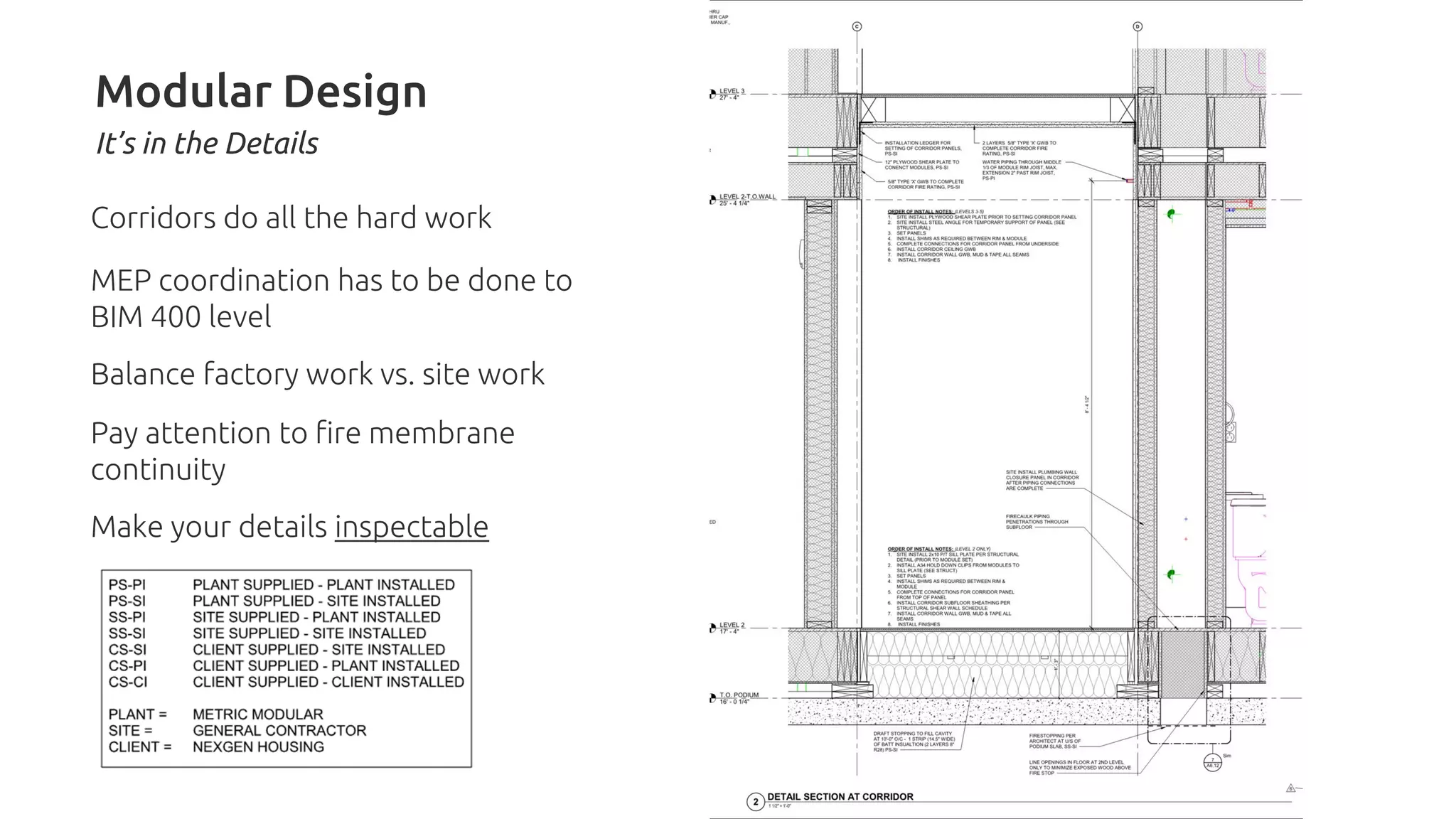
Corridors do all the hard work
MEP coordination has to be done to
BIM 400 level
Balance factory work vs. site work
Pay attention to fire membrane
continuity
Make your details inspectable
Modular Design
It’s in the Details
Modular Team Fit:
Who’s In, Who’s Out?
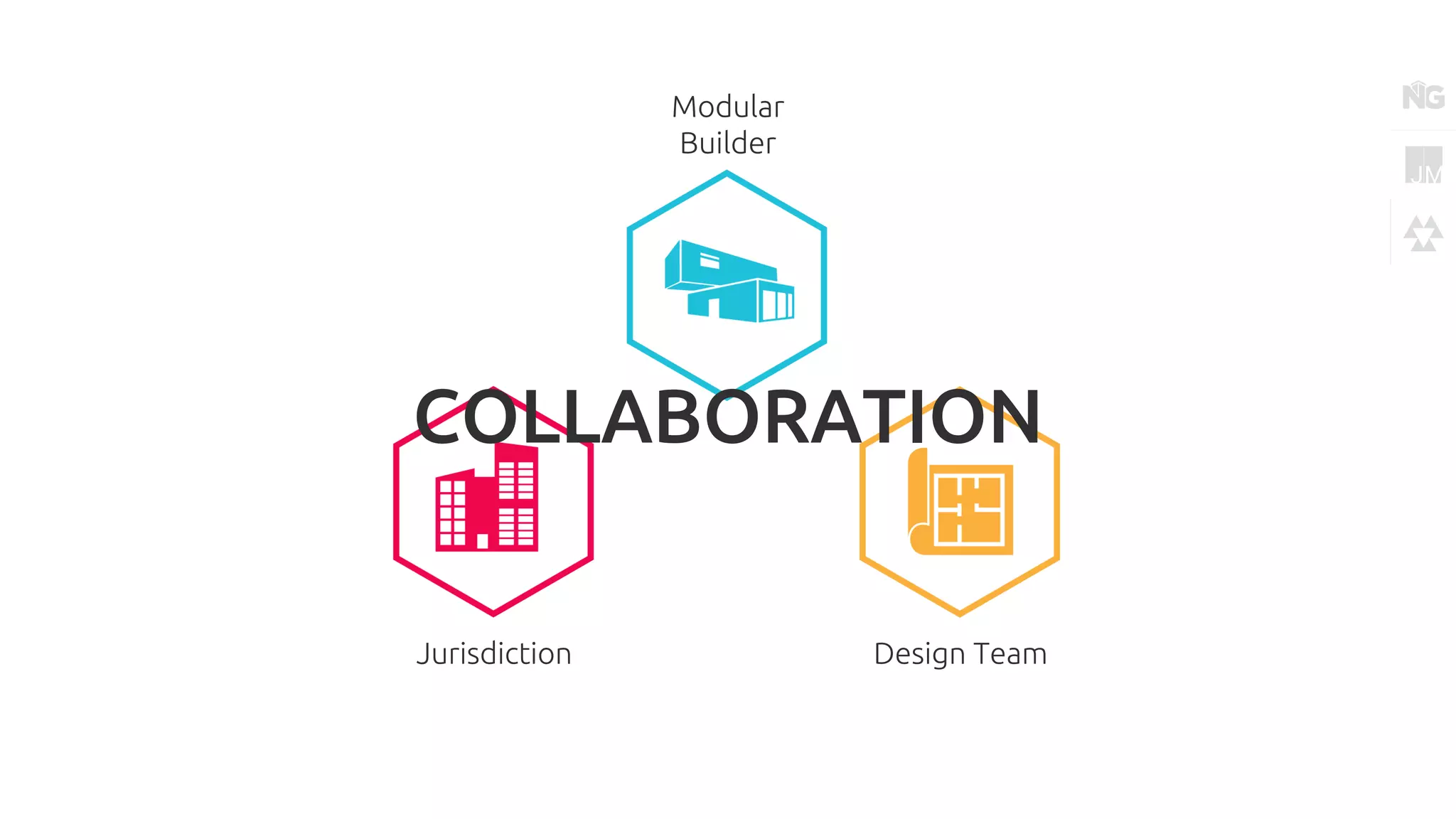
Modular
Builder
Design TeamJurisdiction
COLLABORATION
The Why & The How to Build
A Prototype
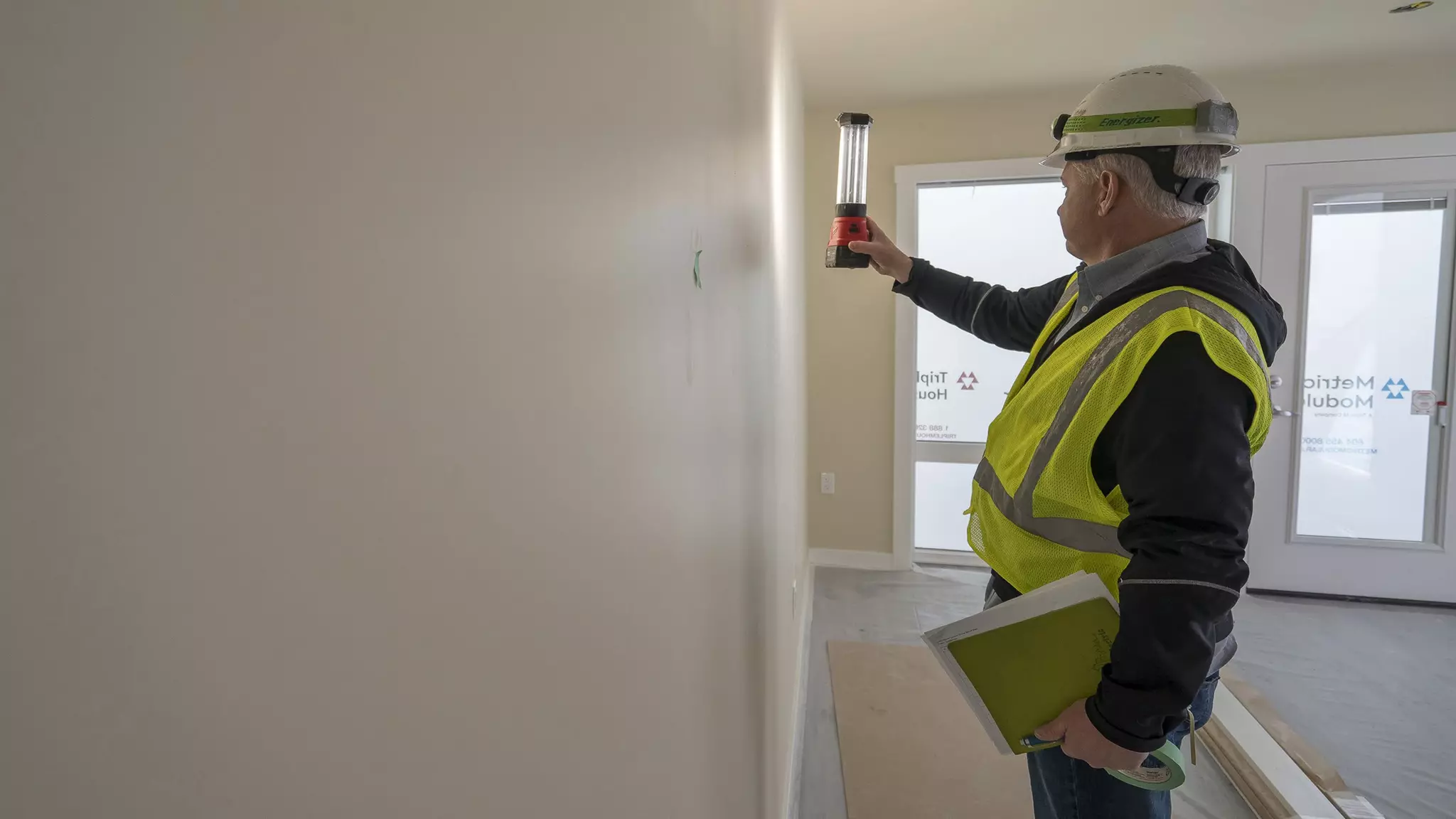
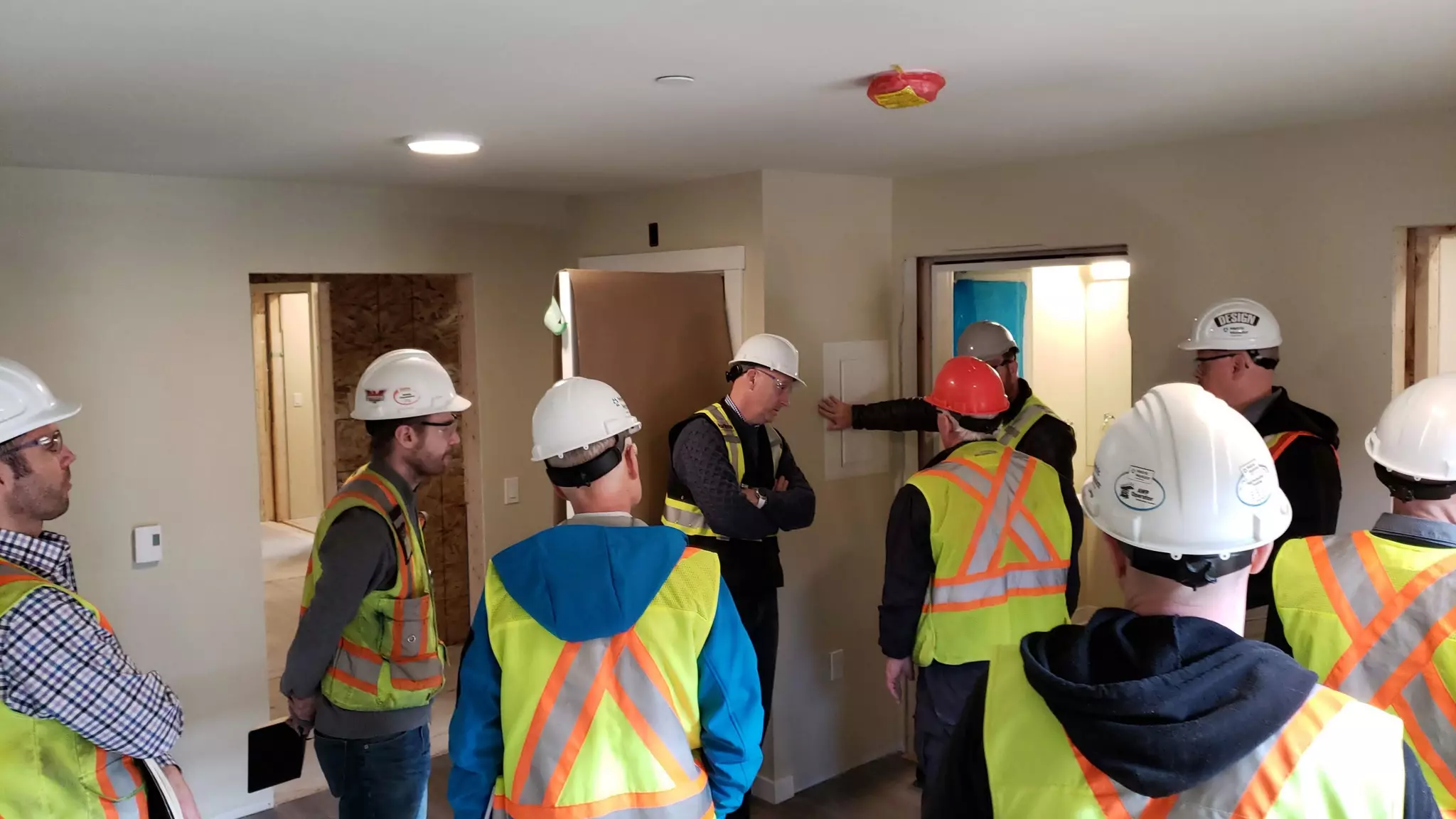
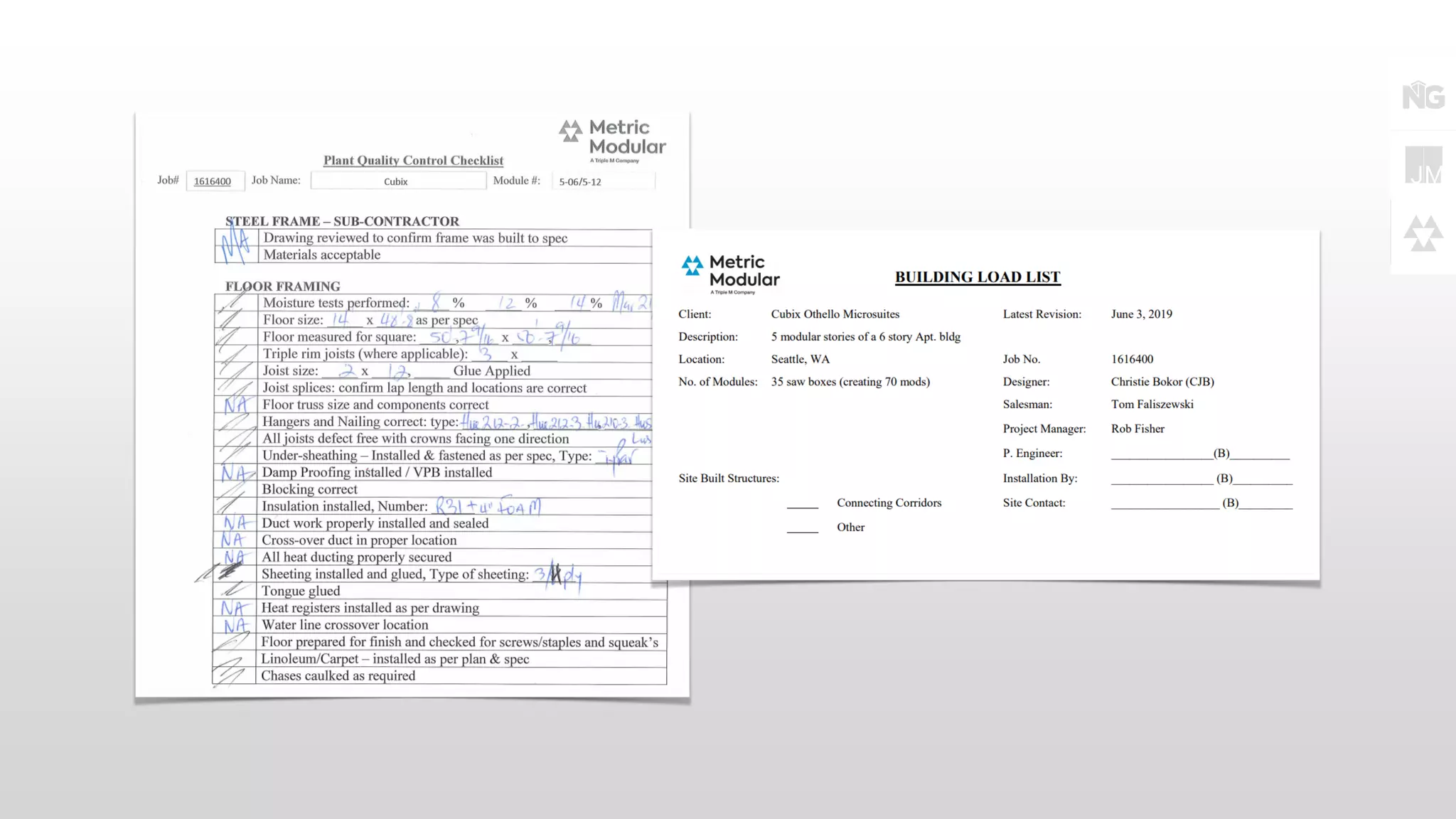
Prototype
Schedule
Where do you schedule a prototype in?01
Understand Why to Build a Prototype
Is it for constructibility, or for design elements?02
How to Build a Prototype
Understanding owner-supplied materials vs. factory-supplied
and disruption to the process
03
Costs of a Prototype
Is it a stand-alone module or does it get incorporated in?04
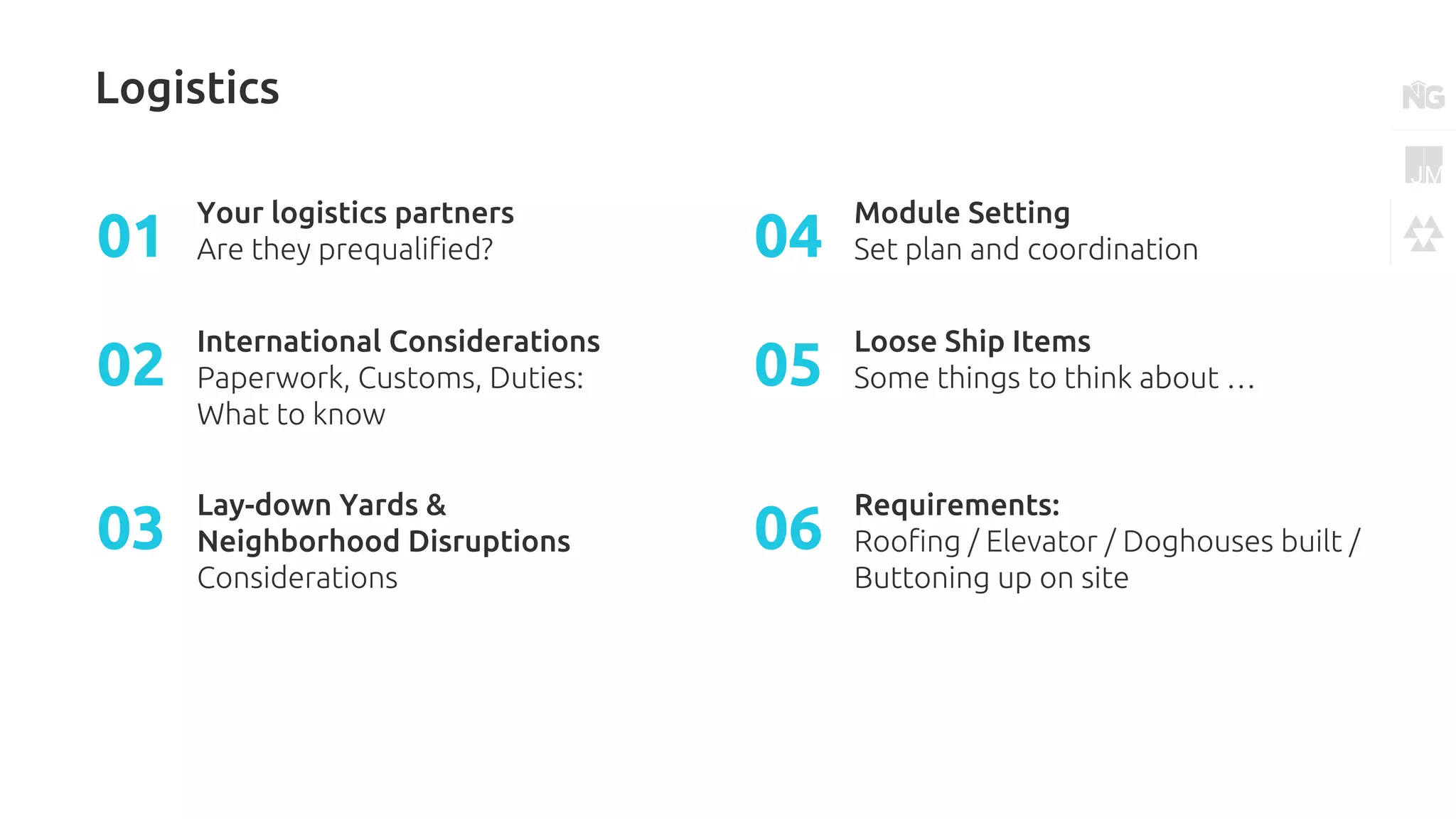
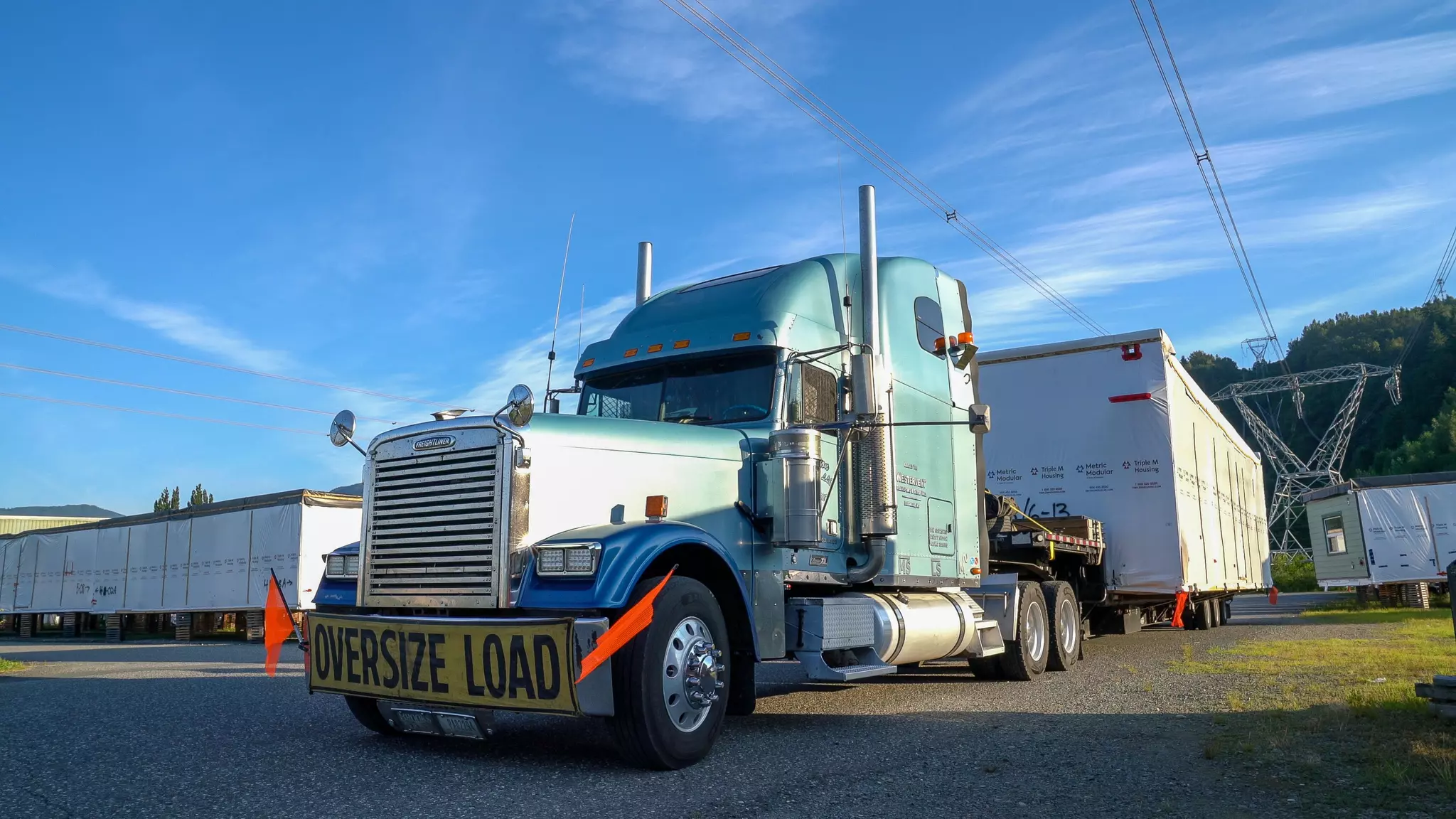
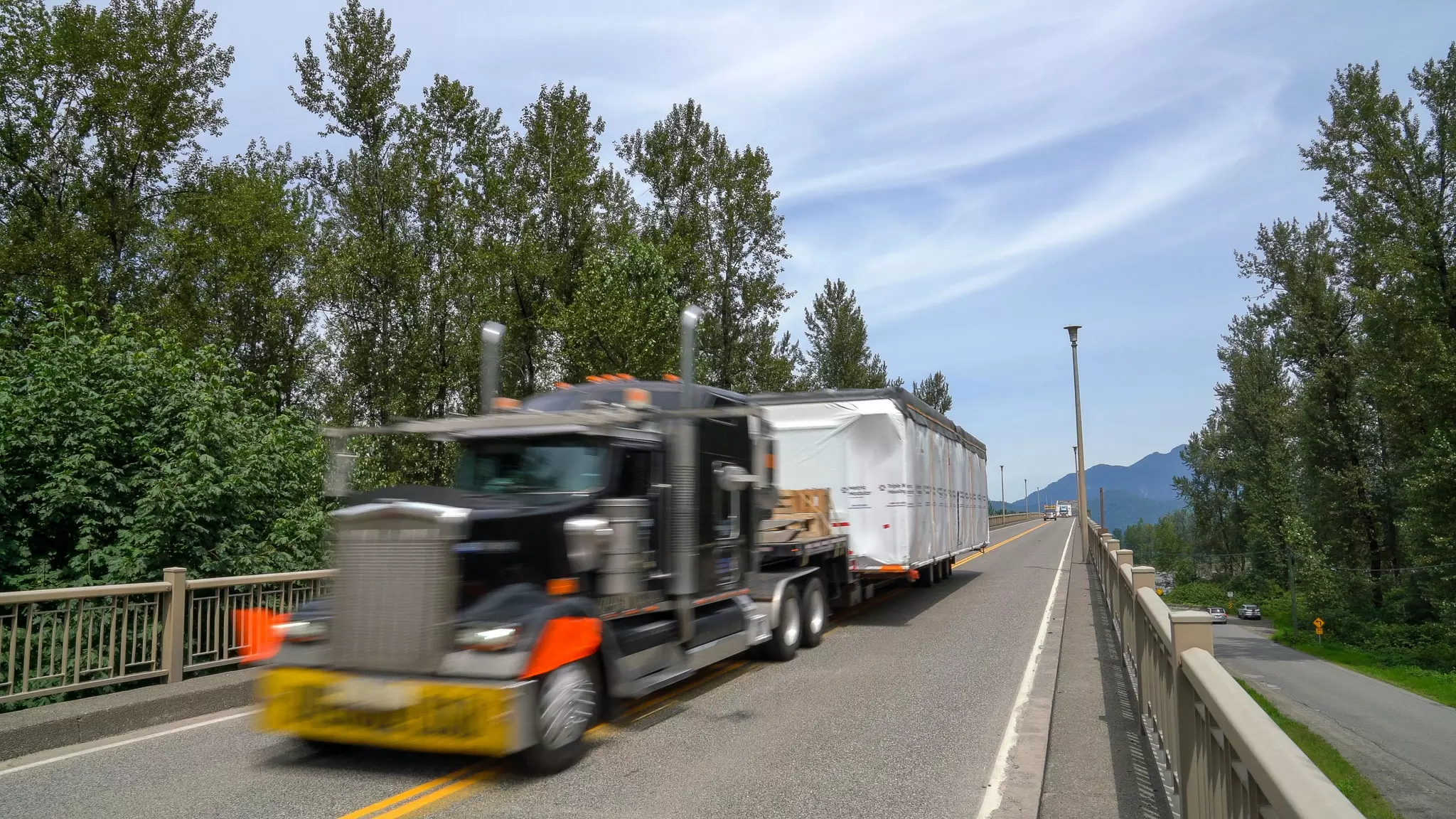
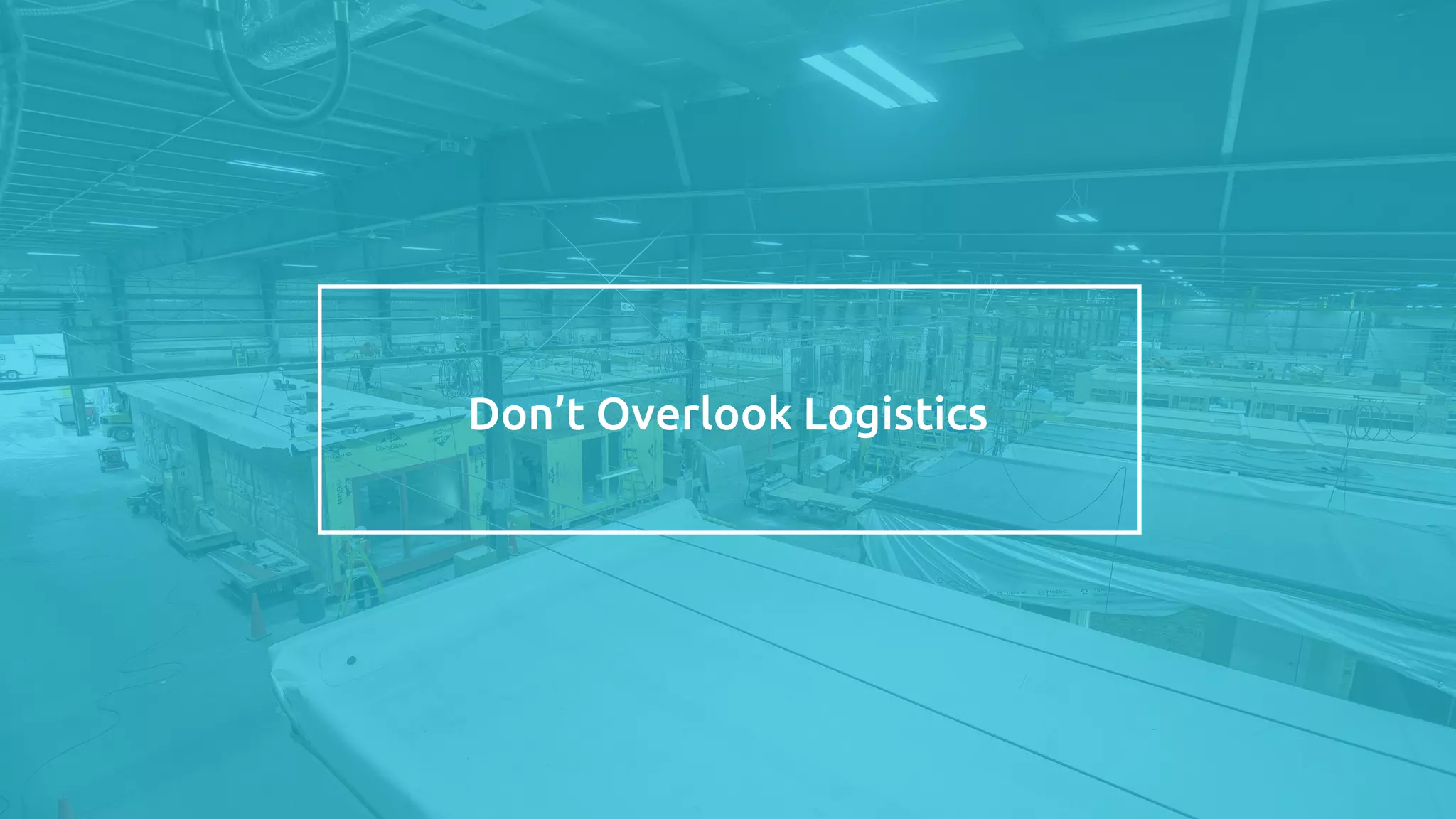
Don’t Overlook Logistics
Logistics
Your logistics partners
Are they prequalified?01
International Considerations
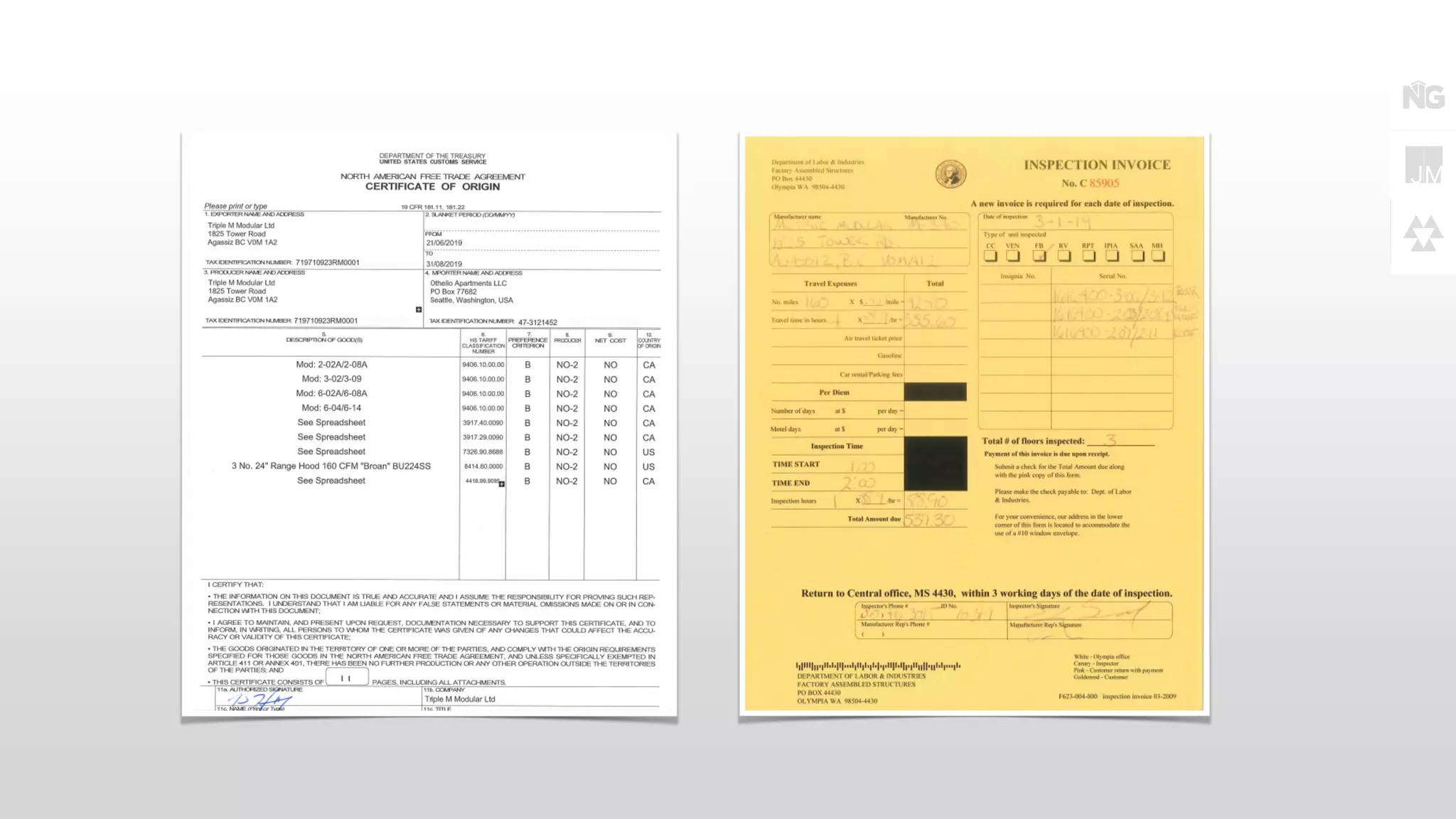
Paperwork, Customs, Duties:
What to know
02
Lay-down Yards &
Neighborhood Disruptions
Considerations
03
Module Setting
Set plan and coordination04
Loose Ship Items
Some things to think about …05
Requirements:
Roofing / Elevator / Doghouses built /
Buttoning up on site
06
How Do We Expedite Permitting?
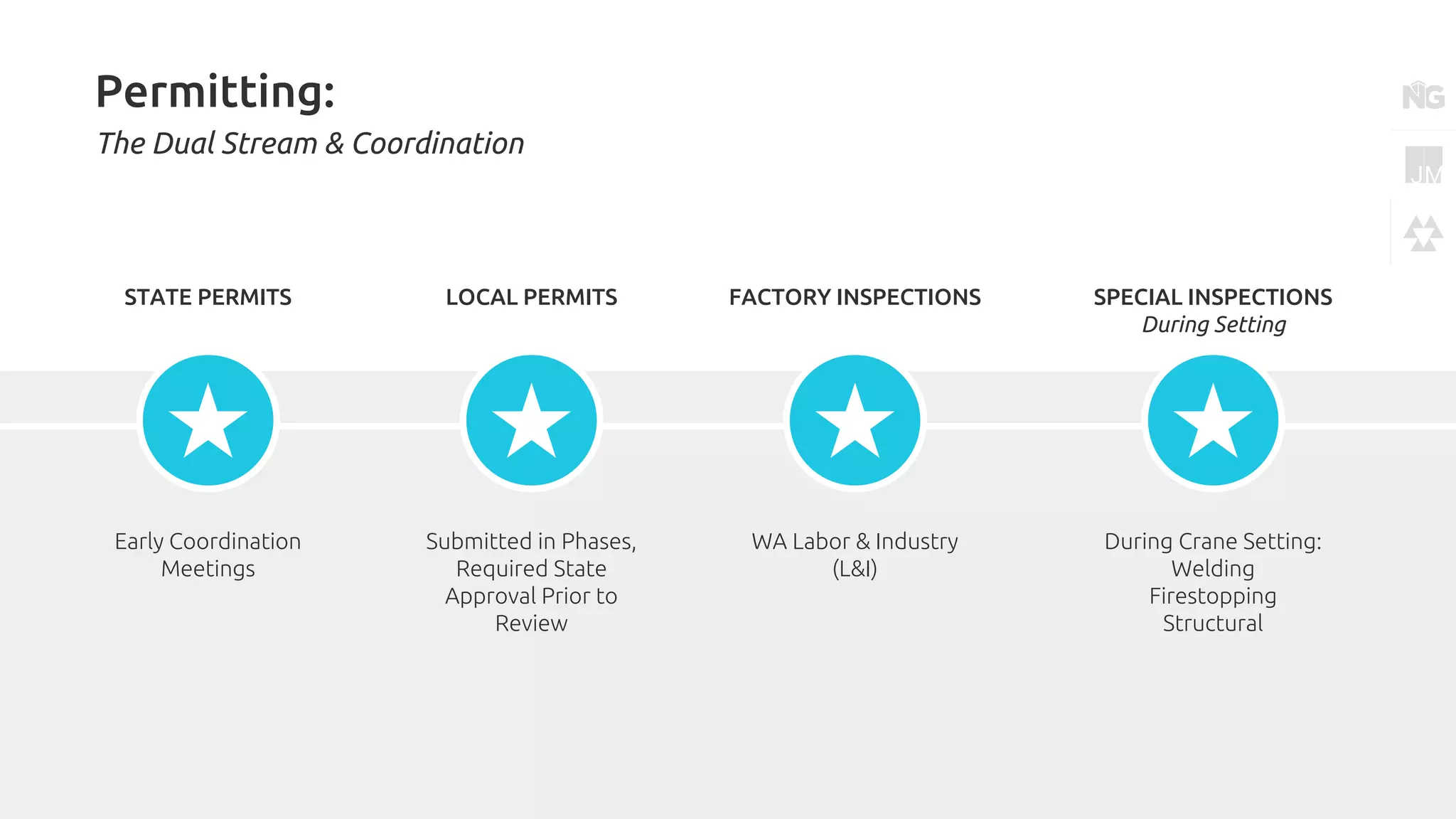
Permitting:
The Dual Stream & Coordination
Early Coordination
Meetings
STATE PERMITS
Submitted in Phases,
Required State
Approval Prior to
Review
LOCAL PERMITS
WA Labor & Industry
(L&I)
FACTORY INSPECTIONS
During Crane Setting:
Welding
Firestopping
Structural
SPECIAL INSPECTIONS
During Setting
35% of Time in Permitting
Is spent Producing Drawings
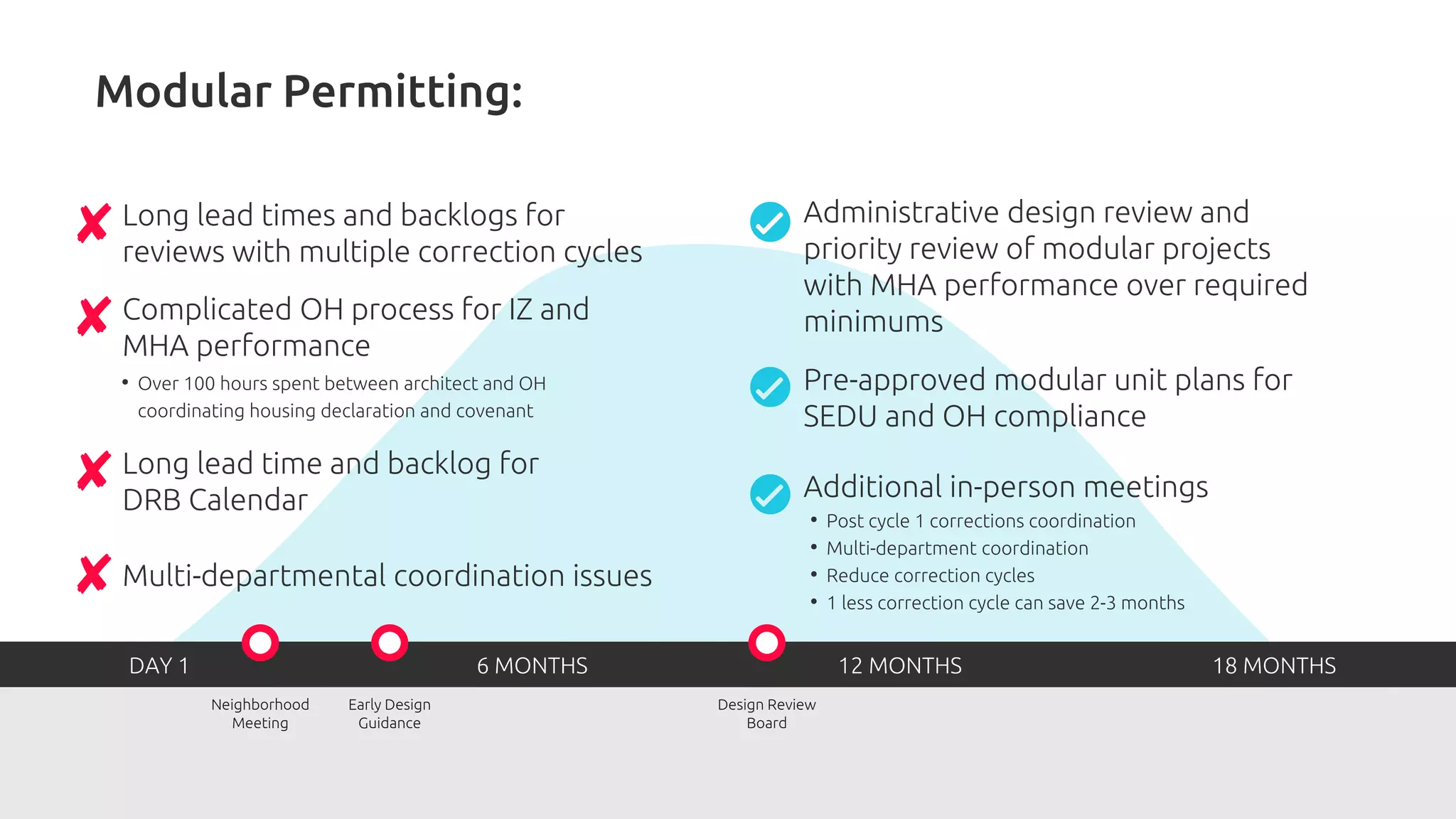
Administrative design review and
priority review of modular projects
with MHA performance over required
minimums
Pre-approved modular unit plans for
SEDU and OH compliance
Additional in-person meetings
• Post cycle 1 corrections coordination
• Multi-department coordination
• Reduce correction cycles
• 1 less correction cycle can save 2-3 months
Long lead times and backlogs for
reviews with multiple correction cycles
• Over 100 hours spent between architect and OH
coordinating housing declaration and covenant
Complicated OH process for IZ and
MHA performance
Long lead time and backlog for
DRB Calendar
Multi-departmental coordination issues
DAY 1 6 MONTHS 12 MONTHS 18 MONTHS
Neighborhood
Meeting
Early Design
Guidance
Design Review
Board
Modular Permitting:
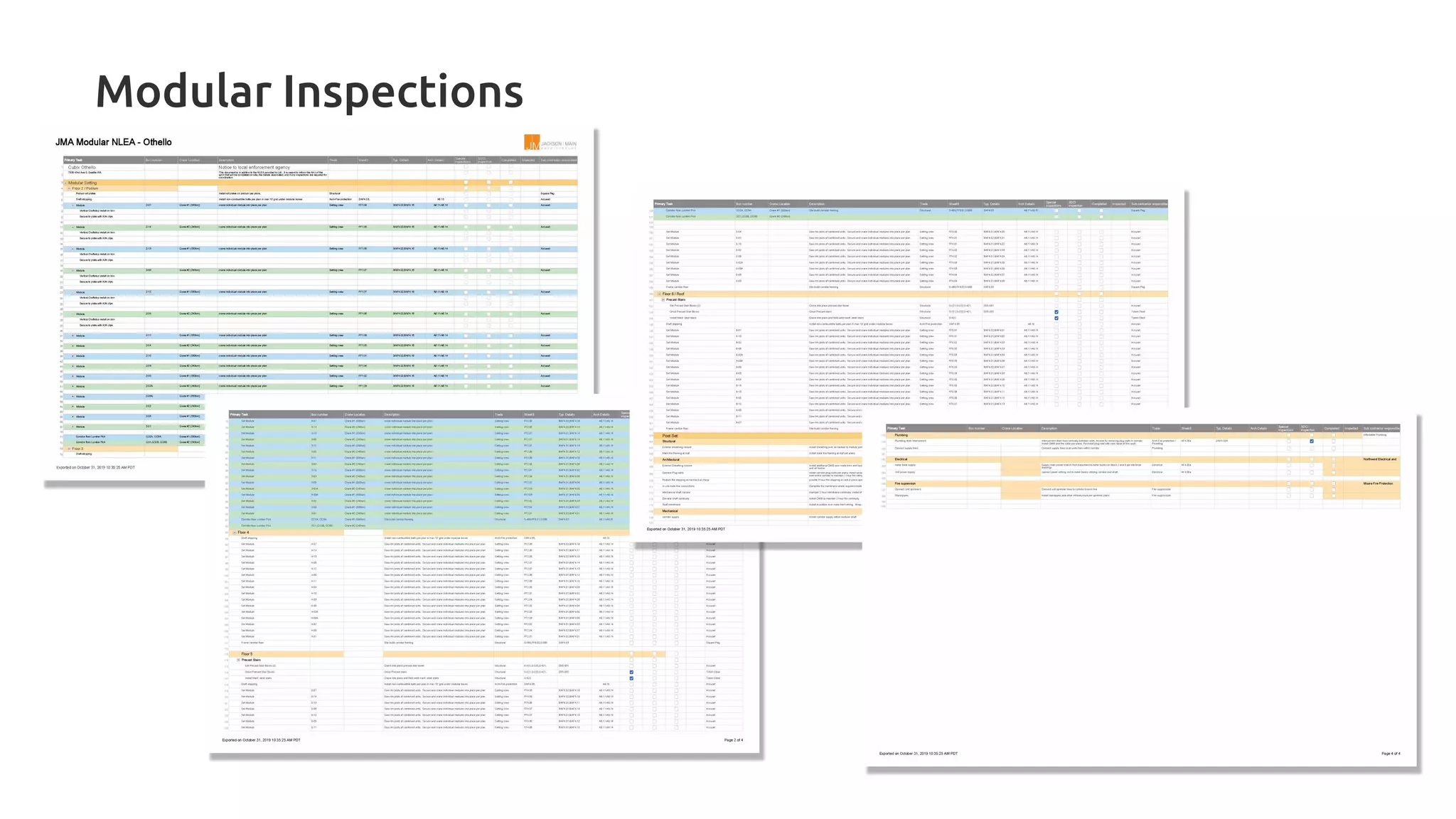
Modular Inspections
Challenges Outside the Box:
Modular Financing
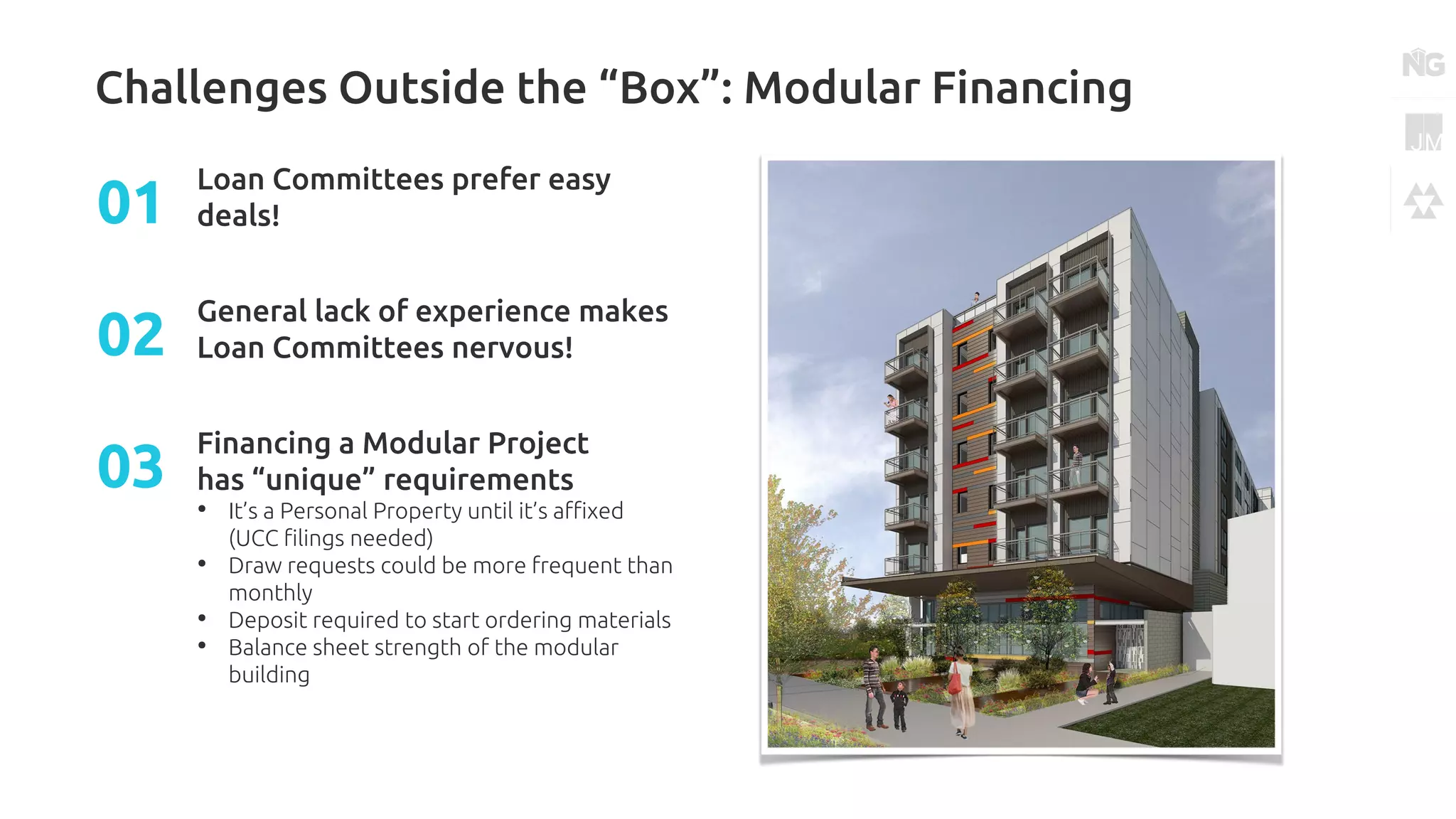
Challenges Outside the “Box”: Modular Financing
Loan Committees prefer easy
deals!01
General lack of experience makes
Loan Committees nervous!02
Financing a Modular Project
has “unique” requirements
• It’s a Personal Property until it’s affixed
(UCC filings needed)
• Draw requests could be more frequent than
monthly
• Deposit required to start ordering materials
• Balance sheet strength of the modular
building
03
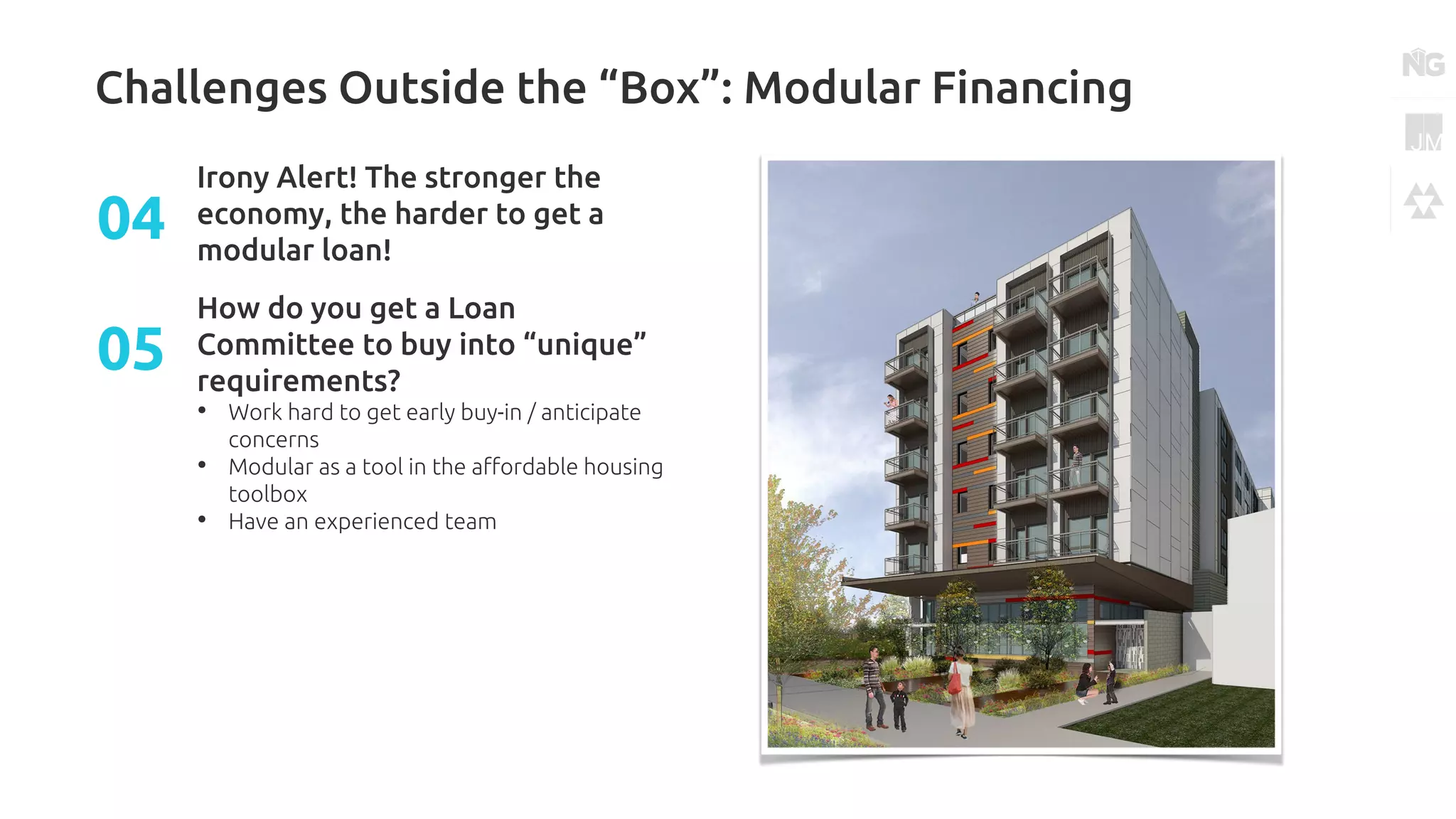
Challenges Outside the “Box”: Modular Financing
Irony Alert! The stronger the
economy, the harder to get a
modular loan!
04
How do you get a Loan
Committee to buy into “unique”
requirements?
• Work hard to get early buy-in / anticipate
concerns
• Modular as a tool in the affordable housing
toolbox
• Have an experienced team
05
What Have We Learned?
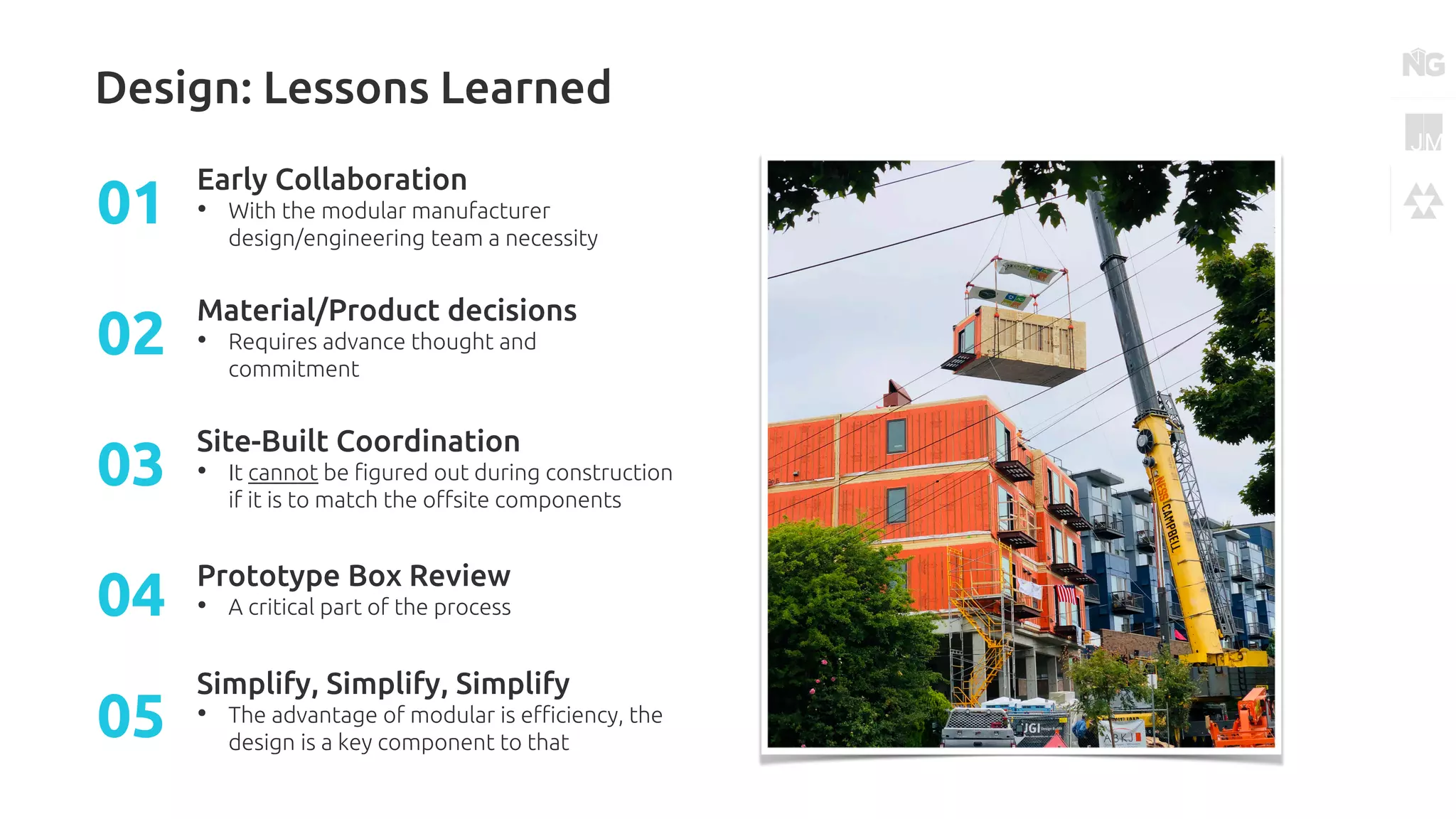
Design: Lessons Learned
Early Collaboration
• With the modular manufacturer
design/engineering team a necessity
01
Material/Product decisions
• Requires advance thought and
commitment
02
Site-Built Coordination
• It cannot be figured out during construction
if it is to match the offsite components
03
Prototype Box Review
• A critical part of the process04
Simplify, Simplify, Simplify
• The advantage of modular is efficiency, the
design is a key component to that
05
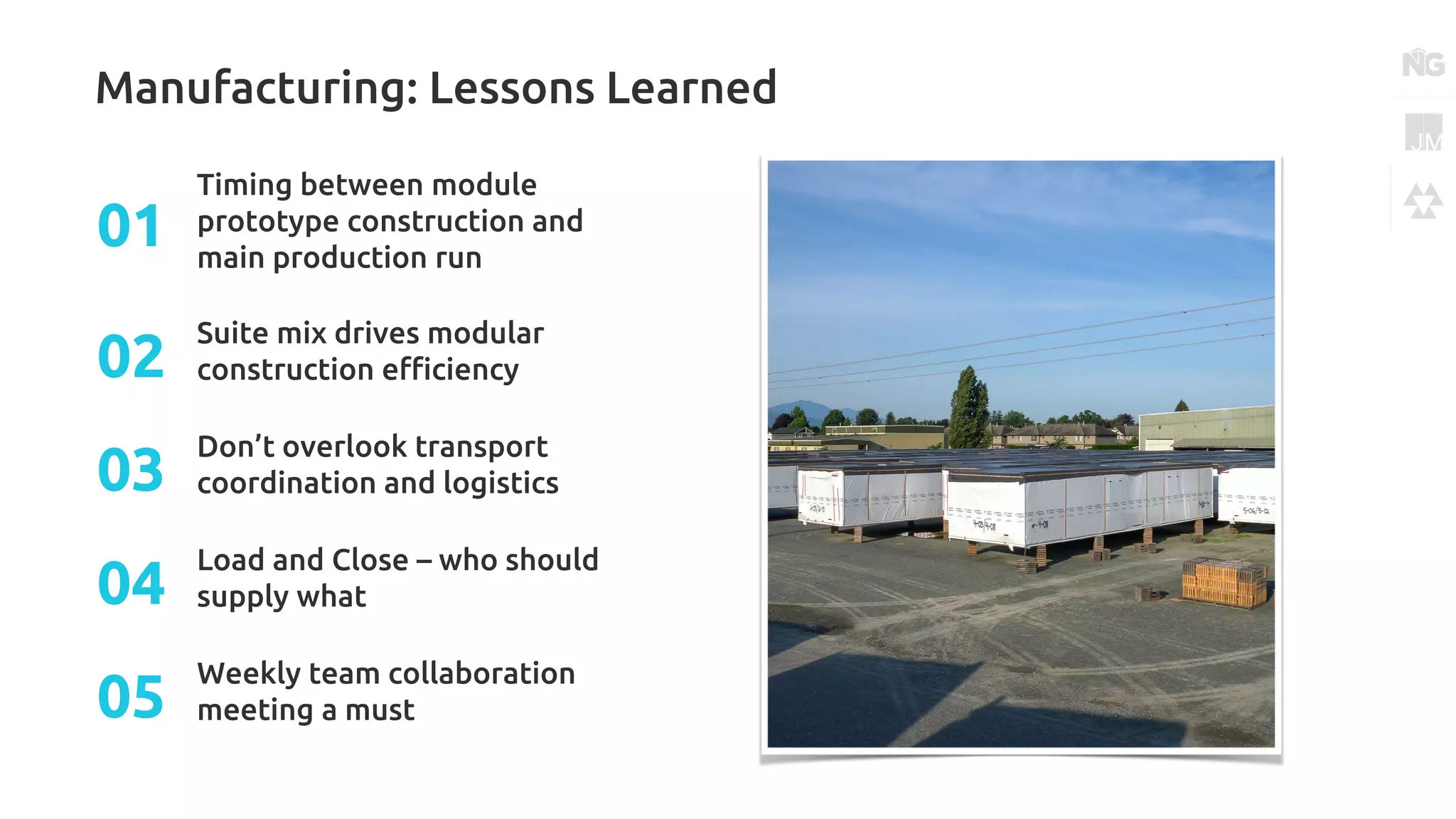
Manufacturing: Lessons Learned
Timing between module
prototype construction and
main production run
01
Suite mix drives modular
construction efficiency02
Don’t overlook transport
coordination and logistics03
Load and Close – who should
supply what04
Weekly team collaboration
meeting a must05
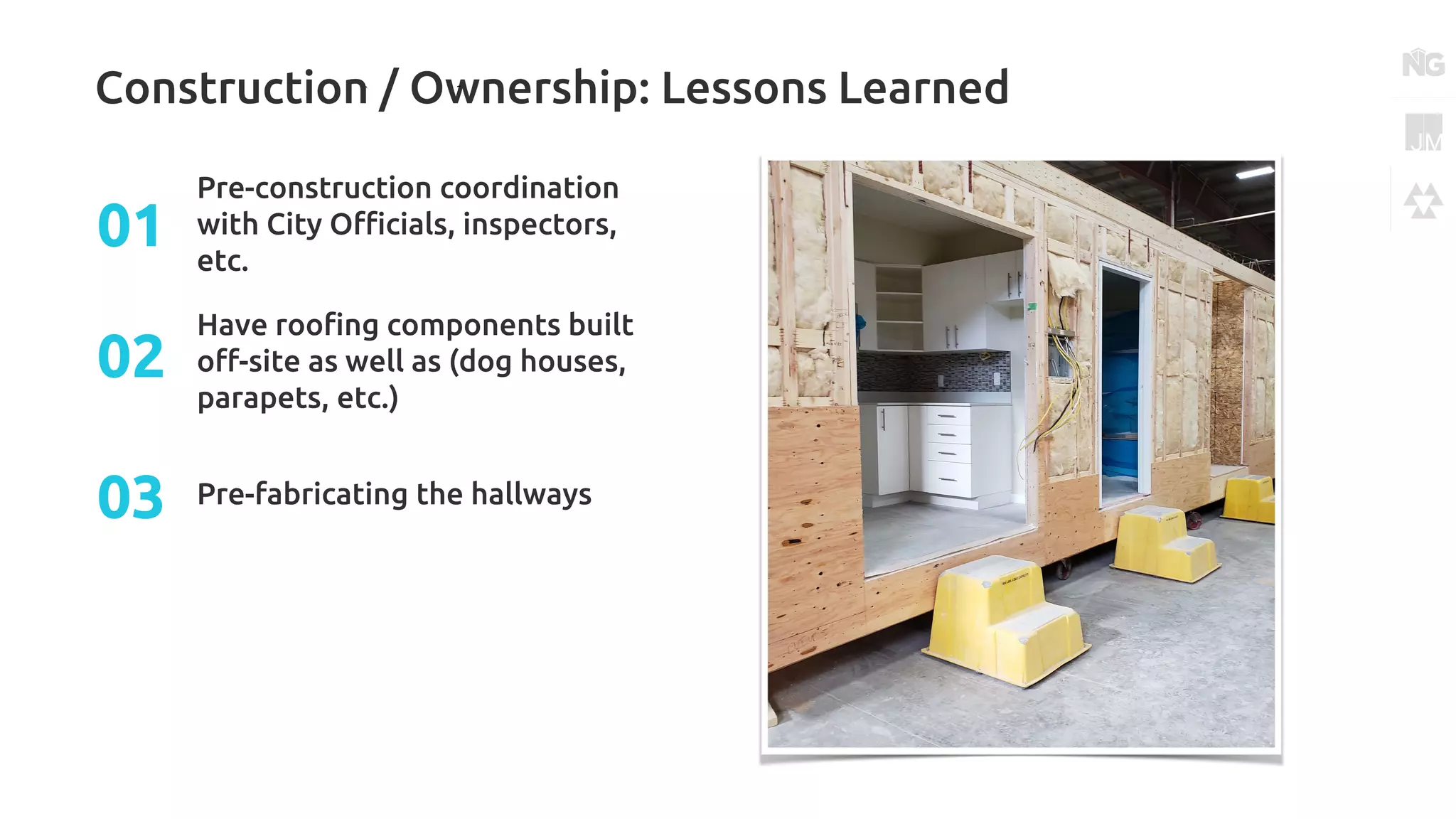
Construction / Ownership: Lessons Learned
Pre-construction coordination
with City Officials, inspectors,
etc.
01
Have roofing components built
off-site as well as (dog houses,
parapets, etc.)
02
Pre-fabricating the hallways03
Questions?
Thank You!
This concludes our Multi-Family Case Study

Modular Construction Cubix Othello Multifamily Case Study

  • 1.
    Multi-Family Case Study: CUBIXOTHELLO Sponsored by Housing Development Consortium
  • 2.
    Your Presenters Matthew Laase Principal Jackson| Main Architecture Craig Mitchell Director Innovative Solutions Metric Modular Daniel Stoner NexGen Housing Partners
  • 3.
  • 5.
    13 How Can WeBuild Affordable And Market Rate?
  • 6.
    Innovative Strategies SuchAs Modular Give Us an Advantage
  • 7.
    Why Aren’t MoreDevelopers Pursuing Modular?
  • 8.
    Most Modular BuildersStop After One Project … Is it an indictment of the technology? The developer? Why?
  • 9.
    The Answer isa Multi-Project Thesis Answered in 3 Phases:
  • 10.
    Multi-Project Thesis 3 Phases Proofof Concept MODULAR 1.0 Create a Set of Modular “Legos” MODULAR 2.0 Apply “Legos” to a Variety of Different Building Sites MODULAR 3.0
  • 11.
    Cubix North Park Modular1.0 108 Units 93 Efficiency Units / 15 Live / Work 4 Stories Type V-A 3 Stories of Modular Modules Set To Occupancy: 15 Months
  • 12.
    Cubix Othello Modular 2.0 6Stories, 85 Units NC3-P85 (1.3) IZ 5 Floors of Type I-A 56 Studio Units / 29 1-BDRS Modules Set in 6 Days! From MOD-Set to Occupancy: 10 Months
  • 13.
  • 14.
  • 15.
    Modular Benefits Stable Pricing $ •Factory work is done under contract • No wage requirements for factory-built structures Build in Controlled Environment • Multiple buildings can have duplicate parts ensuring brand consistency • Trade damage and sequence issues are avoided in factory Excellent Quality Control • Factory allows for high quality and consistency within a controlled environment • Multiple buildings in a portfolio can be assembled with similar parts ensuring brand quality Assembly Line Efficiency • Modules arrive with finishes in apartments • Modules set onsite in weeks rather than months of framing Pre-Approved Building Components • State-approved building plans make up most of local building permit • Pre-approved modular units can be re-used in multiple projects, expediting permit process
  • 16.
    Modular Integrated DesignTraditional DAY 1 6 MONTHS 12 MONTHS 18 MONTHS Design Timeline
  • 17.
    Design DAY 1 6MONTHS 12 MONTHS 14-15 MONTHS Standard Construction
  • 18.
    Design DAY 1 6MONTHS 12 MONTHS 14-15 MONTHS Modular Construction
  • 19.
    Disruptive strategies areneeded to meet the 2030 building challenge of 100% net zero buildings Factory built construction emits 43% less carbon than site built Typically 10% of construction materials can end up waste, modular factories can achieve less than 2% Passive house level envelope for a 4-8% increase Single source of procurement for specified materials Skilled labor trades can be cross-trained in many construction fields with experience in manufacturing and even robotics! Sustainability Is Built in the Factory
  • 20.
  • 21.
    Modular Building Basics Kitof Parts Pre-Approved Boxes Pre-Approved Connection Details
  • 22.
    Jurisdiction Modular Builder Design Team Coordinatedreviews Eliminate in-unit matelines No MEP shafts Simple structural system Bad weather set More factory work More off-site construction Coordinated inspections Modular Design: Opportunities & Improvements
  • 23.
    Corridors act asdrag struts, precast stair towers as shear columns No vertical wood shear walls No vertical tie rods Simple exterior sheathing connection Smaller boxes eliminate need for panelized inside & outside corners 19 Design Concept: Structural Drag Struts – Collectors – Saw Boxes
  • 24.
    How do thesite trades coordinate and interact during the set? Set sequence plan Draft stop planning Inspections and AHJ coordination Detailed set coordination planning Staging site location How many crane picks? Stacking order, boom lock? Modular Design It’s in the Details
  • 25.
    Adding the elementof time to your details Defining the scope of work for each component Any inspections required, by who and when? Modular Design It’s in the Details
  • 26.
    Adding the elementof time to your details Defining the scope of work for each component Any inspections required, by who and when? Modular Design It’s in the Details
  • 27.
    Corridors do allthe hard work MEP coordination has to be done to BIM 400 level Balance factory work vs. site work Pay attention to fire membrane continuity Make your details inspectable Modular Design It’s in the Details
  • 28.
    Modular Team Fit: Who’sIn, Who’s Out?
  • 29.
  • 30.
    The Why &The How to Build A Prototype
  • 31.
    Prototype Schedule Where do youschedule a prototype in?01 Understand Why to Build a Prototype Is it for constructibility, or for design elements?02 How to Build a Prototype Understanding owner-supplied materials vs. factory-supplied and disruption to the process 03 Costs of a Prototype Is it a stand-alone module or does it get incorporated in?04
  • 39.
  • 40.
    Logistics Your logistics partners Arethey prequalified?01 International Considerations Paperwork, Customs, Duties: What to know 02 Lay-down Yards & Neighborhood Disruptions Considerations 03 Module Setting Set plan and coordination04 Loose Ship Items Some things to think about …05 Requirements: Roofing / Elevator / Doghouses built / Buttoning up on site 06
  • 46.
    How Do WeExpedite Permitting?
  • 47.
    Permitting: The Dual Stream& Coordination Early Coordination Meetings STATE PERMITS Submitted in Phases, Required State Approval Prior to Review LOCAL PERMITS WA Labor & Industry (L&I) FACTORY INSPECTIONS During Crane Setting: Welding Firestopping Structural SPECIAL INSPECTIONS During Setting
  • 49.
    35% of Timein Permitting Is spent Producing Drawings Administrative design review and priority review of modular projects with MHA performance over required minimums Pre-approved modular unit plans for SEDU and OH compliance Additional in-person meetings • Post cycle 1 corrections coordination • Multi-department coordination • Reduce correction cycles • 1 less correction cycle can save 2-3 months Long lead times and backlogs for reviews with multiple correction cycles • Over 100 hours spent between architect and OH coordinating housing declaration and covenant Complicated OH process for IZ and MHA performance Long lead time and backlog for DRB Calendar Multi-departmental coordination issues DAY 1 6 MONTHS 12 MONTHS 18 MONTHS Neighborhood Meeting Early Design Guidance Design Review Board Modular Permitting:
  • 50.
  • 51.
    Challenges Outside theBox: Modular Financing
  • 52.
    Challenges Outside the“Box”: Modular Financing Loan Committees prefer easy deals!01 General lack of experience makes Loan Committees nervous!02 Financing a Modular Project has “unique” requirements • It’s a Personal Property until it’s affixed (UCC filings needed) • Draw requests could be more frequent than monthly • Deposit required to start ordering materials • Balance sheet strength of the modular building 03
  • 53.
    Challenges Outside the“Box”: Modular Financing Irony Alert! The stronger the economy, the harder to get a modular loan! 04 How do you get a Loan Committee to buy into “unique” requirements? • Work hard to get early buy-in / anticipate concerns • Modular as a tool in the affordable housing toolbox • Have an experienced team 05
  • 54.
    What Have WeLearned?
  • 55.
    Design: Lessons Learned EarlyCollaboration • With the modular manufacturer design/engineering team a necessity 01 Material/Product decisions • Requires advance thought and commitment 02 Site-Built Coordination • It cannot be figured out during construction if it is to match the offsite components 03 Prototype Box Review • A critical part of the process04 Simplify, Simplify, Simplify • The advantage of modular is efficiency, the design is a key component to that 05
  • 56.
    Manufacturing: Lessons Learned Timingbetween module prototype construction and main production run 01 Suite mix drives modular construction efficiency02 Don’t overlook transport coordination and logistics03 Load and Close – who should supply what04 Weekly team collaboration meeting a must05
  • 57.
    Construction / Ownership:Lessons Learned Pre-construction coordination with City Officials, inspectors, etc. 01 Have roofing components built off-site as well as (dog houses, parapets, etc.) 02 Pre-fabricating the hallways03
  • 58.
    Questions? Thank You! This concludesour Multi-Family Case Study