making sense of literatures -
working with small groups
of papers
Pat Thomson
Patter – patthomson.net
@ThomsonPat
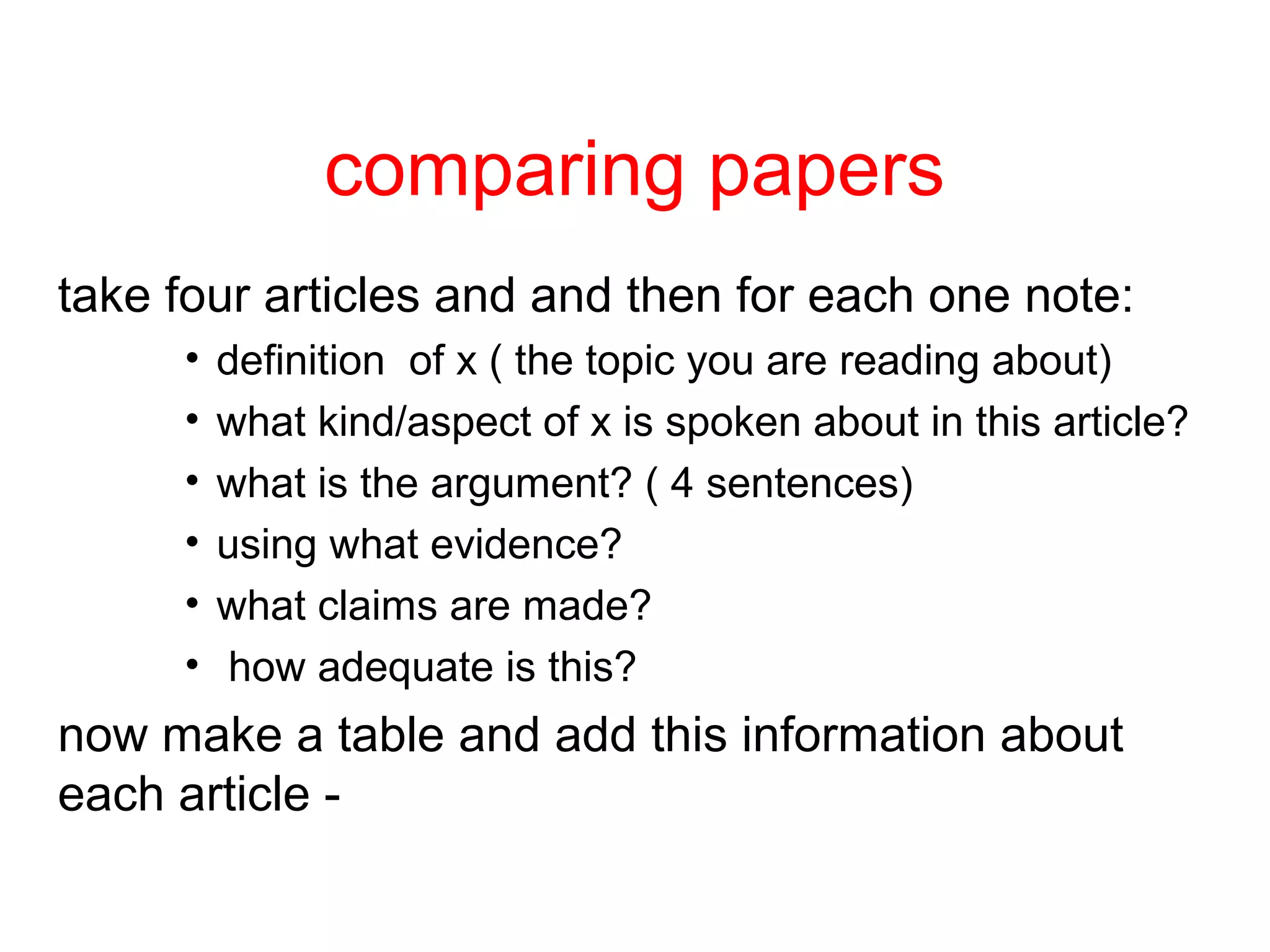
comparing papers
take four articles and and then for each one note:
• definition of x ( the topic you are reading about)
• what kind/aspect of x is spoken about in this article?
• what is the argument? ( 4 sentences)
• using what evidence?
• what claims are made?
• how adequate is this?
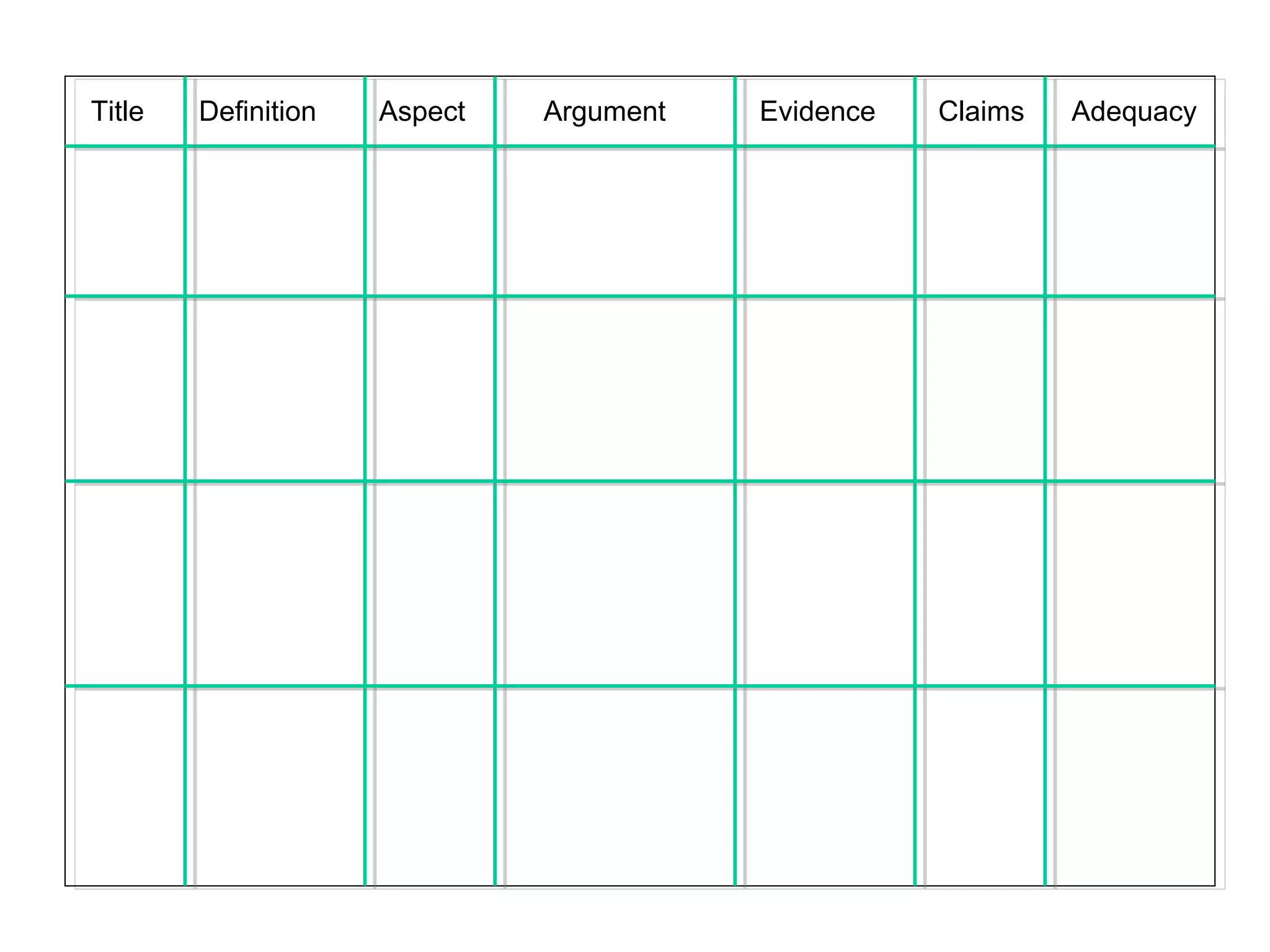
now make a table and add this information about
each article -
Title Definition Aspect Argument Evidence Claims Adequacy
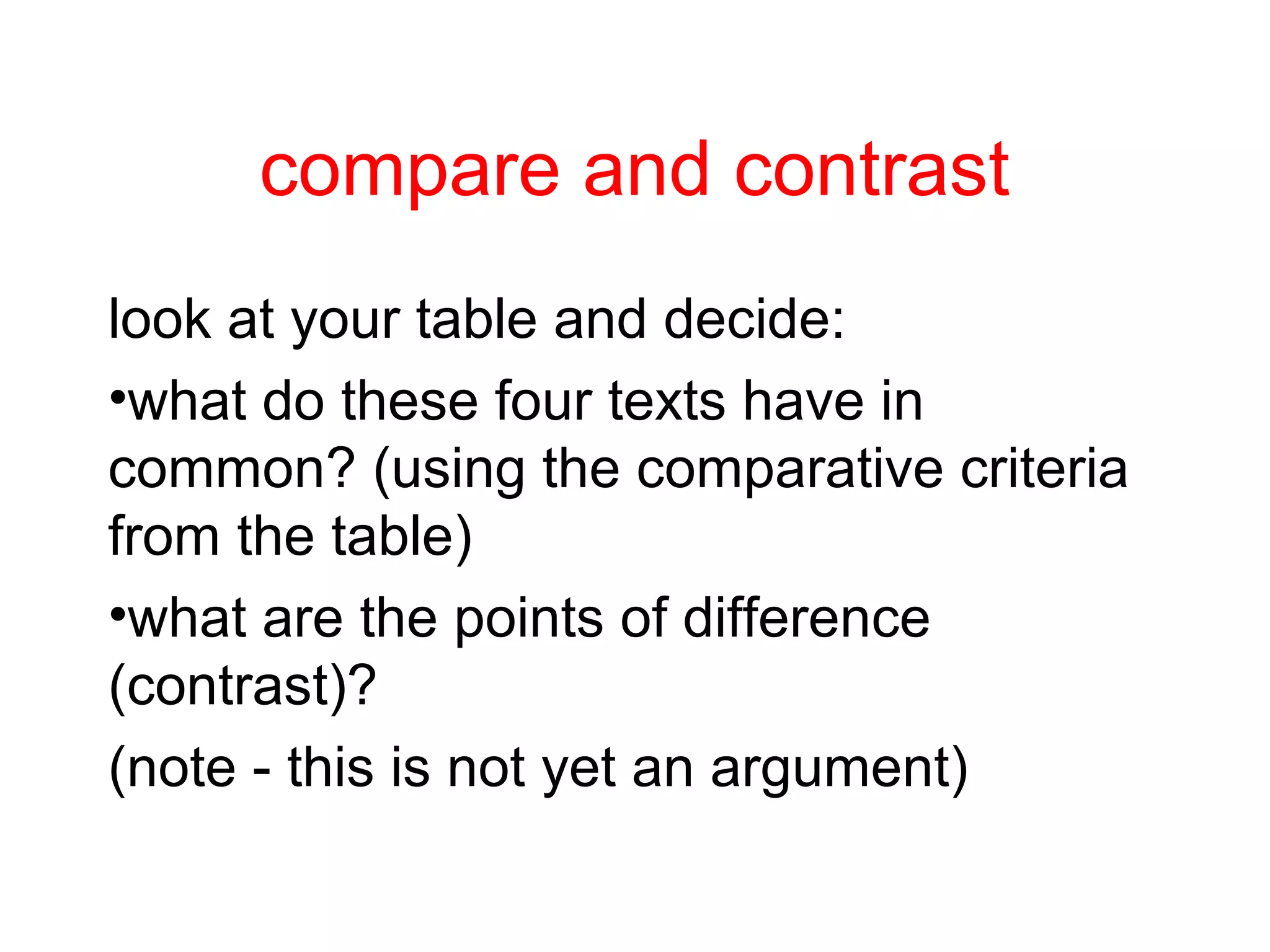
compare and contrast
look at your table and decide:
•what do these four texts have in
common? (using the comparative criteria
from the table)
•what are the points of difference
(contrast)?
(note - this is not yet an argument)
blank and blind spots
relook at your table and the section about
inadequacies – were they blank or blind
spots?
•blind spots – something the method,
definitions or theoretical approach does
not allow to be seen/said
•blank spots – things that are not yet
‘filled in’ by this study
WRITE: a sentence skeleton
• write an opening statement about the topic x and why it
is important/interesting/puzzling and to whom, why and
where
• I have analysed four articles which address (x). They
share (one or two important things).
• While all of the authors are in agreement that …… there
are also important differences. These begin with
variations in sample/method/place. (1) is…. (2)… ((3)
is… )
• There are also differences in findings. For example, (1)
suggests that …. while (2) argues ….(4) and (3)
propose ……… )
• ( ) is more rigorous/convincing/useful for my study
because …… ( consider blank and blind spots here and
connections with other literatures)
WRITE: a sentence skeleton
• write an opening statement about the topic x and why it
is important/interesting/puzzling and to whom, why and
where
• I have analysed four articles which address (x). They
share (one or two important things).
• While all of the authors are in agreement that …… there
are also important differences. These begin with
variations in sample/method/place. (1) is…. (2)… ((3)
is… )
• There are also differences in findings. For example, (1)
suggests that …. while (2) argues ….(4) and (3)
propose ……… )
• ( ) is more rigorous/convincing/useful for my study
because …… ( consider blank and blind spots here and
connections with other literatures)

working the literatures - compare and contrast

  • 1.
    making sense ofliteratures - working with small groups of papers Pat Thomson Patter – patthomson.net @ThomsonPat
  • 2.
    comparing papers take fourarticles and and then for each one note: • definition of x ( the topic you are reading about) • what kind/aspect of x is spoken about in this article? • what is the argument? ( 4 sentences) • using what evidence? • what claims are made? • how adequate is this? now make a table and add this information about each article -
  • 3.
    Title Definition AspectArgument Evidence Claims Adequacy
  • 4.
    compare and contrast lookat your table and decide: •what do these four texts have in common? (using the comparative criteria from the table) •what are the points of difference (contrast)? (note - this is not yet an argument)
  • 5.
    blank and blindspots relook at your table and the section about inadequacies – were they blank or blind spots? •blind spots – something the method, definitions or theoretical approach does not allow to be seen/said •blank spots – things that are not yet ‘filled in’ by this study
  • 6.
    WRITE: a sentenceskeleton • write an opening statement about the topic x and why it is important/interesting/puzzling and to whom, why and where • I have analysed four articles which address (x). They share (one or two important things). • While all of the authors are in agreement that …… there are also important differences. These begin with variations in sample/method/place. (1) is…. (2)… ((3) is… ) • There are also differences in findings. For example, (1) suggests that …. while (2) argues ….(4) and (3) propose ……… ) • ( ) is more rigorous/convincing/useful for my study because …… ( consider blank and blind spots here and connections with other literatures)
  • 7.
    WRITE: a sentenceskeleton • write an opening statement about the topic x and why it is important/interesting/puzzling and to whom, why and where • I have analysed four articles which address (x). They share (one or two important things). • While all of the authors are in agreement that …… there are also important differences. These begin with variations in sample/method/place. (1) is…. (2)… ((3) is… ) • There are also differences in findings. For example, (1) suggests that …. while (2) argues ….(4) and (3) propose ……… ) • ( ) is more rigorous/convincing/useful for my study because …… ( consider blank and blind spots here and connections with other literatures)