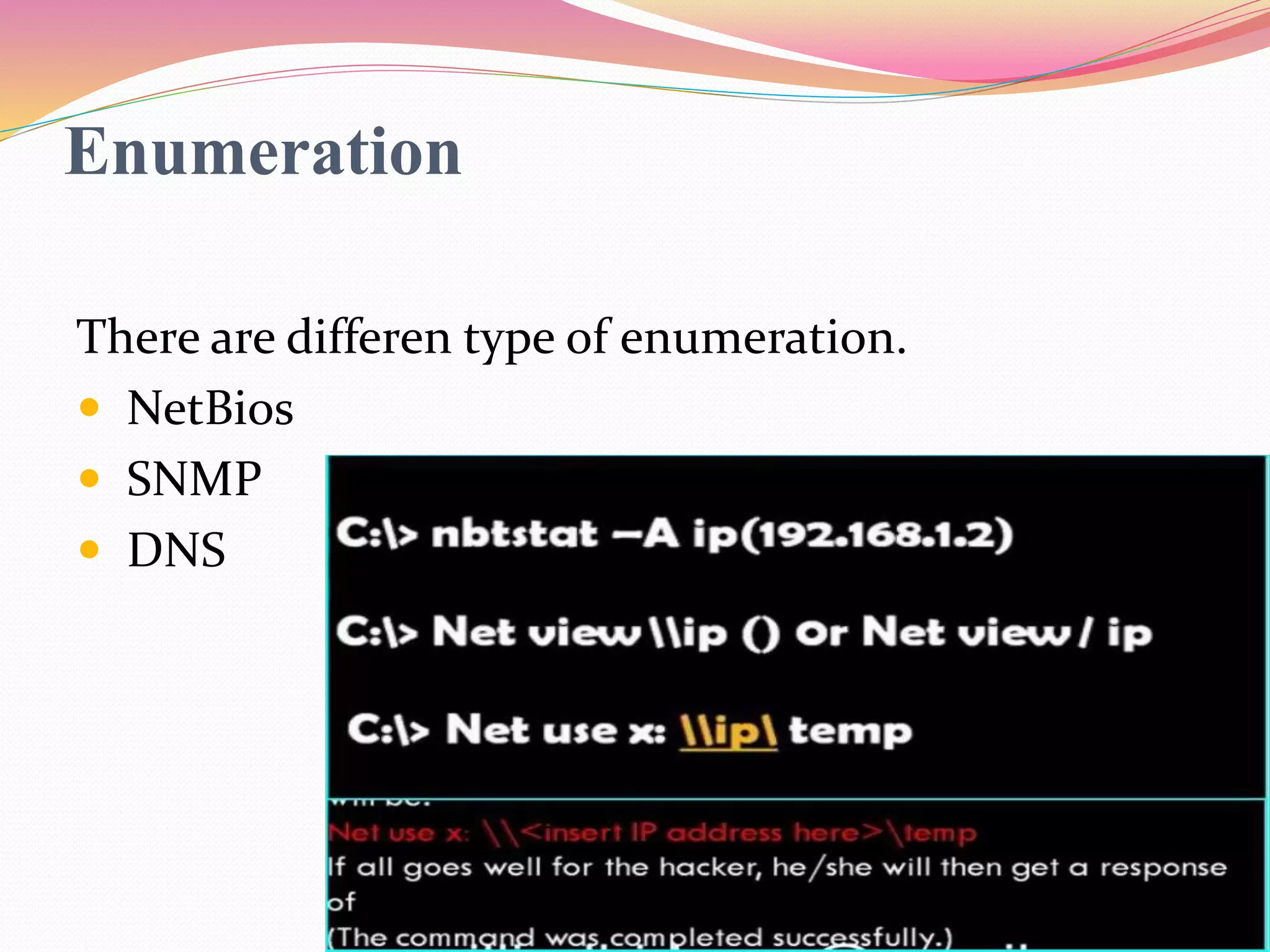
The document presents a seminar on ethical hacking, covering the definition, processes, and tools associated with the field. It outlines various types of hackers, the ethical hacking process, its advantages and disadvantages, and the importance of cybersecurity. The conclusion emphasizes the need for awareness and education to protect against unauthorized hacking.
Contents
Introduction
Whatis Hacking?
Ethical Hacking
Types of Hackers
Process of Ethical Hacking
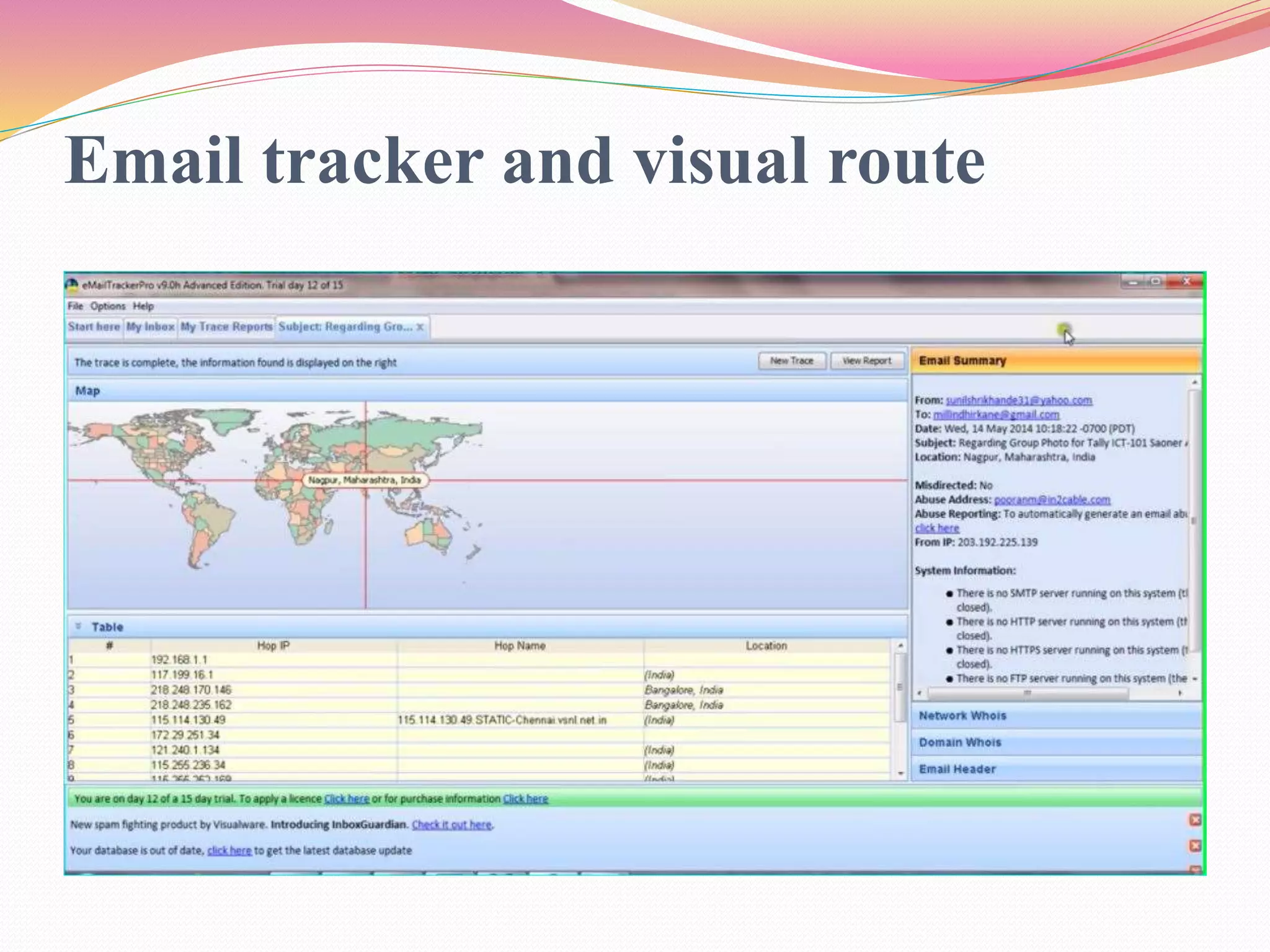
Ethical Hacking tools
Required Skills of an Ethical Hacker
What do hackers do after hacking?
Advantages and disadvantages
Conclusion
3.
Introduction
Ethical hacking alsoknown as penetration testing or
white-hat hacking, involves the same tools, tricks, and
techniques that hackers use, but with one major difference that
Ethical hacking is legal.
4.
What is hacking?
Hacking is unauthorized use of computer and network
resources. Computer hacking is the practice of modifying
computer hardware and software to accomplish a goal
outside of the creator’s original purpose.
5.
Ethical Hacking
Independentcomputer security Professionals breaking into the
computer systems.
Neither damage the target systems nor steal information.
Evaluate target systems security and report back to owners
about the vulnerabilities found.
6.
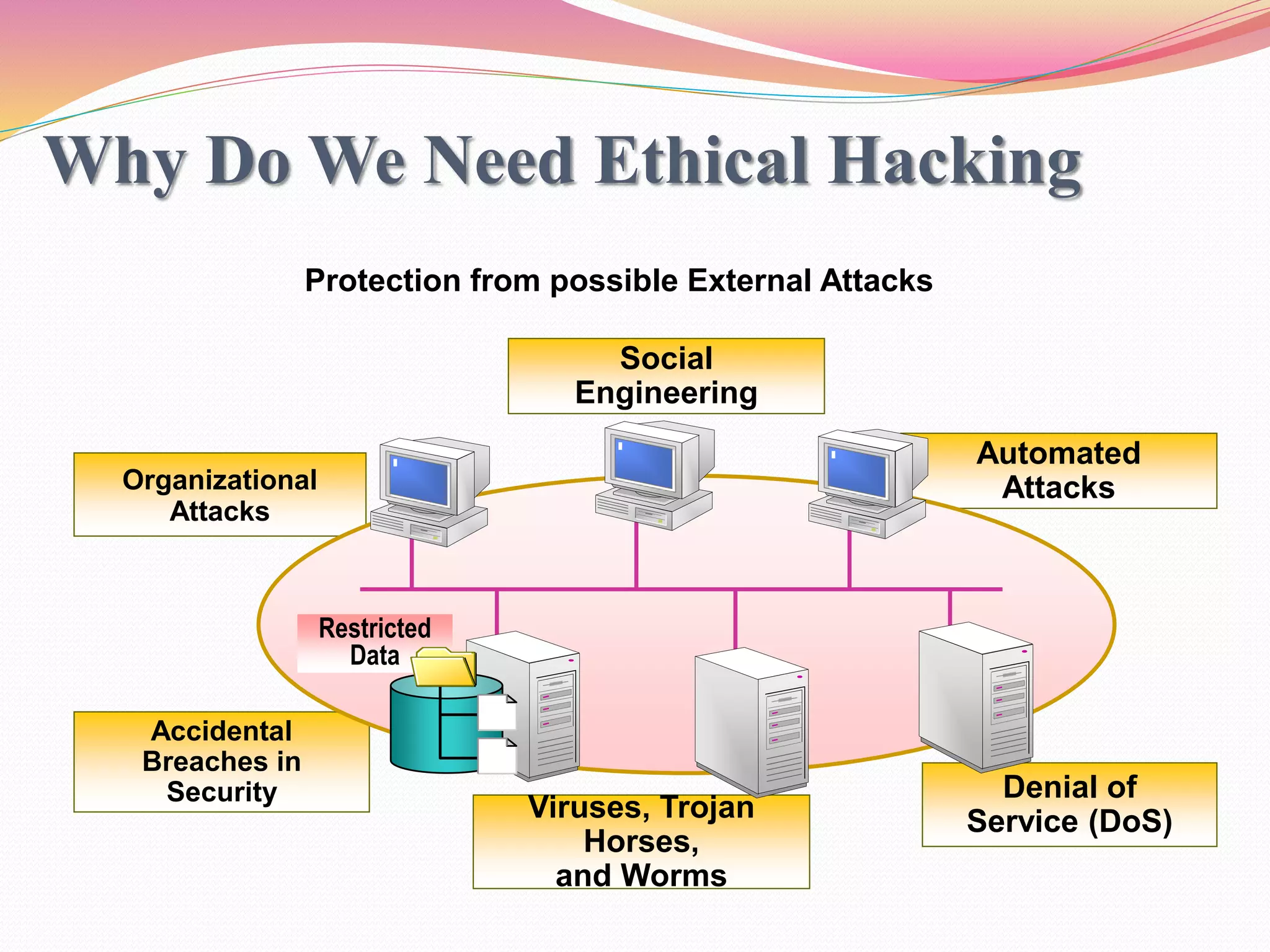
Why Do WeNeed Ethical Hacking
Viruses, Trojan
Horses,
and Worms
Social
Engineering
Automated
Attacks
Accidental
Breaches in
Security Denial of
Service (DoS)
Organizational
Attacks
Restricted
Data
Protection from possible External Attacks
7.
Hackers
A personwho enjoys learning details of a programming
language or system
A person who enjoys actually doing the programming
rather than just theorizing about it
A person capable of appreciating someone else's hacking
A person who picks up programming quickly
A person who is an expert at a particular programming
language or system
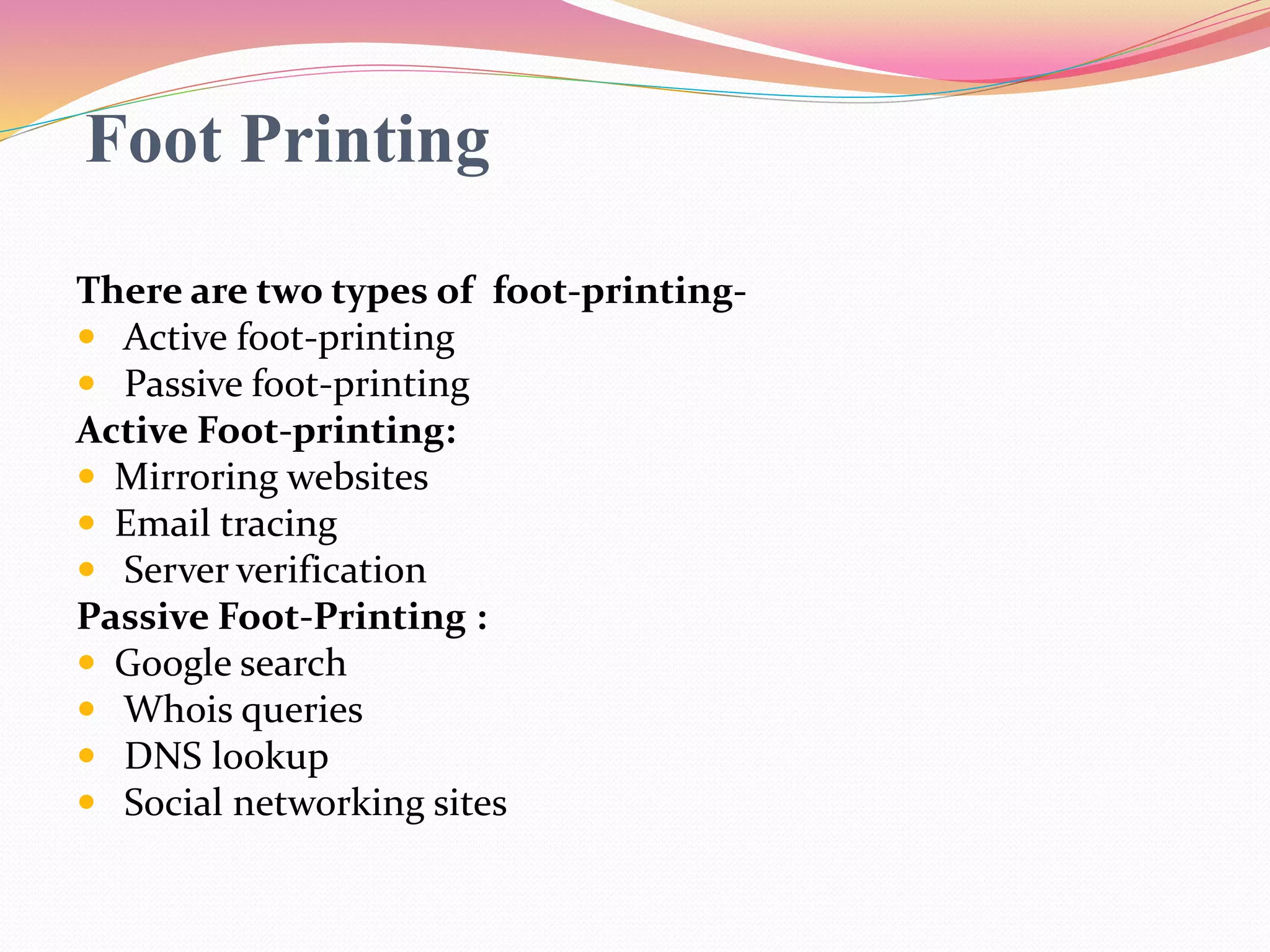
Foot Printing
There aretwo types of foot-printing-
Active foot-printing
Passive foot-printing
Active Foot-printing:
Mirroring websites
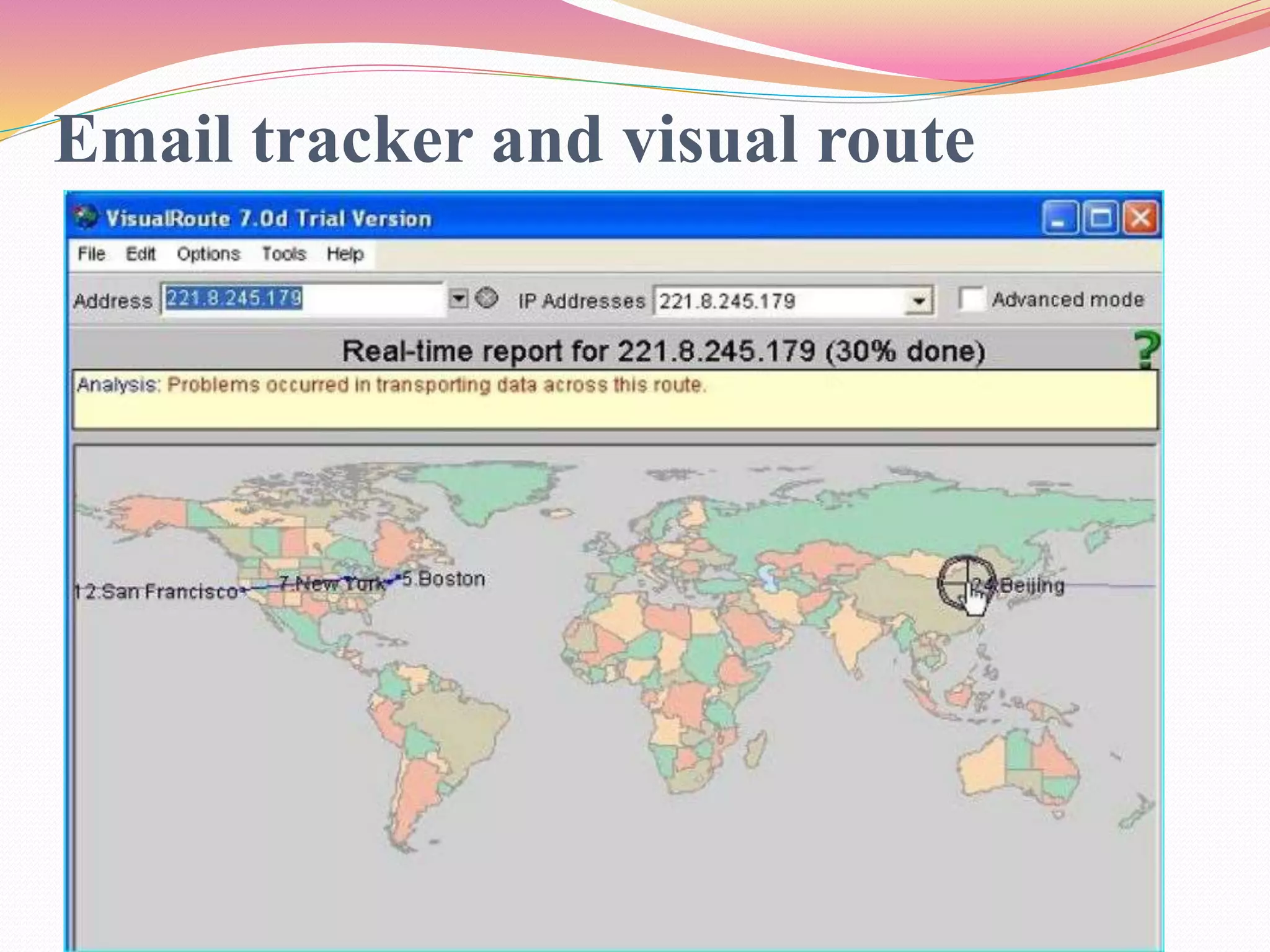
Email tracing
Server verification
Passive Foot-Printing :
Google search
Whois queries
DNS lookup
Social networking sites
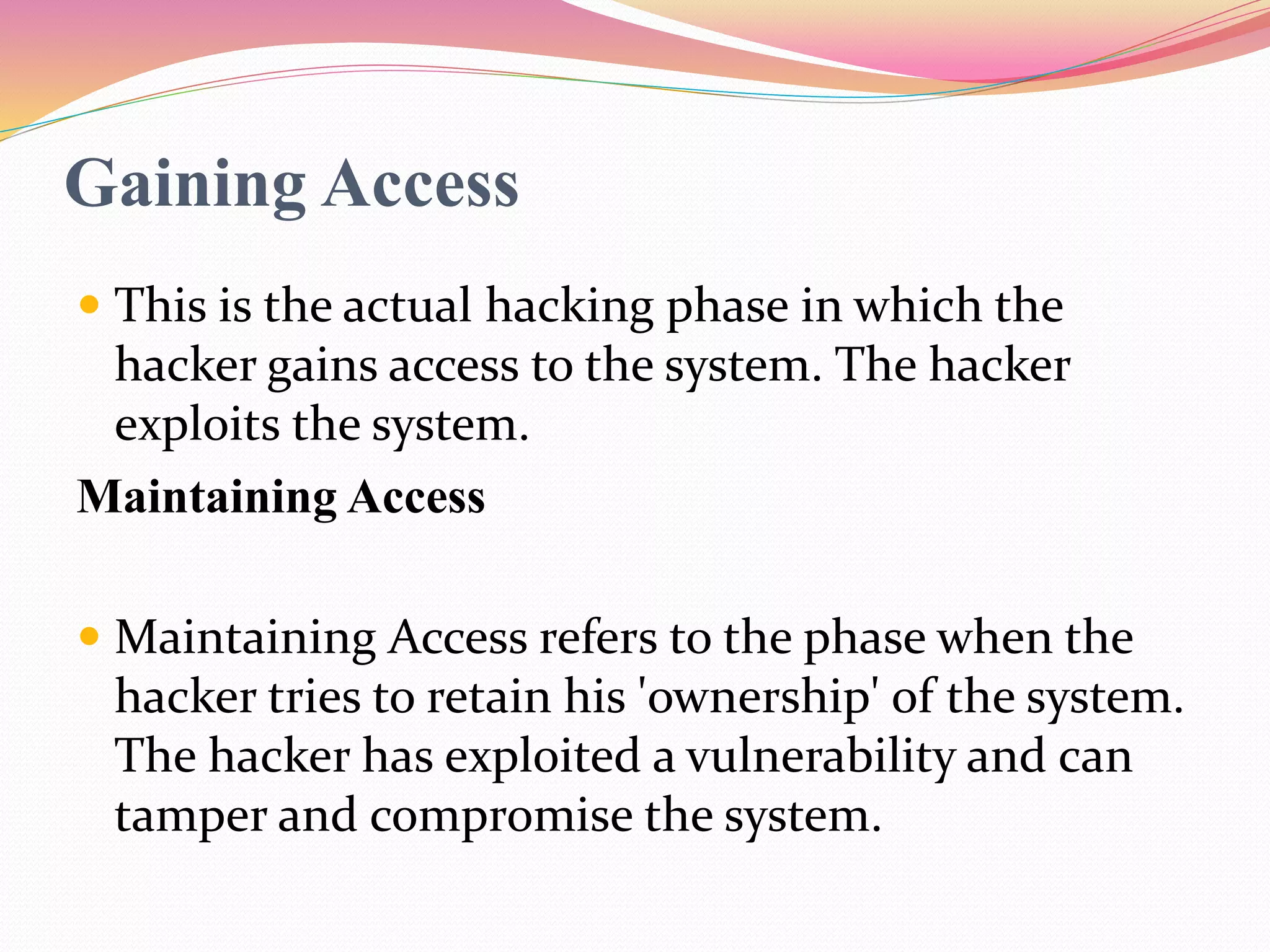
Gaining Access
Thisis the actual hacking phase in which the
hacker gains access to the system. The hacker
exploits the system.
Maintaining Access
Maintaining Access refers to the phase when the
hacker tries to retain his 'ownership' of the system.
The hacker has exploited a vulnerability and can
tamper and compromise the system.
What do hackersdo after hacking?
Install scanner program
mscan, sscan, nmap
Install exploit program
Install denial of service program
Use all of installed programs silently
Patch Security hole
The other hackers can’t intrude
Install rootkit ( backdoor )
It contains trojan virus, and so on
20.
Advantages
To catcha thief you have to think like a thief.
Helps in closing the open holes in the system network.
Provides security to banking and financial establishments.
Prevents website defacements.
21.
Disadvantages
All dependsupon the trustworthiness of the ethical hacker.
Hiring professionals is expensive.
22.
Conclusion
In thepreceding sections we saw the methodology of hacking,
why should we aware of hacking and some tools which a
hacker may use.
Now we can see what can we do against hacking or to protect
ourselves from hacking.
The first thing we should do is to keep ourselves updated
about those software’s we and using for official and reliable
sources.
Educate the employees and the users against black hat hacking.