HACKING
Seminar
On
Hacking
• Introduction
• Ethical Hacking
• Hackers
• Types of Hackers
• Hacking Process
• Why do We need Ethical Hacking
• Required Skills of an Ethical Hacker
CONTENT
CONTENT…
• What do hackers do after Hacking?
• Advantages
• Disadvantages
• Future Enhancements
• Conclusion
INTRODUCTION
Ethical hacking also known as penetration testing or
white-hat hacking, involves the same tools, tricks, and
techniques that hackers use, but with one major difference that
Ethical hacking is legal.
Ethical hacking, is legally breaking into computers and devices
to test an organization's defenses.
ETHICAL HACKING
• Independent computer security Professionals breaking into
the computer systems.
• Neither damage the target systems nor steal information.
• Evaluate target systems security and report back to owners
about the vulnerabilities found.
HACKERS
• A person who enjoys learning details of a programming
language or system
• A person who enjoys actually doing the
programming rather than just theorizing about it
• A person capable of appreciating someone else's hacking
• A person who picks up programming quickly
• A person who is an expert at a particular programming
language or system
TYPES OF HACKERS
• Black Hat Hacker
• White Hat Hacker
• Grey Hat Hacker
BLACK-HAT HACKER
• A black hat hackers or crackers are individuals with
extraordinary computing skills, resorting to malicious or
destructive activities.
• That is black hat hackers use their knowledge and skill
for their own personal gains probably by hurting others.
WHITE-HAT HACKER
• White hat hackers are those individuals professing
hacker skills and using them for defensive purposes.
• This means that the white hat hackers use their
knowledge and skill for the good of others and for the
common good.
GREY-HAT HACKERS
• These are individuals who work both offensively and
defensively at various times.
• We cannot predict their behavior.
• Sometimes they use their skills for the common good while
in some other times he uses them for their personal gains.
HACKING PROCESS
• Foot Printing
• Scanning
• Gaining Access
• Maintaining Access
FOOT PRINTING
• Whois lookup
• NS lookup
• IP lookup
SCANNING
• Port Scanning
• Network Scanning
• Finger Printing
• Fire Walking
GAINING ACCESS
• Password Attacks
• Social Engineering
• Viruses
MAINTAINING ACCESS
• Os BackDoors
• Trojans
• Clears Tracks
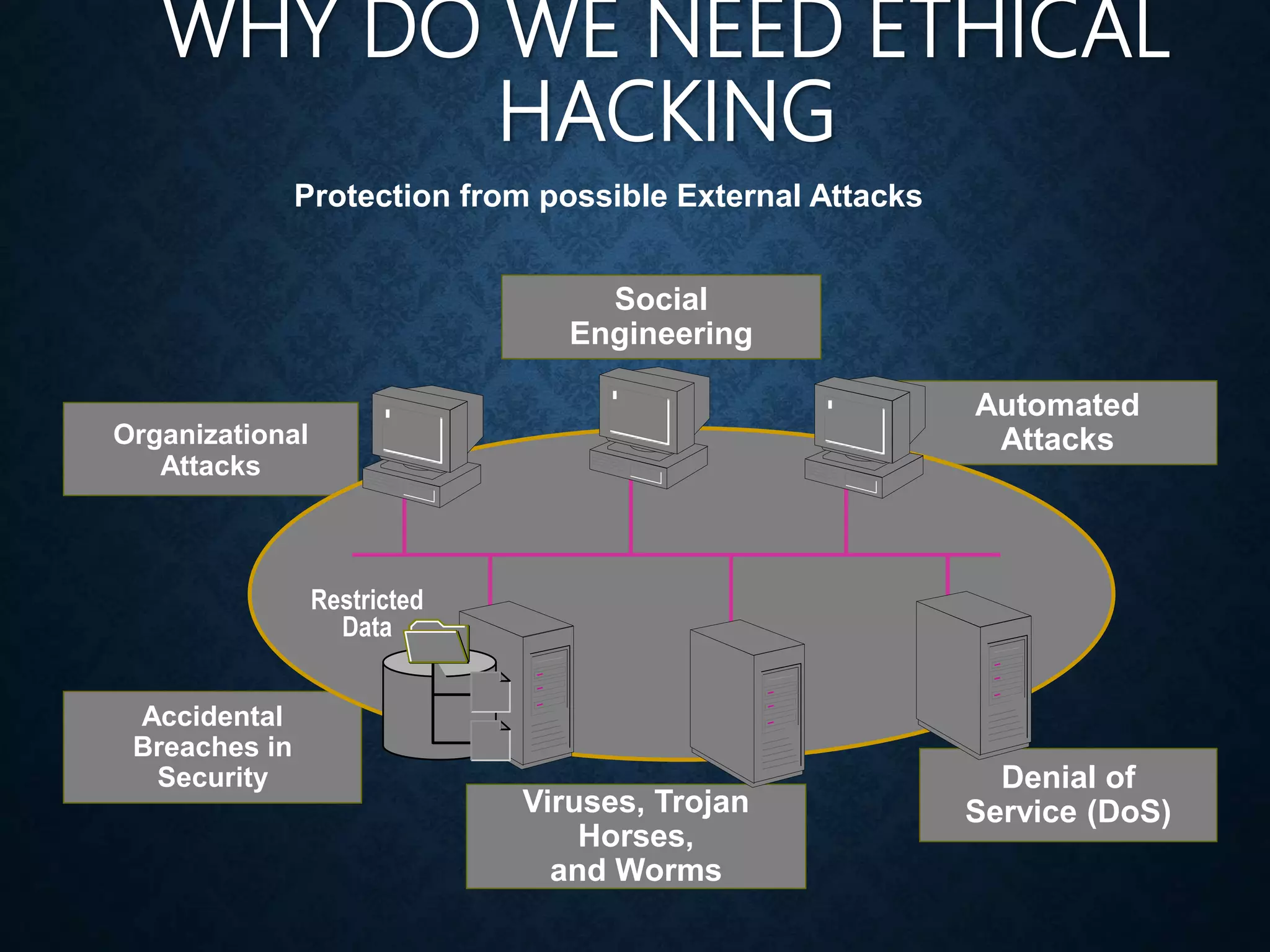
WHY DO WE NEED ETHICAL
HACKING
Viruses, Trojan
Horses,
and Worms
Social
Engineering
Automated
Attacks
Accidental
Breaches in
Security Denial of
Service (DoS)
Organizational
Attacks
Restricted
Data
Protection from possible External Attacks
REQUIRED SKILLS OF AN ETHICAL
HACKER
• Microsoft: skills in operation, configuration and management.
• Linux: knowledge of Linux/Unix; security setting, configuration,
and services.
• Firewalls: configurations, and operation of intrusion detection
systems.
REQUIRED SKILLS OF AN
ETHICAL HACKER….
• Routers: knowledge of routers, routing protocols, and access control
lists
• Mainframes
• Network Protocols: TCP/IP; how they function and can be
manipulated.
• Project Management: leading, planning, organizing, and controlling
a penetration testing team.
WHAT DO HACKERS DO AFTER
HACKING?...
• Patch Security hole
 The other hackers can’t intrude
• Clear logs and hide themselves
• Install rootkit ( backdoor )
 The hacker who hacked the system can use the
system later
 It contains trojan virus, and so on
• Install irc related program
 identd, irc, bitchx, eggdrop, bnc
WHAT DO HACKERS DO
AFTER HACKING?
• Install scanner program
 mscan, sscan, nmap
• Install exploit program
• Install denial of service program
• Use all of installed programs silently
ADVANTAGES
• ‘’To catch a thief you have to think like a thief”
• Helps in closing the open holes in the system network
• Provides security to banking and financial establishments
• Prevents website defacements
• An evolving technique
DISADVANTAGES
• All depends upon the trustworthiness of the ethical hacker
• Hiring professionals is expensive.
FUTURE ENHANCEMENTS
• As it an evolving branch the scope of enhancement in technology
is immense.
• No ethical hacker can ensure the system security by using the
same technique repeatedly.
• More enhanced software’s should be used for optimum
protection.
CONCLUSION
• In the preceding sections we saw the methodology of hacking,
why should we aware of hacking and some tools which a
hacker may use.
• Now we can see what can we do against hacking or to protect
ourselves from hacking.
• The first thing we should do is to keep ourselves updated about
those software’s we and using for official and reliable sources.
• Educate the employees and the users against black hat hacking.
Thanks

Ethical hacking

  • 1.
  • 2.
    • Introduction • EthicalHacking • Hackers • Types of Hackers • Hacking Process • Why do We need Ethical Hacking • Required Skills of an Ethical Hacker CONTENT
  • 3.
    CONTENT… • What dohackers do after Hacking? • Advantages • Disadvantages • Future Enhancements • Conclusion
  • 4.
    INTRODUCTION Ethical hacking alsoknown as penetration testing or white-hat hacking, involves the same tools, tricks, and techniques that hackers use, but with one major difference that Ethical hacking is legal. Ethical hacking, is legally breaking into computers and devices to test an organization's defenses.
  • 5.
    ETHICAL HACKING • Independentcomputer security Professionals breaking into the computer systems. • Neither damage the target systems nor steal information. • Evaluate target systems security and report back to owners about the vulnerabilities found.
  • 6.
    HACKERS • A personwho enjoys learning details of a programming language or system • A person who enjoys actually doing the programming rather than just theorizing about it • A person capable of appreciating someone else's hacking • A person who picks up programming quickly • A person who is an expert at a particular programming language or system
  • 7.
    TYPES OF HACKERS •Black Hat Hacker • White Hat Hacker • Grey Hat Hacker
  • 8.
    BLACK-HAT HACKER • Ablack hat hackers or crackers are individuals with extraordinary computing skills, resorting to malicious or destructive activities. • That is black hat hackers use their knowledge and skill for their own personal gains probably by hurting others.
  • 9.
    WHITE-HAT HACKER • Whitehat hackers are those individuals professing hacker skills and using them for defensive purposes. • This means that the white hat hackers use their knowledge and skill for the good of others and for the common good.
  • 10.
    GREY-HAT HACKERS • Theseare individuals who work both offensively and defensively at various times. • We cannot predict their behavior. • Sometimes they use their skills for the common good while in some other times he uses them for their personal gains.
  • 11.
    HACKING PROCESS • FootPrinting • Scanning • Gaining Access • Maintaining Access
  • 12.
    FOOT PRINTING • Whoislookup • NS lookup • IP lookup
  • 13.
    SCANNING • Port Scanning •Network Scanning • Finger Printing • Fire Walking
  • 14.
    GAINING ACCESS • PasswordAttacks • Social Engineering • Viruses
  • 15.
    MAINTAINING ACCESS • OsBackDoors • Trojans • Clears Tracks
  • 16.
    WHY DO WENEED ETHICAL HACKING Viruses, Trojan Horses, and Worms Social Engineering Automated Attacks Accidental Breaches in Security Denial of Service (DoS) Organizational Attacks Restricted Data Protection from possible External Attacks
  • 17.
    REQUIRED SKILLS OFAN ETHICAL HACKER • Microsoft: skills in operation, configuration and management. • Linux: knowledge of Linux/Unix; security setting, configuration, and services. • Firewalls: configurations, and operation of intrusion detection systems.
  • 18.
    REQUIRED SKILLS OFAN ETHICAL HACKER…. • Routers: knowledge of routers, routing protocols, and access control lists • Mainframes • Network Protocols: TCP/IP; how they function and can be manipulated. • Project Management: leading, planning, organizing, and controlling a penetration testing team.
  • 19.
    WHAT DO HACKERSDO AFTER HACKING?... • Patch Security hole  The other hackers can’t intrude • Clear logs and hide themselves • Install rootkit ( backdoor )  The hacker who hacked the system can use the system later  It contains trojan virus, and so on • Install irc related program  identd, irc, bitchx, eggdrop, bnc
  • 20.
    WHAT DO HACKERSDO AFTER HACKING? • Install scanner program  mscan, sscan, nmap • Install exploit program • Install denial of service program • Use all of installed programs silently
  • 21.
    ADVANTAGES • ‘’To catcha thief you have to think like a thief” • Helps in closing the open holes in the system network • Provides security to banking and financial establishments • Prevents website defacements • An evolving technique
  • 22.
    DISADVANTAGES • All dependsupon the trustworthiness of the ethical hacker • Hiring professionals is expensive.
  • 23.
    FUTURE ENHANCEMENTS • Asit an evolving branch the scope of enhancement in technology is immense. • No ethical hacker can ensure the system security by using the same technique repeatedly. • More enhanced software’s should be used for optimum protection.
  • 24.
    CONCLUSION • In thepreceding sections we saw the methodology of hacking, why should we aware of hacking and some tools which a hacker may use. • Now we can see what can we do against hacking or to protect ourselves from hacking. • The first thing we should do is to keep ourselves updated about those software’s we and using for official and reliable sources. • Educate the employees and the users against black hat hacking.
  • 25.

Editor's Notes