CRPS
Complex Regional Pain Syndrome
DURGESH K
SECOND YEAR MBBS
ARUNAI MEDICAL COLLEGE AND HOSPITAL
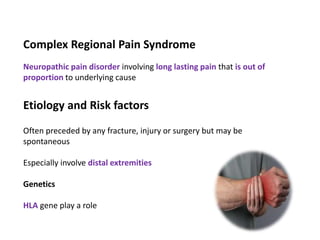
Complex Regional Pain Syndrome
Neuropathic pain disorder involving long lasting pain that is out of
proportion to underlying cause
Etiology and Risk factors
Often preceded by any fracture, injury or surgery but may be
spontaneous
Especially involve distal extremities
Genetics
HLA gene play a role
Pathophysiology
1. Inflammatory
elevated pro inflammatory cytokines & neuropeptides
↓
vasodilatation
2. Immunological
Auto-antibodies against alpha 1 & beta 2 adrenergic receptor& muscuranic 2
receptors
3. Pain sensitization
reduction in pain threshold in periphery and central
4. Autonomic dysregulation
Increased sympathetic receptors
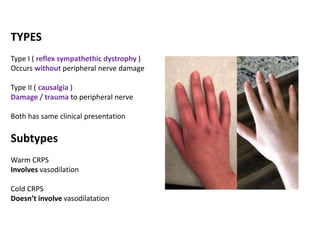
TYPES
Type I ( reflex sympathethic dystrophy )
Occurs without peripheral nerve damage
Type II ( causalgia )
Damage / trauma to peripheral nerve
Both has same clinical presentation
Subtypes
Warm CRPS
Involves vasodilation
Cold CRPS
Doesn’t involve vasodilatation
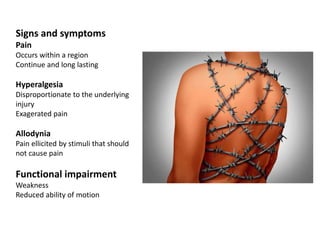
Signs and symptoms
Pain
Occurs within a region
Continue and long lasting
Hyperalgesia
Disproportionate to the underlying
injury
Exagerated pain
Allodynia
Pain ellicited by stimuli that should
not cause pain
Functional impairment
Weakness
Reduced ability of motion
Erythema & edema
Hyperhidrosis
Excessive sweating in the affected area
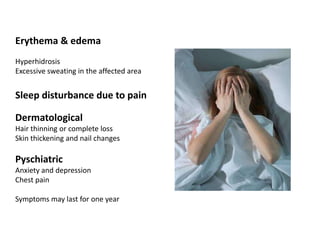
Sleep disturbance due to pain
Dermatological
Hair thinning or complete loss
Skin thickening and nail changes
Pyschiatric
Anxiety and depression
Chest pain
Symptoms may last for one year
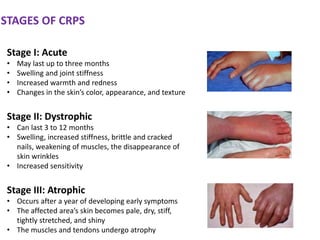
Stage I: Acute
• May last up to three months
• Swelling and joint stiffness
• Increased warmth and redness
• Changes in the skin’s color, appearance, and texture
Stage II: Dystrophic
• Can last 3 to 12 months
• Swelling, increased stiffness, brittle and cracked
nails, weakening of muscles, the disappearance of
skin wrinkles
• Increased sensitivity
Stage III: Atrophic
• Occurs after a year of developing early symptoms
• The affected area’s skin becomes pale, dry, stiff,
tightly stretched, and shiny
• The muscles and tendons undergo atrophy
STAGES OF CRPS
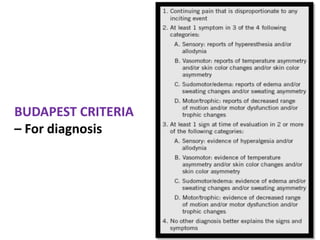
BUDAPEST CRITERIA
– For diagnosis
Some patients may improve spontaneously
• Supplementation with Vitamin C may prevent CRPS or improve recovery
• Smoking cessation reduces risk of CRPS Lifestyle
• Physiotherapy, occupational therapy, exercise to aid in function
• Patient education regarding pain
Pharmacotherapy
• NSAIDs
• Topical capsaicin
• Bisphosphonates
• Gabapentin, amitriptyline (low-quality evidence)
Other Therapies: Spinal cord stimulation, Dorsal Root Ganglion Stimulation
Treatment

CRPS ( Complex regional pain syndrome )

  • 1.
    CRPS Complex Regional PainSyndrome DURGESH K SECOND YEAR MBBS ARUNAI MEDICAL COLLEGE AND HOSPITAL
  • 2.
    Complex Regional PainSyndrome Neuropathic pain disorder involving long lasting pain that is out of proportion to underlying cause Etiology and Risk factors Often preceded by any fracture, injury or surgery but may be spontaneous Especially involve distal extremities Genetics HLA gene play a role
  • 3.
    Pathophysiology 1. Inflammatory elevated proinflammatory cytokines & neuropeptides ↓ vasodilatation 2. Immunological Auto-antibodies against alpha 1 & beta 2 adrenergic receptor& muscuranic 2 receptors 3. Pain sensitization reduction in pain threshold in periphery and central 4. Autonomic dysregulation Increased sympathetic receptors
  • 4.
    TYPES Type I (reflex sympathethic dystrophy ) Occurs without peripheral nerve damage Type II ( causalgia ) Damage / trauma to peripheral nerve Both has same clinical presentation Subtypes Warm CRPS Involves vasodilation Cold CRPS Doesn’t involve vasodilatation
  • 5.
    Signs and symptoms Pain Occurswithin a region Continue and long lasting Hyperalgesia Disproportionate to the underlying injury Exagerated pain Allodynia Pain ellicited by stimuli that should not cause pain Functional impairment Weakness Reduced ability of motion
  • 6.
    Erythema & edema Hyperhidrosis Excessivesweating in the affected area Sleep disturbance due to pain Dermatological Hair thinning or complete loss Skin thickening and nail changes Pyschiatric Anxiety and depression Chest pain Symptoms may last for one year
  • 7.
    Stage I: Acute •May last up to three months • Swelling and joint stiffness • Increased warmth and redness • Changes in the skin’s color, appearance, and texture Stage II: Dystrophic • Can last 3 to 12 months • Swelling, increased stiffness, brittle and cracked nails, weakening of muscles, the disappearance of skin wrinkles • Increased sensitivity Stage III: Atrophic • Occurs after a year of developing early symptoms • The affected area’s skin becomes pale, dry, stiff, tightly stretched, and shiny • The muscles and tendons undergo atrophy STAGES OF CRPS
  • 8.
  • 9.
    Some patients mayimprove spontaneously • Supplementation with Vitamin C may prevent CRPS or improve recovery • Smoking cessation reduces risk of CRPS Lifestyle • Physiotherapy, occupational therapy, exercise to aid in function • Patient education regarding pain Pharmacotherapy • NSAIDs • Topical capsaicin • Bisphosphonates • Gabapentin, amitriptyline (low-quality evidence) Other Therapies: Spinal cord stimulation, Dorsal Root Ganglion Stimulation Treatment