Complex Regional
pain syndrome
By Aya Reyad
Rheumatology resident at Aswan Univercity Hospital
Contents
I n t r o d u c t i o n
E t i o l o g y
C l i n i c a l P r e s e n t a t i o n
D i a g n o s i s & T T T
Complex Regional Pain Syndrome (CRPS)
a complex pain disorder characterised by continuing
(spontaneous and/or evoked) regional pain that is seemingly
disproportionate in time or degree to the usual course of any
known trauma or lesion.
abnormal sympathetic nerve activity occurs early in the disease course.
Many names have been used to describe this syndrome such as
Reflex Sympathetic Dystrophy
Causalgia
Algoneurodystrophy
Sudeck’s atrophy
Post-traumatic dystrophyosteprosis
Transient osteoprosis
Acute atrophy of bone
CRPS is more common in females than males, with a
ratio of 3.5:1.
CRPS can affect people of all ages, including children as
young as three years old and adults as old as 75 years.
CRPS Type I occurs in 5% of all traumatic injuries,
with 91% of all CRPS cases occurring after surgery.
CRPS mostly affecting the extremities, occurring
slightly more in the lower extremities (60%)
than in the upper extremities (40%).
It can also appear unilaterally or bilaterally
Location
Prognosis
Approximately 15% of early CRPS (up to 6-18 months
duration) fail to recover and early onset of cold CRPS
predicts poor recovery.
Children have a better prognosis than adults .
Type I occurs in the absence of major nerve damage
(minor nerve damage may be present)
sympathetic dystrophy
90%of CRPS
Type II occurs following major nerve damage.
causalgia
10% of CRPS
Classification
Why do you think that
this classification has
a little clinical importance
??!
Q
because there is a large overlap
in clinical features and the primary
diagnostic criteria are identical.
A
stage I - acute up to 3 months
Severe burning or aching pain that increases with a very slight touch
Muscle spasms and joint pain
stage II - dystrophic 3-6- months after onset
The level of pain increases
The skin continues to change and the nails become brittle and cracked,
and hair growth slows down.
The joints stiffen and the muscles weaken.
stage III - atrophic > 6 months
These changes can become permanent.
3 Stages
the existence
of these
stages has
been
suggested as
unsubstantiatd
.
"warm CRPS"
(warm, red, dry and oedematous extremity,
inflammatory phenotype)
"cold CRPS" (cold, blue or pale, sweaty and less
oedematous, central phenotype).
Warm CRPS is by far the most common in early
CRPS, and cold CRPS tends to have a worse
prognosis and more persistent symptomatology.
Classification
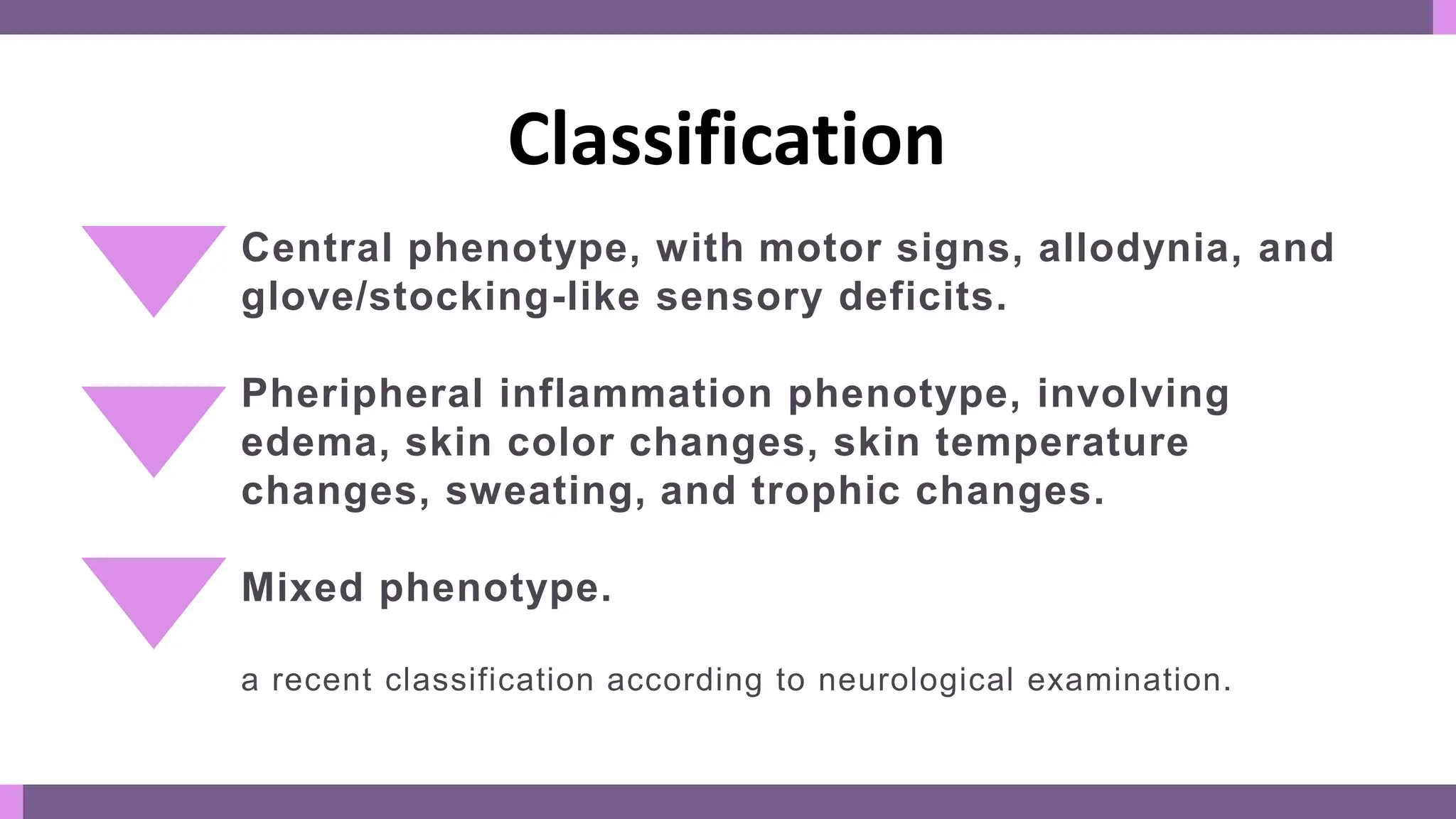
Central phenotype, with motor signs, allodynia, and
glove/stocking-like sensory deficits.
Pheripheral inflammation phenotype, involving
edema, skin color changes, skin temperature
changes, sweating, and trophic changes.
Mixed phenotype.
a recent classification according to neurological examination.
Classification
Etiology and Pathophysiology
Etiology
Complex regional pain syndrome can develop after
the occurrence of different types of injuries, such as:
-Minor soft tissue trauma (sprains)
-Surgeries ( CTS and foot surgeries)
-Fractures, especially following immobilisation
-Contusions
-Crush injuries
-Peripheral nerve diseases
-Stroke - MI
In 7% of cases there is no injury or surgery preceding the onset of CRPS.
Pathophysiology
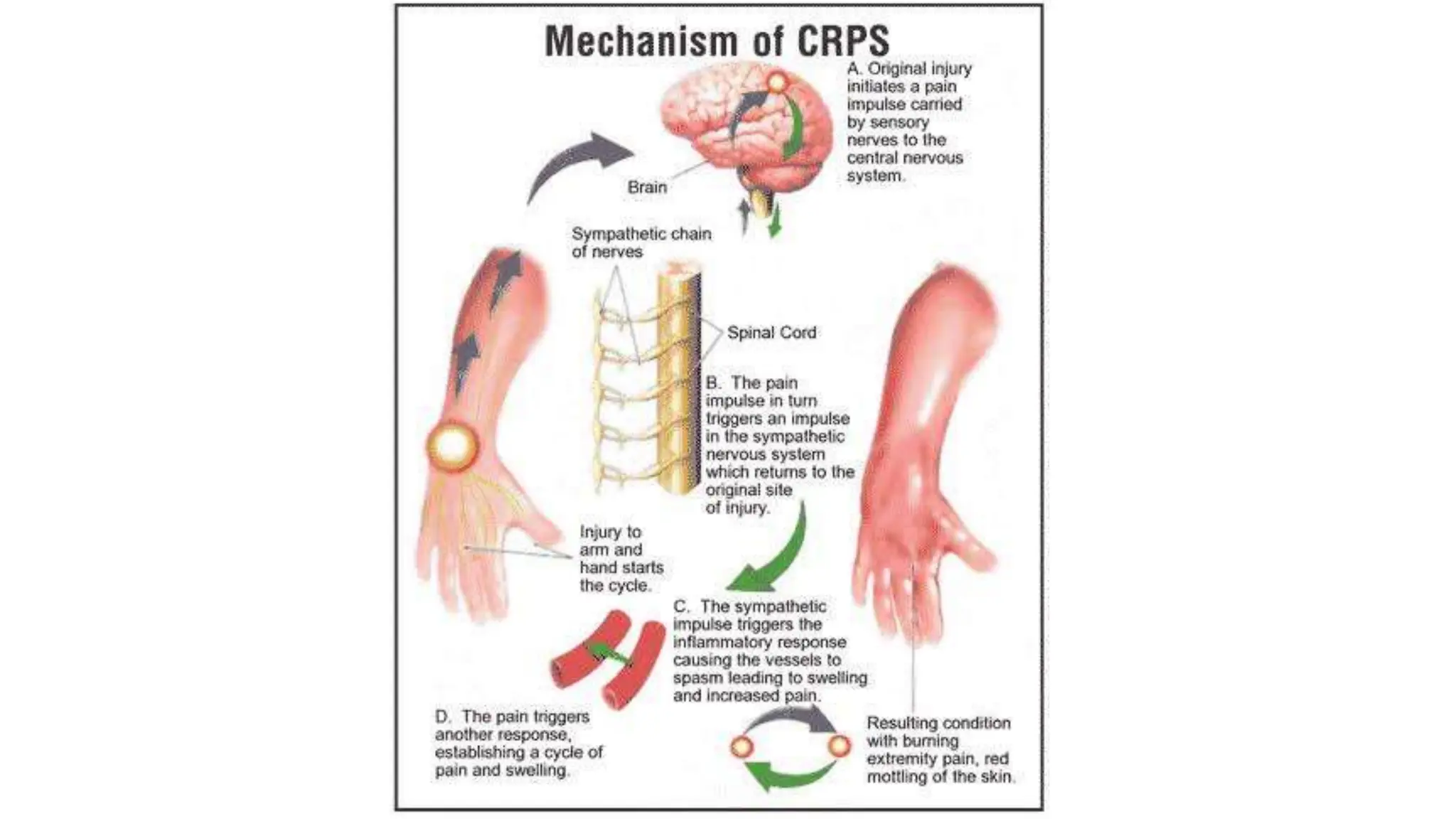
The central and peripheral
nervous systems are connected
through neural and chemical
pathways, and can have direct
control over the autonomic
nervous system. It is for this
reason that there can be changes
in vasomotor and sudomotor
responses without any
impairment in the peripheral
nervous system
• Various mechanisms are at play in the development and maintenance of CRPS,
including nerve injury, central and peripheral sensitisation, altered sympathetic
function, inflammatory and immune factors, brain changes, genetic factors and
psychological factors.
• CRPS usually follows trauma/surgery, and likely starts with normal peripheral
nociceptive stimulation. Enhanced, altered and ongoing nociception can then lead
to peripheral and central sensitisation (CS), with the latter regarded as a
prominent mechanism underlying CRPS.
• Sustained neuroinflammation has lately received attention as a key factor in the
initiation of CRPS. Neuropeptides mediate the enhanced neurogenic inflammation
and pain; they may activate astrocytes, resulting in a cascade of events that
sensitise neurons. Upregulated cytokines, secreted by keratinocytes, exacerbate
this phenomenon.
• Treatment approaches are aimed at normalising afferent inputs and reversing
secondary changes associated with immobilisation.
Clinical
Presentation
Clinical picture
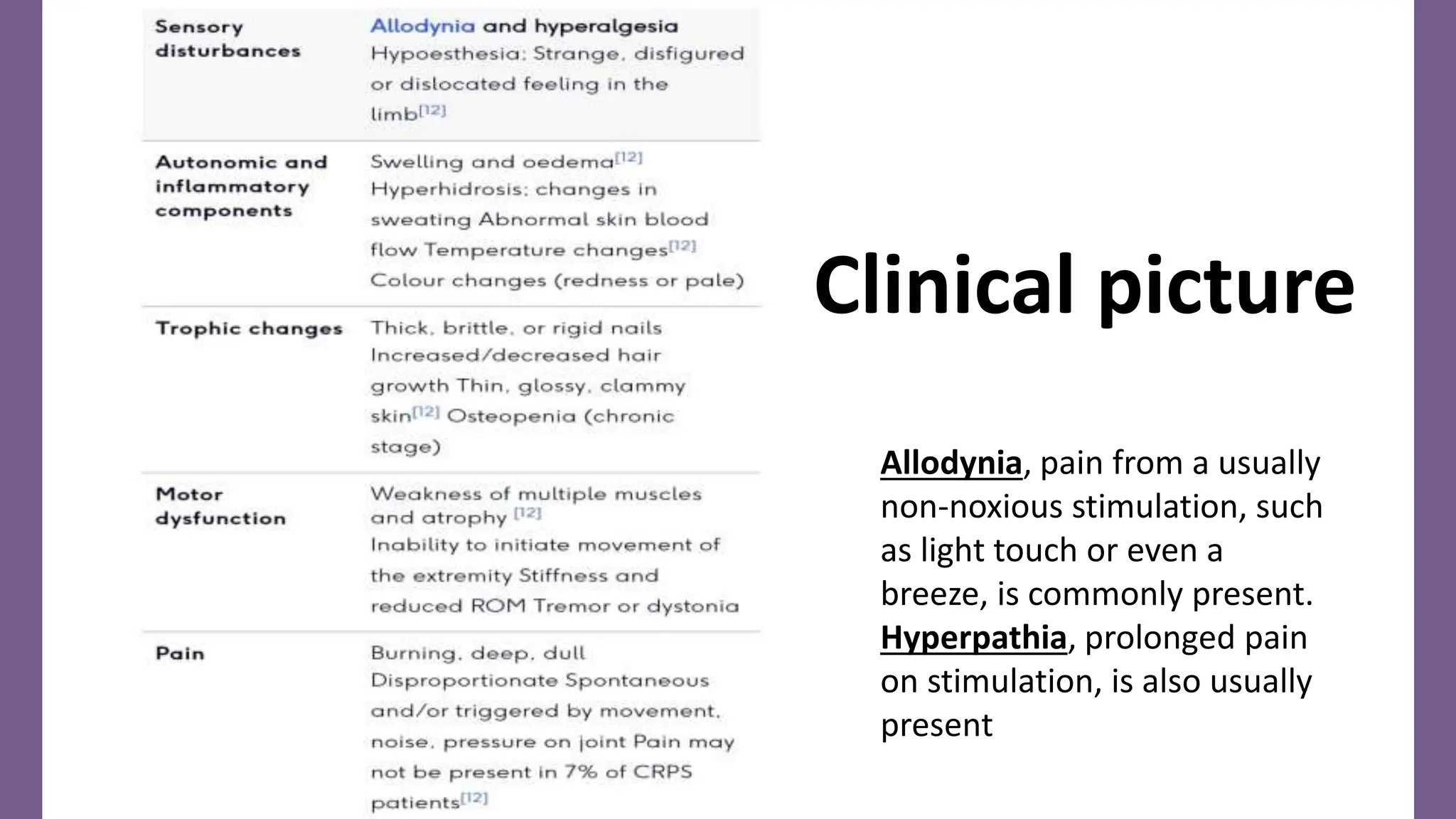
Allodynia, pain from a usually
non-noxious stimulation, such
as light touch or even a
breeze, is commonly present.
Hyperpathia, prolonged pain
on stimulation, is also usually
present
Q
What is shoulder–hand syndrome?
The concomitant shoulder involvement
seen with hand CRPS.
The ipsilateral shoulder may become
diffusely painful, develop limited range
of motion in all directions, and may
progress to adhesive capsulitis.
A
Diagnosis
History Examination
Investigations Diagnostic criteria
Examination
Autonomic Dysfunction:
The majority of patients with CRPS have bilateral differences in limb temperature and the skin
temperature depends of the chronicity of the disease.
In the acute stages, temperature increases are often concomitant with a white or reddish
colouration of the skin and swelling.
where the syndrome is chronic, the temperature will decrease and is associated with a bluish
tint to the skin and atrophy.
Motor Dysfunction:
Studies have shown that approximately 70% of the patients with CRPS show muscle weakness
in the affected limb, exaggerated tendon reflexes or tremor, irregular myoclonic jerks, and
dystonic muscle contractions. Muscle dysfunction often coincides with a loss of range of
motion in the distal joints.
Sensory Dysfunction:
The distal ends of the extremities require attention when examining a patient with CRPS.
However, common findings of regional neuropathic and motor dysfunction have shown us that
it is important to broaden the examination both proximally and contralaterally. [41]Light
touch, pinprick, temperature and vibration sensation should be assessed for a complete
picture of the CRPS.
Investigations
X Ray
The characteristic radiologic appearance is soft tissue swelling and regional patchy or mottled
osteopenia
three phase bone scan (TPBS) has emerged as an objective diagnostic test especially if
performed within the first 5 months.
In stage 1, there is an increase in blood velocity and blood pooling with early and delayed
hyperfixation. The bone scan is abnormal approximately 80% of the time in this stage.
A quantitative increased radiotracer uptake (ipsilateral >1.32 compared with contralateral) in the
third phase of the TPBS in joints distal to trauma is characteristic.
In stage 2, there is normalization of blood velocity and blood pooling but a persistence of early
and delayed hyperfixation. The bone scan is abnormal approximately half the time in this stage.
In stage 3, there is reduced blood velocity and blood pooling, and a minority of patients have
early and delayed hyperfixation.
Thus, a bone scan performed early in the disease is usually abnormal, but as the disease
progresses, scans can be normal.
A negative bone scan does not exclude the diagnosis of CRPS.
An abnormal (i.e., hot) bone scan may predict a good response to corticosteroids.
Lt hand | marked periarticular osteoprosis compared with Rt hand .
There is no clear role for computed tomography scan or magnetic
resonance imaging to confirm a diagnosis of CRPS.
They are used only to rule out other musculoskeletal disorders that
might be confused with CRPS..
Regional sympathetic nerve block (stellate ganglion or lumbar
sympathetic nerve) causing transient relief from pain and
dysesthesia is not diagnostic of CRPS but does confirm that the
pain is mediated by the sympathetic nervous system
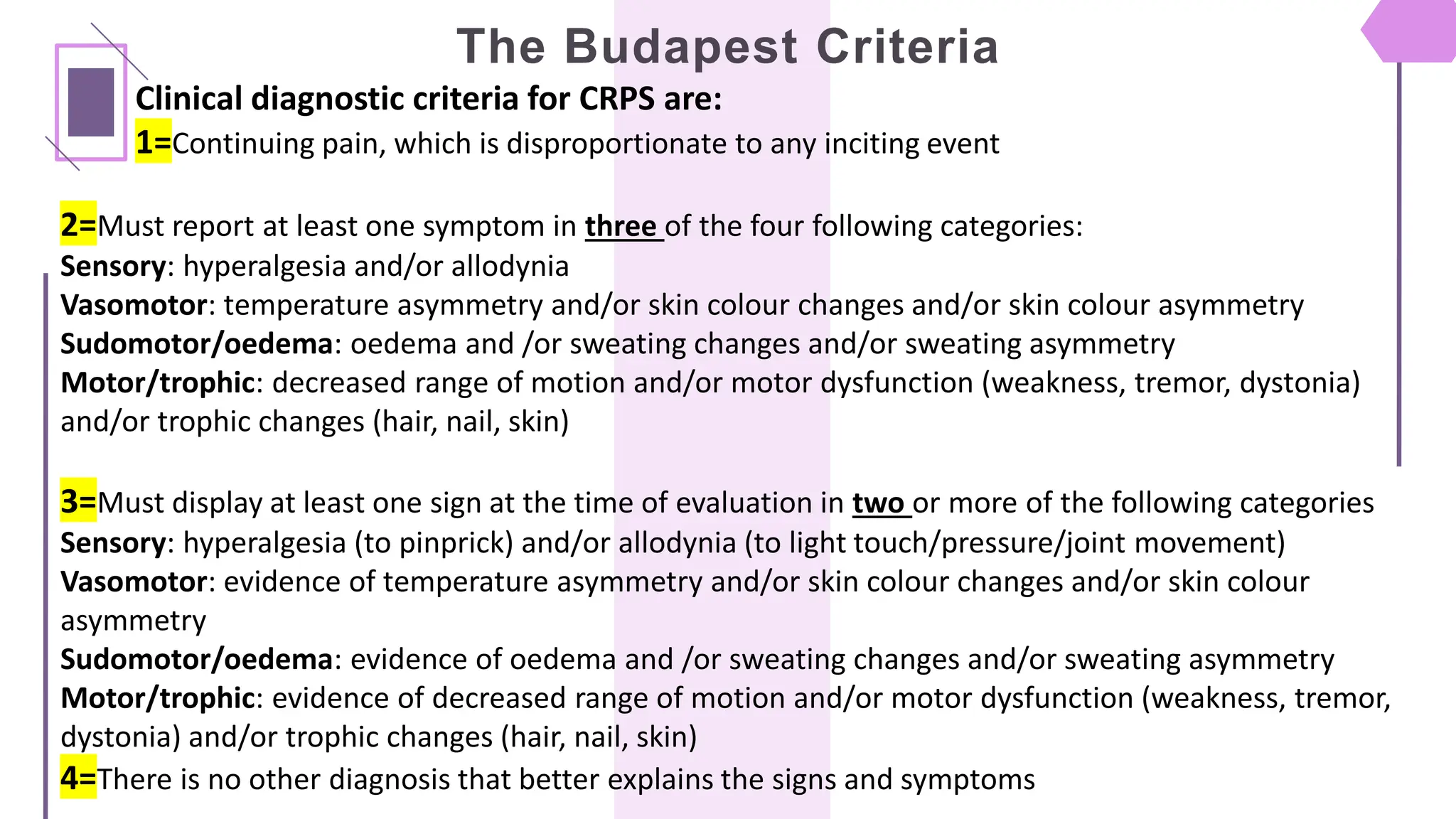
The Budapest Criteria
Clinical diagnostic criteria for CRPS are:
1=Continuing pain, which is disproportionate to any inciting event
2=Must report at least one symptom in three of the four following categories:
Sensory: hyperalgesia and/or allodynia
Vasomotor: temperature asymmetry and/or skin colour changes and/or skin colour asymmetry
Sudomotor/oedema: oedema and /or sweating changes and/or sweating asymmetry
Motor/trophic: decreased range of motion and/or motor dysfunction (weakness, tremor, dystonia)
and/or trophic changes (hair, nail, skin)
3=Must display at least one sign at the time of evaluation in two or more of the following categories
Sensory: hyperalgesia (to pinprick) and/or allodynia (to light touch/pressure/joint movement)
Vasomotor: evidence of temperature asymmetry and/or skin colour changes and/or skin colour
asymmetry
Sudomotor/oedema: evidence of oedema and /or sweating changes and/or sweating asymmetry
Motor/trophic: evidence of decreased range of motion and/or motor dysfunction (weakness, tremor,
dystonia) and/or trophic changes (hair, nail, skin)
4=There is no other diagnosis that better explains the signs and symptoms
The Budapest Criteria
Differential Diagnosis
• Bony or soft tissue injury
• Peripheral neuropathy, nerve lesions
• Inflammatory Arthritis
• Infection (osteomylitis )
• Compartment syndrome
• Arterial insufficiency
• Raynaud’s Disease
• Lymphatic or venous obstruction (eg. DVT)
• Thoracic Outlet Syndrome (TOS) * pancost tumor
• Gardner-Diamond Syndrome
• Erythromelalgia
• Self-harm or malingering
• Cellulitis
• Undiagnosed fracture
Management
Available noninvasive treatments
• Medication
• Physical and Occupational Therapy
• Psychological therapy.
Available invasive and surgical treatments
• Anesthetics
• A sympathetic ganglion block
• A spinal cord stimulator
• Surgical sympathectpmy
DRUGS useful to reduce pain to a level that allows you to
begin rehabilitation therapies:
Painkillers (analgesics) such as paracetamol, NSAIDs and tramadol may play a
part in controlling moderate pain.
Anticonvulsants such as gabapentin and pregabalin can help by reducing pain
signals from the nerves to the brain.
Anti inflammatory : steroids can modulate the effect of inflammatory
neuropeptides.
Tricyclic antidepressants such as amitriptyline, given in low doses, can also
reduce pain signals to the brain and help improve sleeping.
Other antidepressants, such as duloxetine, also have pain-relieving
properties.
Antiosteoprotic therapy, used mainly to prevent thinning of the bones,
may also provide pain relief, although the reasons for this aren't fully understood.
Patches filled with lidocaine (a local anaesthetic) may also be used.
Topical capsaicin : depletion of supstance P in peripheral nerves.
Blocking of the sympathetic nervous system if severe pain ,
by (lidocaine, opioid injection inti ganglion , IV phentolamine ,surgical
sympathectomy )
Rehabilitation
• Physiotherapy
Progressive strengthening - ROM exercises
Gradual weight bearing
US , TENS
• Occuptional therapy
Desensitisation
Graded motor imagery
Mirror visual feedback therapy
vitamin C 500 mg daily for 50 days is a
low-risk intervention that may reduce the
prevalence of CRPS in patients who had
wrist fractures ,lower limb injuries or CTS
surgery.
How to prevent ?
ADD YOUR TITLE
ENTER TITLE
Nostalgia took me to the depths of past.
ENTER TITLE
Nostalgia took me to the depths of past.
ENTER TITLE
Nostalgia took me to the depths of past.
ENTER TITLE
Nostalgia took me to the depths of past.
THANK YOU

All about Complex Regional Pain Syndrome.pptx

  • 1.
    Complex Regional pain syndrome ByAya Reyad Rheumatology resident at Aswan Univercity Hospital
  • 2.
    Contents I n tr o d u c t i o n E t i o l o g y C l i n i c a l P r e s e n t a t i o n D i a g n o s i s & T T T
  • 3.
    Complex Regional PainSyndrome (CRPS) a complex pain disorder characterised by continuing (spontaneous and/or evoked) regional pain that is seemingly disproportionate in time or degree to the usual course of any known trauma or lesion. abnormal sympathetic nerve activity occurs early in the disease course.
  • 4.
    Many names havebeen used to describe this syndrome such as Reflex Sympathetic Dystrophy Causalgia Algoneurodystrophy Sudeck’s atrophy Post-traumatic dystrophyosteprosis Transient osteoprosis Acute atrophy of bone
  • 5.
    CRPS is morecommon in females than males, with a ratio of 3.5:1. CRPS can affect people of all ages, including children as young as three years old and adults as old as 75 years. CRPS Type I occurs in 5% of all traumatic injuries, with 91% of all CRPS cases occurring after surgery.
  • 6.
    CRPS mostly affectingthe extremities, occurring slightly more in the lower extremities (60%) than in the upper extremities (40%). It can also appear unilaterally or bilaterally Location
  • 7.
    Prognosis Approximately 15% ofearly CRPS (up to 6-18 months duration) fail to recover and early onset of cold CRPS predicts poor recovery. Children have a better prognosis than adults .
  • 8.
    Type I occursin the absence of major nerve damage (minor nerve damage may be present) sympathetic dystrophy 90%of CRPS Type II occurs following major nerve damage. causalgia 10% of CRPS Classification
  • 9.
    Why do youthink that this classification has a little clinical importance ??! Q
  • 10.
    because there isa large overlap in clinical features and the primary diagnostic criteria are identical. A
  • 11.
    stage I -acute up to 3 months Severe burning or aching pain that increases with a very slight touch Muscle spasms and joint pain stage II - dystrophic 3-6- months after onset The level of pain increases The skin continues to change and the nails become brittle and cracked, and hair growth slows down. The joints stiffen and the muscles weaken. stage III - atrophic > 6 months These changes can become permanent. 3 Stages the existence of these stages has been suggested as unsubstantiatd .
  • 13.
    "warm CRPS" (warm, red,dry and oedematous extremity, inflammatory phenotype) "cold CRPS" (cold, blue or pale, sweaty and less oedematous, central phenotype). Warm CRPS is by far the most common in early CRPS, and cold CRPS tends to have a worse prognosis and more persistent symptomatology. Classification
  • 14.
    Central phenotype, withmotor signs, allodynia, and glove/stocking-like sensory deficits. Pheripheral inflammation phenotype, involving edema, skin color changes, skin temperature changes, sweating, and trophic changes. Mixed phenotype. a recent classification according to neurological examination. Classification
  • 15.
  • 16.
    Etiology Complex regional painsyndrome can develop after the occurrence of different types of injuries, such as: -Minor soft tissue trauma (sprains) -Surgeries ( CTS and foot surgeries) -Fractures, especially following immobilisation -Contusions -Crush injuries -Peripheral nerve diseases -Stroke - MI In 7% of cases there is no injury or surgery preceding the onset of CRPS.
  • 17.
    Pathophysiology The central andperipheral nervous systems are connected through neural and chemical pathways, and can have direct control over the autonomic nervous system. It is for this reason that there can be changes in vasomotor and sudomotor responses without any impairment in the peripheral nervous system
  • 19.
    • Various mechanismsare at play in the development and maintenance of CRPS, including nerve injury, central and peripheral sensitisation, altered sympathetic function, inflammatory and immune factors, brain changes, genetic factors and psychological factors. • CRPS usually follows trauma/surgery, and likely starts with normal peripheral nociceptive stimulation. Enhanced, altered and ongoing nociception can then lead to peripheral and central sensitisation (CS), with the latter regarded as a prominent mechanism underlying CRPS. • Sustained neuroinflammation has lately received attention as a key factor in the initiation of CRPS. Neuropeptides mediate the enhanced neurogenic inflammation and pain; they may activate astrocytes, resulting in a cascade of events that sensitise neurons. Upregulated cytokines, secreted by keratinocytes, exacerbate this phenomenon. • Treatment approaches are aimed at normalising afferent inputs and reversing secondary changes associated with immobilisation.
  • 20.
  • 21.
    Clinical picture Allodynia, painfrom a usually non-noxious stimulation, such as light touch or even a breeze, is commonly present. Hyperpathia, prolonged pain on stimulation, is also usually present
  • 25.
  • 26.
    The concomitant shoulderinvolvement seen with hand CRPS. The ipsilateral shoulder may become diffusely painful, develop limited range of motion in all directions, and may progress to adhesive capsulitis. A
  • 27.
  • 28.
    Examination Autonomic Dysfunction: The majorityof patients with CRPS have bilateral differences in limb temperature and the skin temperature depends of the chronicity of the disease. In the acute stages, temperature increases are often concomitant with a white or reddish colouration of the skin and swelling. where the syndrome is chronic, the temperature will decrease and is associated with a bluish tint to the skin and atrophy. Motor Dysfunction: Studies have shown that approximately 70% of the patients with CRPS show muscle weakness in the affected limb, exaggerated tendon reflexes or tremor, irregular myoclonic jerks, and dystonic muscle contractions. Muscle dysfunction often coincides with a loss of range of motion in the distal joints. Sensory Dysfunction: The distal ends of the extremities require attention when examining a patient with CRPS. However, common findings of regional neuropathic and motor dysfunction have shown us that it is important to broaden the examination both proximally and contralaterally. [41]Light touch, pinprick, temperature and vibration sensation should be assessed for a complete picture of the CRPS.
  • 29.
    Investigations X Ray The characteristicradiologic appearance is soft tissue swelling and regional patchy or mottled osteopenia three phase bone scan (TPBS) has emerged as an objective diagnostic test especially if performed within the first 5 months. In stage 1, there is an increase in blood velocity and blood pooling with early and delayed hyperfixation. The bone scan is abnormal approximately 80% of the time in this stage. A quantitative increased radiotracer uptake (ipsilateral >1.32 compared with contralateral) in the third phase of the TPBS in joints distal to trauma is characteristic. In stage 2, there is normalization of blood velocity and blood pooling but a persistence of early and delayed hyperfixation. The bone scan is abnormal approximately half the time in this stage. In stage 3, there is reduced blood velocity and blood pooling, and a minority of patients have early and delayed hyperfixation. Thus, a bone scan performed early in the disease is usually abnormal, but as the disease progresses, scans can be normal. A negative bone scan does not exclude the diagnosis of CRPS. An abnormal (i.e., hot) bone scan may predict a good response to corticosteroids.
  • 30.
    Lt hand |marked periarticular osteoprosis compared with Rt hand .
  • 31.
    There is noclear role for computed tomography scan or magnetic resonance imaging to confirm a diagnosis of CRPS. They are used only to rule out other musculoskeletal disorders that might be confused with CRPS.. Regional sympathetic nerve block (stellate ganglion or lumbar sympathetic nerve) causing transient relief from pain and dysesthesia is not diagnostic of CRPS but does confirm that the pain is mediated by the sympathetic nervous system
  • 32.
    The Budapest Criteria Clinicaldiagnostic criteria for CRPS are: 1=Continuing pain, which is disproportionate to any inciting event 2=Must report at least one symptom in three of the four following categories: Sensory: hyperalgesia and/or allodynia Vasomotor: temperature asymmetry and/or skin colour changes and/or skin colour asymmetry Sudomotor/oedema: oedema and /or sweating changes and/or sweating asymmetry Motor/trophic: decreased range of motion and/or motor dysfunction (weakness, tremor, dystonia) and/or trophic changes (hair, nail, skin) 3=Must display at least one sign at the time of evaluation in two or more of the following categories Sensory: hyperalgesia (to pinprick) and/or allodynia (to light touch/pressure/joint movement) Vasomotor: evidence of temperature asymmetry and/or skin colour changes and/or skin colour asymmetry Sudomotor/oedema: evidence of oedema and /or sweating changes and/or sweating asymmetry Motor/trophic: evidence of decreased range of motion and/or motor dysfunction (weakness, tremor, dystonia) and/or trophic changes (hair, nail, skin) 4=There is no other diagnosis that better explains the signs and symptoms
  • 33.
  • 34.
    Differential Diagnosis • Bonyor soft tissue injury • Peripheral neuropathy, nerve lesions • Inflammatory Arthritis • Infection (osteomylitis ) • Compartment syndrome • Arterial insufficiency • Raynaud’s Disease • Lymphatic or venous obstruction (eg. DVT) • Thoracic Outlet Syndrome (TOS) * pancost tumor • Gardner-Diamond Syndrome • Erythromelalgia • Self-harm or malingering • Cellulitis • Undiagnosed fracture
  • 35.
  • 36.
    Available noninvasive treatments •Medication • Physical and Occupational Therapy • Psychological therapy. Available invasive and surgical treatments • Anesthetics • A sympathetic ganglion block • A spinal cord stimulator • Surgical sympathectpmy
  • 37.
    DRUGS useful toreduce pain to a level that allows you to begin rehabilitation therapies: Painkillers (analgesics) such as paracetamol, NSAIDs and tramadol may play a part in controlling moderate pain. Anticonvulsants such as gabapentin and pregabalin can help by reducing pain signals from the nerves to the brain. Anti inflammatory : steroids can modulate the effect of inflammatory neuropeptides. Tricyclic antidepressants such as amitriptyline, given in low doses, can also reduce pain signals to the brain and help improve sleeping. Other antidepressants, such as duloxetine, also have pain-relieving properties. Antiosteoprotic therapy, used mainly to prevent thinning of the bones, may also provide pain relief, although the reasons for this aren't fully understood. Patches filled with lidocaine (a local anaesthetic) may also be used. Topical capsaicin : depletion of supstance P in peripheral nerves. Blocking of the sympathetic nervous system if severe pain , by (lidocaine, opioid injection inti ganglion , IV phentolamine ,surgical sympathectomy )
  • 38.
    Rehabilitation • Physiotherapy Progressive strengthening- ROM exercises Gradual weight bearing US , TENS • Occuptional therapy Desensitisation Graded motor imagery Mirror visual feedback therapy
  • 40.
    vitamin C 500mg daily for 50 days is a low-risk intervention that may reduce the prevalence of CRPS in patients who had wrist fractures ,lower limb injuries or CTS surgery. How to prevent ?
  • 41.
    ADD YOUR TITLE ENTERTITLE Nostalgia took me to the depths of past. ENTER TITLE Nostalgia took me to the depths of past. ENTER TITLE Nostalgia took me to the depths of past. ENTER TITLE Nostalgia took me to the depths of past.
  • 42.