GENERAL
BIOLOGY
Sam Milben
CROSSING OVER AND
RECOMBINATION IN
MEOSIS
WE ARE
UNIQUE!!!
2
WHAT IS
CROSSING
OVER?
• Crossing over is the exchange of segments between the
non-sister chromatids of homologous chromosome.
Origins:
There are two popular and overlapping theories
explaining the origins of crossing-over, coming from
the different theories on the origin Of meiosis.
.
1. The first theory rests upon the idea that meiosis evolved
as another method Of DNA repair. and thus crossing-over
is a novel way to replace possibly damaged sections Of
DNA
2. The second theory is that meiosis
evolved from bacterial transformation. with the function
of propagating diversity.
The five stages are leptotene where the chromosomes
align and prepare for recombination; zygotene during
which crossing over takes place between the chromatids
in the tetrad; pachytene in which these chromosomes now
start to separate; diplotene, in which the chiasmata break
down, and the pairs move apart, and finally diakinesis
where they are at opposite poles of the cell.
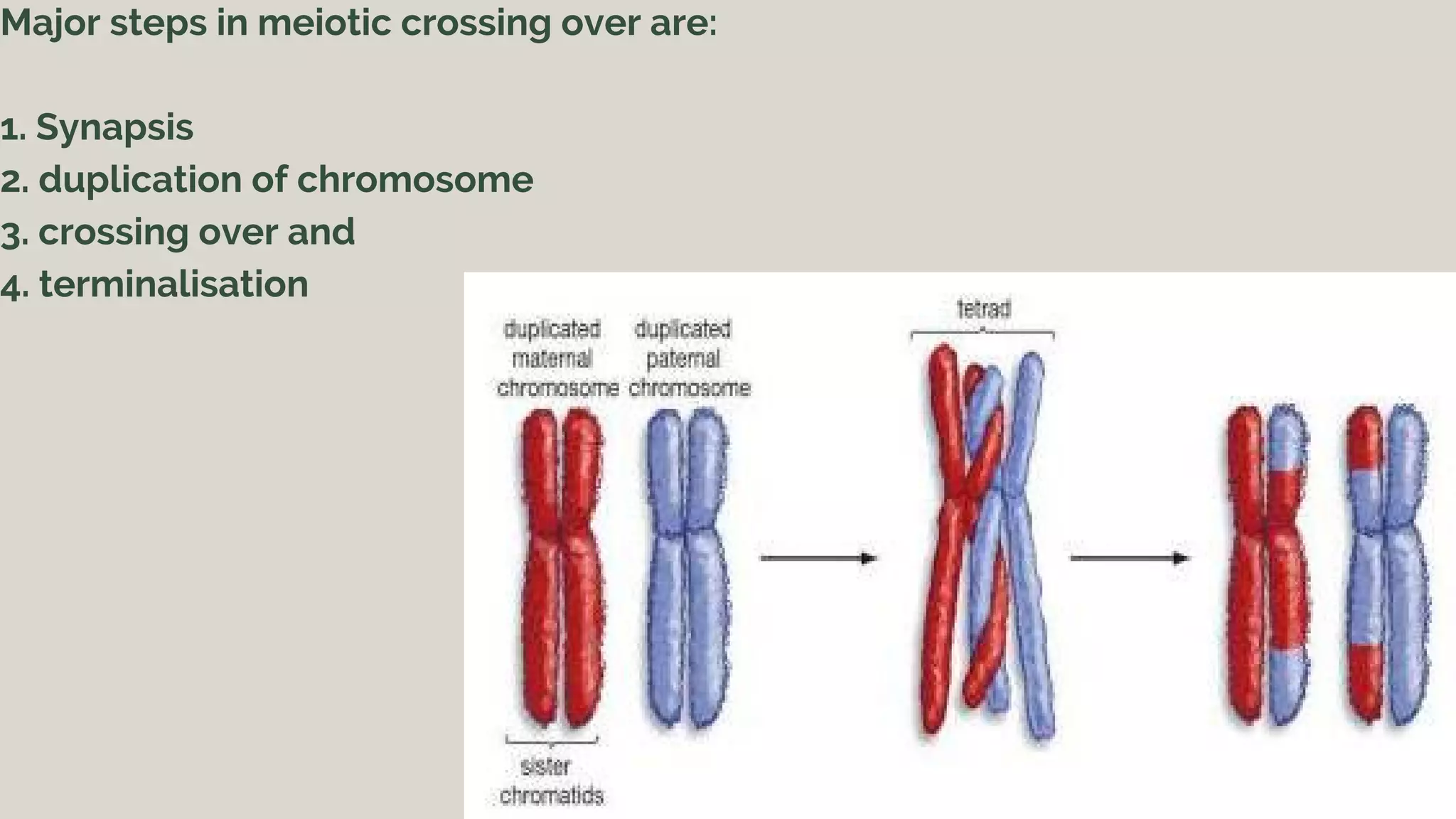
Major steps in meiotic crossing over are:
1. Synapsis
2. duplication of chromosome
3. crossing over and
4. terminalisation
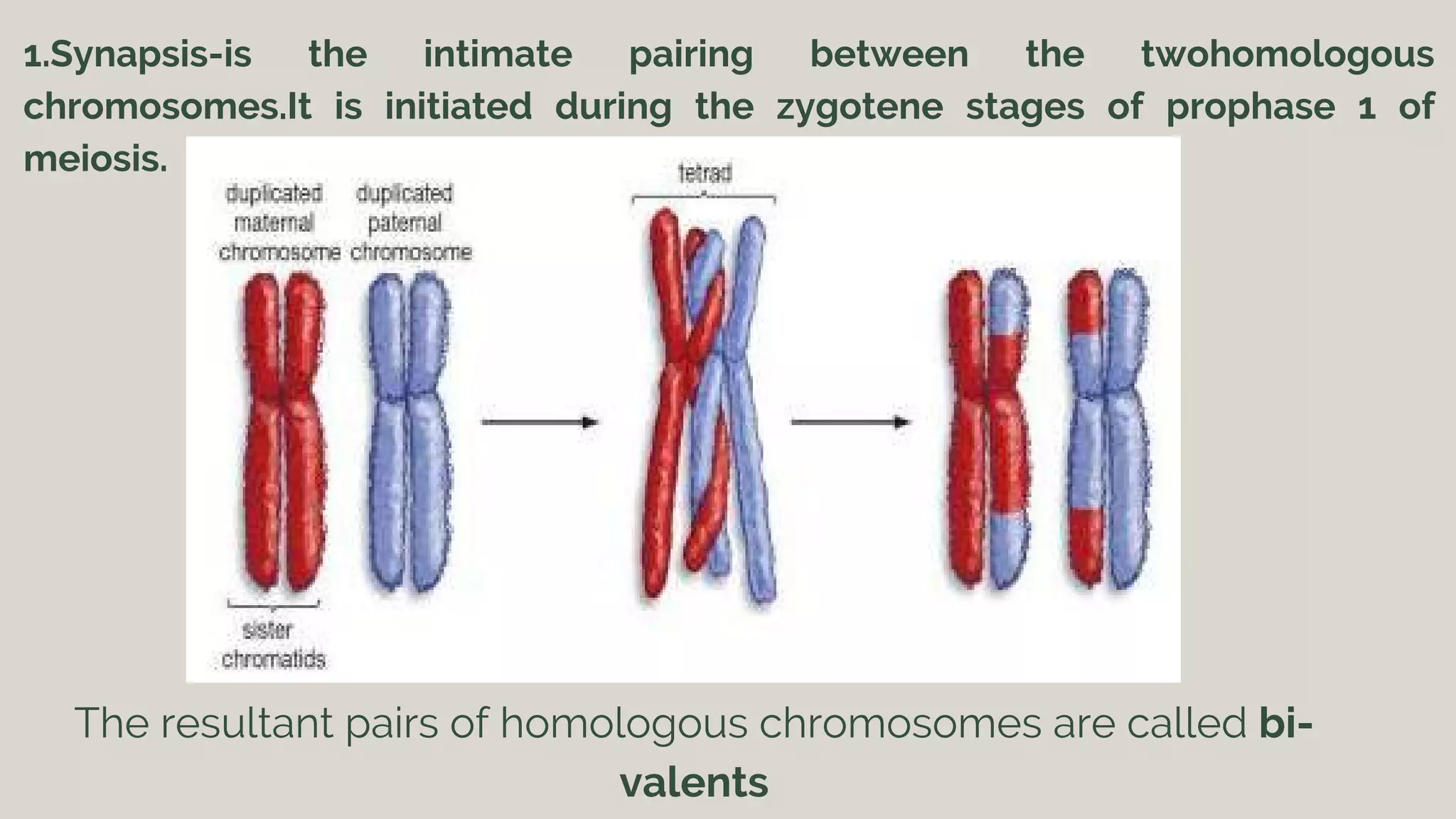
1.Synapsis-is the intimate pairing between the twohomologous
chromosomes.It is initiated during the zygotene stages of prophase 1 of
meiosis.
The resultant pairs of homologous chromosomes are called bi-
valents
For easier understanding,crossing over can be divided into 3 major
steps;
1.breakage of chromatids segments
2.their transportation(movement to the respective site)and
3.fusion or joining
Synapsis is followed by duplication of chromosome (in pachytene)
The final step is Terminalisation.After crossing over the non-sister
chromatids starts to repel each other.
The movement of chiasma is known as Terminalisation.As a result of
terminalisation, homologous chromosomes are separated
completely.
3
BOTTOM LINE
Its Why You and I Don't Look Alike
Crossing Over ensures a
combination of the maternal and
paternal genes we inherited
• So, when chromosomes separated during meiosis
some of the daughter cells receive daughter
chromosome
with recombined alleles.
• Due to this genetic recombination offspring have a
different set of genes and alleles than their parents
4
TYPES OF CROSSING OVER
• Single crossing over:
Chromosomal crossover (or crossing over)
is the exchange of genetic material
between homologous chromosomes that
result in recombinant chromosomes
.


Formation of single chiasma and involves
only two chrimatids out of four
•DOUBLE CROSSING
OVER
-It refers to the formation of two
chiasmata between non-sister
chromatids of homologous
chromosomes
-Two simultaneous reciprocal and
reunion events between the same two
chromatids.
-Formation of two
chiasma and involves two
or three or all four
strands
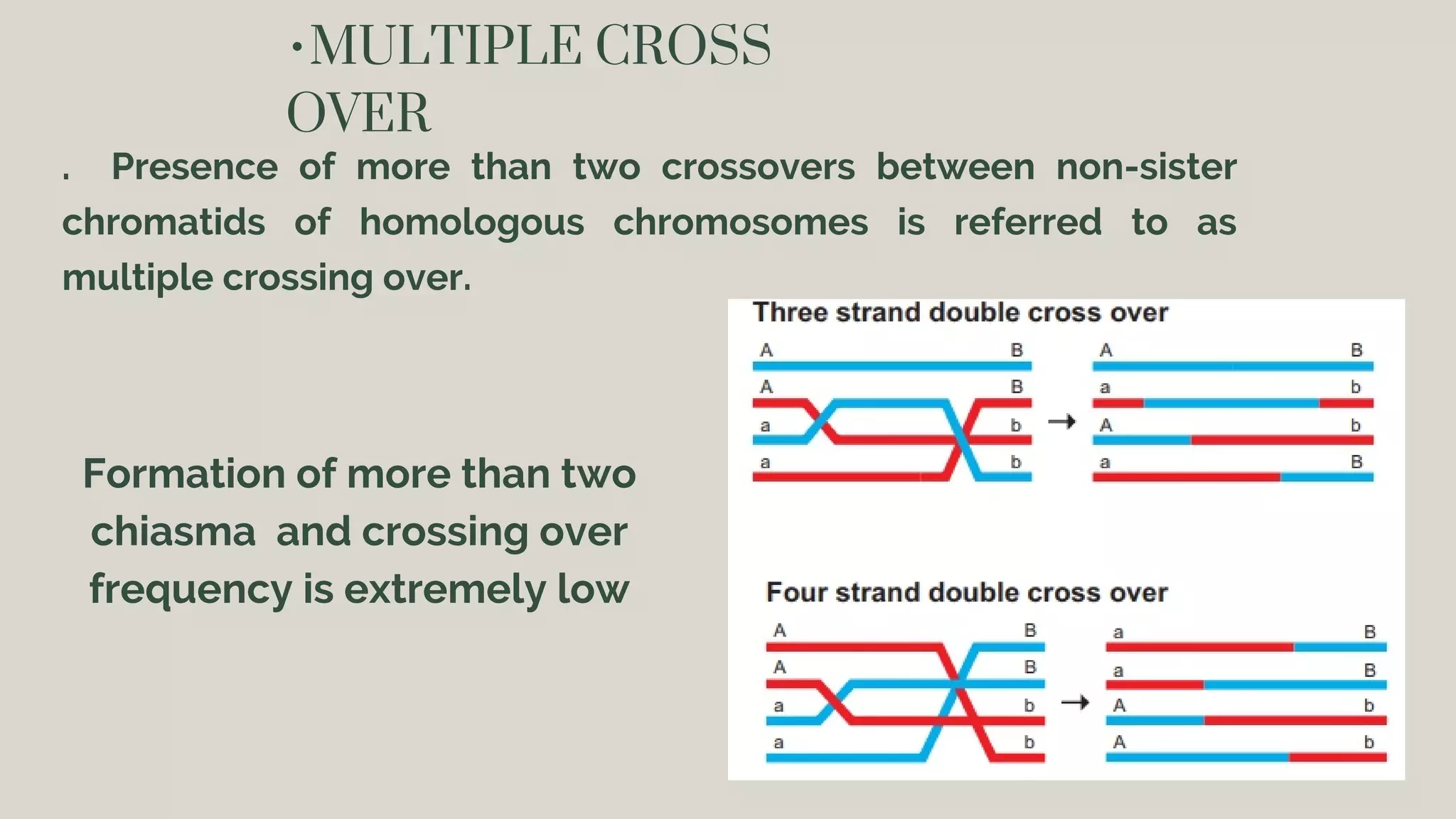
•MULTIPLE CROSS
OVER
. Presence of more than two crossovers between non-sister
chromatids of homologous chromosomes is referred to as
multiple crossing over.
Formation of more than two
chiasma and crossing over
frequency is extremely low
Crossing over allows genetic variants of the same
chromosome to evolve
Which greatly increases an organism's evolutionary
FOR
LISTENING
THANK U
Sam Milben Samonte
QUIZ
TIME!!!
Multiple Choice
1. What do you call the exchanging of segments between
the non-sister chromatids of a homologous
chromosome?
A.Synapsis
B.Terminalisation
C.Crossing Over
2.Last step in Meiotic Crossing Over
A.Terminalisation
B.Synapsis
C.Duplication of chromosome
Enumeration
3-6)What are the major steps in Meiotic crossing over?
7-9)Three types of Crossing over
True or False
10.Single crossing over is formation of only one or single
chiasma and involves only two chromatids out of four.

Crossing over and Recombination in Meiosos.pdf

  • 1.
    GENERAL BIOLOGY Sam Milben CROSSING OVERAND RECOMBINATION IN MEOSIS
  • 2.
  • 3.
    2 WHAT IS CROSSING OVER? • Crossingover is the exchange of segments between the non-sister chromatids of homologous chromosome. Origins: There are two popular and overlapping theories explaining the origins of crossing-over, coming from the different theories on the origin Of meiosis. . 1. The first theory rests upon the idea that meiosis evolved as another method Of DNA repair. and thus crossing-over is a novel way to replace possibly damaged sections Of DNA 2. The second theory is that meiosis evolved from bacterial transformation. with the function of propagating diversity.
  • 4.
    The five stagesare leptotene where the chromosomes align and prepare for recombination; zygotene during which crossing over takes place between the chromatids in the tetrad; pachytene in which these chromosomes now start to separate; diplotene, in which the chiasmata break down, and the pairs move apart, and finally diakinesis where they are at opposite poles of the cell.
  • 5.
    Major steps inmeiotic crossing over are: 1. Synapsis 2. duplication of chromosome 3. crossing over and 4. terminalisation
  • 6.
    1.Synapsis-is the intimatepairing between the twohomologous chromosomes.It is initiated during the zygotene stages of prophase 1 of meiosis. The resultant pairs of homologous chromosomes are called bi- valents
  • 7.
    For easier understanding,crossingover can be divided into 3 major steps; 1.breakage of chromatids segments 2.their transportation(movement to the respective site)and 3.fusion or joining Synapsis is followed by duplication of chromosome (in pachytene) The final step is Terminalisation.After crossing over the non-sister chromatids starts to repel each other. The movement of chiasma is known as Terminalisation.As a result of terminalisation, homologous chromosomes are separated completely.
  • 8.
    3 BOTTOM LINE Its WhyYou and I Don't Look Alike Crossing Over ensures a combination of the maternal and paternal genes we inherited • So, when chromosomes separated during meiosis some of the daughter cells receive daughter chromosome with recombined alleles. • Due to this genetic recombination offspring have a different set of genes and alleles than their parents
  • 9.
    4 TYPES OF CROSSINGOVER • Single crossing over: Chromosomal crossover (or crossing over) is the exchange of genetic material between homologous chromosomes that result in recombinant chromosomes . Formation of single chiasma and involves only two chrimatids out of four
  • 10.
    •DOUBLE CROSSING OVER -It refersto the formation of two chiasmata between non-sister chromatids of homologous chromosomes -Two simultaneous reciprocal and reunion events between the same two chromatids. -Formation of two chiasma and involves two or three or all four strands
  • 11.
    •MULTIPLE CROSS OVER . Presenceof more than two crossovers between non-sister chromatids of homologous chromosomes is referred to as multiple crossing over. Formation of more than two chiasma and crossing over frequency is extremely low
  • 12.
    Crossing over allowsgenetic variants of the same chromosome to evolve Which greatly increases an organism's evolutionary
  • 13.
  • 14.
  • 15.
    Multiple Choice 1. Whatdo you call the exchanging of segments between the non-sister chromatids of a homologous chromosome? A.Synapsis B.Terminalisation C.Crossing Over 2.Last step in Meiotic Crossing Over A.Terminalisation B.Synapsis C.Duplication of chromosome
  • 16.
    Enumeration 3-6)What are themajor steps in Meiotic crossing over? 7-9)Three types of Crossing over True or False 10.Single crossing over is formation of only one or single chiasma and involves only two chromatids out of four.