Cross-selling in the Banking
Industry
BY: GILLYAN GOWARTY
MAY 6, 2017
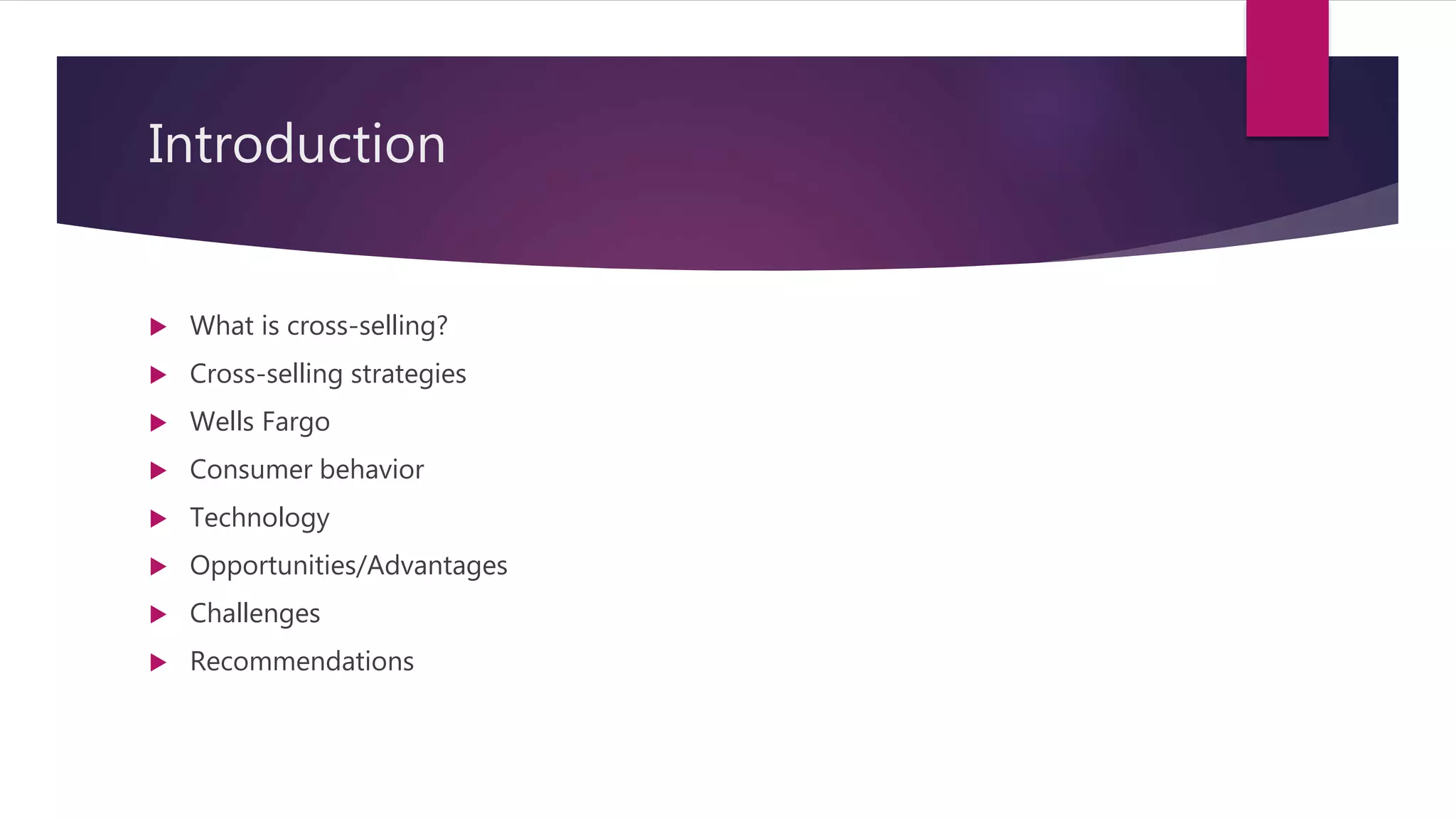
Introduction
 What is cross-selling?
 Cross-selling strategies
 Wells Fargo
 Consumer behavior
 Technology
 Opportunities/Advantages
 Challenges
 Recommendations
Cross-selling
 What is cross-selling?
 The selling of multiple products and services to existing customers
 How does it apply to the banking industry?
 Cross-selling is a core banking sales function
 A key element of cross-selling is establishing strong customer relationships
Strategies
 Cross-selling requires that bank personnel establish strong relationships with their
customers.
 Bankers need to understand what their customers need, along with having a strong
knowledge of what products and services they have to offer.
 Utilize a database
 Match the customer to the product
 Ask questions
 Present the questions in a natural dialogue
Strategies cont’d
 The easiest sales that can be made to existing customers are products and services
that can help them to better utilize an account they already own
 These sales can include a debit card, online banking, direct deposit, bill pay, automatic
savings transfer, personal line of credit
 It is important to stay connected with customers after that initial sale
 Send follow-up emails, make phone calls, send cards
Strategies Cont’d
 It is important to continually evaluate cross-selling opportunities
 Customer focused software
 Send out personalized communication
 Make sure employees are properly trained
 Remember that customers like to be rewarded for their loyalty
Wells Fargo
 Sept 2016- Wells Fargo was fined 185 million for unethical sales practices
 Fired 5,300 employees
 Employees had unrealistic sales goals
 Received threats from management
 Accounts were opened without customer authorization
Wells Fargo Cont’d
 Wells Fargo was always well-known for its effective cross-selling strategies
 In the first quarter of 2015, Wells Fargo reported that its retail banking customers
had an average of 6.13 products per household
 Cross-selling became a focus for Wells Fargo during the 1990s
 Going for Gr-eight
Wells Fargo Cont’d
 Sandbagging
 Bundling
 Pinning
Consumer Behavior
 Consumers tend to utilize more than one financial institution
 Married couples have five or six bank accounts, sometimes spread over several
financial institutions
 Joint or individual
 FDIC limits
 Some accounts are goal specific
 Christmas clubs, Vacation funds
 Keeping track of several different accounts can be challenging
 A downside of maintaining multiple accounts is the fees that can be involved
Bank incentives for Customers
 When it comes to choosing a financial institution, consumers have many options
 Banks are using incentives to attract new customers, retain existing customers, and
to get their customers to use more services
 Many banks offer cash bonuses for new accounts, as long as certain criteria are
met
 Average balance, qualifying direct deposit, number of purchases with a debit card
 Average bonus between 150 and 300
Technology
 The banking industry is forced to adapt to advancing technology
 Branches are adapting/disappearing
 Changing the way bankers interact with customers
 JP Morgan said that tellers only handled 42% of banking transactions. This has
drastically decreased since 2007, when 90% of all banking transactions were
conducted by tellers
 Teller jobs/titles are changing
 These jobs now involve responsibilities such as handling transactions, assisting
customers with online transactions, offering advice on various products, and assisting
customers with ATMs
Technology Cont’d
 Branch traffic is plummeting
 Customers can now perform routine transactions on their phones
 Not limited to banking hours
 Branches will soon look like airport check-in kiosks
 Self-service kiosks, iPads, 24-hour teleconferencing
 JPMorgan, Chase, PNC Bank, Bank of America, and KeyBank are testing self-service
kiosks, self-service drive-thru lanes, and 24-hour ATMs which will feature the
ability to chat with a teller
Technology Cont’d
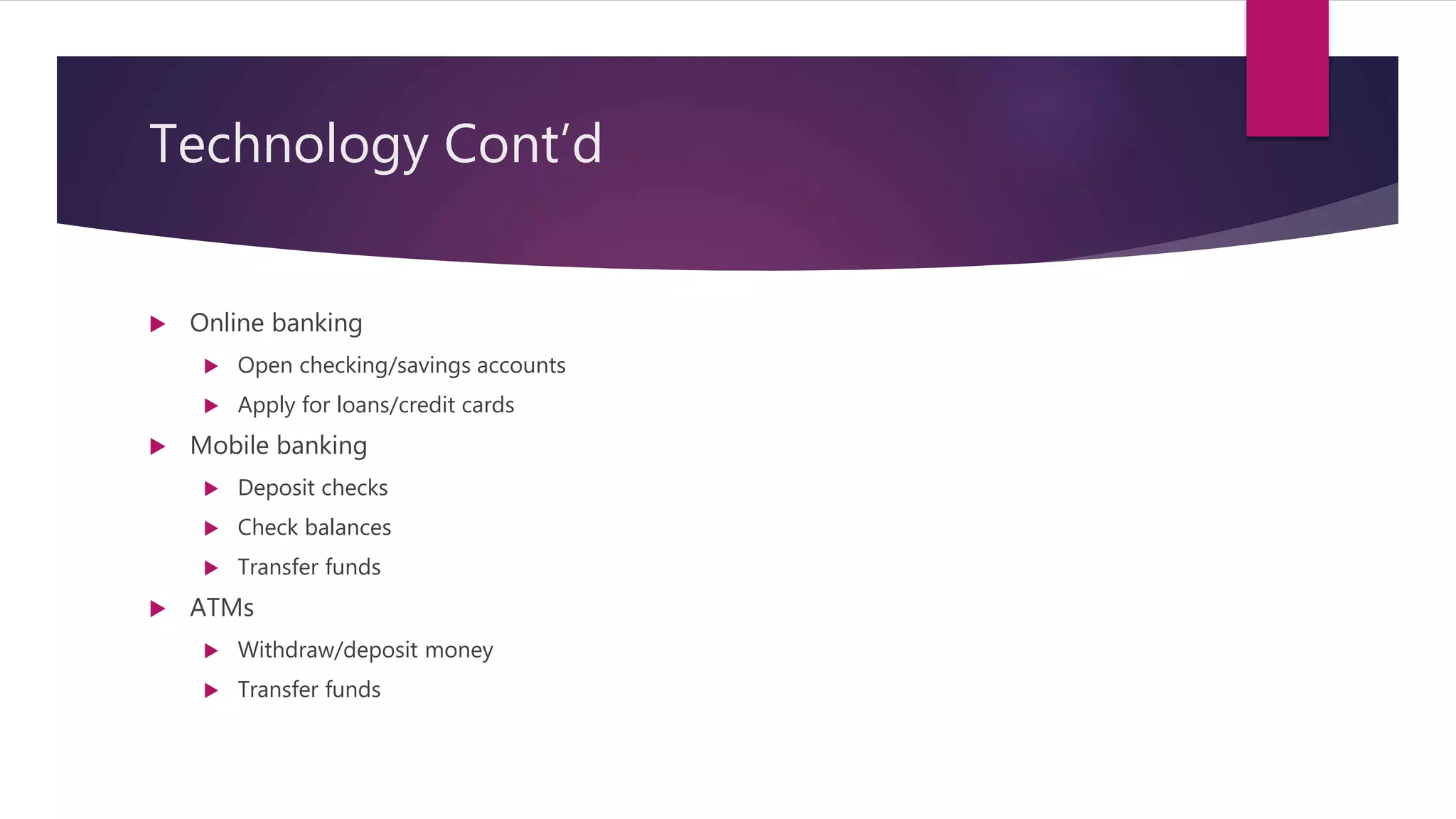
 Online banking
 Open checking/savings accounts
 Apply for loans/credit cards
 Mobile banking
 Deposit checks
 Check balances
 Transfer funds
 ATMs
 Withdraw/deposit money
 Transfer funds
Technology Cont’d
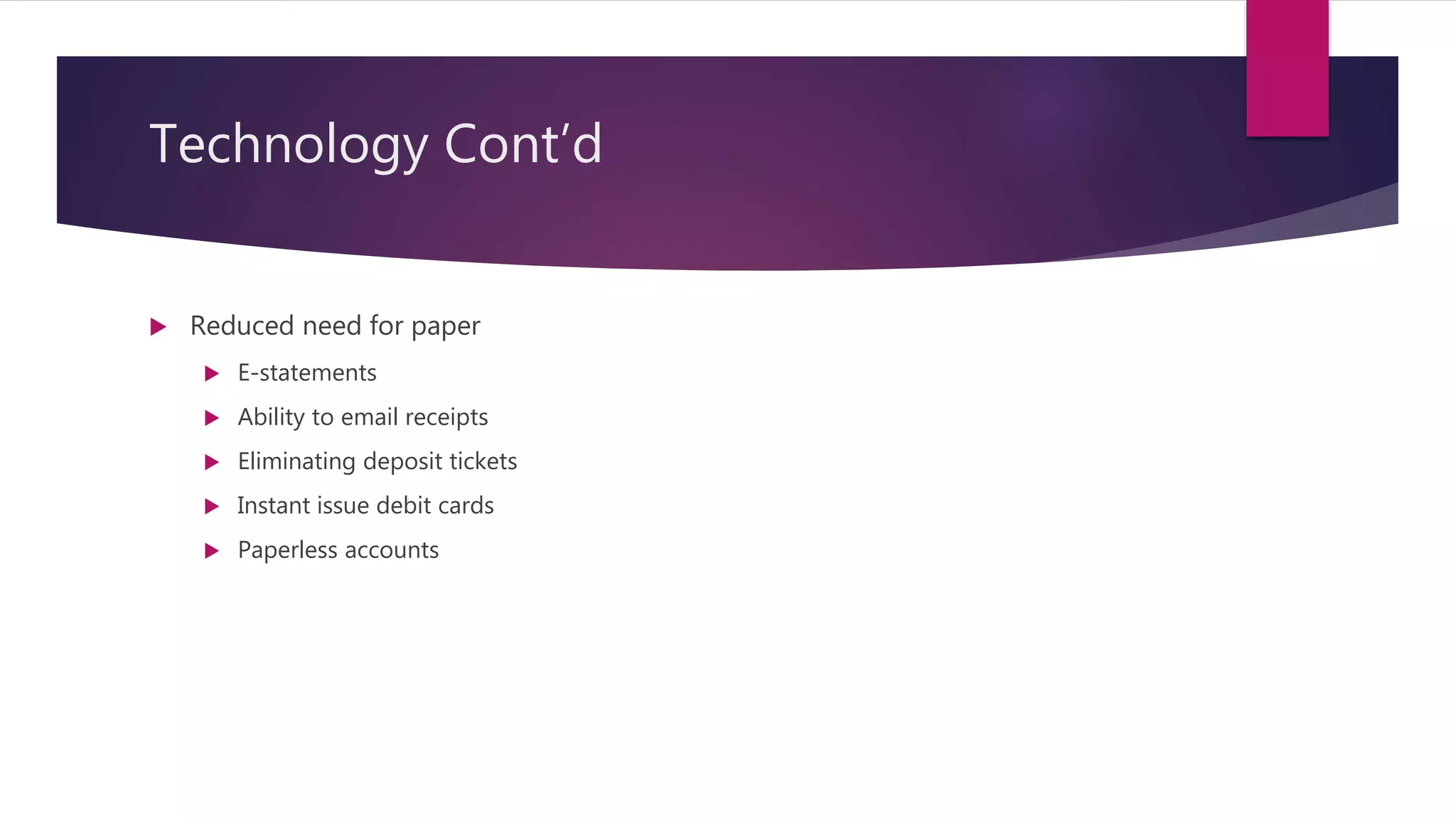
 Reduced need for paper
 E-statements
 Ability to email receipts
 Eliminating deposit tickets
 Instant issue debit cards
 Paperless accounts
Opportunities/Advantages
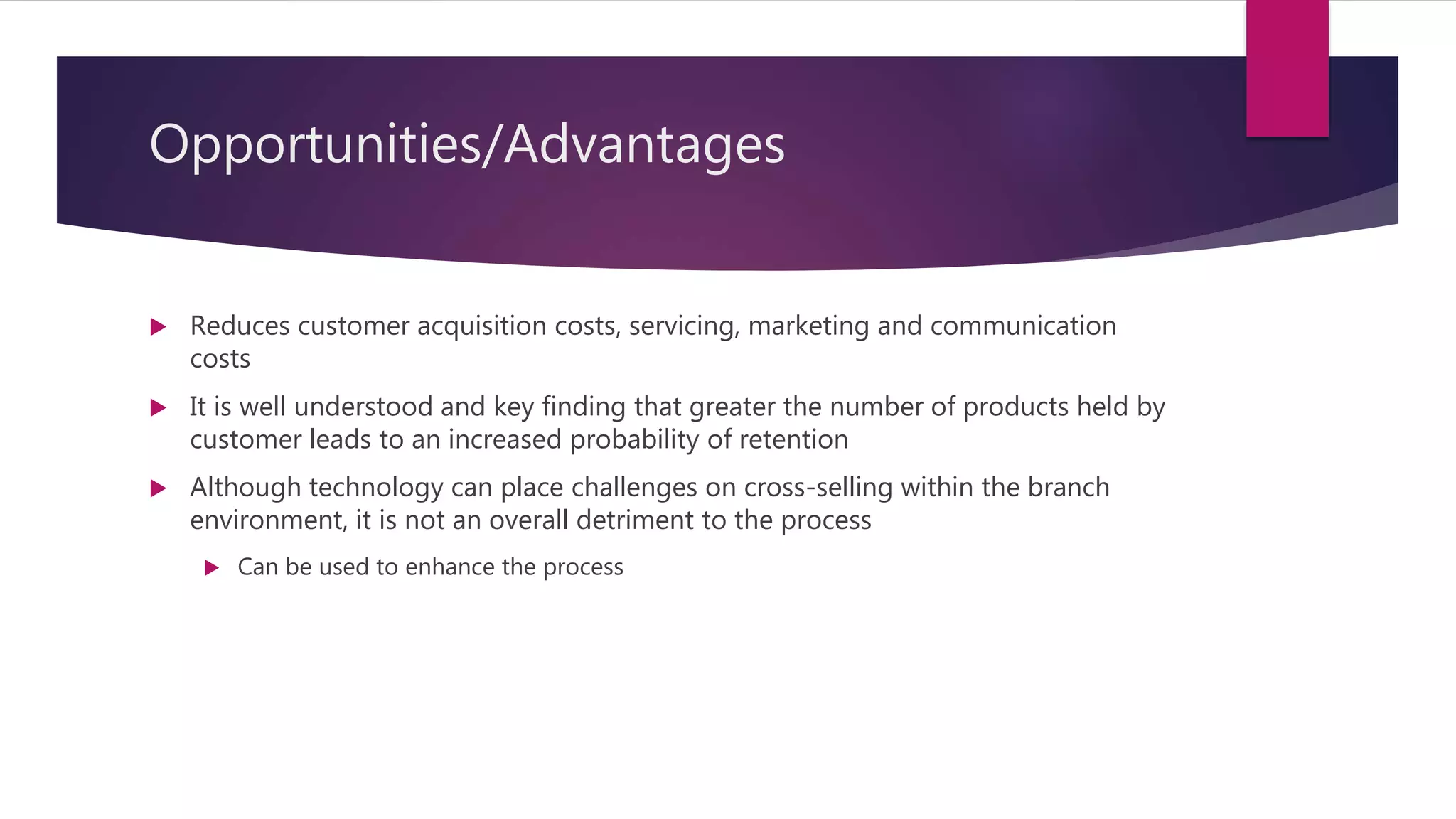
 Reduces customer acquisition costs, servicing, marketing and communication
costs
 It is well understood and key finding that greater the number of products held by
customer leads to an increased probability of retention
 Although technology can place challenges on cross-selling within the branch
environment, it is not an overall detriment to the process
 Can be used to enhance the process
Opportunities/Advantages Cont’d
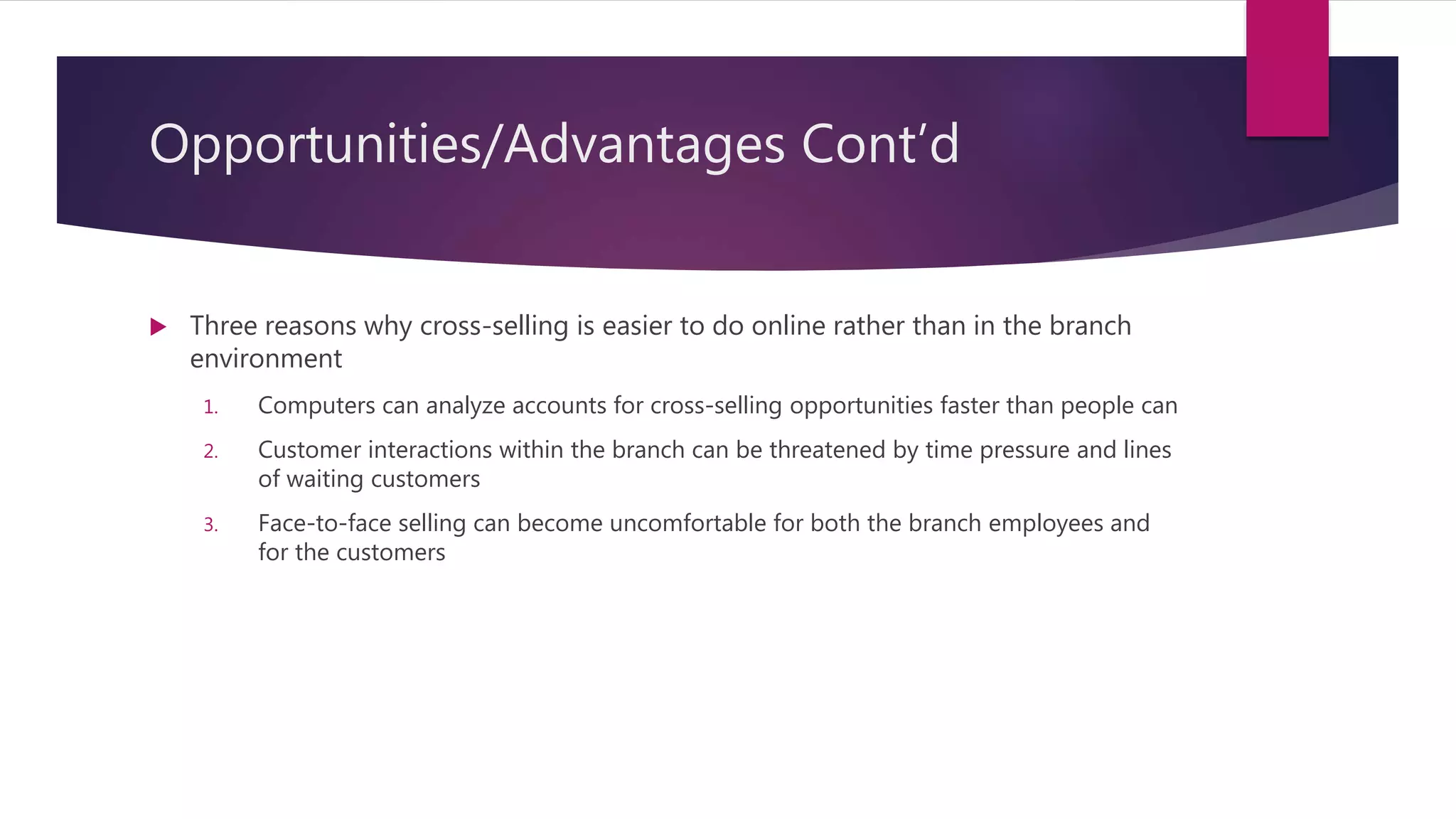
 Three reasons why cross-selling is easier to do online rather than in the branch
environment
1. Computers can analyze accounts for cross-selling opportunities faster than people can
2. Customer interactions within the branch can be threatened by time pressure and lines
of waiting customers
3. Face-to-face selling can become uncomfortable for both the branch employees and
for the customers
Opportunities/Advantages Cont’d
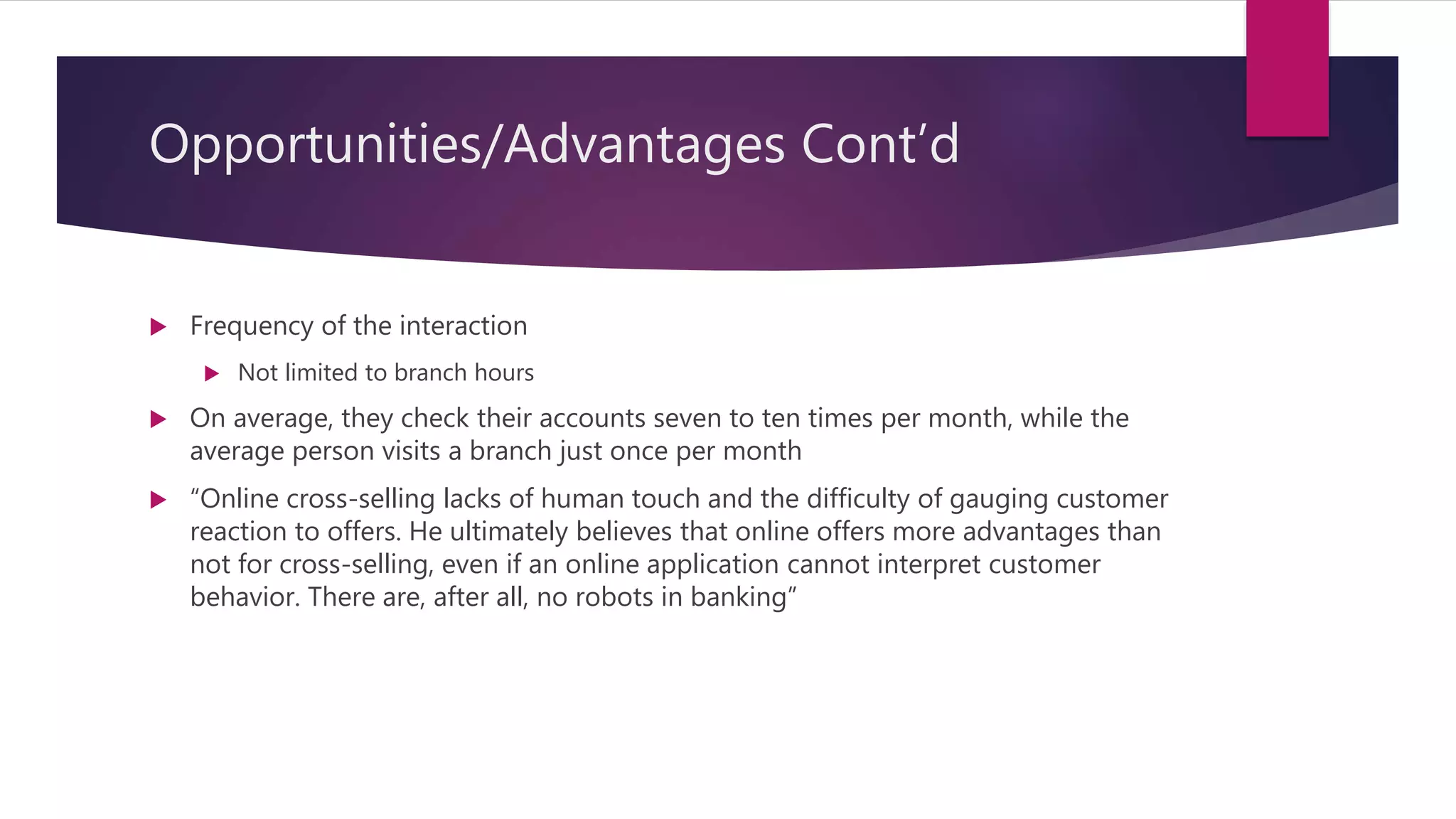
 Frequency of the interaction
 Not limited to branch hours
 On average, they check their accounts seven to ten times per month, while the
average person visits a branch just once per month
 “Online cross-selling lacks of human touch and the difficulty of gauging customer
reaction to offers. He ultimately believes that online offers more advantages than
not for cross-selling, even if an online application cannot interpret customer
behavior. There are, after all, no robots in banking”
Challenges
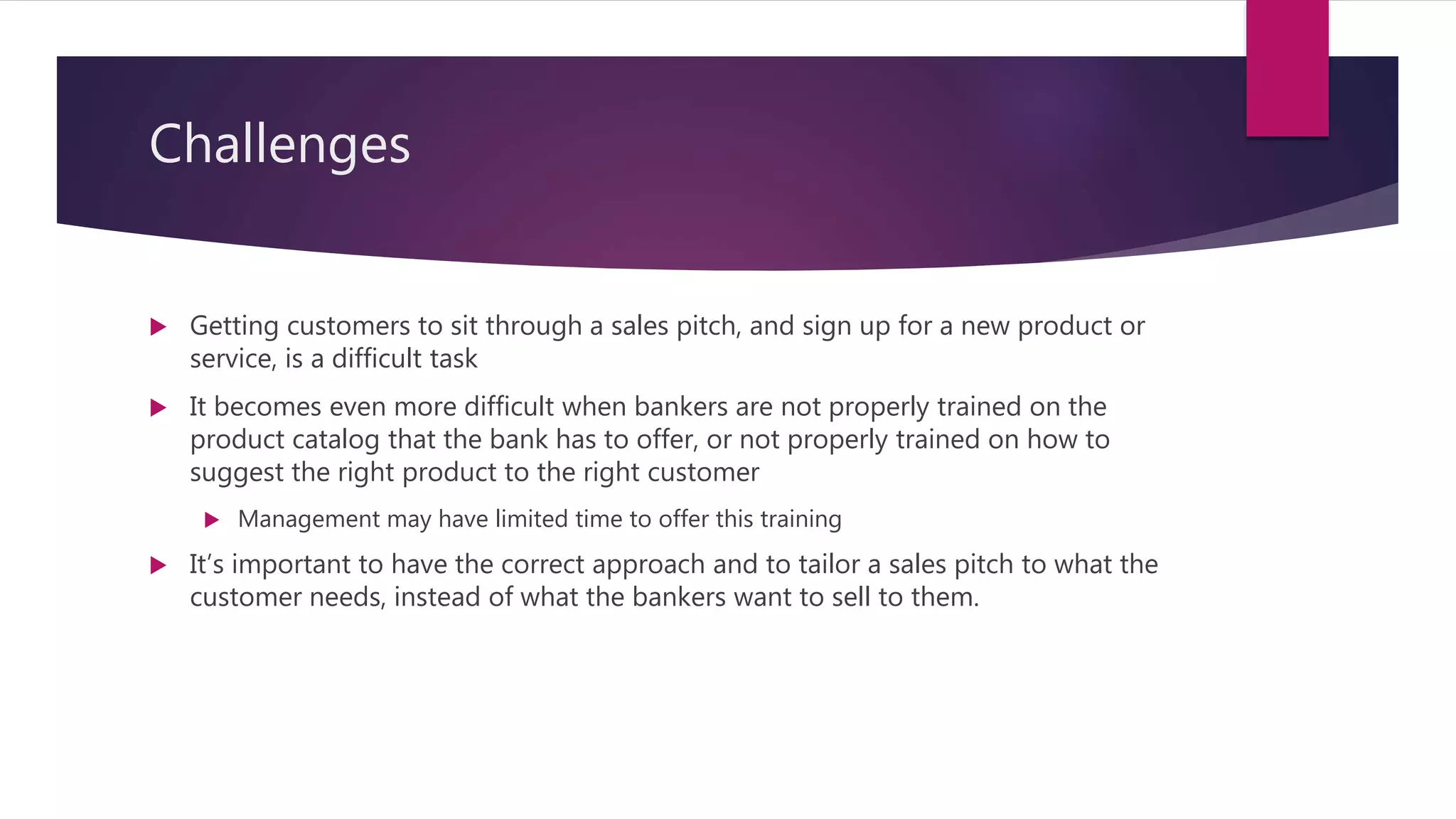
 Getting customers to sit through a sales pitch, and sign up for a new product or
service, is a difficult task
 It becomes even more difficult when bankers are not properly trained on the
product catalog that the bank has to offer, or not properly trained on how to
suggest the right product to the right customer
 Management may have limited time to offer this training
 It’s important to have the correct approach and to tailor a sales pitch to what the
customer needs, instead of what the bankers want to sell to them.
Challenges
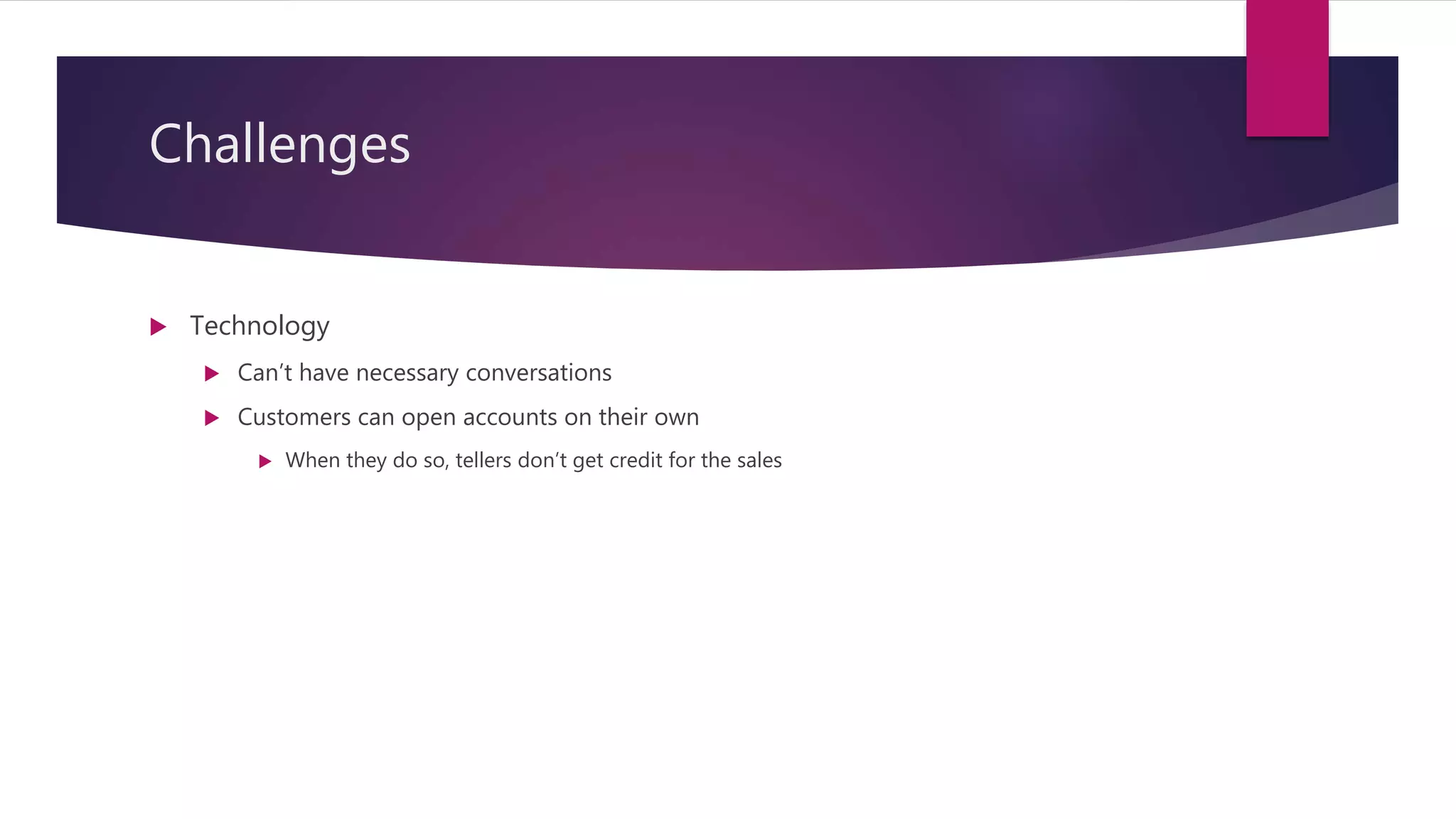
 Technology
 Can’t have necessary conversations
 Customers can open accounts on their own
 When they do so, tellers don’t get credit for the sales
Recommendations
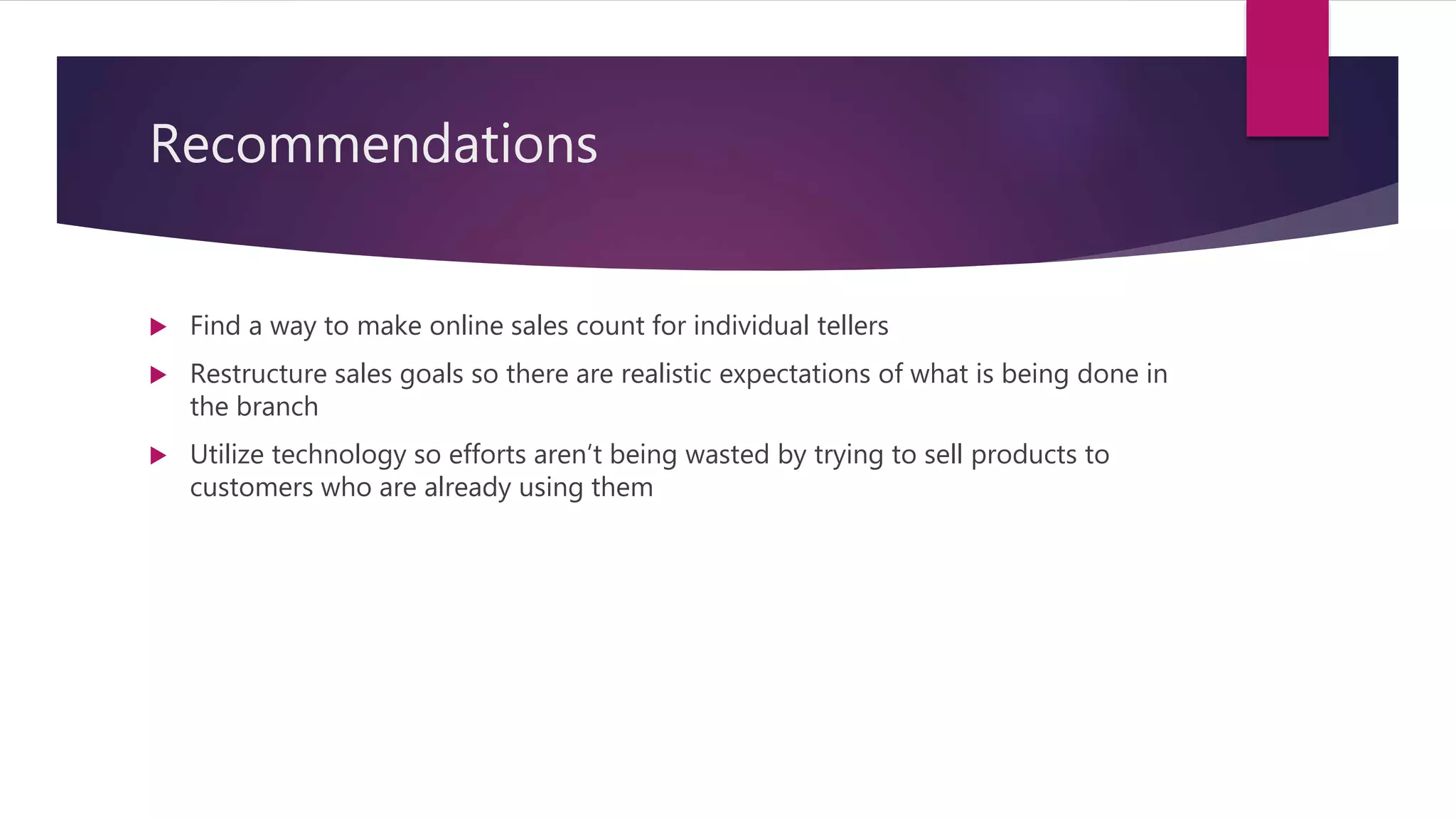
 Find a way to make online sales count for individual tellers
 Restructure sales goals so there are realistic expectations of what is being done in
the branch
 Utilize technology so efforts aren’t being wasted by trying to sell products to
customers who are already using them

Thesis presentation

  • 1.
    Cross-selling in theBanking Industry BY: GILLYAN GOWARTY MAY 6, 2017
  • 2.
    Introduction  What iscross-selling?  Cross-selling strategies  Wells Fargo  Consumer behavior  Technology  Opportunities/Advantages  Challenges  Recommendations
  • 3.
    Cross-selling  What iscross-selling?  The selling of multiple products and services to existing customers  How does it apply to the banking industry?  Cross-selling is a core banking sales function  A key element of cross-selling is establishing strong customer relationships
  • 4.
    Strategies  Cross-selling requiresthat bank personnel establish strong relationships with their customers.  Bankers need to understand what their customers need, along with having a strong knowledge of what products and services they have to offer.  Utilize a database  Match the customer to the product  Ask questions  Present the questions in a natural dialogue
  • 5.
    Strategies cont’d  Theeasiest sales that can be made to existing customers are products and services that can help them to better utilize an account they already own  These sales can include a debit card, online banking, direct deposit, bill pay, automatic savings transfer, personal line of credit  It is important to stay connected with customers after that initial sale  Send follow-up emails, make phone calls, send cards
  • 6.
    Strategies Cont’d  Itis important to continually evaluate cross-selling opportunities  Customer focused software  Send out personalized communication  Make sure employees are properly trained  Remember that customers like to be rewarded for their loyalty
  • 7.
    Wells Fargo  Sept2016- Wells Fargo was fined 185 million for unethical sales practices  Fired 5,300 employees  Employees had unrealistic sales goals  Received threats from management  Accounts were opened without customer authorization
  • 8.
    Wells Fargo Cont’d Wells Fargo was always well-known for its effective cross-selling strategies  In the first quarter of 2015, Wells Fargo reported that its retail banking customers had an average of 6.13 products per household  Cross-selling became a focus for Wells Fargo during the 1990s  Going for Gr-eight
  • 9.
    Wells Fargo Cont’d Sandbagging  Bundling  Pinning
  • 10.
    Consumer Behavior  Consumerstend to utilize more than one financial institution  Married couples have five or six bank accounts, sometimes spread over several financial institutions  Joint or individual  FDIC limits  Some accounts are goal specific  Christmas clubs, Vacation funds  Keeping track of several different accounts can be challenging  A downside of maintaining multiple accounts is the fees that can be involved
  • 11.
    Bank incentives forCustomers  When it comes to choosing a financial institution, consumers have many options  Banks are using incentives to attract new customers, retain existing customers, and to get their customers to use more services  Many banks offer cash bonuses for new accounts, as long as certain criteria are met  Average balance, qualifying direct deposit, number of purchases with a debit card  Average bonus between 150 and 300
  • 12.
    Technology  The bankingindustry is forced to adapt to advancing technology  Branches are adapting/disappearing  Changing the way bankers interact with customers  JP Morgan said that tellers only handled 42% of banking transactions. This has drastically decreased since 2007, when 90% of all banking transactions were conducted by tellers  Teller jobs/titles are changing  These jobs now involve responsibilities such as handling transactions, assisting customers with online transactions, offering advice on various products, and assisting customers with ATMs
  • 13.
    Technology Cont’d  Branchtraffic is plummeting  Customers can now perform routine transactions on their phones  Not limited to banking hours  Branches will soon look like airport check-in kiosks  Self-service kiosks, iPads, 24-hour teleconferencing  JPMorgan, Chase, PNC Bank, Bank of America, and KeyBank are testing self-service kiosks, self-service drive-thru lanes, and 24-hour ATMs which will feature the ability to chat with a teller
  • 14.
    Technology Cont’d  Onlinebanking  Open checking/savings accounts  Apply for loans/credit cards  Mobile banking  Deposit checks  Check balances  Transfer funds  ATMs  Withdraw/deposit money  Transfer funds
  • 15.
    Technology Cont’d  Reducedneed for paper  E-statements  Ability to email receipts  Eliminating deposit tickets  Instant issue debit cards  Paperless accounts
  • 16.
    Opportunities/Advantages  Reduces customeracquisition costs, servicing, marketing and communication costs  It is well understood and key finding that greater the number of products held by customer leads to an increased probability of retention  Although technology can place challenges on cross-selling within the branch environment, it is not an overall detriment to the process  Can be used to enhance the process
  • 17.
    Opportunities/Advantages Cont’d  Threereasons why cross-selling is easier to do online rather than in the branch environment 1. Computers can analyze accounts for cross-selling opportunities faster than people can 2. Customer interactions within the branch can be threatened by time pressure and lines of waiting customers 3. Face-to-face selling can become uncomfortable for both the branch employees and for the customers
  • 18.
    Opportunities/Advantages Cont’d  Frequencyof the interaction  Not limited to branch hours  On average, they check their accounts seven to ten times per month, while the average person visits a branch just once per month  “Online cross-selling lacks of human touch and the difficulty of gauging customer reaction to offers. He ultimately believes that online offers more advantages than not for cross-selling, even if an online application cannot interpret customer behavior. There are, after all, no robots in banking”
  • 19.
    Challenges  Getting customersto sit through a sales pitch, and sign up for a new product or service, is a difficult task  It becomes even more difficult when bankers are not properly trained on the product catalog that the bank has to offer, or not properly trained on how to suggest the right product to the right customer  Management may have limited time to offer this training  It’s important to have the correct approach and to tailor a sales pitch to what the customer needs, instead of what the bankers want to sell to them.
  • 20.
    Challenges  Technology  Can’thave necessary conversations  Customers can open accounts on their own  When they do so, tellers don’t get credit for the sales
  • 21.
    Recommendations  Find away to make online sales count for individual tellers  Restructure sales goals so there are realistic expectations of what is being done in the branch  Utilize technology so efforts aren’t being wasted by trying to sell products to customers who are already using them