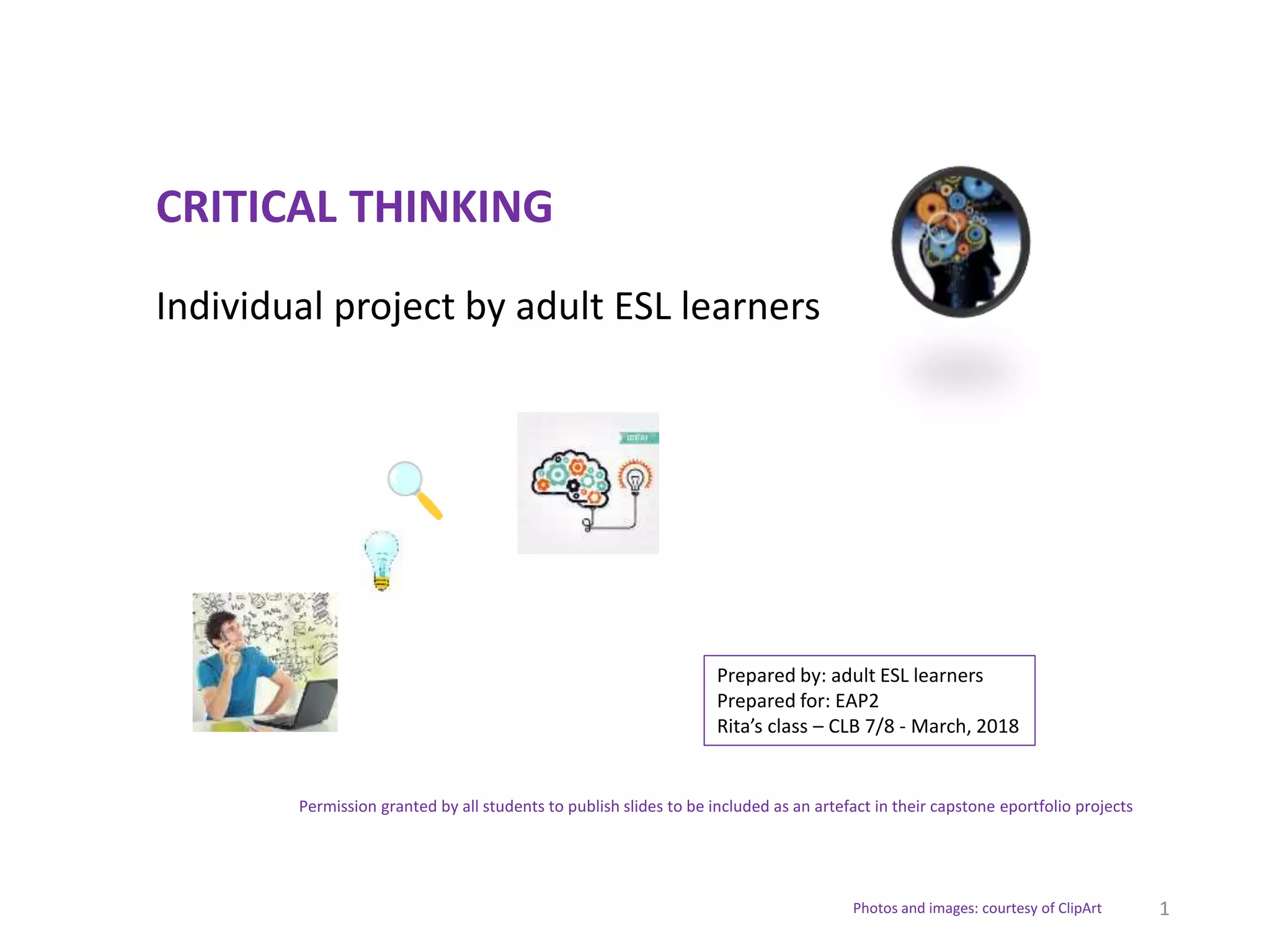
CRITICAL THINKING
Individual project by adult ESL learners
Prepared by: adult ESL learners
Prepared for: EAP2
Rita’s class – CLB 7/8 - March, 2018
Photos and images: courtesy of ClipArt
Permission granted by all students to publish slides to be included as an artefact in their capstone eportfolio projects
1
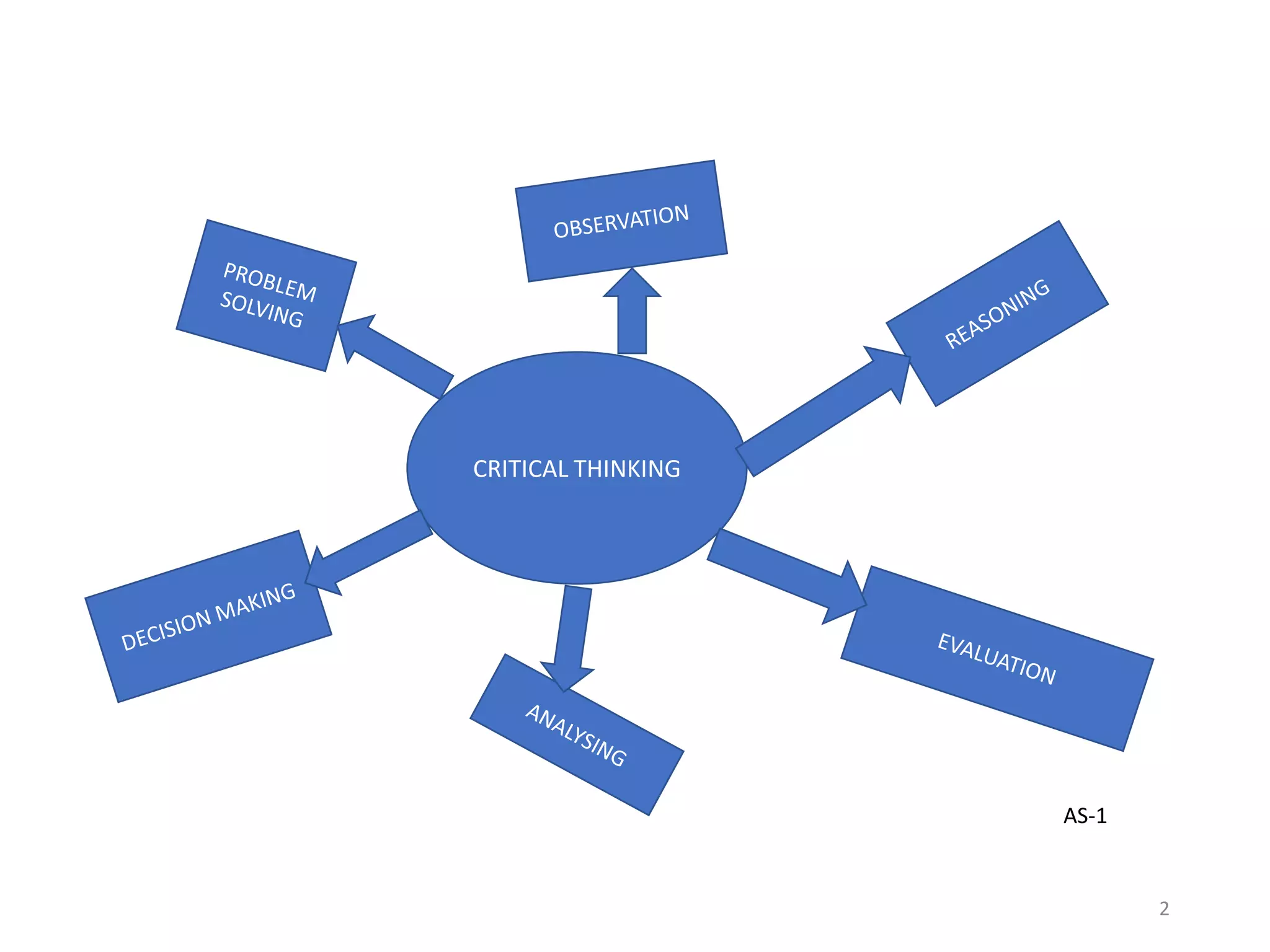
CRITICAL THINKING
AS-1
2
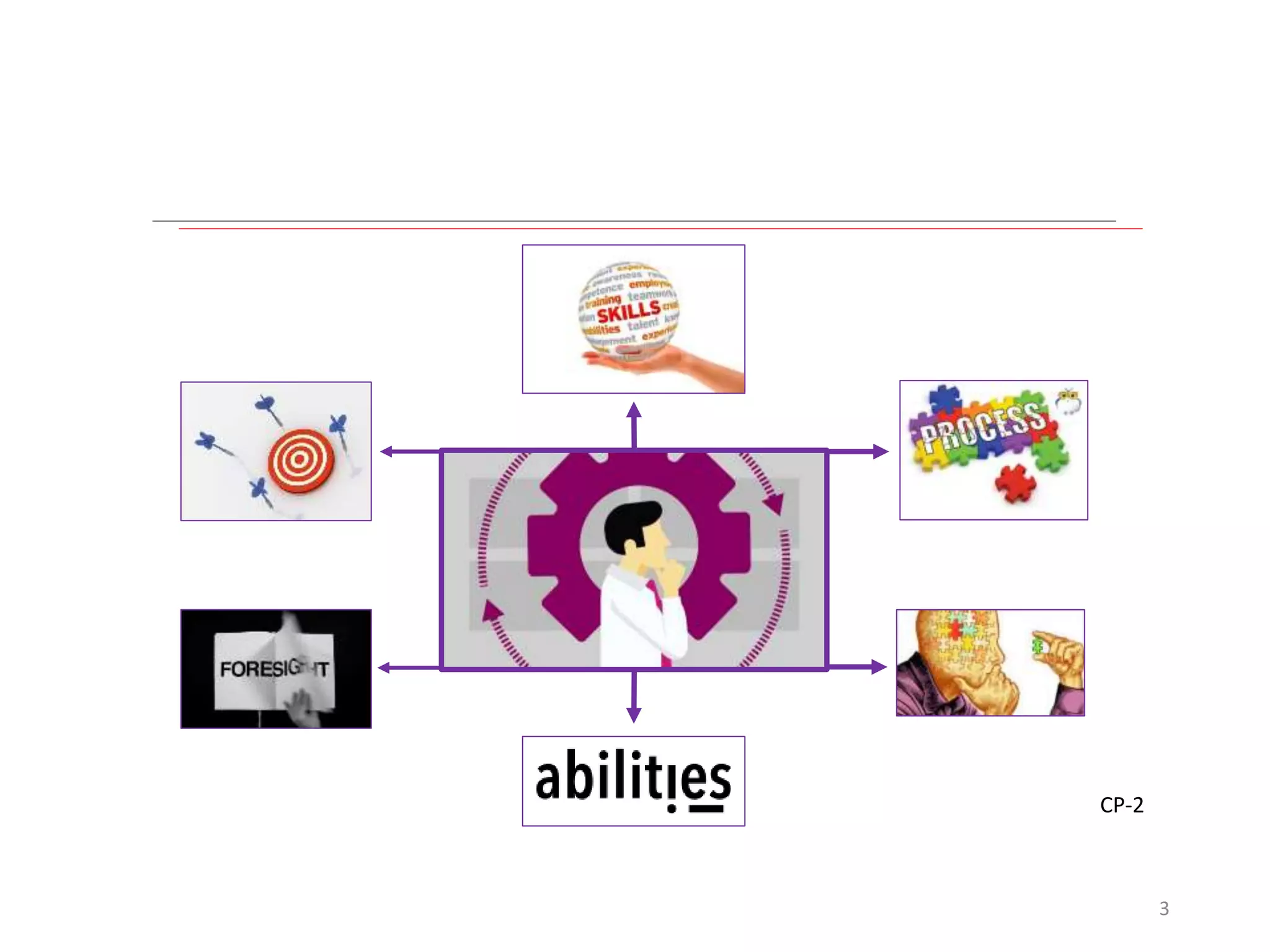
CP-2
3
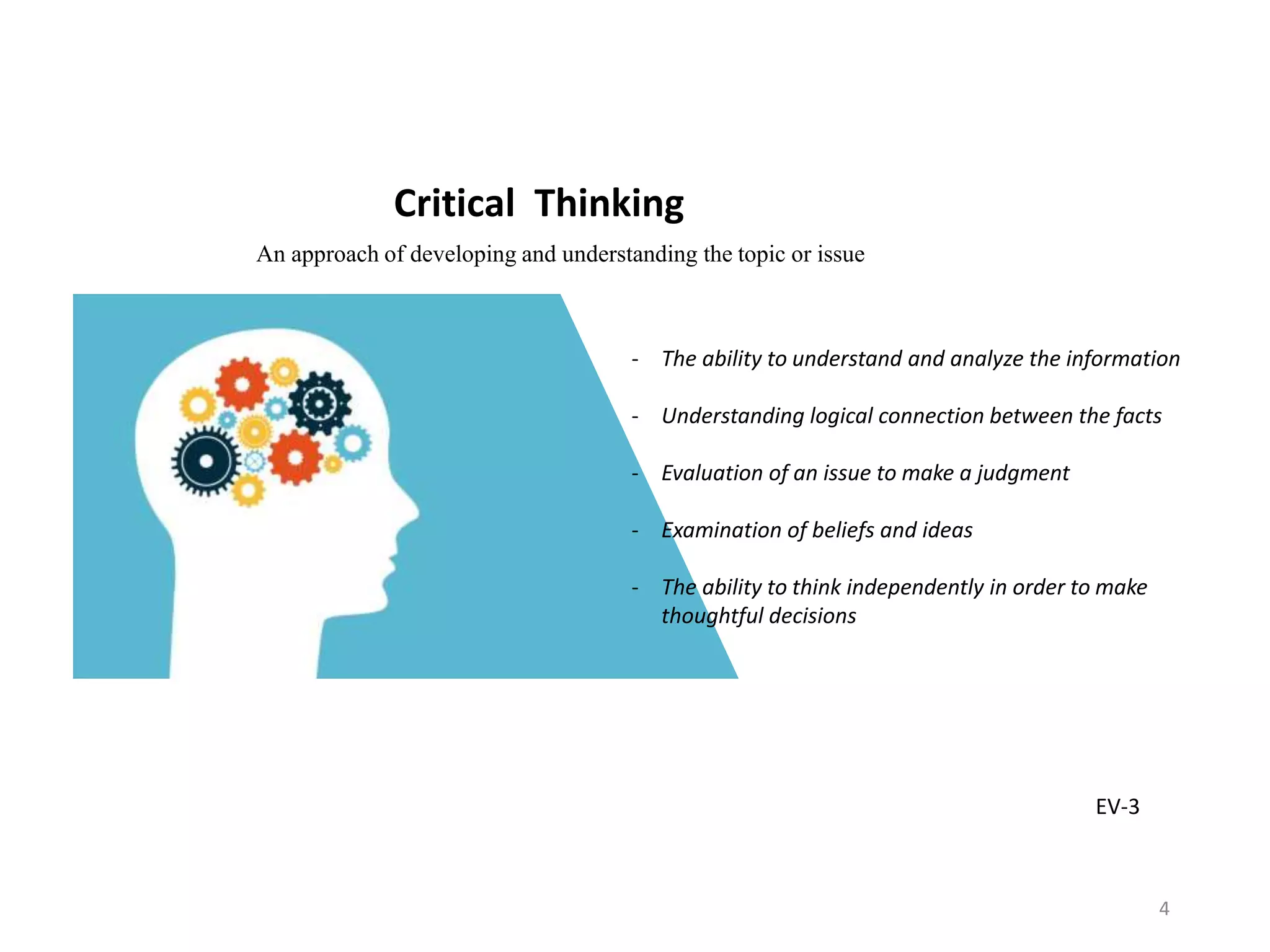
Critical Thinking
- The ability to understand and analyze the information
- Understanding logical connection between the facts
- Evaluation of an issue to make a judgment
- Examination of beliefs and ideas
- The ability to think independently in order to make
thoughtful decisions
An approach of developing and understanding the topic or issue
EV-3
4
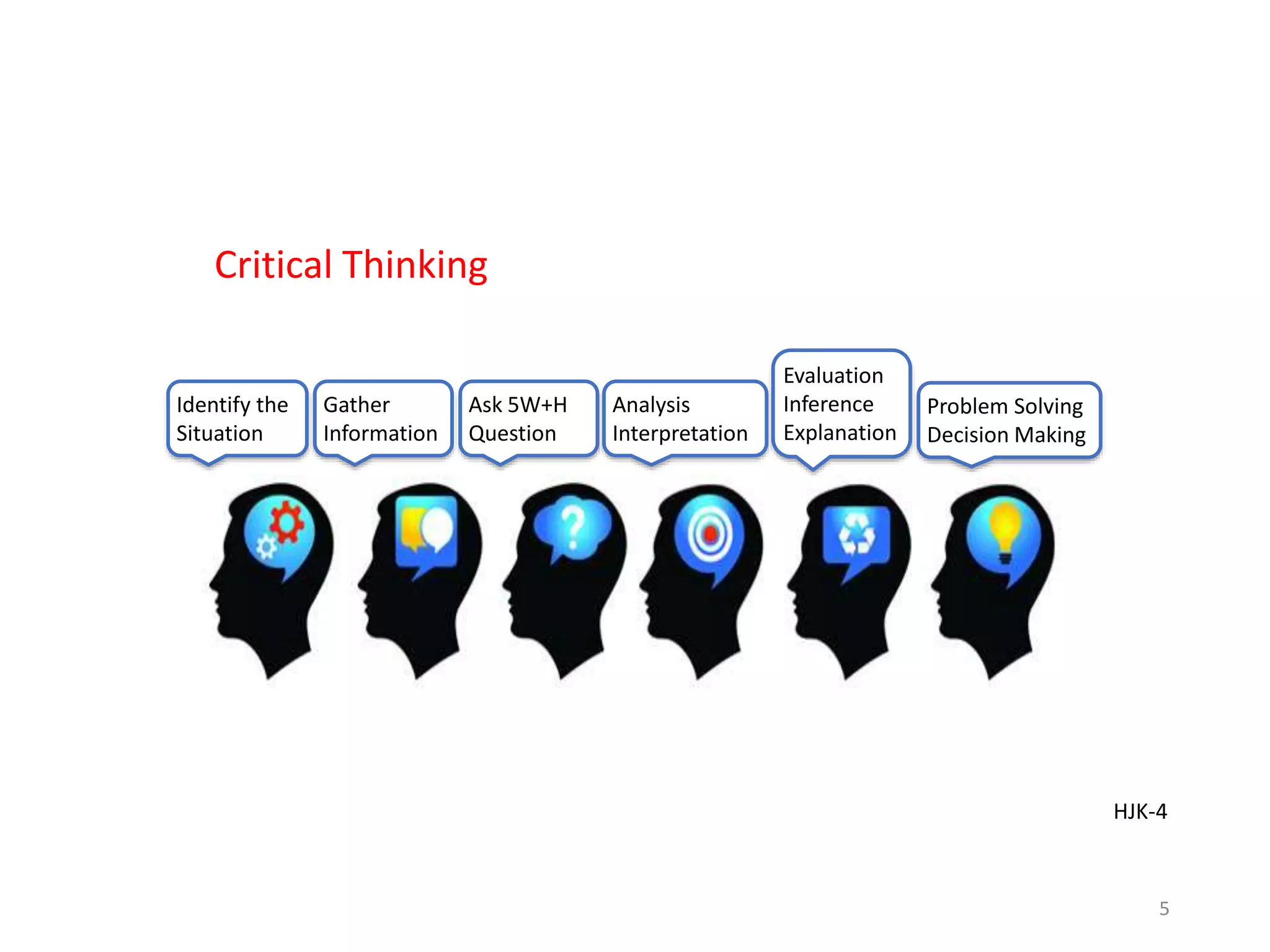
Critical Thinking
Identify the
Situation
Gather
Information
Ask 5W+H
Question
Analysis
Interpretation
Evaluation
Inference
Explanation
Problem Solving
Decision Making
HJK-4
Critical Thinking
5
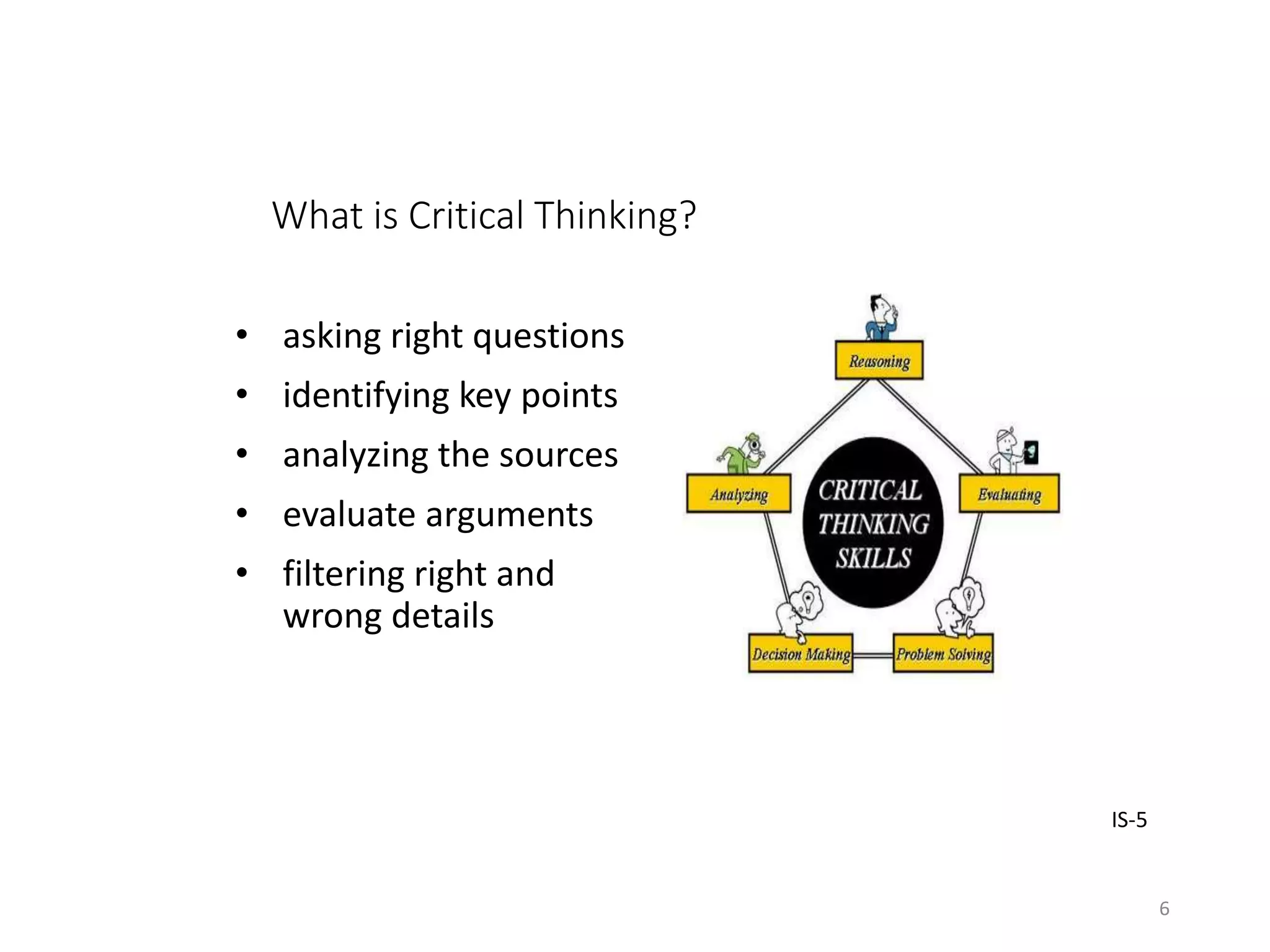
What is Critical Thinking?
• asking right questions
• identifying key points
• analyzing the sources
• evaluate arguments
• filtering right and
wrong details
IS-5
6
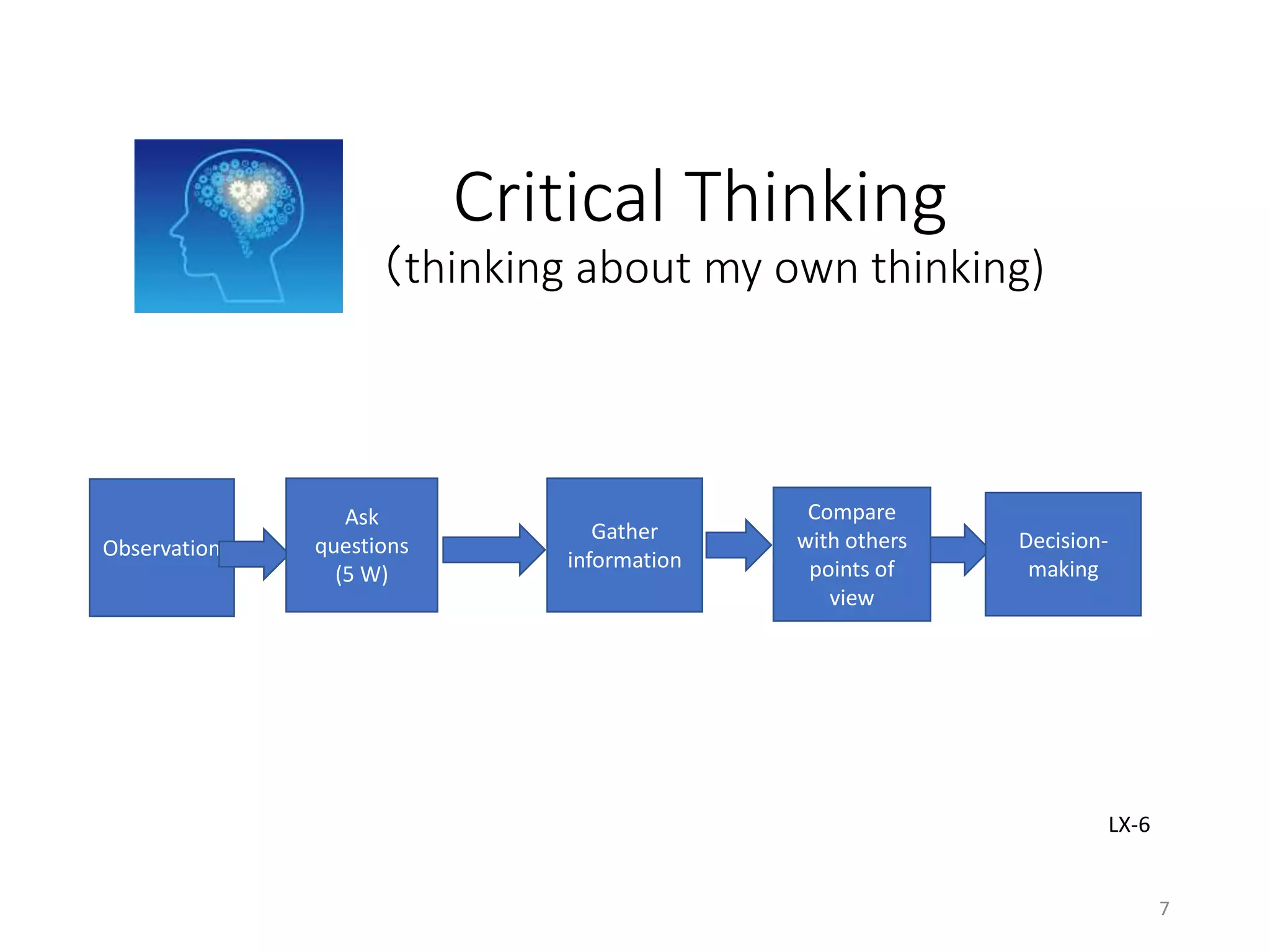
Critical Thinking
(thinking about my own thinking)
Observation
Ask
questions
(5 W)
Gather
information
Decision-
making
Compare
with others
points of
view
LX-6
7
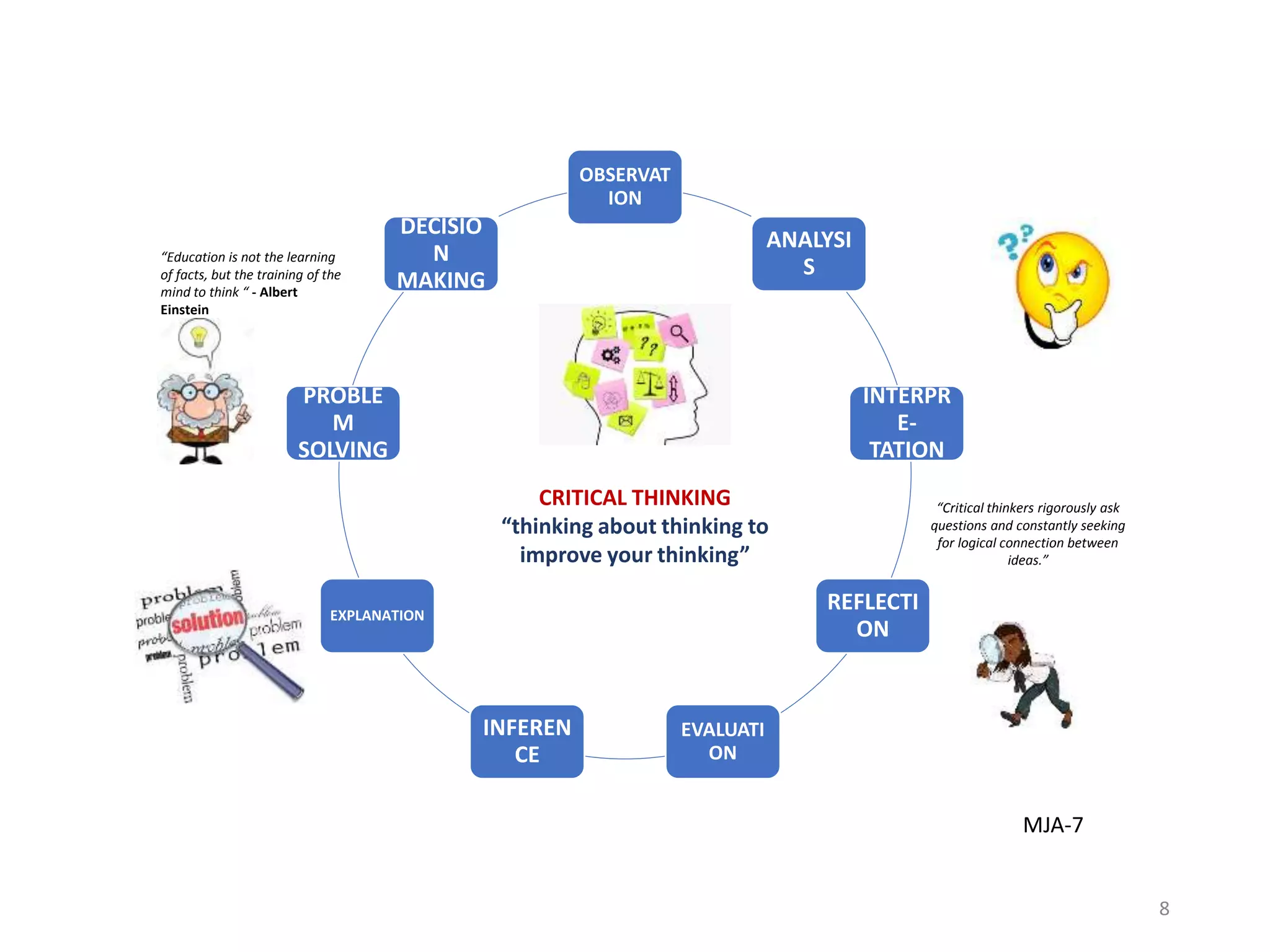
OBSERVAT
ION
ANALYSI
S
INTERPR
E-
TATION
REFLECTI
ON
EVALUATI
ON
INFEREN
CE
EXPLANATION
PROBLE
M
SOLVING
DECISIO
N
MAKING
CRITICAL THINKING
“thinking about thinking to
improve your thinking”
“Education is not the learning
of facts, but the training of the
mind to think “ - Albert
Einstein
“Critical thinkers rigorously ask
questions and constantly seeking
for logical connection between
ideas.”
MJA-7
8
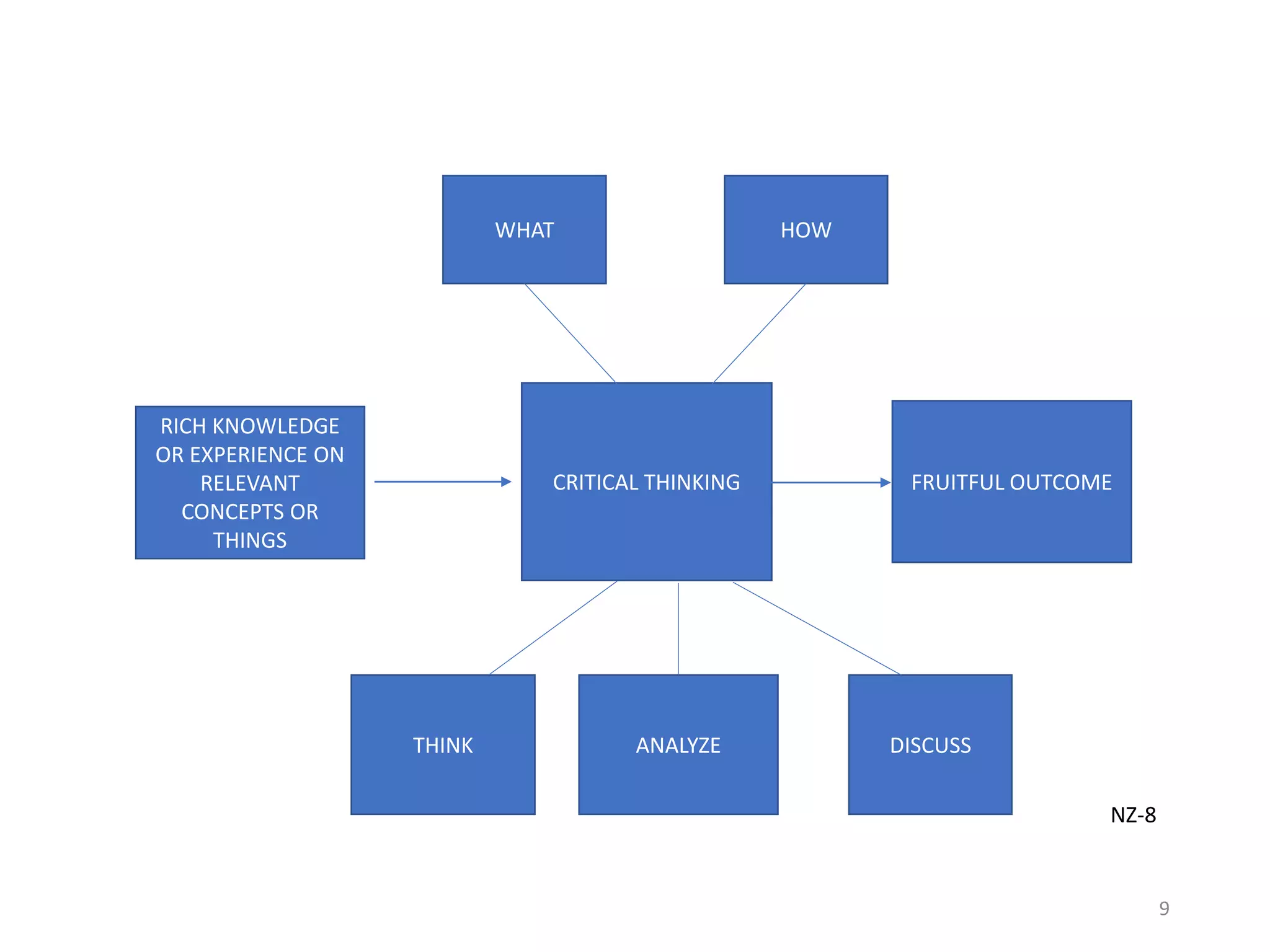
HOW
RICH KNOWLEDGE
OR EXPERIENCE ON
RELEVANT
CONCEPTS OR
THINGS
WHAT
CRITICAL THINKING FRUITFUL OUTCOME
THINK ANALYZE DISCUSS
NZ-8
9
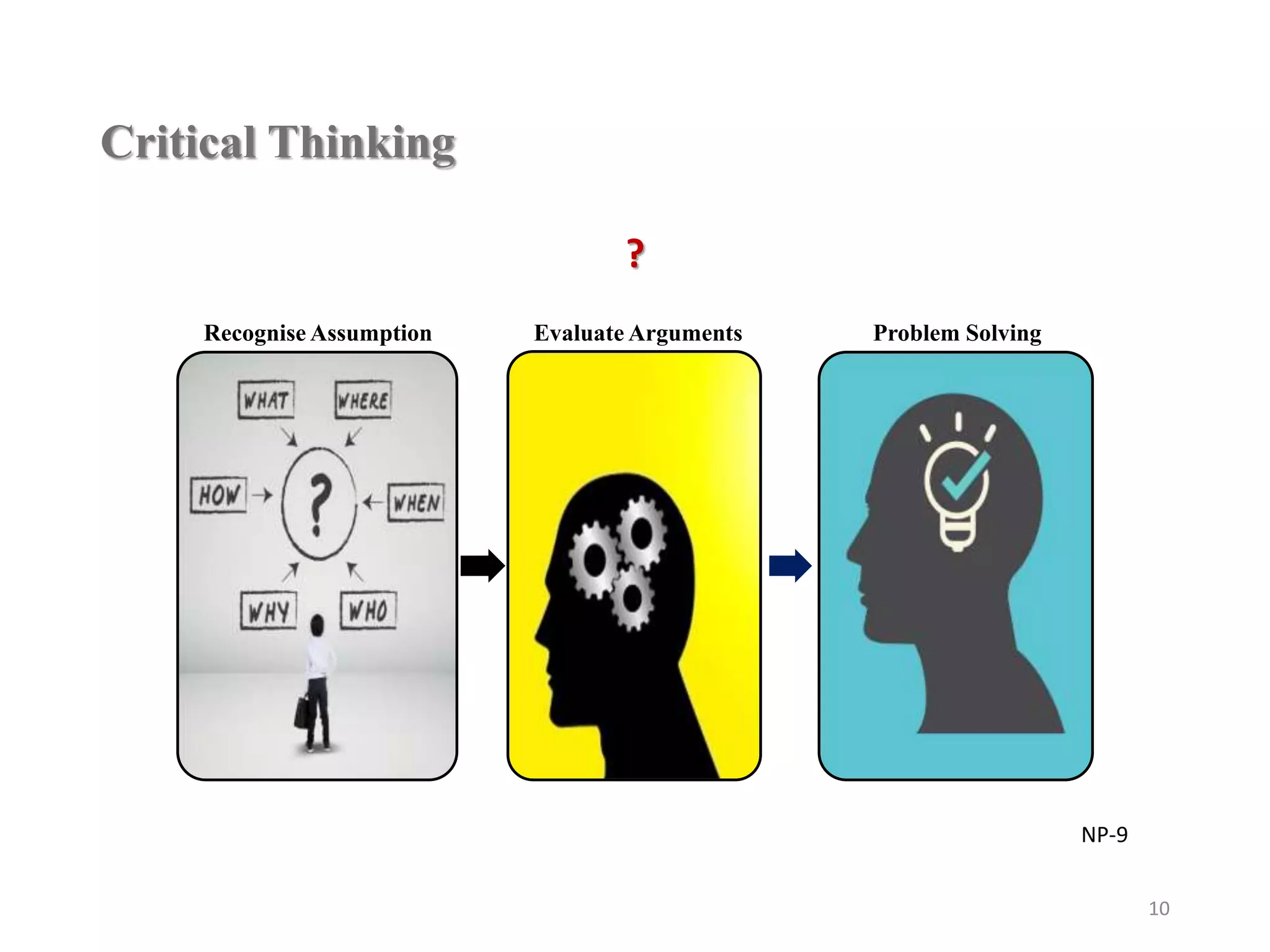
Critical Thinking
?
Recognise Assumption Evaluate Arguments Problem Solving
NP-9
10
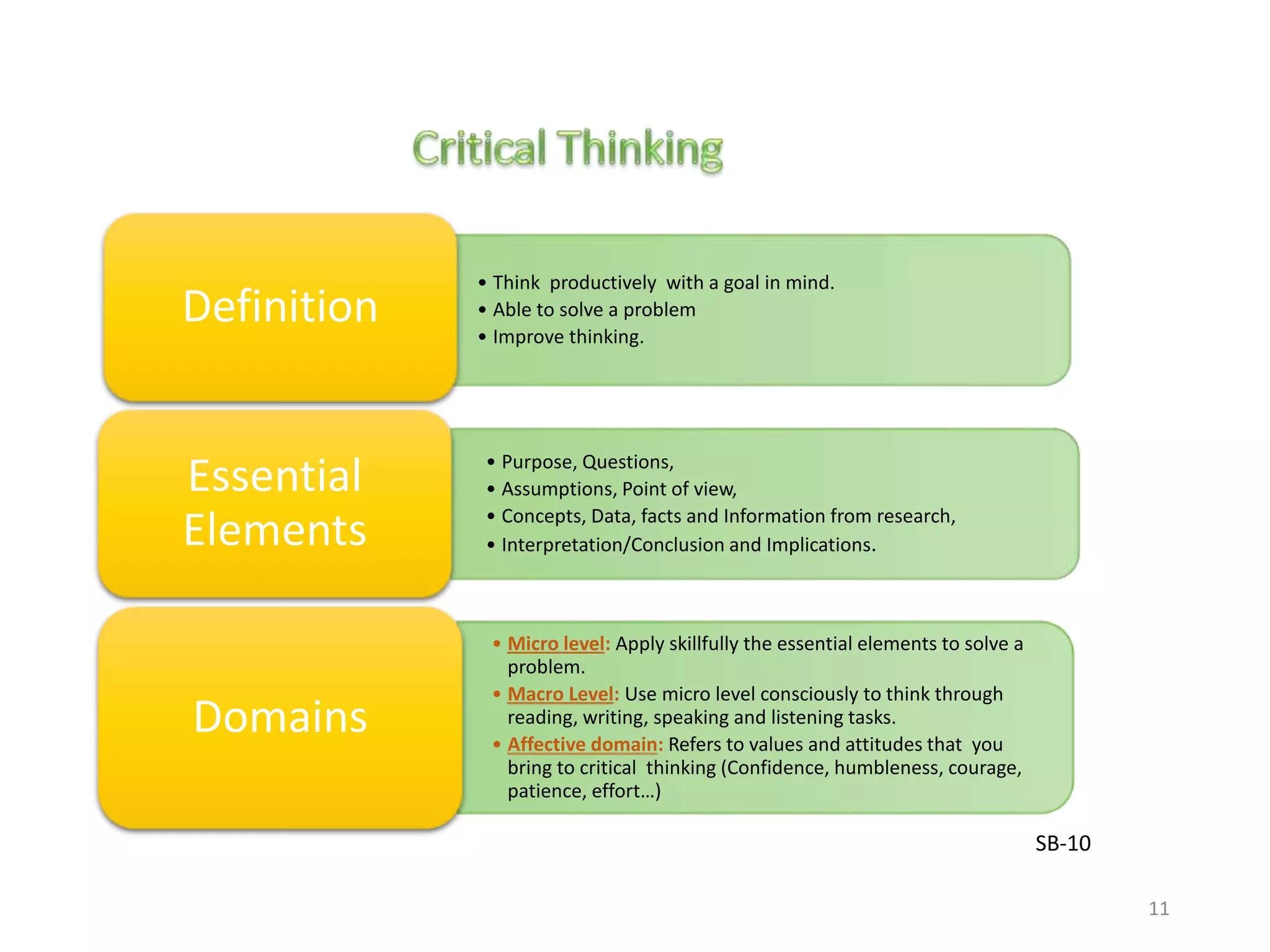
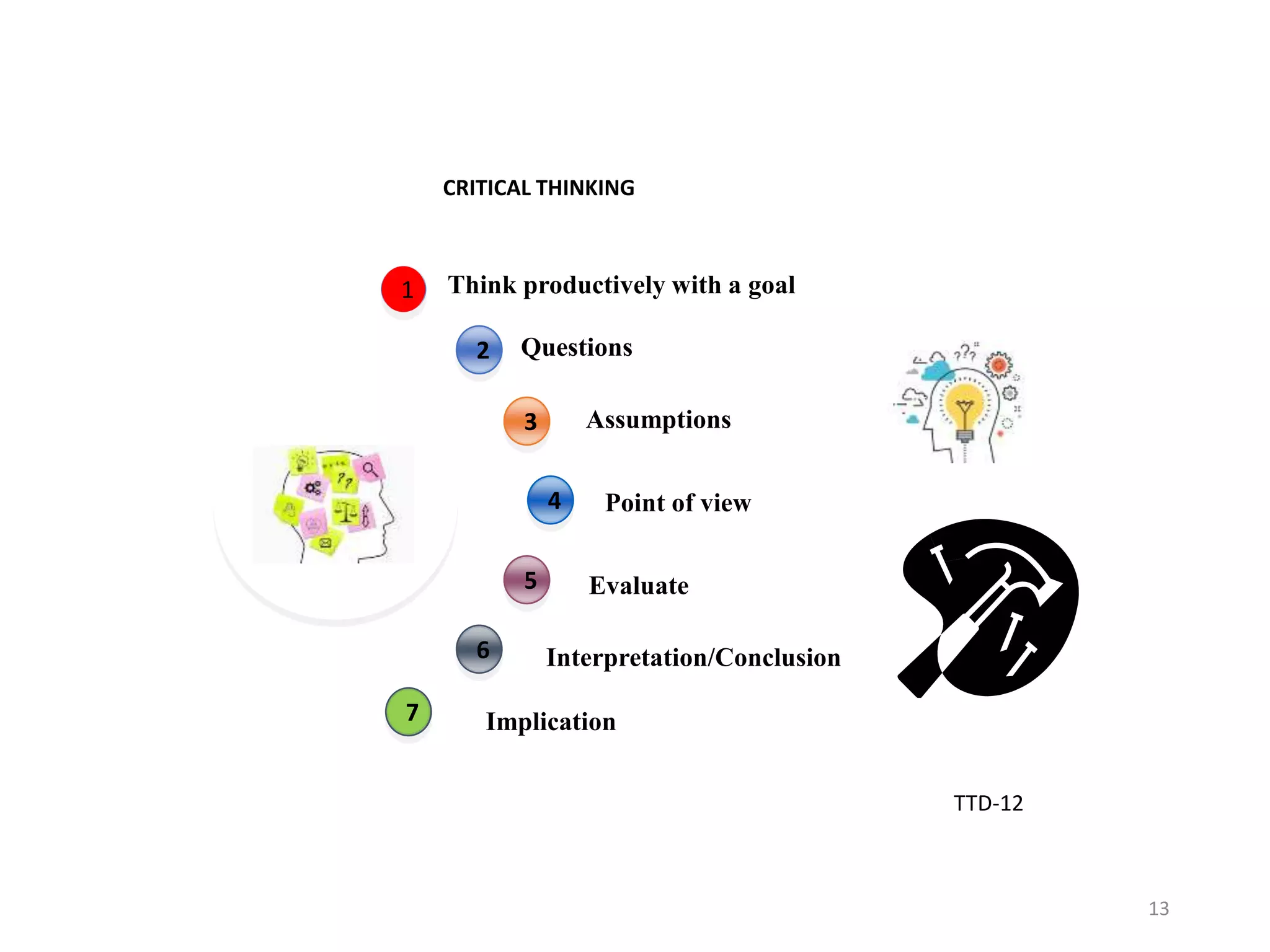
• Think productively with a goal in mind.
• Able to solve a problem
• Improve thinking.
Definition
• Purpose, Questions,
• Assumptions, Point of view,
• Concepts, Data, facts and Information from research,
• Interpretation/Conclusion and Implications.
Essential
Elements
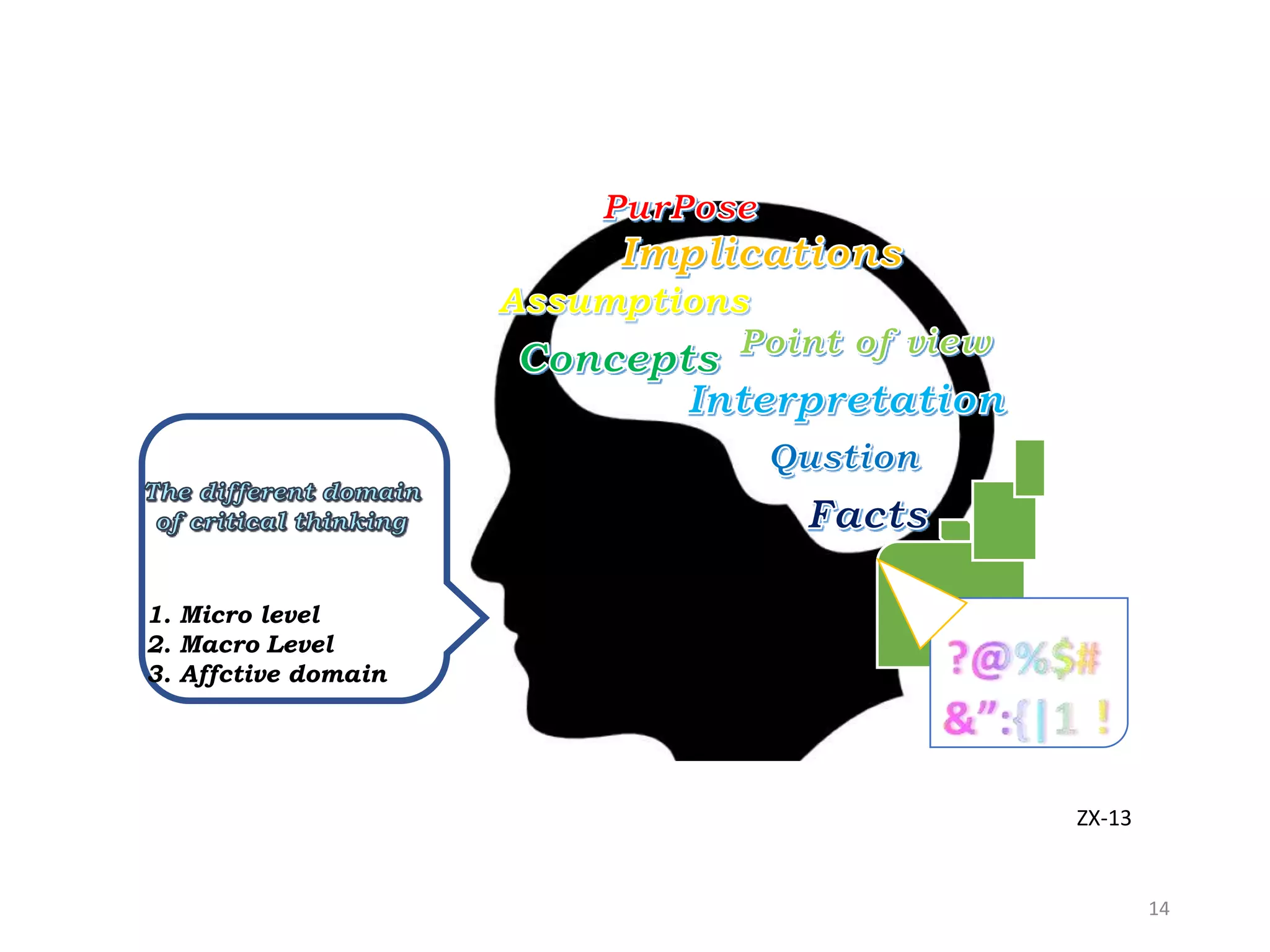
• Micro level: Apply skillfully the essential elements to solve a
problem.
• Macro Level: Use micro level consciously to think through
reading, writing, speaking and listening tasks.
• Affective domain: Refers to values and attitudes that you
bring to critical thinking (Confidence, humbleness, courage,
patience, effort…)
Domains
SB-10
11
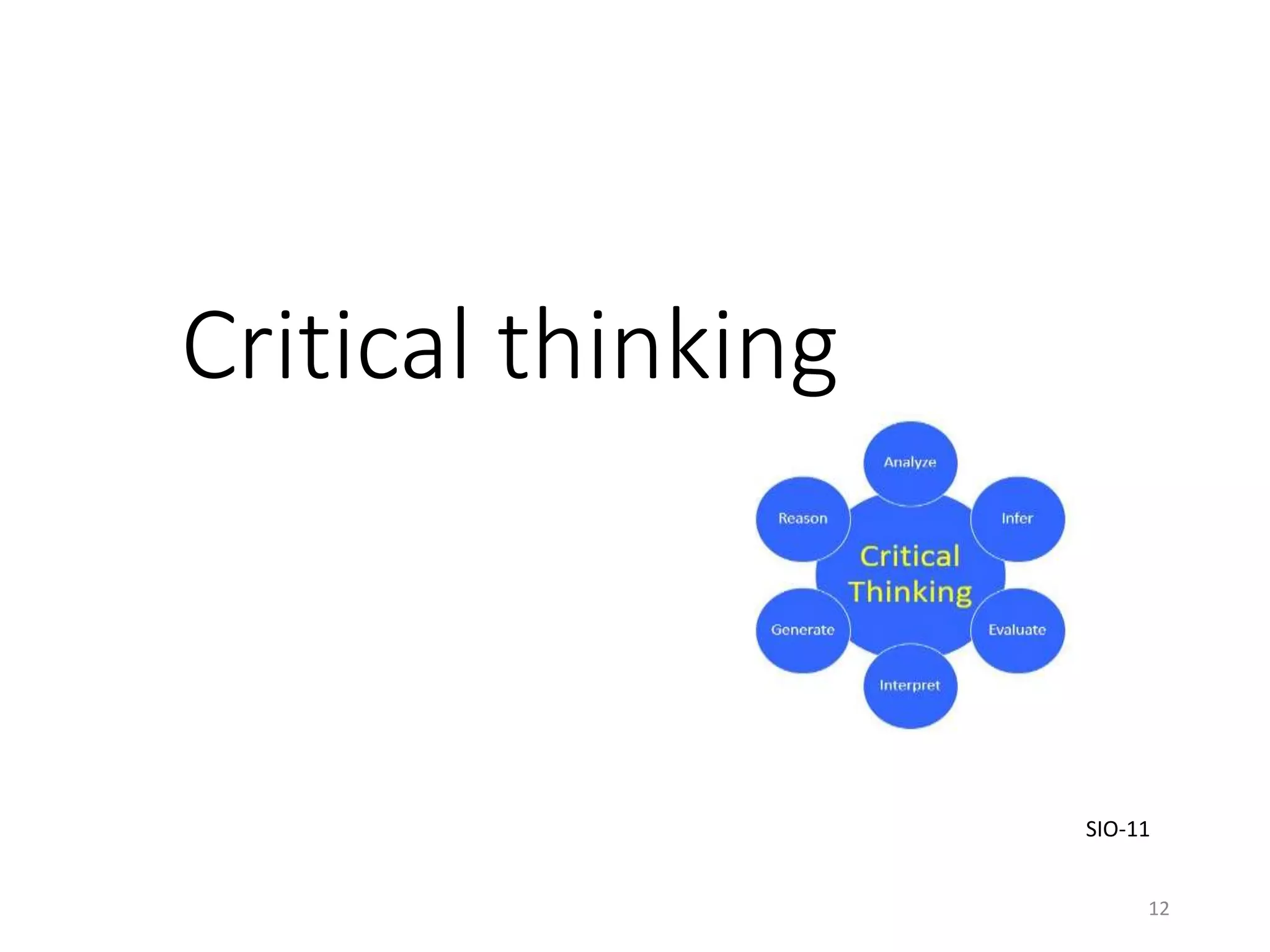
Critical thinking
SIO-11
12
Questions2
3
4
5
6
1
7
Think productively with a goal
Assumptions
Point of view
Evaluate
Interpretation/Conclusion
Implication
CRITICAL THINKING
TTD-12
13
1. Micro level
2. Macro Level
3. Affctive domain
ZX-13
14
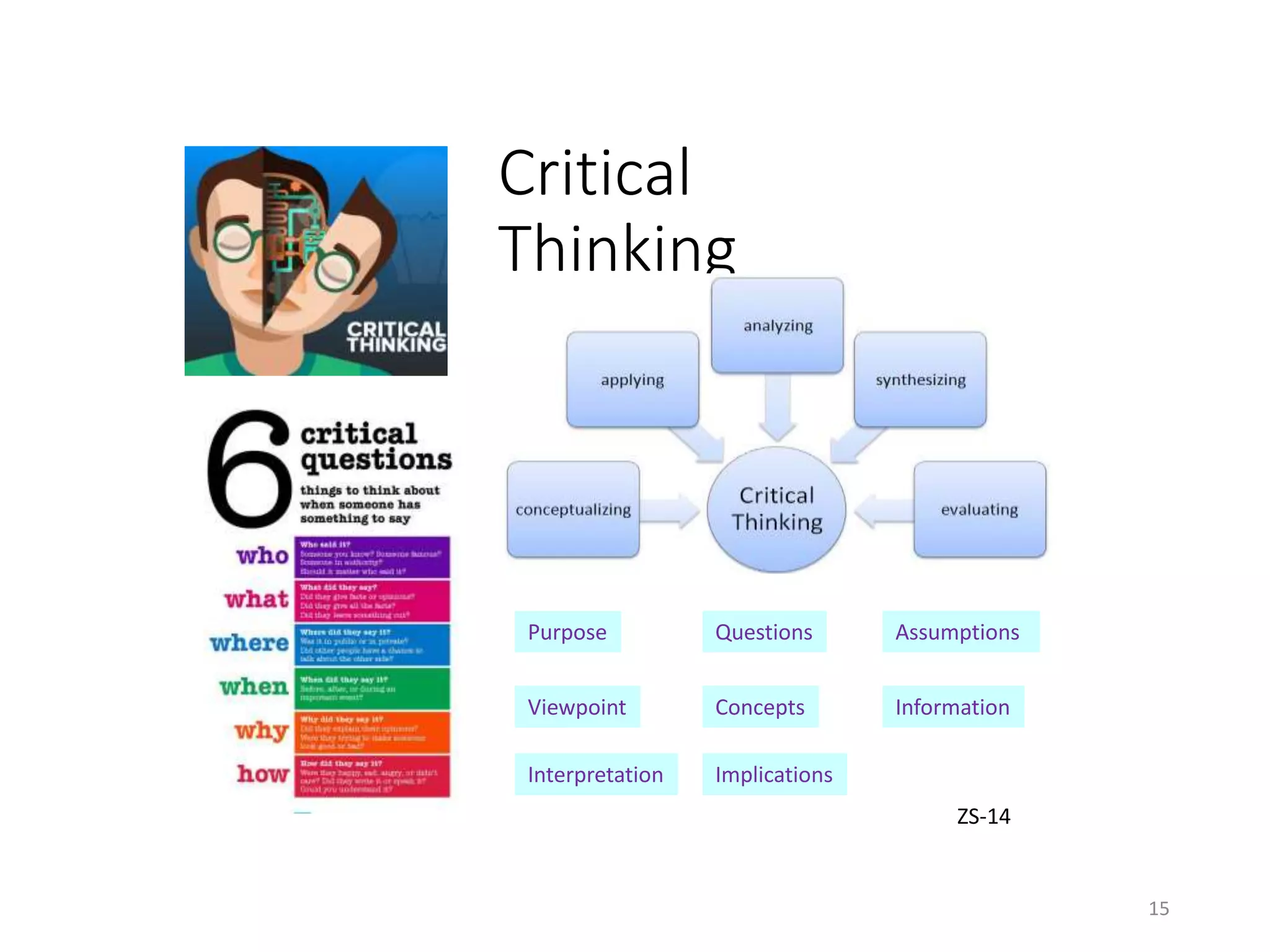
Critical
Thinking
Purpose Assumptions
Viewpoint Concepts Information
Interpretation Implications
Questions
ZS-14
15
REFERENCES
Disclaimer: we have made every effort to cite all sources and Royalty-free sites
Images:
Courtesy of ClipArt
Courtesy of GoogleImages
Reading:
Critical Thinking by Francis Bacon
Thinking Critically by Learning Assistance Centre at RRC (August, 2009)
G&R Languages OER - April, 2014: https://www.slideshare.net/RitaProkopetz/critical-thinking-33463347
G&R Languages OER – April, 2014: https://www.slideshare.net/RitaProkopetz/socratic-questioning-33463414
Listening:
Pearson/Longman Contemporary Topics
How to Think Critically and Learn Anything: https://www.youtube.com/watch?v=4dy7wbLeDF4
Link: https://www.youtube.com/watch?v=dItUGF8GdTw
Five Tips to Improve your Critical Thinking by Samantha Agoos
Link: https://www.youtube.com/watch?v=dUqRTWCdXt4
TEDxWilliamsport - Dr. Derek Cabrera - How Thinking Works
Other resources were also used
16

Critical Thinking Skills - Project by ESL Learners

  • 1.
    CRITICAL THINKING Individual projectby adult ESL learners Prepared by: adult ESL learners Prepared for: EAP2 Rita’s class – CLB 7/8 - March, 2018 Photos and images: courtesy of ClipArt Permission granted by all students to publish slides to be included as an artefact in their capstone eportfolio projects 1
  • 2.
  • 3.
  • 4.
    Critical Thinking - Theability to understand and analyze the information - Understanding logical connection between the facts - Evaluation of an issue to make a judgment - Examination of beliefs and ideas - The ability to think independently in order to make thoughtful decisions An approach of developing and understanding the topic or issue EV-3 4
  • 5.
    Critical Thinking Identify the Situation Gather Information Ask5W+H Question Analysis Interpretation Evaluation Inference Explanation Problem Solving Decision Making HJK-4 Critical Thinking 5
  • 6.
    What is CriticalThinking? • asking right questions • identifying key points • analyzing the sources • evaluate arguments • filtering right and wrong details IS-5 6
  • 7.
    Critical Thinking (thinking aboutmy own thinking) Observation Ask questions (5 W) Gather information Decision- making Compare with others points of view LX-6 7
  • 8.
    OBSERVAT ION ANALYSI S INTERPR E- TATION REFLECTI ON EVALUATI ON INFEREN CE EXPLANATION PROBLE M SOLVING DECISIO N MAKING CRITICAL THINKING “thinking aboutthinking to improve your thinking” “Education is not the learning of facts, but the training of the mind to think “ - Albert Einstein “Critical thinkers rigorously ask questions and constantly seeking for logical connection between ideas.” MJA-7 8
  • 9.
    HOW RICH KNOWLEDGE OR EXPERIENCEON RELEVANT CONCEPTS OR THINGS WHAT CRITICAL THINKING FRUITFUL OUTCOME THINK ANALYZE DISCUSS NZ-8 9
  • 10.
    Critical Thinking ? Recognise AssumptionEvaluate Arguments Problem Solving NP-9 10
  • 11.
    • Think productivelywith a goal in mind. • Able to solve a problem • Improve thinking. Definition • Purpose, Questions, • Assumptions, Point of view, • Concepts, Data, facts and Information from research, • Interpretation/Conclusion and Implications. Essential Elements • Micro level: Apply skillfully the essential elements to solve a problem. • Macro Level: Use micro level consciously to think through reading, writing, speaking and listening tasks. • Affective domain: Refers to values and attitudes that you bring to critical thinking (Confidence, humbleness, courage, patience, effort…) Domains SB-10 11
  • 12.
  • 13.
    Questions2 3 4 5 6 1 7 Think productively witha goal Assumptions Point of view Evaluate Interpretation/Conclusion Implication CRITICAL THINKING TTD-12 13
  • 14.
    1. Micro level 2.Macro Level 3. Affctive domain ZX-13 14
  • 15.
    Critical Thinking Purpose Assumptions Viewpoint ConceptsInformation Interpretation Implications Questions ZS-14 15
  • 16.
    REFERENCES Disclaimer: we havemade every effort to cite all sources and Royalty-free sites Images: Courtesy of ClipArt Courtesy of GoogleImages Reading: Critical Thinking by Francis Bacon Thinking Critically by Learning Assistance Centre at RRC (August, 2009) G&R Languages OER - April, 2014: https://www.slideshare.net/RitaProkopetz/critical-thinking-33463347 G&R Languages OER – April, 2014: https://www.slideshare.net/RitaProkopetz/socratic-questioning-33463414 Listening: Pearson/Longman Contemporary Topics How to Think Critically and Learn Anything: https://www.youtube.com/watch?v=4dy7wbLeDF4 Link: https://www.youtube.com/watch?v=dItUGF8GdTw Five Tips to Improve your Critical Thinking by Samantha Agoos Link: https://www.youtube.com/watch?v=dUqRTWCdXt4 TEDxWilliamsport - Dr. Derek Cabrera - How Thinking Works Other resources were also used 16