

• Commercial banks are called the creator of credit.
• They advance much more than what the collect from people in
the form of deposits.
• Through the process of credit creation, commercial banks provide
finance to all sectors of the economy thus making them more
developed than before.
• The basis of credit money is the bank
deposits.
• The bank deposits are of two kinds viz.,
–Primary deposits
–Derivative deposits
•
•
• The banking system as a whole can create credit which is several
times more than the original increase in the deposits of a bank.
The numerical expression for it is known as money multiplier
• Money Multiplier = 1
LRR
LRR = Legal Reserve Ratio
• LRR means reserve ratio of cash reserved by commercial banks
with themselves.
•
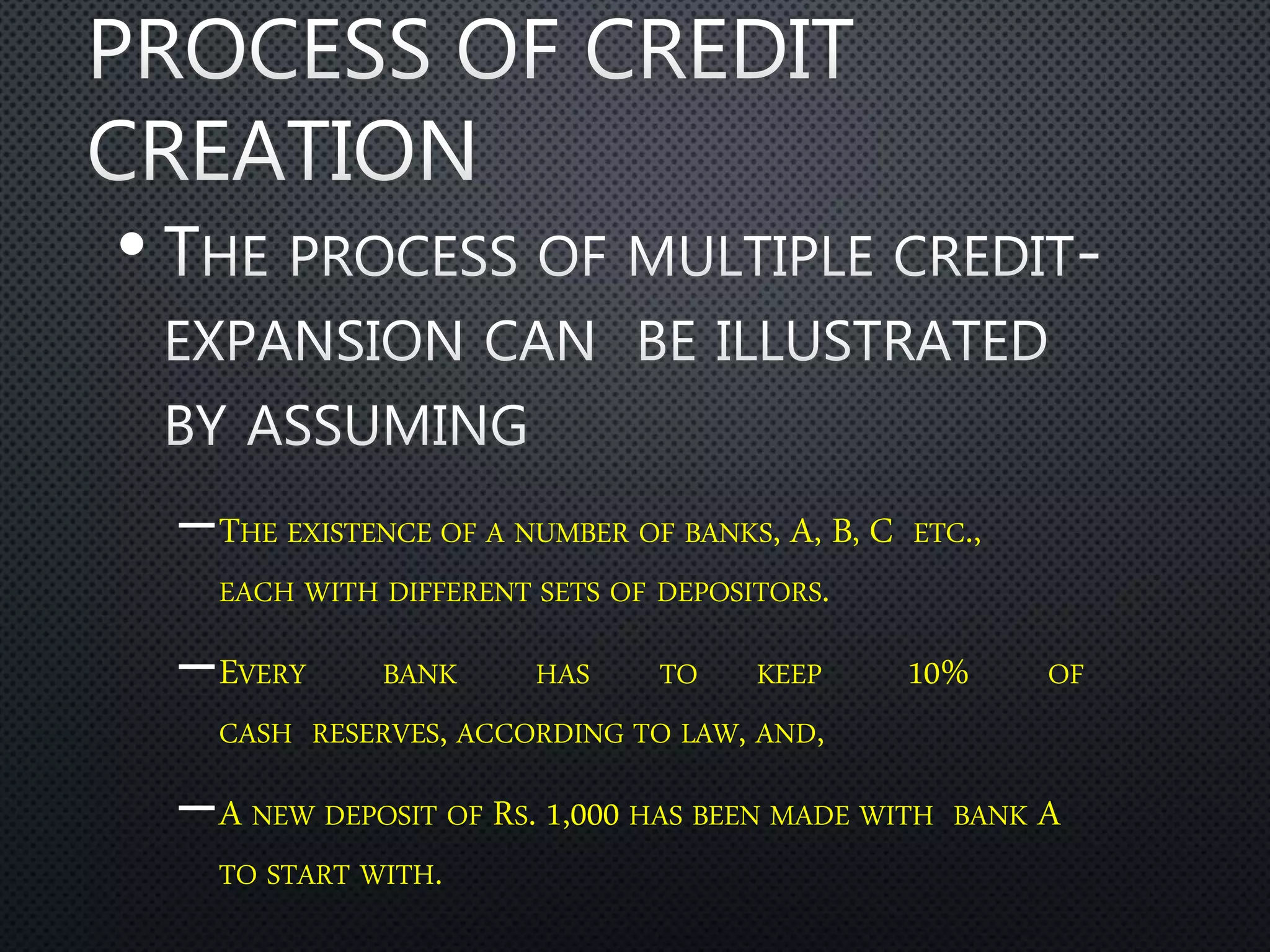
–THE EXISTENCE OF A NUMBER OF BANKS, A, B, C ETC.,
EACH WITH DIFFERENT SETS OF DEPOSITORS.
–EVERY BANK HAS TO KEEP 10% OF
CASH RESERVES, ACCORDING TO LAW, AND,
–A NEW DEPOSIT OF RS. 1,000 HAS BEEN MADE WITH BANK A
TO START WITH.
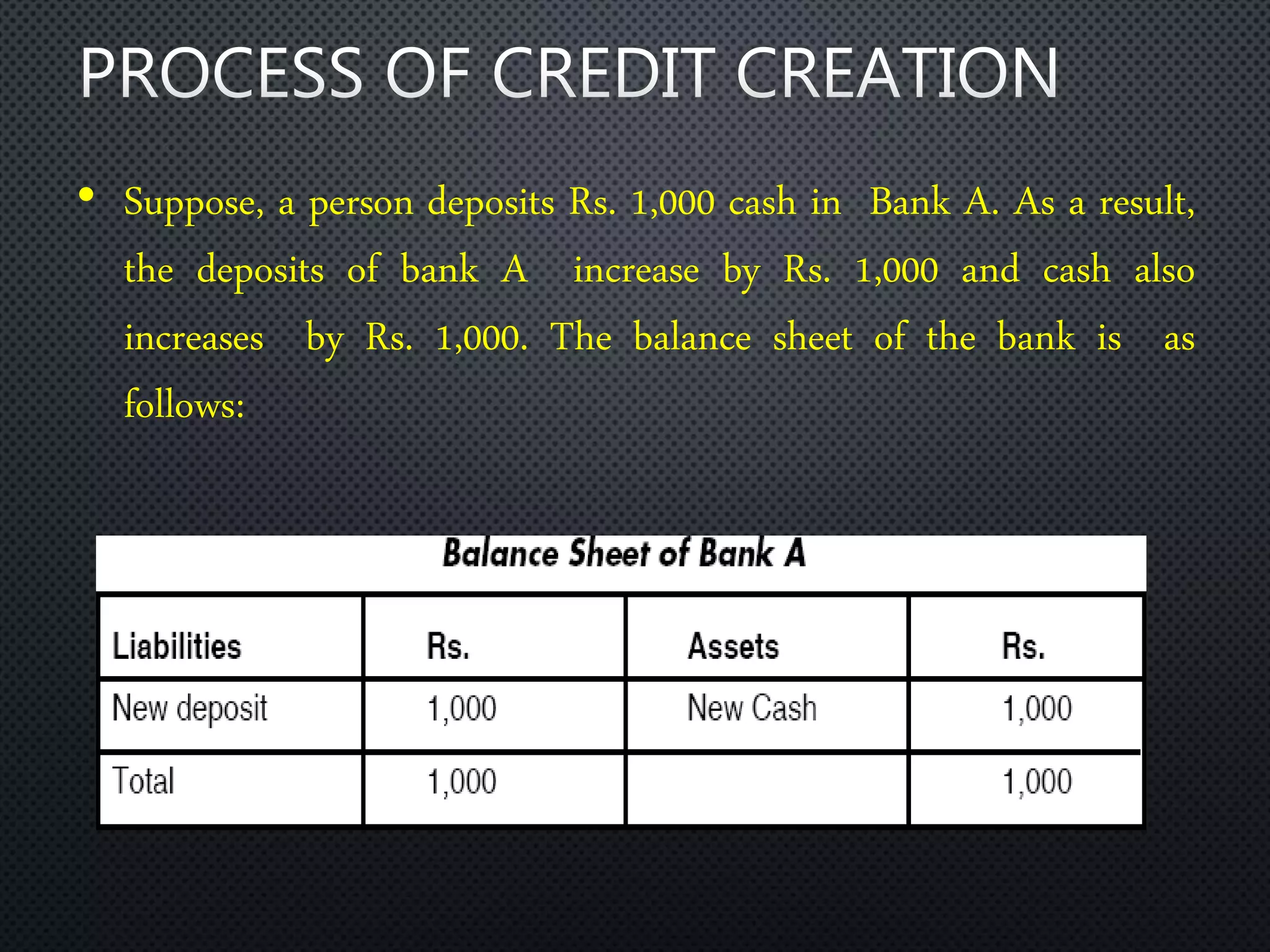
• Suppose, a person deposits Rs. 1,000 cash in Bank A. As a result,
the deposits of bank A increase by Rs. 1,000 and cash also
increases by Rs. 1,000. The balance sheet of the bank is as
follows:
• Under the double entry system, the amount of Rs. 1,000 is shown
on both sides.
• Suppose X purchase goods of the value of Rs. 900 from Y and pay cash.
• Y deposits the amount with Bank B.
• The deposits of Bank B now increase by Rs. 900 and its cash also increases by Rs. 900. After
keeping a cash reserve of Rs. 90, Bank B is free to lend the balance of Rs. 810 to any one.
• Suppose bank B lends Rs. 810 to Z, who uses the amount to pay off his creditors. The balance
sheet of bank B will be as follows:
• Suppose Z purchases goods of the value of Rs. 810 from S and pays the
amount.
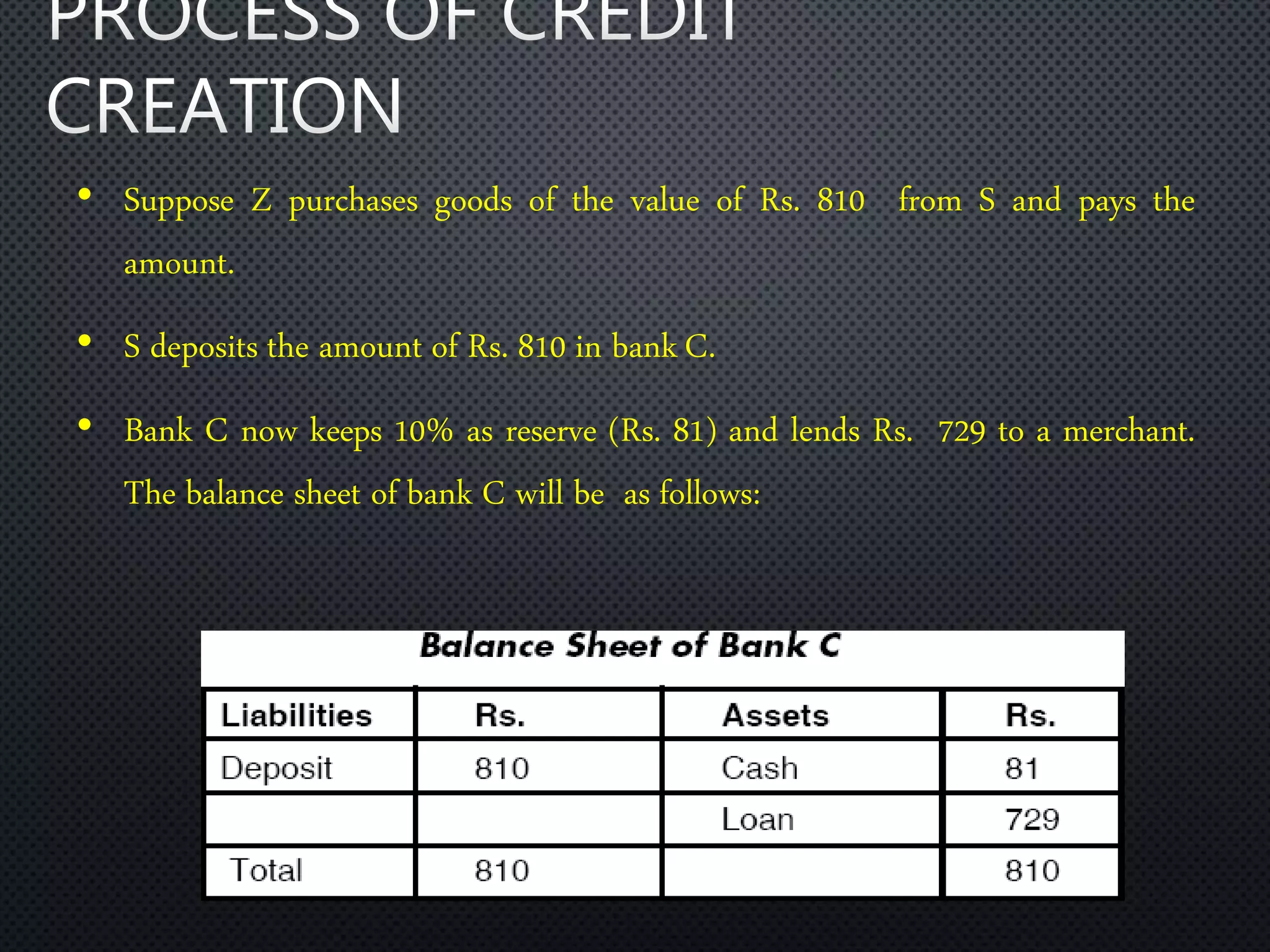
• S deposits the amount of Rs. 810 in bankC.
• Bank C now keeps 10% as reserve (Rs. 81) and lends Rs. 729 to a merchant.
The balance sheet of bank C will be as follows:
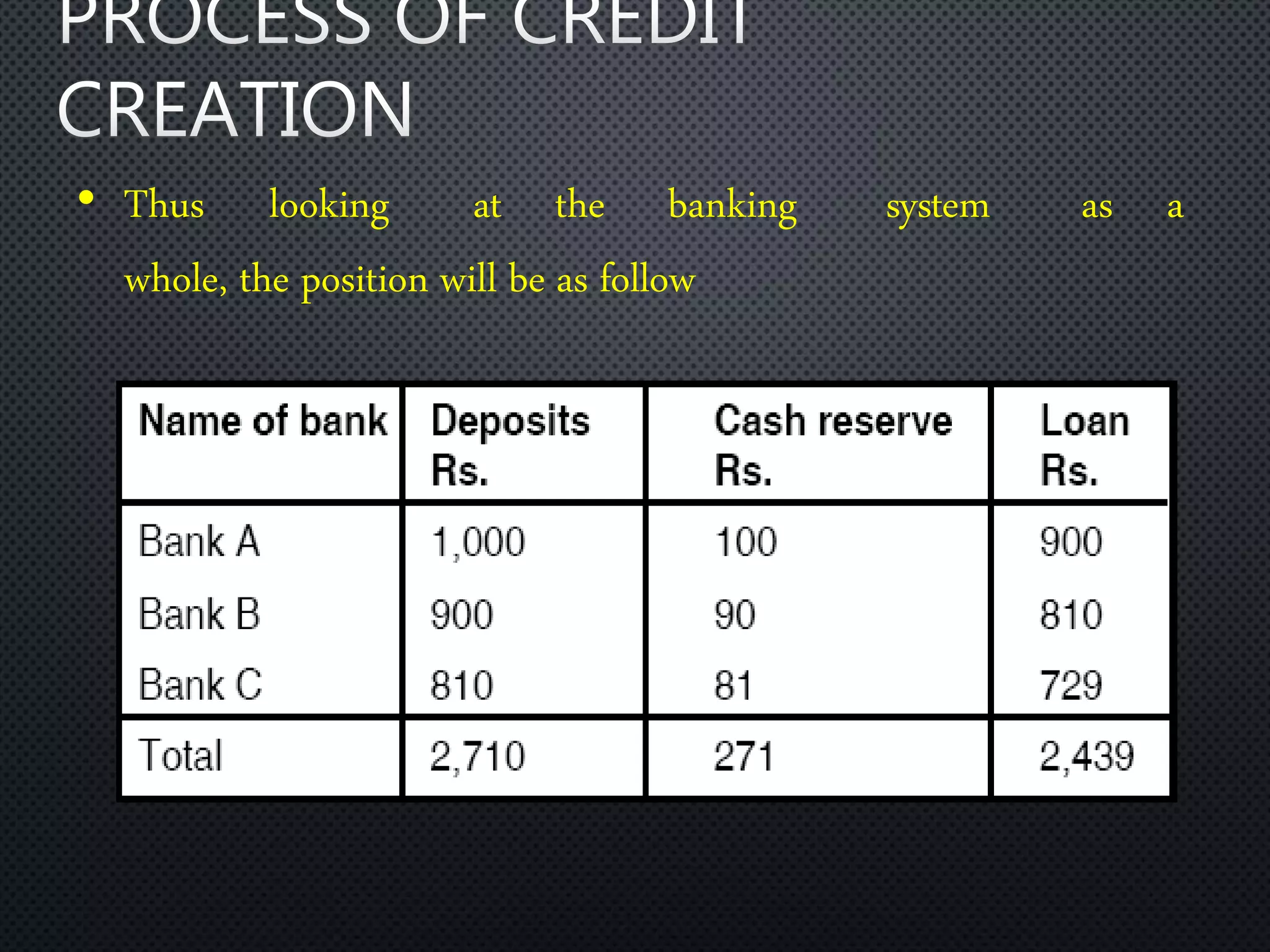
• Thus looking at the banking system as a
whole, the position will be as follow
• THE BANK CAN CREATE CREDIT TO THE LIMIT DECIDED BY THE
RESERVE RATIO I.E. 10%.
• HERE MONEY MULTIPLIER IS 1/LRR
• SO, MONEY MULTIPLIER IS 1/0.1 = 10 TIMES
• SO, THE TOTAL MONEY CREATED BY THE BANK IS
DEPOSIT X MONEY MULTIPLIER
RS. 1000 X 10 = RS. 10,000
• Amount of Cash: The power to create credit depends on the amount of cash deposit
in bank.
• More the cash deposit, more credit can be created out of it.
• Cash Reserve Ratio: All deposits cannot be used for credit creation. Banks must
keep certain percentage of deposits in cash as reserve.
• The Banking Habits of the People: The loan advanced to a customer should again
come back into banks as primary deposit.
• Nature of Business Conditions in the Economy: Credit creation will be large during
a period of prosperity, while it will be smaller during a depression.
Credit creation and money multiplier

Credit creation and money multiplier

  • 2.
    • Commercial banksare called the creator of credit. • They advance much more than what the collect from people in the form of deposits. • Through the process of credit creation, commercial banks provide finance to all sectors of the economy thus making them more developed than before.
  • 3.
    • The basisof credit money is the bank deposits. • The bank deposits are of two kinds viz., –Primary deposits –Derivative deposits
  • 4.
  • 5.
    • The bankingsystem as a whole can create credit which is several times more than the original increase in the deposits of a bank. The numerical expression for it is known as money multiplier • Money Multiplier = 1 LRR LRR = Legal Reserve Ratio • LRR means reserve ratio of cash reserved by commercial banks with themselves.
  • 6.
    • –THE EXISTENCE OFA NUMBER OF BANKS, A, B, C ETC., EACH WITH DIFFERENT SETS OF DEPOSITORS. –EVERY BANK HAS TO KEEP 10% OF CASH RESERVES, ACCORDING TO LAW, AND, –A NEW DEPOSIT OF RS. 1,000 HAS BEEN MADE WITH BANK A TO START WITH.
  • 7.
    • Suppose, aperson deposits Rs. 1,000 cash in Bank A. As a result, the deposits of bank A increase by Rs. 1,000 and cash also increases by Rs. 1,000. The balance sheet of the bank is as follows:
  • 8.
    • Under thedouble entry system, the amount of Rs. 1,000 is shown on both sides.
  • 9.
    • Suppose Xpurchase goods of the value of Rs. 900 from Y and pay cash. • Y deposits the amount with Bank B. • The deposits of Bank B now increase by Rs. 900 and its cash also increases by Rs. 900. After keeping a cash reserve of Rs. 90, Bank B is free to lend the balance of Rs. 810 to any one. • Suppose bank B lends Rs. 810 to Z, who uses the amount to pay off his creditors. The balance sheet of bank B will be as follows:
  • 10.
    • Suppose Zpurchases goods of the value of Rs. 810 from S and pays the amount. • S deposits the amount of Rs. 810 in bankC. • Bank C now keeps 10% as reserve (Rs. 81) and lends Rs. 729 to a merchant. The balance sheet of bank C will be as follows:
  • 11.
    • Thus lookingat the banking system as a whole, the position will be as follow
  • 12.
    • THE BANKCAN CREATE CREDIT TO THE LIMIT DECIDED BY THE RESERVE RATIO I.E. 10%. • HERE MONEY MULTIPLIER IS 1/LRR • SO, MONEY MULTIPLIER IS 1/0.1 = 10 TIMES • SO, THE TOTAL MONEY CREATED BY THE BANK IS DEPOSIT X MONEY MULTIPLIER RS. 1000 X 10 = RS. 10,000
  • 13.
    • Amount ofCash: The power to create credit depends on the amount of cash deposit in bank. • More the cash deposit, more credit can be created out of it. • Cash Reserve Ratio: All deposits cannot be used for credit creation. Banks must keep certain percentage of deposits in cash as reserve. • The Banking Habits of the People: The loan advanced to a customer should again come back into banks as primary deposit. • Nature of Business Conditions in the Economy: Credit creation will be large during a period of prosperity, while it will be smaller during a depression.