
Creating a winning 
ERP Change Strategy 
Paul J Siegenthaler 
24th September 2014
ERP Change 
Paul J Siegenthaler 
24th September 2014
How tough will the journey be ? 
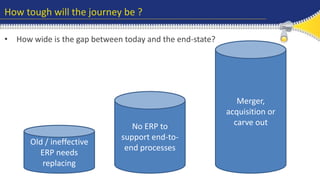
• How wide is the gap between today and the end-state? 
Old / ineffective 
ERP needs 
replacing 
No ERP to 
support end-to-end 
processes 
Merger, 
acquisition or 
carve out
How tough will the journey be ? 
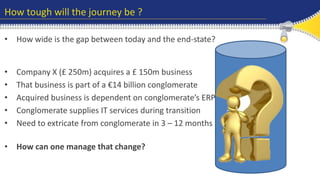
• How wide is the gap between today and the end-state? 
Old / ineffective 
ERP needs 
replacing 
No ERP to 
support end-to-end 
processes 
Merger, 
acquisition or 
carve out 
• Company X (£ 250m) acquires a £ 150m business 
• That business is part of a €14 billion conglomerate 
• Acquired business is dependent on conglomerate’s ERP 
• Conglomerate supplies IT services during transition 
• Need to extricate from conglomerate in 3 – 12 months 
• How can one manage that change?
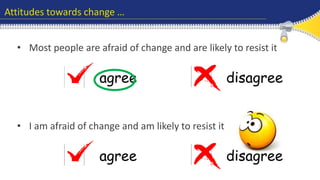
Attitudes towards change … 
• Most people are afraid of change and are likely to resist it 
agree disagree 
• I am afraid of change and am likely to resist it 
agree disagree
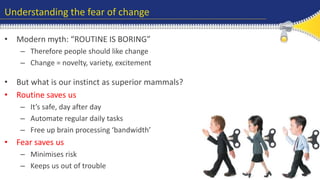
Understanding the fear of change 
• Modern myth: “ROUTINE IS BORING” 
– Therefore people should like change 
– Change = novelty, variety, excitement 
• But what is our instinct as superior mammals? 
• Routine saves us 
– It’s safe, day after day 
– Automate regular daily tasks 
– Free up brain processing ‘bandwidth’ 
• Fear saves us 
– Minimises risk 
– Keeps us out of trouble
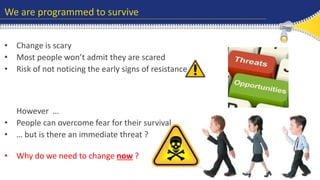
We are programmed to survive 
• Change is scary 
• Most people won’t admit they are scared 
• Risk of not noticing the early signs of resistance 
However … 
• People can overcome fear for their survival 
• … but is there an immediate threat ? 
• Why do we need to change now ?
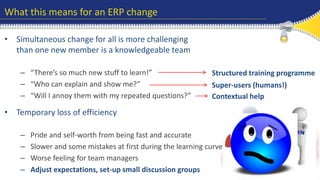
What this means for an ERP change 
• Simultaneous change for all is more challenging 
than one new member is a knowledgeable team 
– “There’s so much new stuff to learn!” 
– “Who can explain and show me?” 
– “Will I annoy them with my repeated questions?” 
Structured training programme 
Super-users (humans!) 
Contextual help 
• Temporary loss of efficiency 
– Pride and self-worth from being fast and accurate 
– Slower and some mistakes at first during the learning curve 
– Worse feeling for team managers 
– Adjust expectations, set-up small discussion groups
ERP change in mergers, acquisitions and carve-outs 
• Clarify the start and end points (“from – to”) 
– Processes 
– Systems architecture 
– Applications landscape 
• Who from the other side will help you? 
– How important are you to them? 
– Calibre 
– Knowledge 
• Clarify the transition 
– Transition services agreements (TSAs) 
– Service levels 
– Cost and compensation
Risk management and contingency planning 
• It’s basic stuff, and yet seldom honest or realistic 
– Risks documented but not actively managed 
– Some risks will inevitable materialize 
– The sum of impacts x likelihood should be included in the budget (contingency) 
or deducted from the benefits case. 
– That number is usually higher than 
the traditional 10% contingency 
• The unimaginable can happen! 
– Include more contingency than the value 
of the risk map
Coping with change  Managing change  Leading change” 
• Explain what and why 
– Visualise the end-point 
– Explain the options and their consequences 
• Manage expectations 
– Effort from all, not just I.T. 
– Long preparation for all (e.g. data cleansing) 
• Language and relevance 
– Different impacts on different functions 
• Create involvement and sense of urgency 
– Feedback in small groups 
– Maintain pace (short term milestones) 
– Many change agents, not just the boss!
Using technology to support change 
• Collaborative tools : sharing across teams and geographies 
– Document repository (SharePoint, DropBox …) 
– Programme management software (with workflow) 
– Can everyone access these tools? 
• Training 
– Process and system use 
– Realism of training environment 
– Repeatability (beyond initial cut-over) 
– Simultaneous training across geographies (not reliant on “train the trainer”)
In summary … 
• Creating a winning ERP change strategy 
• “Winning” ≠ “perfect” (you will never get it 100% perfect!) 
But the following will get you to the “winning” stage: 
• Clarity of purpose and self-evident business case 
• Rigorous programme management 
• Management of expectations 
• Stakeholder management (champions and resistors) 
• Strong and coherent leadership 
• Create “traction” 
– Don’t shove it, be supportive, help them! 
– Reduce fear of the unknown 
– Communicate, visualize the end-point
Any questions or other experiences? Let’s discuss!
Thank you ! 
Paul J Siegenthaler 
24th September 2014

Creating a winning ERP change strategy

  • 1.
    Creating a winning ERP Change Strategy Paul J Siegenthaler 24th September 2014
  • 2.
    ERP Change PaulJ Siegenthaler 24th September 2014
  • 3.
    How tough willthe journey be ? • How wide is the gap between today and the end-state? Old / ineffective ERP needs replacing No ERP to support end-to-end processes Merger, acquisition or carve out
  • 4.
    How tough willthe journey be ? • How wide is the gap between today and the end-state? Old / ineffective ERP needs replacing No ERP to support end-to-end processes Merger, acquisition or carve out • Company X (£ 250m) acquires a £ 150m business • That business is part of a €14 billion conglomerate • Acquired business is dependent on conglomerate’s ERP • Conglomerate supplies IT services during transition • Need to extricate from conglomerate in 3 – 12 months • How can one manage that change?
  • 5.
    Attitudes towards change… • Most people are afraid of change and are likely to resist it agree disagree • I am afraid of change and am likely to resist it agree disagree
  • 6.
    Understanding the fearof change • Modern myth: “ROUTINE IS BORING” – Therefore people should like change – Change = novelty, variety, excitement • But what is our instinct as superior mammals? • Routine saves us – It’s safe, day after day – Automate regular daily tasks – Free up brain processing ‘bandwidth’ • Fear saves us – Minimises risk – Keeps us out of trouble
  • 7.
    We are programmedto survive • Change is scary • Most people won’t admit they are scared • Risk of not noticing the early signs of resistance However … • People can overcome fear for their survival • … but is there an immediate threat ? • Why do we need to change now ?
  • 8.
    What this meansfor an ERP change • Simultaneous change for all is more challenging than one new member is a knowledgeable team – “There’s so much new stuff to learn!” – “Who can explain and show me?” – “Will I annoy them with my repeated questions?” Structured training programme Super-users (humans!) Contextual help • Temporary loss of efficiency – Pride and self-worth from being fast and accurate – Slower and some mistakes at first during the learning curve – Worse feeling for team managers – Adjust expectations, set-up small discussion groups
  • 9.
    ERP change inmergers, acquisitions and carve-outs • Clarify the start and end points (“from – to”) – Processes – Systems architecture – Applications landscape • Who from the other side will help you? – How important are you to them? – Calibre – Knowledge • Clarify the transition – Transition services agreements (TSAs) – Service levels – Cost and compensation
  • 10.
    Risk management andcontingency planning • It’s basic stuff, and yet seldom honest or realistic – Risks documented but not actively managed – Some risks will inevitable materialize – The sum of impacts x likelihood should be included in the budget (contingency) or deducted from the benefits case. – That number is usually higher than the traditional 10% contingency • The unimaginable can happen! – Include more contingency than the value of the risk map
  • 11.
    Coping with change Managing change  Leading change” • Explain what and why – Visualise the end-point – Explain the options and their consequences • Manage expectations – Effort from all, not just I.T. – Long preparation for all (e.g. data cleansing) • Language and relevance – Different impacts on different functions • Create involvement and sense of urgency – Feedback in small groups – Maintain pace (short term milestones) – Many change agents, not just the boss!
  • 12.
    Using technology tosupport change • Collaborative tools : sharing across teams and geographies – Document repository (SharePoint, DropBox …) – Programme management software (with workflow) – Can everyone access these tools? • Training – Process and system use – Realism of training environment – Repeatability (beyond initial cut-over) – Simultaneous training across geographies (not reliant on “train the trainer”)
  • 13.
    In summary … • Creating a winning ERP change strategy • “Winning” ≠ “perfect” (you will never get it 100% perfect!) But the following will get you to the “winning” stage: • Clarity of purpose and self-evident business case • Rigorous programme management • Management of expectations • Stakeholder management (champions and resistors) • Strong and coherent leadership • Create “traction” – Don’t shove it, be supportive, help them! – Reduce fear of the unknown – Communicate, visualize the end-point
  • 14.
    Any questions orother experiences? Let’s discuss!
  • 15.
    Thank you ! Paul J Siegenthaler 24th September 2014