CRAFTING THE BRAND POSITIONING
Contents:
• What is Positioning?
• What is Competitve Frame of Reference?
• POD & POP
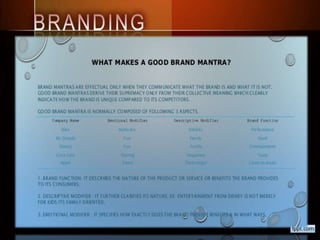
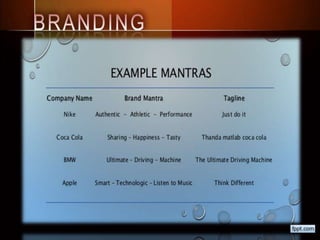
• Brand Mantra
• Differentiation Strategies
• Product Life Cycle
• Style, Fashion & Fad Life Cycle
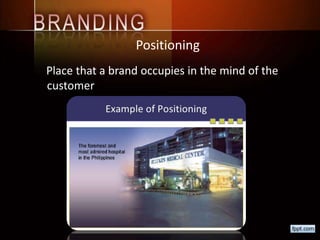
Positioning
Place that a brand occupies in the mind of the
customer
Competitive Frame of Reference
• The competitive frame of reference provides the
context for positioning, and it is a fancy way of
describing the market or context in which you
choose to position your brand
Points of Difference
• Factors of products & services that establish
differentiation
Example:
Small cars are similiar but Mini Cooper is
uniquely sporty and fun to drive.
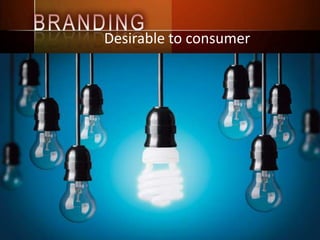
Desirable to consumer
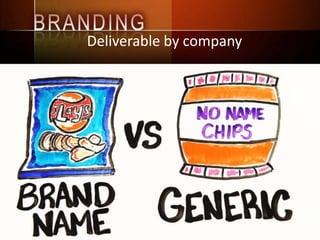
Deliverable by company
Points of Parity
• Features & benefits that are offered by everyone.
Example:
All cars have four wheels,lights & gas.
Types of association
• Category points of parity
• Competitive point of parity
Differentiation Strategies
• Competitive Advantage:
Finding different ways of being unique in the
marketplace
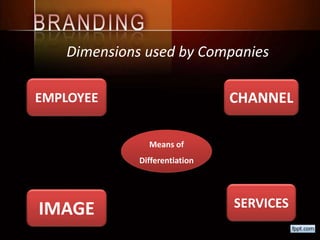
Dimensions used by Companies
Means of
Differentiation
EMPLOYEE CHANNEL
IMAGE SERVICES
Personnel
Differentiation
Companies try
to differentiate themselves to
gain a competitive Companies
try to differentiate themselves
to gain a competitive
advantage through better-
trained people who can serve
their customers in an excellent
manner.
through better-trained people who can serve their customers
in an excellent manner.
. CompaniCompanies try to differentiate themselves to gain a
competitive advantage through better-trained people who
can serve their customers in an excellent manner.
es try to differentiate themselves to gain a competitive
advantage through better-trained people who can serve their
customers in an excellent manner.
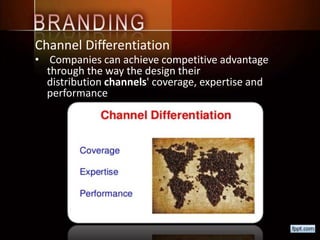
Channel Differentiation
• Companies can achieve competitive advantage
through the way the design their
distribution channels' coverage, expertise and
performance
Image Differentiation
• An effective image establishes the product's
character and value proposition
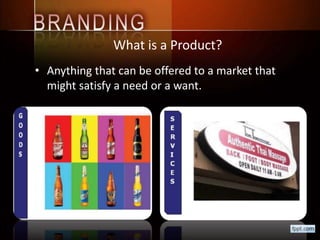
What is a Product?
• Anything that can be offered to a market that
might satisfy a need or a want.
Demand For The Products
Demand for these products nowadays :
• Diabetes Insulin Injections.
• Video Cassette Player.
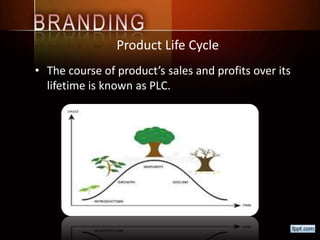
Product Life Cycle
• The course of product’s sales and profits over its
lifetime is known as PLC.
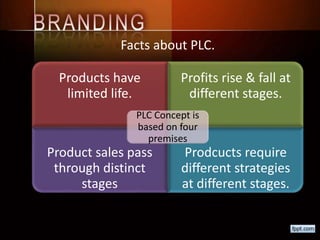
Facts about PLC.
Products have
limited life.
Profits rise & fall at
different stages.
Product sales pass
through distinct
stages
Prodcucts require
different strategies
at different stages.
PLC Concept is
based on four
premises
PLC Stages
 Product Development
• Sales are zero.
• Company’s investment cost mounts.
• Profits are negative.
Continued.
 Introduction Stage:
• Slow sales.
• Profit non-existent
• Heavy Expenses.
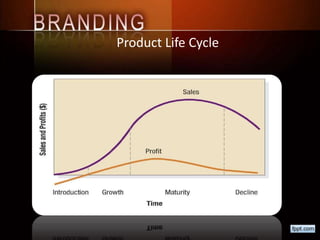
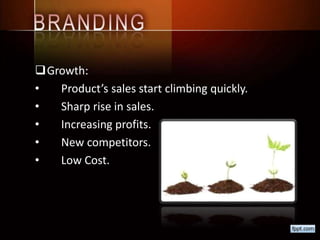
Growth:
• Product’s sales start climbing quickly.
• Sharp rise in sales.
• Increasing profits.
• New competitors.
• Low Cost.
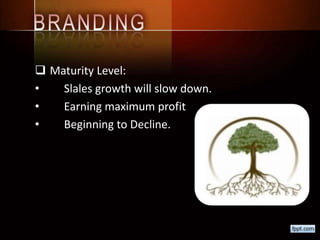
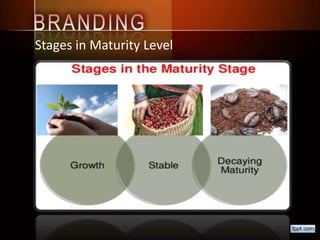
 Maturity Level:
• Slales growth will slow down.
• Earning maximum profit
• Beginning to Decline.
Stages in Maturity Level
Changes in Product during Maturity Level
• Market Modification:
Try to expand the market.
eg. Fair & Lovely bb cream for men.
• Product Modification:
Firms modify the product’s characteristics
through quality,feature & style improvement.
Product Modification(cont..)
 Quality Improvement:
Increasing the product’s functional performance.
 Feature Improvement:
Firms add new feature in product that expands
the product’s performance.
 Style improvement:
Style strategy might give the a product a unique
identity.
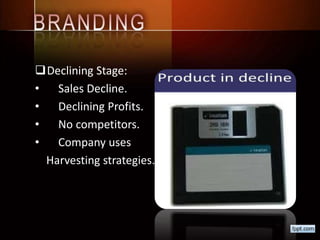
Declining Stage:
• Sales Decline.
• Declining Profits.
• No competitors.
• Company uses
Harvesting strategies.
Product Life Cycle
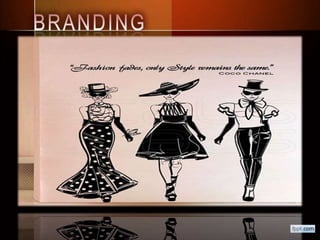
Style, Fashion & Fad life cycle
• Style:
Physical appearance of any product.
• Fashion:
It is a popular style, especially in clothing,
footwear, lifestyle products, accessories, makeup,
hairstyle and body
• Fad:
An activity, style or interest that is very popular for
very short time period.
Crafting the brand positioning

Crafting the brand positioning

  • 1.
    CRAFTING THE BRANDPOSITIONING
  • 2.
    Contents: • What isPositioning? • What is Competitve Frame of Reference? • POD & POP • Brand Mantra • Differentiation Strategies • Product Life Cycle • Style, Fashion & Fad Life Cycle
  • 3.
    Positioning Place that abrand occupies in the mind of the customer
  • 4.
    Competitive Frame ofReference • The competitive frame of reference provides the context for positioning, and it is a fancy way of describing the market or context in which you choose to position your brand
  • 5.
    Points of Difference •Factors of products & services that establish differentiation Example: Small cars are similiar but Mini Cooper is uniquely sporty and fun to drive.
  • 6.
  • 7.
  • 8.
    Points of Parity •Features & benefits that are offered by everyone. Example: All cars have four wheels,lights & gas.
  • 9.
    Types of association •Category points of parity • Competitive point of parity
  • 17.
    Differentiation Strategies • CompetitiveAdvantage: Finding different ways of being unique in the marketplace
  • 18.
    Dimensions used byCompanies Means of Differentiation EMPLOYEE CHANNEL IMAGE SERVICES
  • 19.
    Personnel Differentiation Companies try to differentiatethemselves to gain a competitive Companies try to differentiate themselves to gain a competitive advantage through better- trained people who can serve their customers in an excellent manner. through better-trained people who can serve their customers in an excellent manner. . CompaniCompanies try to differentiate themselves to gain a competitive advantage through better-trained people who can serve their customers in an excellent manner. es try to differentiate themselves to gain a competitive advantage through better-trained people who can serve their customers in an excellent manner.
  • 20.
    Channel Differentiation • Companiescan achieve competitive advantage through the way the design their distribution channels' coverage, expertise and performance
  • 21.
    Image Differentiation • Aneffective image establishes the product's character and value proposition
  • 26.
    What is aProduct? • Anything that can be offered to a market that might satisfy a need or a want.
  • 27.
    Demand For TheProducts Demand for these products nowadays : • Diabetes Insulin Injections. • Video Cassette Player.
  • 28.
    Product Life Cycle •The course of product’s sales and profits over its lifetime is known as PLC.
  • 29.
    Facts about PLC. Productshave limited life. Profits rise & fall at different stages. Product sales pass through distinct stages Prodcucts require different strategies at different stages. PLC Concept is based on four premises
  • 30.
    PLC Stages  ProductDevelopment • Sales are zero. • Company’s investment cost mounts. • Profits are negative.
  • 31.
    Continued.  Introduction Stage: •Slow sales. • Profit non-existent • Heavy Expenses.
  • 32.
    Growth: • Product’s salesstart climbing quickly. • Sharp rise in sales. • Increasing profits. • New competitors. • Low Cost.
  • 33.
     Maturity Level: •Slales growth will slow down. • Earning maximum profit • Beginning to Decline.
  • 34.
  • 35.
    Changes in Productduring Maturity Level • Market Modification: Try to expand the market. eg. Fair & Lovely bb cream for men. • Product Modification: Firms modify the product’s characteristics through quality,feature & style improvement.
  • 36.
    Product Modification(cont..)  QualityImprovement: Increasing the product’s functional performance.  Feature Improvement: Firms add new feature in product that expands the product’s performance.  Style improvement: Style strategy might give the a product a unique identity.
  • 37.
    Declining Stage: • SalesDecline. • Declining Profits. • No competitors. • Company uses Harvesting strategies.
  • 38.
  • 39.
    Style, Fashion &Fad life cycle • Style: Physical appearance of any product. • Fashion: It is a popular style, especially in clothing, footwear, lifestyle products, accessories, makeup, hairstyle and body • Fad: An activity, style or interest that is very popular for very short time period.