COVID-19
(FEBRUARY 2020)
STANDARD OPERATING
PROCEDURES & GUIDELINES
First Revision
29 Feb 2020
List of Contributors
Primary Authors
Dr Haroon Jahangir Khan Director General Health Services Punjab
Dr Shahnaz Naeem Director Health Services CD &EPC
Dr Somia Iqtadar Associate Professor Medicine KEMU
Dr Jamshaid Ahmed Head of WHO Office Punjab
Mr. Usman Ghani Additional Director Health Education
Section B: Surveillance and Response
Dr Muhammad Saeed Akhter Technical Advisor to DG Health
Dr Irfan Ahmed NPO WHO Surveillance
Dr Ahmed Shafique Director Programs Punjab, JSI Inc.
Dr M Mohsan Watto TSO FELTP PDSRU
Dr Sarmad Wahaj Manager IT EP&C
Mr. Shamas ul Islam Senior Program Manager PITB
Mr Rana Muhammad Hassan Program Manager PITB
Dr Muhammad Shaban Nadeem Manager Operations EP&C Punjab
Dr Muhammad Imran Bashir Additional Director Health EP&C
Section C: Clinical Management
Dr Javed Magsi Associate Professor of Pulmonology AIMC
Dr Asif Hanif Assistant Professor pulmonology KEMU
Section D: Laboratory Sample Collection and Transportation
Professor Dr Sidra Saleem Head of Microbiology Department University of Health Sciences
Section E: Infection Prevention and Control
Dr Summia Khan Demonstrator Institute of Public Health Lahore
Dr Huda Sarwar Demonstrator Institute of Public Health Lahore
Reviewed bY
Professor Dr Javed Akram Vice Chancellor University of Health Sciences
Brig (R) Dr Waheed ul Zaman Professor of Pathology Cughtai Lab
Dr Muhammad Saqib Saeed Professor of Pulmonology KEMU
Message by Sardar Usman Ahmad Khan Buzdar
Chief Minister Punjab
Message by Dr Haroon Jehangir Khan
Director General Health Services Punjab
Annex 7: Contact Details of COVID-19 Focal Points in Punjab
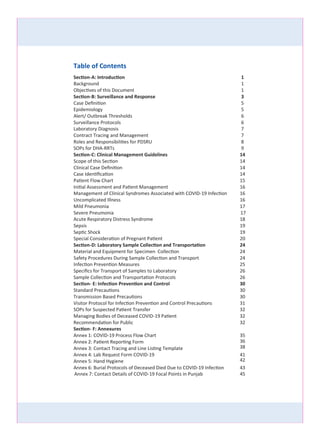
Table of Contents
Section-A: Introduction 1
Background 1
Objectives of this Document 1
Section-B: Surveillance and Response 3
Case Definition 5
Epidemiology 5
Alert/ Outbreak Thresholds 6
Surveillance Protocols 6
Laboratory Diagnosis 7
Contract Tracing and Management 7
Roles and Responsibilities for PDSRU 8
SOPs for DHA-RRTs 9
Section-C: Clinical Management Guidelines 14
Scope of this Section 14
Clinical Case Definition 14
Case Identification 14
Patient Flow Chart 15
Initial Assessment and Patient Management 16
Management of Clinical Syndromes Associated with COVID-
Uncomplicated Illness 16
Mild Pneumonia 17
Severe Pneumonia
Acute Respiratory Distress Syndrome 18
Sepsis 19
Septic Shock 19
Special Consideration of Pregnant Patient 20
Section-D: Laboratory Sample Collection and Transportation 24
Material and Equipment for Specimen Collection
Safety Procedures During Sample Collection and Transport 24
24
Infection Prevention Measures 25
Specifics for Transport of Samples to Laboratory 26
Sample Collection and Transportation Protocols 26
Section- E: Infection Prevention and Control 30
Standard Precautions 30
Transmission Based Precautions 30
Visitor Protocol for Infection Prevention and Control Precautions 31
SOPs for Suspected Patient Transfer 32
Managing Bodies of Deceased COVID-19 Patient 32
Recommendation for Public 32
Section- F: Annexures
Annex 1: COVID-19 Process Flow Chart 35
36
38
Annex 2: Patient Reporting Form
Annex 3: Contact Tracing and Line Listing Template
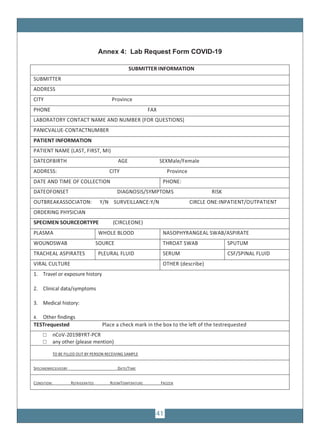
Annex 4: Lab Request Form COVID-19 41
42
43
45
Annex 6: Burial Protocols of Deceased Died Due to COVID-19 Infection
17
Annex 5: Hand Hygiene
1619 Infection
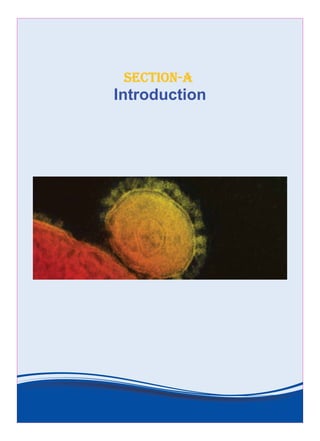
section-a
Introduction
01
section-a
Introduction
Background
On 31st December 2019, cases of pneumonia of unknown etiology (unknown cause) were detected in Wuhan City,
Hubei province of China. 31st December 2019 through 3rd January 2020, a total of 44 cases of pneumonia of
unknown etiology were identified. During this reported period, the causal agent was not identified. On 11th and
12th January 2020, National Health Commission (NHC) China reported that the outbreak is associated with
exposure in one of the seafood and livestock markets in Wuhan City. The Chinese authorities identified a new
type of coronavirus on 7th January 2020. On 12th January 2020, China shared the genetic sequence of the novel
coronavirus for countries to use in developing specific diagnostic kits. Subsequently, laboratory confirmed cases
of 2019-nCoV reported by Thailand, Japan and Korea. On 30th January 2020, 2019-nCoV was declared a global
health emergency by the World Health Organization (WHO).
On 11th February, 2020 WHO officially named the deadly disease caused by Novel Coronavirus as “COVID-19
The name represent phrase ‘Coronavirus Disease 19’. Experts created the name without referencing any
animal, place or person.
Objectives of this Document
The new disease with limited available knowledge demands a set of SOPs and guidelines for all levels of care
which are well aligned with national and local context to establish and implement prevention and control measures.
WHO has developed and provided technical documents and interim guidelines to tackle this new infection. The
Ministry of Health Services, Regulations and Coordination (MHSR&C) has also developed guidelines based upon
WHO documents however these documents are mainly focusing upon coordination and response at point of entries
(POEs). There is a need to prepare a comprehensive guiding document covering all aspects including technical
guidance and standard operating procedures and protocols aligned with provincial health system. This document
will amicably address the need and will also
help stakeholders to get all the required information (available so far) about the COVID-19, existing
surveillance mechanism and their respective role and responsibilities; AND
facilitate clinicians and care providers on standard case management.
The document has FOUR main sections:
1. Section B: Surveillance and Response (S&R)
2. Section C: Clinical Management Guidelines
3. Section D: Laboratory Samples Collection and Transportation
4. Section
-
-
-
- E: Infection Prevention and Control (IPC)
All important areas related to COVID-19 are covered under these main sections.
Surveillance and Response
section - b
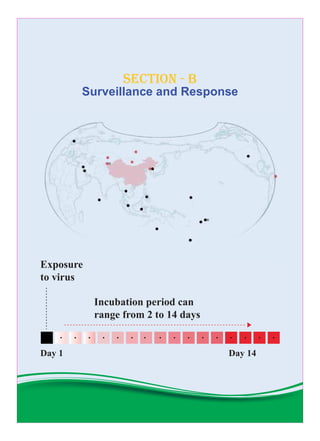
Exposure
to virus
Day 1 Day 14
Incubation period can
range from 2 to 14 days
05
section- b
Surveillance and Response
Case Definitions
Suspected Case: (Surveillance case definition, may slightly differ from clinical case definitions)
A. A patient with acute respiratory illness (fever and at least one sign/symptom of respiratory disease (e.g., cough,
shortness of breath), AND with no other etiology that fully explains the clinical presentation AND a history
of travel to or residence in a country/area or territory reporting local transmission (See situation report) of
COVID-19 disease during the 14 days prior to symptom onset.
OR
B. A patient with any acute respiratory illness AND having been in contact with a confirmed or probable COVID-19
case (see definition of contact) in the last 14 days prior to onset of symptoms;
OR
C. A patient with severe acute respiratory infection (fever and at least one sign/symptom of respiratory disease
(e.g., cough, shortness breath) AND requiring hospitalization AND with no other etiology that fully explains
the clinical presentation
D. Any person died of having signs and symptoms of COVID-19 illness in the area with ongoing transmission
of infection OR have definitive epidemiological link with a Probable or Confirmed COVID-19 patient
Confirmed Case: A person with laboratory confirmation of COVID-19 infection, irrespective of clinical signs
and symptoms.
Epidemiology
Infectious Agent
1. “Coronavirus Disease 2019 (COVID-19)” is caused by a novel Coronavirus which is named as
SARS-COV 2 (Severe Acute Respiratory Syndrome Coronavirus 2).
2. Coronaviruses are a large family of viruses, some causing illness in people and others that circulate among animals,
including camels, cats and fruit bats.
4. This new virus strain SARS-COV 2 is also believed to be of zoonotic origin
3. Sometimes, zoonotic coronaviruses mutate and infect human and then spread between people such has been
seen with Severe Acute Respiratory Syndrome SARS-COV (2002) and Middle East Respiratory Syndrome
(MERS-COV) in 2012 epidemics.
Mode of Transmission: The initial source of COVID-19 still remains unknown however this virus is also
believed of zoonotic origin. Epidemiological information reinforces the evidence that the COVID-19 can be
transmitted from one individual to another. Exact mode of transmission of COVID-19 is still unknown however
based upon the previous knowledge about human to human transmission of other coronaviruses (SARS-CoV &
MERS-CoV), it is suggested that COVID-19 has similar mode of transmission i.e.;
1. Droplet infection
2. Contact transmission
3. Contaminated objects (fomites)
4. Air borne
Incubation Period: Current estimates of the incubation period range from 2-14 days, and these estimates will
be refined as more data become available.
Probable Case: A suspect case for whom testing for COVID-19 is inconclusive
06
Population at Risk: People most at risk of infection from the novel coronavirus are:
1. Those who have recent travel history to the area where human to human transmission of COVID-19 outbreak
is reported
2. Those who are caring people infected with COVID-19 such as family members and healthcare workers, and
3. Those in close contact with animals such are live animal market workers
People of any age and sex may got infected with COVID-19 however reportedly disease course is more severe for
elder patients and patients with any pre-existing chronic disease or co-morbidity.
Seasonality: This is new infection so not much knowledge is available however it is suggested that it may follow
the pattern similar to other coronaviruses.
Clinical Presentation: Limited information is available to characterize the spectrum of clinical illness
associated with COVID-19. The observed clinical signs and symptoms of this illness include:
1. Mild disease with symptoms of common cold and upper respiratory infection (URTI)
2. Fever
3. Cough
4. Difficulty in breathing.
5. Chest radiographs show invasive pneumonic infiltrates in both lungs.
Disease Spread and Morbidity: The first known human infection occurred in early December 2019. An
outbreak of COVID-19 was first detected in Wuhan, China, in mid-December 19. The virus subsequently spread
to all provinces of China and to 28 other countries and territories in Asia, Europe, North America, and Oceania by
6th February 2020. Human-to-human spread of the virus has been confirmed in all of these regions.
Alert/Outbreak Thresholds
Alert Criteria: One suspected case (meeting case definitions of COVID-19) is an alert and to be reported and
investigated immediately.
Outbreak Criteria: One confirmed case of COVID-19 is an outbreak and will trigger epidemic response
protocols.
Surveillance Protocols
 COVID-19 is a category-1 reportable infectious disease and has been declared as Public Health Emergency
of International Concern (PHEIC) under International Health Regulation (IHR) by the WHO.
 Any suspected case of COVID-19 who is meeting the case definition must be reported immediately to
Provincial Disease Surveillance and Response Unit (PDSRU) at office of Director General Health Services
Punjab
 The immediate report must be shared with PDSRU using “COVID-19 Reporting Form” (Annexure 2) duly
filled and signed by focal person.
 The PDSRU should also be informed through phone call, WhatsApp or email. The Event Management Team
at PDSRU will review and evaluate the available information.
 If the case information satisfies the case definition criteria, the respective health facility focal person will be
advised to upload patient information on Disease Surveillance System (DSS) dashboard
 The Rapid Response Team (RRT) will be mobilized by the District Health Authority (DHA).
 However, all suspected patients will be immediately isolated from the other patients and recommended IPC
protocols will be implemented as the patient is reported.
 The specimen collection for laboratory confirmation from the suspected patient will also be ensured (Refer to
Laboratory Guidelines for detailed SOPs)
 The responsibility of case reporting is on:
07
o Health Authorities operating at POE
o Focal persons at designated health facility
o Medical Superintendents/ In-charges of health facilities
o Laboratory focal person (In-Charge)
o Chief Executive Officer (CEO) of District Health Authority (DHA)
o Administrators of private sector healthcare facilities, parastatal hospitals through respective DHA
 During the current phase of epidemic, it is responsibility of Central Health Establishment (CHE) at POE and
designated health facilities to submit daily status report as well as “Zero Report”
Laboratory Diagnosis
Respiratory virus diagnosis depends on the collection of high-quality specimens, their rapid transport to the
laboratory and appropriate storage before laboratory testing. Designated health facilities must ensure that the
sample collection SOPs and appropriate identified staff are available, staff is trained on PPE donning and doffing,
proper disposal, appropriate collection, specimen storage, packaging and transport under cold chain conditions.
 RT-PCR is the confirmatory test (Test capacity available at NIH Islamabad)
 Collect specimen both from nasopharynx and oropharynx from ambulant patients and transport in one tube
 Collect specimen from lower respiratory tract (expectorated sputum, endotracheal aspirate, broncho-alveolar
lavage) from patients with more severe disease.
 Collect blood cultures for bacteria that cause pneumonia and sepsis, ideally before antimicrobial therapy.
 Serology for diagnostic purposes is not yet available
Contact Tracing and Management
Close Contacts (Higher Risk of Contacting Infection with COVID-19)
Defined as:
 Health care associated exposure in the form of:
o Providing direct care for COVID-19 patients
o Working with health care workers infected with COVID-19
o Visiting patients or staying in the same close environment of a COVID-19 patient.
 A person having had face to face contact or having been in a closed environment with a COVID-19 patient
 Traveling together with COVID-19 patient in any kind of conveyance
 Living in the same household of a COVID-19 patient
Casual Contacts (Relatively low risk but there are chances of contacting infection)
Defined as:
 An identifiable person having a casual contact with an ambulant COVID-19 case
 A person having stayed in an area presumed to have ongoing community transmission
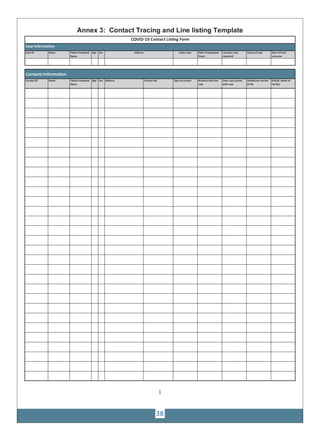
This is the responsibility of RRT to trace and list all the contacts of suspected patients using “Contacts Definitions”
and “Contact Line Listing Format” (Annexure 3)
Managements of Contacts: Close contacts (high-risk exposure)
1. Inform the local health focal person to activate and apply quarantine protocols and active monitoring.
A. If designated quarantine facility is available:
i. Isolate and transfer the contacts to the quarantine area under standard SOPs and IPC protocol
ii. Registration of contact at quarantine facility with all details and contact history
iii. Conduct entry screening (Medical as well as Lab)
iv. Educate, explain and provide psychological counseling
08
v. Shower, provide new dress and belongings
vi. Shift the contact to allocated room
vii. Daily monitoring for COVID-19 symptoms, including fever of any grade, cough or difficulty
breathing; will be done by the health authorities for 14 days from last contact
viii. Restrict social contact during the quarantine period
ix. Apply IPC measures to daily laundry, leftovers and utensils in use of contact
x. Apply exit protocol once, quarantine period is completed
xi. If contact develops, any kind of symptoms during the observation period, immediately isolate and
move the patient to designated health facility near quarantine site for initial assessment.
xii. Transfer the symptomatic contact to designated health facility if case definition criteria are met.
xiii. Apply all protocols listed in case management section
B. If Designated Quarantine Facility is not available, manage home quarantine and depute one responsible
and trained healthcare staff to maintain liaison with contact to monitor the contact’s health on daily basis.
Low Risk Exposure
1. Inform the local health focal person
2. Instruct the person:
a) To self-monitor for COVID-19 symptoms, including fever of any grade, cough or difficulty
breathing, for 14 days from last exposure
b) Immediately self-isolate and contact health services in the event of any symptom appearing within
14 days.
If no symptoms appear within 14 days of last exposure the contact person is no longer considered to be at
risk of developing COVID-19.
Responsibility Matrix Contact Tracing
Sr. No Contact tracing level Timeframe Responsibility to
identify
Responsibility to monitor
up to 14 days
1 Point of Entry Immediately after review
passenger health record
Airport Health
Authority/ (CHE)
and share daily report
with PDSRU
DHA / RRT
PDSRU share report will
concerned DHA on daily
basis
2 Community/neighborhood
/household
Immediately after receiving
alert for suspected case
DHA through RRT
and share daily report
with PDSRU
DHA through RRT*
3 Health Facility Immediately after suspect
case reporting
Health facility nominated
focal persons
and share daily report
with PDSRU
Hospital focal person
DHA through Rapid
response team
*Cross notification of travel history to concerned DHA
Roles and Responsibilities for PDSRU
The PDSRU will work as overall central unit for:
 Situation monitoring/alert generation
 Coordination for all the teams (HF focal person, CAA, CHE, Rescue1122 and DHA) and units working in
their respective area
 Assist the provincial and DHAs for necessary measures
 Coordinate with national and international partners and stakeholders
 Facilitate the capacity building process and strengthening of DHAs and other stakeholders
 Generate daily situation report for all stakeholders
 Assist the authorities on media briefings and risk communication
 Will operate 24/7
09
SOPs for DHA – RRTs
1- Coordinate with respective Airport Health Officer (AHO) / POE focal person frequently and prepare daily
report of all screened and suspected travelers of COVID-19 if any in last 24 hours. Daily report must be shared
with provincial focal person at punjab.pdsru@gmail.com and dhscdcpunjab@gmail.com
2- Ensure mandatory data entry of all cases of suspected COVID-19 infection, pneumonia, Influenza Like Illness
(ILI) and Severe Acute Respiratory Infection(SARI) on DSS dashboard by each health facility of the district
3- Maintain a list of private sector hospitals in the district and their focal persons for case notification and
reporting
4- Conduct daily meeting of RRTs to review surveillance data and maintenance of line listing of suspected
COVID-19 cases.
5- Coordinate and facilitate health facility staff in sample collection of suspected patient (s) as per guidelines
6- Ensure appropriate sample handling, recording, and transportation to the designated laboratory and follow up.
7- Ensure availability of sufficient sampling supplies with appropriate sample transportation mechanism in line
with the national guidelines. The sampling protocols have already been shared.
8- Mandatory and immediate notification of suspected cases of COVID-19 infection as per standard case
definition to provincial focal point i.e. DHS CD&EPC and PDSRU Punjab. All suspected COVID-19 cases
must be reported on DSS and through email dhscdcpunjab@gmail.com, punjab.pdsru@gmail.com, Telephone
No. 042-99202970, 042-99200970, SMS or through relevant DDSRU WhatsApp groups.
9- Ensure availability of sufficient stocks of PPE kits including gloves, face masks (surgical & N-95), goggles,
head covers, gowns and shoe covers. Further CEOs must ensure availability of hand washing supplies (soaps,
running water & alcohol based sanitizer) at each health facility.
10- DHA-RRT will coordinate with health facilities and concerned line departments for surveillance of suspected
COVID-19 cases
11- Training/sensitization of healthcare providers on identification of suspected COVID-19 infections by using
standard case definition
12- Training/sensitization of healthcare providers on standard sampling and transportation techniques in line with
the national guidelines
13- A close liaison must be developed by DHA-RRT with private sector hospitals for data entry on DSS and
compliance of SOPs.
14- Case investigation of each suspected case using standard Case Investigation Form (CIF) developed for
COVID-19 infections
15- Ensure sampling of each suspected case and transportation of each sample to reference laboratory
16- Ensure contact tracing through Active Surveillance and Case Finding (ASCF)
17- Sharing of relevant surveillance data (line listing, CIF, laboratory results etc.) with the district focal point and
provincial focal points through proper channel
18- DHA-RRT must act as technical resource team at district level and share updated information regarding
COVID-19 received from the DHS CD&EPC & PDSRU
19- The team must include the following:
a. District Health Officer (PS) Team Lead
b. District Surveillance Coordinator Member
c. Medical Officer/Physician Member
d. District Pathologist Member
e. CDCO Member
f. District Sanitary Inspector Member
g. District DSS focal person Member
h. Any Co-opted (as per need) Member
10
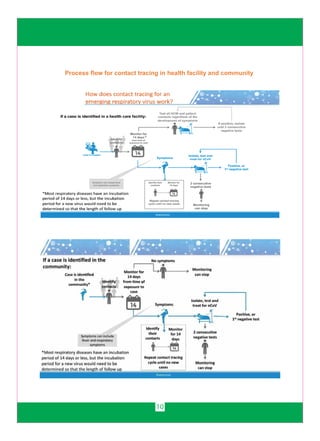
Process flow for contact tracing in health facility and community
Clinical Management Guidelines
section - c
14
sseeccttiioonn--cc
Clinical Management Guidelines
Scope of This Section
This document is intended for clinicians taking care of hospitalized adult and pediatric patients with clinical
spectrum of acute respiratory illness when a COVID-19 infection is suspected. It is not meant to replace clinical
judgment or specialist consultation but rather to strengthen clinical management of these patients and provide to
up-to-date guidance.
Clinical Case Definition
Suspected Case: Fever or measured temperature ≥38 C° (essential criterion) of less than 14 days,
With ANY one of the following:
 Cough
 Shortness of breath
 Difficulty in breathing
 Flu like illness
 Severe Acute Respiratory Infection (SARI) in a person requiring admission to hospital, with no
other etiology that fully explains the clinical presentation
AND either of the following:
1. A person with history of travel to or reside in to China in the last 14 days.
2. Close contact with a confirmed or probable case of COVID-19 while that patient was ill.
Case Definitions of “Probable Case” and “Confirmed Case” are same as given in Section B of this document.
Case Identification:
(Triage: Early recognition of patients with SARI associated with COVID-19 infection).
 Recognize and sort all patients with symptoms matching case definition and travel history of affected country
or contact with a probable or confirmed case of COVID-19 at any point of contact with health care system.
Consider COVID-19 as a possible cause of severe acute respiratory illness.
 Implement Infection Prevention and Control (IPC) measures and start treatment based on disease severity.
Keeping in view the limited available knowledge of the disease caused by COVID-19 infection and its
transmission patterns, it is strongly advised that all suspected cases should be isolated and monitored in
hospital settings by trained staff. This would ensure both safety and quality of health care (in case patients’
symptoms worsen) and public health security.
Patients NOT meeting the case definition of suspected COVID-19 should be assessed and managed according to
treatment protocols of other respiratory illnesses as diagnosed by the clinician.
15
Look for other
Respiratory Illness
& Treatment
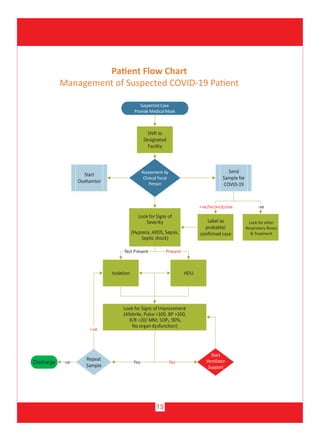
Patient Flow Chart
Management of Suspected COVID-19 Patient
16
Initial Assessment and Patient Management
 Patients with suspected COVID-19 should be admitted in dedicated isolation unit
 The case management should be initiated immediately by trained and dedicated team of healthcare providers
 Nasopharyngeal and oropharyngeal swabs should be collected as soon as possible at enrollment for laboratory
testing and specimen should be dispatched to the designated laboratory following all recommended SOPs
 Other investigations include
o CBC
o Blood cultures
o Chest X-Ray, if symptomatic
o Other investigations as indicated
 If the patient is clinically stable, provide symptomatic care only
o Antibiotics are NOT indicated
o Advise steam, antihistamines, plenty of fluids.
o Acetaminophen may be used to reduce fever
o Oseltamivir 75mg BD for treatment of influenza and should be de-escalated on the basis of
microbiological/lab results.
 Weight based administration of Oseltamivir to be used for management of pediatric
patients
o If the patient is unstable (e.g., has hypoxemia or is hypotensive), should be admitted in the designated
isolation rooms/HDU and to be managed according to his/her disease severity.
Management of Clinical Syndromes Associated with COVID-19 Infection
 Spectrum of 19-CoV ranges from asymptomatic infection to Severe Acute Respiratory Infection (SARI).
 The disease can take the severe form manifesting as pneumonia to ARDS sepsis and septic shock.
 No specific anti-viral is recommended for treating COVID-19 at present.
 General supportive measures remain the mainstay of treatment.
 Mild diseases require treatment in dedicated isolation units and serious patients will be requiring HDU
management:
Uncomplicated Illness
Patients with uncomplicated upper respiratory tract viral infection may have non-specific symptoms. These
patients do not have any signs of dehydration, sepsis or shortness of breath. The signs and symptoms of
uncomplicated illness include fever, cough, sore throat, nasal congestion, malaise, headache and myalgia.
 The elderly and immunosuppressed may present with atypical symptoms.
Management of Uncomplicated Illness
 Such patient should be managed in isolation unit dedicated for COVID-19 patients
 Only symptomatic management is required including
o Antipyretics
o Antihistamines
o Steam inhalation
17
Mild Pneumonia
In addition to symptoms of uncomplicated illness, patient will have Chest pain and Tiredness.
The diagnosis is purely clinical however chest imaging can exclude complications.
Management of Mild Pneumonia
 Such patients require dedicated inpatient management by trained clinicians who can assess the patient’s
condition and able to pick any signs of disease severity as early as possible
 Management protocols are on same lines i.e. symptomatic management
oAntipyretics
oAntihistamines
oSteam inhalation
Severe Pneumonia
 All patients with severe pneumonia require HDU management with regular monitoring under strict IPC
protocols.
 Signs and symptoms of severe pneumonia include
o In adolescent and adults
 Fever
 Cough
 Shortness of breath
 Respiratory rate >30 breaths/min
 Severe respiratory distress
o In Children
 Cough
 Difficulty in breathing
 Central cyanosis
 Severe respiratory distress (grunting, very severe chest in drawing)
 Inability to breastfeed or drink
 Lethargy or unconsciousness
 Convulsions
 Chest in-drawing
 Fast breathing
Management of Severe Pneumonia
 In patients with SARI and respiratory distress, hypoxemia, or shock, immediately initiate supplemental
Oxygen therapy at 5 liter/min
 Titrate flow rates to reach the targets as below:
 Target:
o SpO2 ≥ 90% in non-pregnant adults
o SpO2 ≥ 92 to 95% in pregnant patients
 Use conservative fluid management in patients with SARI when there is no evidence of shock. (Aggressive
fluid management may worsen oxygen saturation especially in settings where ventilator support is not
available).
 Give empiric antimicrobials to treat likely pathogens causing SARI. Give antimicrobials within one hour of
initial patient assessment for patients with sepsis.
 Empirical antibiotic therapy will be based on clinical diagnosis (community-acquired pneumonia, health care
associated pneumonia or sepsis). Empirical therapy may also include:
18
 Do not give systemic corticosteroids routinely for treatment of viral pneumonia or ARDS outside of clinical
trials, unless they are indicated for another reason.
 Closely monitor patients with SARI for signs of clinical deterioration, such as rapidly progressive respiratory
failure and sepsis
 Apply supportive care interventions immediately
 Understand the patient’s co-morbid condition(s) to tailor the management of critical illness and appreciate the
prognosis.
 Communicate early with the patient and the family
Acute Respiratory Distress Syndrome
ARDS is one of the severe form of diseases and requires HDU management with frequent monitoring and
strict IPC measures
 New or worsening respiratory symptoms within one week of clinical presentation.
 The diagnosis of ARDS is mainly through chest imaging using either:
o Radiograph
o CT chest
o Lung ultrasound
Findings include bilateral opacities, not fully explained by effusions; lobar or lung collapse, or nodules
 Echocardiography can be done to exclude hydrostatic cause of oedema.
 Signs and symptoms of severe pneumonia include:
In adults and adolescents:
Non cardiogenic pulmonary oedema
Labored or rapid breathing
Fever
Muscle fatigue
Discolored skin and nails
Rapid pulse rate
Hacking cough
o Classification according to severity:
Mild ARDS 200 mmHg < PaO2/FiO2 ≤ 300 mmHg
Moderate ARDS 100 mmHg < PaO2/FiO2 ≤200 mmHg
Severe ARDS PaO2/FiO2 ≤ 100 mmHg
o Oseltamivir 75mg BD for treatment of influenza and should be de-escalated on the basis of
microbiological/lab results.
In children:
Abdominal pain
Cough
Fatigue
Shortness of breath
o Classification according to severity:
Mild ARDS 4 ≤ OI < 8 or 5 ≤ OSI < 7.5
Moderate ARDS 8 ≤ OI < 16 or 7.5 ≤ OSI < 12.3
Severe ARDS OI ≥ 16 or OSI ≥ 12.3
(OI= Oxygenation Index; OSI= Oxygenation Index Using SPO)
19
Management
 Recognize severe hypoxemic respiratory failure when a patient with respiratory distress is failing standard
oxygen therapy of 10-15 liter/min
o High-flow Nasal Oxygen (HFNO) or Non-Invasive Ventilation (NIV) should only be used in selected
patients with hypoxemic respiratory failure.
o The risk of treatment failure is high and patients treated with either HFNO or NIV should be closely
monitored for clinical deterioration.
 Endotracheal intubation should be performed by a trained and experienced provider using airborne
precautions.
 Implement mechanical ventilation using lower tidal volumes (4–8 ml/kg predicted body weight, PBW) and
lower inspiratory pressures (plateau pressure <30 cmH2O).
 In patients with severe ARDS, prone ventilation for > 12 hours per day is recommended
 Use a conservative fluid management strategy for ARDS patients without tissue hypo perfusion
 In patients with moderate or severe ARDS, higher PEEP instead of lower PEEP is suggested
 In patients with moderate-severe ARDS (PaO2/FiO2 <150), neuromuscular blockade by continuous infusion
should not be routinely used.
Sepsis
 Documented or suspected infection, with two or more of the following conditions:
o Temperature > 38 °C (100.4 °F) or < 36 °C (96.8 °F),
o Heart Rate (HR) > 90/min
o Respiratory Rate (RR) > 20/min
o PaCO2 < 32 mm Hg
o White blood cells > 12 000 or < 4000/mm3 or > 10% immature (band) forms
Signs and Symptoms
 Sepsis leads to life threatening organ dysfunction manifested as:
o Altered mental status
o Difficult or fast breathing
o Low oxygen saturation
o Reduced urine output
o Fast heart rate
o Weak pulse
o Cold extremities
o Low blood pressure
o Skin mottling
In children, suspected or proven infection and ≥2 SIRS criteria, of which ONE must be abnormal temperature or
white blood cell count
Septic Shock
 Sepsis-induced hypotension (SBP < 90 mm Hg) despite adequate fluid resuscitation and signs of hypo
perfusion.
 In adults suspected or confirmed for COVID-19 infection, septic shock is labelled when:
o Vasopressors are needed to maintain mean arterial pressure ≥65 mmHg
o Lactate is ≥2 mmol/L
o Absence of hypovolemia
20
 In children
o Hypotension is essential criteria and any TWO of the following
 Altered mental state
 Tachycardia (>150 beats/min in children >160 beats/min in infants)
 Bradycardia <70 beats /min in children and <90 beats/min in infants)
 Prolonged capillary refill time (>2 sec)
 OR
 Warm vasodilation with bounding pulse, tachypnea, mottled skin, petechial or purpuric rash,
increased lactate, oliguria, hyper or hypothermia
Management of Sepsis and Septic Shock
Empirical broad-spectrum antibiotics are the hallmark of management of sepsis and septic shock and adjust
according to culture and sensitivity results
Fluid resuscitation
o Adults: 30 ml/kg of isotonic crystalloid in the first 3 hours.
o Children: 20 ml/kg as a rapid bolus and up to 40-60 ml/kg in the first 1 hr.
o Do not use hypotonic crystalloids, starches, or gelatins for resuscitation.
o Vasopressors when shock persists during or after fluid resuscitation.
o The initial blood pressure target is Mean Arterial Pressure (MAP) ≥65 mmHg in adults’ age-
appropriate targets in children.
o If central venous catheters are not available, vasopressors can be given through a peripheral IV,
but use a large vein and closely monitor for signs of extravasation and local tissue necrosis. If
extravasation occurs, stop infusion.
Vasopressors can also be administered through intraosseous needles.
If signs of poor perfusion and cardiac dysfunction persist despite achieving MAP target with fluids and
vasopressors, consider an inotrope such as dobutamine.
Special Considerations for Pregnant Patients
 Pregnant women with suspected or confirmed COVID-19 infection should be treated with supportive therapies
as described above, taking into account the physiologic adaptations of pregnancy.
 Emergency delivery and pregnancy termination decisions are challenging and based on many factors:
gestational age, maternal condition, and fetal stability.
 Consultations with obstetric, neonatal, and intensive care specialists (depending on the condition of the
mother) are essential.
Note: Certain drugs are being tested in trials for treating COVID-19 patients those may have shown promising
results however name of drug of choice will be updated upon availability scientific evidence
Laboratory Samples
Collection & Transportation
section - d
24
sseeccttiioonn--dd
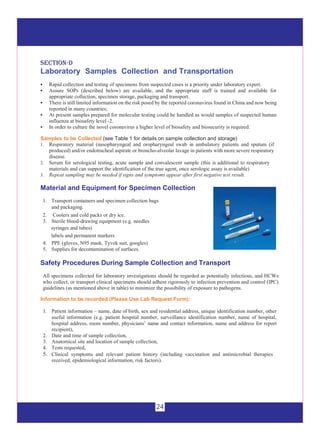
Laboratory Samples Collection and Transportation
 Rapid collection and testing of specimens from suspected cases is a priority under laboratory expert.
 Assure SOPs (described below) are available, and the appropriate staff is trained and available for
appropriate collection, specimen storage, packaging and transport.
 There is still limited information on the risk posed by the reported coronavirus found in China and now being
reported in many countries;
 At present samples prepared for molecular testing could be handled as would samples of suspected human
influenza at biosafety level -2.
 In order to culture the novel coronavirus a higher level of biosafety and biosecurity is required.
Samples to be Collected (see Table 1 for details on sample collection and storage)
1. Respiratory material (nasopharyngeal and oropharyngeal swab in ambulatory patients and sputum (if
produced) and/or endotracheal aspirate or broncho-alveolar lavage in patients with more severe respiratory
disease.
2. Serum for serological testing, acute sample and convalescent sample (this is additional to respiratory
materials and can support the identification of the true agent, once serologic assay is available)
3. Repeat sampling may be needed if signs and symptoms appear after first negative test result.
Material and Equipment for Specimen Collection
1. Transport containers and specimen collection bags
and packaging.
2. Coolers and cold packs or dry ice.
3. Sterile blood-drawing equipment (e.g. needles
labels and permanent markers
syringes and tubes)
4. PPE (gloves, N95 mask, Tyvek suit, googles)
5. Supplies for decontamination of surfaces.
Safety Procedures During Sample Collection and Transport
All specimens collected for laboratory investigations should be regarded as potentially infectious, and HCWs
who collect, or transport clinical specimens should adhere rigorously to infection prevention and control (IPC)
guidelines (as mentioned above in table) to minimize the possibility of exposure to pathogens.
Information to be recorded (Please Use Lab Request Form):
1. Patient information – name, date of birth, sex and residential address, unique identification number, other
useful information (e.g. patient hospital number, surveillance identification number, name of hospital,
hospital address, room number, physicians’ name and contact information, name and address for report
recipient),
2. Date and time of sample collection,
3. Anatomical site and location of sample collection,
4. Tests requested,
5. Clinical symptoms and relevant patient history (including vaccination and antimicrobial therapies
received, epidemiological information, risk factors).
25
Infection Prevention Measures
1. Ensure that Health Care workers (HCWs) who collect specimens follow the following guideline and use
the adequate PPE (refer to the table).
2. Perform procedures in an adequately ventilated room: at a minimum natural ventilation with at least
160l/s/patient air flow, or negative pressure rooms with at least 12 air changes per hour and controlled direction of
air flow when using mechanical ventilation
3. Limit the number of persons present in the room to the minimum required for the patient’s care and
support; and
4. Follow WHO guidance for steps of donning and doffing PPE. Perform hand hygiene before and after
contact with the patient and his or her surroundings and after PPE removal
5. Waste management and decontamination procedures: Ensure that all material used is disposed
appropriately as per healthcare facility policies. Disinfection of work areas and decontamination of possible
spills of blood or infectious body fluids should follow validated procedures, usually with chlorine-based
solutions.
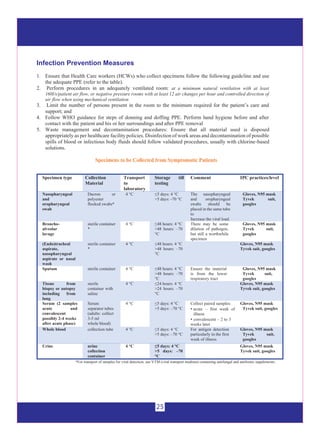
Specimens to be Collected from Symptomatic Patients
Specimen type Collection
Material
Transport
to
laboratory
Storage till
testing
Comment IPC practices/level
Nasopharyngeal
and
oropharyngeal
swab
Dacron or
polyester
flocked swabs*
4 °C ≤5 days: 4 °C
>5 days: -70 °C
The nasopharyngeal
and oropharyngeal
swabs should be
placed in the same tube
to
Increase the viral load.
Gloves, N95 mask
Tyvek suit,
googles
Broncho-
alveolar
lavage
sterile container
*
4 °C ≤48 hours: 4 °C
>48 hours: –70
°C
There may be some
dilution of pathogen,
but still a worthwhile
specimen
Gloves, N95 mask
Tyvek suit,
googles
(Endo)tracheal
aspirate,
nasopharyngeal
aspirate or nasal
wash
sterile container
*
4 °C ≤48 hours: 4 °C
>48 hours: –70
°C
Gloves, N95 mask
Tyvek suit, googles
Sputum sterile container 4 °C ≤48 hours: 4 °C
>48 hours: –70
°C
Ensure the material
is from the lower
respiratory tract
Gloves, N95 mask
Tyvek suit,
googles
Tissue from
biopsy or autopsy
including from
lung
sterile
container with
saline
4 °C ≤24 hours: 4 °C
>24 hours: –70
°C
Gloves, N95 mask
Tyvek suit, googles
Serum (2 samples
acute and
convalescent
possibly 2-4 weeks
after acute phase)
Serum
separator tubes
(adults: collect
3-5 ml
whole blood)
4 °C ≤5 days: 4 °C
>5 days: –70 °C
Collect paired samples:
• acute – first week of
illness
• convalescent – 2 to 3
weeks later
Gloves, N95 mask
Tyvek suit, googles
Whole blood collection tube 4 °C ≤5 days: 4 °C
>5 days: –70 °C
For antigen detection
particularly in the first
week of illness
Gloves, N95 mask
Tyvek suit,
googles
Urine urine
collection
container
4 °C ≤5 days: 4 °C
>5 days: –70
°C
Gloves, N95 mask
Tyvek suit, googles
*For transport of samples for viral detection, use VTM (viral transport medium) containing antifungal and antibiotic supplements.
26
1. Ensure that personnel who transport specimens are trained in safe handling practices and spill
decontamination procedures.
2. Specimen should be transport in triple packaging in refrigerated temperature.
3. Deliver all specimens by hand whenever possible.
4. State the full name, date of birth of the suspected case clearly on the accompanying request form.
Notify the laboratory as soon as possible that the specimen is being transported.
Specifics for Transport of Samples to Laboratory
Sample Collection and Transportation Protocols
Activity When Who
1 Provision of viral transport medium /cold chain
boxes
Available with the DHA-RRT
(to be handed over to HF focal
person in advance)
NIH through DHA-RRT
2 Sample collection Immediately on reporting to
the HDU/HF
Microbiologist/skilled hospital
based lab staff
3 Sample sealing in NIH provided VTM/cold
chain box and filling of Lab request form
Immediately after sample
collection
Microbiologist/skilled hospital
based lab staff
4 Request for transportation of sample to DSC Immediately after sample
collection
Notified hospital focal person
5 Sample transportation to NIH or designated
provincial Lab
Immediately DSC of DHA through designated
courier service
Picture Credits Getty Images
https://www.who.int/news-room/detail/06-02-2020-who-to-accelerate-research-and-innovation-for-new-coronavirus
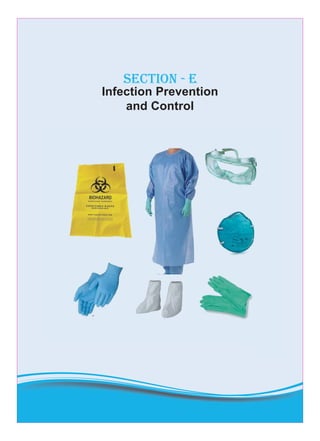
Infection Prevention
and Control
section - e
30
Infection Prevention and Control
 Infection prevention and control remains the mainstay in effective management of any communicable disease
control.
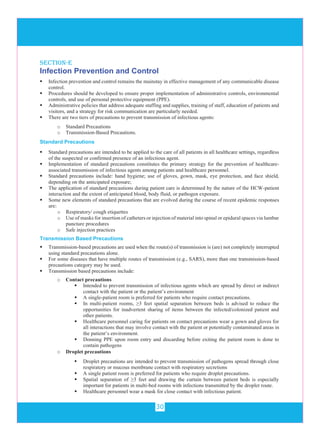
 Procedures should be developed to ensure proper implementation of administrative controls, environmental
controls, and use of personal protective equipment (PPE).
 Administrative policies that address adequate staffing and supplies, training of staff, education of patients and
visitors, and a strategy for risk communication are particularly needed.
 There are two tiers of precautions to prevent transmission of infectious agents:
o Standard Precautions
o Transmission-Based Precautions.
Standard Precautions
 Standard precautions are intended to be applied to the care of all patients in all healthcare settings, regardless
of the suspected or confirmed presence of an infectious agent.
 Implementation of standard precautions constitutes the primary strategy for the prevention of healthcare-
associated transmission of infectious agents among patients and healthcare personnel.
 Standard precautions include: hand hygiene; use of gloves, gown, mask, eye protection, and face shield,
depending on the anticipated exposure;
 The application of standard precautions during patient care is determined by the nature of the HCW-patient
interaction and the extent of anticipated blood, body fluid, or pathogen exposure.
 Some new elements of standard precautions that are evolved during the course of recent epidemic responses
are:
o Respiratory/ cough etiquettes
o Use of masks for insertion of catheters or injection of material into spinal or epidural spaces via lumbar
puncture procedures
o Safe injection practices
Transmission Based Precautions
 Transmission-based precautions are used when the route(s) of transmission is (are) not completely interrupted
using standard precautions alone.
 For some diseases that have multiple routes of transmission (e.g., SARS), more than one transmission-based
precautions category may be used.
 Transmission based precautions include:
o Contact precautions
 Intended to prevent transmission of infectious agents which are spread by direct or indirect
contact with the patient or the patient’s environment
 A single-patient room is preferred for patients who require contact precautions.
 In multi-patient rooms, ≥3 feet spatial separation between beds is advised to reduce the
opportunities for inadvertent sharing of items between the infected/colonized patient and
other patients.
 Healthcare personnel caring for patients on contact precautions wear a gown and gloves for
all interactions that may involve contact with the patient or potentially contaminated areas in
the patient’s environment.
 Donning PPE upon room entry and discarding before exiting the patient room is done to
contain pathogens
section-e
o Droplet precautions
 Droplet precautions are intended to prevent transmission of pathogens spread through close
respiratory or mucous membrane contact with respiratory secretions
 A single patient room is preferred for patients who require droplet precautions.
 Spatial separation of ≥3 feet and drawing the curtain between patient beds is especially
important for patients in multi-bed rooms with infections transmitted by the droplet route.
 Healthcare personnel wear a mask for close contact with infectious patient.
31
o Airborne precautions
 Airborne precautions prevent transmission of infectious agents that remain infectious over
long distances when suspended in the air
 The preferred placement for patients who require airborne precautions is in an airborne
infection isolation room with negative air pressure
 A respiratory protection program that includes education about use of respirators, fit-testing,
and user seal checks is required in any facility designated to manage such patients.
 In settings where airborne precautions cannot be implemented due to limited engineering
resources, masking the patient, placing the patient in a dedicated isolation with the strict
barrier nursing, and providing N95 or higher level respirators reduce likelihood of airborne
transmission
 Healthcare personnel caring for patients on airborne precautions wear N-95 mask or respirator
along with full PPE
 Airborne precautions are required especially when healthcare provider is performing any
aerosol generating procedure upon suspected patient like intubation, tracheal lavage etc.
 When used either singly or in combination, they are always used in addition to standard precautions.
 Application of different levels of precautions is given in the table below.
Healthcare/Patient Interaction Level Recommended PPE Protection
Staff dealing with travelers at POE Standard Precautions that may be enhanced to contact or
droplet precaution if any suspected with respiratory symptoms
is received.
Outpatient Level Standard Precautions
Inpatient Care in Isolation Room Standard Precautions+ Contact Precaution+ Droplet
Precaution
Inpatient Care in HDU Standard Precautions+ Contact Precaution+ Droplet
Precautions+ Airborne Precautions
Specimen Collection from a suspected patient Standard Precautions+ Contact Precaution+ Droplet
Precautions+ Airborne Precautions
Specimen Handling and Transportation Standard Precautions+ Contact Precaution
Specimen Testing in Lab Standard Precautions+ Contact Precaution+ Droplet
Precautions+ Airborne Precautions
Transfer of Patient/Suspected case Standard Precautions+ Contact Precaution+ Droplet
Precautions
Handling of Deceased body Standard Precautions+ Contact Precaution+ Droplet
Precautions
At Community/Household level Standard Precautions that may be escalated to Contact
Precaution+ Droplet Precautions if any suspected case is
around
Visitors Protocol for Infection Prevention and Control Precautions
 Screening visitors for symptoms of acute respiratory illness before entering the healthcare facility.
 Facilities should evaluate risk to the health of the visitor (e.g., visitor might have underlying illness putting
them at higher risk for COVID-19) and ability to comply with precautions.
 Facilities should provide instruction, before visitors enter patients’ rooms, on hand hygiene, limiting surfaces
touched, and use of PPE according to current facility policy while in the patient’s room.
 Facilities should maintain a record (e.g., log book) of all visitors who enter patient rooms.
 Visitors should not be present during aerosol-generating procedures.
 Exposed visitors (e.g., contact with COVID-19 patient prior to admission) should be advised to report any
signs and symptoms of acute illness to their health care provider for a period of at least 14 days after the last
known exposure to the sick patient.
 Establish procedures for monitoring, managing and training visitors regarding hand hygiene, respiratory
hygiene, cough etiquette, use of PPE and limited movement within the facility
32
SOPs for Suspected Patient Transfer
1. The suspected traveler or patient identified by screening at POE will be assessed by POE Health Authorities
following POE guidelines issued by the Ministry.
2. The PDSRU and District RRT will be informed
3. The RRT will make arrangements to receive suspected patient/ traveler from POE authorities as per SOPs
4. The designated vehicle (not necessarily fully equipped ambulance) with trained ambulance team (Paramedic,
Driver and Medical Officer In-Charge) will be deputed at airport/POE to receive and transfer to designated
facility
5. The ambulance team will follow IPC guidelines as per situation
a. If a patient with symptoms is to be transferred to health facility, the team must use complete PPE with
N95 mask
b. If a traveler (close contact) is to be transferred to designated quarantine site, the team may use basic
PPE and follow all respiratory IPC etiquettes
6. The decontamination of transfer vehicle will be done immediately after each transfer
7. The staff involved in transfers will also practice decontamination SOPs after each transfer
8. PPEs used during transfers will be immediately disposed as per SOPs.
Managing Bodies of Deceased COVID-19 Patients
 There is no knowledge about postmortem transmission of COVID-19 so far hence utmost precautions are
required to be practiced while handling a deceased COVID-19 (Ebola burial guideline).
 The deceased bodies potentially may pose a risk when handled by untrained personnel.
 Body washing of COVID-19 cases should preferably be done at hospitals by the trained professionals.
 The relatives of the deceased may be educated and given briefing and if needed, one of the attendants may
join the body preparation as observer under complete IPC protocols and with PPEs.
 The deceased body in coffin must be handed over to the relatives properly treated and prepared.
 All relevant infection control precautions including appropriate use and disposal of PPEs must be ensured.
 The vehicles used for transfer of dead body must be decontaminated following recommended IPC guidelines
immediately after the use.
 The staff involved in transfer and handling must also be trained on IPC protocols.
Recommendations for Public
 Wash your hands frequently with soap and water for at least 20 seconds
 If soap and water are not available, use an alcohol-based hand rub with at least 60% alcohol
 Cover mouth and nose with flexed elbow or tissue paper while coughing and sneezing
 Discard tissue immediately into a closed bin and clean your hands with alcohol-based hand rub or soap and
water.
 Avoid touching any part of your face especially eyes, nose and mouth
 Avoid close contact with sick person or if you are caregiver, practice all precautions advised by the medical
staff
 While sick, limit contact with other people and stay at home
 If you have fever, cough and difficulty breathing, seek immediate medical care early
 As a general precaution, practice general hygiene measures when visiting live animal markets, wet markets or
animal product markets
 Avoid consumption of raw or undercooked animal products
 Handle raw meat, milk or animal organs with care, to avoid cross-contamination with uncooked foods, as per
good food safety practices.
 Slaughterhouse workers, veterinarians in charge of animal and food inspection in markets, market workers,
and those handling live animals and animal products should practice good personal hygiene, wear protective
gowns, gloves and masks.
 Equipment and working stations should be disinfected frequently, at least once a day.
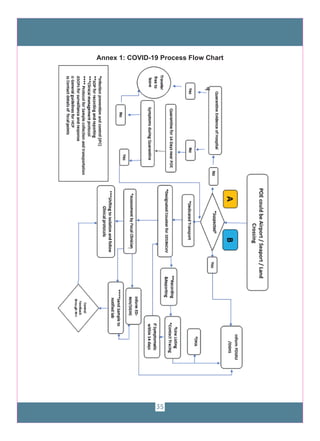
Annex 1: COVID-19 Process Flow Chart
Annex 2: Patient Reporting Form
Annex 3: Contact Tracing and Line listing Template
Annex 4: Lab Request Form
Annex 5: Hand Hygiene
Annex 6: Burial Protocol of Deceased died due to COVID-19 Infection
Annex 7: Contact Details of COVID-19 Focal Points in Punjab
Annexures
section - f
35
Annex 1: COVID-19 Process Flow Chart
36
1
Interim case reporting form for COVID-19 Contact Listing Form
of confirmed and probable cases
WHO Minimum Data Set Report Form
Date of reporting to national health authority: [_D_][_D_]/[_M_][_M_]/[_Y_][_Y_][_Y_][_Y_]
Reporting institution: _________________________________________________
Reporting country:_______________________________
Case classification: □ Confirmed □ Probable
Detected at point of entry □ No □ Yes □ Unknown If yes, date [_D_][_D_]/[_M_][_M_]/[_Y_][_Y_][_Y_][_Y_]
Section 1: Patient information
Unique case identifier (used in country): _____________________________
Date of birth: [_D_][_D_]/[_M_][_M_]/[_Y_][_Y_][_Y_][_Y_] or estimated age: [___][___][___] in years
if < 1 year, [___][___] in months or if < 1 month, [___][___] in days
Sex at birth: □ Male □ Female
Place where the case was diagnosed: Country: ______________________________
Admin Level 1 (province): _______________________________ Admin Level 2 (district): _________________________
Patient usual place of residency: Country: ______________________________
Admin Level 1 (province): _______________________________ Admin Level 2 (district): ____________________________
Section 2: Clinical information
Patient clinical course
Date of onset of symptoms: [_D_][_D_]/[_M_][_M_]/[_Y_][_Y_][_Y_][_Y_] □ Asymptomatic □ Unknown
Admission to hospital: □ No □ Yes □ Unknown
First date of admission to hospital: [_D_][_D_]/[_M_][_M_]/[_Y_][_Y_][_Y_][_Y_]
Name of hospital: ___________________________________
Date of isolation: [_D_][_D_]/[_M_][_M_]/[_Y_][_Y_][_Y_][_Y_]
Was the patient ventilated: □ No □ Yes □ Unknown
Health status (circle) at time of reporting: Recovered / Not recovered / Died / Unknown
Date of death, if applicable: [_D_][_D_]/[_M_][_M_]/[_Y_][_Y_][_Y_][_Y_]
Patient symptoms (check all reported symptoms):
□ History of fever / chills □ Shortness of breath □ Pain (check all that apply)
□ General weakness □ Diarrhoea ( ) Muscular ( ) Chest
□ Cough □ Nausea/vomiting ( ) Abdominal ( ) Joint
□ Sore throat □ Headache
□ Runny nose □ Irritability/Confusion
□ Other, specify ____________________________________________________________________________________________________
Patient signs :
Temperature: [___][___][___] □°C / □ F
Check all observed signs:
□ Pharyngea exudate □ Coma □ Abnormal lung x-ray findings
□ Conjunctival injection □ Dyspnea / tachypnea
□ Seizure □ Abnormal lung auscultation
WHO Case ID (International) ______________________________________
Annex 2: Patient Reporting Form
Section 4: Laboratory Information
Name of laboratory that conducted the test : ____________________________________________________________________________
Please specify which assay was used: ________________________
Was sequencing done? □ Yes □ No □ Unknown
Date of laboratory confirmation: [_D_][_D_]/[_M_][_M_]/[_Y_][_Y_][_Y_][_Y_]
37
38
Annex 3: Contact Tracing and Line listing Template
COVID-19
1
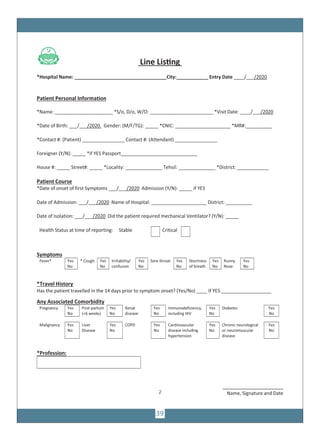
39
Line Listing
2
3
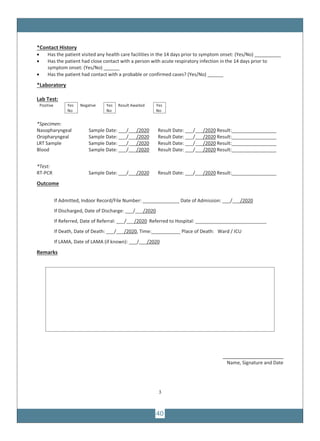
40
41
Annex 4: Lab Request Form COVID-19
42
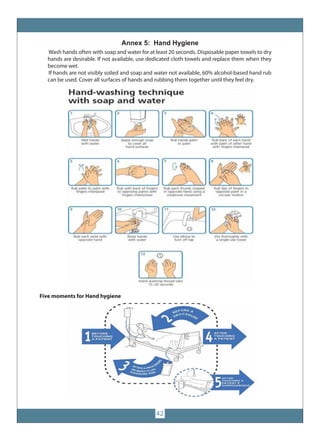
Annex 5: Hand Hygiene
Wash hands often with soap and water for at least 20 seconds. Disposable paper towels to dry
hands are desirable. If not available, use dedicated cloth towels and replace them when they
become wet.
If hands are not visibly soiled and soap and water not available, 60% alcohol-based hand rub
can be used. Cover all surfaces of hands and rubbing them together until they feel dry.
Five moments for Hand hygiene
43
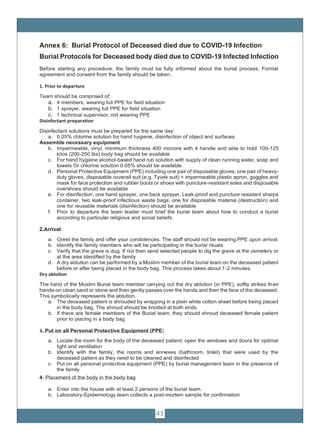
Annex 6: Burial Protocol of Deceased died due to COVID-19 Infection
Burial Protocols for Deceased body died due to COVID-19 Infected Infection
Before starting any procedure, the family must be fully informed about the burial process. Formal
agreement and consent from the family should be taken.
1. Prior to departure
Team should be comprised of:
a. 4 members, wearing full PPE for field situation
b. 1 sprayer, wearing full PPE for field situation
c. 1 technical supervisor, not wearing PPE
Disinfectant preparation
Disinfectant solutions must be prepared for the same day:
a. 0.05% chlorine solution for hand hygiene, disinfection of object and surfaces
Assemble necessary equipment
b. Impermeable, vinyl, minimum thickness 400 microns with 4 handle and able to hold 100-125
kilos (200-250 lbs) body bag should be available
c. For hand hygiene alcohol-based hand rub solution with supply of clean running water, soap and
towels Or chlorine solution 0.05% should be available
d. Personal Protective Equipment (PPE) including one pair of disposable gloves, one pair of heavy-
duty gloves, disposable coverall suit (e.g. Tyvek suit) + impermeable plastic apron, goggles and
mask for face protection and rubber boots or shoes with puncture-resistant soles and disposable
overshoes should be available
e. For disinfection, one hand sprayer, one back sprayer, Leak-proof and puncture resistant sharps
container, two leak-proof infectious waste bags: one for disposable material (destruction) and
one for reusable materials (disinfection) should be available
f. Prior to departure the team leader must brief the burial team about how to conduct a burial
according to particular religious and social beliefs.
2.Arrival:
a. Greet the family and offer your condolences. The staff should not be wearing PPE upon arrival.
b. Identify the family members who will be participating in the burial rituals.
c. Verify that the grave is dug. If not then send selected people to dig the grave at the cemetery or
at the area identified by the family
d. A dry ablution can be performed by a Muslim member of the burial team on the deceased patient
before or after being placed in the body bag. This process takes about 1-2 minutes.
Dry ablution
The hand of the Muslim Burial team member carrying out the dry ablution (in PPE), softly strikes their
hands-on clean sand or stone and then gently passes over the hands and then the face of the deceased.
This symbolically represents the ablution.
a. The deceased patient is shrouded by wrapping in a plain white cotton sheet before being placed
in the body bag. The shroud should be knotted at both ends.
b. If there are female members of the Burial team, they should shroud deceased female patient
prior to placing in a body bag
3. Put on all Personal Protective Equipment (PPE)
a. Locate the room for the body of the deceased patient; open the windows and doors for optimal
light and ventilation
b. Identify with the family, the rooms and annexes (bathroom, toilet) that were used by the
deceased patient as they need to be cleaned and disinfected
c. Put on all personal protective equipment (PPE) by burial management team in the presence of
the family
4. Placement of the body in the body bag
a. Enter into the house with at least 2 persons of the burial team.
b. Laboratory-Epidemiology team collects a post-mortem sample for confirmation
44
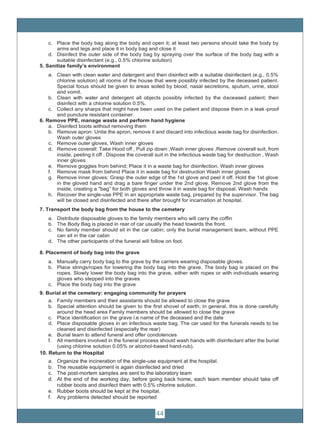
c. Place the body bag along the body and open it; at least two persons should take the body by
arms and legs and place it in body bag and close it
d. Disinfect the outer side of the body bag by spraying over the surface of the body bag with a
suitable disinfectant (e.g., 0.5% chlorine solution)
5. Sanitize family’s environment
a. Clean with clean water and detergent and then disinfect with a suitable disinfectant (e.g., 0.5%
chlorine solution) all rooms of the house that were possibly infected by the deceased patient.
Special focus should be given to areas soiled by blood, nasal secretions, sputum, urine, stool
and vomit.
b. Clean with water and detergent all objects possibly infected by the deceased patient; then
disinfect with a chlorine solution 0.5%.
c. Collect any sharps that might have been used on the patient and dispose them in a leak-proof
and puncture resistant container.
6. Remove PPE, manage waste and perform hand hygiene
a. Disinfect boots without removing them
b. Remove apron: Untie the apron, remove it and discard into infectious waste bag for disinfection.
Wash outer gloves
c. Remove outer gloves, Wash inner gloves
d. Remove coverall: Take Hood off , Pull zip down ,Wash inner gloves ,Remove coverall suit, from
inside, peeling it off , Dispose the coverall suit in the infectious waste bag for destruction , Wash
inner gloves
e. Remove goggles from behind; Place it in a waste bag for disinfection. Wash inner gloves
f. Remove mask from behind Place it in waste bag for destruction Wash inner gloves
g. Remove inner gloves: Grasp the outer edge of the 1st glove and peel it off. Hold the 1st glove
in the gloved hand and drag a bare finger under the 2nd glove. Remove 2nd glove from the
inside, creating a "bag” for both gloves and throw it in waste bag for disposal. Wash hands
h. Recover the single-use PPE in an appropriate waste bag, prepared by the supervisor. The bag
will be closed and disinfected and there after brought for incarnation at hospital.
7. Transport the body bag from the house to the cemetery
a. Distribute disposable gloves to the family members who will carry the coffin
b. The Body Bag is placed in rear of car usually the head towards the front.
c. No family member should sit in the car cabin; only the burial management team, without PPE
can sit in the car cabin
d. The other participants of the funeral will follow on foot.
8. Placement of body bag into the grave
a. Manually carry body bag to the grave by the carriers wearing disposable gloves.
b. Place strings/ropes for lowering the body bag into the grave. The body bag is placed on the
ropes. Slowly lower the body bag into the grave, either with ropes or with individuals wearing
gloves who stepped into the graves
c. Place the body bag into the grave
9. Burial at the cemetery: engaging community for prayers
a. Family members and their assistants should be allowed to close the grave
b. Special attention should be given to the first shovel of earth; in general, this is done carefully
around the head area Family members should be allowed to close the grave
c. Place identification on the grave i.e name of the deceased and the date
d. Place disposable gloves in an infectious waste bag. The car used for the funerals needs to be
cleaned and disinfected (especially the rear)
e. Burial team to attend funeral and offer condolences
f. All members involved in the funeral process should wash hands with disinfectant after the burial
(using chlorine solution 0.05% or alcohol-based hand-rub).
10. Return to the Hospital
a. Organize the incineration of the single-use equipment at the hospital.
b. The reusable equipment is again disinfected and dried
c. The post-mortem samples are sent to the laboratory team
d. At the end of the working day, before going back home, each team member should take off
rubber boots and disinfect them with 0.5% chlorine solution.
e. Rubber boots should be kept at the hospital.
f. Any problems detected should be reported
45
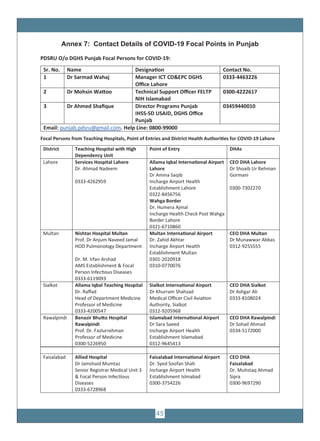
PDSRU O/o DGHS Punjab Focal Persons
Sr. No. Name Designation Contact No.
1 Dr Sarmad Wahaj Manager ICT CD&EPC DGHS
Office Lahore
0333-4463226
2 Dr Mohsin Wattoo Technical Support Officer FELTP
NIH Islamabad
0300-4222617
3 Dr Ahmed Shafique Director Programs Punjab
IHSS-SD USAID, DGHS Office
Punjab
03459440010
Email: punjab.pdsru@gmail.com. Help Line: 0800-99000
Focal Persons from Teaching Hospitals, Point of Entries and District Health Authorities for COVID-19 Lahore
District Teaching Hospital with High
Dependency Unit
Point of Entry DHAs
Lahore Services Hospital Lahore
Dr. Ahmad Nadeem
0333-4262959
Allama Iqbal International Airport
Lahore
Dr Amina Saqib
Incharge Airport Health
Establishment Lahore
0322-8456756
Wahga Border
Dr. Humera Ajmal
Incharge Health Check Post Wahga
Border Lahore
0321-6710860
CEO DHA Lahore
Dr Shoaib Ur Rehman
Gormani
0300-7302270
Multan Nishtar Hospital Multan
Prof. Dr Anjum Naveed Jamal
HOD Pulmonology Department
Dr. M. Irfan Arshad
AMS Establishment & Focal
Person Infectious Diseases
0333-6119093
Multan International Airport
Dr. Zahid Akhtar
Incharge Airport Health
Establishment Multan
0301-2020918
0310-0770076
CEO DHA Multan
Dr Munawwar Abbas
0312-9255555
Sialkot Allama Iqbal Teaching Hospital
Dr. Raffad
Head of Department Medicine
Professor of Medicine
0333-4200547
Sialkot International Airport
Dr Khurram Shahzad
Medical Officer Civil Aviation
Authority, Sialkot
0312-9205968
CEO DHA Sialkot
Dr Ashgar Ali
0333-8108024
Rawalpindi Benazir Bhutto Hospital
Rawalpindi
Prof. Dr. Fazlurrehman
Professor of Medicine
0300-5226950
Islamabad International Airport
Dr Sara Saeed
Incharge Airport Health
Establishment Islamabad
0312-9645413
CEO DHA Rawalpindi
Dr Sohail Ahmad
0334-5172000
Faisalabad Allied Hospital
Dr Jamshaid Mumtaz
Senior Registrar Medical Unit 3
& Focal Person Infectious
Diseases
0333-6728968
Faisalabad International Airport
Dr. Syed Soofan Shah
Incharge Airport Health
Establishment Islmabad
0300-3754226
CEO DHA
Faisalabad
Dr. Muhstaq Ahmad
Sipra
0300-9697290
Annex 7: Contact Details of COVID-19 Focal Points in Punjab
for COVID-19:
46
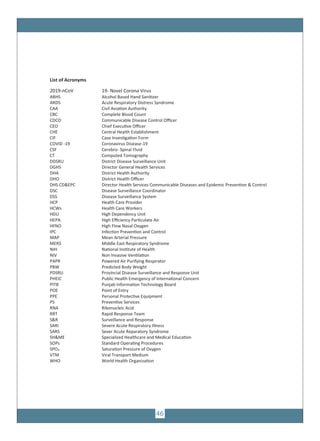
List of Acronyms
2019-nCoV 19- Novel Corona Virus
ABHS Alcohol Based Hand Sanitizer
ARDS Acute Respiratory Distress Syndrome
CAA Civil Aviation Authority
CBC Complete Blood Count
CDCO Communicable Disease Control Officer
CEO Chief Executive Officer
CHE Central Health Establishment
CIF Case Investigation Form
COVID -19 Coronavirus Disease-19
CSF Cerebro- Spinal Fluid
CT Computed Tomography
DDSRU District Disease Surveillance Unit
DGHS Director General Health Services
DHA District Health Authority
DHO District Health Officer
DHS CD&EPC Director Health Services Communicable Diseases and Epidemic Prevention & Control
DSC Disease Surveillance Coordinator
DSS Disease Surveillance System
HCP Health Care Provider
HCWs Health Care Workers
HDU High Dependency Unit
HEPA High Efficiency Particulate Air
HFNO High Flow Nasal Oxygen
IPC Infection Prevention and Control
MAP Mean Arterial Pressure
MERS Middle East Respiratory Syndrome
NIH National Institute of Health
NIV Non Invasive Ventilation
PAPR Powered Air Purifying Respirator
PBW Predicted Body Weight
PDSRU Provincial Disease Surveillance and Response Unit
PHEIC Public Health Emergency of International Concern
PITB Punjab Information Technology Board
POE Point of Entry
PPE Personal Protective Equipment
PS Preventive Services
RNA Ribonucleic Acid
RRT Rapid Response Team
S&R Surveillance and Response
SARI Severe Acute Respiratory Illness
SARS Sever Acute Reparatory Syndrome
SH&ME Specialized Healthcare and Medical Education
SOPs Standard Operating Procedures
SPO2 Saturation Pressure of Oxygen
VTM Viral Transport Medium
WHO World Health Organization
Covid 19-book

Covid 19-book

  • 1.
    COVID-19 (FEBRUARY 2020) STANDARD OPERATING PROCEDURES& GUIDELINES First Revision 29 Feb 2020
  • 2.
    List of Contributors PrimaryAuthors Dr Haroon Jahangir Khan Director General Health Services Punjab Dr Shahnaz Naeem Director Health Services CD &EPC Dr Somia Iqtadar Associate Professor Medicine KEMU Dr Jamshaid Ahmed Head of WHO Office Punjab Mr. Usman Ghani Additional Director Health Education Section B: Surveillance and Response Dr Muhammad Saeed Akhter Technical Advisor to DG Health Dr Irfan Ahmed NPO WHO Surveillance Dr Ahmed Shafique Director Programs Punjab, JSI Inc. Dr M Mohsan Watto TSO FELTP PDSRU Dr Sarmad Wahaj Manager IT EP&C Mr. Shamas ul Islam Senior Program Manager PITB Mr Rana Muhammad Hassan Program Manager PITB Dr Muhammad Shaban Nadeem Manager Operations EP&C Punjab Dr Muhammad Imran Bashir Additional Director Health EP&C Section C: Clinical Management Dr Javed Magsi Associate Professor of Pulmonology AIMC Dr Asif Hanif Assistant Professor pulmonology KEMU Section D: Laboratory Sample Collection and Transportation Professor Dr Sidra Saleem Head of Microbiology Department University of Health Sciences Section E: Infection Prevention and Control Dr Summia Khan Demonstrator Institute of Public Health Lahore Dr Huda Sarwar Demonstrator Institute of Public Health Lahore Reviewed bY Professor Dr Javed Akram Vice Chancellor University of Health Sciences Brig (R) Dr Waheed ul Zaman Professor of Pathology Cughtai Lab Dr Muhammad Saqib Saeed Professor of Pulmonology KEMU
  • 3.
    Message by SardarUsman Ahmad Khan Buzdar Chief Minister Punjab
  • 7.
    Message by DrHaroon Jehangir Khan Director General Health Services Punjab
  • 8.
    Annex 7: ContactDetails of COVID-19 Focal Points in Punjab Table of Contents Section-A: Introduction 1 Background 1 Objectives of this Document 1 Section-B: Surveillance and Response 3 Case Definition 5 Epidemiology 5 Alert/ Outbreak Thresholds 6 Surveillance Protocols 6 Laboratory Diagnosis 7 Contract Tracing and Management 7 Roles and Responsibilities for PDSRU 8 SOPs for DHA-RRTs 9 Section-C: Clinical Management Guidelines 14 Scope of this Section 14 Clinical Case Definition 14 Case Identification 14 Patient Flow Chart 15 Initial Assessment and Patient Management 16 Management of Clinical Syndromes Associated with COVID- Uncomplicated Illness 16 Mild Pneumonia 17 Severe Pneumonia Acute Respiratory Distress Syndrome 18 Sepsis 19 Septic Shock 19 Special Consideration of Pregnant Patient 20 Section-D: Laboratory Sample Collection and Transportation 24 Material and Equipment for Specimen Collection Safety Procedures During Sample Collection and Transport 24 24 Infection Prevention Measures 25 Specifics for Transport of Samples to Laboratory 26 Sample Collection and Transportation Protocols 26 Section- E: Infection Prevention and Control 30 Standard Precautions 30 Transmission Based Precautions 30 Visitor Protocol for Infection Prevention and Control Precautions 31 SOPs for Suspected Patient Transfer 32 Managing Bodies of Deceased COVID-19 Patient 32 Recommendation for Public 32 Section- F: Annexures Annex 1: COVID-19 Process Flow Chart 35 36 38 Annex 2: Patient Reporting Form Annex 3: Contact Tracing and Line Listing Template Annex 4: Lab Request Form COVID-19 41 42 43 45 Annex 6: Burial Protocols of Deceased Died Due to COVID-19 Infection 17 Annex 5: Hand Hygiene 1619 Infection
  • 9.
  • 10.
    01 section-a Introduction Background On 31st December2019, cases of pneumonia of unknown etiology (unknown cause) were detected in Wuhan City, Hubei province of China. 31st December 2019 through 3rd January 2020, a total of 44 cases of pneumonia of unknown etiology were identified. During this reported period, the causal agent was not identified. On 11th and 12th January 2020, National Health Commission (NHC) China reported that the outbreak is associated with exposure in one of the seafood and livestock markets in Wuhan City. The Chinese authorities identified a new type of coronavirus on 7th January 2020. On 12th January 2020, China shared the genetic sequence of the novel coronavirus for countries to use in developing specific diagnostic kits. Subsequently, laboratory confirmed cases of 2019-nCoV reported by Thailand, Japan and Korea. On 30th January 2020, 2019-nCoV was declared a global health emergency by the World Health Organization (WHO). On 11th February, 2020 WHO officially named the deadly disease caused by Novel Coronavirus as “COVID-19 The name represent phrase ‘Coronavirus Disease 19’. Experts created the name without referencing any animal, place or person. Objectives of this Document The new disease with limited available knowledge demands a set of SOPs and guidelines for all levels of care which are well aligned with national and local context to establish and implement prevention and control measures. WHO has developed and provided technical documents and interim guidelines to tackle this new infection. The Ministry of Health Services, Regulations and Coordination (MHSR&C) has also developed guidelines based upon WHO documents however these documents are mainly focusing upon coordination and response at point of entries (POEs). There is a need to prepare a comprehensive guiding document covering all aspects including technical guidance and standard operating procedures and protocols aligned with provincial health system. This document will amicably address the need and will also help stakeholders to get all the required information (available so far) about the COVID-19, existing surveillance mechanism and their respective role and responsibilities; AND facilitate clinicians and care providers on standard case management. The document has FOUR main sections: 1. Section B: Surveillance and Response (S&R) 2. Section C: Clinical Management Guidelines 3. Section D: Laboratory Samples Collection and Transportation 4. Section - - - - E: Infection Prevention and Control (IPC) All important areas related to COVID-19 are covered under these main sections.
  • 11.
    Surveillance and Response section- b Exposure to virus Day 1 Day 14 Incubation period can range from 2 to 14 days
  • 12.
    05 section- b Surveillance andResponse Case Definitions Suspected Case: (Surveillance case definition, may slightly differ from clinical case definitions) A. A patient with acute respiratory illness (fever and at least one sign/symptom of respiratory disease (e.g., cough, shortness of breath), AND with no other etiology that fully explains the clinical presentation AND a history of travel to or residence in a country/area or territory reporting local transmission (See situation report) of COVID-19 disease during the 14 days prior to symptom onset. OR B. A patient with any acute respiratory illness AND having been in contact with a confirmed or probable COVID-19 case (see definition of contact) in the last 14 days prior to onset of symptoms; OR C. A patient with severe acute respiratory infection (fever and at least one sign/symptom of respiratory disease (e.g., cough, shortness breath) AND requiring hospitalization AND with no other etiology that fully explains the clinical presentation D. Any person died of having signs and symptoms of COVID-19 illness in the area with ongoing transmission of infection OR have definitive epidemiological link with a Probable or Confirmed COVID-19 patient Confirmed Case: A person with laboratory confirmation of COVID-19 infection, irrespective of clinical signs and symptoms. Epidemiology Infectious Agent 1. “Coronavirus Disease 2019 (COVID-19)” is caused by a novel Coronavirus which is named as SARS-COV 2 (Severe Acute Respiratory Syndrome Coronavirus 2). 2. Coronaviruses are a large family of viruses, some causing illness in people and others that circulate among animals, including camels, cats and fruit bats. 4. This new virus strain SARS-COV 2 is also believed to be of zoonotic origin 3. Sometimes, zoonotic coronaviruses mutate and infect human and then spread between people such has been seen with Severe Acute Respiratory Syndrome SARS-COV (2002) and Middle East Respiratory Syndrome (MERS-COV) in 2012 epidemics. Mode of Transmission: The initial source of COVID-19 still remains unknown however this virus is also believed of zoonotic origin. Epidemiological information reinforces the evidence that the COVID-19 can be transmitted from one individual to another. Exact mode of transmission of COVID-19 is still unknown however based upon the previous knowledge about human to human transmission of other coronaviruses (SARS-CoV & MERS-CoV), it is suggested that COVID-19 has similar mode of transmission i.e.; 1. Droplet infection 2. Contact transmission 3. Contaminated objects (fomites) 4. Air borne Incubation Period: Current estimates of the incubation period range from 2-14 days, and these estimates will be refined as more data become available. Probable Case: A suspect case for whom testing for COVID-19 is inconclusive
  • 13.
    06 Population at Risk:People most at risk of infection from the novel coronavirus are: 1. Those who have recent travel history to the area where human to human transmission of COVID-19 outbreak is reported 2. Those who are caring people infected with COVID-19 such as family members and healthcare workers, and 3. Those in close contact with animals such are live animal market workers People of any age and sex may got infected with COVID-19 however reportedly disease course is more severe for elder patients and patients with any pre-existing chronic disease or co-morbidity. Seasonality: This is new infection so not much knowledge is available however it is suggested that it may follow the pattern similar to other coronaviruses. Clinical Presentation: Limited information is available to characterize the spectrum of clinical illness associated with COVID-19. The observed clinical signs and symptoms of this illness include: 1. Mild disease with symptoms of common cold and upper respiratory infection (URTI) 2. Fever 3. Cough 4. Difficulty in breathing. 5. Chest radiographs show invasive pneumonic infiltrates in both lungs. Disease Spread and Morbidity: The first known human infection occurred in early December 2019. An outbreak of COVID-19 was first detected in Wuhan, China, in mid-December 19. The virus subsequently spread to all provinces of China and to 28 other countries and territories in Asia, Europe, North America, and Oceania by 6th February 2020. Human-to-human spread of the virus has been confirmed in all of these regions. Alert/Outbreak Thresholds Alert Criteria: One suspected case (meeting case definitions of COVID-19) is an alert and to be reported and investigated immediately. Outbreak Criteria: One confirmed case of COVID-19 is an outbreak and will trigger epidemic response protocols. Surveillance Protocols  COVID-19 is a category-1 reportable infectious disease and has been declared as Public Health Emergency of International Concern (PHEIC) under International Health Regulation (IHR) by the WHO.  Any suspected case of COVID-19 who is meeting the case definition must be reported immediately to Provincial Disease Surveillance and Response Unit (PDSRU) at office of Director General Health Services Punjab  The immediate report must be shared with PDSRU using “COVID-19 Reporting Form” (Annexure 2) duly filled and signed by focal person.  The PDSRU should also be informed through phone call, WhatsApp or email. The Event Management Team at PDSRU will review and evaluate the available information.  If the case information satisfies the case definition criteria, the respective health facility focal person will be advised to upload patient information on Disease Surveillance System (DSS) dashboard  The Rapid Response Team (RRT) will be mobilized by the District Health Authority (DHA).  However, all suspected patients will be immediately isolated from the other patients and recommended IPC protocols will be implemented as the patient is reported.  The specimen collection for laboratory confirmation from the suspected patient will also be ensured (Refer to Laboratory Guidelines for detailed SOPs)  The responsibility of case reporting is on:
  • 14.
    07 o Health Authoritiesoperating at POE o Focal persons at designated health facility o Medical Superintendents/ In-charges of health facilities o Laboratory focal person (In-Charge) o Chief Executive Officer (CEO) of District Health Authority (DHA) o Administrators of private sector healthcare facilities, parastatal hospitals through respective DHA  During the current phase of epidemic, it is responsibility of Central Health Establishment (CHE) at POE and designated health facilities to submit daily status report as well as “Zero Report” Laboratory Diagnosis Respiratory virus diagnosis depends on the collection of high-quality specimens, their rapid transport to the laboratory and appropriate storage before laboratory testing. Designated health facilities must ensure that the sample collection SOPs and appropriate identified staff are available, staff is trained on PPE donning and doffing, proper disposal, appropriate collection, specimen storage, packaging and transport under cold chain conditions.  RT-PCR is the confirmatory test (Test capacity available at NIH Islamabad)  Collect specimen both from nasopharynx and oropharynx from ambulant patients and transport in one tube  Collect specimen from lower respiratory tract (expectorated sputum, endotracheal aspirate, broncho-alveolar lavage) from patients with more severe disease.  Collect blood cultures for bacteria that cause pneumonia and sepsis, ideally before antimicrobial therapy.  Serology for diagnostic purposes is not yet available Contact Tracing and Management Close Contacts (Higher Risk of Contacting Infection with COVID-19) Defined as:  Health care associated exposure in the form of: o Providing direct care for COVID-19 patients o Working with health care workers infected with COVID-19 o Visiting patients or staying in the same close environment of a COVID-19 patient.  A person having had face to face contact or having been in a closed environment with a COVID-19 patient  Traveling together with COVID-19 patient in any kind of conveyance  Living in the same household of a COVID-19 patient Casual Contacts (Relatively low risk but there are chances of contacting infection) Defined as:  An identifiable person having a casual contact with an ambulant COVID-19 case  A person having stayed in an area presumed to have ongoing community transmission This is the responsibility of RRT to trace and list all the contacts of suspected patients using “Contacts Definitions” and “Contact Line Listing Format” (Annexure 3) Managements of Contacts: Close contacts (high-risk exposure) 1. Inform the local health focal person to activate and apply quarantine protocols and active monitoring. A. If designated quarantine facility is available: i. Isolate and transfer the contacts to the quarantine area under standard SOPs and IPC protocol ii. Registration of contact at quarantine facility with all details and contact history iii. Conduct entry screening (Medical as well as Lab) iv. Educate, explain and provide psychological counseling
  • 15.
    08 v. Shower, providenew dress and belongings vi. Shift the contact to allocated room vii. Daily monitoring for COVID-19 symptoms, including fever of any grade, cough or difficulty breathing; will be done by the health authorities for 14 days from last contact viii. Restrict social contact during the quarantine period ix. Apply IPC measures to daily laundry, leftovers and utensils in use of contact x. Apply exit protocol once, quarantine period is completed xi. If contact develops, any kind of symptoms during the observation period, immediately isolate and move the patient to designated health facility near quarantine site for initial assessment. xii. Transfer the symptomatic contact to designated health facility if case definition criteria are met. xiii. Apply all protocols listed in case management section B. If Designated Quarantine Facility is not available, manage home quarantine and depute one responsible and trained healthcare staff to maintain liaison with contact to monitor the contact’s health on daily basis. Low Risk Exposure 1. Inform the local health focal person 2. Instruct the person: a) To self-monitor for COVID-19 symptoms, including fever of any grade, cough or difficulty breathing, for 14 days from last exposure b) Immediately self-isolate and contact health services in the event of any symptom appearing within 14 days. If no symptoms appear within 14 days of last exposure the contact person is no longer considered to be at risk of developing COVID-19. Responsibility Matrix Contact Tracing Sr. No Contact tracing level Timeframe Responsibility to identify Responsibility to monitor up to 14 days 1 Point of Entry Immediately after review passenger health record Airport Health Authority/ (CHE) and share daily report with PDSRU DHA / RRT PDSRU share report will concerned DHA on daily basis 2 Community/neighborhood /household Immediately after receiving alert for suspected case DHA through RRT and share daily report with PDSRU DHA through RRT* 3 Health Facility Immediately after suspect case reporting Health facility nominated focal persons and share daily report with PDSRU Hospital focal person DHA through Rapid response team *Cross notification of travel history to concerned DHA Roles and Responsibilities for PDSRU The PDSRU will work as overall central unit for:  Situation monitoring/alert generation  Coordination for all the teams (HF focal person, CAA, CHE, Rescue1122 and DHA) and units working in their respective area  Assist the provincial and DHAs for necessary measures  Coordinate with national and international partners and stakeholders  Facilitate the capacity building process and strengthening of DHAs and other stakeholders  Generate daily situation report for all stakeholders  Assist the authorities on media briefings and risk communication  Will operate 24/7
  • 16.
    09 SOPs for DHA– RRTs 1- Coordinate with respective Airport Health Officer (AHO) / POE focal person frequently and prepare daily report of all screened and suspected travelers of COVID-19 if any in last 24 hours. Daily report must be shared with provincial focal person at punjab.pdsru@gmail.com and dhscdcpunjab@gmail.com 2- Ensure mandatory data entry of all cases of suspected COVID-19 infection, pneumonia, Influenza Like Illness (ILI) and Severe Acute Respiratory Infection(SARI) on DSS dashboard by each health facility of the district 3- Maintain a list of private sector hospitals in the district and their focal persons for case notification and reporting 4- Conduct daily meeting of RRTs to review surveillance data and maintenance of line listing of suspected COVID-19 cases. 5- Coordinate and facilitate health facility staff in sample collection of suspected patient (s) as per guidelines 6- Ensure appropriate sample handling, recording, and transportation to the designated laboratory and follow up. 7- Ensure availability of sufficient sampling supplies with appropriate sample transportation mechanism in line with the national guidelines. The sampling protocols have already been shared. 8- Mandatory and immediate notification of suspected cases of COVID-19 infection as per standard case definition to provincial focal point i.e. DHS CD&EPC and PDSRU Punjab. All suspected COVID-19 cases must be reported on DSS and through email dhscdcpunjab@gmail.com, punjab.pdsru@gmail.com, Telephone No. 042-99202970, 042-99200970, SMS or through relevant DDSRU WhatsApp groups. 9- Ensure availability of sufficient stocks of PPE kits including gloves, face masks (surgical & N-95), goggles, head covers, gowns and shoe covers. Further CEOs must ensure availability of hand washing supplies (soaps, running water & alcohol based sanitizer) at each health facility. 10- DHA-RRT will coordinate with health facilities and concerned line departments for surveillance of suspected COVID-19 cases 11- Training/sensitization of healthcare providers on identification of suspected COVID-19 infections by using standard case definition 12- Training/sensitization of healthcare providers on standard sampling and transportation techniques in line with the national guidelines 13- A close liaison must be developed by DHA-RRT with private sector hospitals for data entry on DSS and compliance of SOPs. 14- Case investigation of each suspected case using standard Case Investigation Form (CIF) developed for COVID-19 infections 15- Ensure sampling of each suspected case and transportation of each sample to reference laboratory 16- Ensure contact tracing through Active Surveillance and Case Finding (ASCF) 17- Sharing of relevant surveillance data (line listing, CIF, laboratory results etc.) with the district focal point and provincial focal points through proper channel 18- DHA-RRT must act as technical resource team at district level and share updated information regarding COVID-19 received from the DHS CD&EPC & PDSRU 19- The team must include the following: a. District Health Officer (PS) Team Lead b. District Surveillance Coordinator Member c. Medical Officer/Physician Member d. District Pathologist Member e. CDCO Member f. District Sanitary Inspector Member g. District DSS focal person Member h. Any Co-opted (as per need) Member
  • 17.
    10 Process flow forcontact tracing in health facility and community
  • 18.
  • 19.
    14 sseeccttiioonn--cc Clinical Management Guidelines Scopeof This Section This document is intended for clinicians taking care of hospitalized adult and pediatric patients with clinical spectrum of acute respiratory illness when a COVID-19 infection is suspected. It is not meant to replace clinical judgment or specialist consultation but rather to strengthen clinical management of these patients and provide to up-to-date guidance. Clinical Case Definition Suspected Case: Fever or measured temperature ≥38 C° (essential criterion) of less than 14 days, With ANY one of the following:  Cough  Shortness of breath  Difficulty in breathing  Flu like illness  Severe Acute Respiratory Infection (SARI) in a person requiring admission to hospital, with no other etiology that fully explains the clinical presentation AND either of the following: 1. A person with history of travel to or reside in to China in the last 14 days. 2. Close contact with a confirmed or probable case of COVID-19 while that patient was ill. Case Definitions of “Probable Case” and “Confirmed Case” are same as given in Section B of this document. Case Identification: (Triage: Early recognition of patients with SARI associated with COVID-19 infection).  Recognize and sort all patients with symptoms matching case definition and travel history of affected country or contact with a probable or confirmed case of COVID-19 at any point of contact with health care system. Consider COVID-19 as a possible cause of severe acute respiratory illness.  Implement Infection Prevention and Control (IPC) measures and start treatment based on disease severity. Keeping in view the limited available knowledge of the disease caused by COVID-19 infection and its transmission patterns, it is strongly advised that all suspected cases should be isolated and monitored in hospital settings by trained staff. This would ensure both safety and quality of health care (in case patients’ symptoms worsen) and public health security. Patients NOT meeting the case definition of suspected COVID-19 should be assessed and managed according to treatment protocols of other respiratory illnesses as diagnosed by the clinician.
  • 20.
    15 Look for other RespiratoryIllness & Treatment Patient Flow Chart Management of Suspected COVID-19 Patient
  • 21.
    16 Initial Assessment andPatient Management  Patients with suspected COVID-19 should be admitted in dedicated isolation unit  The case management should be initiated immediately by trained and dedicated team of healthcare providers  Nasopharyngeal and oropharyngeal swabs should be collected as soon as possible at enrollment for laboratory testing and specimen should be dispatched to the designated laboratory following all recommended SOPs  Other investigations include o CBC o Blood cultures o Chest X-Ray, if symptomatic o Other investigations as indicated  If the patient is clinically stable, provide symptomatic care only o Antibiotics are NOT indicated o Advise steam, antihistamines, plenty of fluids. o Acetaminophen may be used to reduce fever o Oseltamivir 75mg BD for treatment of influenza and should be de-escalated on the basis of microbiological/lab results.  Weight based administration of Oseltamivir to be used for management of pediatric patients o If the patient is unstable (e.g., has hypoxemia or is hypotensive), should be admitted in the designated isolation rooms/HDU and to be managed according to his/her disease severity. Management of Clinical Syndromes Associated with COVID-19 Infection  Spectrum of 19-CoV ranges from asymptomatic infection to Severe Acute Respiratory Infection (SARI).  The disease can take the severe form manifesting as pneumonia to ARDS sepsis and septic shock.  No specific anti-viral is recommended for treating COVID-19 at present.  General supportive measures remain the mainstay of treatment.  Mild diseases require treatment in dedicated isolation units and serious patients will be requiring HDU management: Uncomplicated Illness Patients with uncomplicated upper respiratory tract viral infection may have non-specific symptoms. These patients do not have any signs of dehydration, sepsis or shortness of breath. The signs and symptoms of uncomplicated illness include fever, cough, sore throat, nasal congestion, malaise, headache and myalgia.  The elderly and immunosuppressed may present with atypical symptoms. Management of Uncomplicated Illness  Such patient should be managed in isolation unit dedicated for COVID-19 patients  Only symptomatic management is required including o Antipyretics o Antihistamines o Steam inhalation
  • 22.
    17 Mild Pneumonia In additionto symptoms of uncomplicated illness, patient will have Chest pain and Tiredness. The diagnosis is purely clinical however chest imaging can exclude complications. Management of Mild Pneumonia  Such patients require dedicated inpatient management by trained clinicians who can assess the patient’s condition and able to pick any signs of disease severity as early as possible  Management protocols are on same lines i.e. symptomatic management oAntipyretics oAntihistamines oSteam inhalation Severe Pneumonia  All patients with severe pneumonia require HDU management with regular monitoring under strict IPC protocols.  Signs and symptoms of severe pneumonia include o In adolescent and adults  Fever  Cough  Shortness of breath  Respiratory rate >30 breaths/min  Severe respiratory distress o In Children  Cough  Difficulty in breathing  Central cyanosis  Severe respiratory distress (grunting, very severe chest in drawing)  Inability to breastfeed or drink  Lethargy or unconsciousness  Convulsions  Chest in-drawing  Fast breathing Management of Severe Pneumonia  In patients with SARI and respiratory distress, hypoxemia, or shock, immediately initiate supplemental Oxygen therapy at 5 liter/min  Titrate flow rates to reach the targets as below:  Target: o SpO2 ≥ 90% in non-pregnant adults o SpO2 ≥ 92 to 95% in pregnant patients  Use conservative fluid management in patients with SARI when there is no evidence of shock. (Aggressive fluid management may worsen oxygen saturation especially in settings where ventilator support is not available).  Give empiric antimicrobials to treat likely pathogens causing SARI. Give antimicrobials within one hour of initial patient assessment for patients with sepsis.  Empirical antibiotic therapy will be based on clinical diagnosis (community-acquired pneumonia, health care associated pneumonia or sepsis). Empirical therapy may also include:
  • 23.
    18  Do notgive systemic corticosteroids routinely for treatment of viral pneumonia or ARDS outside of clinical trials, unless they are indicated for another reason.  Closely monitor patients with SARI for signs of clinical deterioration, such as rapidly progressive respiratory failure and sepsis  Apply supportive care interventions immediately  Understand the patient’s co-morbid condition(s) to tailor the management of critical illness and appreciate the prognosis.  Communicate early with the patient and the family Acute Respiratory Distress Syndrome ARDS is one of the severe form of diseases and requires HDU management with frequent monitoring and strict IPC measures  New or worsening respiratory symptoms within one week of clinical presentation.  The diagnosis of ARDS is mainly through chest imaging using either: o Radiograph o CT chest o Lung ultrasound Findings include bilateral opacities, not fully explained by effusions; lobar or lung collapse, or nodules  Echocardiography can be done to exclude hydrostatic cause of oedema.  Signs and symptoms of severe pneumonia include: In adults and adolescents: Non cardiogenic pulmonary oedema Labored or rapid breathing Fever Muscle fatigue Discolored skin and nails Rapid pulse rate Hacking cough o Classification according to severity: Mild ARDS 200 mmHg < PaO2/FiO2 ≤ 300 mmHg Moderate ARDS 100 mmHg < PaO2/FiO2 ≤200 mmHg Severe ARDS PaO2/FiO2 ≤ 100 mmHg o Oseltamivir 75mg BD for treatment of influenza and should be de-escalated on the basis of microbiological/lab results. In children: Abdominal pain Cough Fatigue Shortness of breath o Classification according to severity: Mild ARDS 4 ≤ OI < 8 or 5 ≤ OSI < 7.5 Moderate ARDS 8 ≤ OI < 16 or 7.5 ≤ OSI < 12.3 Severe ARDS OI ≥ 16 or OSI ≥ 12.3 (OI= Oxygenation Index; OSI= Oxygenation Index Using SPO)
  • 24.
    19 Management  Recognize severehypoxemic respiratory failure when a patient with respiratory distress is failing standard oxygen therapy of 10-15 liter/min o High-flow Nasal Oxygen (HFNO) or Non-Invasive Ventilation (NIV) should only be used in selected patients with hypoxemic respiratory failure. o The risk of treatment failure is high and patients treated with either HFNO or NIV should be closely monitored for clinical deterioration.  Endotracheal intubation should be performed by a trained and experienced provider using airborne precautions.  Implement mechanical ventilation using lower tidal volumes (4–8 ml/kg predicted body weight, PBW) and lower inspiratory pressures (plateau pressure <30 cmH2O).  In patients with severe ARDS, prone ventilation for > 12 hours per day is recommended  Use a conservative fluid management strategy for ARDS patients without tissue hypo perfusion  In patients with moderate or severe ARDS, higher PEEP instead of lower PEEP is suggested  In patients with moderate-severe ARDS (PaO2/FiO2 <150), neuromuscular blockade by continuous infusion should not be routinely used. Sepsis  Documented or suspected infection, with two or more of the following conditions: o Temperature > 38 °C (100.4 °F) or < 36 °C (96.8 °F), o Heart Rate (HR) > 90/min o Respiratory Rate (RR) > 20/min o PaCO2 < 32 mm Hg o White blood cells > 12 000 or < 4000/mm3 or > 10% immature (band) forms Signs and Symptoms  Sepsis leads to life threatening organ dysfunction manifested as: o Altered mental status o Difficult or fast breathing o Low oxygen saturation o Reduced urine output o Fast heart rate o Weak pulse o Cold extremities o Low blood pressure o Skin mottling In children, suspected or proven infection and ≥2 SIRS criteria, of which ONE must be abnormal temperature or white blood cell count Septic Shock  Sepsis-induced hypotension (SBP < 90 mm Hg) despite adequate fluid resuscitation and signs of hypo perfusion.  In adults suspected or confirmed for COVID-19 infection, septic shock is labelled when: o Vasopressors are needed to maintain mean arterial pressure ≥65 mmHg o Lactate is ≥2 mmol/L o Absence of hypovolemia
  • 25.
    20  In children oHypotension is essential criteria and any TWO of the following  Altered mental state  Tachycardia (>150 beats/min in children >160 beats/min in infants)  Bradycardia <70 beats /min in children and <90 beats/min in infants)  Prolonged capillary refill time (>2 sec)  OR  Warm vasodilation with bounding pulse, tachypnea, mottled skin, petechial or purpuric rash, increased lactate, oliguria, hyper or hypothermia Management of Sepsis and Septic Shock Empirical broad-spectrum antibiotics are the hallmark of management of sepsis and septic shock and adjust according to culture and sensitivity results Fluid resuscitation o Adults: 30 ml/kg of isotonic crystalloid in the first 3 hours. o Children: 20 ml/kg as a rapid bolus and up to 40-60 ml/kg in the first 1 hr. o Do not use hypotonic crystalloids, starches, or gelatins for resuscitation. o Vasopressors when shock persists during or after fluid resuscitation. o The initial blood pressure target is Mean Arterial Pressure (MAP) ≥65 mmHg in adults’ age- appropriate targets in children. o If central venous catheters are not available, vasopressors can be given through a peripheral IV, but use a large vein and closely monitor for signs of extravasation and local tissue necrosis. If extravasation occurs, stop infusion. Vasopressors can also be administered through intraosseous needles. If signs of poor perfusion and cardiac dysfunction persist despite achieving MAP target with fluids and vasopressors, consider an inotrope such as dobutamine. Special Considerations for Pregnant Patients  Pregnant women with suspected or confirmed COVID-19 infection should be treated with supportive therapies as described above, taking into account the physiologic adaptations of pregnancy.  Emergency delivery and pregnancy termination decisions are challenging and based on many factors: gestational age, maternal condition, and fetal stability.  Consultations with obstetric, neonatal, and intensive care specialists (depending on the condition of the mother) are essential. Note: Certain drugs are being tested in trials for treating COVID-19 patients those may have shown promising results however name of drug of choice will be updated upon availability scientific evidence
  • 26.
    Laboratory Samples Collection &Transportation section - d
  • 27.
    24 sseeccttiioonn--dd Laboratory Samples Collectionand Transportation  Rapid collection and testing of specimens from suspected cases is a priority under laboratory expert.  Assure SOPs (described below) are available, and the appropriate staff is trained and available for appropriate collection, specimen storage, packaging and transport.  There is still limited information on the risk posed by the reported coronavirus found in China and now being reported in many countries;  At present samples prepared for molecular testing could be handled as would samples of suspected human influenza at biosafety level -2.  In order to culture the novel coronavirus a higher level of biosafety and biosecurity is required. Samples to be Collected (see Table 1 for details on sample collection and storage) 1. Respiratory material (nasopharyngeal and oropharyngeal swab in ambulatory patients and sputum (if produced) and/or endotracheal aspirate or broncho-alveolar lavage in patients with more severe respiratory disease. 2. Serum for serological testing, acute sample and convalescent sample (this is additional to respiratory materials and can support the identification of the true agent, once serologic assay is available) 3. Repeat sampling may be needed if signs and symptoms appear after first negative test result. Material and Equipment for Specimen Collection 1. Transport containers and specimen collection bags and packaging. 2. Coolers and cold packs or dry ice. 3. Sterile blood-drawing equipment (e.g. needles labels and permanent markers syringes and tubes) 4. PPE (gloves, N95 mask, Tyvek suit, googles) 5. Supplies for decontamination of surfaces. Safety Procedures During Sample Collection and Transport All specimens collected for laboratory investigations should be regarded as potentially infectious, and HCWs who collect, or transport clinical specimens should adhere rigorously to infection prevention and control (IPC) guidelines (as mentioned above in table) to minimize the possibility of exposure to pathogens. Information to be recorded (Please Use Lab Request Form): 1. Patient information – name, date of birth, sex and residential address, unique identification number, other useful information (e.g. patient hospital number, surveillance identification number, name of hospital, hospital address, room number, physicians’ name and contact information, name and address for report recipient), 2. Date and time of sample collection, 3. Anatomical site and location of sample collection, 4. Tests requested, 5. Clinical symptoms and relevant patient history (including vaccination and antimicrobial therapies received, epidemiological information, risk factors).
  • 28.
    25 Infection Prevention Measures 1.Ensure that Health Care workers (HCWs) who collect specimens follow the following guideline and use the adequate PPE (refer to the table). 2. Perform procedures in an adequately ventilated room: at a minimum natural ventilation with at least 160l/s/patient air flow, or negative pressure rooms with at least 12 air changes per hour and controlled direction of air flow when using mechanical ventilation 3. Limit the number of persons present in the room to the minimum required for the patient’s care and support; and 4. Follow WHO guidance for steps of donning and doffing PPE. Perform hand hygiene before and after contact with the patient and his or her surroundings and after PPE removal 5. Waste management and decontamination procedures: Ensure that all material used is disposed appropriately as per healthcare facility policies. Disinfection of work areas and decontamination of possible spills of blood or infectious body fluids should follow validated procedures, usually with chlorine-based solutions. Specimens to be Collected from Symptomatic Patients Specimen type Collection Material Transport to laboratory Storage till testing Comment IPC practices/level Nasopharyngeal and oropharyngeal swab Dacron or polyester flocked swabs* 4 °C ≤5 days: 4 °C >5 days: -70 °C The nasopharyngeal and oropharyngeal swabs should be placed in the same tube to Increase the viral load. Gloves, N95 mask Tyvek suit, googles Broncho- alveolar lavage sterile container * 4 °C ≤48 hours: 4 °C >48 hours: –70 °C There may be some dilution of pathogen, but still a worthwhile specimen Gloves, N95 mask Tyvek suit, googles (Endo)tracheal aspirate, nasopharyngeal aspirate or nasal wash sterile container * 4 °C ≤48 hours: 4 °C >48 hours: –70 °C Gloves, N95 mask Tyvek suit, googles Sputum sterile container 4 °C ≤48 hours: 4 °C >48 hours: –70 °C Ensure the material is from the lower respiratory tract Gloves, N95 mask Tyvek suit, googles Tissue from biopsy or autopsy including from lung sterile container with saline 4 °C ≤24 hours: 4 °C >24 hours: –70 °C Gloves, N95 mask Tyvek suit, googles Serum (2 samples acute and convalescent possibly 2-4 weeks after acute phase) Serum separator tubes (adults: collect 3-5 ml whole blood) 4 °C ≤5 days: 4 °C >5 days: –70 °C Collect paired samples: • acute – first week of illness • convalescent – 2 to 3 weeks later Gloves, N95 mask Tyvek suit, googles Whole blood collection tube 4 °C ≤5 days: 4 °C >5 days: –70 °C For antigen detection particularly in the first week of illness Gloves, N95 mask Tyvek suit, googles Urine urine collection container 4 °C ≤5 days: 4 °C >5 days: –70 °C Gloves, N95 mask Tyvek suit, googles *For transport of samples for viral detection, use VTM (viral transport medium) containing antifungal and antibiotic supplements.
  • 29.
    26 1. Ensure thatpersonnel who transport specimens are trained in safe handling practices and spill decontamination procedures. 2. Specimen should be transport in triple packaging in refrigerated temperature. 3. Deliver all specimens by hand whenever possible. 4. State the full name, date of birth of the suspected case clearly on the accompanying request form. Notify the laboratory as soon as possible that the specimen is being transported. Specifics for Transport of Samples to Laboratory Sample Collection and Transportation Protocols Activity When Who 1 Provision of viral transport medium /cold chain boxes Available with the DHA-RRT (to be handed over to HF focal person in advance) NIH through DHA-RRT 2 Sample collection Immediately on reporting to the HDU/HF Microbiologist/skilled hospital based lab staff 3 Sample sealing in NIH provided VTM/cold chain box and filling of Lab request form Immediately after sample collection Microbiologist/skilled hospital based lab staff 4 Request for transportation of sample to DSC Immediately after sample collection Notified hospital focal person 5 Sample transportation to NIH or designated provincial Lab Immediately DSC of DHA through designated courier service Picture Credits Getty Images https://www.who.int/news-room/detail/06-02-2020-who-to-accelerate-research-and-innovation-for-new-coronavirus
  • 30.
  • 31.
    30 Infection Prevention andControl  Infection prevention and control remains the mainstay in effective management of any communicable disease control.  Procedures should be developed to ensure proper implementation of administrative controls, environmental controls, and use of personal protective equipment (PPE).  Administrative policies that address adequate staffing and supplies, training of staff, education of patients and visitors, and a strategy for risk communication are particularly needed.  There are two tiers of precautions to prevent transmission of infectious agents: o Standard Precautions o Transmission-Based Precautions. Standard Precautions  Standard precautions are intended to be applied to the care of all patients in all healthcare settings, regardless of the suspected or confirmed presence of an infectious agent.  Implementation of standard precautions constitutes the primary strategy for the prevention of healthcare- associated transmission of infectious agents among patients and healthcare personnel.  Standard precautions include: hand hygiene; use of gloves, gown, mask, eye protection, and face shield, depending on the anticipated exposure;  The application of standard precautions during patient care is determined by the nature of the HCW-patient interaction and the extent of anticipated blood, body fluid, or pathogen exposure.  Some new elements of standard precautions that are evolved during the course of recent epidemic responses are: o Respiratory/ cough etiquettes o Use of masks for insertion of catheters or injection of material into spinal or epidural spaces via lumbar puncture procedures o Safe injection practices Transmission Based Precautions  Transmission-based precautions are used when the route(s) of transmission is (are) not completely interrupted using standard precautions alone.  For some diseases that have multiple routes of transmission (e.g., SARS), more than one transmission-based precautions category may be used.  Transmission based precautions include: o Contact precautions  Intended to prevent transmission of infectious agents which are spread by direct or indirect contact with the patient or the patient’s environment  A single-patient room is preferred for patients who require contact precautions.  In multi-patient rooms, ≥3 feet spatial separation between beds is advised to reduce the opportunities for inadvertent sharing of items between the infected/colonized patient and other patients.  Healthcare personnel caring for patients on contact precautions wear a gown and gloves for all interactions that may involve contact with the patient or potentially contaminated areas in the patient’s environment.  Donning PPE upon room entry and discarding before exiting the patient room is done to contain pathogens section-e o Droplet precautions  Droplet precautions are intended to prevent transmission of pathogens spread through close respiratory or mucous membrane contact with respiratory secretions  A single patient room is preferred for patients who require droplet precautions.  Spatial separation of ≥3 feet and drawing the curtain between patient beds is especially important for patients in multi-bed rooms with infections transmitted by the droplet route.  Healthcare personnel wear a mask for close contact with infectious patient.
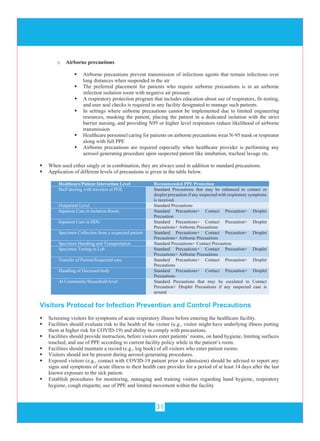
  • 32.
    31 o Airborne precautions Airborne precautions prevent transmission of infectious agents that remain infectious over long distances when suspended in the air  The preferred placement for patients who require airborne precautions is in an airborne infection isolation room with negative air pressure  A respiratory protection program that includes education about use of respirators, fit-testing, and user seal checks is required in any facility designated to manage such patients.  In settings where airborne precautions cannot be implemented due to limited engineering resources, masking the patient, placing the patient in a dedicated isolation with the strict barrier nursing, and providing N95 or higher level respirators reduce likelihood of airborne transmission  Healthcare personnel caring for patients on airborne precautions wear N-95 mask or respirator along with full PPE  Airborne precautions are required especially when healthcare provider is performing any aerosol generating procedure upon suspected patient like intubation, tracheal lavage etc.  When used either singly or in combination, they are always used in addition to standard precautions.  Application of different levels of precautions is given in the table below. Healthcare/Patient Interaction Level Recommended PPE Protection Staff dealing with travelers at POE Standard Precautions that may be enhanced to contact or droplet precaution if any suspected with respiratory symptoms is received. Outpatient Level Standard Precautions Inpatient Care in Isolation Room Standard Precautions+ Contact Precaution+ Droplet Precaution Inpatient Care in HDU Standard Precautions+ Contact Precaution+ Droplet Precautions+ Airborne Precautions Specimen Collection from a suspected patient Standard Precautions+ Contact Precaution+ Droplet Precautions+ Airborne Precautions Specimen Handling and Transportation Standard Precautions+ Contact Precaution Specimen Testing in Lab Standard Precautions+ Contact Precaution+ Droplet Precautions+ Airborne Precautions Transfer of Patient/Suspected case Standard Precautions+ Contact Precaution+ Droplet Precautions Handling of Deceased body Standard Precautions+ Contact Precaution+ Droplet Precautions At Community/Household level Standard Precautions that may be escalated to Contact Precaution+ Droplet Precautions if any suspected case is around Visitors Protocol for Infection Prevention and Control Precautions  Screening visitors for symptoms of acute respiratory illness before entering the healthcare facility.  Facilities should evaluate risk to the health of the visitor (e.g., visitor might have underlying illness putting them at higher risk for COVID-19) and ability to comply with precautions.  Facilities should provide instruction, before visitors enter patients’ rooms, on hand hygiene, limiting surfaces touched, and use of PPE according to current facility policy while in the patient’s room.  Facilities should maintain a record (e.g., log book) of all visitors who enter patient rooms.  Visitors should not be present during aerosol-generating procedures.  Exposed visitors (e.g., contact with COVID-19 patient prior to admission) should be advised to report any signs and symptoms of acute illness to their health care provider for a period of at least 14 days after the last known exposure to the sick patient.  Establish procedures for monitoring, managing and training visitors regarding hand hygiene, respiratory hygiene, cough etiquette, use of PPE and limited movement within the facility
  • 33.
    32 SOPs for SuspectedPatient Transfer 1. The suspected traveler or patient identified by screening at POE will be assessed by POE Health Authorities following POE guidelines issued by the Ministry. 2. The PDSRU and District RRT will be informed 3. The RRT will make arrangements to receive suspected patient/ traveler from POE authorities as per SOPs 4. The designated vehicle (not necessarily fully equipped ambulance) with trained ambulance team (Paramedic, Driver and Medical Officer In-Charge) will be deputed at airport/POE to receive and transfer to designated facility 5. The ambulance team will follow IPC guidelines as per situation a. If a patient with symptoms is to be transferred to health facility, the team must use complete PPE with N95 mask b. If a traveler (close contact) is to be transferred to designated quarantine site, the team may use basic PPE and follow all respiratory IPC etiquettes 6. The decontamination of transfer vehicle will be done immediately after each transfer 7. The staff involved in transfers will also practice decontamination SOPs after each transfer 8. PPEs used during transfers will be immediately disposed as per SOPs. Managing Bodies of Deceased COVID-19 Patients  There is no knowledge about postmortem transmission of COVID-19 so far hence utmost precautions are required to be practiced while handling a deceased COVID-19 (Ebola burial guideline).  The deceased bodies potentially may pose a risk when handled by untrained personnel.  Body washing of COVID-19 cases should preferably be done at hospitals by the trained professionals.  The relatives of the deceased may be educated and given briefing and if needed, one of the attendants may join the body preparation as observer under complete IPC protocols and with PPEs.  The deceased body in coffin must be handed over to the relatives properly treated and prepared.  All relevant infection control precautions including appropriate use and disposal of PPEs must be ensured.  The vehicles used for transfer of dead body must be decontaminated following recommended IPC guidelines immediately after the use.  The staff involved in transfer and handling must also be trained on IPC protocols. Recommendations for Public  Wash your hands frequently with soap and water for at least 20 seconds  If soap and water are not available, use an alcohol-based hand rub with at least 60% alcohol  Cover mouth and nose with flexed elbow or tissue paper while coughing and sneezing  Discard tissue immediately into a closed bin and clean your hands with alcohol-based hand rub or soap and water.  Avoid touching any part of your face especially eyes, nose and mouth  Avoid close contact with sick person or if you are caregiver, practice all precautions advised by the medical staff  While sick, limit contact with other people and stay at home  If you have fever, cough and difficulty breathing, seek immediate medical care early  As a general precaution, practice general hygiene measures when visiting live animal markets, wet markets or animal product markets  Avoid consumption of raw or undercooked animal products  Handle raw meat, milk or animal organs with care, to avoid cross-contamination with uncooked foods, as per good food safety practices.  Slaughterhouse workers, veterinarians in charge of animal and food inspection in markets, market workers, and those handling live animals and animal products should practice good personal hygiene, wear protective gowns, gloves and masks.  Equipment and working stations should be disinfected frequently, at least once a day.
  • 34.
    Annex 1: COVID-19Process Flow Chart Annex 2: Patient Reporting Form Annex 3: Contact Tracing and Line listing Template Annex 4: Lab Request Form Annex 5: Hand Hygiene Annex 6: Burial Protocol of Deceased died due to COVID-19 Infection Annex 7: Contact Details of COVID-19 Focal Points in Punjab Annexures section - f
  • 35.
    35 Annex 1: COVID-19Process Flow Chart
  • 36.
    36 1 Interim case reportingform for COVID-19 Contact Listing Form of confirmed and probable cases WHO Minimum Data Set Report Form Date of reporting to national health authority: [_D_][_D_]/[_M_][_M_]/[_Y_][_Y_][_Y_][_Y_] Reporting institution: _________________________________________________ Reporting country:_______________________________ Case classification: □ Confirmed □ Probable Detected at point of entry □ No □ Yes □ Unknown If yes, date [_D_][_D_]/[_M_][_M_]/[_Y_][_Y_][_Y_][_Y_] Section 1: Patient information Unique case identifier (used in country): _____________________________ Date of birth: [_D_][_D_]/[_M_][_M_]/[_Y_][_Y_][_Y_][_Y_] or estimated age: [___][___][___] in years if < 1 year, [___][___] in months or if < 1 month, [___][___] in days Sex at birth: □ Male □ Female Place where the case was diagnosed: Country: ______________________________ Admin Level 1 (province): _______________________________ Admin Level 2 (district): _________________________ Patient usual place of residency: Country: ______________________________ Admin Level 1 (province): _______________________________ Admin Level 2 (district): ____________________________ Section 2: Clinical information Patient clinical course Date of onset of symptoms: [_D_][_D_]/[_M_][_M_]/[_Y_][_Y_][_Y_][_Y_] □ Asymptomatic □ Unknown Admission to hospital: □ No □ Yes □ Unknown First date of admission to hospital: [_D_][_D_]/[_M_][_M_]/[_Y_][_Y_][_Y_][_Y_] Name of hospital: ___________________________________ Date of isolation: [_D_][_D_]/[_M_][_M_]/[_Y_][_Y_][_Y_][_Y_] Was the patient ventilated: □ No □ Yes □ Unknown Health status (circle) at time of reporting: Recovered / Not recovered / Died / Unknown Date of death, if applicable: [_D_][_D_]/[_M_][_M_]/[_Y_][_Y_][_Y_][_Y_] Patient symptoms (check all reported symptoms): □ History of fever / chills □ Shortness of breath □ Pain (check all that apply) □ General weakness □ Diarrhoea ( ) Muscular ( ) Chest □ Cough □ Nausea/vomiting ( ) Abdominal ( ) Joint □ Sore throat □ Headache □ Runny nose □ Irritability/Confusion □ Other, specify ____________________________________________________________________________________________________ Patient signs : Temperature: [___][___][___] □°C / □ F Check all observed signs: □ Pharyngea exudate □ Coma □ Abnormal lung x-ray findings □ Conjunctival injection □ Dyspnea / tachypnea □ Seizure □ Abnormal lung auscultation WHO Case ID (International) ______________________________________ Annex 2: Patient Reporting Form
  • 37.
    Section 4: LaboratoryInformation Name of laboratory that conducted the test : ____________________________________________________________________________ Please specify which assay was used: ________________________ Was sequencing done? □ Yes □ No □ Unknown Date of laboratory confirmation: [_D_][_D_]/[_M_][_M_]/[_Y_][_Y_][_Y_][_Y_] 37
  • 38.
    38 Annex 3: ContactTracing and Line listing Template COVID-19 1
  • 39.
  • 40.
  • 41.
    41 Annex 4: LabRequest Form COVID-19
  • 42.
    42 Annex 5: HandHygiene Wash hands often with soap and water for at least 20 seconds. Disposable paper towels to dry hands are desirable. If not available, use dedicated cloth towels and replace them when they become wet. If hands are not visibly soiled and soap and water not available, 60% alcohol-based hand rub can be used. Cover all surfaces of hands and rubbing them together until they feel dry. Five moments for Hand hygiene
  • 43.
    43 Annex 6: BurialProtocol of Deceased died due to COVID-19 Infection Burial Protocols for Deceased body died due to COVID-19 Infected Infection Before starting any procedure, the family must be fully informed about the burial process. Formal agreement and consent from the family should be taken. 1. Prior to departure Team should be comprised of: a. 4 members, wearing full PPE for field situation b. 1 sprayer, wearing full PPE for field situation c. 1 technical supervisor, not wearing PPE Disinfectant preparation Disinfectant solutions must be prepared for the same day: a. 0.05% chlorine solution for hand hygiene, disinfection of object and surfaces Assemble necessary equipment b. Impermeable, vinyl, minimum thickness 400 microns with 4 handle and able to hold 100-125 kilos (200-250 lbs) body bag should be available c. For hand hygiene alcohol-based hand rub solution with supply of clean running water, soap and towels Or chlorine solution 0.05% should be available d. Personal Protective Equipment (PPE) including one pair of disposable gloves, one pair of heavy- duty gloves, disposable coverall suit (e.g. Tyvek suit) + impermeable plastic apron, goggles and mask for face protection and rubber boots or shoes with puncture-resistant soles and disposable overshoes should be available e. For disinfection, one hand sprayer, one back sprayer, Leak-proof and puncture resistant sharps container, two leak-proof infectious waste bags: one for disposable material (destruction) and one for reusable materials (disinfection) should be available f. Prior to departure the team leader must brief the burial team about how to conduct a burial according to particular religious and social beliefs. 2.Arrival: a. Greet the family and offer your condolences. The staff should not be wearing PPE upon arrival. b. Identify the family members who will be participating in the burial rituals. c. Verify that the grave is dug. If not then send selected people to dig the grave at the cemetery or at the area identified by the family d. A dry ablution can be performed by a Muslim member of the burial team on the deceased patient before or after being placed in the body bag. This process takes about 1-2 minutes. Dry ablution The hand of the Muslim Burial team member carrying out the dry ablution (in PPE), softly strikes their hands-on clean sand or stone and then gently passes over the hands and then the face of the deceased. This symbolically represents the ablution. a. The deceased patient is shrouded by wrapping in a plain white cotton sheet before being placed in the body bag. The shroud should be knotted at both ends. b. If there are female members of the Burial team, they should shroud deceased female patient prior to placing in a body bag 3. Put on all Personal Protective Equipment (PPE) a. Locate the room for the body of the deceased patient; open the windows and doors for optimal light and ventilation b. Identify with the family, the rooms and annexes (bathroom, toilet) that were used by the deceased patient as they need to be cleaned and disinfected c. Put on all personal protective equipment (PPE) by burial management team in the presence of the family 4. Placement of the body in the body bag a. Enter into the house with at least 2 persons of the burial team. b. Laboratory-Epidemiology team collects a post-mortem sample for confirmation
  • 44.
    44 c. Place thebody bag along the body and open it; at least two persons should take the body by arms and legs and place it in body bag and close it d. Disinfect the outer side of the body bag by spraying over the surface of the body bag with a suitable disinfectant (e.g., 0.5% chlorine solution) 5. Sanitize family’s environment a. Clean with clean water and detergent and then disinfect with a suitable disinfectant (e.g., 0.5% chlorine solution) all rooms of the house that were possibly infected by the deceased patient. Special focus should be given to areas soiled by blood, nasal secretions, sputum, urine, stool and vomit. b. Clean with water and detergent all objects possibly infected by the deceased patient; then disinfect with a chlorine solution 0.5%. c. Collect any sharps that might have been used on the patient and dispose them in a leak-proof and puncture resistant container. 6. Remove PPE, manage waste and perform hand hygiene a. Disinfect boots without removing them b. Remove apron: Untie the apron, remove it and discard into infectious waste bag for disinfection. Wash outer gloves c. Remove outer gloves, Wash inner gloves d. Remove coverall: Take Hood off , Pull zip down ,Wash inner gloves ,Remove coverall suit, from inside, peeling it off , Dispose the coverall suit in the infectious waste bag for destruction , Wash inner gloves e. Remove goggles from behind; Place it in a waste bag for disinfection. Wash inner gloves f. Remove mask from behind Place it in waste bag for destruction Wash inner gloves g. Remove inner gloves: Grasp the outer edge of the 1st glove and peel it off. Hold the 1st glove in the gloved hand and drag a bare finger under the 2nd glove. Remove 2nd glove from the inside, creating a "bag” for both gloves and throw it in waste bag for disposal. Wash hands h. Recover the single-use PPE in an appropriate waste bag, prepared by the supervisor. The bag will be closed and disinfected and there after brought for incarnation at hospital. 7. Transport the body bag from the house to the cemetery a. Distribute disposable gloves to the family members who will carry the coffin b. The Body Bag is placed in rear of car usually the head towards the front. c. No family member should sit in the car cabin; only the burial management team, without PPE can sit in the car cabin d. The other participants of the funeral will follow on foot. 8. Placement of body bag into the grave a. Manually carry body bag to the grave by the carriers wearing disposable gloves. b. Place strings/ropes for lowering the body bag into the grave. The body bag is placed on the ropes. Slowly lower the body bag into the grave, either with ropes or with individuals wearing gloves who stepped into the graves c. Place the body bag into the grave 9. Burial at the cemetery: engaging community for prayers a. Family members and their assistants should be allowed to close the grave b. Special attention should be given to the first shovel of earth; in general, this is done carefully around the head area Family members should be allowed to close the grave c. Place identification on the grave i.e name of the deceased and the date d. Place disposable gloves in an infectious waste bag. The car used for the funerals needs to be cleaned and disinfected (especially the rear) e. Burial team to attend funeral and offer condolences f. All members involved in the funeral process should wash hands with disinfectant after the burial (using chlorine solution 0.05% or alcohol-based hand-rub). 10. Return to the Hospital a. Organize the incineration of the single-use equipment at the hospital. b. The reusable equipment is again disinfected and dried c. The post-mortem samples are sent to the laboratory team d. At the end of the working day, before going back home, each team member should take off rubber boots and disinfect them with 0.5% chlorine solution. e. Rubber boots should be kept at the hospital. f. Any problems detected should be reported
  • 45.
    45 PDSRU O/o DGHSPunjab Focal Persons Sr. No. Name Designation Contact No. 1 Dr Sarmad Wahaj Manager ICT CD&EPC DGHS Office Lahore 0333-4463226 2 Dr Mohsin Wattoo Technical Support Officer FELTP NIH Islamabad 0300-4222617 3 Dr Ahmed Shafique Director Programs Punjab IHSS-SD USAID, DGHS Office Punjab 03459440010 Email: punjab.pdsru@gmail.com. Help Line: 0800-99000 Focal Persons from Teaching Hospitals, Point of Entries and District Health Authorities for COVID-19 Lahore District Teaching Hospital with High Dependency Unit Point of Entry DHAs Lahore Services Hospital Lahore Dr. Ahmad Nadeem 0333-4262959 Allama Iqbal International Airport Lahore Dr Amina Saqib Incharge Airport Health Establishment Lahore 0322-8456756 Wahga Border Dr. Humera Ajmal Incharge Health Check Post Wahga Border Lahore 0321-6710860 CEO DHA Lahore Dr Shoaib Ur Rehman Gormani 0300-7302270 Multan Nishtar Hospital Multan Prof. Dr Anjum Naveed Jamal HOD Pulmonology Department Dr. M. Irfan Arshad AMS Establishment & Focal Person Infectious Diseases 0333-6119093 Multan International Airport Dr. Zahid Akhtar Incharge Airport Health Establishment Multan 0301-2020918 0310-0770076 CEO DHA Multan Dr Munawwar Abbas 0312-9255555 Sialkot Allama Iqbal Teaching Hospital Dr. Raffad Head of Department Medicine Professor of Medicine 0333-4200547 Sialkot International Airport Dr Khurram Shahzad Medical Officer Civil Aviation Authority, Sialkot 0312-9205968 CEO DHA Sialkot Dr Ashgar Ali 0333-8108024 Rawalpindi Benazir Bhutto Hospital Rawalpindi Prof. Dr. Fazlurrehman Professor of Medicine 0300-5226950 Islamabad International Airport Dr Sara Saeed Incharge Airport Health Establishment Islamabad 0312-9645413 CEO DHA Rawalpindi Dr Sohail Ahmad 0334-5172000 Faisalabad Allied Hospital Dr Jamshaid Mumtaz Senior Registrar Medical Unit 3 & Focal Person Infectious Diseases 0333-6728968 Faisalabad International Airport Dr. Syed Soofan Shah Incharge Airport Health Establishment Islmabad 0300-3754226 CEO DHA Faisalabad Dr. Muhstaq Ahmad Sipra 0300-9697290 Annex 7: Contact Details of COVID-19 Focal Points in Punjab for COVID-19:
  • 46.
    46 List of Acronyms 2019-nCoV19- Novel Corona Virus ABHS Alcohol Based Hand Sanitizer ARDS Acute Respiratory Distress Syndrome CAA Civil Aviation Authority CBC Complete Blood Count CDCO Communicable Disease Control Officer CEO Chief Executive Officer CHE Central Health Establishment CIF Case Investigation Form COVID -19 Coronavirus Disease-19 CSF Cerebro- Spinal Fluid CT Computed Tomography DDSRU District Disease Surveillance Unit DGHS Director General Health Services DHA District Health Authority DHO District Health Officer DHS CD&EPC Director Health Services Communicable Diseases and Epidemic Prevention & Control DSC Disease Surveillance Coordinator DSS Disease Surveillance System HCP Health Care Provider HCWs Health Care Workers HDU High Dependency Unit HEPA High Efficiency Particulate Air HFNO High Flow Nasal Oxygen IPC Infection Prevention and Control MAP Mean Arterial Pressure MERS Middle East Respiratory Syndrome NIH National Institute of Health NIV Non Invasive Ventilation PAPR Powered Air Purifying Respirator PBW Predicted Body Weight PDSRU Provincial Disease Surveillance and Response Unit PHEIC Public Health Emergency of International Concern PITB Punjab Information Technology Board POE Point of Entry PPE Personal Protective Equipment PS Preventive Services RNA Ribonucleic Acid RRT Rapid Response Team S&R Surveillance and Response SARI Severe Acute Respiratory Illness SARS Sever Acute Reparatory Syndrome SH&ME Specialized Healthcare and Medical Education SOPs Standard Operating Procedures SPO2 Saturation Pressure of Oxygen VTM Viral Transport Medium WHO World Health Organization