1
COST – BENEFIT ANALYSIS
Presented by: Shahan Ullah
Discipline: Pharmacy
2
COST ANALYSIS
3
CONCERNS
Rising Health care costs
Pressures of Health care policymakers to allocate
resources
Economic benefits of Health technology
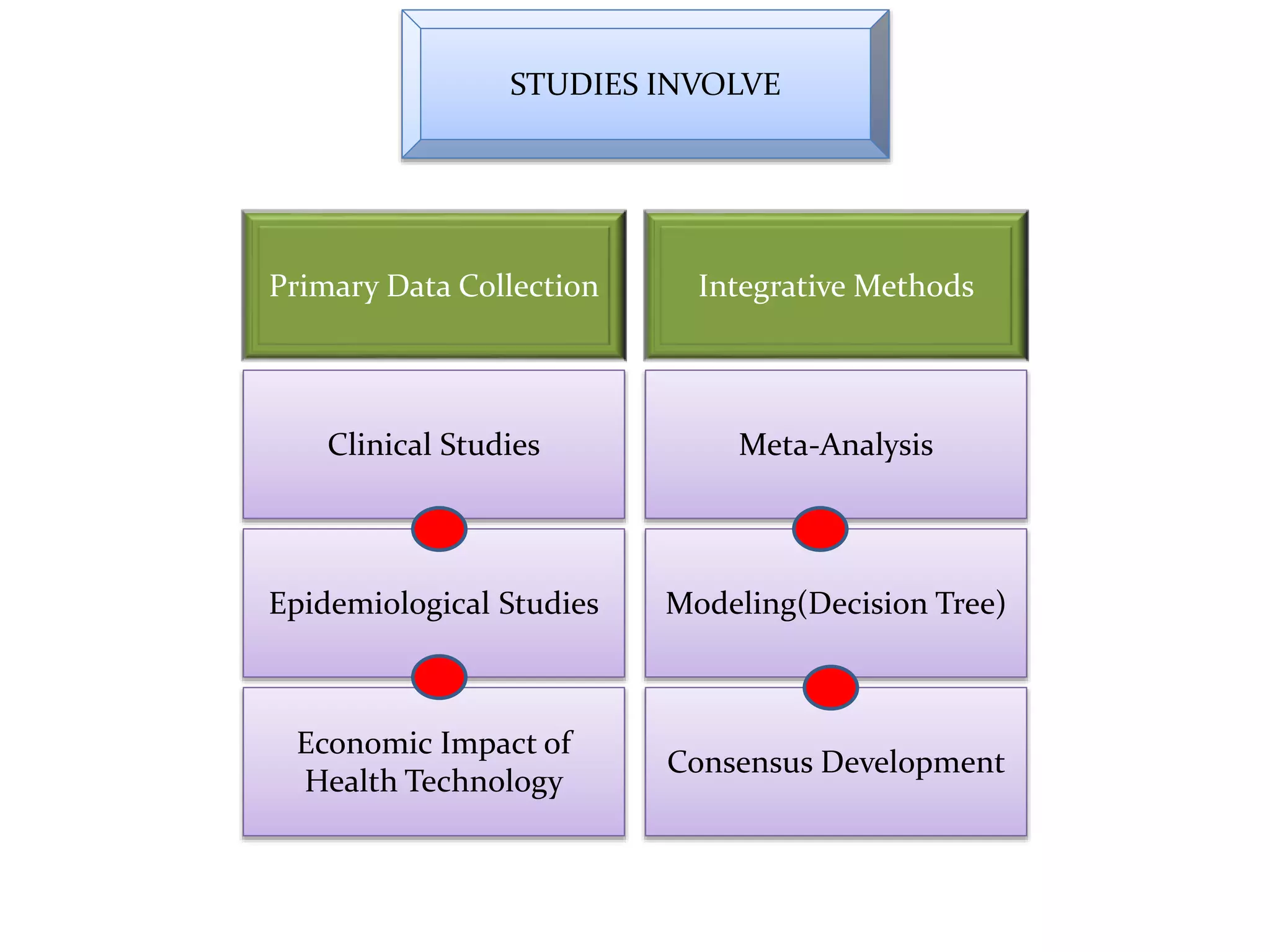
Primary Data Collection
STUDIES INVOLVE
Integrative Methods
Clinical Studies
Epidemiological Studies
Economic Impact of
Health Technology
Consensus Development
Meta-Analysis
Modeling(Decision Tree)
5
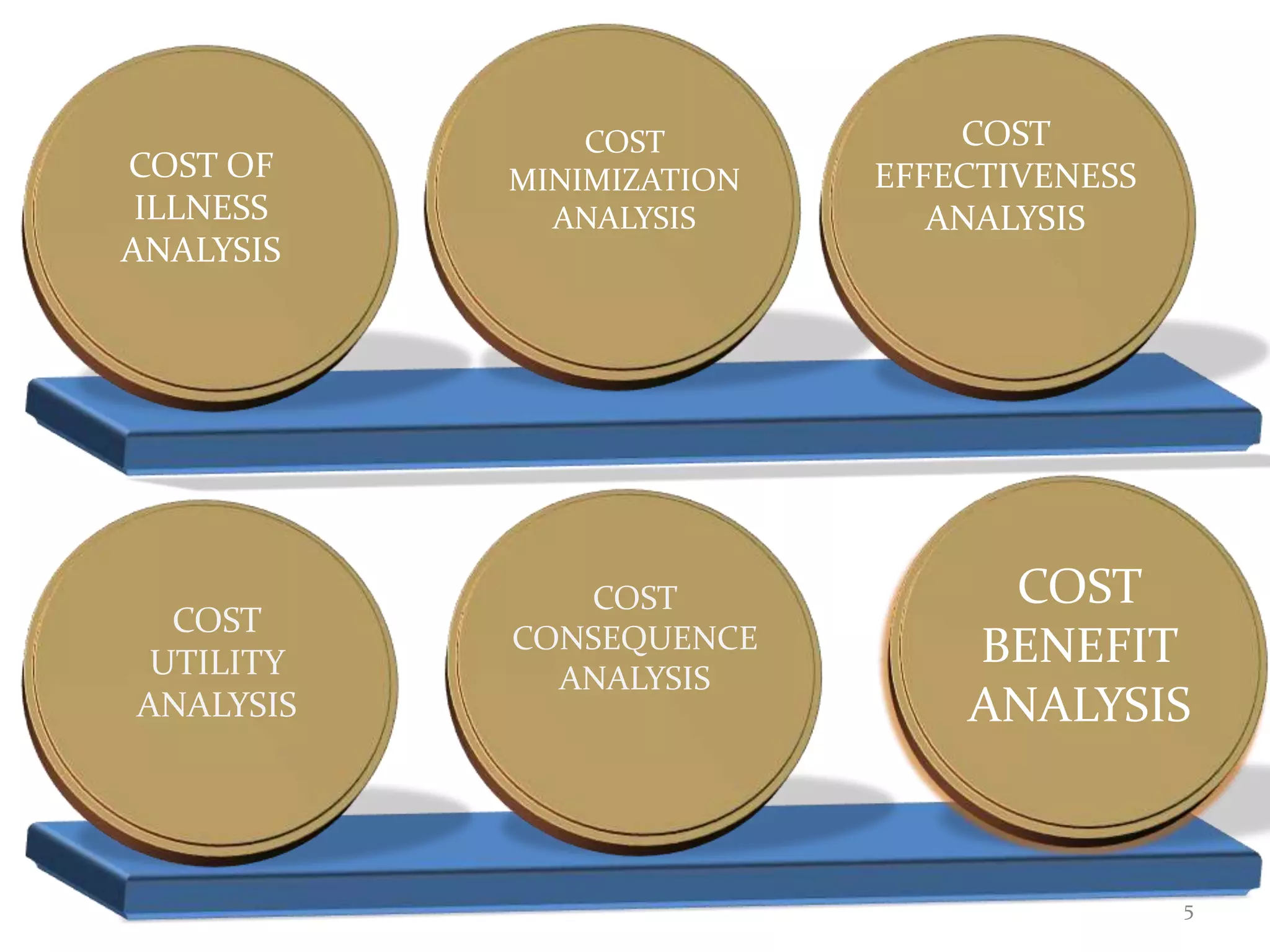
COST
MINIMIZATION
ANALYSIS
COST
EFFECTIVENESS
ANALYSIS
COST
UTILITY
ANALYSIS
COST
CONSEQUENCE
ANALYSIS
COST
BENEFIT
ANALYSIS
COST OF
ILLNESS
ANALYSIS
6
COST – BENEFIT ANALYSIS
“A process by which you weigh
expected costs against expected
benefits to determine the best(or
most profitable) course of action”.
(Entrepreneur)
7
1808 ALBERT GALLATON(1761-1849)
“Water improvement transportation program”
1848 JULES DUPUIT(1844)
“On the Measure of Utility of Public Work”(1848)
US Bureau of reclamation US corps of Engineers
1902
Federal reclamation act 1902
Opening of western lands for Irrigation
8
1936
Flood Control Act 1936
Feasibility test conducted, that benefits must exceed the cost
1946
To
1950
River Basin Committee
Proposed practices for economic analysis of River Basin project
“THE GREEN BOOK”(water management)
1958 OTTO ECSTEIN (Harvard University)
Water resource development: The Economics of Project Evaluation
1960
to
1962
Jack Hirshleifer, Jamed dekaven, Jerome W.Milliman
(economist) (Engineer) (Hydrologist)
Water supply; Economics and Policy(Design of water resource system)
9
1972 Cost benefit analysis of US Breeder Reactor Program
1974 Automotive Emission Control
1976
EZRA MISHAN
“COST BENEFIT ANALYSIS”(PRAEGER PUBLISHERS)
National Approach to Appraisal
Department of transport, Environment of the regions
1994
2011
10
Cost Benefit Analysis
Weighing future values
today
How far into the future You look
today
On what assumptions you base
your analysis
Net Benefit
Value
Inflation: The purchasing value of a Dollar today
& then...
Lost Return on Investment: Forego the benefit you can
take from the money investing today rather than on
project
Discount Rate:
The factor that reflects the
future value of 1$ in today’s
dollars
Allowable Payback Period:
The length of time for
anticipated benefits and
estimated costs
Disc. rate=(1+r)t
r= revenue or benefit
t= time in years
11
Follow the most profitable project out of severals
Decide whether to undertake a project or not
analyzed & framed, appropriate project objective
Proper estimate of resources to perform the project
work
12
13
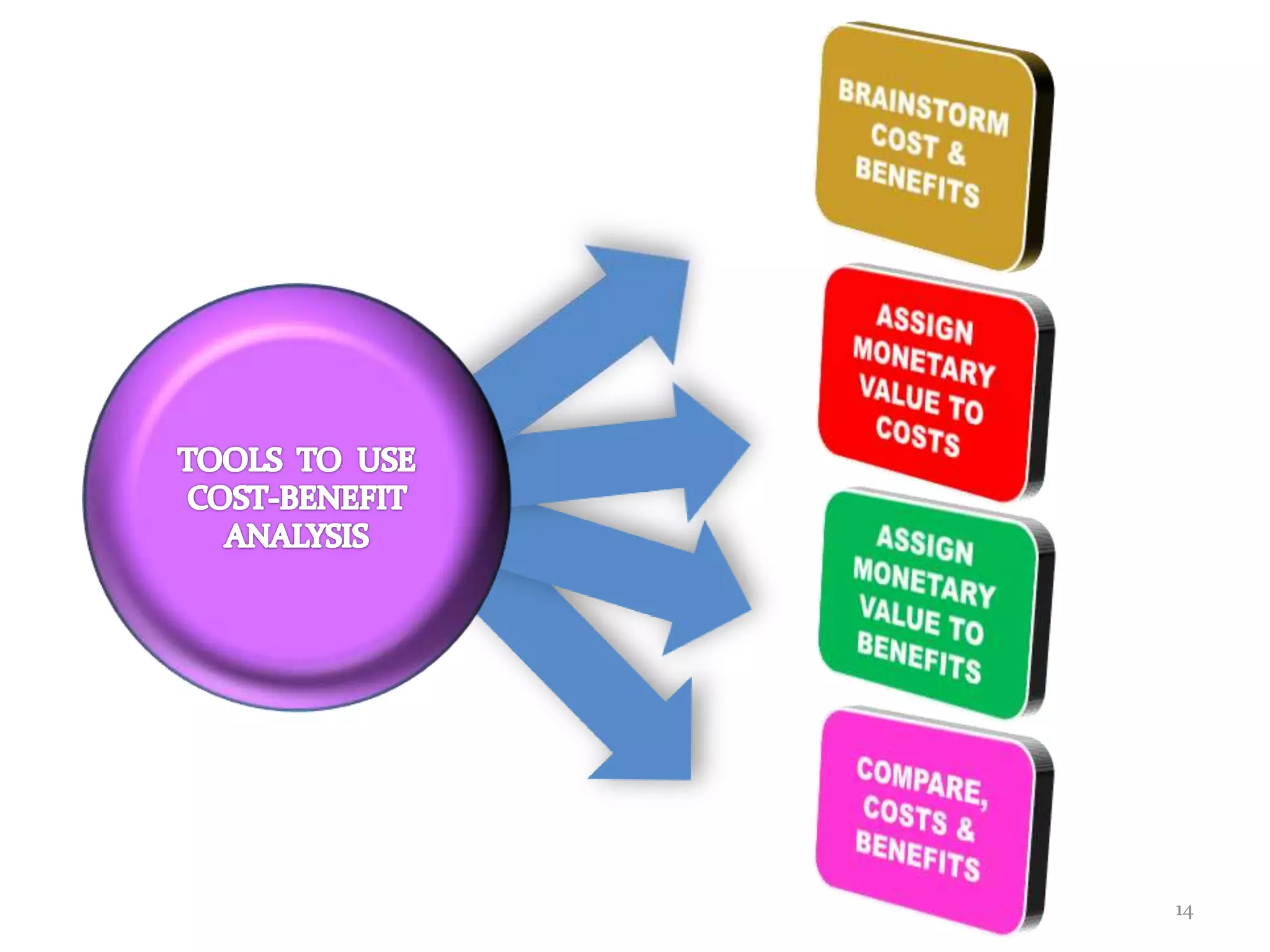
14
15
$COST(interv) – $COST(comp)
$BENEFIT(interv) – $BENEFIT(comp)
COST
BENEFIT
RATIO
=
The Project is BENEFICIAL
If the ratio of the change in costs to the
change in benefits is less than one
The Project is of NO LOSS NO GAIN
If the ratio of the change in costs to the
change in benefits is equal to one
The Project is COSTLY
If the ratio of the change in costs to the
change in benefits is greater than one
APPROACHES
Ratio Approach
indicates the amount of benefits (or outcomes) that
can be realized per unit expenditure
16
APPROACHES
Net BENEFIT Approach
Net CB =
[$COST(int) –$COST(comp)] [$BENEFIT(int) – $BENEFIT(comp)]-
The Project is BENEFICIAL only
If the net change in benefits exceeds the
net change in costs
17
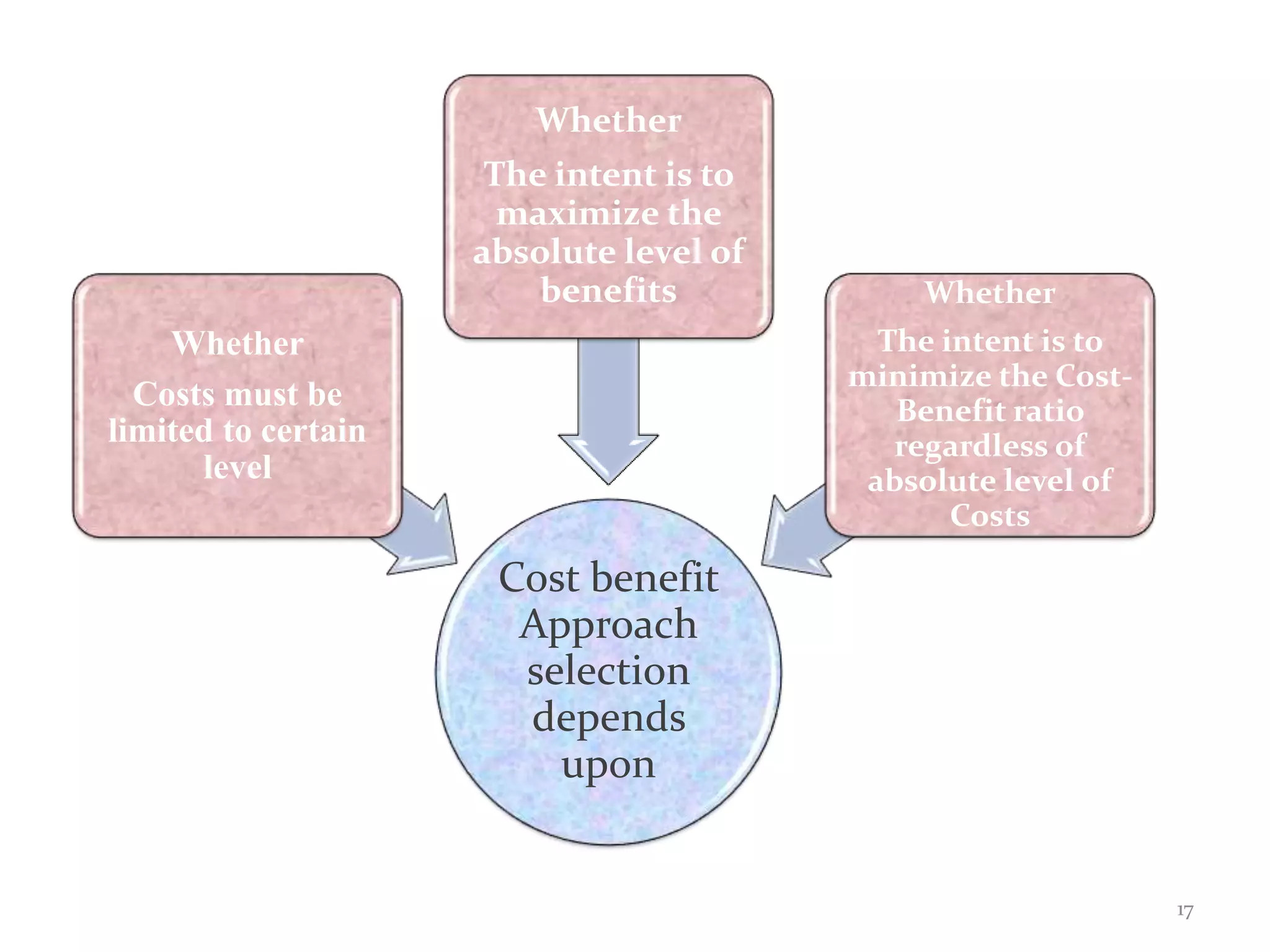
Cost benefit
Approach
selection
depends
upon
Whether
Costs must be
limited to certain
level
Whether
The intent is to
maximize the
absolute level of
benefits Whether
The intent is to
minimize the Cost-
Benefit ratio
regardless of
absolute level of
Costs
18
LIMITATIONS
The project has cash flows that
come in over a number of periods
of time, particularly where
returns vary from period to period
The value that people place on
intangible benefits can be very
subjective
difficult to assign monetary
values to all pertinent
outcomes i.e changes in the
length or quality of life
19

Cost benefit analysis_2

  • 1.
    1 COST – BENEFITANALYSIS Presented by: Shahan Ullah Discipline: Pharmacy
  • 2.
  • 3.
    3 CONCERNS Rising Health carecosts Pressures of Health care policymakers to allocate resources Economic benefits of Health technology
  • 4.
    Primary Data Collection STUDIESINVOLVE Integrative Methods Clinical Studies Epidemiological Studies Economic Impact of Health Technology Consensus Development Meta-Analysis Modeling(Decision Tree)
  • 5.
  • 6.
    6 COST – BENEFITANALYSIS “A process by which you weigh expected costs against expected benefits to determine the best(or most profitable) course of action”. (Entrepreneur)
  • 7.
    7 1808 ALBERT GALLATON(1761-1849) “Waterimprovement transportation program” 1848 JULES DUPUIT(1844) “On the Measure of Utility of Public Work”(1848) US Bureau of reclamation US corps of Engineers 1902 Federal reclamation act 1902 Opening of western lands for Irrigation
  • 8.
    8 1936 Flood Control Act1936 Feasibility test conducted, that benefits must exceed the cost 1946 To 1950 River Basin Committee Proposed practices for economic analysis of River Basin project “THE GREEN BOOK”(water management) 1958 OTTO ECSTEIN (Harvard University) Water resource development: The Economics of Project Evaluation 1960 to 1962 Jack Hirshleifer, Jamed dekaven, Jerome W.Milliman (economist) (Engineer) (Hydrologist) Water supply; Economics and Policy(Design of water resource system)
  • 9.
    9 1972 Cost benefitanalysis of US Breeder Reactor Program 1974 Automotive Emission Control 1976 EZRA MISHAN “COST BENEFIT ANALYSIS”(PRAEGER PUBLISHERS) National Approach to Appraisal Department of transport, Environment of the regions 1994 2011
  • 10.
    10 Cost Benefit Analysis Weighingfuture values today How far into the future You look today On what assumptions you base your analysis Net Benefit Value Inflation: The purchasing value of a Dollar today & then... Lost Return on Investment: Forego the benefit you can take from the money investing today rather than on project Discount Rate: The factor that reflects the future value of 1$ in today’s dollars Allowable Payback Period: The length of time for anticipated benefits and estimated costs Disc. rate=(1+r)t r= revenue or benefit t= time in years
  • 11.
    11 Follow the mostprofitable project out of severals Decide whether to undertake a project or not analyzed & framed, appropriate project objective Proper estimate of resources to perform the project work
  • 12.
  • 13.
  • 14.
  • 15.
    15 $COST(interv) – $COST(comp) $BENEFIT(interv)– $BENEFIT(comp) COST BENEFIT RATIO = The Project is BENEFICIAL If the ratio of the change in costs to the change in benefits is less than one The Project is of NO LOSS NO GAIN If the ratio of the change in costs to the change in benefits is equal to one The Project is COSTLY If the ratio of the change in costs to the change in benefits is greater than one APPROACHES Ratio Approach indicates the amount of benefits (or outcomes) that can be realized per unit expenditure
  • 16.
    16 APPROACHES Net BENEFIT Approach NetCB = [$COST(int) –$COST(comp)] [$BENEFIT(int) – $BENEFIT(comp)]- The Project is BENEFICIAL only If the net change in benefits exceeds the net change in costs
  • 17.
    17 Cost benefit Approach selection depends upon Whether Costs mustbe limited to certain level Whether The intent is to maximize the absolute level of benefits Whether The intent is to minimize the Cost- Benefit ratio regardless of absolute level of Costs
  • 18.
    18 LIMITATIONS The project hascash flows that come in over a number of periods of time, particularly where returns vary from period to period The value that people place on intangible benefits can be very subjective difficult to assign monetary values to all pertinent outcomes i.e changes in the length or quality of life
  • 19.