WELCOME DEVESH SHARMA PREPARED IN ORDER TO CONTROL POLLUTION
PHYSICAL, CHEMICAL & BACTERIOLOGICAL CONTAMINATION OF WATER AND WATER QUALITY STANDARDS
Distribution of water on earth Ocean and sea  -  97% Snow and ice caps  -  2% Rivers,lakes, Ground water -  1%
UNIVERSAL SOLVENT QUALITY DEMERIT 45 LAC WELLS  AND  50 LAC SEPTIC TANKS ( ?)
contamination Geological Human activities  . Organic waste Industrial waste
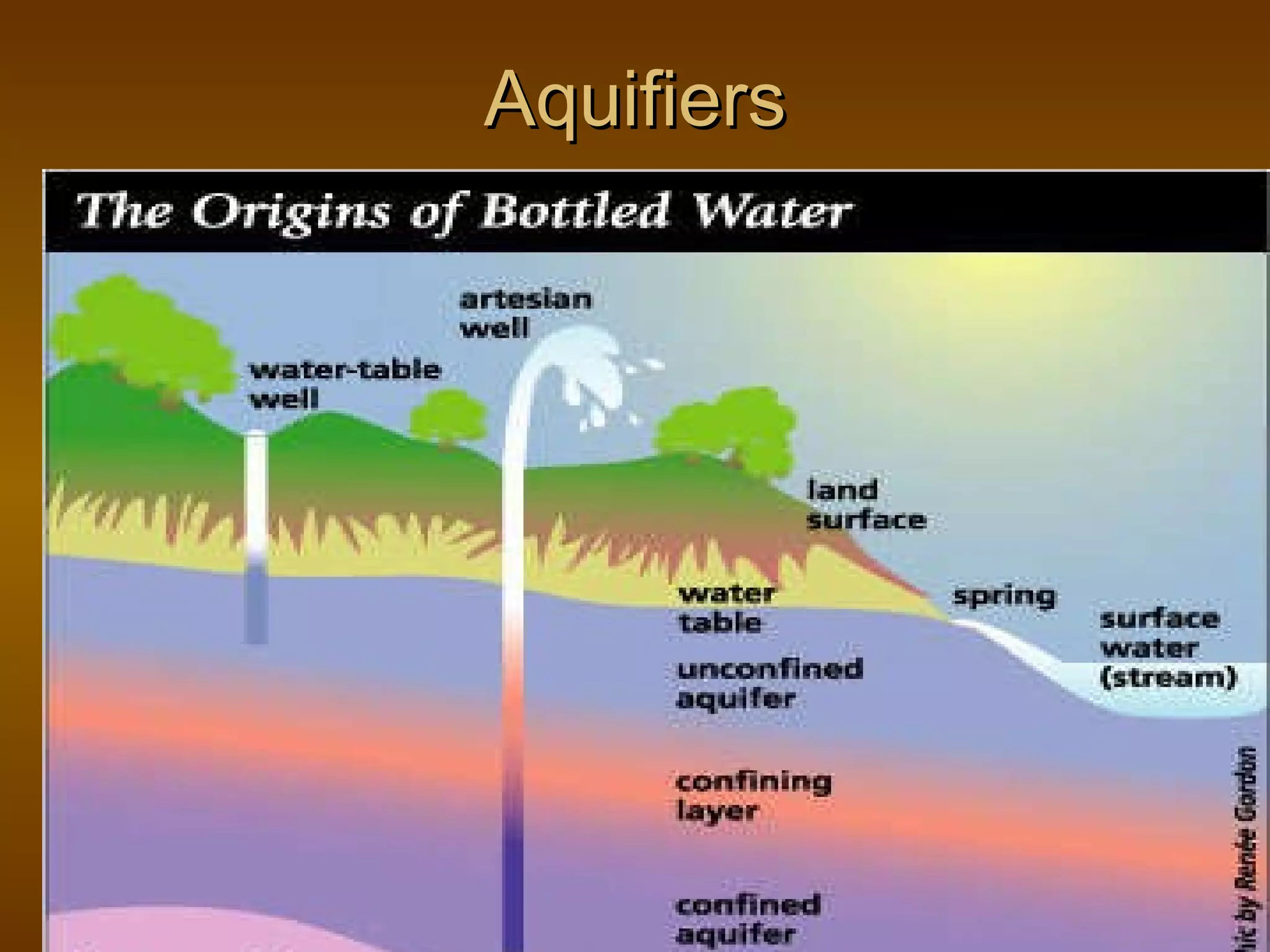
Aquifiers
Safe drinking water Free from pathogenic organisms Clear Not saline Free from offensive taste or smell Free from compounds that may have adverse effect on human health Free from chemicals that cause corrosion of water supply systems
WATER QUALITY PARAMETERS Physical parameters  Chemical Bacteriological
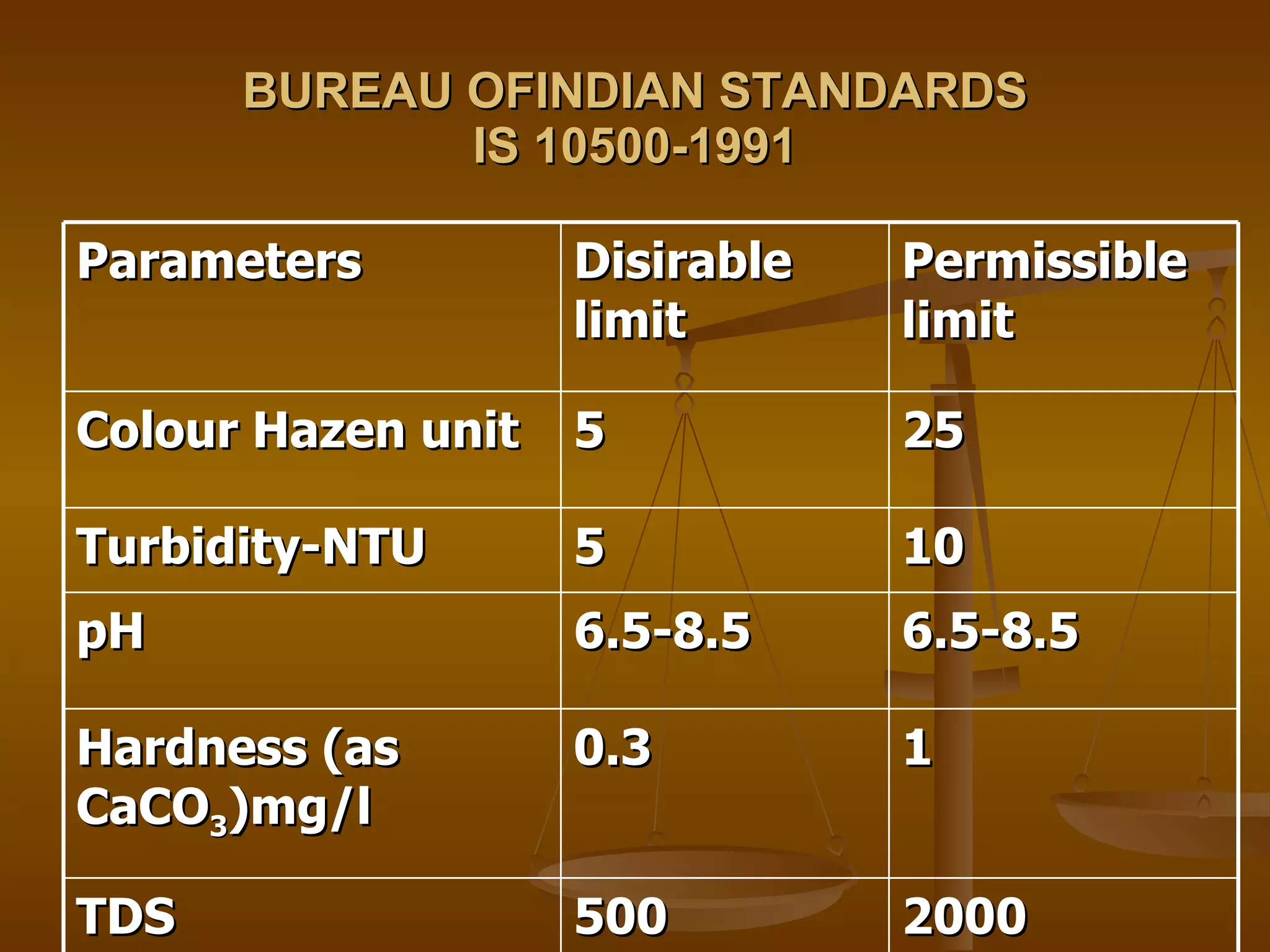
BUREAU OFINDIAN STANDARDS IS 10500-1991 Parameters Disirable limit Permissible limit Colour Hazen unit 5 25 Turbidity-NTU 5 10 pH 6.5-8.5 6.5-8.5 Hardness (as CaCO 3 )mg/l 0.3 1 TDS 500 2000
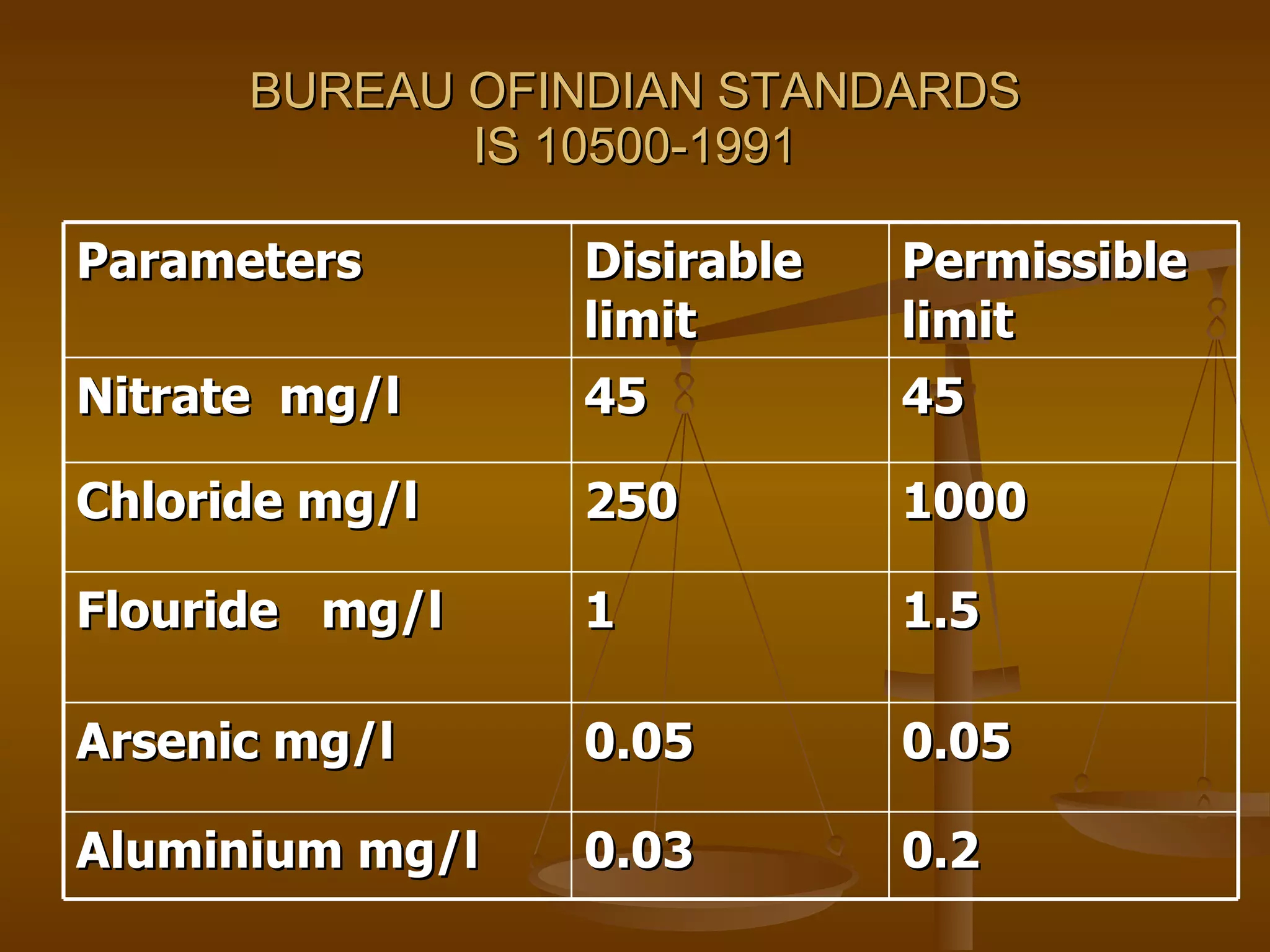
BUREAU OFINDIAN STANDARDS IS 10500-1991 Parameters Disirable limit Permissible limit Nitrate  mg/l 45 45 Chloride mg/l 250 1000 Flouride  mg/l 1 1.5 Arsenic mg/l 0.05 0.05 Aluminium mg/l 0.03 0.2
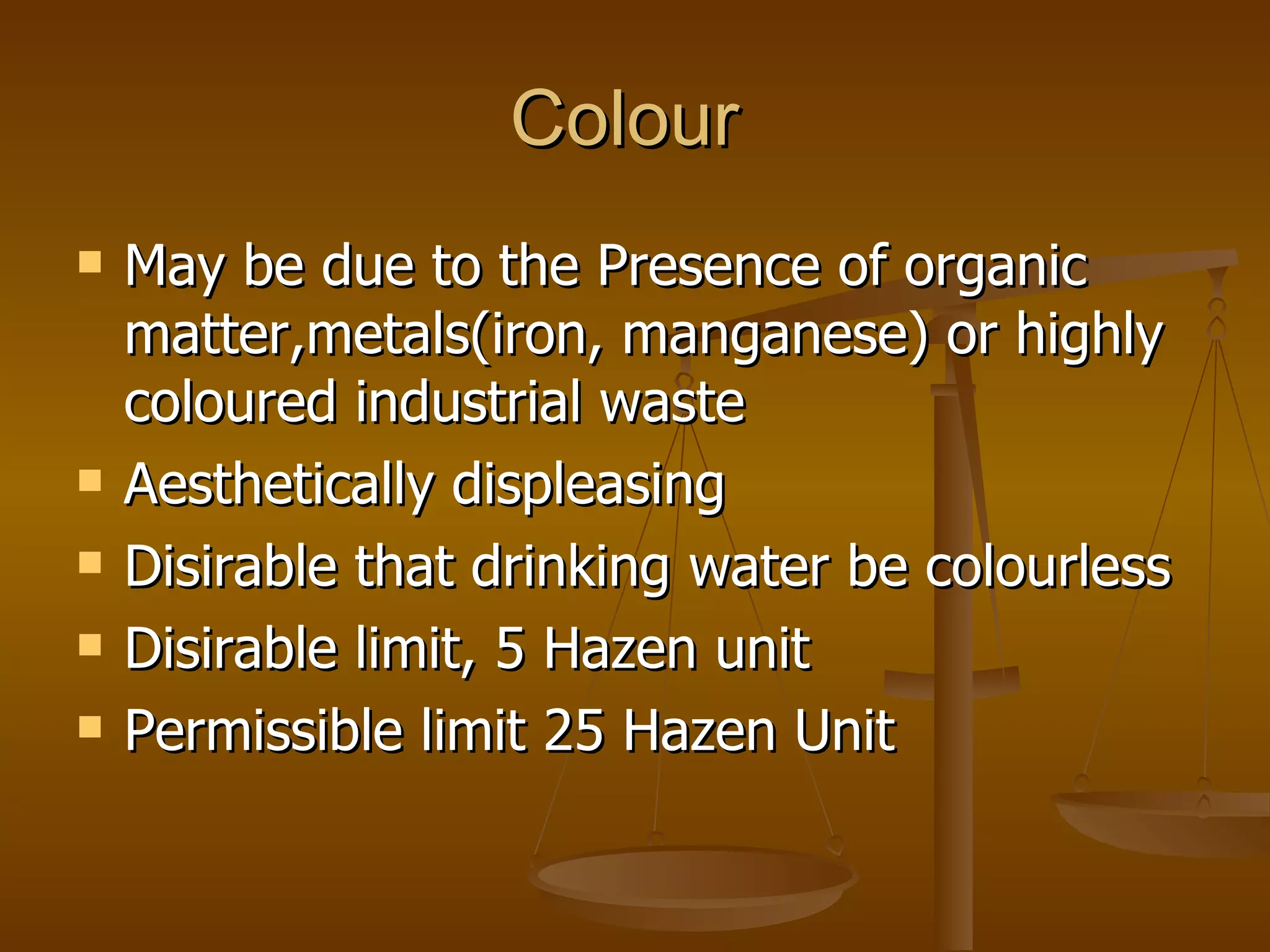
Colour  May be due to the Presence of organic matter,metals(iron, manganese) or highly coloured industrial waste Aesthetically displeasing Disirable that drinking water be colourless Disirable limit, 5 Hazen unit Permissible limit 25 Hazen Unit
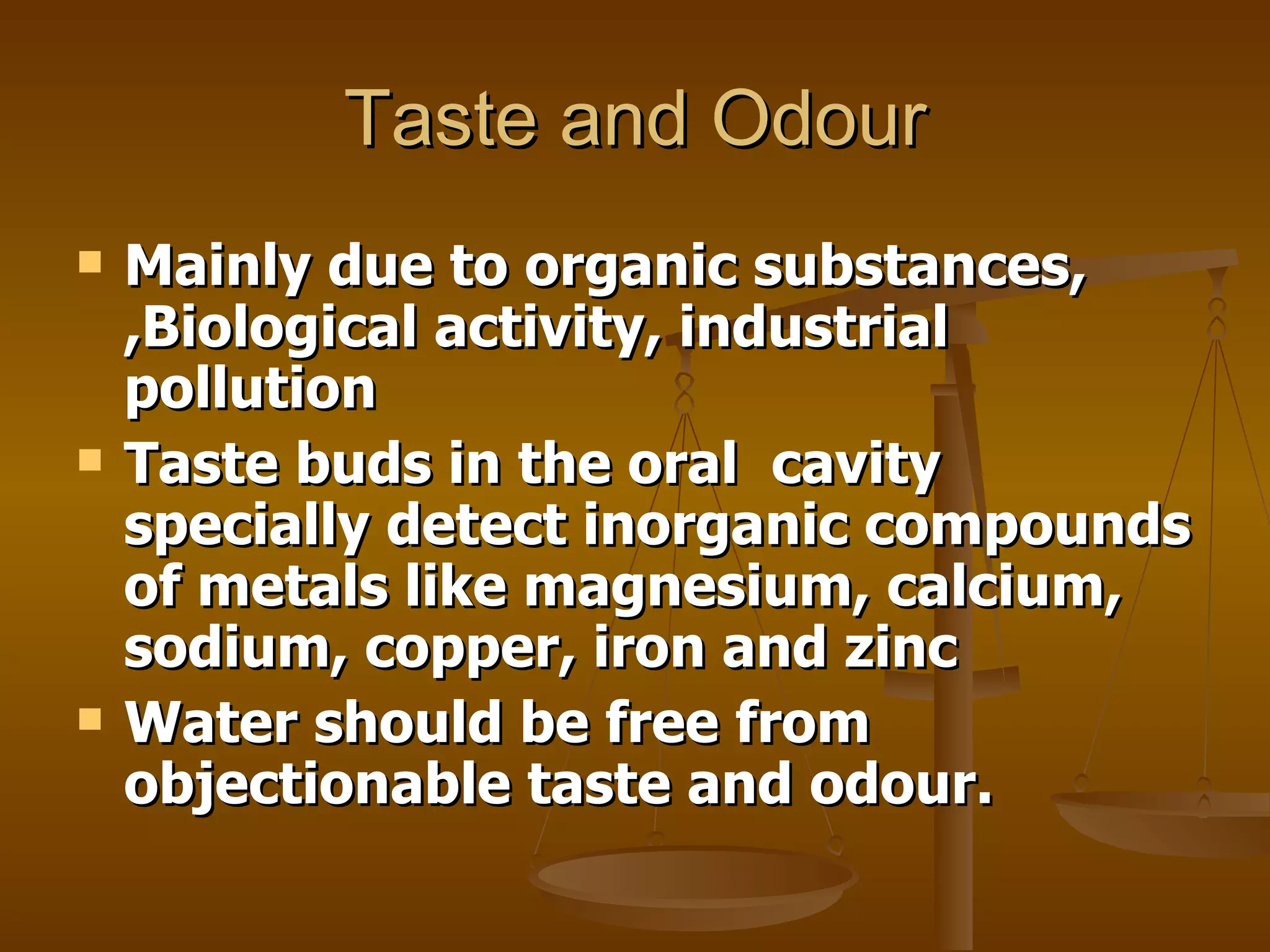
Taste and Odour Mainly due to organic substances, ,Biological activity, industrial pollution Taste buds in the oral  cavity specially detect inorganic compounds of metals like magnesium, calcium, sodium, copper, iron and zinc Water should be free from objectionable taste and odour.
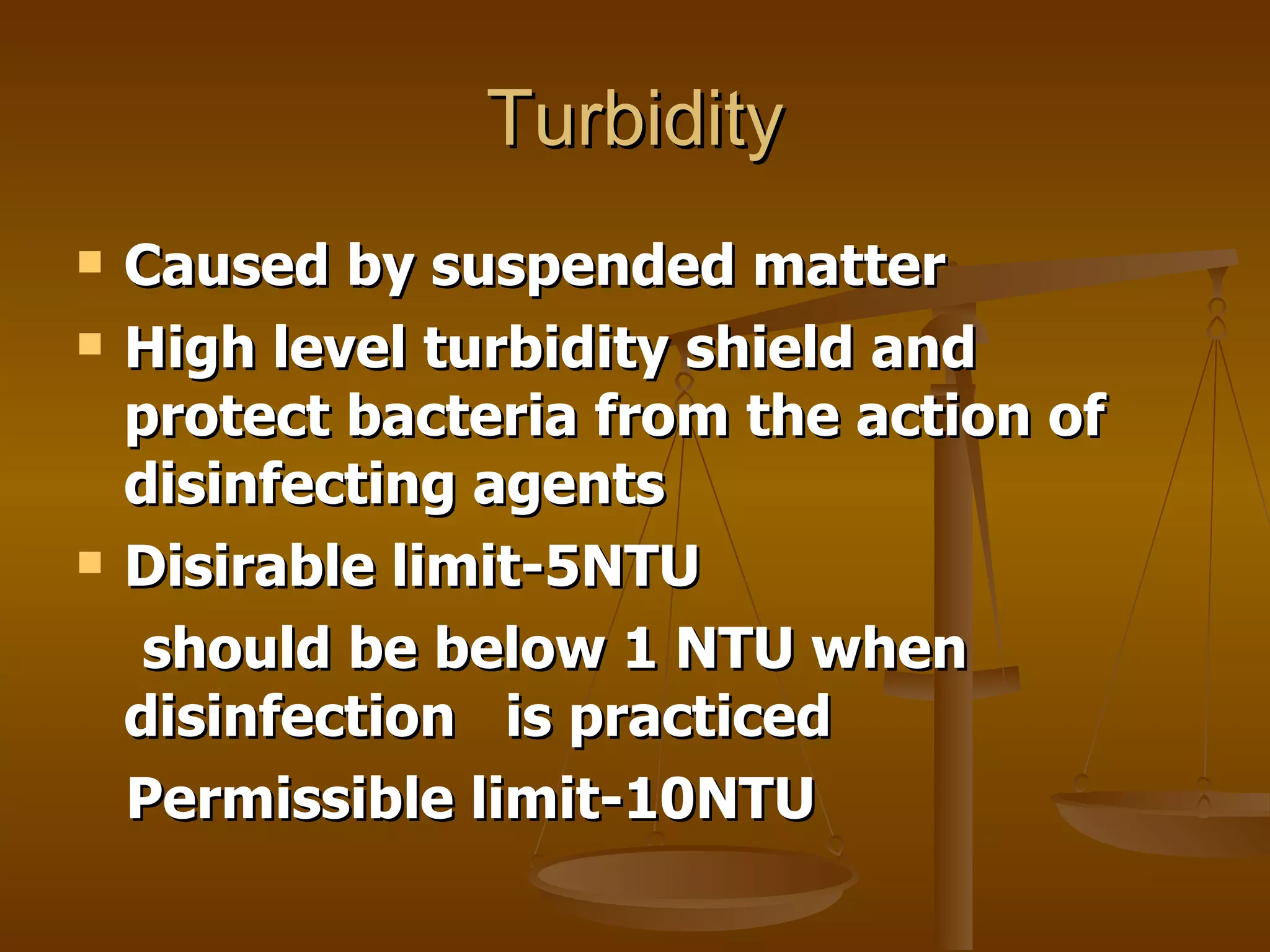
Turbidity Caused by suspended matter High level turbidity shield and protect bacteria from the action of disinfecting agents Disirable limit-5NTU should be below 1 NTU when disinfection  is practiced Permissible limit-10NTU
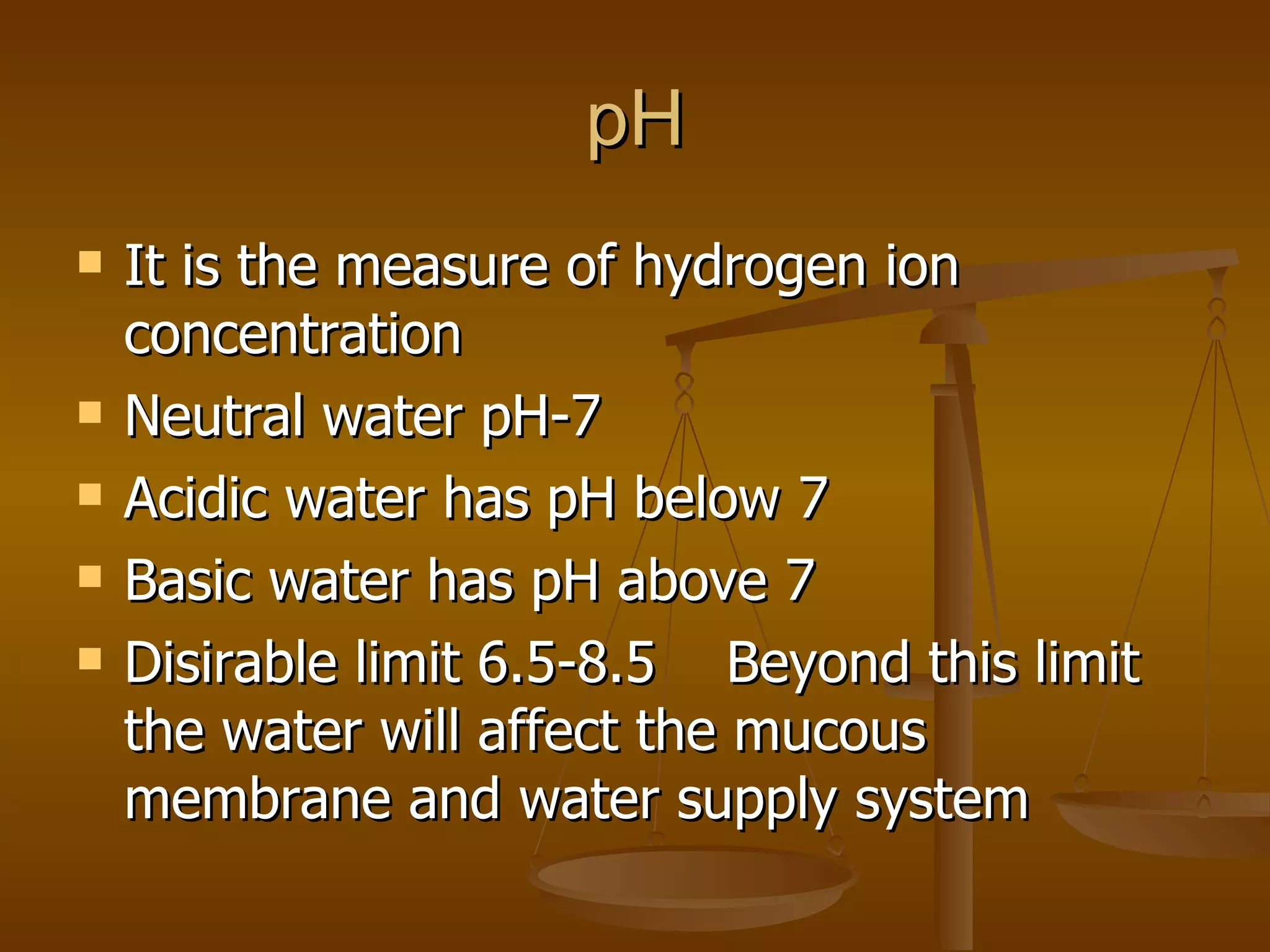
pH It is the measure of hydrogen ion concentration Neutral water pH-7 Acidic water has pH below 7  Basic water has pH above 7 Disirable limit 6.5-8.5  Beyond this limit the water will affect the mucous membrane and water supply system
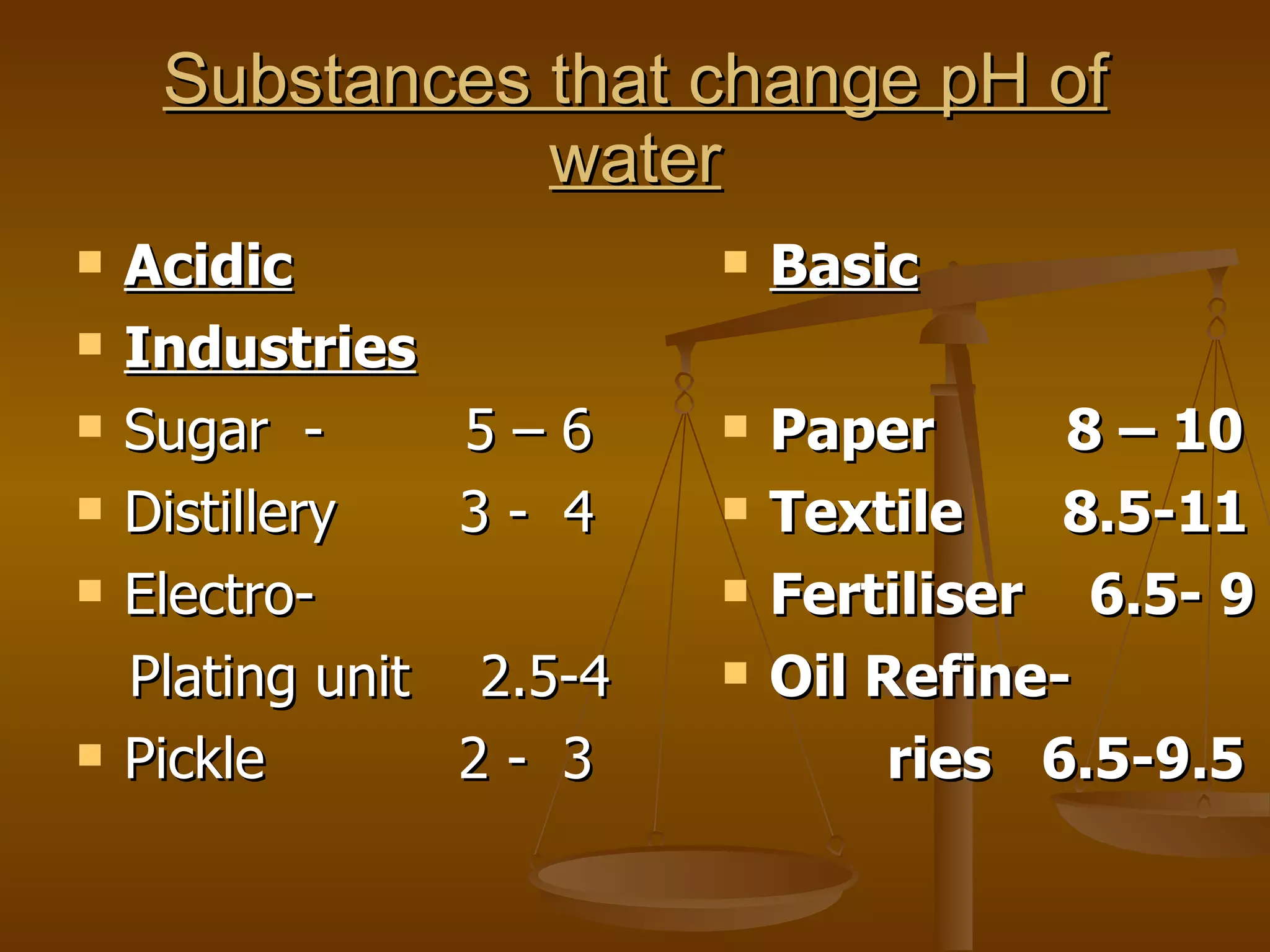
Substances that change pH of water Acidic Industries Sugar  -  5 – 6  Distillery  3 -  4 Electro- Plating unit  2.5-4 Pickle  2 -  3 Basic Paper  8 – 10 Textile  8.5-11 Fertiliser  6.5- 9 Oil Refine- ries  6.5-9.5
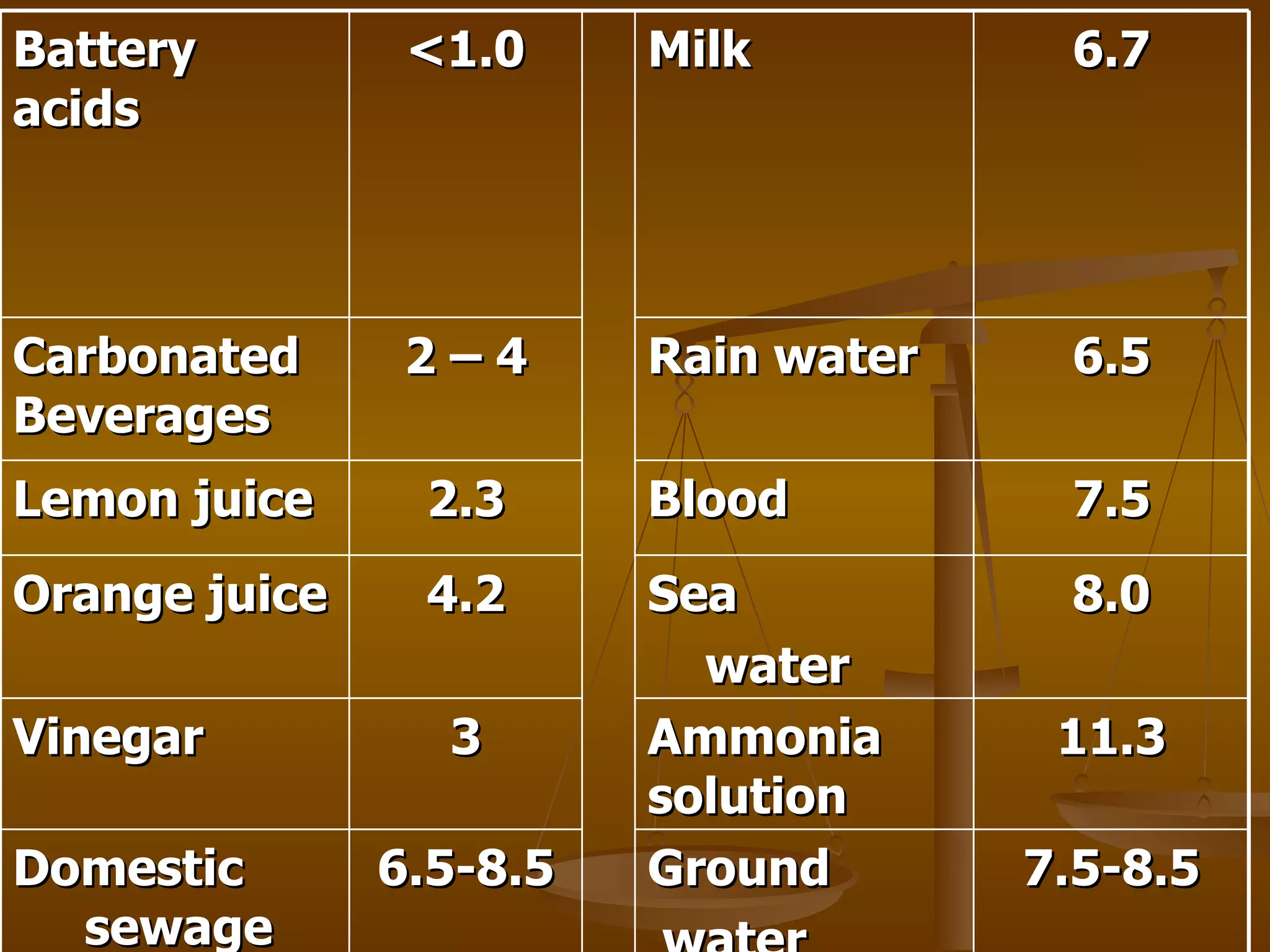
Battery acids <1.0 Milk 6.7 Carbonated Beverages 2 – 4 Rain water 6.5 Lemon juice 2.3 Blood 7.5 Orange juice 4.2 Sea water 8.0 Vinegar 3 Ammonia solution 11.3 Domestic  sewage 6.5-8.5 Ground water 7.5-8.5
HARDNESS Capacity of water for reducing and destroying the lather of soap It is total concentration of calcium and magnesium ions  Temporary hardness – Bicarbonates of Calcium and Magnesium Permanent hardness – Sulphates, chlorides and nitrates of calcium and magnesium
Hardness – contd… 0 – 50 mg/l  - soft 50 – 150 mg/l  - moderately hard 150 – 300 mg/l  - hard 300 above  - very hard Surface water is softer than ground water Causes encrustations in water supply structures
ALKALINITY Capacity to nutralise acid Presence of carbonates, bi-carbonates and hydroxide compounds of Ca, Mg, Na and K Alkalinity = hardness, Ca and Mg salts Alkalinity > hardness - presence of basic salts, Na, K along with Ca and Mg  Alkalinity < hardness – neutral salts of Ca & Mg present
IRON One of the earth’s most plentiful resource High iron causes brown or yellow staining of laundry, household fixtures Metalic taste, offensive odour, poor tasting coffee  Cause iron bacteria Acceptable limit – 0.3 mg / l
CHLORIDE Causes Dissolution of salt deposit Discharge of effluents Intrusion of sea water Not harmful to human beings Regarding irrigation – most troublesome anion Acceptable limit - 250 mg/l
NITRATE Increasing level of nitrate is due to Agricultural fertilizers, manure,animal dung, nitrogenous material ,sewage pollution (blue baby diseases to infants) Maximum permissible limit 45 mg / l
FLOURIDE Occurs naturally Long term consumption above permissible level can cause –  dental flurosis (molting of teeth) Skeletal flurosis Acceptable limit – 1 mg / l  Maximum permissible limit – 1.5 mg / l Remedy – 1) Deflouridation 2)  Mixing Fluride free water 3) Intake of vitamin C,D, calcium,antioxidants
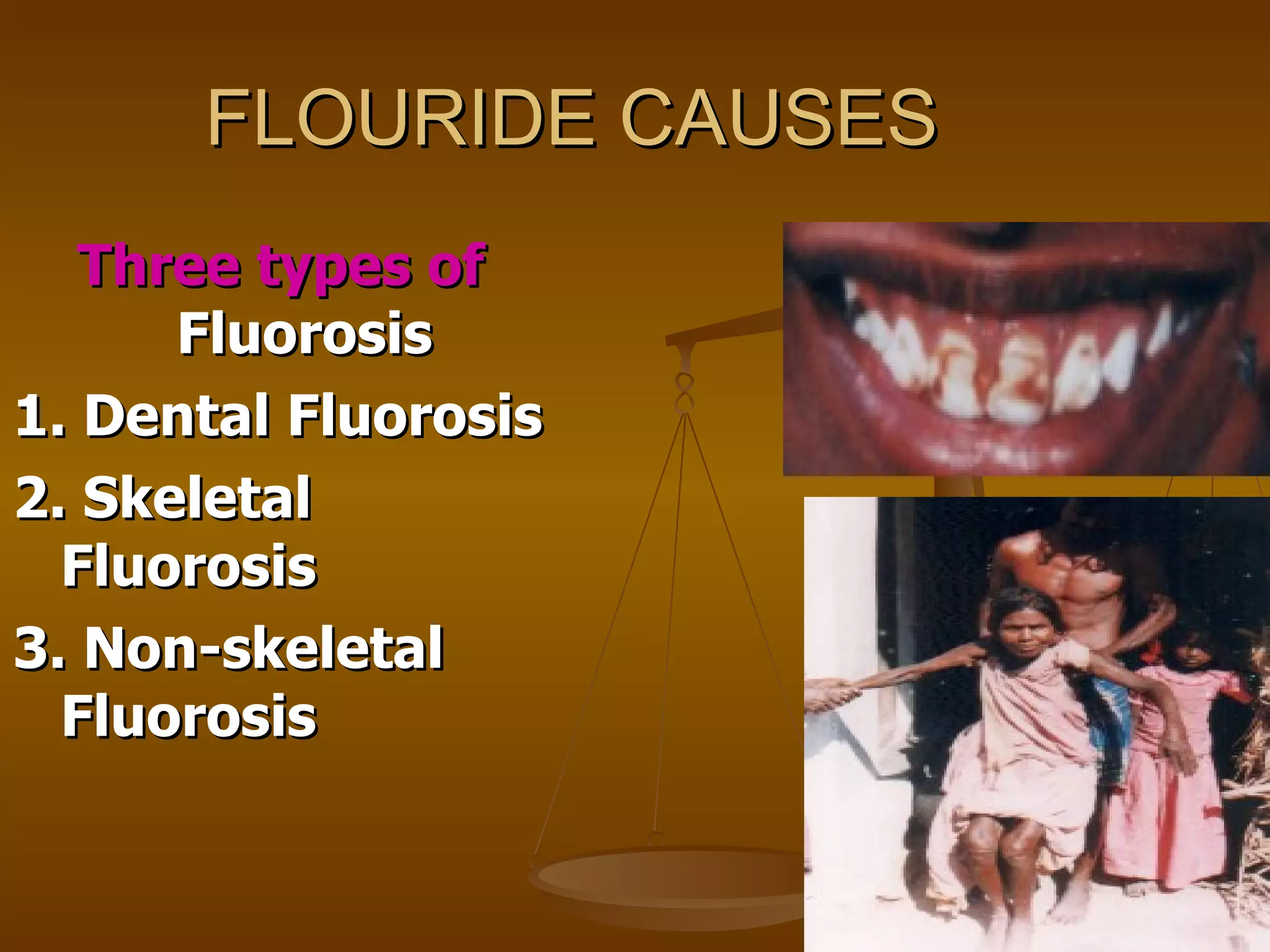
FLOURIDE CAUSES Three types of  Fluorosis 1. Dental Fluorosis 2. Skeletal Fluorosis 3. Non-skeletal Fluorosis
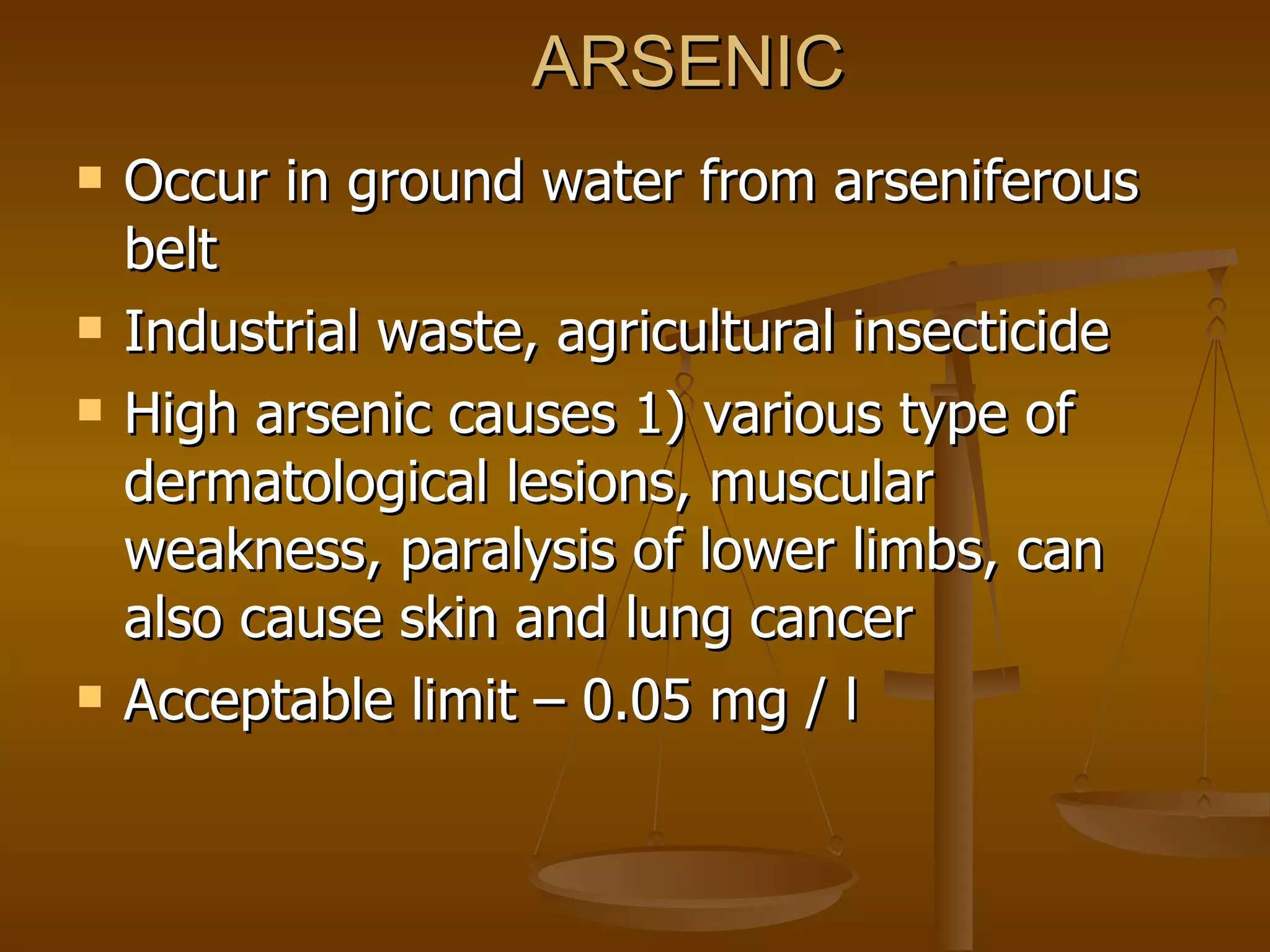
ARSENIC Occur in ground water from arseniferous belt Industrial waste, agricultural insecticide High arsenic causes 1) various type of dermatological lesions, muscular weakness, paralysis of lower limbs, can also cause skin and lung cancer Acceptable limit – 0.05 mg / l
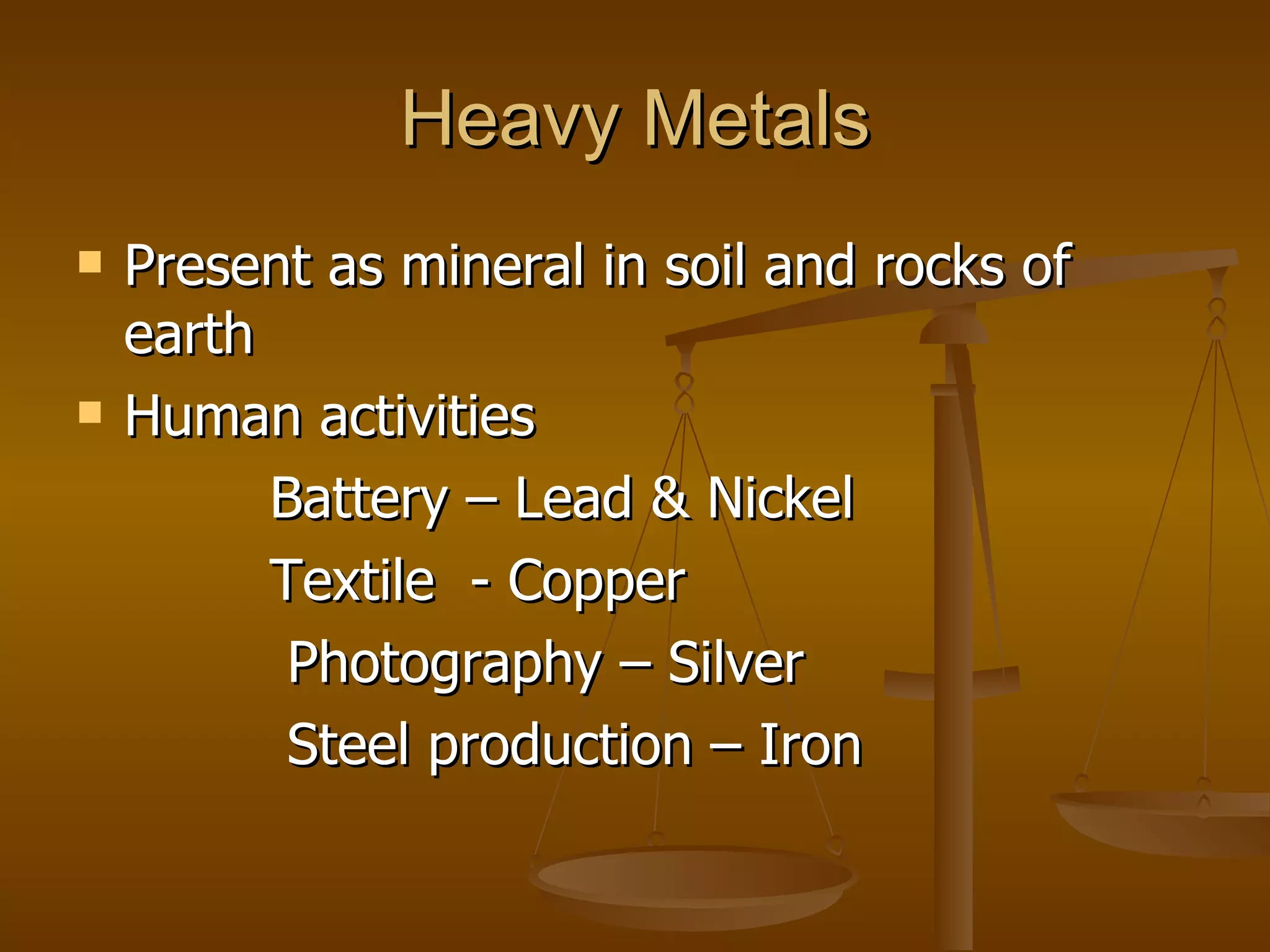
Heavy Metals Present as mineral in soil and rocks of earth Human activities  Battery – Lead & Nickel Textile  - Copper Photography – Silver Steel production – Iron
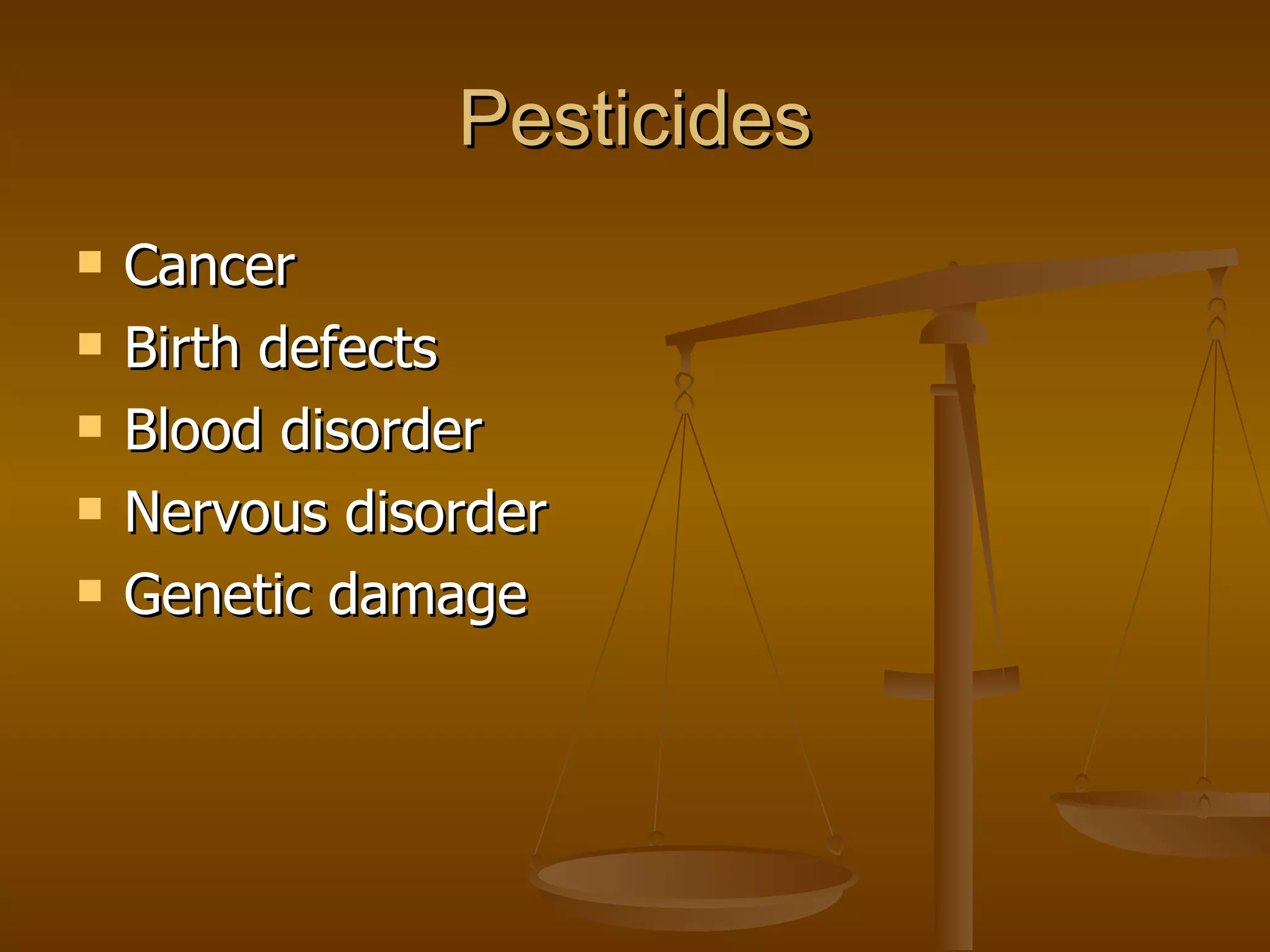
Pesticides Cancer Birth defects Blood disorder Nervous disorder Genetic damage
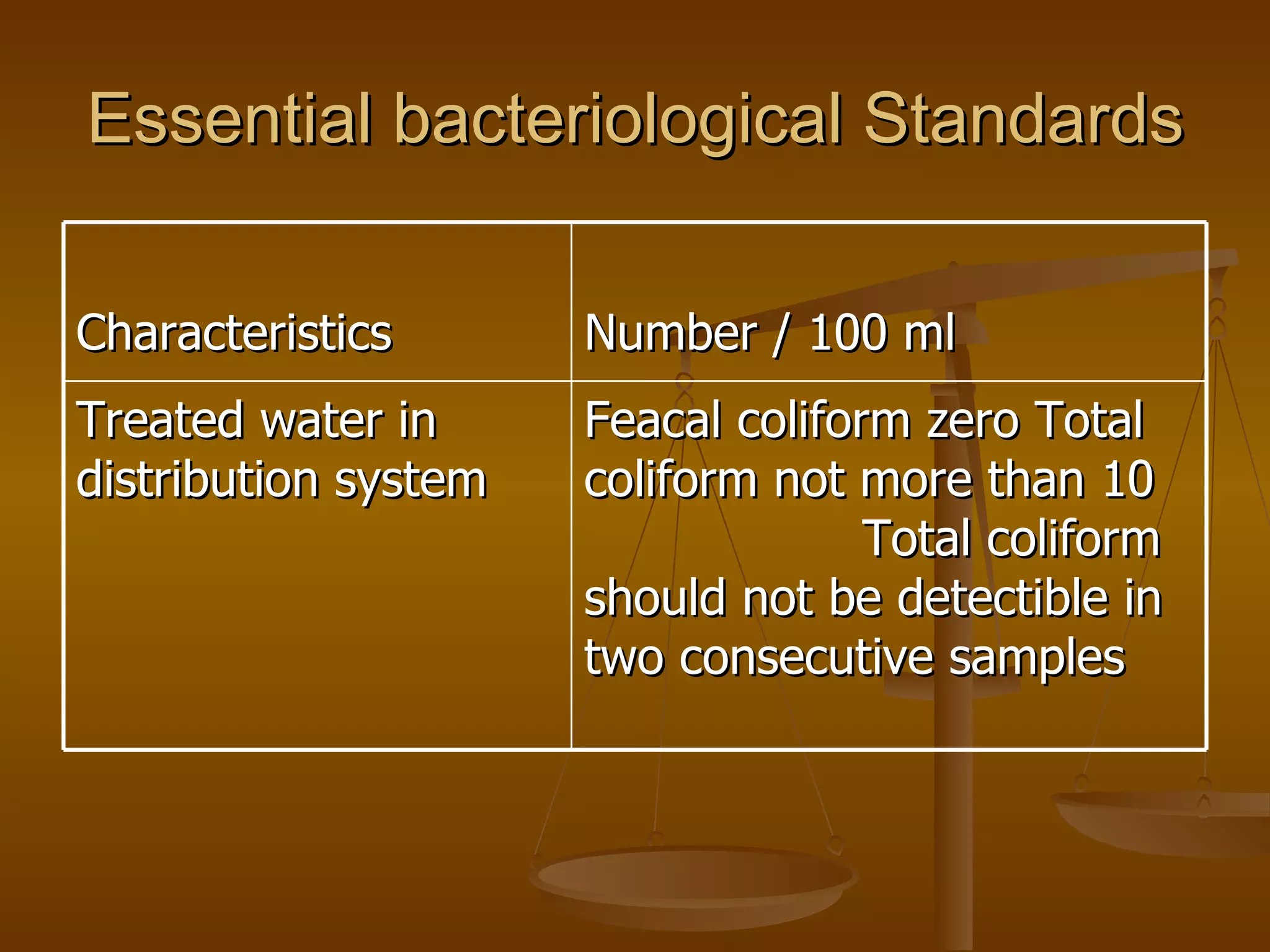
Essential bacteriological Standards Characteristics Number / 100 ml Treated water in distribution system Feacal coliform zero Total coliform not more than 10  Total coliform should not be detectible in two consecutive samples
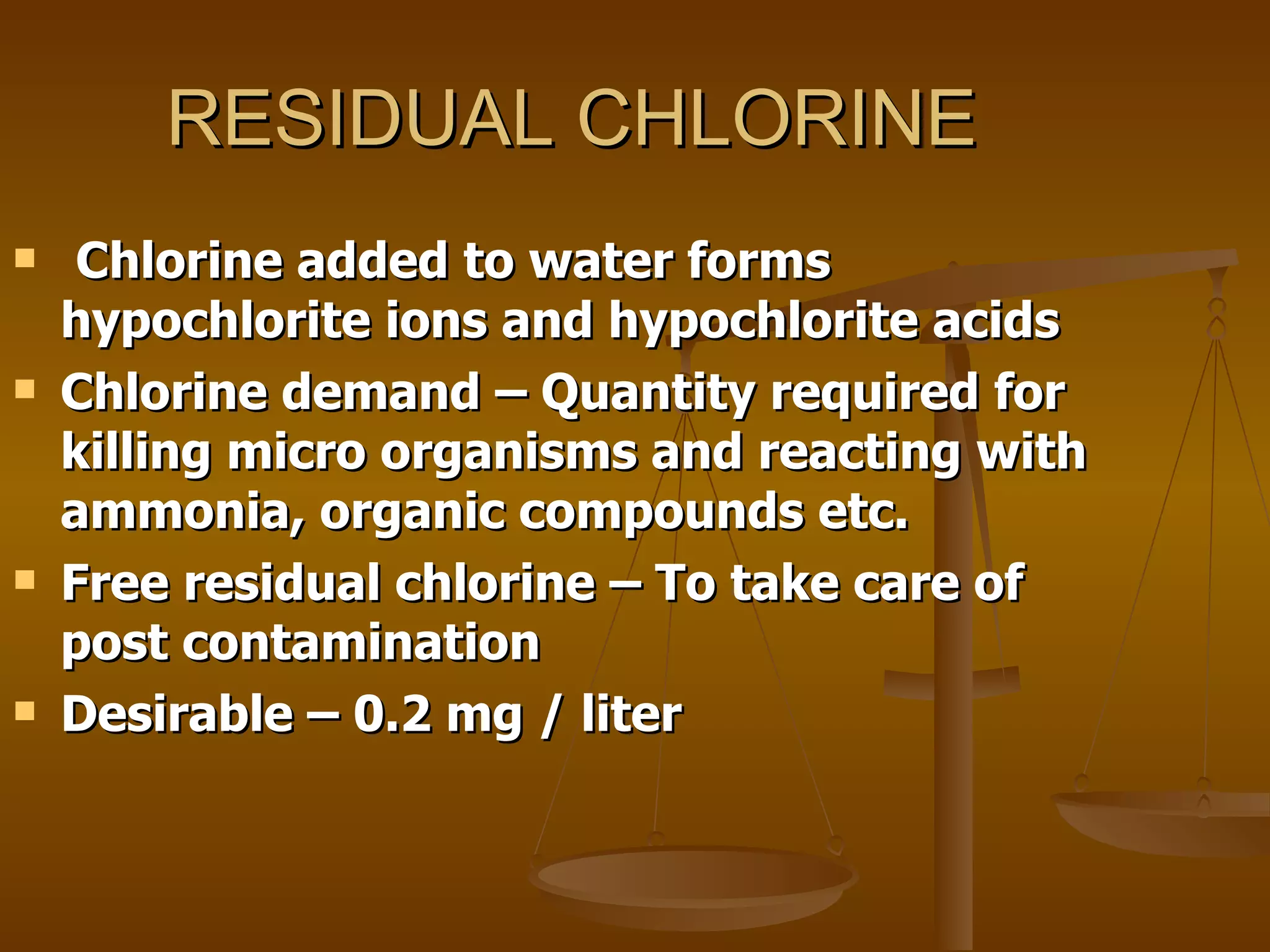
RESIDUAL CHLORINE Chlorine added to water forms hypochlorite ions and hypochlorite acids Chlorine demand – Quantity required for killing micro organisms and reacting with ammonia, organic compounds etc. Free residual chlorine – To take care of post contamination  Desirable – 0.2 mg / liter
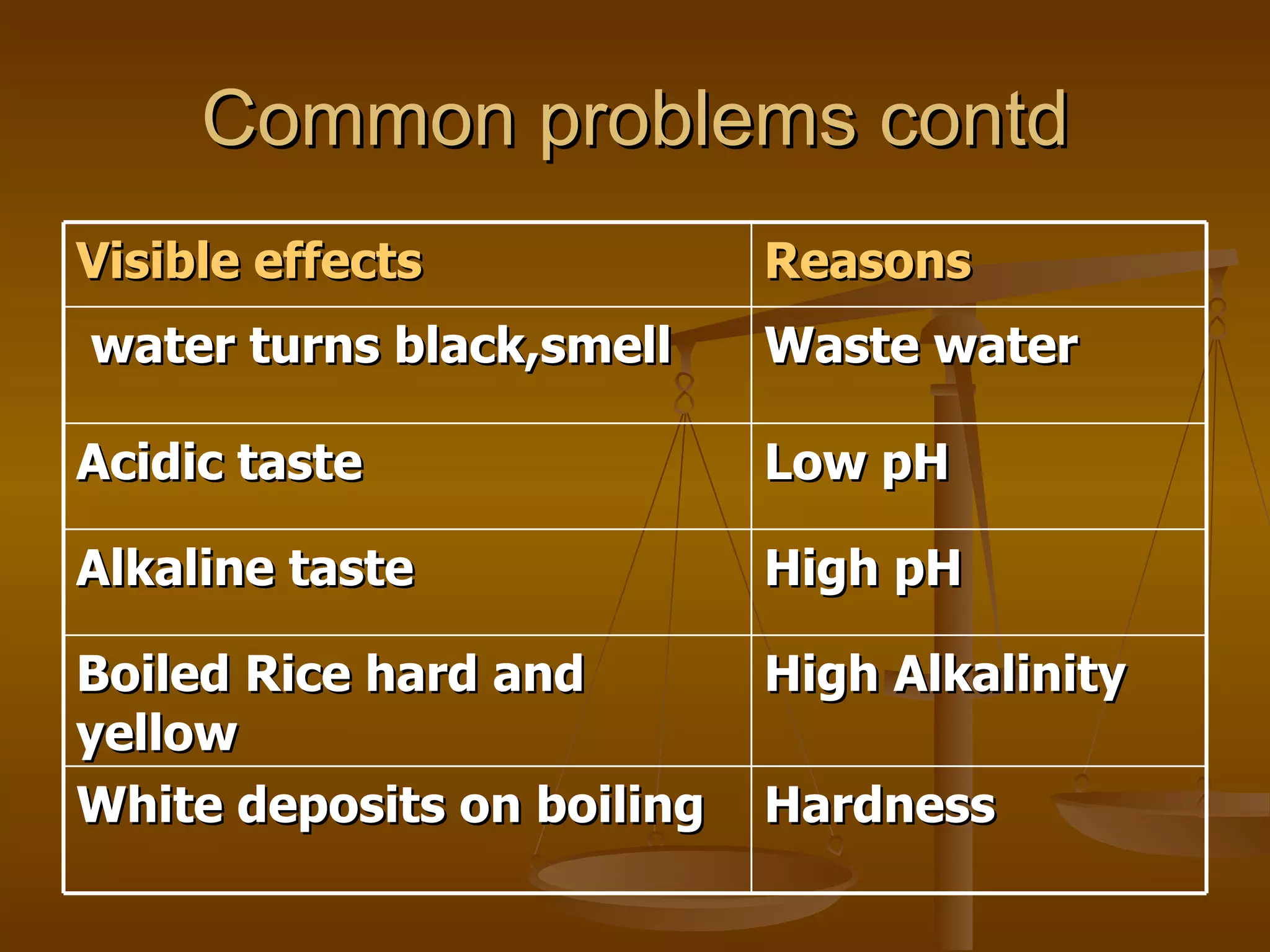
Common problems contd Visible effects Reasons water turns black,smell Waste water Acidic taste Low pH Alkaline taste High pH Boiled Rice hard and yellow High Alkalinity White deposits on boiling Hardness
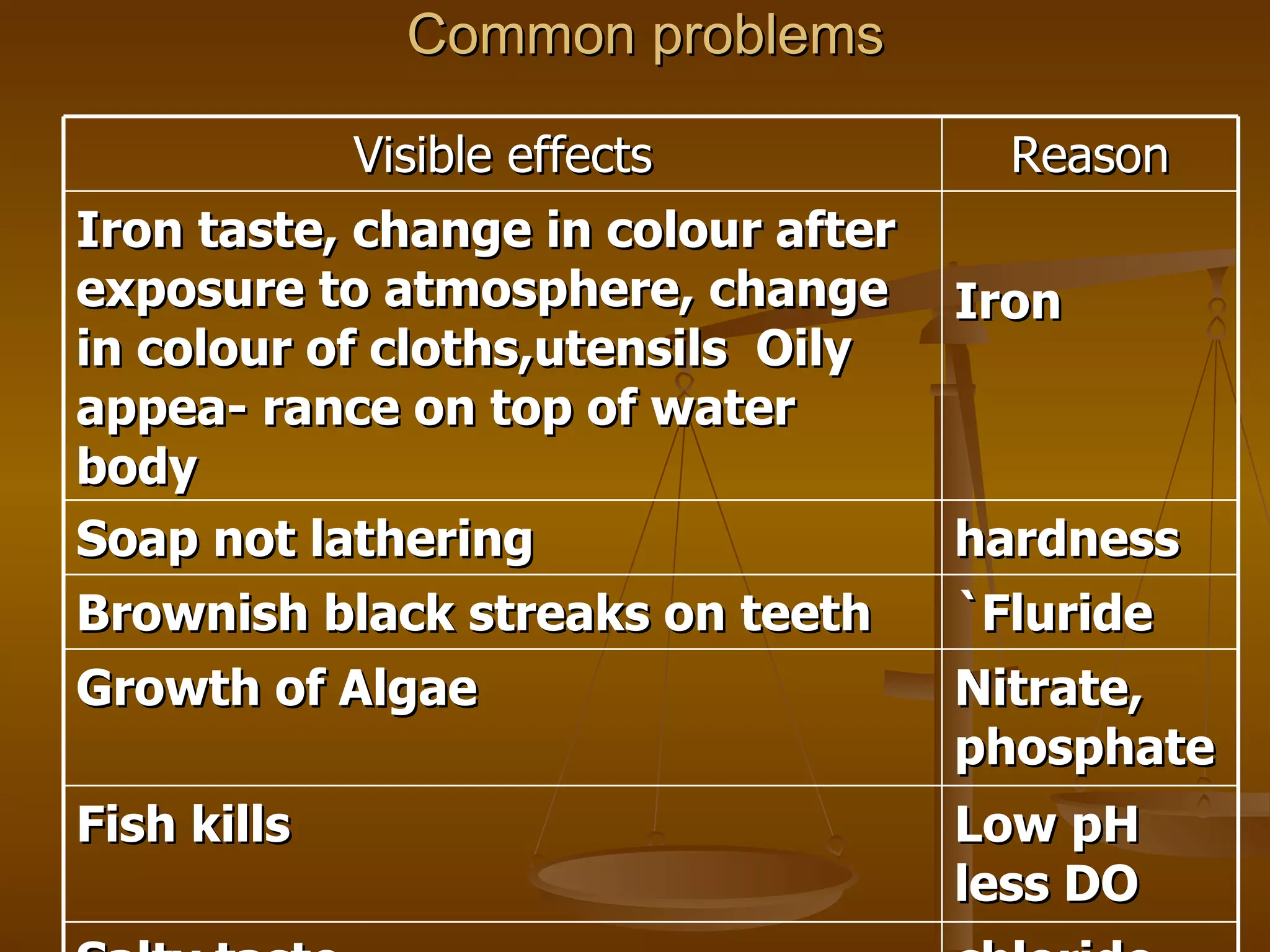
Common problems Visible effects Reason Iron taste, change in colour after exposure to atmosphere, change in colour of cloths,utensils  Oily appea- rance on top of water body Iron Soap not lathering  hardness Brownish black streaks on teeth `Fluride Growth of Algae Nitrate, phosphate Fish kills Low pH less DO Salty taste chloride
Thank you

Copy of water_quality_parameters.ccdu

  • 1.
    WELCOME DEVESH SHARMAPREPARED IN ORDER TO CONTROL POLLUTION
  • 2.
    PHYSICAL, CHEMICAL &BACTERIOLOGICAL CONTAMINATION OF WATER AND WATER QUALITY STANDARDS
  • 3.
    Distribution of wateron earth Ocean and sea - 97% Snow and ice caps - 2% Rivers,lakes, Ground water - 1%
  • 4.
    UNIVERSAL SOLVENT QUALITYDEMERIT 45 LAC WELLS AND 50 LAC SEPTIC TANKS ( ?)
  • 5.
    contamination Geological Humanactivities . Organic waste Industrial waste
  • 6.
  • 7.
    Safe drinking waterFree from pathogenic organisms Clear Not saline Free from offensive taste or smell Free from compounds that may have adverse effect on human health Free from chemicals that cause corrosion of water supply systems
  • 8.
    WATER QUALITY PARAMETERSPhysical parameters Chemical Bacteriological
  • 9.
    BUREAU OFINDIAN STANDARDSIS 10500-1991 Parameters Disirable limit Permissible limit Colour Hazen unit 5 25 Turbidity-NTU 5 10 pH 6.5-8.5 6.5-8.5 Hardness (as CaCO 3 )mg/l 0.3 1 TDS 500 2000
  • 10.
    BUREAU OFINDIAN STANDARDSIS 10500-1991 Parameters Disirable limit Permissible limit Nitrate mg/l 45 45 Chloride mg/l 250 1000 Flouride mg/l 1 1.5 Arsenic mg/l 0.05 0.05 Aluminium mg/l 0.03 0.2
  • 11.
    Colour Maybe due to the Presence of organic matter,metals(iron, manganese) or highly coloured industrial waste Aesthetically displeasing Disirable that drinking water be colourless Disirable limit, 5 Hazen unit Permissible limit 25 Hazen Unit
  • 12.
    Taste and OdourMainly due to organic substances, ,Biological activity, industrial pollution Taste buds in the oral cavity specially detect inorganic compounds of metals like magnesium, calcium, sodium, copper, iron and zinc Water should be free from objectionable taste and odour.
  • 13.
    Turbidity Caused bysuspended matter High level turbidity shield and protect bacteria from the action of disinfecting agents Disirable limit-5NTU should be below 1 NTU when disinfection is practiced Permissible limit-10NTU
  • 14.
    pH It isthe measure of hydrogen ion concentration Neutral water pH-7 Acidic water has pH below 7 Basic water has pH above 7 Disirable limit 6.5-8.5 Beyond this limit the water will affect the mucous membrane and water supply system
  • 15.
    Substances that changepH of water Acidic Industries Sugar - 5 – 6 Distillery 3 - 4 Electro- Plating unit 2.5-4 Pickle 2 - 3 Basic Paper 8 – 10 Textile 8.5-11 Fertiliser 6.5- 9 Oil Refine- ries 6.5-9.5
  • 16.
    Battery acids <1.0Milk 6.7 Carbonated Beverages 2 – 4 Rain water 6.5 Lemon juice 2.3 Blood 7.5 Orange juice 4.2 Sea water 8.0 Vinegar 3 Ammonia solution 11.3 Domestic sewage 6.5-8.5 Ground water 7.5-8.5
  • 17.
    HARDNESS Capacity ofwater for reducing and destroying the lather of soap It is total concentration of calcium and magnesium ions Temporary hardness – Bicarbonates of Calcium and Magnesium Permanent hardness – Sulphates, chlorides and nitrates of calcium and magnesium
  • 18.
    Hardness – contd…0 – 50 mg/l - soft 50 – 150 mg/l - moderately hard 150 – 300 mg/l - hard 300 above - very hard Surface water is softer than ground water Causes encrustations in water supply structures
  • 19.
    ALKALINITY Capacity tonutralise acid Presence of carbonates, bi-carbonates and hydroxide compounds of Ca, Mg, Na and K Alkalinity = hardness, Ca and Mg salts Alkalinity > hardness - presence of basic salts, Na, K along with Ca and Mg Alkalinity < hardness – neutral salts of Ca & Mg present
  • 20.
    IRON One ofthe earth’s most plentiful resource High iron causes brown or yellow staining of laundry, household fixtures Metalic taste, offensive odour, poor tasting coffee Cause iron bacteria Acceptable limit – 0.3 mg / l
  • 21.
    CHLORIDE Causes Dissolutionof salt deposit Discharge of effluents Intrusion of sea water Not harmful to human beings Regarding irrigation – most troublesome anion Acceptable limit - 250 mg/l
  • 22.
    NITRATE Increasing levelof nitrate is due to Agricultural fertilizers, manure,animal dung, nitrogenous material ,sewage pollution (blue baby diseases to infants) Maximum permissible limit 45 mg / l
  • 23.
    FLOURIDE Occurs naturallyLong term consumption above permissible level can cause – dental flurosis (molting of teeth) Skeletal flurosis Acceptable limit – 1 mg / l Maximum permissible limit – 1.5 mg / l Remedy – 1) Deflouridation 2) Mixing Fluride free water 3) Intake of vitamin C,D, calcium,antioxidants
  • 24.
    FLOURIDE CAUSES Threetypes of Fluorosis 1. Dental Fluorosis 2. Skeletal Fluorosis 3. Non-skeletal Fluorosis
  • 25.
    ARSENIC Occur inground water from arseniferous belt Industrial waste, agricultural insecticide High arsenic causes 1) various type of dermatological lesions, muscular weakness, paralysis of lower limbs, can also cause skin and lung cancer Acceptable limit – 0.05 mg / l
  • 26.
    Heavy Metals Presentas mineral in soil and rocks of earth Human activities Battery – Lead & Nickel Textile - Copper Photography – Silver Steel production – Iron
  • 27.
    Pesticides Cancer Birthdefects Blood disorder Nervous disorder Genetic damage
  • 28.
    Essential bacteriological StandardsCharacteristics Number / 100 ml Treated water in distribution system Feacal coliform zero Total coliform not more than 10 Total coliform should not be detectible in two consecutive samples
  • 29.
    RESIDUAL CHLORINE Chlorineadded to water forms hypochlorite ions and hypochlorite acids Chlorine demand – Quantity required for killing micro organisms and reacting with ammonia, organic compounds etc. Free residual chlorine – To take care of post contamination Desirable – 0.2 mg / liter
  • 30.
    Common problems contdVisible effects Reasons water turns black,smell Waste water Acidic taste Low pH Alkaline taste High pH Boiled Rice hard and yellow High Alkalinity White deposits on boiling Hardness
  • 31.
    Common problems Visibleeffects Reason Iron taste, change in colour after exposure to atmosphere, change in colour of cloths,utensils Oily appea- rance on top of water body Iron Soap not lathering hardness Brownish black streaks on teeth `Fluride Growth of Algae Nitrate, phosphate Fish kills Low pH less DO Salty taste chloride
  • 32.