How to improve
the chance of getting your manuscript
       accepted for publication

          Jonas Ranstam PhD
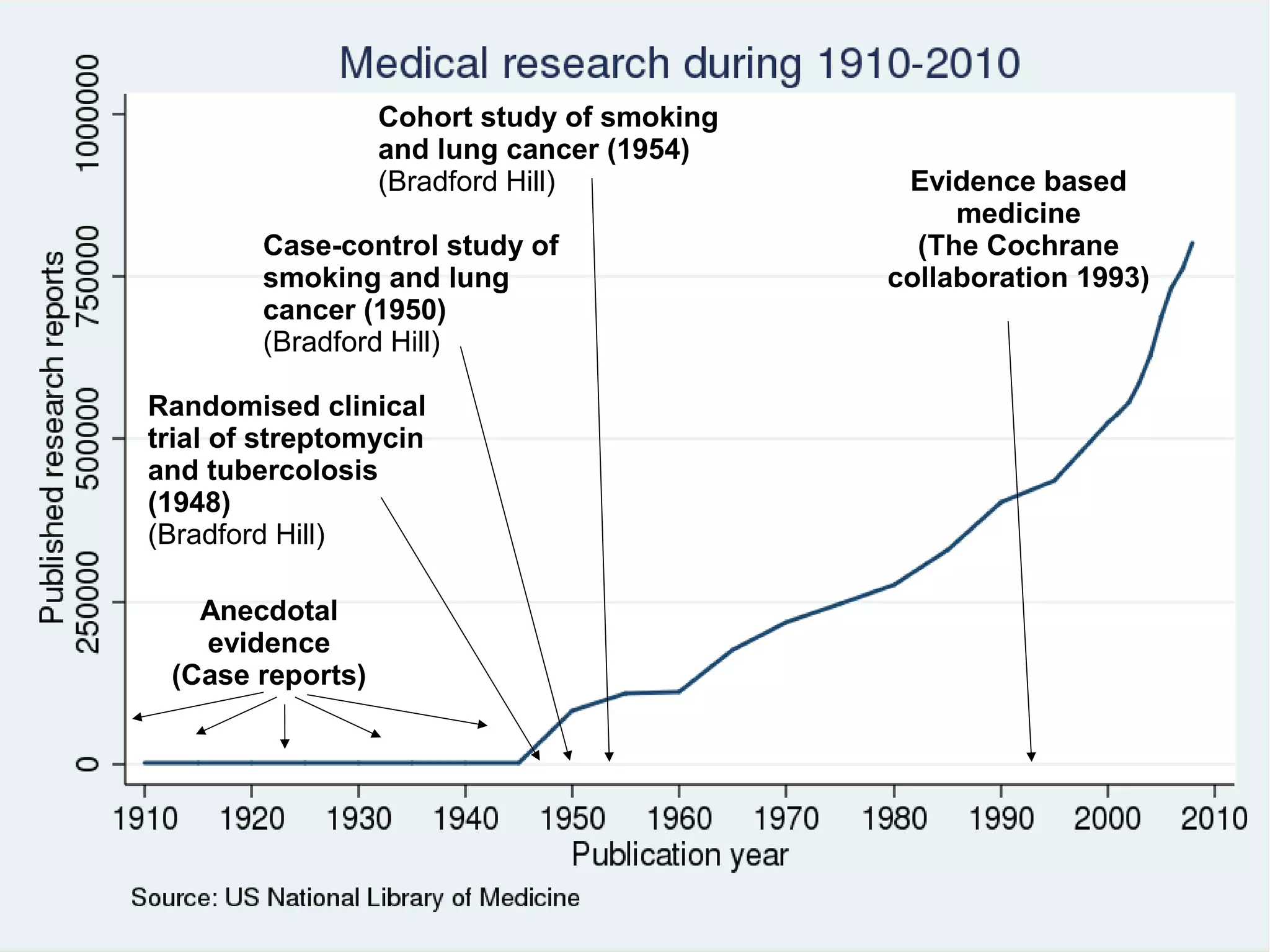
Cohort study of smoking
                  and lung cancer (1954)
                  (Bradford Hill)            Evidence based
                                                 medicine
        Case-control study of                 (The Cochrane
        smoking and lung                    collaboration 1993)
        cancer (1950)
        (Bradford Hill)

Randomised clinical
trial of streptomycin
and tubercolosis
(1948)
(Bradford Hill)

   Anecdotal
   evidence
 (Case reports)
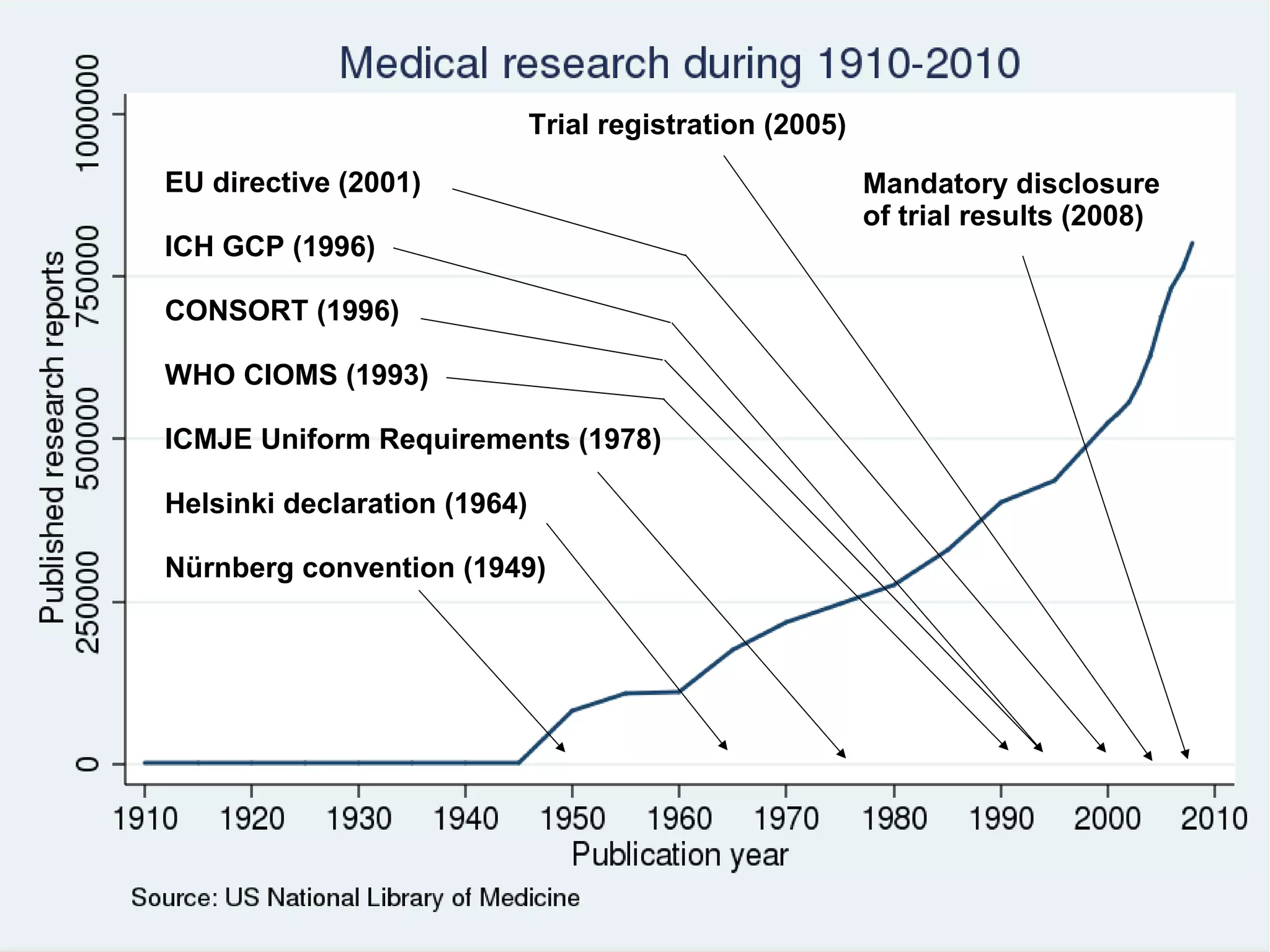
Trial registration (2005)

EU directive (2001)                                       Mandatory disclosure
                                                          of trial results (2008)
ICH GCP (1996)

CONSORT (1996)

WHO CIOMS (1993)

ICMJE Uniform Requirements (1978)

Helsinki declaration (1964)

Nürnberg convention (1949)
Plan
1. Methodological background
2. General guidelines
3. Special recommendations
     a) case reports
     b) mechanical experiments
     c) in vitro/cadaver experiments
     d) cross-sectional studies
     e) epidemiological studies
     f) randomized trials
4. Summary
1. Methodological background
What is statistics used for?
1. Describing data (statistics in the plural)

2. Interpreting uncertain data (statistics in the singular)
Two kinds of uncertainty
1. Uncertainty of measurement

2. Uncertainty of sampling
1. Uncertainty of measurement
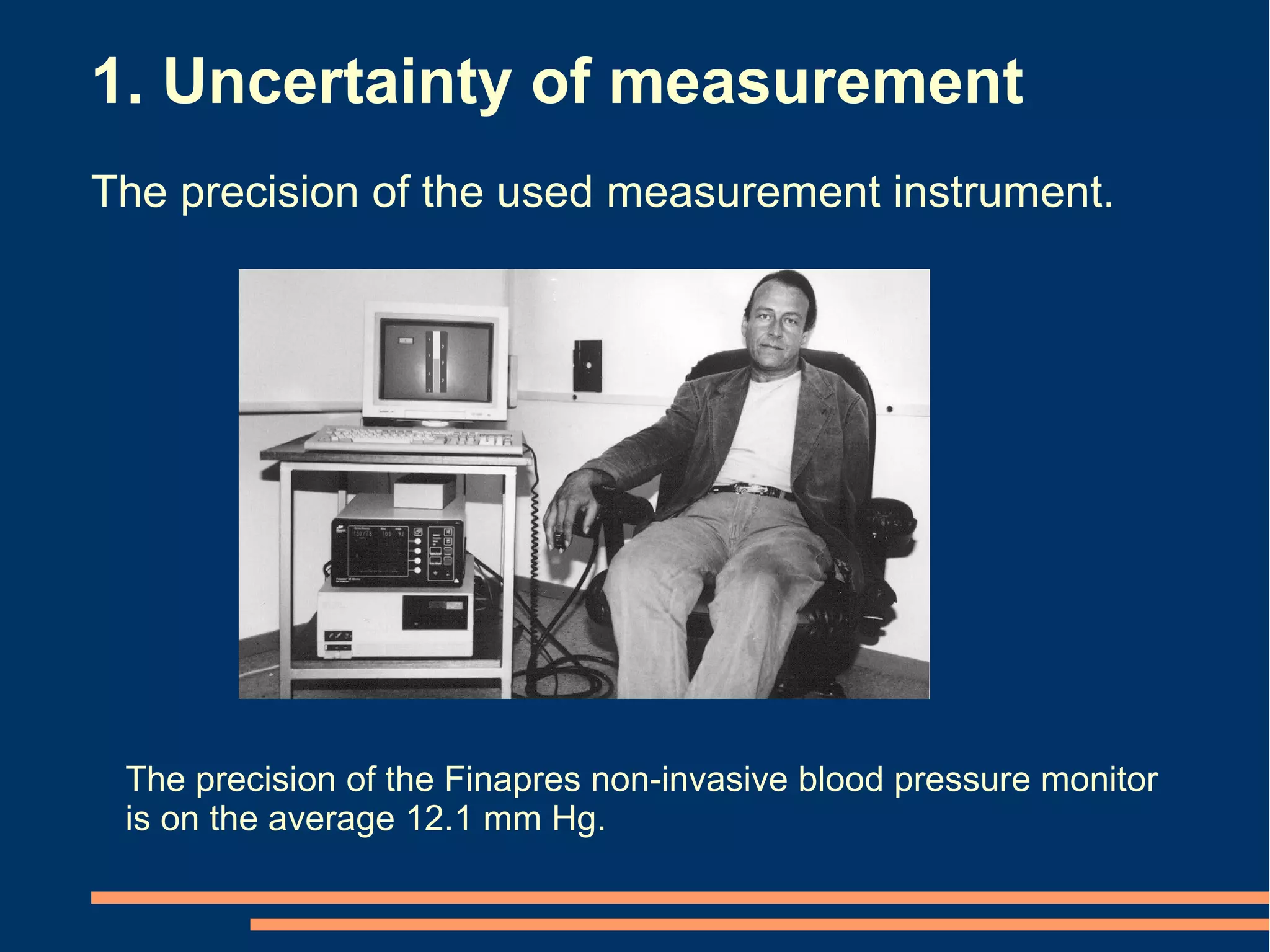
The precision of the used measurement instrument.


 The precision of the Finapres non-invasive blood pressure monitor
 is on the average 12.1 mm Hg.
2. Uncertainty of sampling
Individual effects vary between subjects. Different
samples of subjects yield different observed mean
effects.
Example
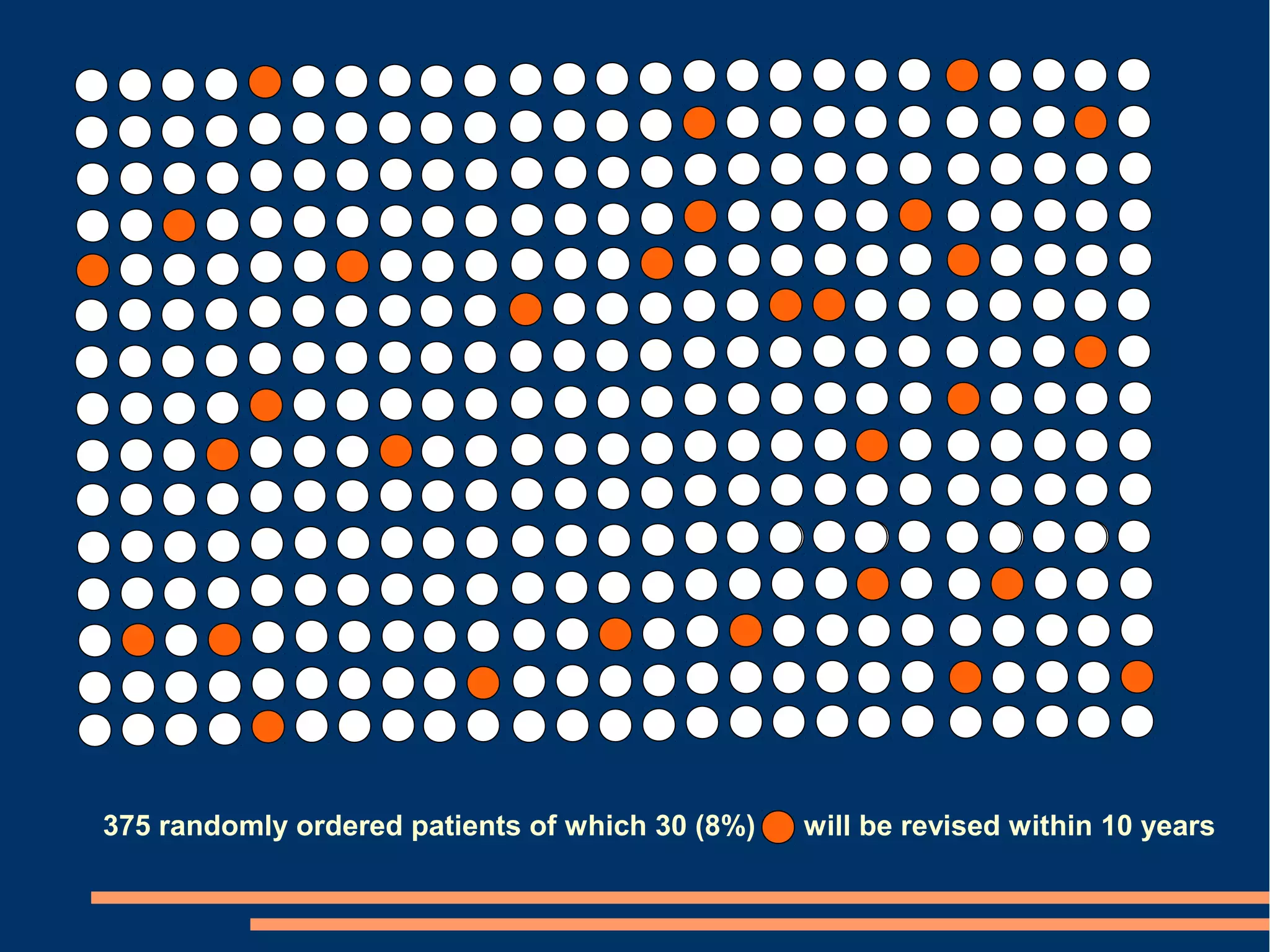
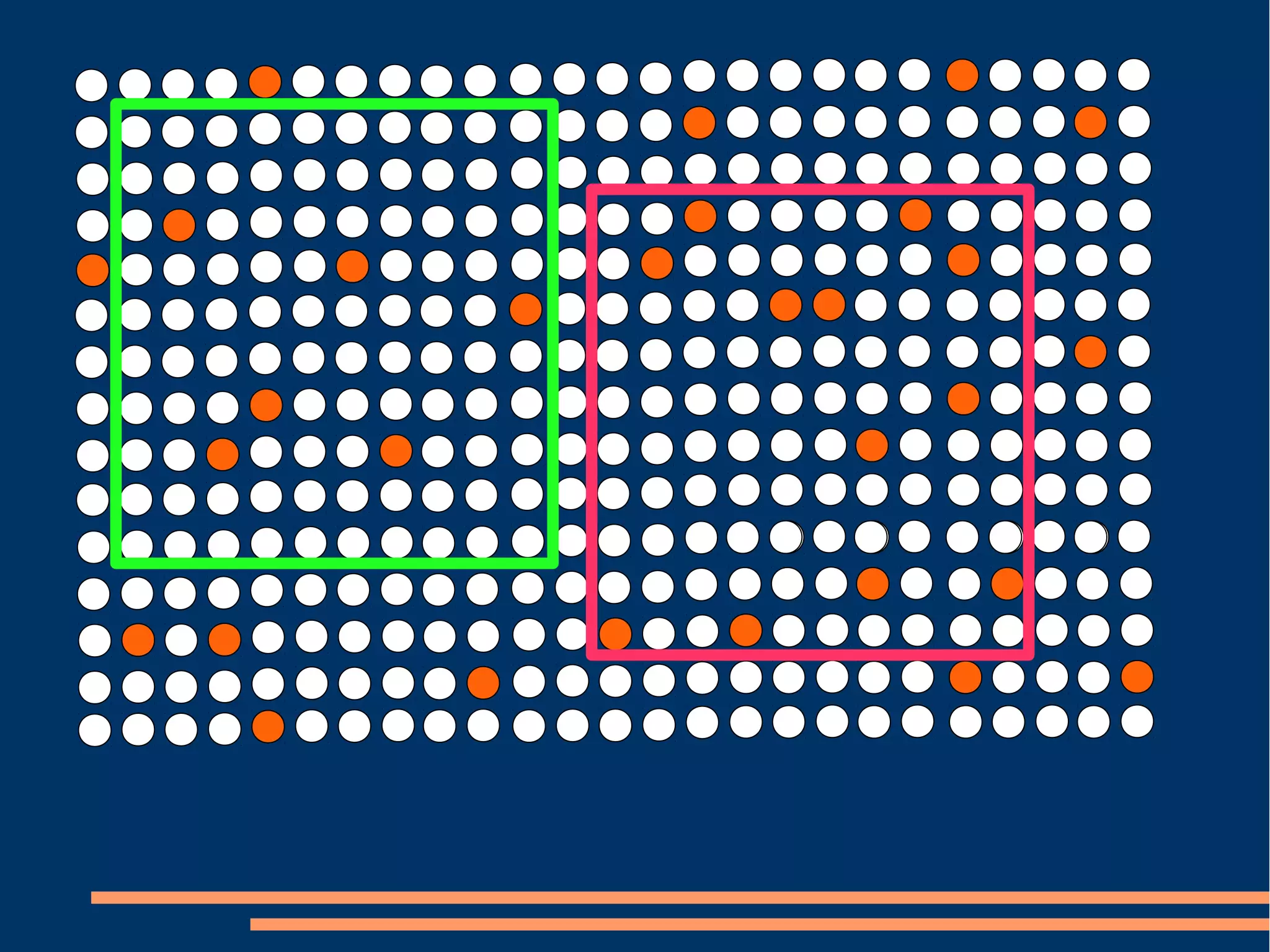
Assume that the cumulative 10-year revision rate
of the Oxford knee prosthesis is 8% and that two
groups of 100 patients receiving the prosthesis are
randomly selected and followed over time.

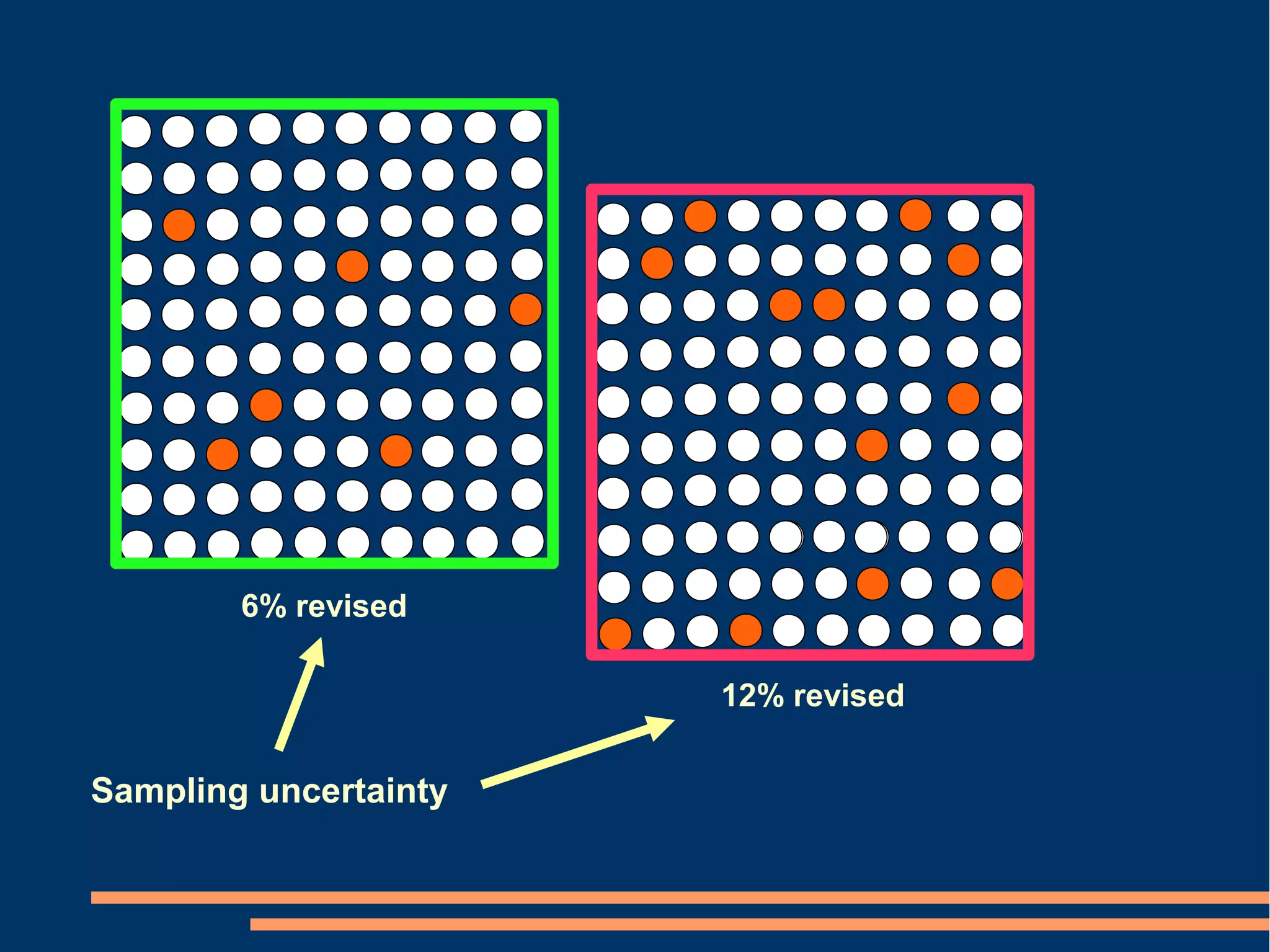
The two groups are likely to get different numbers
of patients revised during follow up.
375 randomly ordered patients of which 30 (8%)   will be revised within 10 years
6% revised

                       12% revised


Sampling uncertainty
6% revised

                                   12% revised


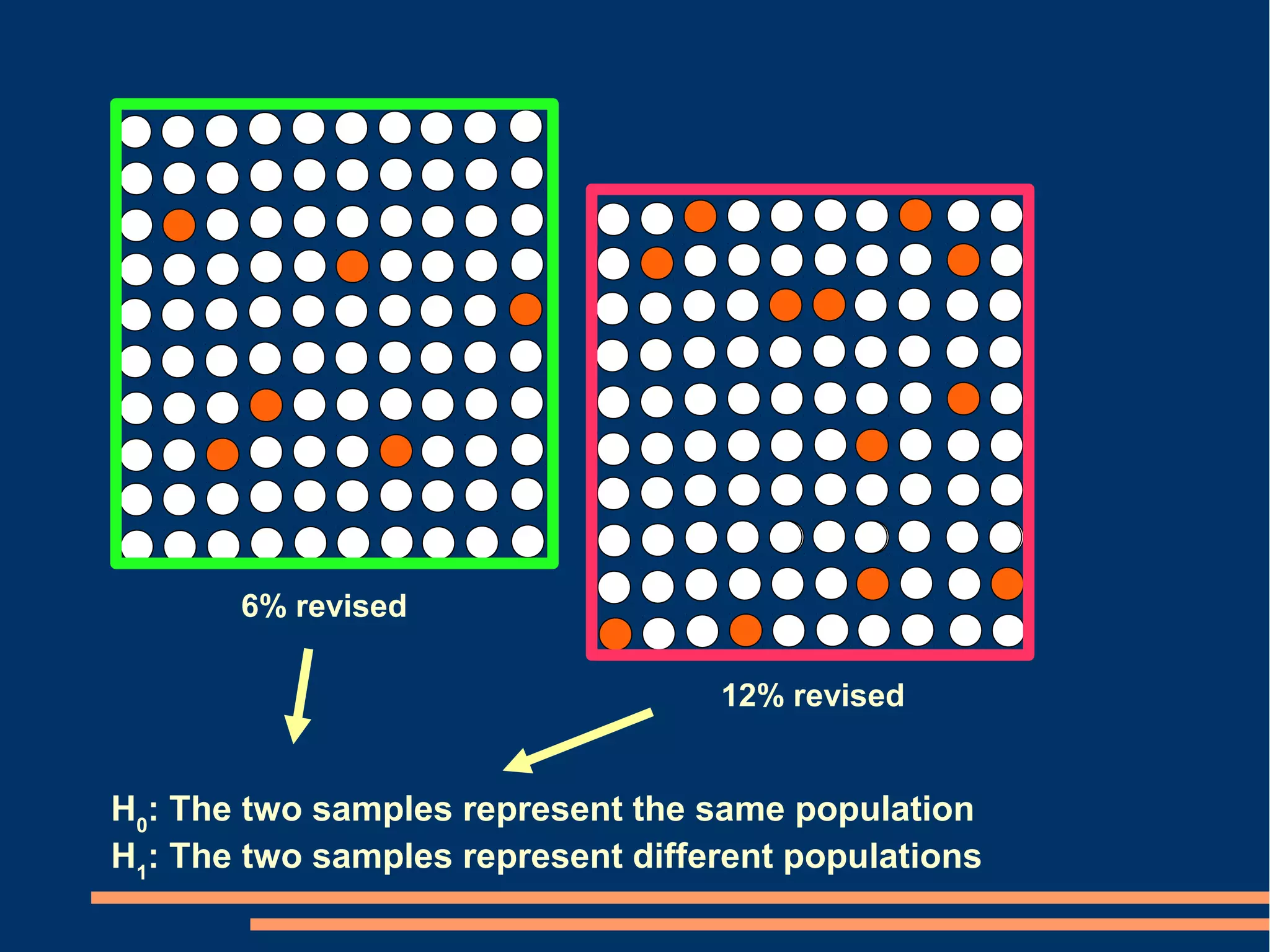
H0: The two samples represent the same population
H1: The two samples represent different populations
P-value
The probability that an observed effect only reflects
sampling uncertainty.


12/100 vs. 6/100, Fisher's exact test p = 0.22
P-values are often misunderstood
They cannot

- describe clinical relevance (they depend on sample
  size)

- show that a difference “does not exist”, because
  n.s. is absence of evidence, not evidence of
  absence
Confidence interval
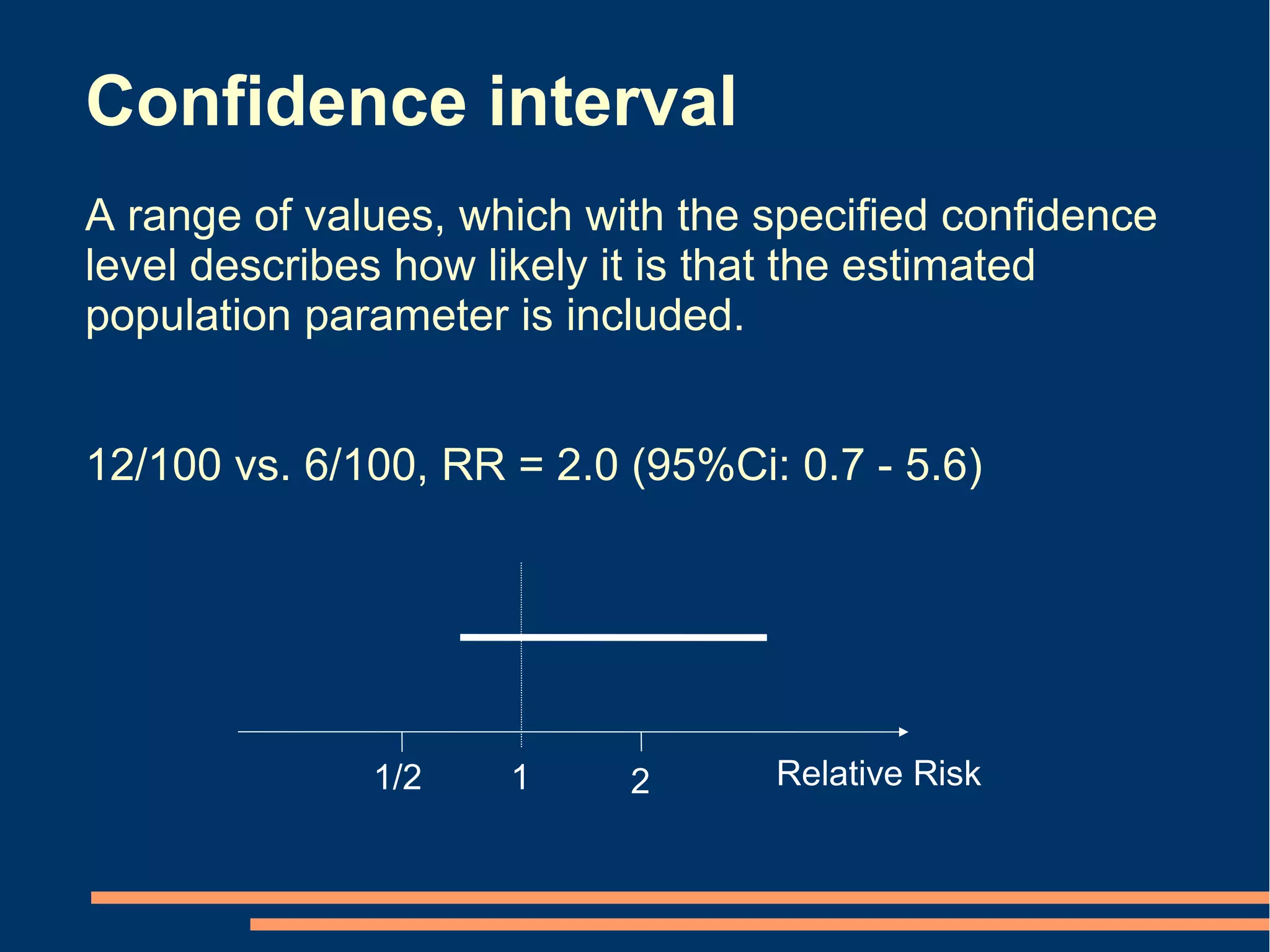
A range of values, which with the specified confidence
level describes how likely it is that the estimated
population parameter is included.


12/100 vs. 6/100, RR = 2.0 (95%Ci: 0.7 - 5.6)


              1/2    1     2      Relative Risk
Confidence interval
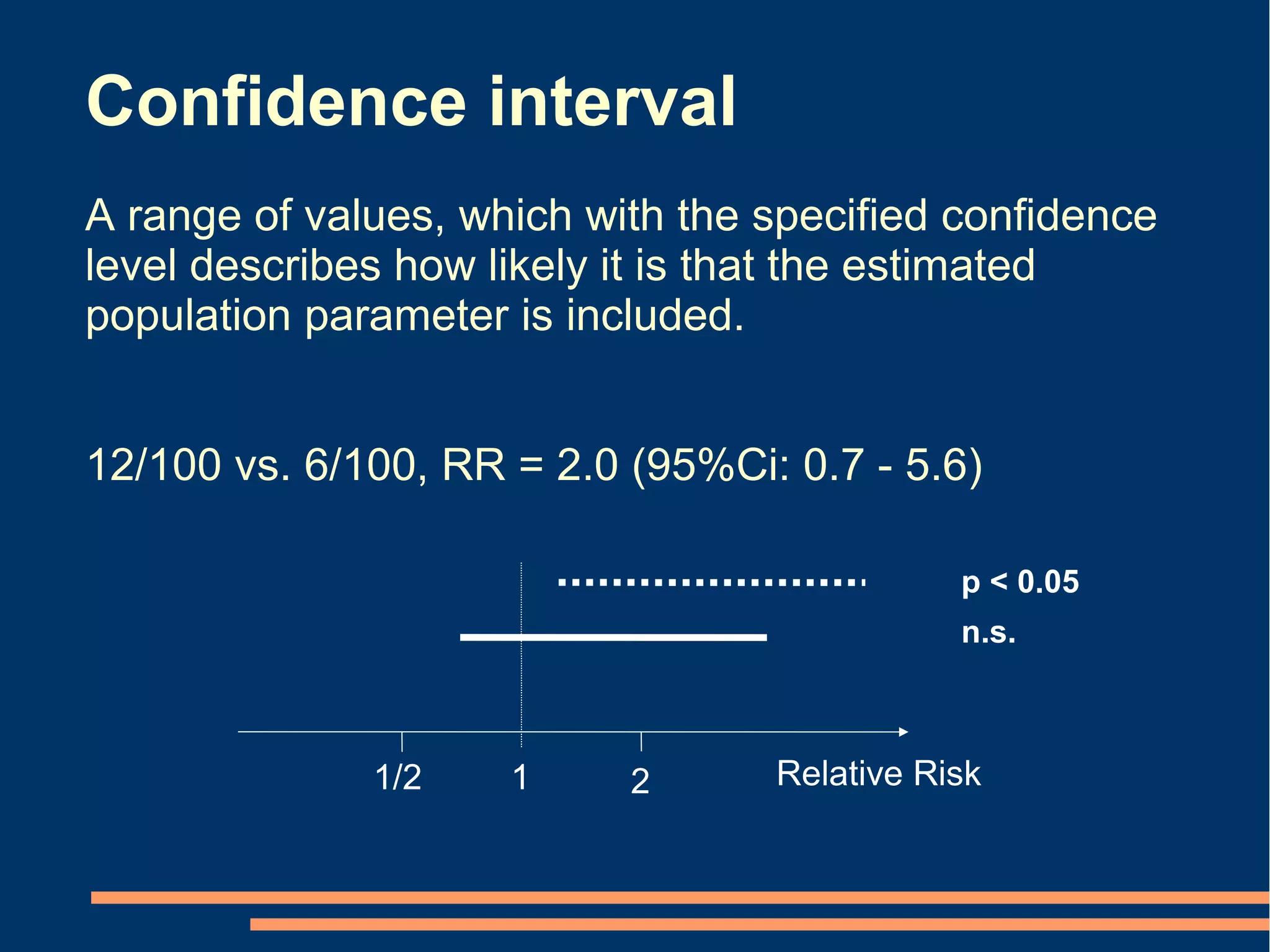
A range of values, which with the specified confidence
level describes how likely it is that the estimated
population parameter is included.


12/100 vs. 6/100, RR = 2.0 (95%Ci: 0.7 - 5.6)

                                             p < 0.05
                                             n.s.


              1/2    1     2      Relative Risk
Important assumptions
Many statistical methods like the Student's t-test and
ANOVA are based on the assumption of Gaussian
distribution and homogeneous variance.
Important assumptions
Many statistical methods like the Student's t-test and
ANOVA are based on the assumption of Gaussian
distribution and homogeneous variance.

If the assumptions are not met, use alternative (non-
parametric) methods, like the Mann-Whitney U-test or
Kruskal-Wallis non-parametric anova).
Important assumptions
Most conventional methods (both parametric and non-
parametric) require independent observations.
Important assumptions
Most conventional methods (both parametric and non-
parametric) require independent observations.

- Patients are independent

- Patients' knees, hips, shoulders, feet, etc. are not
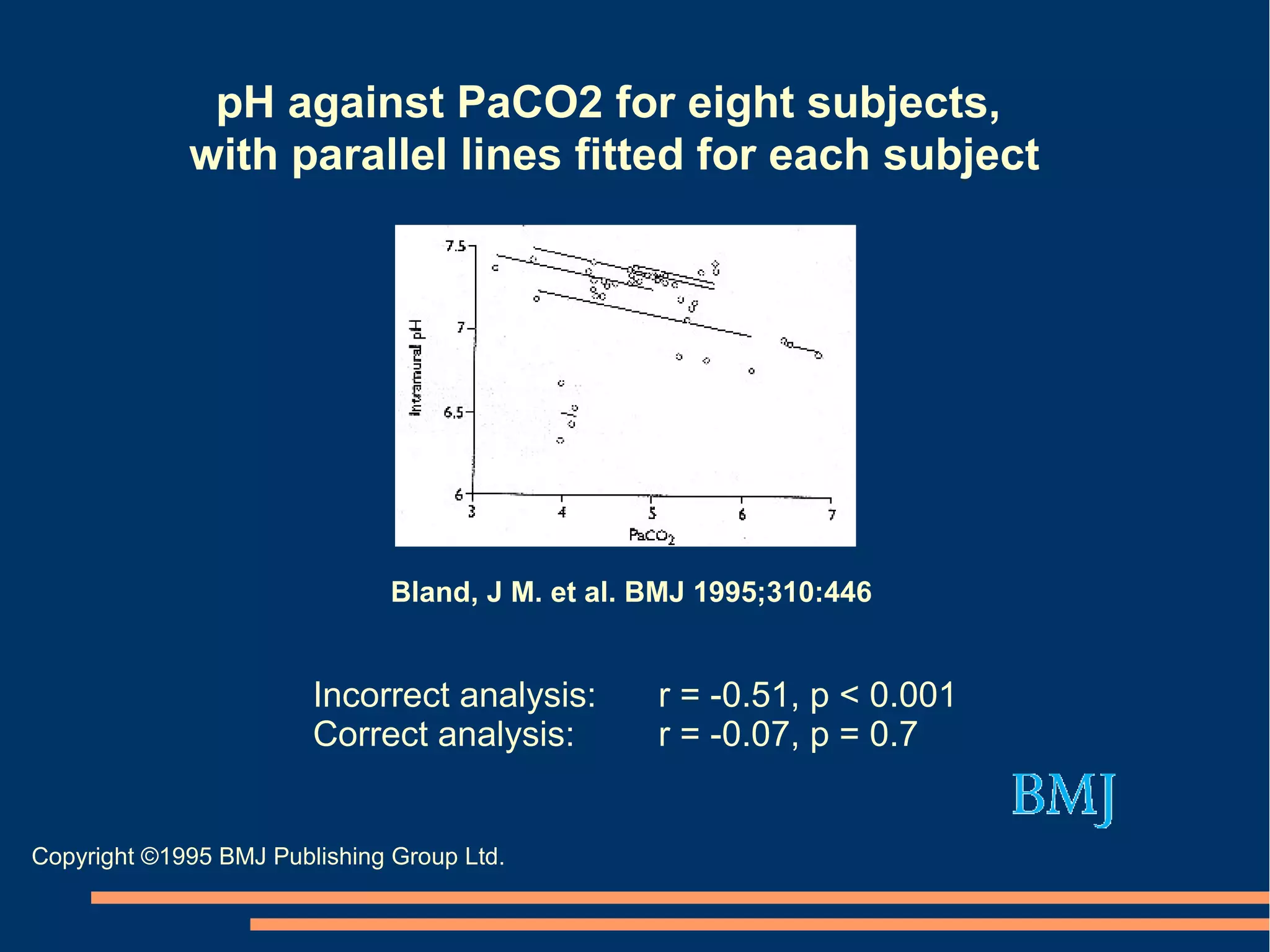
pH against PaCO2 for eight subjects,
             with parallel lines fitted for each subject


                               Bland, J M. et al. BMJ 1995;310:446


                        Incorrect analysis:       r = -0.51, p < 0.001
                        Correct analysis:         r = -0.07, p = 0.7


Copyright ©1995 BMJ Publishing Group Ltd.
How Many Patients? How Many Limbs? Analysis
of Patients or Limbs in the Orthopaedic Literature:
A Systematic Review

Bryant et al. JBJS Am. 2006;88:41-45.

Our findings suggest that a high proportion (42%) of
clinical studies in high-impact-factor orthopaedic journals
involve the inappropriate use of multiple observations from
single individuals, potentially biasing results. Orthopaedic
researchers should attend to this issue when reporting
results.
Important assumptions
Most conventional methods (both parametric and
non-parametric) require independent observations.

Include only one observation per patient, or use a
statistical method that can handle dependant data,
e.g. multilevel or mixed effects models.

Always present both number of observations and
patients.
Multiplicity
In contrast to many other forms of precision,
statistical precision depends on the number of
performed measurements (significance tests).
Multiplicity
Each significance test at a 5% significance level
has 5% risk of a false positive test.

Repeated testing increases the risk of at least one
false positive test.

Number of tests   Risk of at least one false positive

        1                  0.05
        2                  0.10
        5                  0.23
       10                  0.40
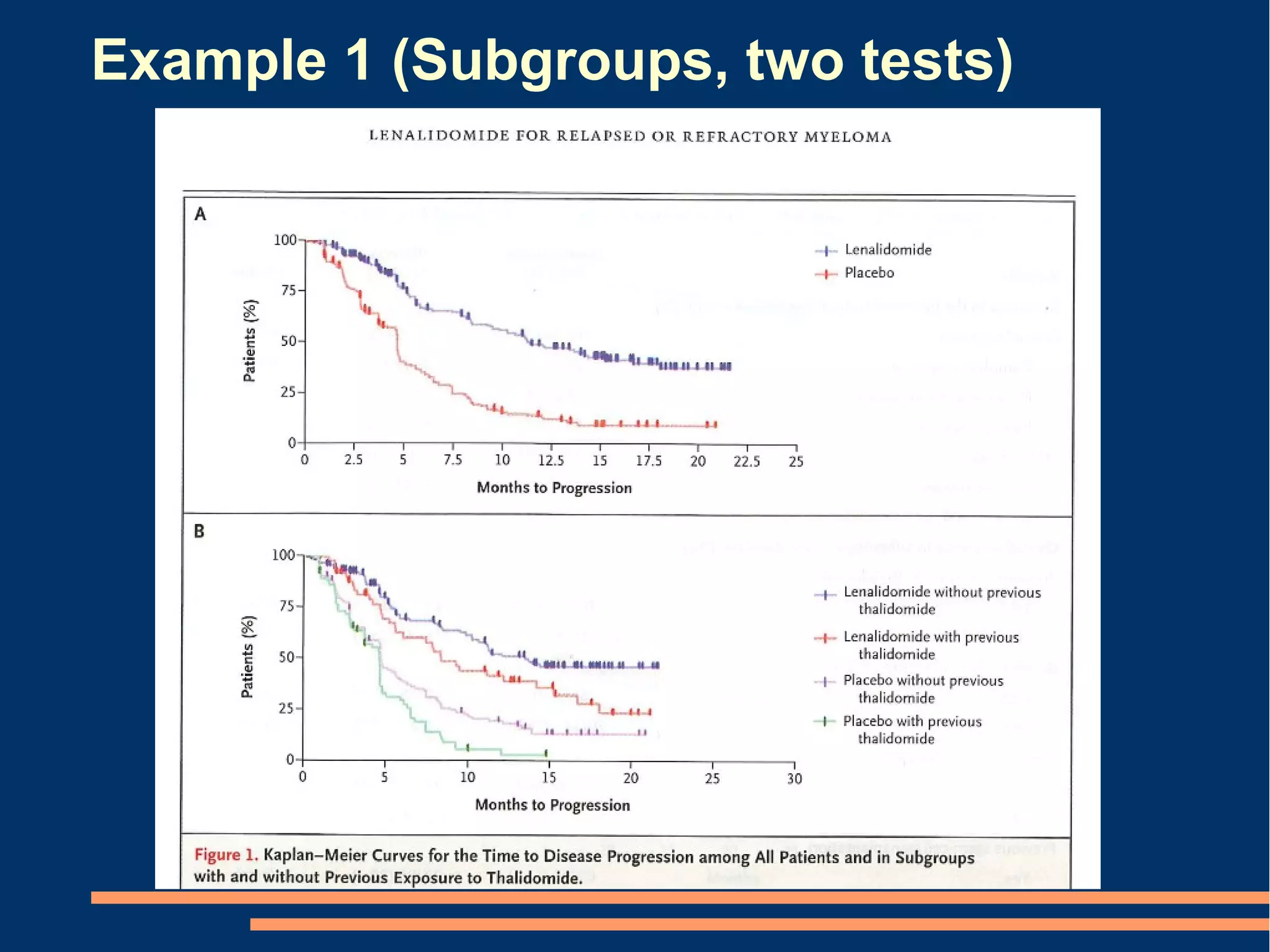
Example 1 (Subgroups, two tests)
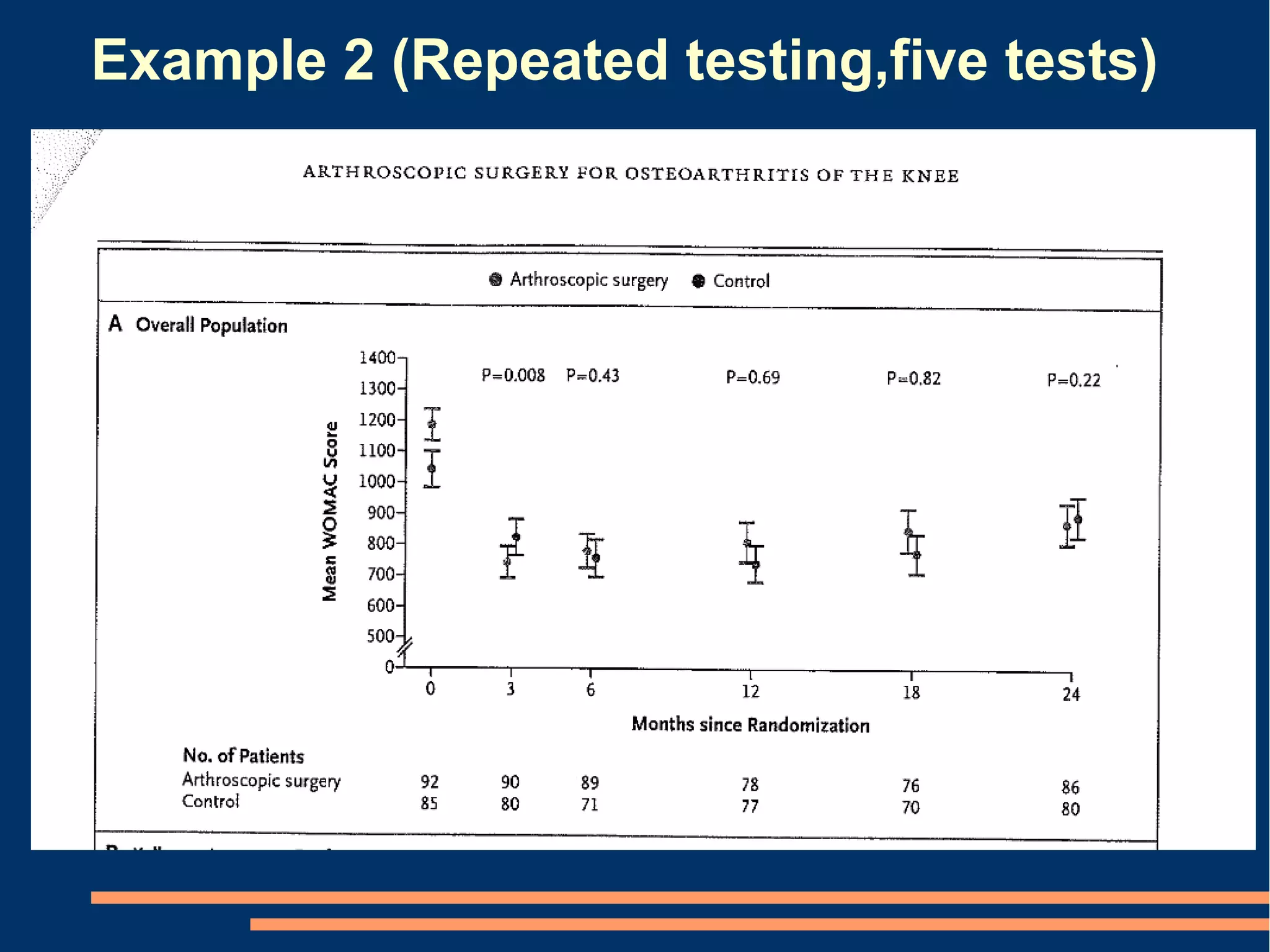
Example 2 (Repeated testing,five tests)
Example 3 (Liver function, 10 tests)
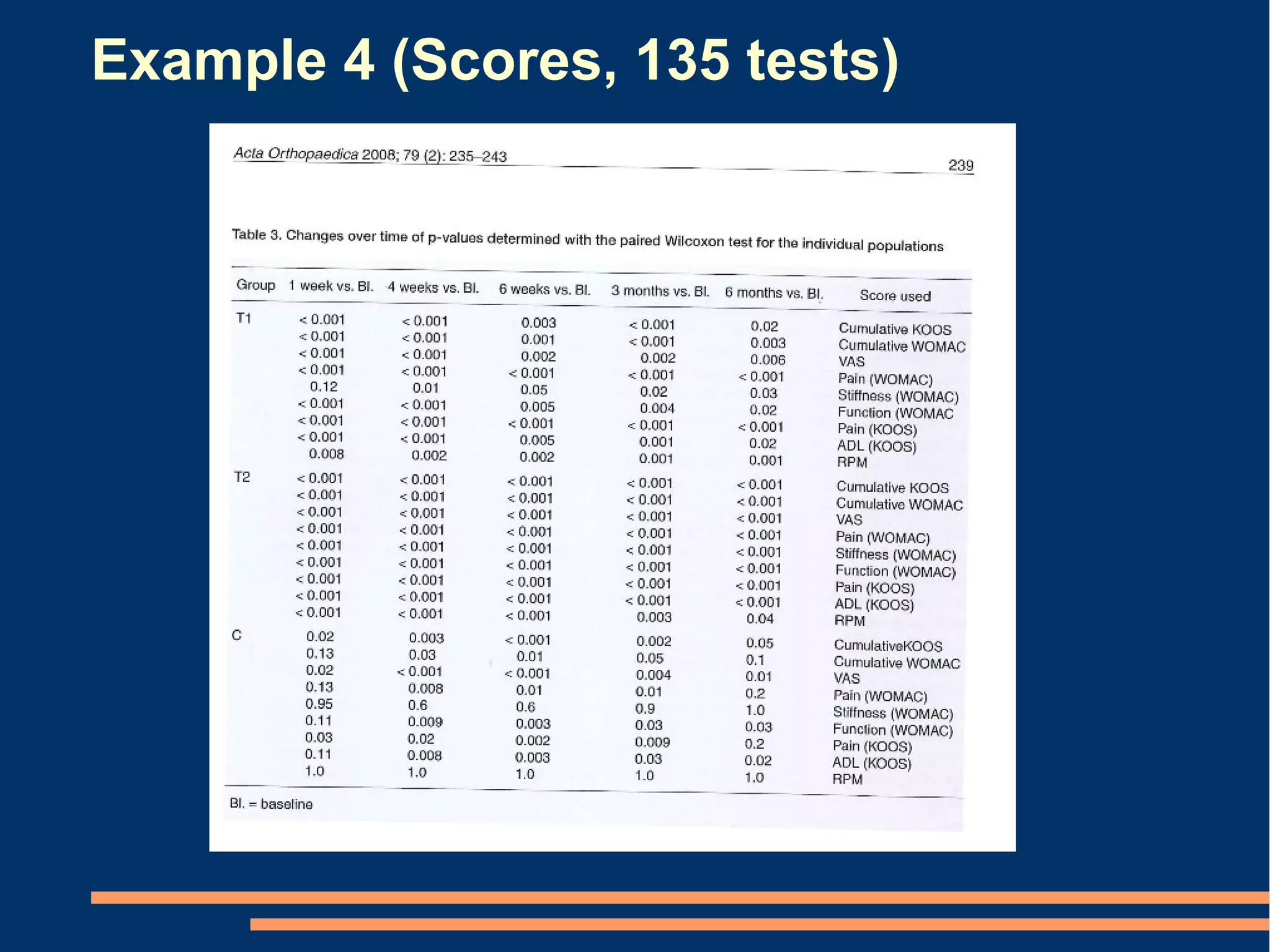
Example 4 (Scores, 135 tests)
Multiplicity
Common in exploratory analyses

Unacceptable in confirmatory analyses
2. General guidelines
Statistical Methods

“Describe statistical methods with enough detail to
enable a knowledgeable reader with access to the
original data to verify the reported results.”
Statistical Methods

“Describe statistical methods with enough detail to
enable a knowledgeable reader with access to the
original data to verify the reported results.”

Required for analytical methods (statistical models,
hypothesis tests, confidence intervals).

Descriptions are often unclear, vague or ambiguous.
They need to be clear and detailed.
Results

“When possible, quantify findings and present them
with appropriate indicators of measurement error or
uncertainty (such as confidence intervals).”
Results

“When possible, quantify findings and present them
with appropriate indicators of measurement error or
uncertainty (such as confidence intervals).”

Statistical precision (p-values and confidence inter-
vals) are necessary for generalization of results beyond
examined patients.
Results

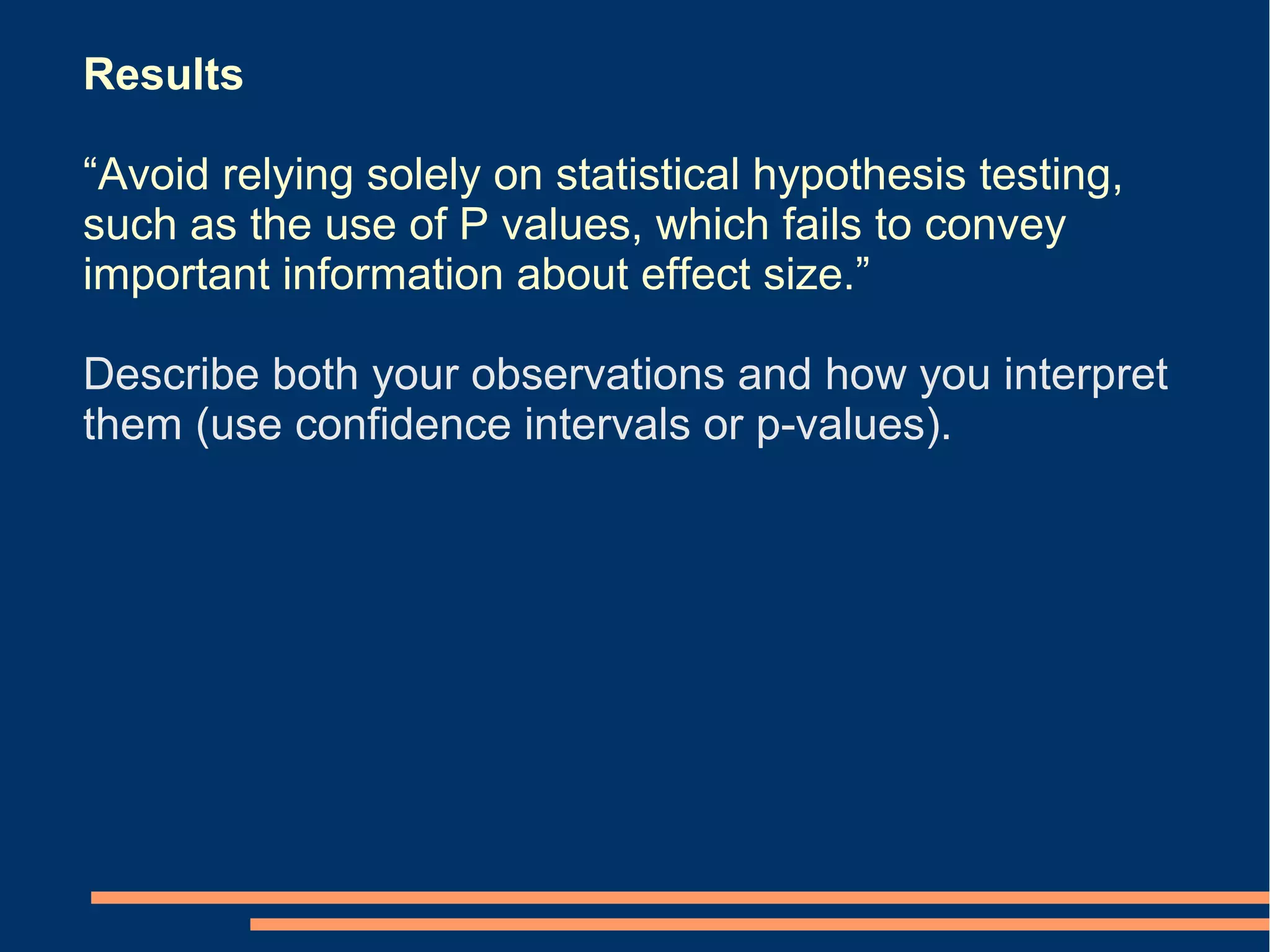
“Avoid relying solely on statistical hypothesis testing,
such as the use of P values, which fails to convey
important information about effect size.”
Results

“Avoid relying solely on statistical hypothesis testing,
such as the use of P values, which fails to convey
important information about effect size.”

Describe both your observations and how you interpret
them (use confidence intervals or p-values).
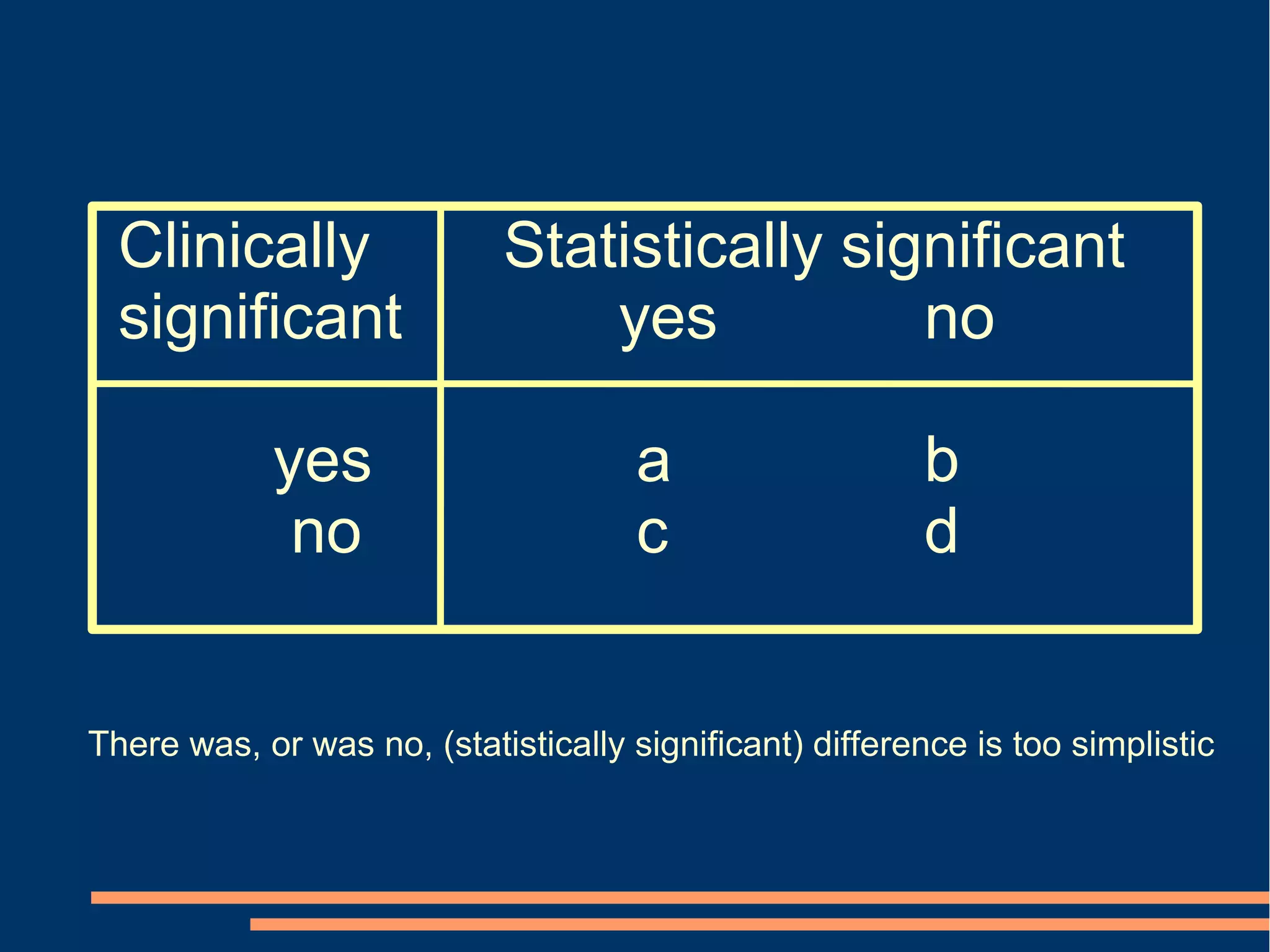
Clinically                Statistically significant
  significant                   yes          no

            yes                      a                   b
             no                      c                   d


There was, or was no, (statistically significant) difference is too simplistic
Example
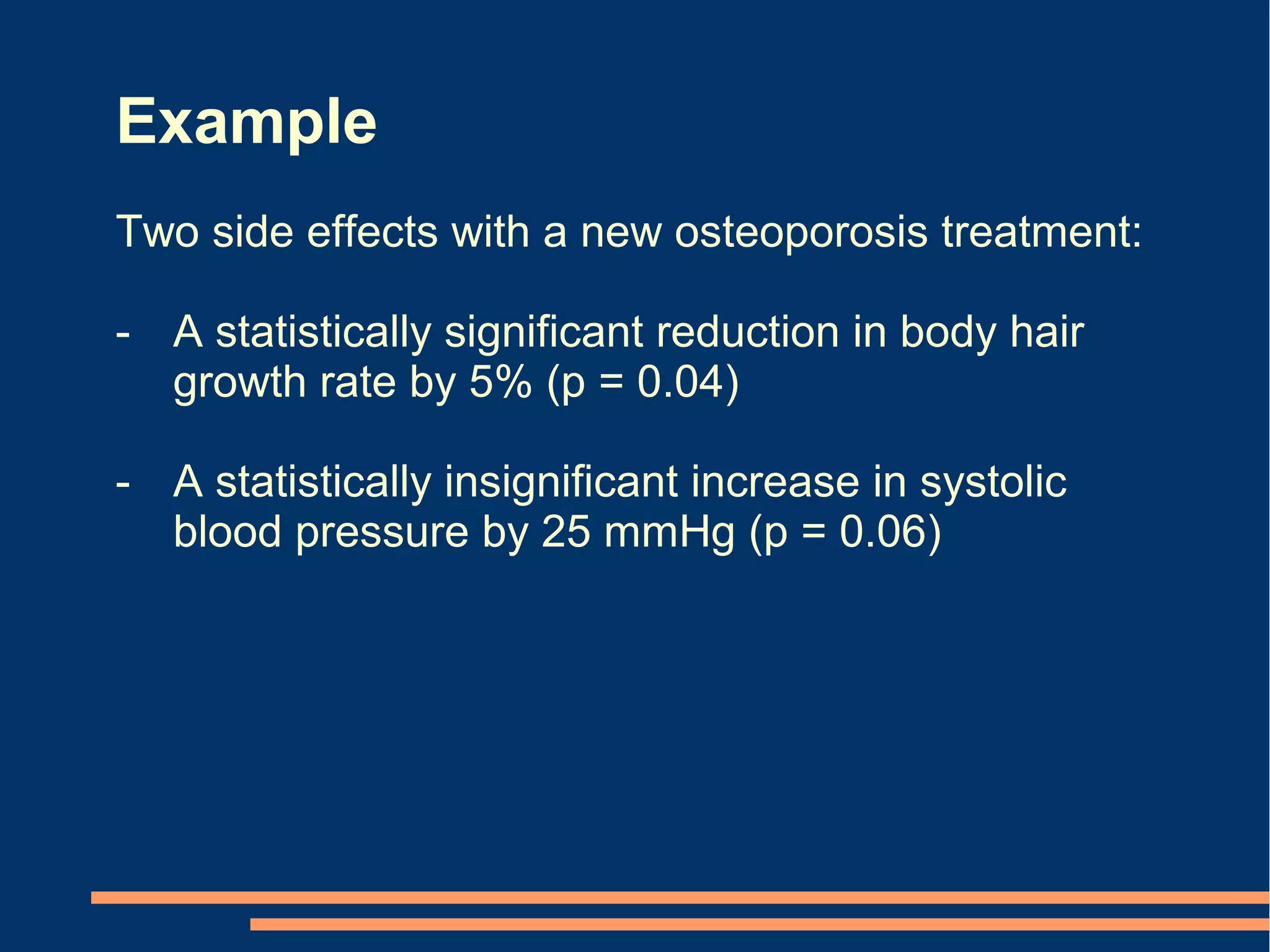
Two side effects with a new osteoporosis treatment:

- A statistically significant reduction in body hair
  growth rate by 5% (p = 0.04)

- A statistically insignificant increase in systolic
  blood pressure by 25 mmHg (p = 0.06)
Confidence intervals are better
than p-values
In contrast to p-values they do

- relate to clinical significance

- show when a difference “does not exist”

because they present lower and upper limits of
  potential clinical effects/differences
P-value and confidence interval
             P-values                       Conclusion from confidence intervals

             [2 alternatives]               [6 alternatives]


                       p < 0.05           Statistically but not clinically significant effect

                                                 Statistically and clinically significant effect
                       p < 0.05


                       p < 0.05           Statistically, but not necessarily clinically, significant effect


                       n.s.
                                            Inconclusive


               n.s.                    Neither statistically nor clinically significant effect


  p < 0.05                              Statistically significant reversed effect


Effect
                                  0
                                      Clinically significant effects
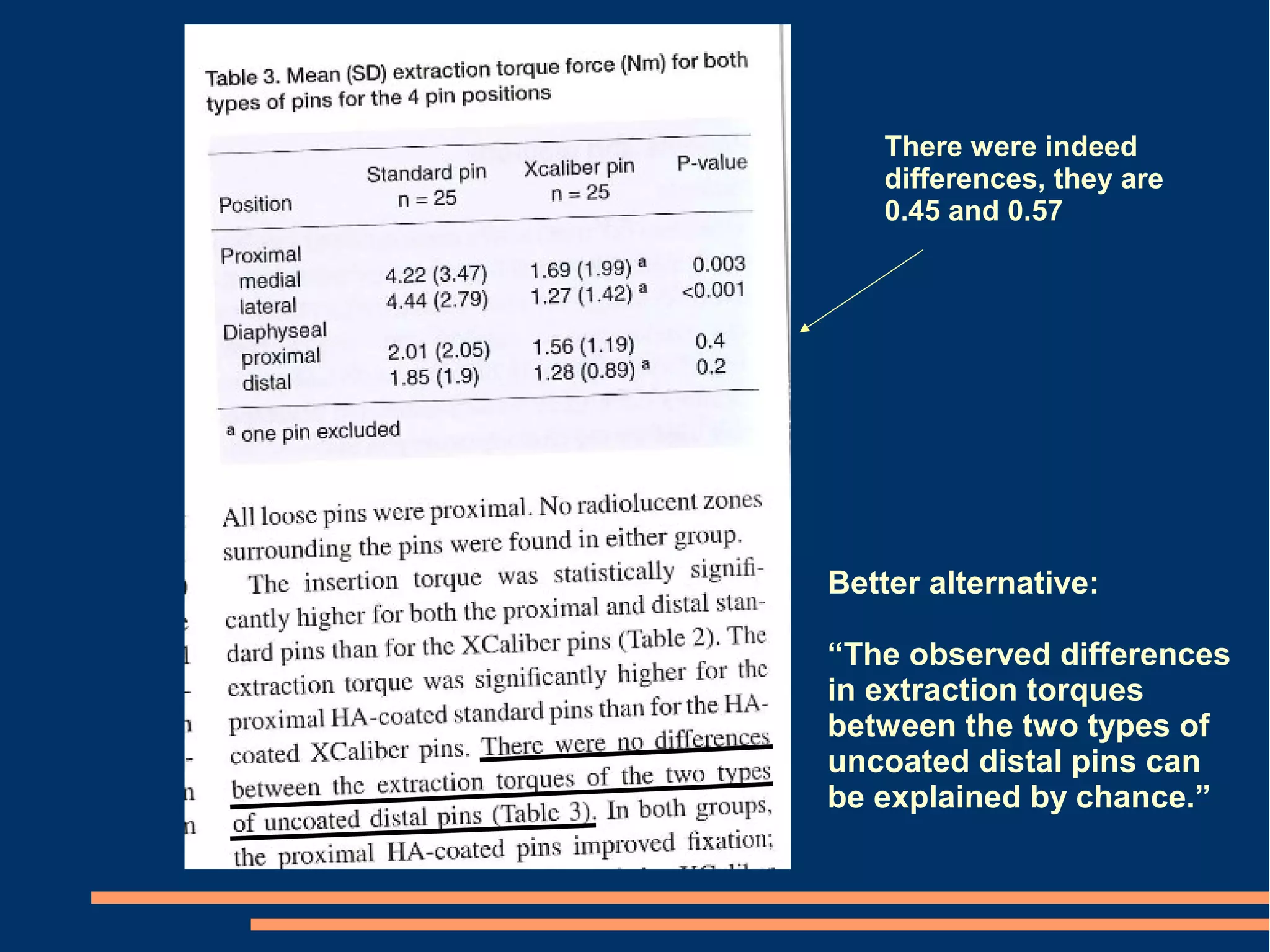
When there is a difference in data

Do not write that there is not a difference!
There were indeed
differences, they are
0.45 and 0.57
There were indeed
   differences, they are
   0.45 and 0.57


Better alternative:

“The observed differences
in extraction torques
between the two types of
uncoated distal pins can
be explained by chance.”
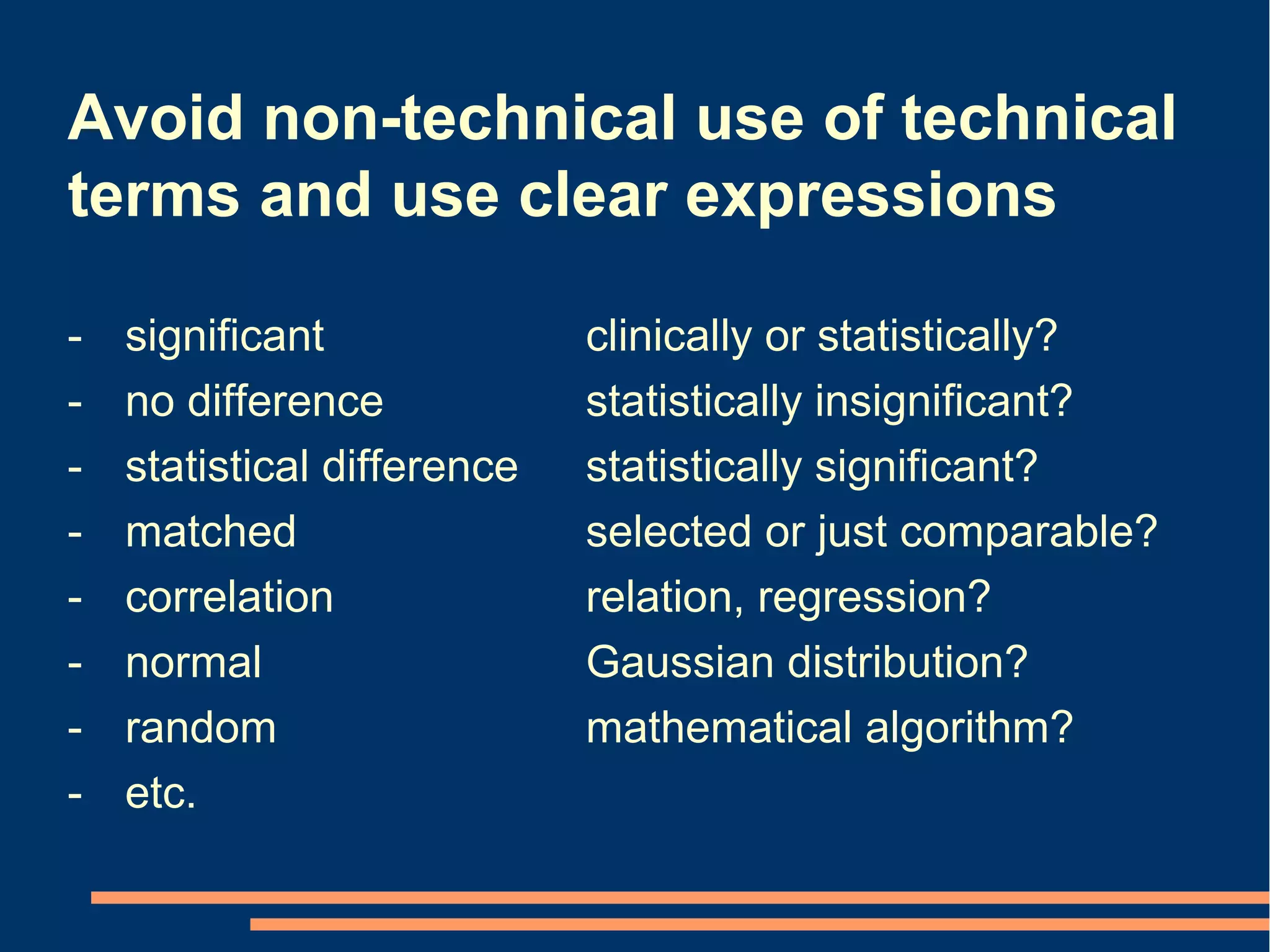
Avoid non-technical use of technical
terms and use clear expressions

-   significant              clinically or statistically?
-   no difference            statistically insignificant?
-   statistical difference   statistically significant?
-   matched                  selected or just comparable?
-   correlation              relation, regression?
-   normal                   Gaussian distribution?
-   random                   mathematical algorithm?
-   etc.
3. Special recommendations
a) case reports
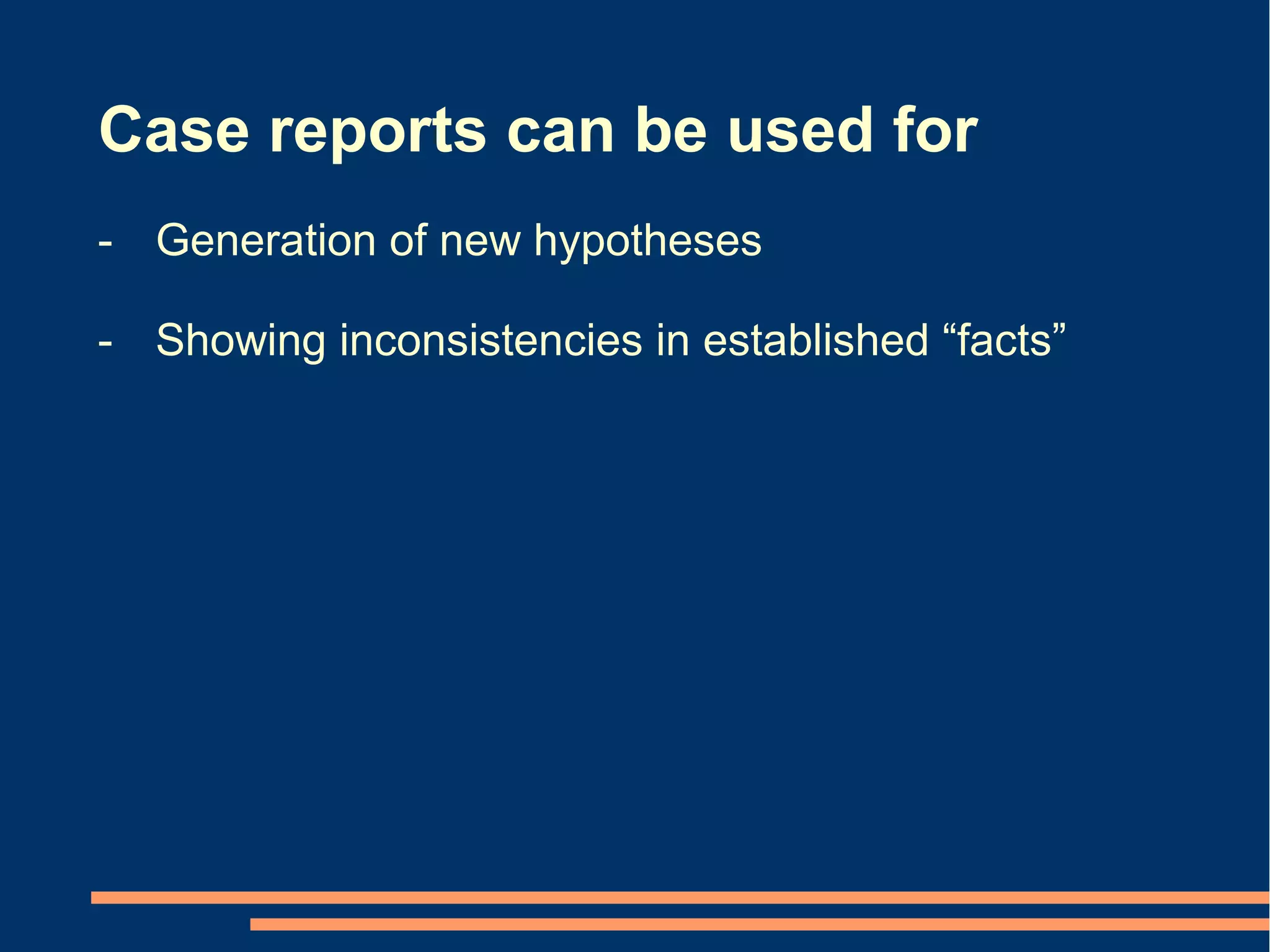
Case reports can be used for
- Generation of new hypotheses

- Showing inconsistencies in established “facts”
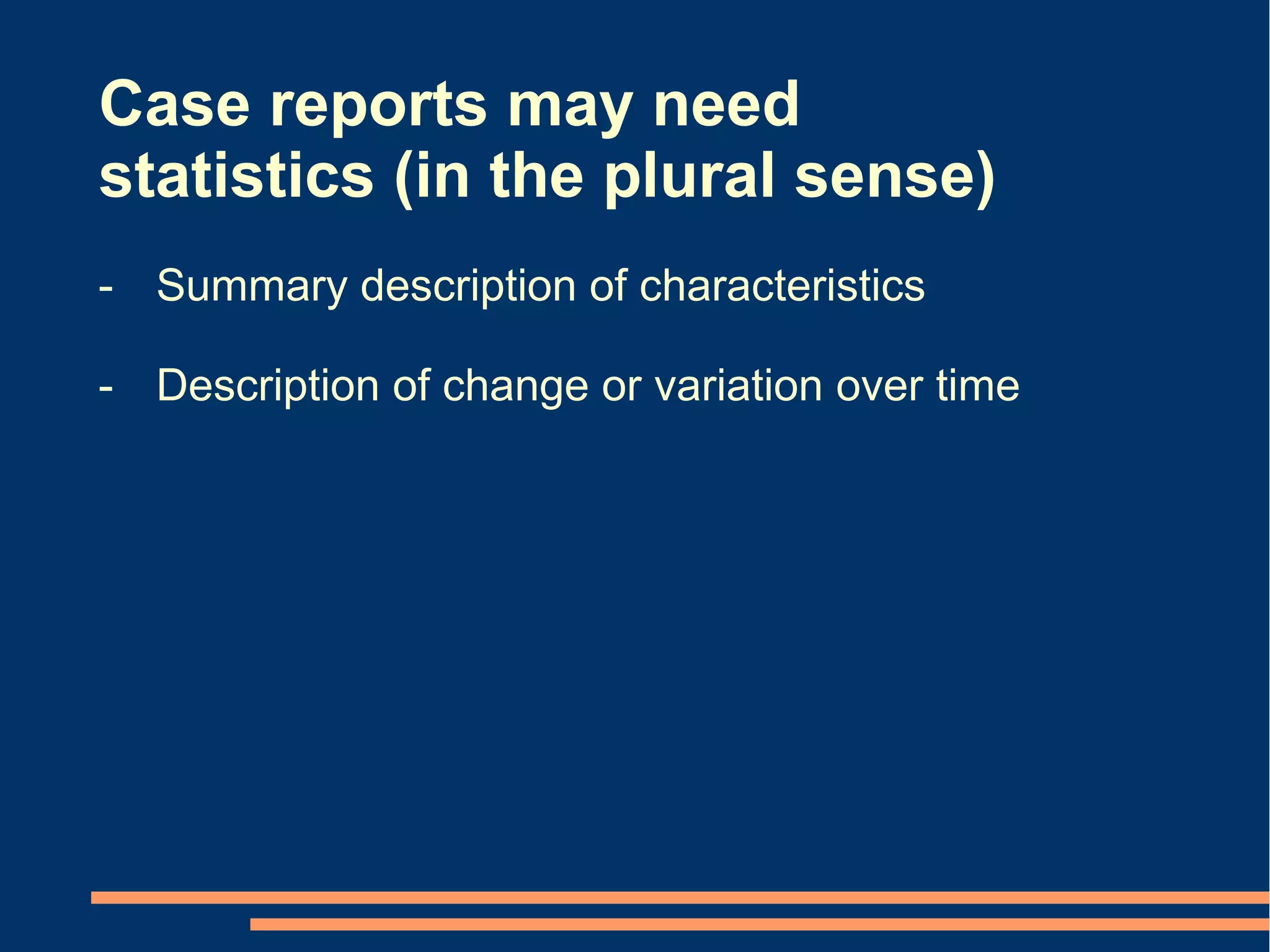
Case reports may need
statistics (in the plural sense)
- Summary description of characteristics

- Description of change or variation over time
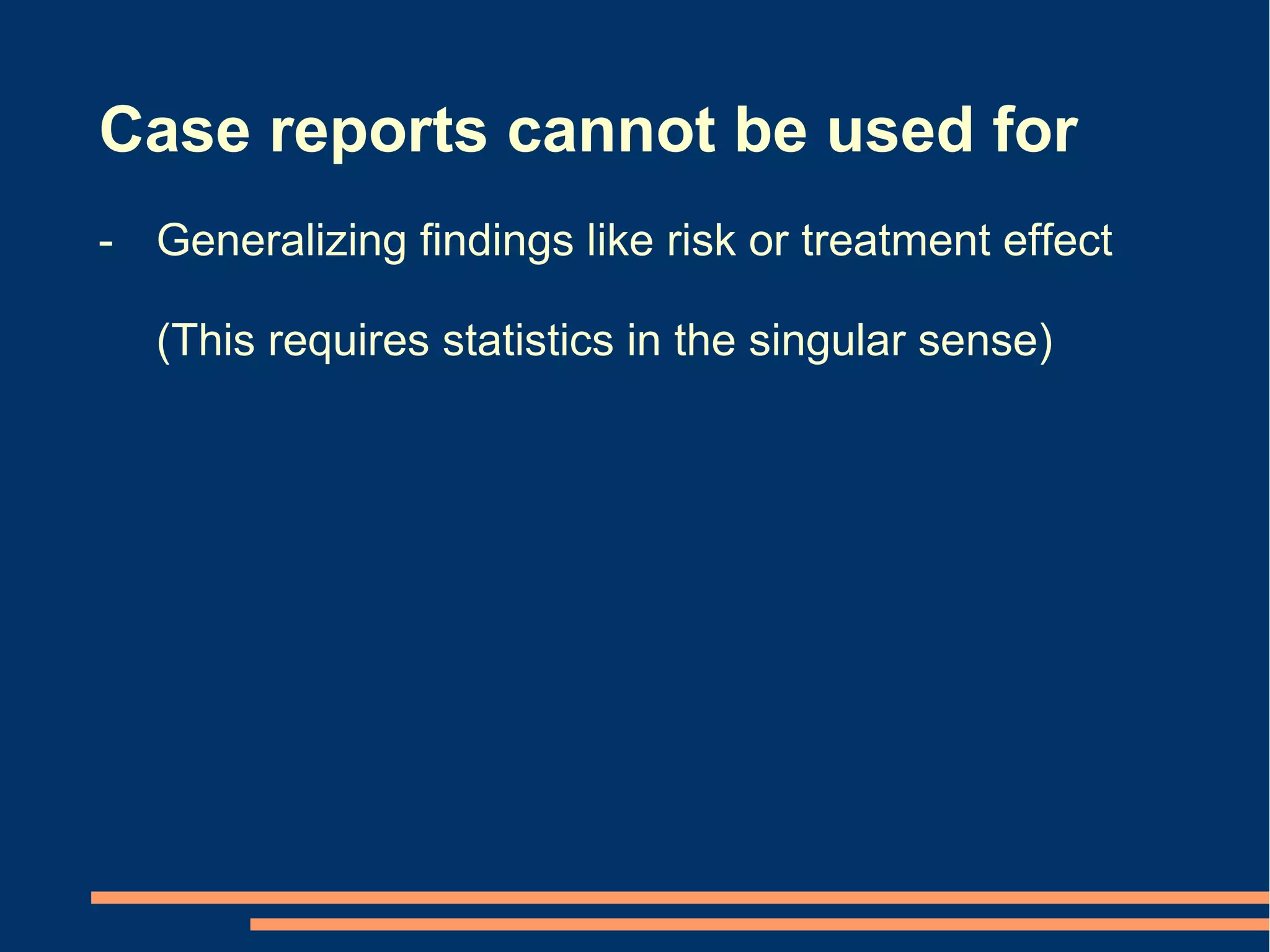
Case reports cannot be used for
- Generalizing findings like risk or treatment effect

   (This requires statistics in the singular sense)
b) mechanical experiments
Mechanical experiments
What do p-values and confidence intervals
relate to?

- Measurement uncertainty (Perhaps)

- Sampling uncertainty (No, there is no
  information on subject variation. The
  findings cannot be generalized beyond
  the device).
c) in vitro/cadaver experiments
In vitro/cadaver experiments
What do p-values and confidence intervals relate
to?

- Measurement uncertainty (Perhaps)

- Sampling uncertainty (Perhaps, if the
  observations provide information on
  variation between subjects)
Example

In a study with 60 observations 20 specimens
had been taken from each of 3 subjects.

The specimens were distributed randomly
between one control group and one
experimental group.

What do significance tests of these two groups
tell us?
d) cross-sectional studies
Remember

- Sampling frame
- Target population
     Super (for scientific questions)
     Finite (requires corrections)
- Non-responders
e) epidemiological studies
Epidemiological studies
- Exploratory, hypothesis generating,
  multiplicity issues considered less
  important than validity issues

- External validity (source of subjects)

- Internal validity (confounding)
Results

Uniform Requirements: “Where scientifically
appropriate, analyses of the data by variables such as
age and sex should be included.”
Results

Uniform Requirements: “Where scientifically
appropriate, analyses of the data by variables such as
age and sex should be included.”

Observational studies require adjustment for known
and suspected confounding factors to produce valid
effect estimates.

This adjustment is usually performed using statistical
modelling (e.g. ANCOVA or regression analysis). The
purpose is to increase validity.
Results

Automatic stepwise regression (forward or backward)
is not an adequate method for confounding
adjustment.
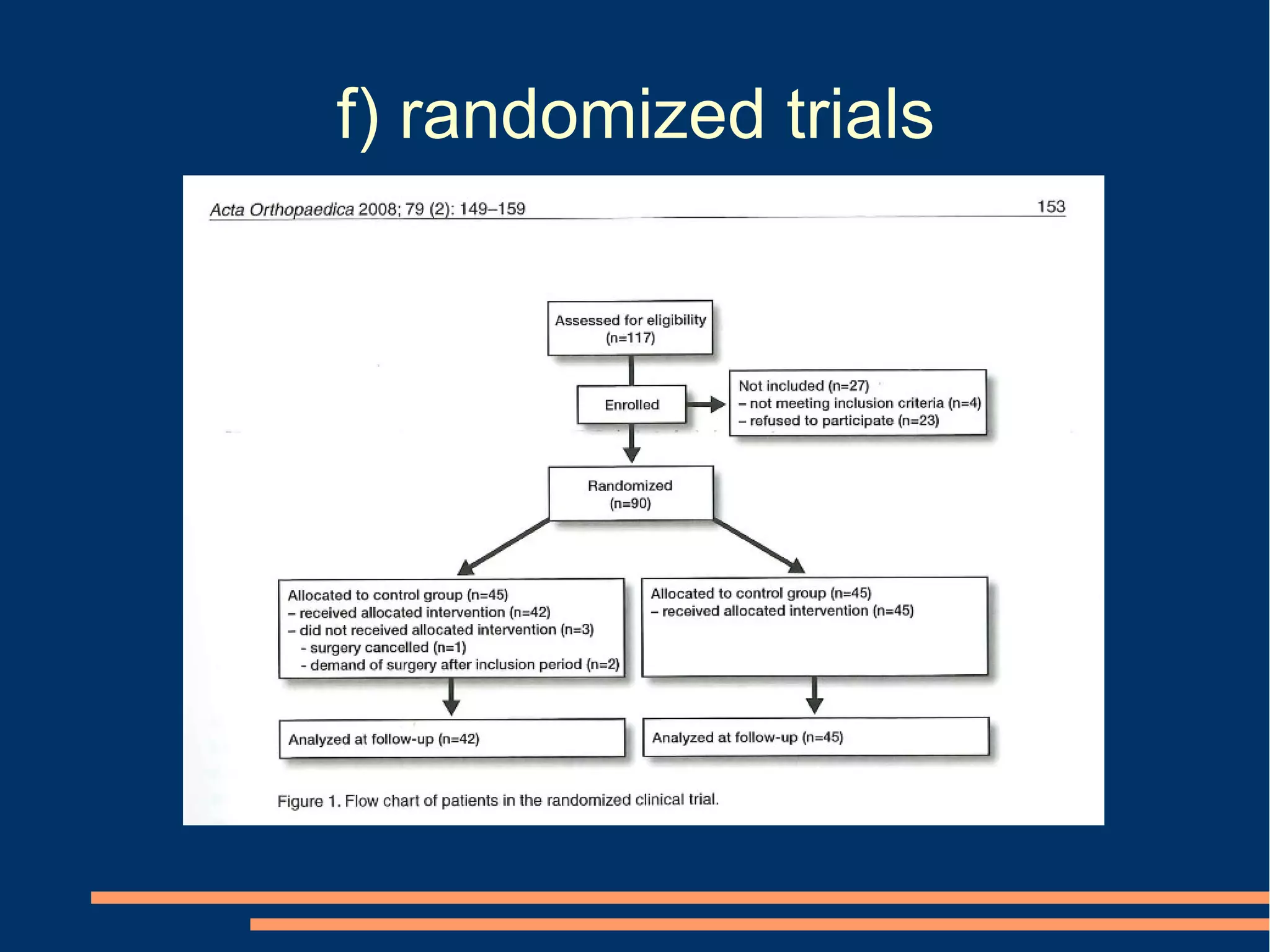
f) randomized trials
Clinical trials

“The ICMJE member journals will require, as a
condition of consideration for publication in their
journals, registration in a public trials registry.”

“The ICMJE recommends that journals publish the trial
registration number at the end of the Abstract.”
Clinical trials

“When reporting experiments on human subjects,
authors should indicate whether the procedures
followed were in accordance with the ethical
standards of the responsible committee on human
experimentation (institutional and national) and with
the Helsinki Declaration of 1975, as revised in 2000
(5).”
WORLD MEDICAL ASSOCIATION DECLARATION OF HELSINKI

Ethical Principles for Medical Research Involving Human Subjects


27.   ...Reports of experimentation not in accordance
      with the principles laid down in this Declaration
      should not be accepted for publication.
Purpose of a randomized trial

To test a hypothesis with control of random and
systematic errors.

- No bias (randomization & blinding)

- No multiplicity problems
Randomization
Mathematical algorithm

Stratified

Concealment of outcome

Reproducible
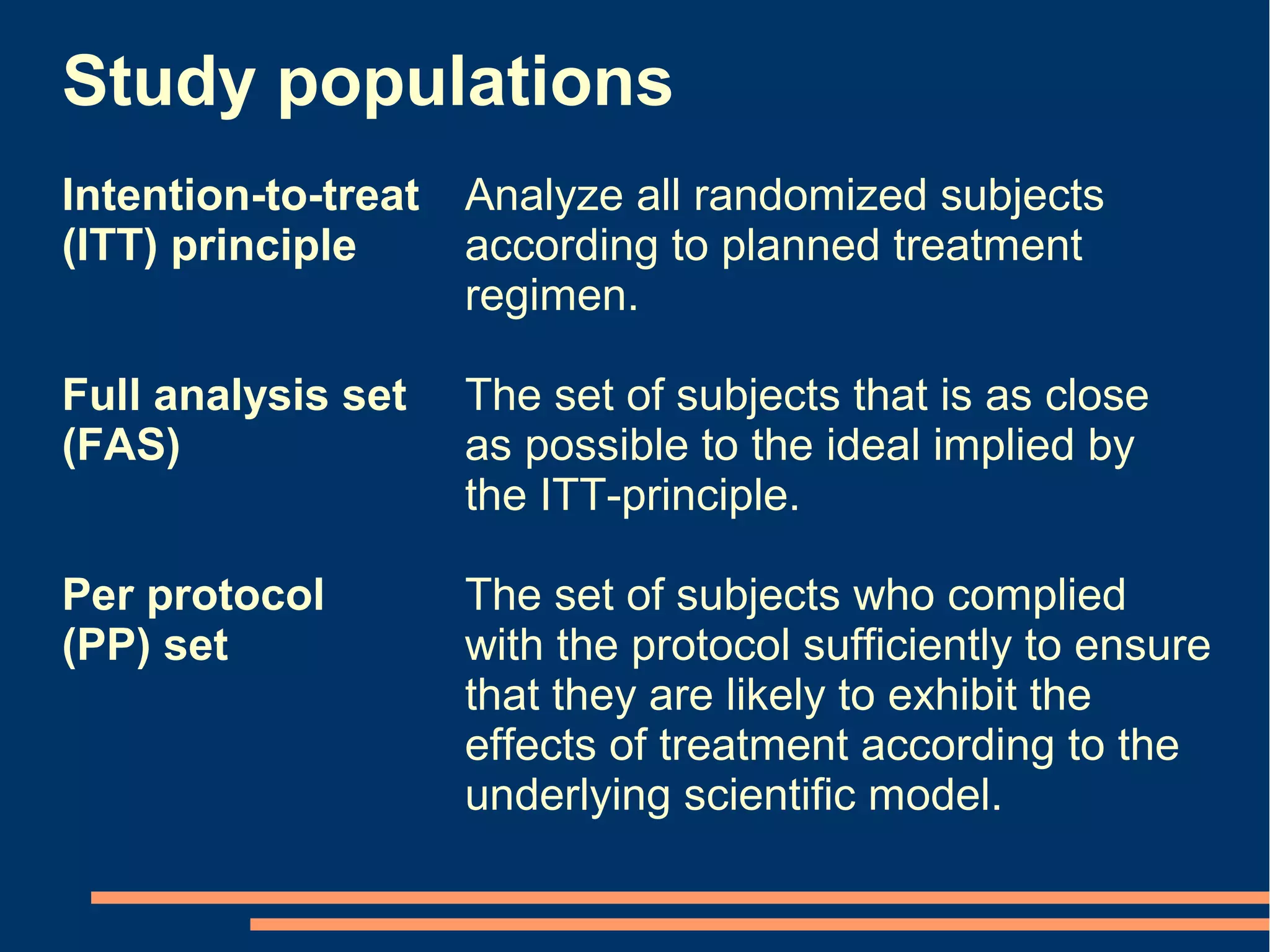
Study populations
Intention-to-treat   Analyze all randomized subjects
(ITT) principle      according to planned treatment
                     regimen.

Full analysis set    The set of subjects that is as close
(FAS)                as possible to the ideal implied by
                     the ITT-principle.

Per protocol         The set of subjects who complied
(PP) set             with the protocol sufficiently to ensure
                     that they are likely to exhibit the
                     effects of treatment according to the
                     underlying scientific model.
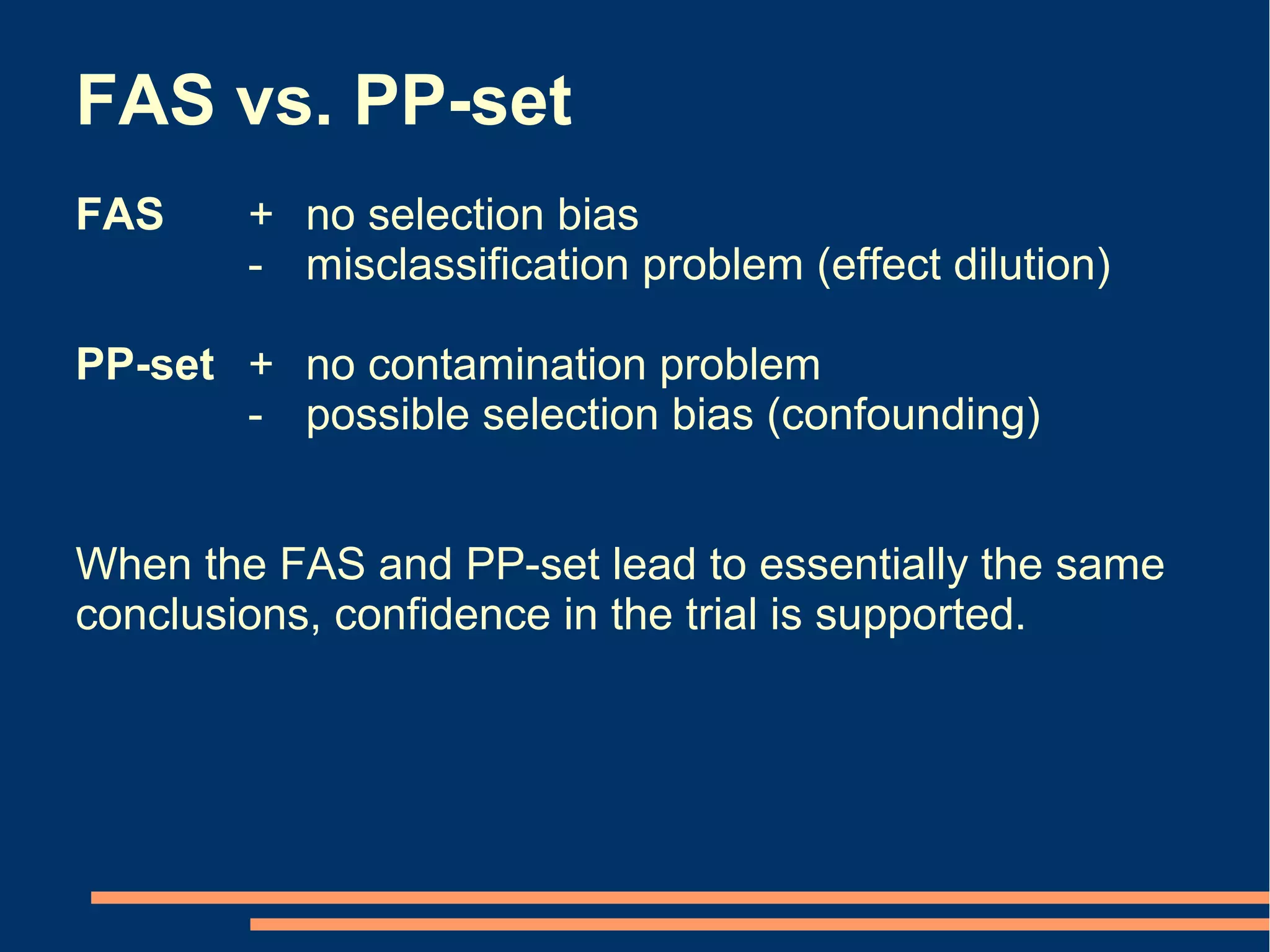
FAS vs. PP-set
FAS     + no selection bias
        - misclassification problem (effect dilution)

PP-set + no contamination problem
       - possible selection bias (confounding)


When the FAS and PP-set lead to essentially the same
conclusions, confidence in the trial is supported.
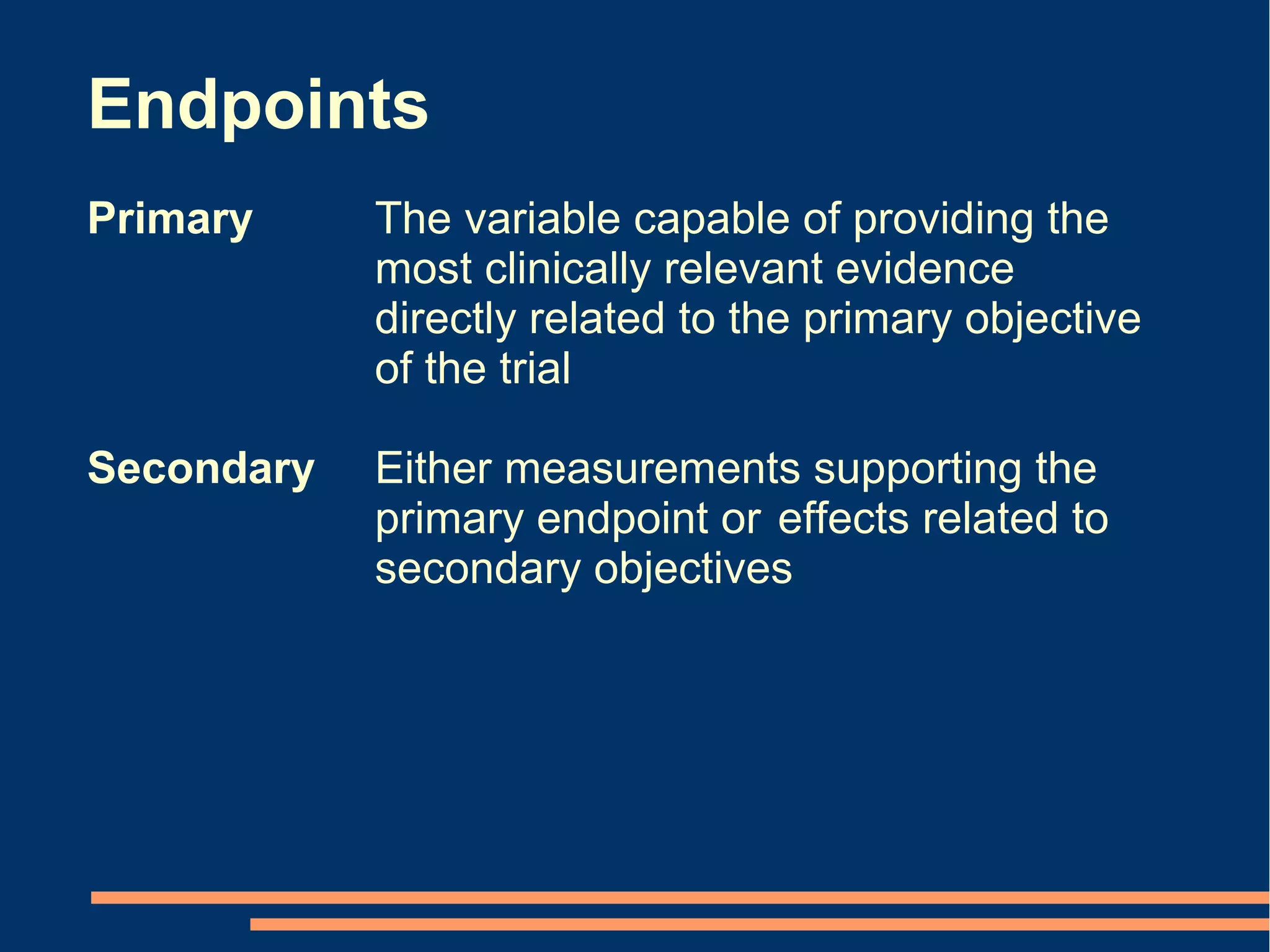
Endpoints
Primary     The variable capable of providing the
            most clinically relevant evidence
            directly related to the primary objective
            of the trial

Secondary   Either measurements supporting the
            primary endpoint or effects related to
            secondary objectives
Statistical analyses
Confirmatory   The result concerns a primary endpoint
               and the p-value or confidence interval
               accounts for potential multiplicity.

               The result can support a claim of
               superiority, equivalence or non-
               inferiority.

Exploratory    All other analyses.

               The result is either supporting or
               explanatory, or simply just a new
               hypothesis.
Reporting
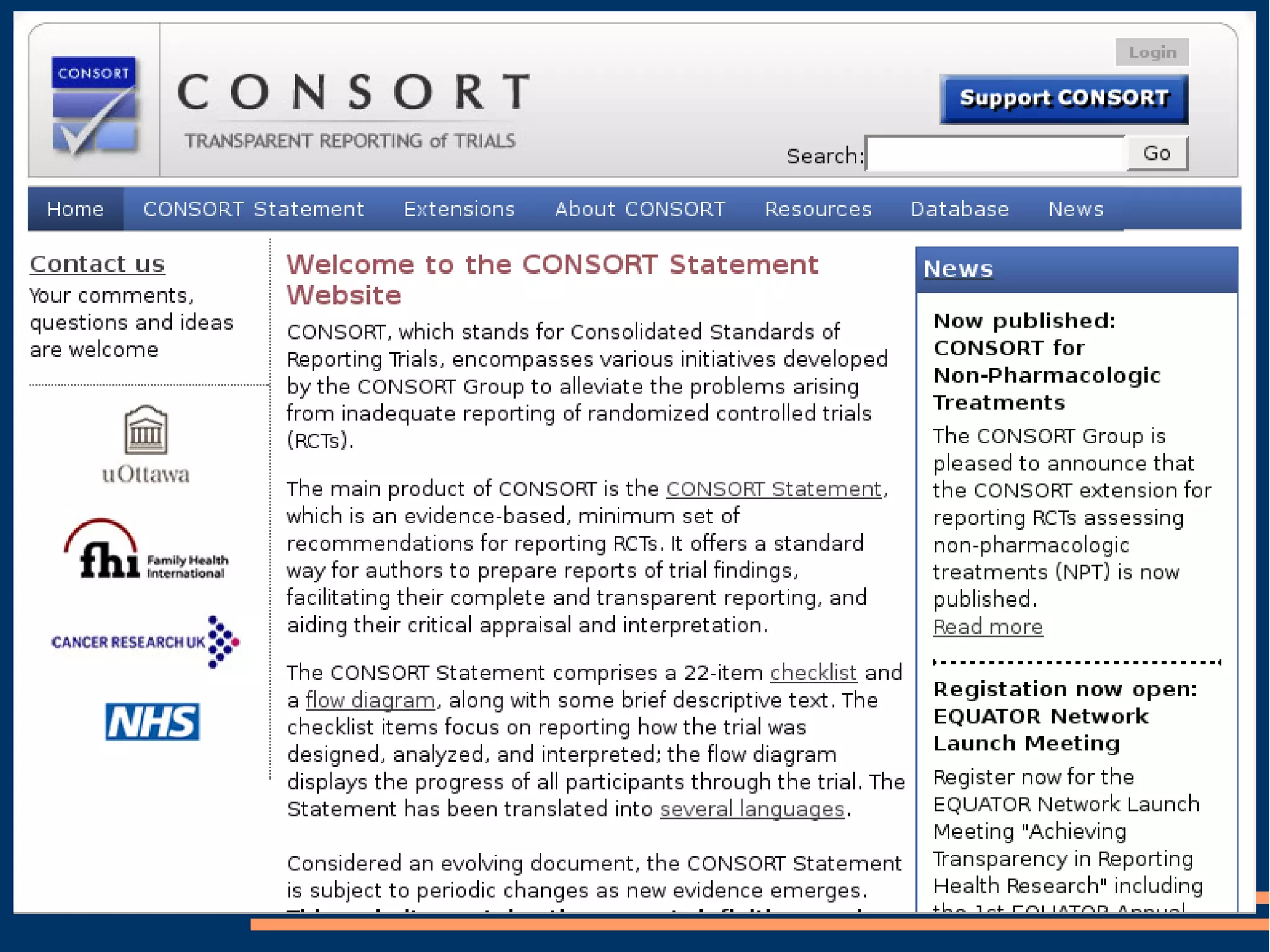
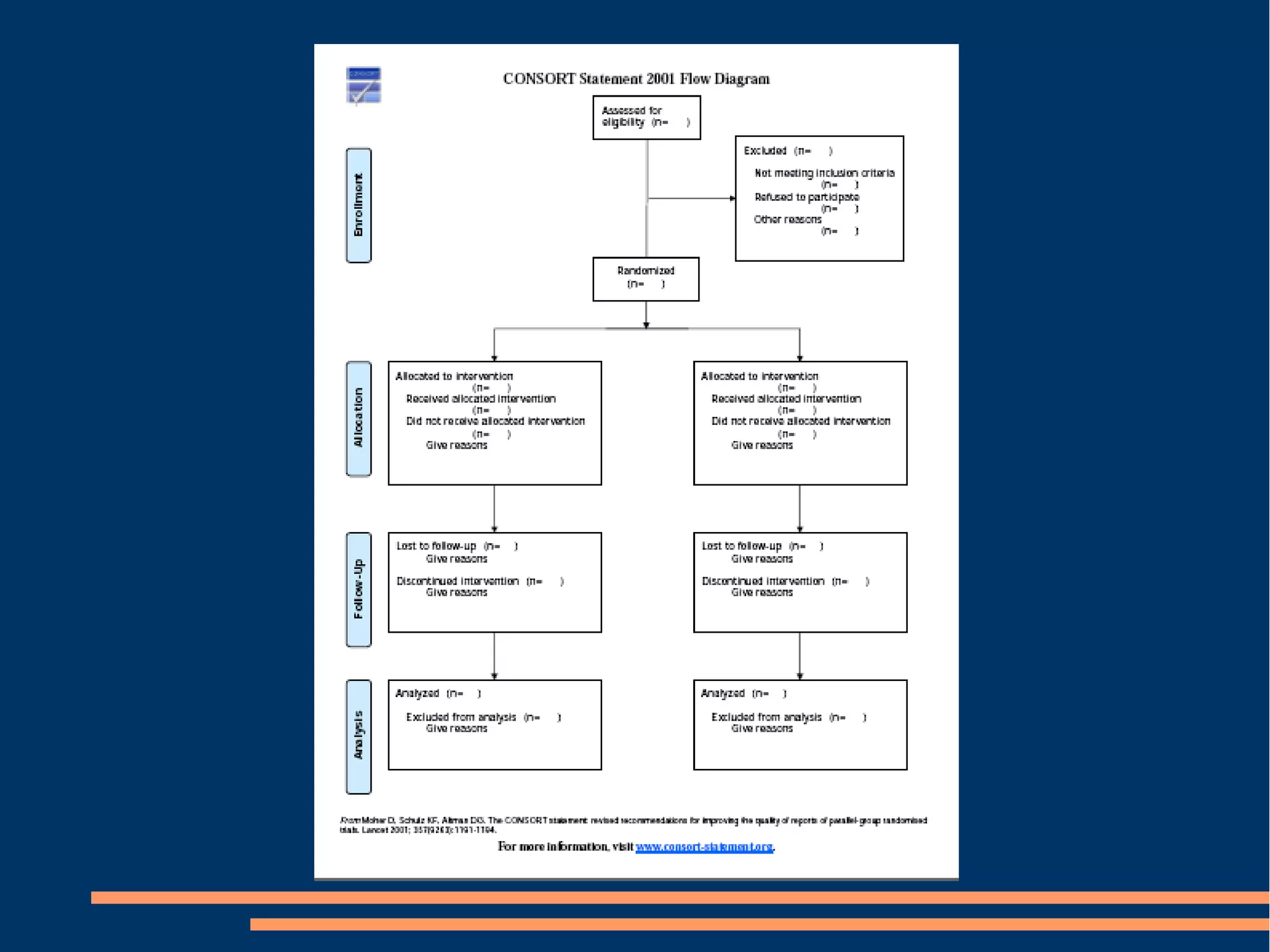
“For reports of randomized controlled trials authors
should refer to the CONSORT statement.”
Include with the manuscript
Study Protocol

Statistical Analysis Plan
Clinical trials
International regulatory guidelines
ICH Topic E9 - Statistical Principles for Clinical Trials

EMEA Points to consider: baseline covariates
                          - missing data
                          - multiplicity issues
                          - etc.

and similar documents from the FDA

These guidelines can all be found on the internet.
4. Summary
The responsibilities of a statistical reviewer

“To make sure that the authors spell out for the reader
the limitations imposed upon the conclusions by the
design of the study, the collection of data, and the
analyses performed.”


Shor S. The responsibilities of a statistical reviewer. Chest 1972;61:486-487.
Read the manuscript from end to beginning, and look
for weaknesses in the links between:

  1. Conclusion
  2. Discussion     (Discussion section)
  3. Results        (Results section)
  4. Methods        (Material & methods section)
  5. Data           (Material & methods section)
  5. Hypothesis     (Introduction)


Make sure the chain holds all the way!
Summary
1. Present statistical methods in detail, and the number
   of observations included in each analysis.
2. Present data, statistical results and your conclusions
      - data description vs. results interpretation
      - clinical vs. statistical significance
      - absence of evidence is not evidence of
        absence
3. Adjust for confounding factors in observational
   studies (but do not use stepwise regression)
4. Comply with the CONSORT checklist in randomized
   studies
Thank you for your attention!

Copenhagen 2008

  • 1.
    How to improve thechance of getting your manuscript accepted for publication Jonas Ranstam PhD
  • 3.
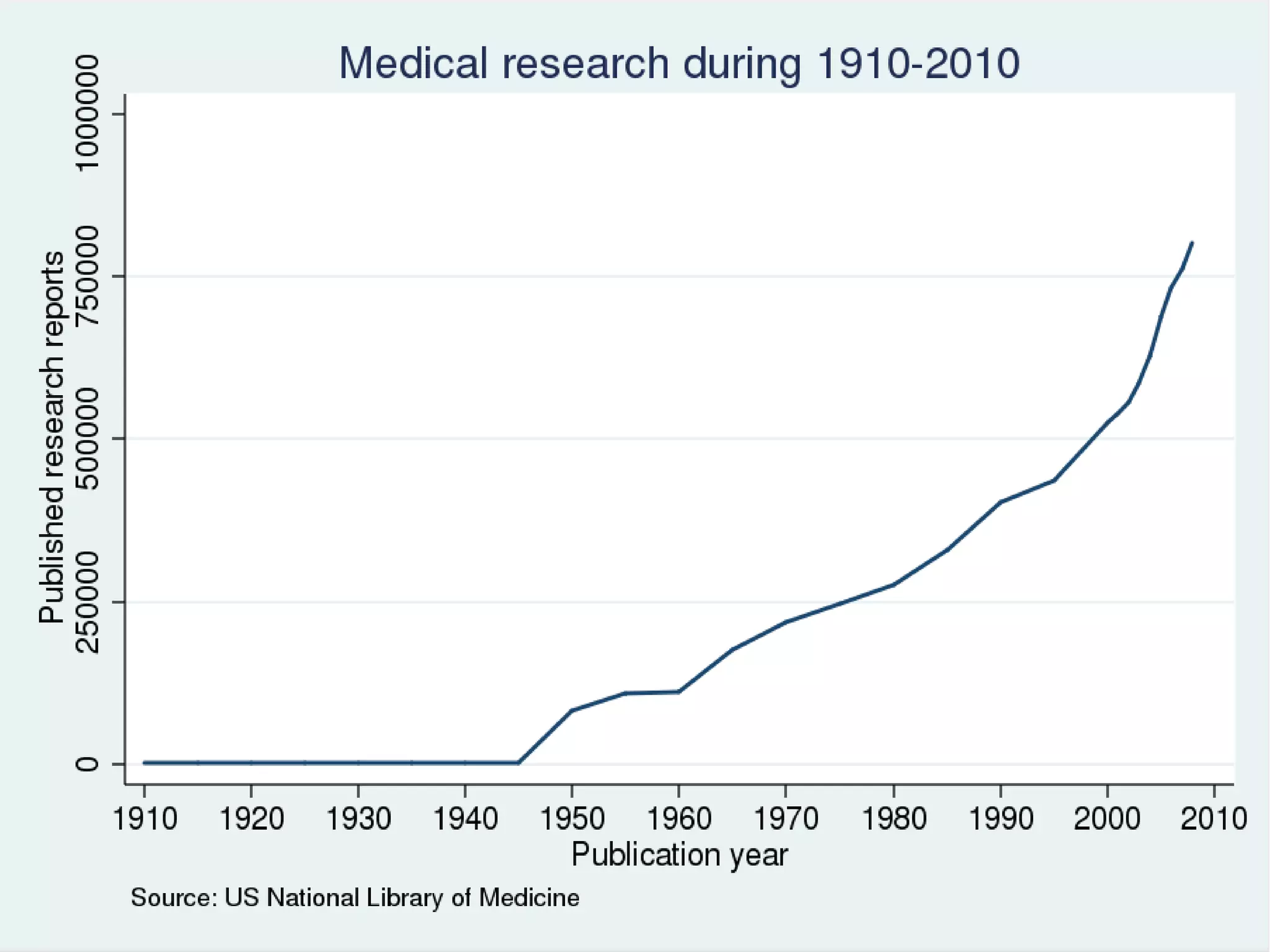
    Cohort study ofsmoking and lung cancer (1954) (Bradford Hill) Evidence based medicine Case-control study of (The Cochrane smoking and lung collaboration 1993) cancer (1950) (Bradford Hill) Randomised clinical trial of streptomycin and tubercolosis (1948) (Bradford Hill) Anecdotal evidence (Case reports)
  • 4.
    Trial registration (2005) EUdirective (2001) Mandatory disclosure of trial results (2008) ICH GCP (1996) CONSORT (1996) WHO CIOMS (1993) ICMJE Uniform Requirements (1978) Helsinki declaration (1964) Nürnberg convention (1949)
  • 5.
    Plan 1. Methodological background 2.General guidelines 3. Special recommendations a) case reports b) mechanical experiments c) in vitro/cadaver experiments d) cross-sectional studies e) epidemiological studies f) randomized trials 4. Summary
  • 6.
  • 7.
    What is statisticsused for? 1. Describing data (statistics in the plural) 2. Interpreting uncertain data (statistics in the singular)
  • 8.
    Two kinds ofuncertainty 1. Uncertainty of measurement 2. Uncertainty of sampling
  • 9.
    1. Uncertainty ofmeasurement The precision of the used measurement instrument. The precision of the Finapres non-invasive blood pressure monitor is on the average 12.1 mm Hg.
  • 10.
    2. Uncertainty ofsampling Individual effects vary between subjects. Different samples of subjects yield different observed mean effects.
  • 11.
    Example Assume that thecumulative 10-year revision rate of the Oxford knee prosthesis is 8% and that two groups of 100 patients receiving the prosthesis are randomly selected and followed over time. The two groups are likely to get different numbers of patients revised during follow up.
  • 12.
    375 randomly orderedpatients of which 30 (8%) will be revised within 10 years
  • 14.
    6% revised 12% revised Sampling uncertainty
  • 15.
    6% revised 12% revised H0: The two samples represent the same population H1: The two samples represent different populations
  • 16.
    P-value The probability thatan observed effect only reflects sampling uncertainty. 12/100 vs. 6/100, Fisher's exact test p = 0.22
  • 17.
    P-values are oftenmisunderstood They cannot - describe clinical relevance (they depend on sample size) - show that a difference “does not exist”, because n.s. is absence of evidence, not evidence of absence
  • 18.
    Confidence interval A rangeof values, which with the specified confidence level describes how likely it is that the estimated population parameter is included. 12/100 vs. 6/100, RR = 2.0 (95%Ci: 0.7 - 5.6) 1/2 1 2 Relative Risk
  • 19.
    Confidence interval A rangeof values, which with the specified confidence level describes how likely it is that the estimated population parameter is included. 12/100 vs. 6/100, RR = 2.0 (95%Ci: 0.7 - 5.6) p < 0.05 n.s. 1/2 1 2 Relative Risk
  • 20.
    Important assumptions Many statisticalmethods like the Student's t-test and ANOVA are based on the assumption of Gaussian distribution and homogeneous variance.
  • 21.
    Important assumptions Many statisticalmethods like the Student's t-test and ANOVA are based on the assumption of Gaussian distribution and homogeneous variance. If the assumptions are not met, use alternative (non- parametric) methods, like the Mann-Whitney U-test or Kruskal-Wallis non-parametric anova).
  • 22.
    Important assumptions Most conventionalmethods (both parametric and non- parametric) require independent observations.
  • 23.
    Important assumptions Most conventionalmethods (both parametric and non- parametric) require independent observations. - Patients are independent - Patients' knees, hips, shoulders, feet, etc. are not
  • 24.
    pH against PaCO2for eight subjects, with parallel lines fitted for each subject Bland, J M. et al. BMJ 1995;310:446 Incorrect analysis: r = -0.51, p < 0.001 Correct analysis: r = -0.07, p = 0.7 Copyright ©1995 BMJ Publishing Group Ltd.
  • 25.
    How Many Patients?How Many Limbs? Analysis of Patients or Limbs in the Orthopaedic Literature: A Systematic Review Bryant et al. JBJS Am. 2006;88:41-45. Our findings suggest that a high proportion (42%) of clinical studies in high-impact-factor orthopaedic journals involve the inappropriate use of multiple observations from single individuals, potentially biasing results. Orthopaedic researchers should attend to this issue when reporting results.
  • 26.
    Important assumptions Most conventionalmethods (both parametric and non-parametric) require independent observations. Include only one observation per patient, or use a statistical method that can handle dependant data, e.g. multilevel or mixed effects models. Always present both number of observations and patients.
  • 27.
    Multiplicity In contrast tomany other forms of precision, statistical precision depends on the number of performed measurements (significance tests).
  • 28.
    Multiplicity Each significance testat a 5% significance level has 5% risk of a false positive test. Repeated testing increases the risk of at least one false positive test. Number of tests Risk of at least one false positive 1 0.05 2 0.10 5 0.23 10 0.40
  • 29.
  • 30.
    Example 2 (Repeatedtesting,five tests)
  • 31.
    Example 3 (Liverfunction, 10 tests)
  • 32.
  • 33.
    Multiplicity Common in exploratoryanalyses Unacceptable in confirmatory analyses
  • 34.
  • 35.
    Statistical Methods “Describe statisticalmethods with enough detail to enable a knowledgeable reader with access to the original data to verify the reported results.”
  • 36.
    Statistical Methods “Describe statisticalmethods with enough detail to enable a knowledgeable reader with access to the original data to verify the reported results.” Required for analytical methods (statistical models, hypothesis tests, confidence intervals). Descriptions are often unclear, vague or ambiguous. They need to be clear and detailed.
  • 37.
    Results “When possible, quantifyfindings and present them with appropriate indicators of measurement error or uncertainty (such as confidence intervals).”
  • 38.
    Results “When possible, quantifyfindings and present them with appropriate indicators of measurement error or uncertainty (such as confidence intervals).” Statistical precision (p-values and confidence inter- vals) are necessary for generalization of results beyond examined patients.
  • 39.
    Results “Avoid relying solelyon statistical hypothesis testing, such as the use of P values, which fails to convey important information about effect size.”
  • 40.
    Results “Avoid relying solelyon statistical hypothesis testing, such as the use of P values, which fails to convey important information about effect size.” Describe both your observations and how you interpret them (use confidence intervals or p-values).
  • 41.
    Clinically Statistically significant significant yes no yes a b no c d There was, or was no, (statistically significant) difference is too simplistic
  • 42.
    Example Two side effectswith a new osteoporosis treatment: - A statistically significant reduction in body hair growth rate by 5% (p = 0.04) - A statistically insignificant increase in systolic blood pressure by 25 mmHg (p = 0.06)
  • 43.
    Confidence intervals arebetter than p-values In contrast to p-values they do - relate to clinical significance - show when a difference “does not exist” because they present lower and upper limits of potential clinical effects/differences
  • 44.
    P-value and confidenceinterval P-values Conclusion from confidence intervals [2 alternatives] [6 alternatives] p < 0.05 Statistically but not clinically significant effect Statistically and clinically significant effect p < 0.05 p < 0.05 Statistically, but not necessarily clinically, significant effect n.s. Inconclusive n.s. Neither statistically nor clinically significant effect p < 0.05 Statistically significant reversed effect Effect 0 Clinically significant effects
  • 45.
    When there isa difference in data Do not write that there is not a difference!
  • 46.
    There were indeed differences,they are 0.45 and 0.57
  • 47.
    There were indeed differences, they are 0.45 and 0.57 Better alternative: “The observed differences in extraction torques between the two types of uncoated distal pins can be explained by chance.”
  • 48.
    Avoid non-technical useof technical terms and use clear expressions - significant clinically or statistically? - no difference statistically insignificant? - statistical difference statistically significant? - matched selected or just comparable? - correlation relation, regression? - normal Gaussian distribution? - random mathematical algorithm? - etc.
  • 49.
  • 50.
  • 51.
    Case reports canbe used for - Generation of new hypotheses - Showing inconsistencies in established “facts”
  • 52.
    Case reports mayneed statistics (in the plural sense) - Summary description of characteristics - Description of change or variation over time
  • 53.
    Case reports cannotbe used for - Generalizing findings like risk or treatment effect (This requires statistics in the singular sense)
  • 54.
  • 55.
    Mechanical experiments What dop-values and confidence intervals relate to? - Measurement uncertainty (Perhaps) - Sampling uncertainty (No, there is no information on subject variation. The findings cannot be generalized beyond the device).
  • 56.
  • 57.
    In vitro/cadaver experiments Whatdo p-values and confidence intervals relate to? - Measurement uncertainty (Perhaps) - Sampling uncertainty (Perhaps, if the observations provide information on variation between subjects)
  • 58.
    Example In a studywith 60 observations 20 specimens had been taken from each of 3 subjects. The specimens were distributed randomly between one control group and one experimental group. What do significance tests of these two groups tell us?
  • 59.
  • 60.
    Remember - Sampling frame -Target population Super (for scientific questions) Finite (requires corrections) - Non-responders
  • 61.
  • 62.
    Epidemiological studies - Exploratory,hypothesis generating, multiplicity issues considered less important than validity issues - External validity (source of subjects) - Internal validity (confounding)

  • 63.
    Results Uniform Requirements: “Wherescientifically appropriate, analyses of the data by variables such as age and sex should be included.”
  • 64.
    Results Uniform Requirements: “Wherescientifically appropriate, analyses of the data by variables such as age and sex should be included.” Observational studies require adjustment for known and suspected confounding factors to produce valid effect estimates. This adjustment is usually performed using statistical modelling (e.g. ANCOVA or regression analysis). The purpose is to increase validity.
  • 65.
    Results Automatic stepwise regression(forward or backward) is not an adequate method for confounding adjustment.
  • 66.
  • 67.
    Clinical trials “The ICMJEmember journals will require, as a condition of consideration for publication in their journals, registration in a public trials registry.” “The ICMJE recommends that journals publish the trial registration number at the end of the Abstract.”
  • 68.
    Clinical trials “When reportingexperiments on human subjects, authors should indicate whether the procedures followed were in accordance with the ethical standards of the responsible committee on human experimentation (institutional and national) and with the Helsinki Declaration of 1975, as revised in 2000 (5).”
  • 69.
    WORLD MEDICAL ASSOCIATIONDECLARATION OF HELSINKI Ethical Principles for Medical Research Involving Human Subjects 27. ...Reports of experimentation not in accordance with the principles laid down in this Declaration should not be accepted for publication.
  • 70.
    Purpose of arandomized trial To test a hypothesis with control of random and systematic errors. - No bias (randomization & blinding) - No multiplicity problems
  • 71.
  • 72.
    Study populations Intention-to-treat Analyze all randomized subjects (ITT) principle according to planned treatment regimen. Full analysis set The set of subjects that is as close (FAS) as possible to the ideal implied by the ITT-principle. Per protocol The set of subjects who complied (PP) set with the protocol sufficiently to ensure that they are likely to exhibit the effects of treatment according to the underlying scientific model.
  • 73.
    FAS vs. PP-set FAS + no selection bias - misclassification problem (effect dilution) PP-set + no contamination problem - possible selection bias (confounding) When the FAS and PP-set lead to essentially the same conclusions, confidence in the trial is supported.
  • 74.
    Endpoints Primary The variable capable of providing the most clinically relevant evidence directly related to the primary objective of the trial Secondary Either measurements supporting the primary endpoint or effects related to secondary objectives
  • 75.
    Statistical analyses Confirmatory The result concerns a primary endpoint and the p-value or confidence interval accounts for potential multiplicity. The result can support a claim of superiority, equivalence or non- inferiority. Exploratory All other analyses. The result is either supporting or explanatory, or simply just a new hypothesis.
  • 76.
    Reporting “For reports ofrandomized controlled trials authors should refer to the CONSORT statement.”
  • 80.
    Include with themanuscript Study Protocol Statistical Analysis Plan
  • 81.
    Clinical trials International regulatoryguidelines ICH Topic E9 - Statistical Principles for Clinical Trials EMEA Points to consider: baseline covariates - missing data - multiplicity issues - etc. and similar documents from the FDA These guidelines can all be found on the internet.
  • 82.
  • 83.
    The responsibilities ofa statistical reviewer “To make sure that the authors spell out for the reader the limitations imposed upon the conclusions by the design of the study, the collection of data, and the analyses performed.” Shor S. The responsibilities of a statistical reviewer. Chest 1972;61:486-487.
  • 84.
    Read the manuscriptfrom end to beginning, and look for weaknesses in the links between: 1. Conclusion 2. Discussion (Discussion section) 3. Results (Results section) 4. Methods (Material & methods section) 5. Data (Material & methods section) 5. Hypothesis (Introduction) Make sure the chain holds all the way!
  • 85.
    Summary 1. Present statisticalmethods in detail, and the number of observations included in each analysis. 2. Present data, statistical results and your conclusions - data description vs. results interpretation - clinical vs. statistical significance - absence of evidence is not evidence of absence 3. Adjust for confounding factors in observational studies (but do not use stepwise regression) 4. Comply with the CONSORT checklist in randomized studies
  • 86.
    Thank you foryour attention!