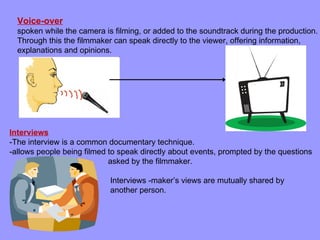
Voice-over
  spoken while the camera is filming, or added to the soundtrack during the production.
  Through this the filmmaker can speak directly to the viewer, offering information,
  explanations and opinions.


Interviews
-The interview is a common documentary technique.
-allows people being filmed to speak directly about events, prompted by the questions
                            asked by the filmmaker.

                            Interviews -maker’s views are mutually shared by
                            another person.
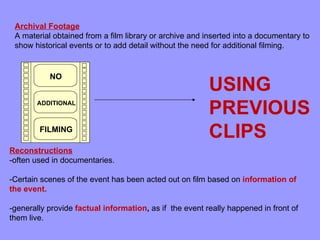
Archival Footage
 A material obtained from a film library or archive and inserted into a documentary to
 show historical events or to add detail without the need for additional filming.


           NO
                                                         USING
       ADDITIONAL
                                                         PREVIOUS
        FILMING
                                                         CLIPS
Reconstructions
-often used in documentaries.

-Certain scenes of the event has been acted out on film based on information of
the event.

-generally provide factual information, as if the event really happened in front of
them live.
Documentary One:
World War Two
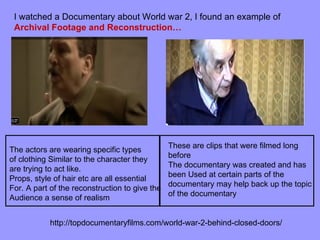
I watched a Documentary about World war 2, I found an example of
 Archival Footage and Reconstruction…


                                                These are clips that were filmed long
The actors are wearing specific types
                                                before
of clothing Similar to the character they
                                                The documentary was created and has
are trying to act like.
                                                been Used at certain parts of the
Props, style of hair etc are all essential
                                                documentary may help back up the topic
For. A part of the reconstruction to give the
                                                of the documentary
Audience a sense of realism


            http://topdocumentaryfilms.com/world-war-2-behind-closed-doors/
Documentary Two:
Nanook of the
North
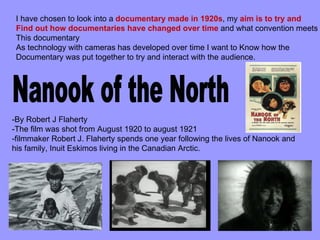
I have chosen to look into a documentary made in 1920s, my aim is to try and
 Find out how documentaries have changed over time and what convention meets
 This documentary
 As technology with cameras has developed over time I want to Know how the
 Documentary was put together to try and interact with the audience.


-By Robert J Flaherty
-The film was shot from August 1920 to august 1921
-filmmaker Robert J. Flaherty spends one year following the lives of Nanook and
his family, Inuit Eskimos living in the Canadian Arctic.
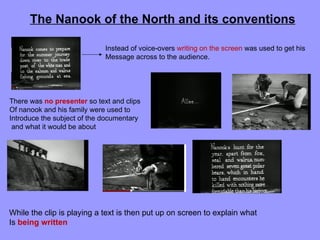
The Nanook of the North and its conventions

                             Instead of voice-overs writing on the screen was used to get his
                             Message across to the audience.


There was no presenter so text and clips
Of nanook and his family were used to
Introduce the subject of the documentary
 and what it would be about


While the clip is playing a text is then put up on screen to explain what
Is being written
Documentary three:
Jack the Ripper
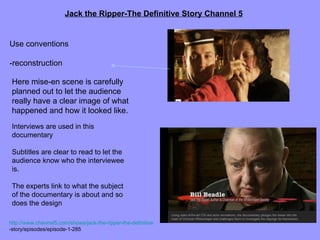
Jack the Ripper-The Definitive Story Channel 5


Use conventions

-reconstruction

 Here mise-en scene is carefully
 planned out to let the audience
 really have a clear image of what
 happened and how it looked like.
 Interviews are used in this
 documentary

 Subtitles are clear to read to let the
 audience know who the interviewee
 is.

 The experts link to what the subject
 of the documentary is about and so
 does the design

http://www.channel5.com/shows/jack-the-ripper-the-definitive
-story/episodes/episode-1-285

conventions of a documentry

  • 2.
    Voice-over spokenwhile the camera is filming, or added to the soundtrack during the production. Through this the filmmaker can speak directly to the viewer, offering information, explanations and opinions. Interviews -The interview is a common documentary technique. -allows people being filmed to speak directly about events, prompted by the questions asked by the filmmaker. Interviews -maker’s views are mutually shared by another person.
  • 3.
    Archival Footage Amaterial obtained from a film library or archive and inserted into a documentary to show historical events or to add detail without the need for additional filming. NO USING ADDITIONAL PREVIOUS FILMING CLIPS Reconstructions -often used in documentaries. -Certain scenes of the event has been acted out on film based on information of the event. -generally provide factual information, as if the event really happened in front of them live.
  • 4.
  • 5.
    I watched aDocumentary about World war 2, I found an example of Archival Footage and Reconstruction… These are clips that were filmed long The actors are wearing specific types before of clothing Similar to the character they The documentary was created and has are trying to act like. been Used at certain parts of the Props, style of hair etc are all essential documentary may help back up the topic For. A part of the reconstruction to give the of the documentary Audience a sense of realism http://topdocumentaryfilms.com/world-war-2-behind-closed-doors/
  • 6.
  • 7.
    I have chosento look into a documentary made in 1920s, my aim is to try and Find out how documentaries have changed over time and what convention meets This documentary As technology with cameras has developed over time I want to Know how the Documentary was put together to try and interact with the audience. -By Robert J Flaherty -The film was shot from August 1920 to august 1921 -filmmaker Robert J. Flaherty spends one year following the lives of Nanook and his family, Inuit Eskimos living in the Canadian Arctic.
  • 8.
    The Nanook ofthe North and its conventions Instead of voice-overs writing on the screen was used to get his Message across to the audience. There was no presenter so text and clips Of nanook and his family were used to Introduce the subject of the documentary and what it would be about While the clip is playing a text is then put up on screen to explain what Is being written
  • 9.
  • 10.
    Jack the Ripper-TheDefinitive Story Channel 5 Use conventions -reconstruction Here mise-en scene is carefully planned out to let the audience really have a clear image of what happened and how it looked like. Interviews are used in this documentary Subtitles are clear to read to let the audience know who the interviewee is. The experts link to what the subject of the documentary is about and so does the design http://www.channel5.com/shows/jack-the-ripper-the-definitive -story/episodes/episode-1-285