Breaking Down Packages
JCM 331
Package Evaluations
 On camera teases, live shots, and standups show what you know about performing,
personality, story organization, and how to use your location and backgrounds to tell
a story.
 The foundational elements of a package is what everyone in the broadcast industry
will judge:
 Writing style: using natural sound, soundbites, video, and reporter voiceover to
tell the story
 Video: did you shoot enough good video to illustrate your story angle?
 Soundbites: Did you shoot them in bumping heads? Do you use them well enough
where they make sense to make an objective story? Did you let them talk too
much?
 Reporter Voiceover: Write facts that complement and set up your soundbites.
Don’t “mimic” or parrott (say the same thing) as your soundbite
 Natural sound: Use it to set the scene for your story with natural sound pops.
You should hear sound throughout the package under video and have other pops
of sound that help you feel like you are there with the reporter.
Package Requirements
4 Essential Elements for a Pkg:
Natural sound
Reporter Voiceover
B-roll/Video
Soundbites (at least 2)
Packages may also have:
Live introductions and live tags by a
reporter
Standups: Opening, closing, or bridges
**Required in JCM 331: Standup Bridge
Standups: Appear on camera inside the package and you
illustrate a point about the story with active movement,
props, etc., that must make sense;
*approximately 10 secs or less/2 sentences to get point
across
Opening & closing standups are easier but illustrate
weaker writing
 Standup bridges : Appear in the middle of packages
to bridge one side/issue of your package to the other
side
News directors would rather see standup bridges
from beginning news reporters
Live shots in the field many times replace any sort of
standup when there’s a package
Package Steps: 16
UA Head Football Coach Saban has “The
Process” and there’s also a process to
illustrate a 1:30 package.
Key Steps:
• Research
• Preplanning
• Execution
• Post-production
• Review process Dr. Clark’s 16-Step Package PROCESS
Package EXAMPLE 1
 Reporter: Bryant Somerville
 WBMA Birmingham (ABC 33/40)
 Story: School Reopens after child
abduction
 FORMAT: LIVE with donut
 Multiple voices
 Techniques–
Nat sound
 Video action reaction
 Soundbite selection
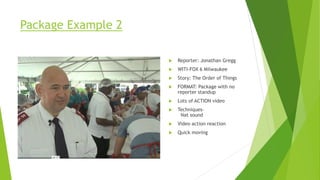
Package Example 2
 Reporter: Jonathan Gregg
 WITI-FOX 6 Milwaukee
 Story: The Order of Things
 FORMAT: Package with no
reporter standup
 Lots of ACTION video
 Techniques–
Nat sound
 Video action reaction
 Quick moving
Package Example 3
 Reporter: Melanie Yuill
 WBMA ABC 3340
 Story: Alabama Retail Sales 2016
 FORMAT: Live with donut
 Lots of file video
 Techniques–
Nat sound
 Multiple elements on a
TECHNICAL REPORT
Package Script Template
Rhythm/Pacing: Too much reporter voiceover can kill a package. Do not go
over 10 seconds of voiceover without a soundbite/nat sound pop.
Timing: Opening with natural sound pops or a soundbite is key to engaging your
audience right into the story.
Scripts can’t be written and voiced over until you’ve shot soundbites, b-roll, and
natural sound.
Package scripts are clearly noted with video, natural sound, and soundbites. “See it,
say it” principle is crucial because writing is more specific to what the viewer is
seeing.
Package Script Template
Caitlin Chastain Package Script Example and Package Example
Package Evaluations
 On camera teases, live shots, and standups show what you know about performing,
personality, story organization, and how to use your location and backgrounds to tell
a story.
 The foundational elements of a package is what everyone in the broadcast industry
will judge:
 Writing style: using natural sound, soundbites, video, and reporter voiceover to
tell the story
 Video: did you shoot enough good video to illustrate your story angle?
 Soundbites: Did you shoot them in bumping heads? Do you use them well enough
where they make sense to make an objective story? Did you let them talk to
much?
 Reporter Voiceover: Write facts that complement and set up your soundbites.
Don’t “mimick” or parrott (say the same thing) as your soundbite
 Natural sound: Use it to set the scene for your story with natural sound pops.
You should hear sound throughout the package under video and have other pops
of sound that help you feel like you are there with the reporter.

JCM 331 package breakdown

  • 1.
  • 2.
    Package Evaluations  Oncamera teases, live shots, and standups show what you know about performing, personality, story organization, and how to use your location and backgrounds to tell a story.  The foundational elements of a package is what everyone in the broadcast industry will judge:  Writing style: using natural sound, soundbites, video, and reporter voiceover to tell the story  Video: did you shoot enough good video to illustrate your story angle?  Soundbites: Did you shoot them in bumping heads? Do you use them well enough where they make sense to make an objective story? Did you let them talk too much?  Reporter Voiceover: Write facts that complement and set up your soundbites. Don’t “mimic” or parrott (say the same thing) as your soundbite  Natural sound: Use it to set the scene for your story with natural sound pops. You should hear sound throughout the package under video and have other pops of sound that help you feel like you are there with the reporter.
  • 3.
    Package Requirements 4 EssentialElements for a Pkg: Natural sound Reporter Voiceover B-roll/Video Soundbites (at least 2) Packages may also have: Live introductions and live tags by a reporter Standups: Opening, closing, or bridges **Required in JCM 331: Standup Bridge
  • 4.
    Standups: Appear oncamera inside the package and you illustrate a point about the story with active movement, props, etc., that must make sense; *approximately 10 secs or less/2 sentences to get point across Opening & closing standups are easier but illustrate weaker writing  Standup bridges : Appear in the middle of packages to bridge one side/issue of your package to the other side News directors would rather see standup bridges from beginning news reporters Live shots in the field many times replace any sort of standup when there’s a package
  • 5.
    Package Steps: 16 UAHead Football Coach Saban has “The Process” and there’s also a process to illustrate a 1:30 package. Key Steps: • Research • Preplanning • Execution • Post-production • Review process Dr. Clark’s 16-Step Package PROCESS
  • 6.
    Package EXAMPLE 1 Reporter: Bryant Somerville  WBMA Birmingham (ABC 33/40)  Story: School Reopens after child abduction  FORMAT: LIVE with donut  Multiple voices  Techniques– Nat sound  Video action reaction  Soundbite selection
  • 7.
    Package Example 2 Reporter: Jonathan Gregg  WITI-FOX 6 Milwaukee  Story: The Order of Things  FORMAT: Package with no reporter standup  Lots of ACTION video  Techniques– Nat sound  Video action reaction  Quick moving
  • 8.
    Package Example 3 Reporter: Melanie Yuill  WBMA ABC 3340  Story: Alabama Retail Sales 2016  FORMAT: Live with donut  Lots of file video  Techniques– Nat sound  Multiple elements on a TECHNICAL REPORT
  • 9.
    Package Script Template Rhythm/Pacing:Too much reporter voiceover can kill a package. Do not go over 10 seconds of voiceover without a soundbite/nat sound pop. Timing: Opening with natural sound pops or a soundbite is key to engaging your audience right into the story. Scripts can’t be written and voiced over until you’ve shot soundbites, b-roll, and natural sound. Package scripts are clearly noted with video, natural sound, and soundbites. “See it, say it” principle is crucial because writing is more specific to what the viewer is seeing. Package Script Template Caitlin Chastain Package Script Example and Package Example
  • 10.
    Package Evaluations  Oncamera teases, live shots, and standups show what you know about performing, personality, story organization, and how to use your location and backgrounds to tell a story.  The foundational elements of a package is what everyone in the broadcast industry will judge:  Writing style: using natural sound, soundbites, video, and reporter voiceover to tell the story  Video: did you shoot enough good video to illustrate your story angle?  Soundbites: Did you shoot them in bumping heads? Do you use them well enough where they make sense to make an objective story? Did you let them talk to much?  Reporter Voiceover: Write facts that complement and set up your soundbites. Don’t “mimick” or parrott (say the same thing) as your soundbite  Natural sound: Use it to set the scene for your story with natural sound pops. You should hear sound throughout the package under video and have other pops of sound that help you feel like you are there with the reporter.