CONTRACTING
      AND
SUBCONTRACTING
Definition of Terms:
• Contracting or Subcontracting – refers to an arrangement
  whereby the principal agrees to farm out a job, work or service
  to a contractor/subcontractor within a definite period of time
  regardless whether the job is completed within or outside the
  premises of the principal.

• Contractor/Subcontractor – any person or entity engaged in a
  legitimate contracting or subcontracting arrangement.
•Contractual employee – employed by a contractor or
subcontractor to perform or complete a job, work or service
pursuant to an arrangement between the contractor and the
principal.


* Principal – any employer who puts out a job, service to a
contractor.
Guiding Principle:

          Contracting and subcontracting arrangements are
allowed by law and are subject to regulation for the promotion
of employment and the observance of the rights of workers to
 just and humane conditions of work, security of tenure, self-
    organization, and collective bargaining. Labor-only is
                    definitely prohibited.

                           Coverage:

       The rules are applicable to all parties of contracting and
       subcontracting where employer-employee relationship
                                exists.
Trilateral Relationship

   There should be 3 parties involved in the
arrangement – the principal which farms out
             a job or service to the
        contractor/subcontractor; the
   contractor/subcontractor which has the
capacity to independently perform the job or
 service; and the contractual employees who
        will perform the job or service.
Prohibitions against Labor-Only Contracting
                (Article 106)
Labor-only contracting shall refer to an arrangement where
     the contractor or subcontractor merely recruits and
     supplies workers to perform a job for a principal and
     these elements are present:

(1) Contractor or subcontractor does not have the substantial
      capital or investment which relates to the job to be
      performed by the employees hired.

(2) Contractor does not exercise the right to control over the
      working performance of the contractual employees.
      Right to control implies determining means and
      manner of the contractual employee in achieving the
      job.
Prohibitions
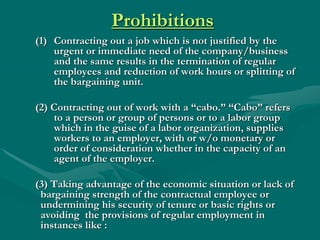
(1) Contracting out a job which is not justified by the
    urgent or immediate need of the company/business
    and the same results in the termination of regular
    employees and reduction of work hours or splitting of
    the bargaining unit.

(2) Contracting out of work with a “cabo.” “Cabo” refers
    to a person or group of persons or to a labor group
    which in the guise of a labor organization, supplies
    workers to an employer, with or w/o monetary or
    order of consideration whether in the capacity of an
    agent of the employer.

(3) Taking advantage of the economic situation or lack of
 bargaining strength of the contractual employee or
 undermining his security of tenure or basic rights or
 avoiding the provisions of regular employment in
 instances like :
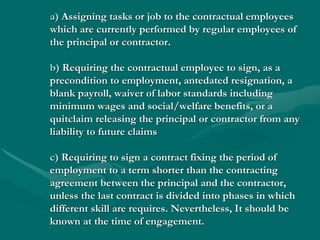
a) Assigning tasks or job to the contractual employees
which are currently performed by regular employees of
the principal or contractor.

b) Requiring the contractual employee to sign, as a
precondition to employment, antedated resignation, a
blank payroll, waiver of labor standards including
minimum wages and social/welfare benefits, or a
quitclaim releasing the principal or contractor from any
liability to future claims

c) Requiring to sign a contract fixing the period of
employment to a term shorter than the contracting
agreement between the principal and the contractor,
unless the last contract is divided into phases in which
different skill are requires. Nevertheless, It should be
known at the time of engagement.
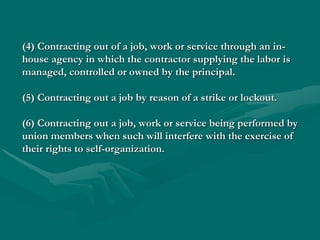
(4) Contracting out of a job, work or service through an in-
house agency in which the contractor supplying the labor is
managed, controlled or owned by the principal.

(5) Contracting out a job by reason of a strike or lockout.

(6) Contracting out a job, work or service being performed by
union members when such will interfere with the exercise of
their rights to self-organization.
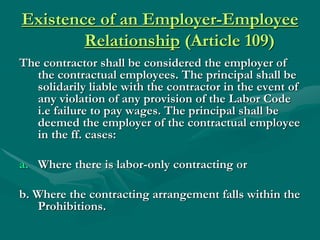
Existence of an Employer-Employee
        Relationship (Article 109)
The contractor shall be considered the employer of
   the contractual employees. The principal shall be
   solidarily liable with the contractor in the event of
   any violation of any provision of the Labor Code
   i.e failure to pay wages. The principal shall be
   deemed the employer of the contractual employee
   in the ff. cases:

a. Where there is labor-only contracting or

b. Where the contracting arrangement falls within the
   Prohibitions.
Rights of Contractual Employees:
• Safe and healthful working conditions

• Labor standards such as service incentive leave, rest days,
  overtime pay, holiday pay, 13th month pay and separation
  pay

• Social Security and welfare benefits

• Self-organization, collective bargaining and peaceful
  concerted action

• Security of tenure
Contract between Contractor and
         Subcontractor and Contractual
                   Employee
The contract between contractor/subcontractor shall be in the
  ff. terms:

a) The specific description of the job, work or service to be
   performed by the contractual employee.

b) The place of work and terms and conditions of
   employment, including a statement of the wage rate
   applicable to the individual contractual employee.

c) The term or duration of employment.
Effect of Termination of Contractual
              Employment
In cases of termination of employment prior to the
  expiration of the contract between the principal
  and the contractor/subcontractor, the right of the
  contractual employee to separation pay or other
  related benefits shall be governed by the applicable
  laws and jurisprudence on termination of
  employment. When the contract of the principal
  and contractor has ended with the completion of
  the contractual employee’s job, the employee shall
  not be entitled to a separation pay but will be given
  completion bonuses.
Enforcement of Labor Standards and
         Working Conditions
The Regional Director through his duly authorized representatives
    shall:

a) Have the authority to conduct routine inspection of
    establishments engaged in contracting/subcontracting.

b) Have access to employer’s records and premises at any
    time of the day or night whenever work is being
    undertaken therein.

c) Right to question any employee and investigate any fact or
    matters necessary to determine violations in the
    enforcement of the Labor code.

Contracting and subcontracting

  • 1.
    CONTRACTING AND SUBCONTRACTING
  • 2.
    Definition of Terms: •Contracting or Subcontracting – refers to an arrangement whereby the principal agrees to farm out a job, work or service to a contractor/subcontractor within a definite period of time regardless whether the job is completed within or outside the premises of the principal. • Contractor/Subcontractor – any person or entity engaged in a legitimate contracting or subcontracting arrangement.
  • 3.
    •Contractual employee –employed by a contractor or subcontractor to perform or complete a job, work or service pursuant to an arrangement between the contractor and the principal. * Principal – any employer who puts out a job, service to a contractor.
  • 4.
    Guiding Principle: Contracting and subcontracting arrangements are allowed by law and are subject to regulation for the promotion of employment and the observance of the rights of workers to just and humane conditions of work, security of tenure, self- organization, and collective bargaining. Labor-only is definitely prohibited. Coverage: The rules are applicable to all parties of contracting and subcontracting where employer-employee relationship exists.
  • 5.
    Trilateral Relationship There should be 3 parties involved in the arrangement – the principal which farms out a job or service to the contractor/subcontractor; the contractor/subcontractor which has the capacity to independently perform the job or service; and the contractual employees who will perform the job or service.
  • 6.
    Prohibitions against Labor-OnlyContracting (Article 106) Labor-only contracting shall refer to an arrangement where the contractor or subcontractor merely recruits and supplies workers to perform a job for a principal and these elements are present: (1) Contractor or subcontractor does not have the substantial capital or investment which relates to the job to be performed by the employees hired. (2) Contractor does not exercise the right to control over the working performance of the contractual employees. Right to control implies determining means and manner of the contractual employee in achieving the job.
  • 7.
    Prohibitions (1) Contracting outa job which is not justified by the urgent or immediate need of the company/business and the same results in the termination of regular employees and reduction of work hours or splitting of the bargaining unit. (2) Contracting out of work with a “cabo.” “Cabo” refers to a person or group of persons or to a labor group which in the guise of a labor organization, supplies workers to an employer, with or w/o monetary or order of consideration whether in the capacity of an agent of the employer. (3) Taking advantage of the economic situation or lack of bargaining strength of the contractual employee or undermining his security of tenure or basic rights or avoiding the provisions of regular employment in instances like :
  • 8.
    a) Assigning tasksor job to the contractual employees which are currently performed by regular employees of the principal or contractor. b) Requiring the contractual employee to sign, as a precondition to employment, antedated resignation, a blank payroll, waiver of labor standards including minimum wages and social/welfare benefits, or a quitclaim releasing the principal or contractor from any liability to future claims c) Requiring to sign a contract fixing the period of employment to a term shorter than the contracting agreement between the principal and the contractor, unless the last contract is divided into phases in which different skill are requires. Nevertheless, It should be known at the time of engagement.
  • 9.
    (4) Contracting outof a job, work or service through an in- house agency in which the contractor supplying the labor is managed, controlled or owned by the principal. (5) Contracting out a job by reason of a strike or lockout. (6) Contracting out a job, work or service being performed by union members when such will interfere with the exercise of their rights to self-organization.
  • 10.
    Existence of anEmployer-Employee Relationship (Article 109) The contractor shall be considered the employer of the contractual employees. The principal shall be solidarily liable with the contractor in the event of any violation of any provision of the Labor Code i.e failure to pay wages. The principal shall be deemed the employer of the contractual employee in the ff. cases: a. Where there is labor-only contracting or b. Where the contracting arrangement falls within the Prohibitions.
  • 11.
    Rights of ContractualEmployees: • Safe and healthful working conditions • Labor standards such as service incentive leave, rest days, overtime pay, holiday pay, 13th month pay and separation pay • Social Security and welfare benefits • Self-organization, collective bargaining and peaceful concerted action • Security of tenure
  • 12.
    Contract between Contractorand Subcontractor and Contractual Employee The contract between contractor/subcontractor shall be in the ff. terms: a) The specific description of the job, work or service to be performed by the contractual employee. b) The place of work and terms and conditions of employment, including a statement of the wage rate applicable to the individual contractual employee. c) The term or duration of employment.
  • 13.
    Effect of Terminationof Contractual Employment In cases of termination of employment prior to the expiration of the contract between the principal and the contractor/subcontractor, the right of the contractual employee to separation pay or other related benefits shall be governed by the applicable laws and jurisprudence on termination of employment. When the contract of the principal and contractor has ended with the completion of the contractual employee’s job, the employee shall not be entitled to a separation pay but will be given completion bonuses.
  • 14.
    Enforcement of LaborStandards and Working Conditions The Regional Director through his duly authorized representatives shall: a) Have the authority to conduct routine inspection of establishments engaged in contracting/subcontracting. b) Have access to employer’s records and premises at any time of the day or night whenever work is being undertaken therein. c) Right to question any employee and investigate any fact or matters necessary to determine violations in the enforcement of the Labor code.