CONTRACEPTIVES
Dr Sujean J N, MBBS
COMMUNITY MEDICINE, AIMS
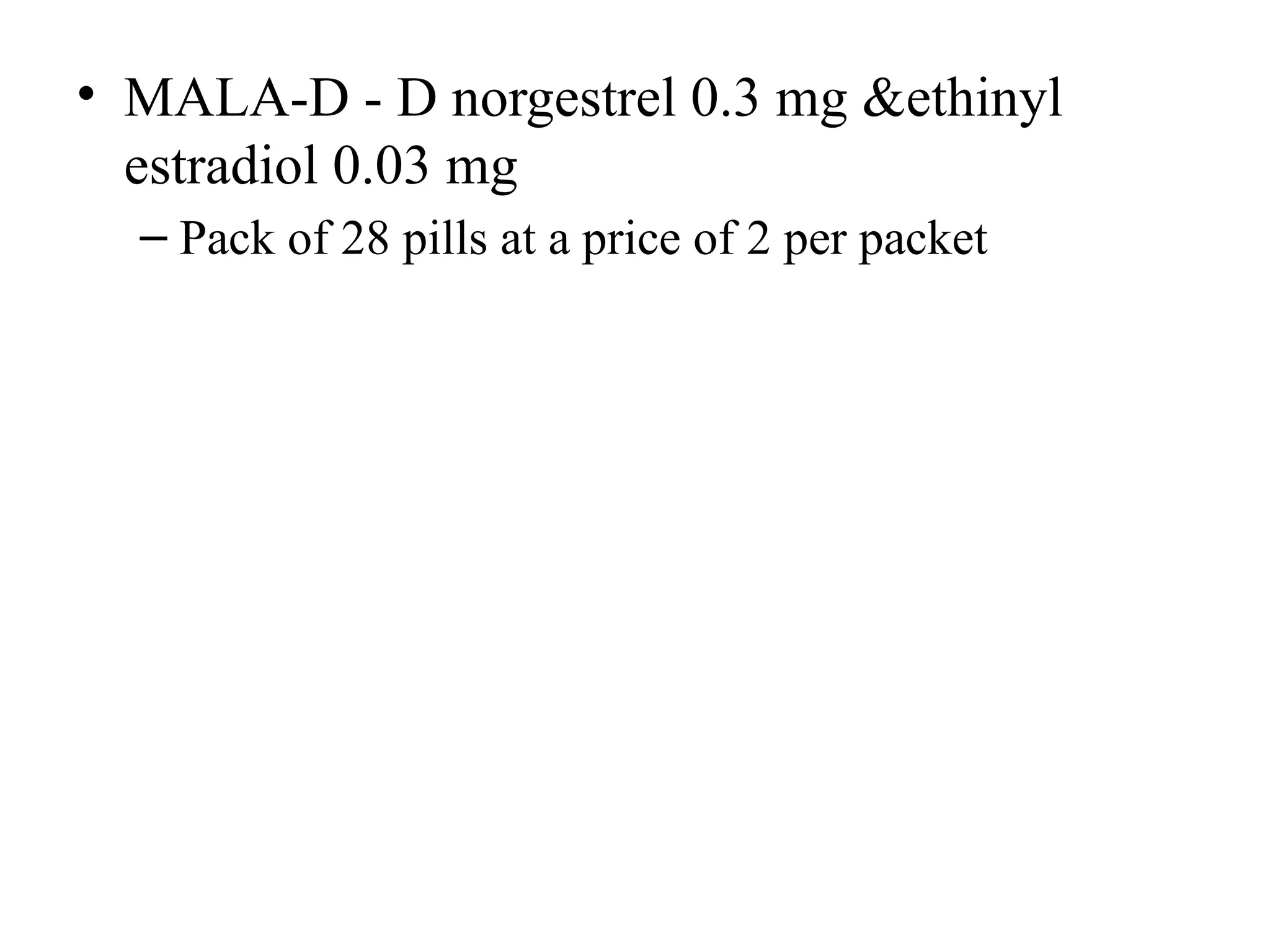
• Contraception=against conception
• The preventive methods to help women avoid
unwanted pregnancies are called contraceptive
methods.
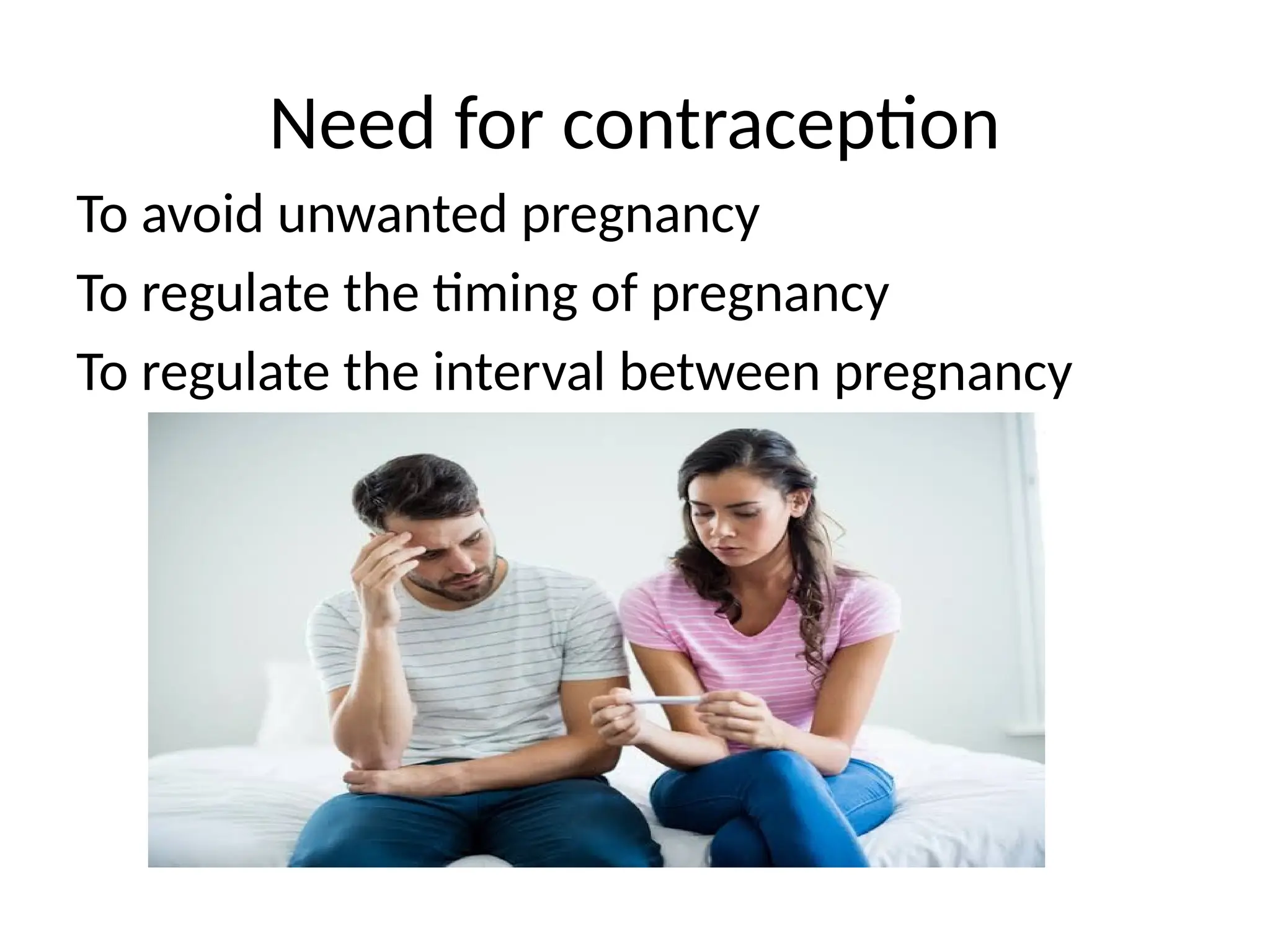
Need for contraception
To avoid unwanted pregnancy
To regulate the timing of pregnancy
To regulate the interval between pregnancy
Family planning
A way of thinking and living that is adopted
voluntarily, upon the basis of knowledge,
attitudes and responsible decisions by
individuals and couples, in order to promote
the health and welfare of the family group and
thus contribute effectively to social
development of a country.
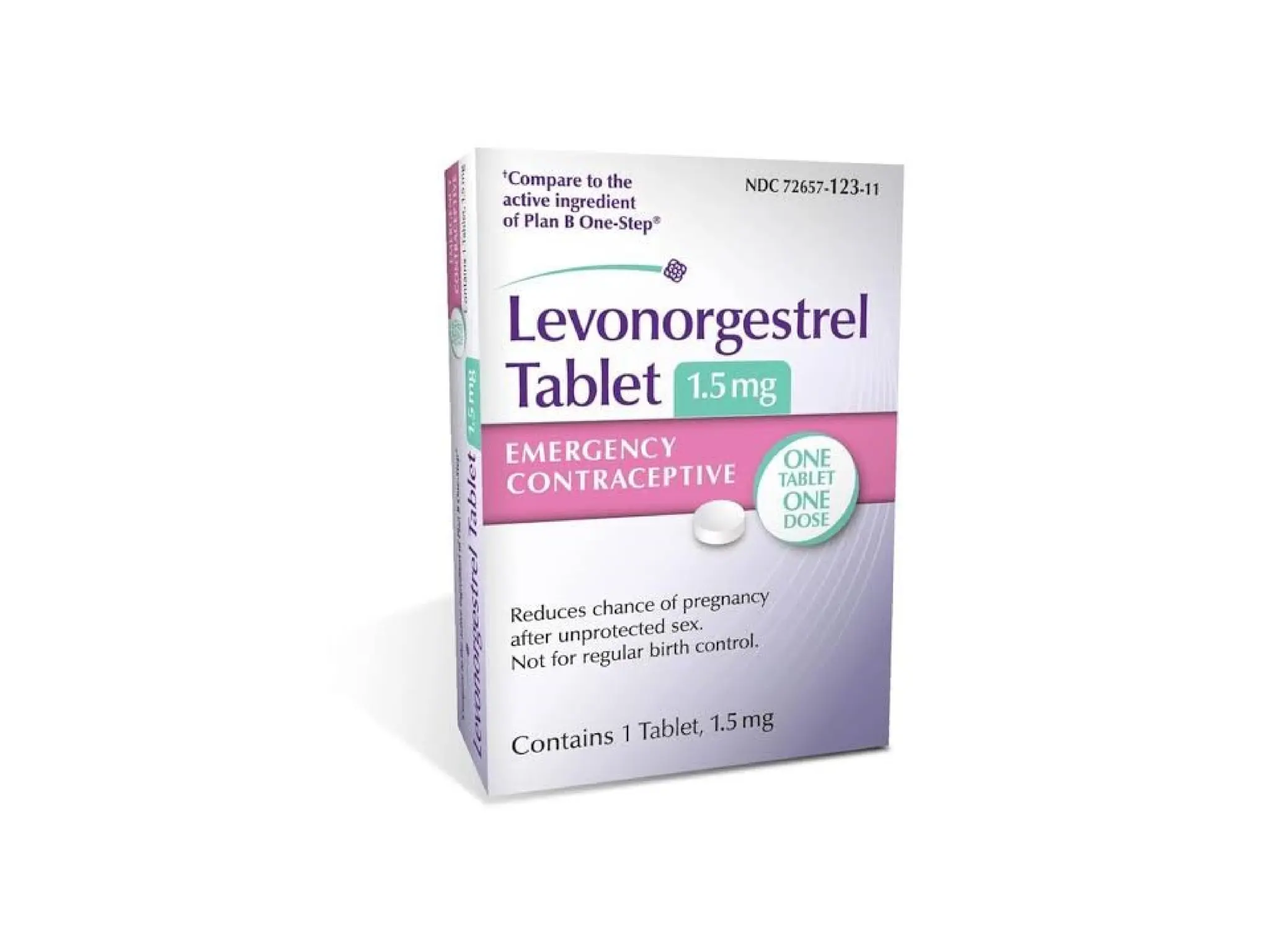
EMERGENCY CONTACEPTIVE PILLS
• Type of contraceptive: hormonal contraceptive
• Dose: levonorgesterol - 1.5mg. 1 tablet to be taken
immediately or within 72hours of unprotected
intercourse, 2nd tablet 12 hours after the first pill
• Mechanism of action: thickens cervical mucus, atrophy
of endometrium
• Failure rate: Pregnancy rate 0.3/ HWY(hundred women
year)
• Side effects: breast tenderness, headache, nausea,
vomiting, dizziness.
MENSTRUAL REGULATOR SYRINGE
• Used to evacuate the contents of the uterus
after a missed period
• Carried out effectively within 42 days from the
last menstrual period
• It consists of a plastic cannula(Karman’s
cannula) and a plastic 50 ml syringe capable of
creating a vacuum of 60cm Hg
• Advantages:
The procedure can be carried out in out-patient clinic
or day care center
• Contraindications:
Pregnancy of more than 42 days
Presence of local pelvic inflammation
• Complications:
Failure to evacuate leading to continuation of the
pregnancy
Incomplete evacuation
Hemorrhage
Cervical laceration
Infection
MALE CONDOM
• Type of contraceptive: barrier method, latex, non
latex and spermicide coated are available
• Failure rate: 3-14%
• Advantages: Easily available, safe,
inexpensive, prevents STI and PID, does not
require technical supervision, light, compact and
disposable
• Disadvantages: high failure rate, needs high
motivation, reduction in pleasure
COMBINED ORAL CONTRACEPTIVE
• MALA-D -D norgestrel 0.3 mg & ethinyl
estradiol 0.03 mg. Pack of 28 pills at a price of
Rs 3 per packet
• Type of contraceptive : hormonal contraceptive
• Failure rate : 0.1 %
• Advantage : very effective , non –contraceptive
benefits - prevents ovarian carcinoma,
endometrial cancer, benign breast disease ,
protective against ectopic pregnancy
• Disadvantage : cardiovascular effects - myocardial
Infarction, cerebral thrombosis, venous thrombosis.
Carcinogenesis - cervical cancer. Metabolic effects
- elevation in BP, alteration in serum lipid, Others
liver disorder , adversely affects the quality and
constituents of breast milk, beast tenderness,
weight gain, migraine bleeding disturbances.
CONTRAINDICATION
• Absolute - Cancer of breast and genitals, liver
disease, previous or present history of
thromboembolism, cardiac abnormalities,
congenital hyperlipidaemia, undiagnosed abnormal
uterine bleeding
• Relative - Age over 40 years, smoking and age
over 35 years, mild hypertension, chronic renal
disease , epilepsy, migraine, nursing mothers in
the first 6 months, diabetes mellitus, gall bladder
disease, history of infrequent bleeding
amenorrhoea .
COPPER T 380A
• Type of contraceptive : Intrauterine device,
contains 380 sq mm surface Cu wire, to be
replaced every 10 years
• Mechanism of action: foreign body reaction in
the uterus , Impairs the viability of gamete ,
enhance cellular response in the endometrium,
affects sperm motility and survival
Time of insertion :
• Interval - last day of the menstrual period
• Post abortal - device may be inserted after
spontaneous abortion/MTP immediately
• Postpartum - Immediately after Caesarean
section/removal of placenta
• Failure rate : pregnancy rate 0.5 - 0.8 %
• Advantage : effective till 10 years, No
hormonal side effects
• Disadvantage : excessive bleeding, pain,
pelvic infection, uterine perforation, ectopic
pregnancy
• Ideal IUD candidate : Who has borne at least
one child, has no history of pelvic disease
willing to check IUD tail regularly, has access
to follow up & treatment of potential
problems, is in a monogamous relationship
• Contraindications
• Absolute : Suspected pregnancy, PID,
Vaginal bleeding of undiagnosed aetiology ,
Ca of cervix, uterus or adnexa, Previous
ectopic pregnancy
• Relative: Anaemia, Menorrhagia, History of
PID since last pregnancy, purulent vaginal
discharge, Congenital malformations of uterus,
fibroid, unmotivated person
Cu-t 375 Multiload
• Type of contraceptive: Intrauterine device (IUD)
— Copper-containing, multiload (non-hormonal).
• Mechanism of action: Copper ions released into
the uterine cavity:
• Spermicidal effect: Copper is toxic to sperm →
impairs motility & viability.
• Endometrial changes: Makes the uterine lining
unsuitable for implantation.
• Cervical mucus changes: Copper increases mucus
hostility to sperm.
• Time of insertion: Post-menstrual (day 3–7 of
cycle) — easiest, ensures no pregnancy, softer
cervix.
• Post-partum: Immediate (within 10 min of
placental delivery)
• Post-placental (within 48 hrs)Interval (≥6 weeks
after delivery)
• Post-abortion: Immediately if no infection.
• Advantages: Long-acting (up to 5 years for Cu-
T 375 multiload).
• No hormones → safe in women with estrogen
contraindications.
• Immediate return of fertility after removal.One-
time procedure, minimal maintenance.Can be
used during lactation.
Disadvantages: Heavier, longer, or more painful
periods (esp. first few cycles).
No protection against STIs/HIV.
Rare risks: uterine perforation, pelvic
inflammatory disease (PID).
ORAL CONTRACEPTIVE PILL
• Type of contraceptive: hormonal
contraceptive
• Combined pill, progesterone only pill, post
coital pill, Once a month pill, Male pill are
available.
• Failure rate: 0.1%
• Advantage: very effective, non
contraceptive benefits- prevents ovarian
carcinoma, endometrial cancer, benign breast
disease, protective against ectopic pregnancy
• Disadvantage: weight gain
• CONTRAINDICATION:
• Absolute- cancer of breast and genitals, liver
disease, previous or present history of
thromboembolism, cardiac abnormalities,
congenital hyperlipidemia, undiagnosed abnormal
uterine bleeding
• Relative- age over 40years, smoking and age over
35years, mild hypertension, chronic renal disease,
epilepsy, migraine, nursing mothers in the first 6
months, diabetes mellitus, gall bladder disease,
history of infrequent bleeding, amennorrhoea
• MALA-D - D norgestrel 0.3 mg &ethinyl
estradiol 0.03 mg
– Pack of 28 pills at a price of 2 per packet
Thank you! Also, this will all
be on the exam." 😈

CONTRACEPTIVES and DEVICES USED FOR CONTRACEPTION

  • 1.
    CONTRACEPTIVES Dr Sujean JN, MBBS COMMUNITY MEDICINE, AIMS
  • 2.
    • Contraception=against conception •The preventive methods to help women avoid unwanted pregnancies are called contraceptive methods.
  • 3.
    Need for contraception Toavoid unwanted pregnancy To regulate the timing of pregnancy To regulate the interval between pregnancy
  • 4.
    Family planning A wayof thinking and living that is adopted voluntarily, upon the basis of knowledge, attitudes and responsible decisions by individuals and couples, in order to promote the health and welfare of the family group and thus contribute effectively to social development of a country.
  • 5.
    EMERGENCY CONTACEPTIVE PILLS •Type of contraceptive: hormonal contraceptive • Dose: levonorgesterol - 1.5mg. 1 tablet to be taken immediately or within 72hours of unprotected intercourse, 2nd tablet 12 hours after the first pill • Mechanism of action: thickens cervical mucus, atrophy of endometrium • Failure rate: Pregnancy rate 0.3/ HWY(hundred women year) • Side effects: breast tenderness, headache, nausea, vomiting, dizziness.
  • 7.
    MENSTRUAL REGULATOR SYRINGE •Used to evacuate the contents of the uterus after a missed period • Carried out effectively within 42 days from the last menstrual period • It consists of a plastic cannula(Karman’s cannula) and a plastic 50 ml syringe capable of creating a vacuum of 60cm Hg
  • 8.
    • Advantages: The procedurecan be carried out in out-patient clinic or day care center • Contraindications: Pregnancy of more than 42 days Presence of local pelvic inflammation • Complications: Failure to evacuate leading to continuation of the pregnancy Incomplete evacuation Hemorrhage Cervical laceration Infection
  • 9.
    MALE CONDOM • Typeof contraceptive: barrier method, latex, non latex and spermicide coated are available • Failure rate: 3-14% • Advantages: Easily available, safe, inexpensive, prevents STI and PID, does not require technical supervision, light, compact and disposable • Disadvantages: high failure rate, needs high motivation, reduction in pleasure
  • 10.
    COMBINED ORAL CONTRACEPTIVE •MALA-D -D norgestrel 0.3 mg & ethinyl estradiol 0.03 mg. Pack of 28 pills at a price of Rs 3 per packet • Type of contraceptive : hormonal contraceptive • Failure rate : 0.1 % • Advantage : very effective , non –contraceptive benefits - prevents ovarian carcinoma, endometrial cancer, benign breast disease , protective against ectopic pregnancy
  • 11.
    • Disadvantage :cardiovascular effects - myocardial Infarction, cerebral thrombosis, venous thrombosis. Carcinogenesis - cervical cancer. Metabolic effects - elevation in BP, alteration in serum lipid, Others liver disorder , adversely affects the quality and constituents of breast milk, beast tenderness, weight gain, migraine bleeding disturbances. CONTRAINDICATION • Absolute - Cancer of breast and genitals, liver disease, previous or present history of thromboembolism, cardiac abnormalities, congenital hyperlipidaemia, undiagnosed abnormal uterine bleeding
  • 12.
    • Relative -Age over 40 years, smoking and age over 35 years, mild hypertension, chronic renal disease , epilepsy, migraine, nursing mothers in the first 6 months, diabetes mellitus, gall bladder disease, history of infrequent bleeding amenorrhoea .
  • 13.
    COPPER T 380A •Type of contraceptive : Intrauterine device, contains 380 sq mm surface Cu wire, to be replaced every 10 years • Mechanism of action: foreign body reaction in the uterus , Impairs the viability of gamete , enhance cellular response in the endometrium, affects sperm motility and survival
  • 14.
    Time of insertion: • Interval - last day of the menstrual period • Post abortal - device may be inserted after spontaneous abortion/MTP immediately • Postpartum - Immediately after Caesarean section/removal of placenta • Failure rate : pregnancy rate 0.5 - 0.8 %
  • 15.
    • Advantage :effective till 10 years, No hormonal side effects • Disadvantage : excessive bleeding, pain, pelvic infection, uterine perforation, ectopic pregnancy • Ideal IUD candidate : Who has borne at least one child, has no history of pelvic disease willing to check IUD tail regularly, has access to follow up & treatment of potential problems, is in a monogamous relationship
  • 16.
    • Contraindications • Absolute: Suspected pregnancy, PID, Vaginal bleeding of undiagnosed aetiology , Ca of cervix, uterus or adnexa, Previous ectopic pregnancy • Relative: Anaemia, Menorrhagia, History of PID since last pregnancy, purulent vaginal discharge, Congenital malformations of uterus, fibroid, unmotivated person
  • 17.
    Cu-t 375 Multiload •Type of contraceptive: Intrauterine device (IUD) — Copper-containing, multiload (non-hormonal). • Mechanism of action: Copper ions released into the uterine cavity: • Spermicidal effect: Copper is toxic to sperm → impairs motility & viability. • Endometrial changes: Makes the uterine lining unsuitable for implantation. • Cervical mucus changes: Copper increases mucus hostility to sperm.
  • 18.
    • Time ofinsertion: Post-menstrual (day 3–7 of cycle) — easiest, ensures no pregnancy, softer cervix. • Post-partum: Immediate (within 10 min of placental delivery) • Post-placental (within 48 hrs)Interval (≥6 weeks after delivery) • Post-abortion: Immediately if no infection. • Advantages: Long-acting (up to 5 years for Cu- T 375 multiload). • No hormones → safe in women with estrogen contraindications.
  • 19.
    • Immediate returnof fertility after removal.One- time procedure, minimal maintenance.Can be used during lactation. Disadvantages: Heavier, longer, or more painful periods (esp. first few cycles). No protection against STIs/HIV. Rare risks: uterine perforation, pelvic inflammatory disease (PID).
  • 20.
    ORAL CONTRACEPTIVE PILL •Type of contraceptive: hormonal contraceptive • Combined pill, progesterone only pill, post coital pill, Once a month pill, Male pill are available. • Failure rate: 0.1% • Advantage: very effective, non contraceptive benefits- prevents ovarian carcinoma, endometrial cancer, benign breast disease, protective against ectopic pregnancy
  • 21.
    • Disadvantage: weightgain • CONTRAINDICATION: • Absolute- cancer of breast and genitals, liver disease, previous or present history of thromboembolism, cardiac abnormalities, congenital hyperlipidemia, undiagnosed abnormal uterine bleeding • Relative- age over 40years, smoking and age over 35years, mild hypertension, chronic renal disease, epilepsy, migraine, nursing mothers in the first 6 months, diabetes mellitus, gall bladder disease, history of infrequent bleeding, amennorrhoea
  • 22.
    • MALA-D -D norgestrel 0.3 mg &ethinyl estradiol 0.03 mg – Pack of 28 pills at a price of 2 per packet
  • 23.
    Thank you! Also,this will all be on the exam." 😈