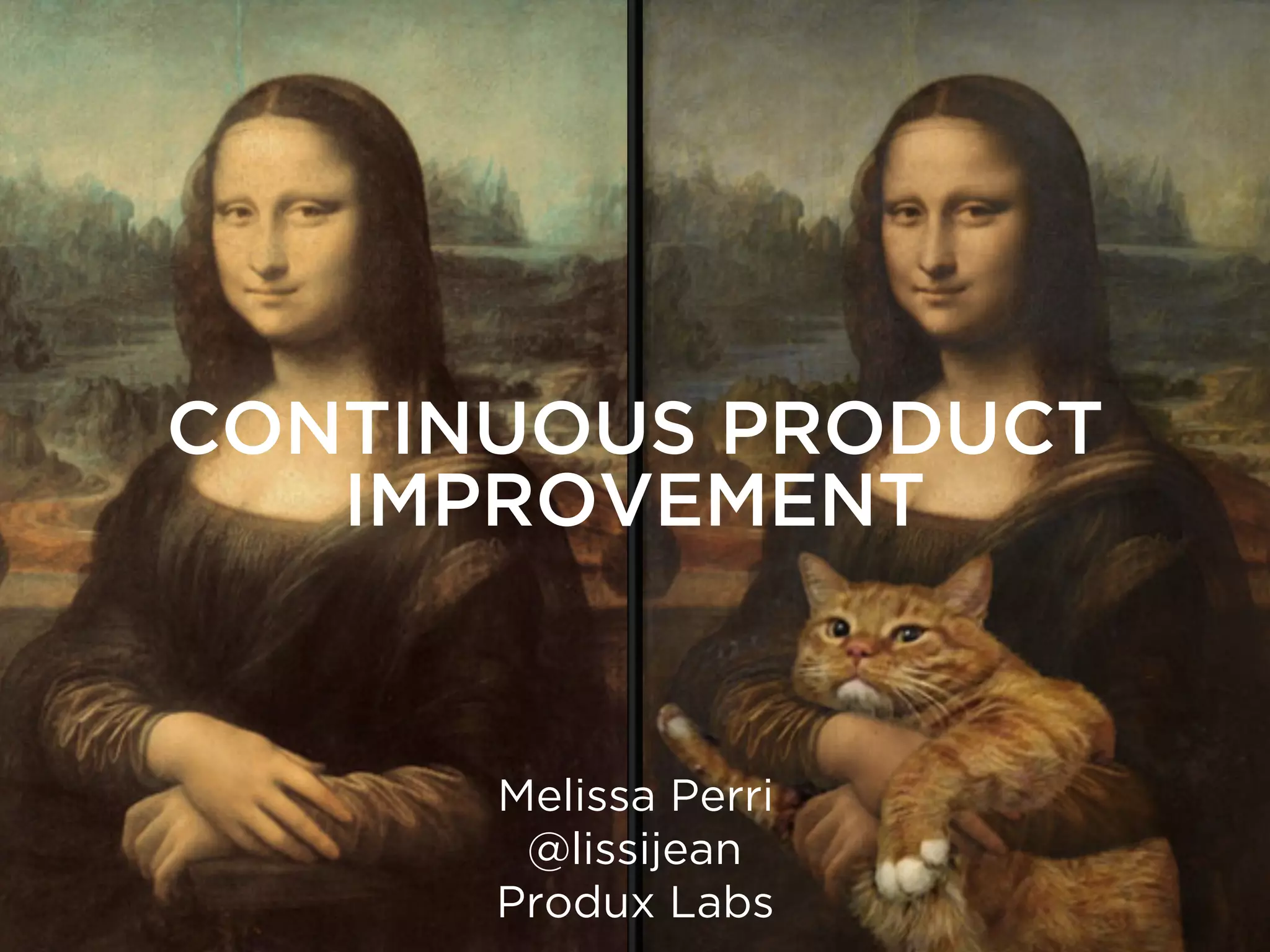
CONTINUOUS PRODUCT
IMPROVEMENT
Melissa Perri
@lissijean
Produx Labs
@lissijean
Melissa Perri
Produx Labs
melissaperri.com
@lissijean
@lissijean
It’s about
thinking.
@lissijean
@lissijean
@lissijean
What happens before
we know what to build?
@lissijean
The
Build Trap
@lissijean
It doesn’t matter
how well you build
an unwanted feature.
It will always be
unwanted.
@lissijean
@lissijean
Product Management is about
reducing the uncertainty that
your product will succeed in
the market.
@lissijean
@lissijean
@lissijean
@lissijean
@lissijean
@lissijean
Lean Startup
@lissijean
Product Management is not
just about building things,
it’s about solving problems.
@lissijean
This type of
thinking is hard.
How do we improve our existing
products to satisfy our customers
and achieve goals?
How do we reach our
business goals?
How do we create new
services that satisfy a need
for our users?
@lissijean
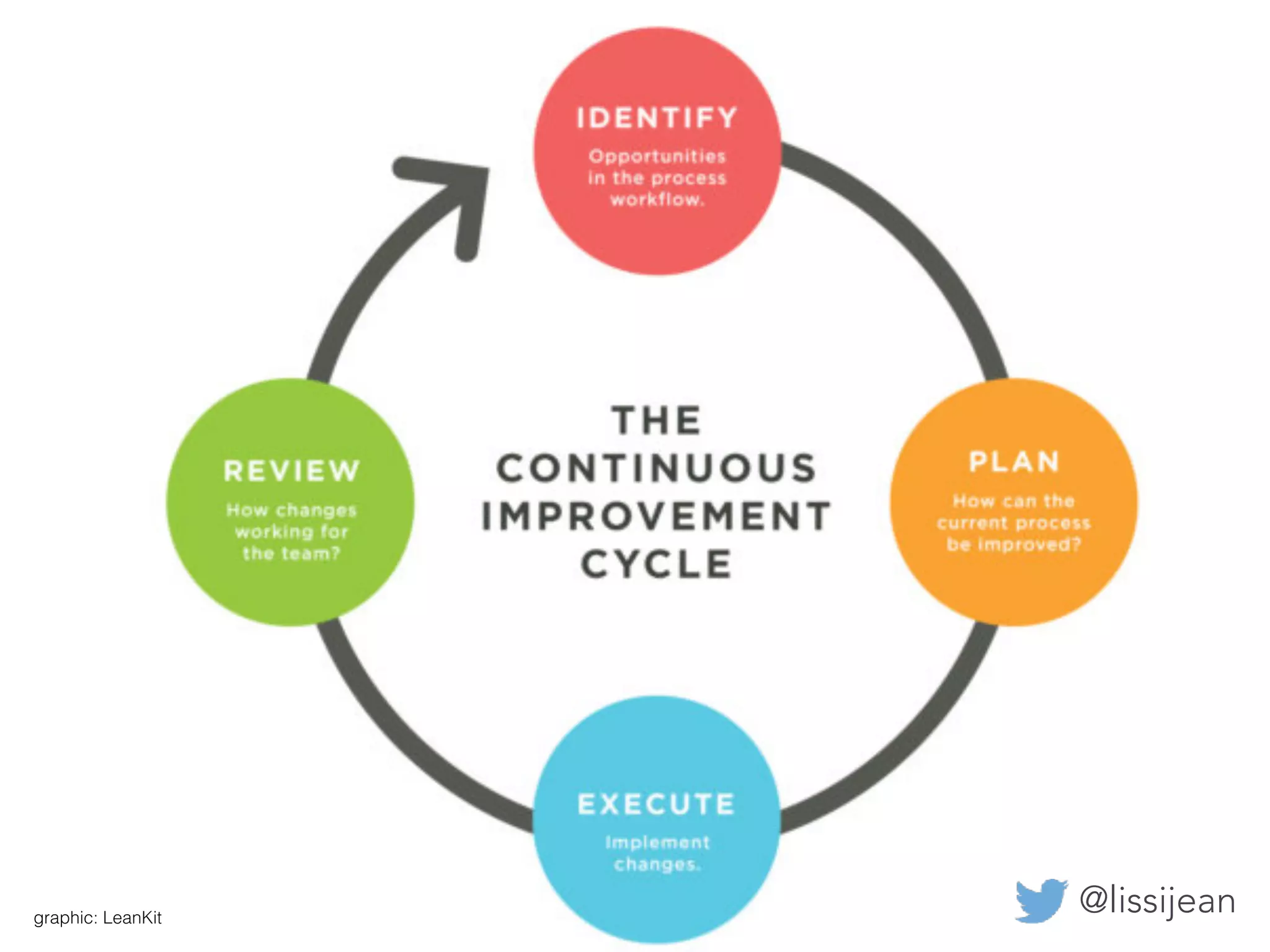
graphic: LeanKit
@lissijean
1. Introduce you to the Kata
Framework
2. Show you how it applies
to Product Management
TODAY
@lissijean
The key to the Toyota
Way and what makes
Toyota stand out is not
any of the individual
elements… [but] having
all the elements together
as a system. It must be
practiced every day in a
very consistent manner,
not in spurts.
-Taiichi Ohno
“
@lissijean
@lissijean
@lissijean
• Name your team. Minimum groups of 6.
• Shuffle your cards REALLY well.
• Up to 4 people can participate in the
exercise.
• Chose one other person to be a timekeeper.
• Choose one other person to be the
recorder.
• Choose one other coach.
Team	Name:
Date:
Round
A
Round
B
BASELINE	
ROUNDS
5
10
15
20
25
30
35
40
45
50
5
10
15
20
25
30
35
40
45
50
seconds seconds
Kata	in	the	Classroom	/	katatogrow.com
Order your cards as
fast as possible.
Record your time on
Baseline Rounds.
Do twice.
Cards must be in
straight lines and
equal spacing
between rows and
columns.
Set a Target
Condition.
Be ambitious.
What	will	you	do?
•
•
•
What	will	you	do?
•
•
•
What	will	you	do?
•
•
•
What	will	you	do?
•
•
•
What	will	you	do?
•
•
•
What	will	you	do?
•
•
•
Experiment		1
Team	Name:
Date: EXPERIMENTING	
Experiment		2 Experiment		3 Experiment		4 Experiment		5 Experiment		6
35
40
45
50
35
40
45
50
35
40
45
50
35
40
45
50
35
40
45
50
35
40
45
50
Change Change Change Change Change Change
STOP!
@lissijean
How did that go?
@lissijean
STOP!
@lissijean
What did you learn?
@lissijean
Continuous
Improvement
is a mindset.
PRODUCT KATA
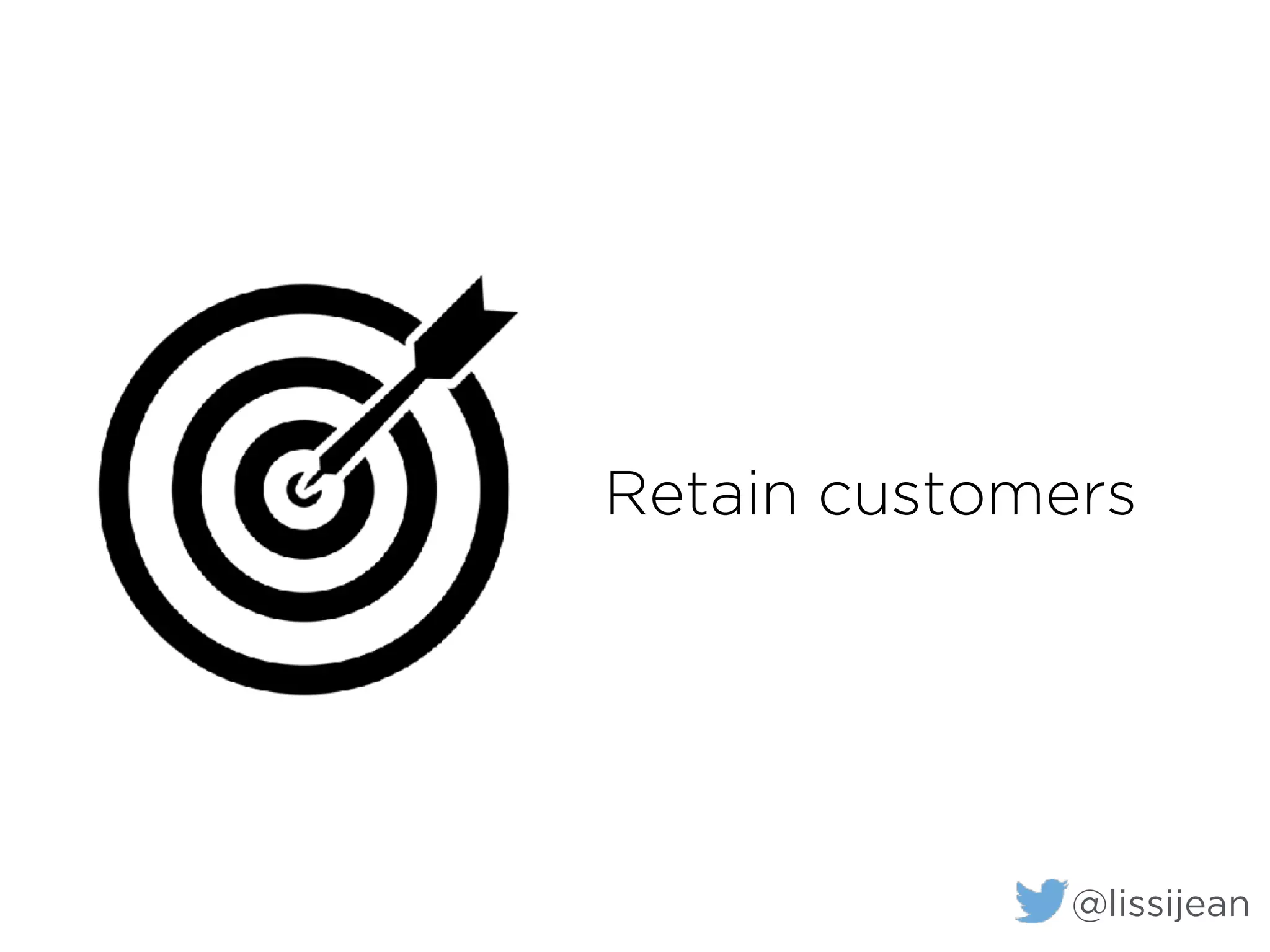
Retain customers
@lissijean
Prove new product
in market
@lissijean
Convert freemium users
@lissijean
Increase engagement
@lissijean
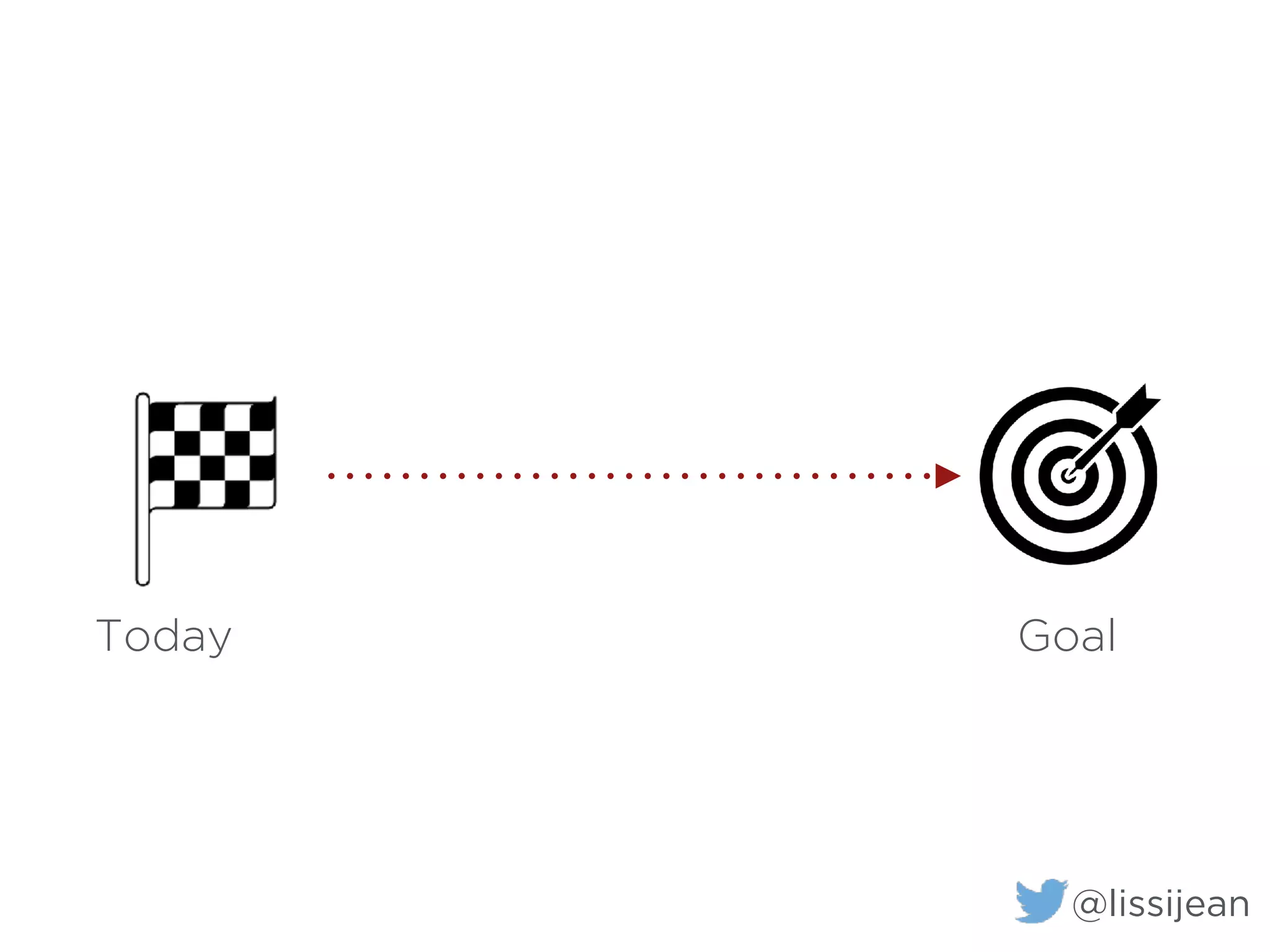
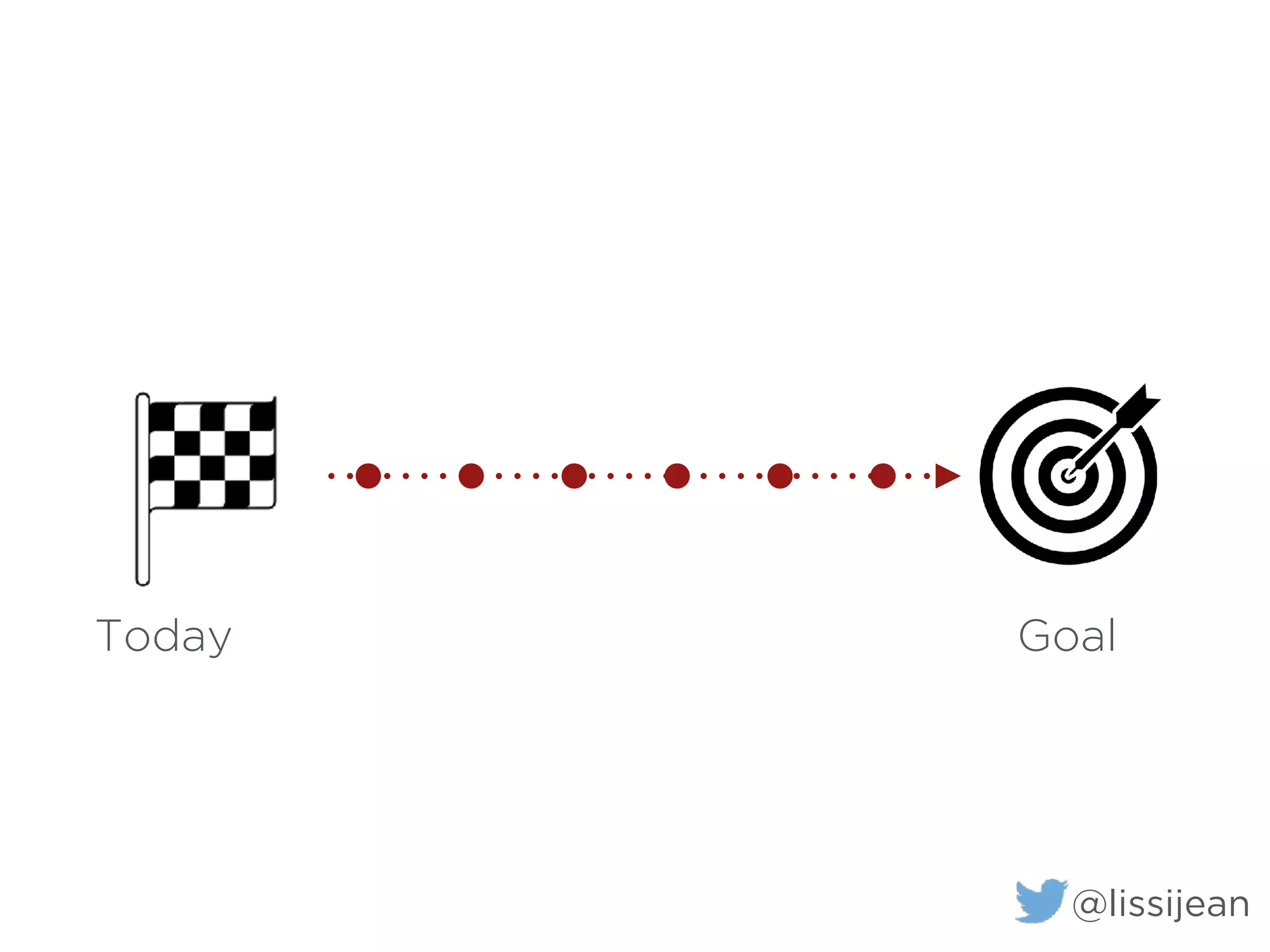
Today Goal
@lissijean
@lissijean
Today Goal
WTF?!
OH YEAH!
@lissijean
Today Goal
@lissijean
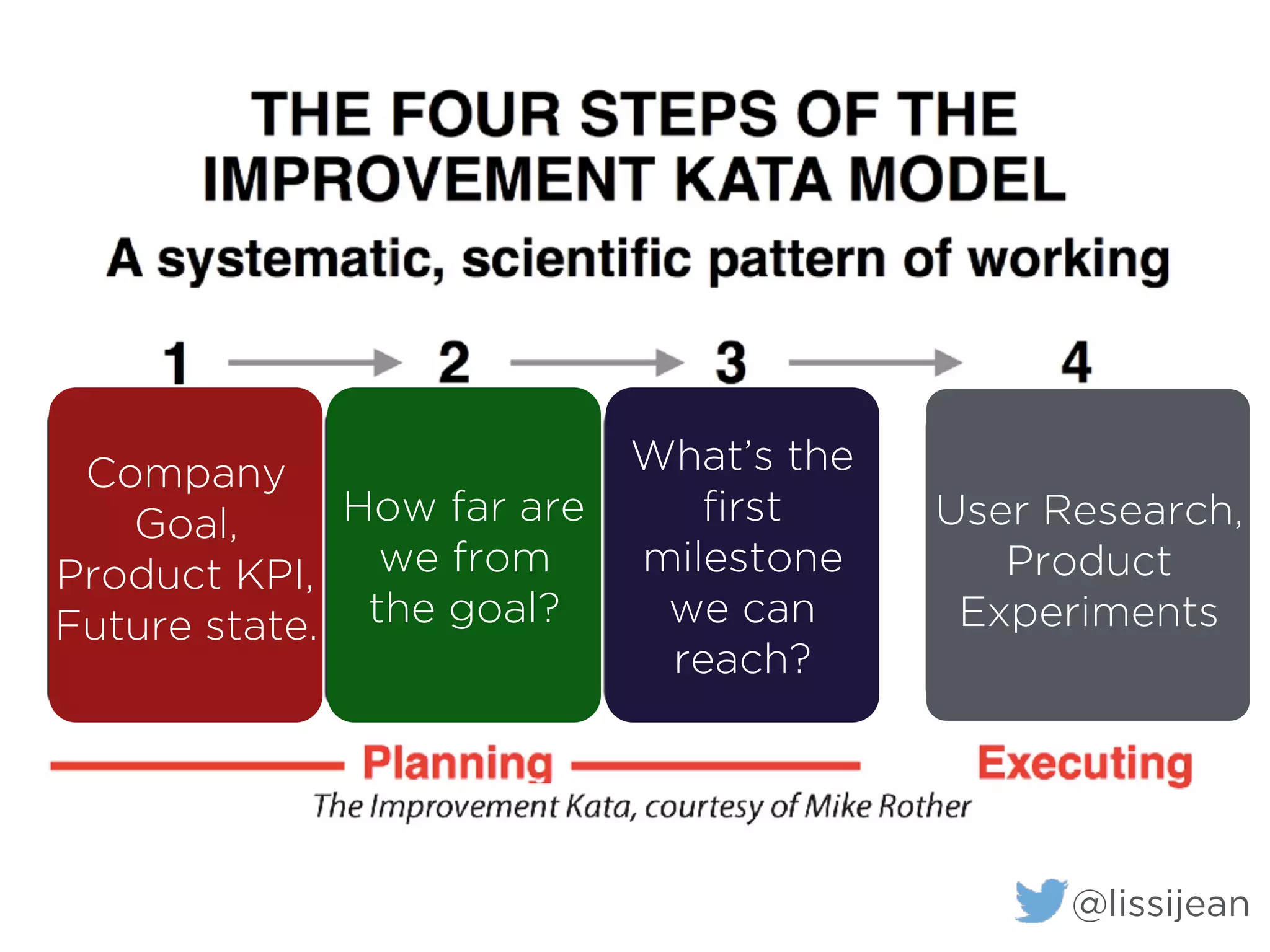
Company
Goal,
Product KPI,
Future state.
How far are
we from
the goal?
What’s the
first
milestone
we can
reach?
User Research,
Product
Experiments
@lissijean
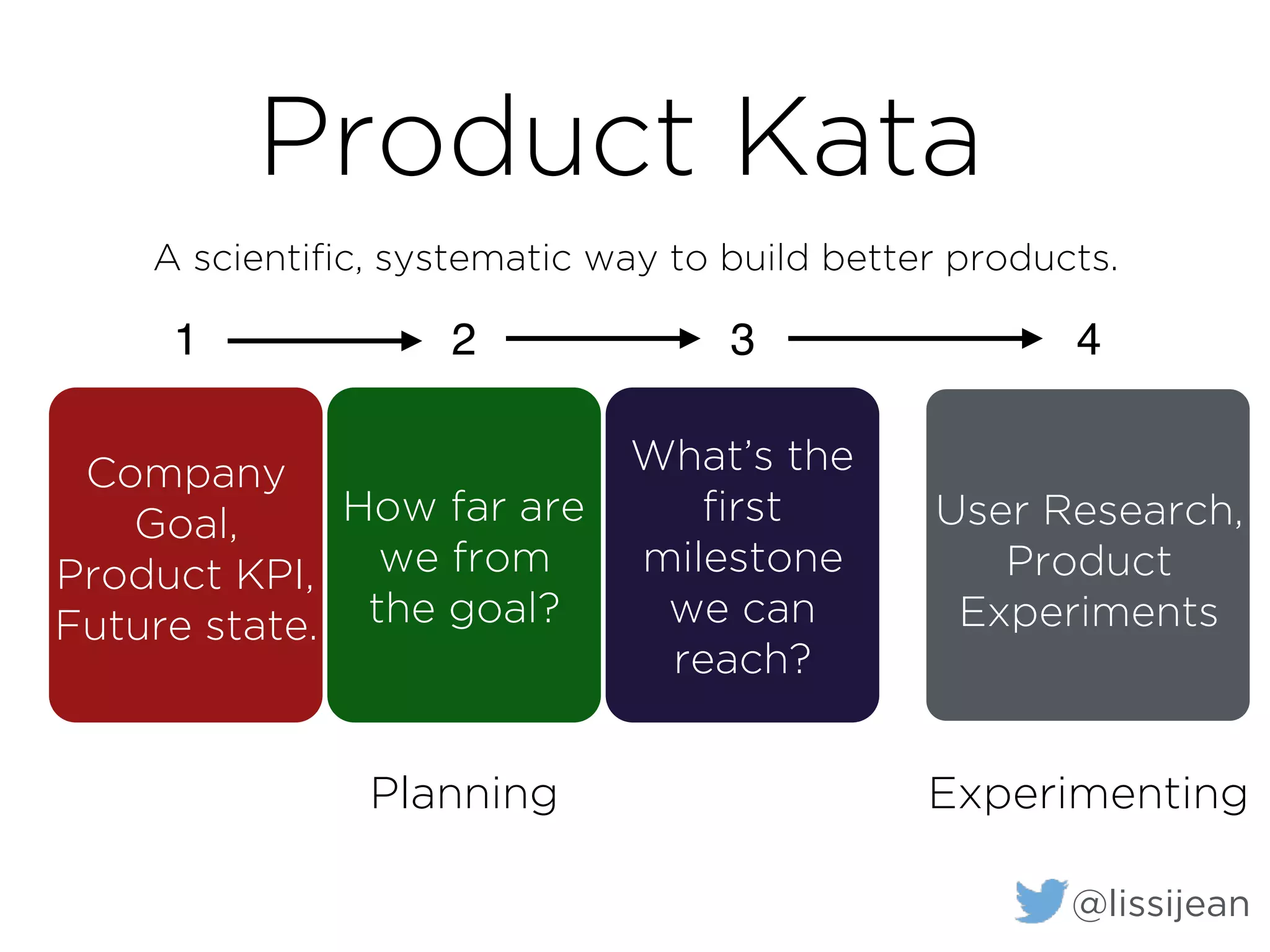
Product Kata
1 2 3 4
Planning Experimenting
A scientific, systematic way to build better products.
@lissijean
Company
Goal,
Product KPI,
Future state.
How far are
we from
the goal?
What’s the
first
milestone
we can
reach?
User Research,
Product
Experiments
@lissijean
DO NOT WANT
@lissijean
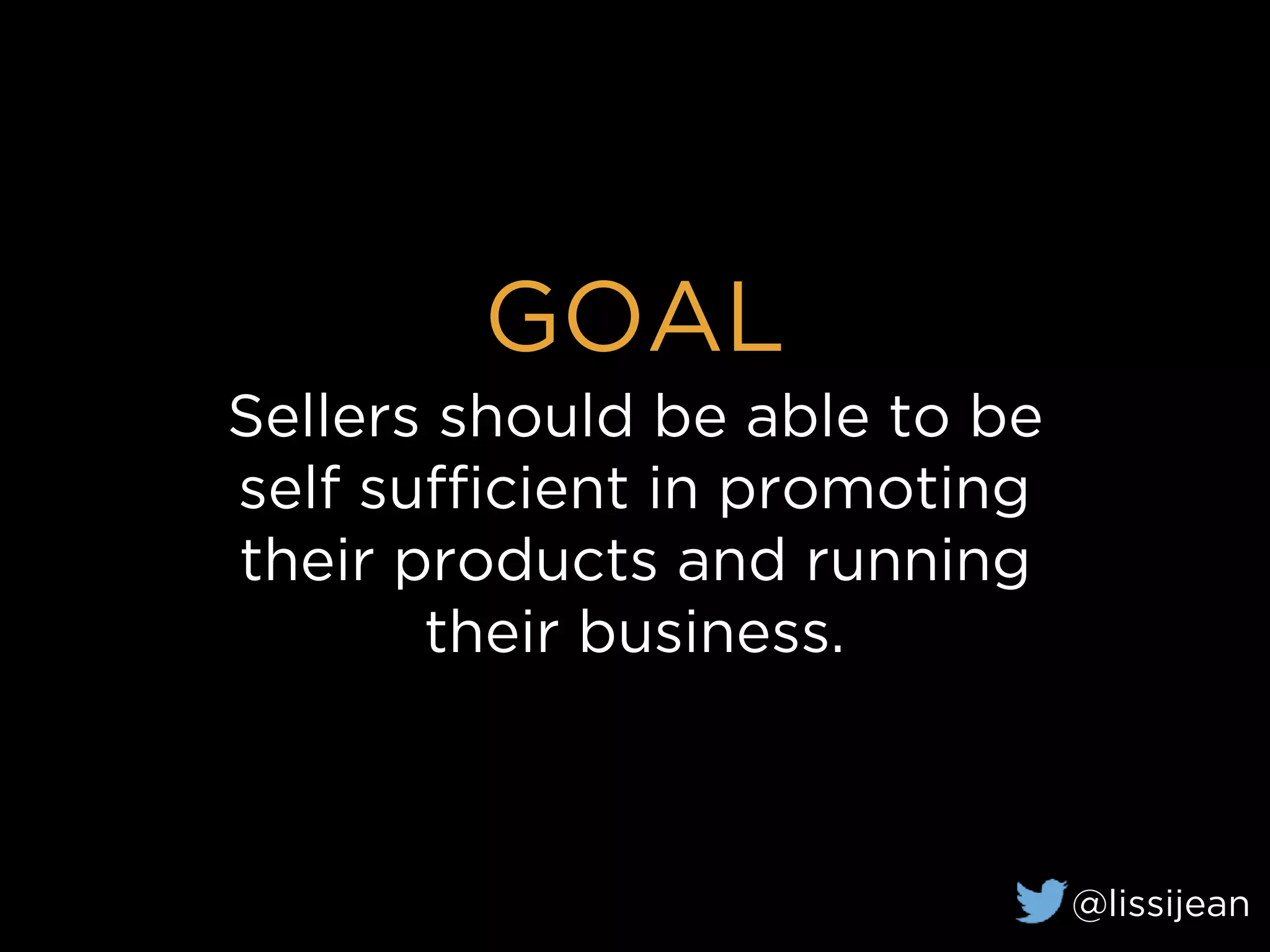
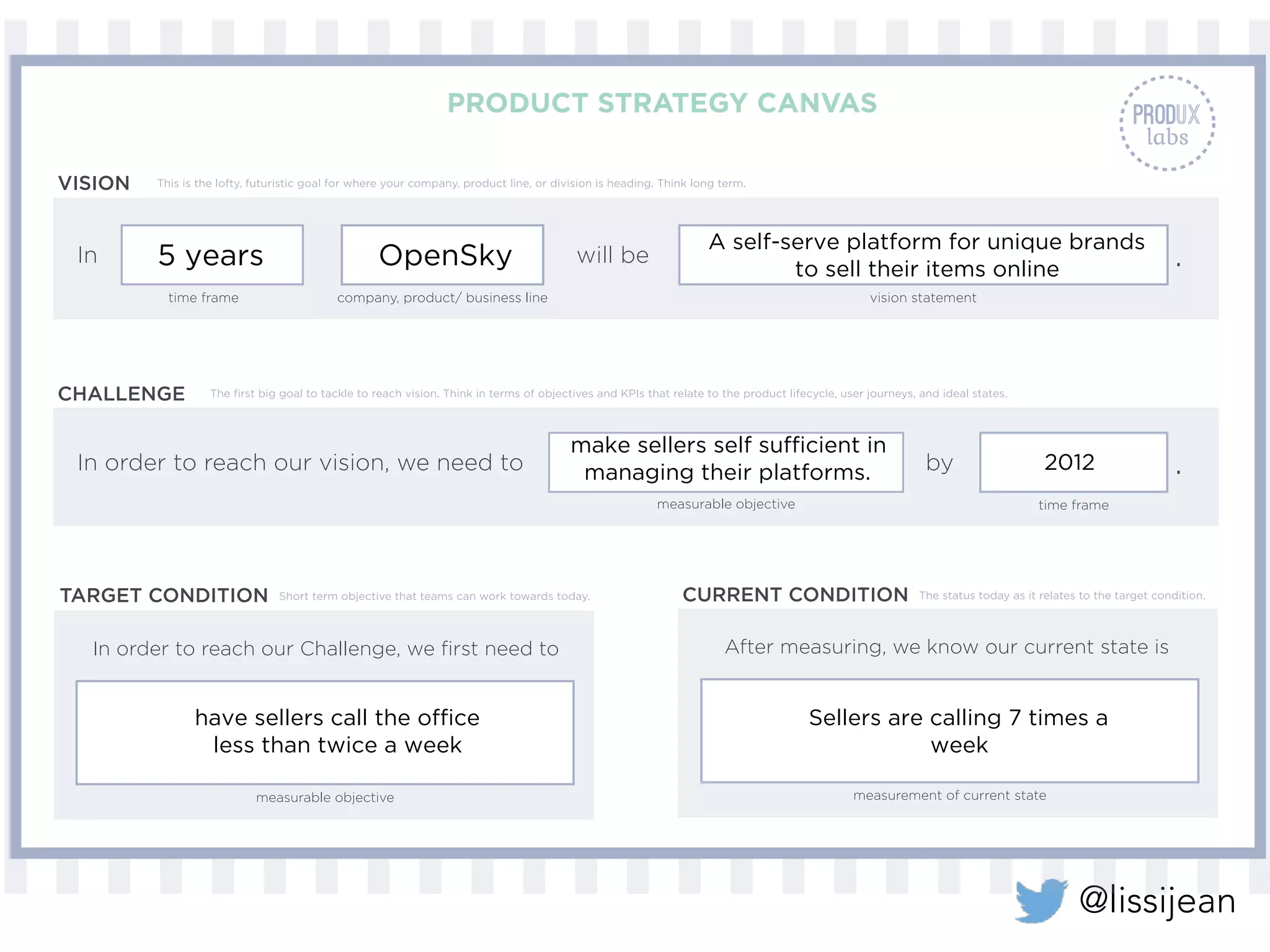
GOAL
Sellers should be able to be
self sufficient in promoting
their products and running
their business.
@lissijean
TARGET CONDITION
Sellers call office less than
twice a week.
@lissijean
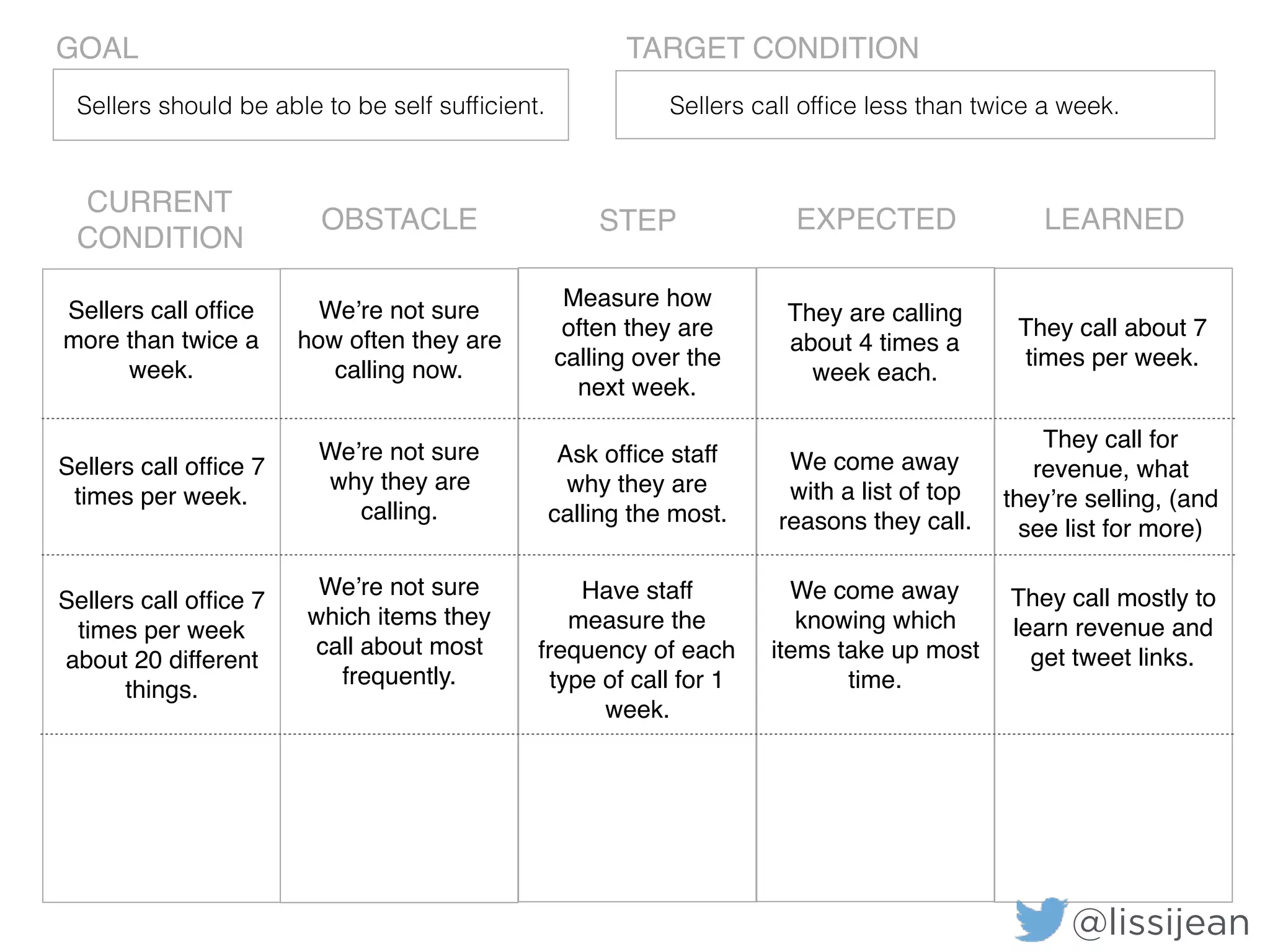
GOAL TARGET CONDITION
CURRENT
CONDITION
OBSTACLE STEP EXPECTED LEARNED
Sellers should be able to be self sufficient. Sellers call office less than twice a week.
Sellers call office
more than twice a
week.
We’re not sure
how often they are
calling now.
Measure how
often they are
calling over the
next week.
They are calling
about 4 times a
week each.
They call about 7
times per week.
@lissijean
@lissijean
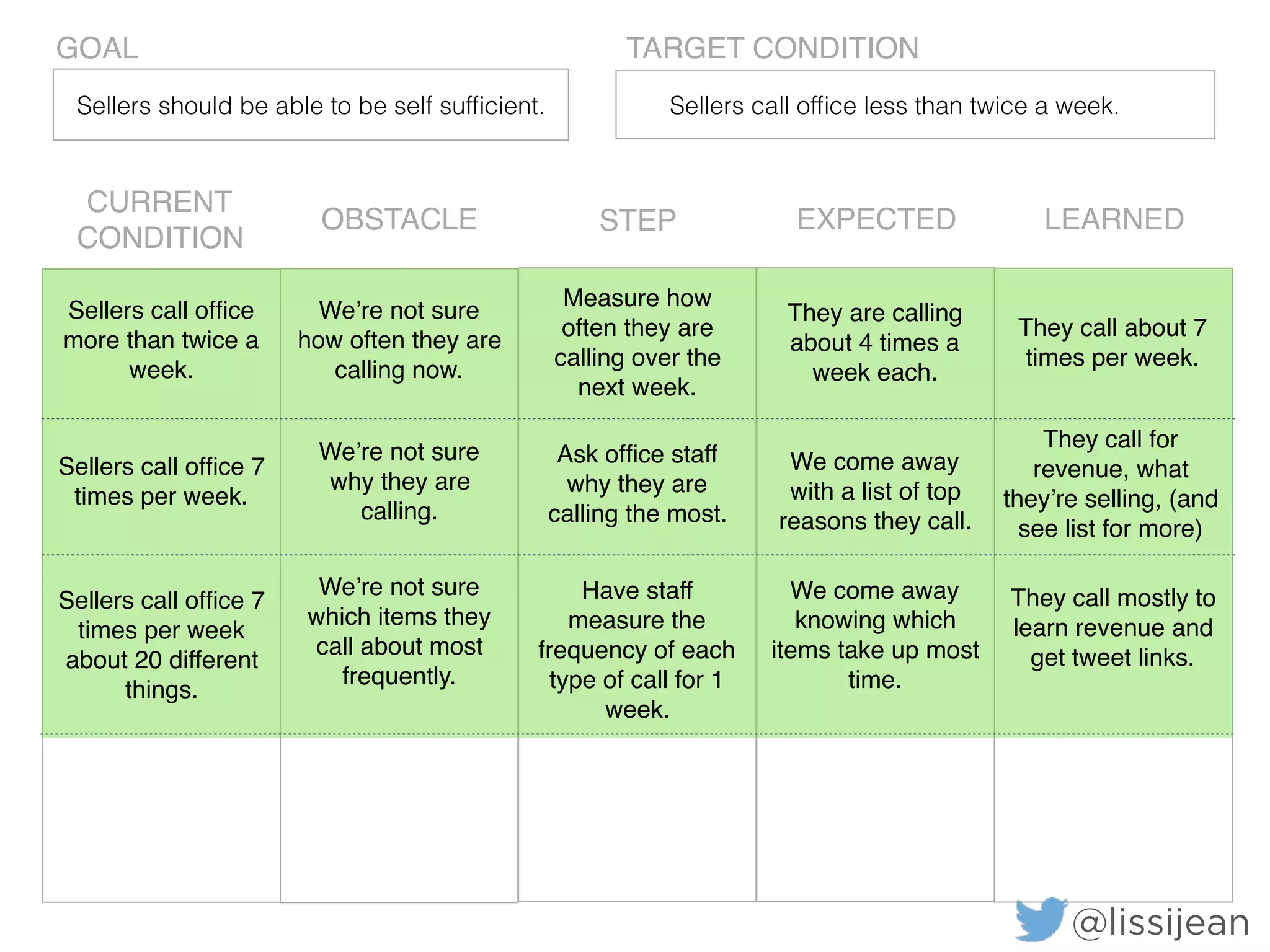
GOAL TARGET CONDITION
CURRENT
CONDITION
OBSTACLE STEP EXPECTED LEARNED
Sellers should be able to be self sufficient. Sellers call office less than twice a week.
Sellers call office
more than twice a
week.
We’re not sure
how often they are
calling now.
Measure how
often they are
calling over the
next week.
They are calling
about 4 times a
week each.
They call about 7
times per week.
Sellers call office 7
times per week.
We’re not sure
why they are
calling.
Ask office staff
why they are
calling the most.
We come away
with a list of top
reasons they call.
They call for
revenue, what
they’re selling, (and
see list for more)

Sellers call office 7
times per week
about 20 different
things.
We’re not sure
which items they
call about most
frequently.
Have staff
measure the
frequency of each
type of call for 1
week.
We come away
knowing which
items take up most
time.
They call mostly to
learn revenue and
get tweet links.
@lissijean
GOAL TARGET CONDITION
CURRENT
CONDITION
OBSTACLE STEP EXPECTED LEARNED
Sellers should be able to be self sufficient. Sellers call office less than twice a week.
Sellers call office
more than twice a
week.
We’re not sure
how often they are
calling now.
Measure how
often they are
calling over the
next week.
They are calling
about 4 times a
week each.
They call about 7
times per week.
Sellers call office 7
times per week.
We’re not sure
why they are
calling.
Ask office staff
why they are
calling the most.
We come away
with a list of top
reasons they call.
They call for
revenue, what
they’re selling, (and
see list for more)
Sellers call office 7
times per week
about 20 different
things.
We’re not sure
which items they
call about most
frequently.
Have staff
measure the
frequency of each
type of call for 1
week.
We come away
knowing which
items take up most
time.
They call mostly to
learn revenue and
get tweet links.
@lissijean
GOAL TARGET CONDITION
CURRENT
CONDITION
OBSTACLE STEP EXPECTED LEARNED
Sellers should be able to be self sufficient. Sellers call office less than twice a week.
Sellers call office
more than twice a
week.
We’re not sure
how often they are
calling now.
Measure how
often they are
calling over the
next week.
They are calling
about 4 times a
week each.
They call about 7
times per week.
Sellers call office 7
times per week.
We’re not sure
why they are
calling.
Ask office staff
why they are
calling the most.
We come away
with a list of top
reasons they call.
They call for
revenue, what
they’re selling, (and
see list for more)
Sellers call office 7
times per week
about 20 different
things.
We’re not sure
which items they
call about most
frequently.
Have staff
measure the
frequency of each
type of call for 1
week.
We come away
knowing which
items take up most
time.
They call mostly to
learn revenue and
get tweet links.
Sellers call office 7
times per week
mostly about
revenue and tweet
links.
Have sellers call
less for revenue.
The sellers will
stop calling for
revenue.
They wanted an
update more
frequently than
once a week.
@lissijean
Manually send
sellers a weekly
revenue email. See
if they call for
revenue that week.
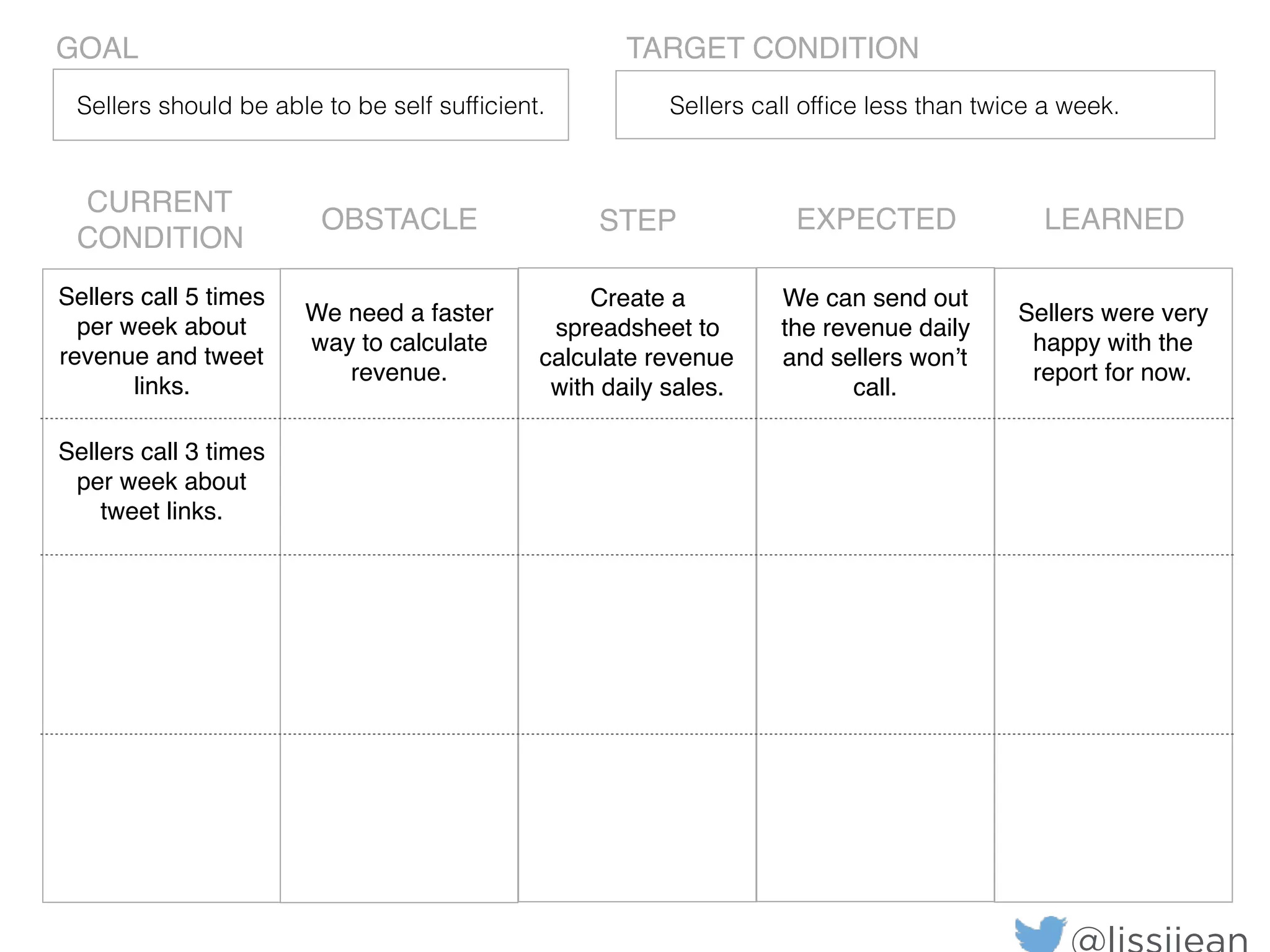
GOAL TARGET CONDITION
CURRENT
CONDITION
OBSTACLE STEP EXPECTED LEARNED
Sellers should be able to be self sufficient. Sellers call office less than twice a week.
Sellers call 5 times
per week about
revenue and tweet
links.
We need a faster
way to calculate
revenue.
Create a
spreadsheet to
calculate revenue
with daily sales.
We can send out
the revenue daily
and sellers won’t
call.
Sellers were very
happy with the
report for now.
Sellers call 3 times
per week about
tweet links.
@lissijean
GOAL TARGET CONDITION
CURRENT
CONDITION
OBSTACLE STEP EXPECTED LEARNED
Sellers should be able to be self sufficient. Sellers call office less than twice a week.
Sellers call 5 times
per week about
revenue and tweet
links.
We need a faster
way to calculate
revenue.
Create a
spreadsheet to
calculate revenue
with daily sales.
We can send out
the revenue daily
and sellers won’t
call.
Sellers were very
happy with the
report for now.
Sellers call 3 times
per week about
tweet links.
Tweet links have
unique codes
generated on them
Create a
standardized
share code for
curators.
Sellers will know
their code and not
ask for links.
They still ask for
links because
forget link text.
Sellers call 2 times
per week about
tweet links.
Weird naming
system doesn’t
allow sellers to
remember.
Create a list of all
the products for
each seller and
generate tweet
links.
Sellers will use
this to tweet and
not ask for links.
They were happy
with this and liked
the one click.
Sellers call 1 time
per week about
many different
things.
@lissijean
@lissijean
@lissijean@lissijean#AgileOTB
@lissijean
@lissijean
5 years OpenSky
A self-serve platform for unique brands
to sell their items online
make sellers self sufficient in
managing their platforms. 2012
have sellers call the office
less than twice a week
Sellers are calling 7 times a
week
1. Schedule routine checkins after every experiment to
walk through the 5 questions.
2. Designate someone from outside the team as the coach.
3. Spend time establishing the target condition and the
current condition.
4. Note that experiments and feedback will be longer as
you build out solutions fully, but you can still use Kata to
checkin and improve.
5. Adjust target conditions and challenges that you find
miss the mark.
Tips for Using Kata
@lissijean
“
Improvement usually means
doing something that we have
never done before.
– Shigeo Shingo
Melissa Perri
melissa@produxlabs.com
melissaperri.com
produxlabs.com
twitter: @lissijean
Agile17 for 15% off
productinstitute.com
Coming
LATE 2017!
produxlabs.com/book
QUESTIONS?

Continuous Product Improvement Workshop