Continuous Integration  & Hudson
Agenda Objective What is Continuous Integration (CI)? Why do we need Continuous Integration (CI)? Typical CI Architecture Advantages of CI CI Requirements What is Hudson? Why Hudson?
Objective Basic Introduction to Continuous Integration System & Hudson
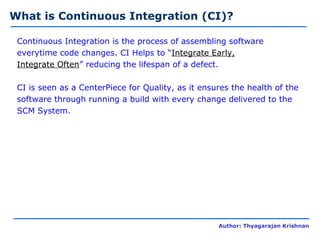
What is Continuous Integration (CI)? Continuous Integration is the process of assembling software everytime code changes. CI Helps to “ Integrate Early, Integrate Often ” reducing the lifespan of a defect.  CI is seen as a CenterPiece for Quality, as it ensures the health of the software through running a build with every change delivered to the SCM System.
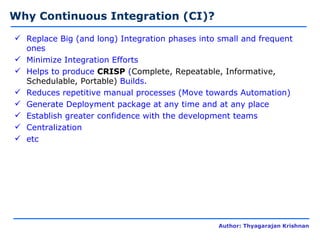
Why Continuous Integration (CI)? Replace Big (and long) Integration phases into small and frequent ones Minimize Integration Efforts Helps to produce  CRISP  ( Complete, Repeatable, Informative, Schedulable, Portable)  Builds. Reduces repetitive manual processes (Move towards Automation) Generate Deployment package at any time and at any place Establish greater confidence with the development teams Centralization etc
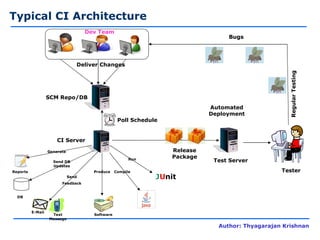
Typical CI Architecture SCM Repo/DB CI Server Tester Test Server Deliver Changes Poll Schedule Bugs Dev Team Release Package Automated Deployment Regular Testing Reports DB Generate Send DB Updates Send Feedback E-Mail Produce Software Compile J U nit Run Text Message
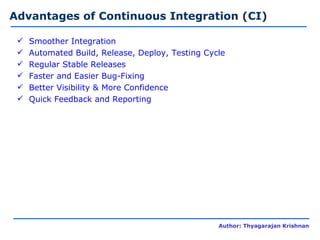
Advantages of Continuous Integration (CI) Smoother Integration Automated Build, Release, Deploy, Testing Cycle Regular Stable Releases Faster and Easier Bug-Fixing Better Visibility & More Confidence Quick Feedback and Reporting
Continuous Integration Requirements A reliable build process using  ANT, Maven etc An SCM System  Clearcase, Subversion etc A Continuous Integration Server  Hudson, CruiseControl, Cruise, Meister etc
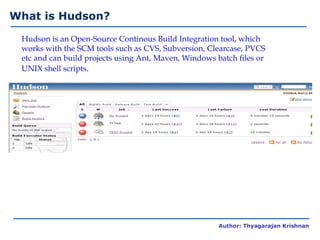
What is Hudson? Hudson is an Open-Source Continous Build Integration tool, which works with the SCM tools such as CVS, Subversion, Clearcase, PVCS etc and can build projects using Ant, Maven, Windows batch files or UNIX shell scripts .
Why Hudson? Web Based, Easy to Use Lots of Plugins Cool User Interface ChangeSet Support Easy to Setup, Configure and Administer Powerful as it supports various SCM systems, build tools Comprehensive Project Reporting & Dashboard Security - Supports User Authentication and Restriction Free and OpenSource – Zero Cost Widely used in the industry : :
Thank You

Continuous Integration System

  • 1.
  • 2.
    Agenda Objective Whatis Continuous Integration (CI)? Why do we need Continuous Integration (CI)? Typical CI Architecture Advantages of CI CI Requirements What is Hudson? Why Hudson?
  • 3.
    Objective Basic Introductionto Continuous Integration System & Hudson
  • 4.
    What is ContinuousIntegration (CI)? Continuous Integration is the process of assembling software everytime code changes. CI Helps to “ Integrate Early, Integrate Often ” reducing the lifespan of a defect. CI is seen as a CenterPiece for Quality, as it ensures the health of the software through running a build with every change delivered to the SCM System.
  • 5.
    Why Continuous Integration(CI)? Replace Big (and long) Integration phases into small and frequent ones Minimize Integration Efforts Helps to produce CRISP ( Complete, Repeatable, Informative, Schedulable, Portable) Builds. Reduces repetitive manual processes (Move towards Automation) Generate Deployment package at any time and at any place Establish greater confidence with the development teams Centralization etc
  • 6.
    Typical CI ArchitectureSCM Repo/DB CI Server Tester Test Server Deliver Changes Poll Schedule Bugs Dev Team Release Package Automated Deployment Regular Testing Reports DB Generate Send DB Updates Send Feedback E-Mail Produce Software Compile J U nit Run Text Message
  • 7.
    Advantages of ContinuousIntegration (CI) Smoother Integration Automated Build, Release, Deploy, Testing Cycle Regular Stable Releases Faster and Easier Bug-Fixing Better Visibility & More Confidence Quick Feedback and Reporting
  • 8.
    Continuous Integration RequirementsA reliable build process using ANT, Maven etc An SCM System Clearcase, Subversion etc A Continuous Integration Server Hudson, CruiseControl, Cruise, Meister etc
  • 9.
    What is Hudson?Hudson is an Open-Source Continous Build Integration tool, which works with the SCM tools such as CVS, Subversion, Clearcase, PVCS etc and can build projects using Ant, Maven, Windows batch files or UNIX shell scripts .
  • 10.
    Why Hudson? WebBased, Easy to Use Lots of Plugins Cool User Interface ChangeSet Support Easy to Setup, Configure and Administer Powerful as it supports various SCM systems, build tools Comprehensive Project Reporting & Dashboard Security - Supports User Authentication and Restriction Free and OpenSource – Zero Cost Widely used in the industry : :
  • 11.