Continuous Composter Tanks
Sarah Allen. Spring 2015. Luke Kwan. INTA332 B
What do they do?
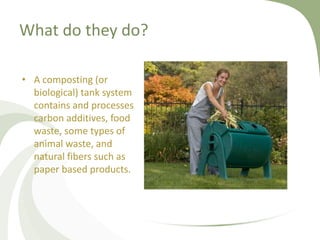
• A composting (or
biological) tank system
contains and processes
carbon additives, food
waste, some types of
animal waste, and
natural fibers such as
paper based products.
How does it work?
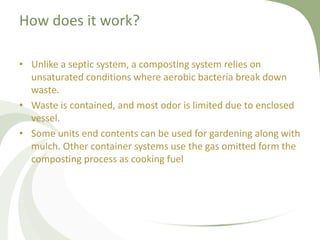
• Unlike a septic system, a composting system relies on
unsaturated conditions where aerobic bacteria break down
waste.
• Waste is contained, and most odor is limited due to enclosed
vessel.
• Some units end contents can be used for gardening along with
mulch. Other container systems use the gas omitted form the
composting process as cooking fuel
Composting Cycle
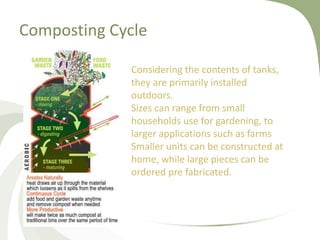
Considering the contents of tanks,
they are primarily installed
outdoors.
Sizes can range from small
households use for gardening, to
larger applications such as farms
Smaller units can be constructed at
home, while large pieces can be
ordered pre fabricated.
The “Other” Tank
Types of composting toilets
Batch Composting
Continuous Composting
Hybrid Composting
Waterless Composting Toilet Tanks
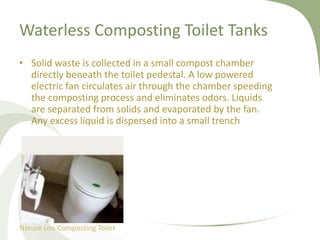
• Solid waste is collected in a small compost chamber
directly beneath the toilet pedestal. A low powered
electric fan circulates air through the chamber speeding
the composting process and eliminates odors. Liquids
are separated from solids and evaporated by the fan.
Any excess liquid is dispersed into a small trench
Nature Loo Composting Toilet
Installation
Installation of these composting
tanks take more than the basic
plumbing needs of the typical
toilet. There are drain hoses
(10ft or more), Vent stacks,
diffusers, and roof flashings.
Basically you are installing an
additional “ante chamber”
outside of the bathroom to
collect the waste and keep it
contained in needed
temperature levels, and prevent
odors from escaping
Types of Tanks

Continuous composting tanks

  • 1.
    Continuous Composter Tanks SarahAllen. Spring 2015. Luke Kwan. INTA332 B
  • 2.
    What do theydo? • A composting (or biological) tank system contains and processes carbon additives, food waste, some types of animal waste, and natural fibers such as paper based products.
  • 3.
    How does itwork? • Unlike a septic system, a composting system relies on unsaturated conditions where aerobic bacteria break down waste. • Waste is contained, and most odor is limited due to enclosed vessel. • Some units end contents can be used for gardening along with mulch. Other container systems use the gas omitted form the composting process as cooking fuel
  • 4.
    Composting Cycle Considering thecontents of tanks, they are primarily installed outdoors. Sizes can range from small households use for gardening, to larger applications such as farms Smaller units can be constructed at home, while large pieces can be ordered pre fabricated.
  • 5.
  • 6.
    Types of compostingtoilets Batch Composting Continuous Composting Hybrid Composting
  • 7.
    Waterless Composting ToiletTanks • Solid waste is collected in a small compost chamber directly beneath the toilet pedestal. A low powered electric fan circulates air through the chamber speeding the composting process and eliminates odors. Liquids are separated from solids and evaporated by the fan. Any excess liquid is dispersed into a small trench Nature Loo Composting Toilet
  • 8.
    Installation Installation of thesecomposting tanks take more than the basic plumbing needs of the typical toilet. There are drain hoses (10ft or more), Vent stacks, diffusers, and roof flashings. Basically you are installing an additional “ante chamber” outside of the bathroom to collect the waste and keep it contained in needed temperature levels, and prevent odors from escaping
  • 9.